OrbitalHub

Where curiosity reaches escape velocity.

Domain is for sale. $50,000,000.00 USD. Direct any inquiries to contact@orbitalhub.com.

Archive for the Science category


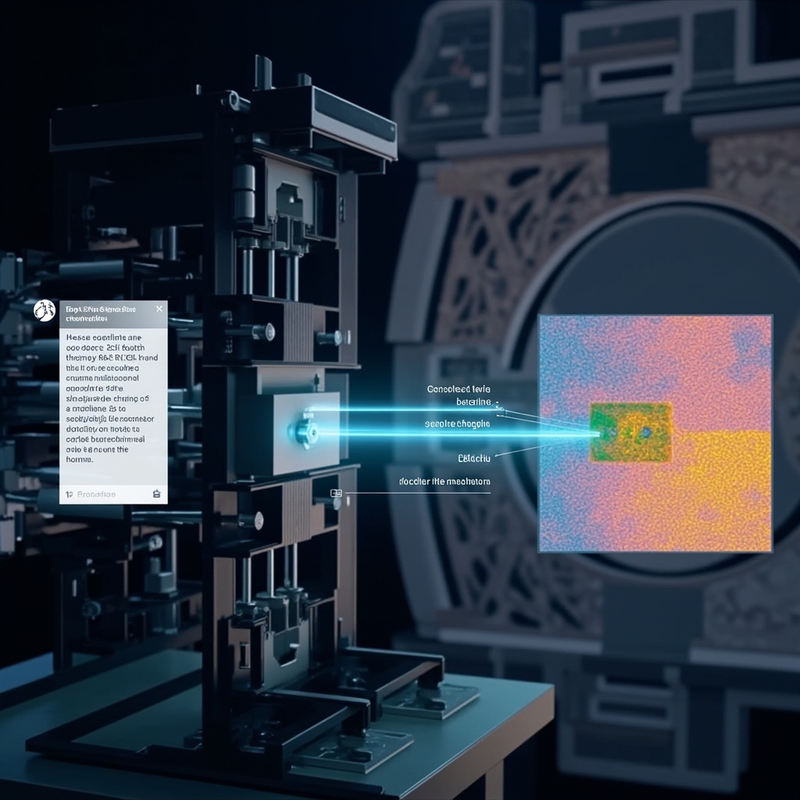
Argonne's hard X-ray nanoprobe at beamline 26-ID at the Advanced Photon Source: a multimodal LLM agent's chat panel on the left, the synchrotron X-ray nanoprobe illuminating a microchip in the center, and a ptychographic reconstruction on the right showing the interface between two doped regions of a microchip in false-color orange-red and teal-blue.

A microchip sat on the stage of beamline 26-ID at Argonne National Laboratory on a Tuesday in early October. Instead of guiding a motorized stage through a hand-scripted raster, a researcher typed “find the interface between these two regions” into a chat box. A software agent read the instruction, parsed a freshly reconstructed X-ray image, picked a new point on the sample, asked the beamline to move there, looked again, and decided on a third step. After a handful of those scan-reason-move cycles, the agent locked onto the boundary the user wanted and switched itself into a higher-resolution scan mode. No operator wrote Python. The human in the room just talked to the microscope.


That experiment, run at the joint Center for Nanoscale Materials and Advanced Photon Source hard X-ray nanoprobe in the first week of October 2026, is the first time a working agentic AI has steered a synchrotron beamline end-to-end through natural language. The team behind it, drawn from Argonne, Lawrence Berkeley, Brookhaven, SLAC, and Oak Ridge national laboratories, is calling the broader effort SYNAPS-I, short for Synergistic Neutron and Photon Science–Intelligence, and plugging it into the Department of Energy’s Genesis Mission as a flagship demonstration of what an AI-augmented user facility can look like in 2026 (Argonne, October 5, 2026).

For most of the synchrotron’s seventy-year history, the bottleneck at a beamline has not been the X-ray source. It has been the human at the controls. A modern storage ring like the APS sends electrons whirling at seven gigaelectronvolts through a 1.1-kilometer ring of bending magnets, where they shed X-rays bright enough to resolve features a few nanometers across. The catch is that the data deluge starts the moment the shutter opens. At 26-ID, a single experiment at a third-generation nanoprobe writes millions of ptychographic diffraction patterns in a few hours, and every pattern needs a heavy iterative computation to turn back into a usable image. Without live reconstruction, the team on shift has to choose what to scan on the basis of intuition and a coarse preview, then fly home and discover, days later, that the region of interest was three millimeters to the left the whole time.

The SYNAPS-I project, launched in 2025 and led out of Lawrence Berkeley, set out to change that ratio. The first phase, publicly reported in April 2026, replaced the slow offline reconstruction with a real-time engine. The engine, a fine-tuned 2D vision transformer the team calls PtychoFM, ingests raw diffraction patterns as they stream off the detector and returns a reconstructed phase-and-magnitude image in seconds (Argonne, April 2026). The math itself is well understood: a coherent X-ray beam is scanned across the sample in overlapping circles, and the resulting diffraction patterns are stitched together in Fourier space using a difference-map or gradient-descent solver. What PtychoFM adds is a learned prior, a model trained on enough examples that it can skip most of the iteration and guess a plausible reconstruction from a single forward pass, then refine it on the fly as more data arrives. For a beamline scientist, that turns hours of post-experiment waiting into a real-time video feed of structure under the beam.

The second phase, announced in early October, is what made the headline demo possible. The team wrapped PtychoFM in an agentic layer that uses a multimodal large language model as its decision-maker, alongside Meta’s Segment Anything Model 3 (SAM3) as its image-segmentation eye. The agent reads each new image, calls SAM3 to label the structures it sees, and reasons about what to do next in plain English — or rather, in plain tokens. “Agentic AI solves this by interpreting the images reconstructed in real time by PtychoFM, our ptychographic model, leveraging the vision capability of a multimodal large language model,” said Ming Du, an Argonne computational scientist on the SYNAPS-I team, in the October release. The architectural pattern is now familiar from the wider AI world: an LLM plays the role of a slow, generalist planner, a smaller specialist model handles perception, and a set of tool calls translate decisions into beamline commands. Here the tools are the motor controllers of a nanoprobe stage and a reconstruction pipeline running on the Argonne Leadership Computing Facility.

The integration was not trivial. SAM3 is a foundation model of non-trivial size, and the team needed it available to every beamline in the DOE complex rather than baked into one workstation. The Argonne Leadership Computing Facility stood up a cloud-style inference service, the ALCF Inference Service launched earlier in 2026, and the SYNAPS-I team plumbed SAM3 into it. From the agent’s point of view, segmentation is a function call. From the operator’s point of view, asking the beamline “what’s at this spot?” and getting a labeled map back is now as cheap as a chat reply.

The microelectronics demo that closed the October announcement was deliberately mundane. The interface between two doped regions in a chip is a classic defect-investigation target; in 2026 it is also a target that is genuinely hard to localize across devices, because process variation shifts the boundary unpredictably from wafer to wafer. Aileen Luo, the Argonne assistant computational scientist who led the ptychography-model work, framed the result this way: real-time reconstruction “changes the way experiments are performed, enabling researchers to adjust measurements on the fly instead of discovering key features they missed after the experiment has ended” (Argonne, October 2026). The agentic layer extends that loop by closing it. The microscope now decides what to scan next, not just what it has already seen.

What changes because of this is not the physics. The X-ray wavelength, the optics, the sample stage, and the math of ptychographic reconstruction are all the same as a decade ago. What changes is the operator. A graduate student who used to spend a year learning EPICS control scripts can now describe what they want in a sentence and spend the saved time on the science. That is the same labor-shifting move that swept structural biology when cryo-EM got its own AI denoisers, and astronomy when adaptive-optics pipelines learned to schedule themselves. Beamlines are next. By 2030 it is reasonable to expect that a substantial fraction of routine scanning at a synchrotron user facility will be conversational: the operator sets a goal, the agent handles the geometry, the human reviews the result and asks for the next scan.

The cleverness here is mostly plumbing. PtychoFM does the hard imaging work. SAM3 does the segmentation. A multimodal LLM does the planning. The novelty of SYNAPS-I is that Argonne, Berkeley, Brookhaven, SLAC, and Oak Ridge wired those pieces into the same end-to-end loop on a working beamline, and the Department of Energy underwrote it through Genesis. That is harder to copy than any single model. It is also more useful.
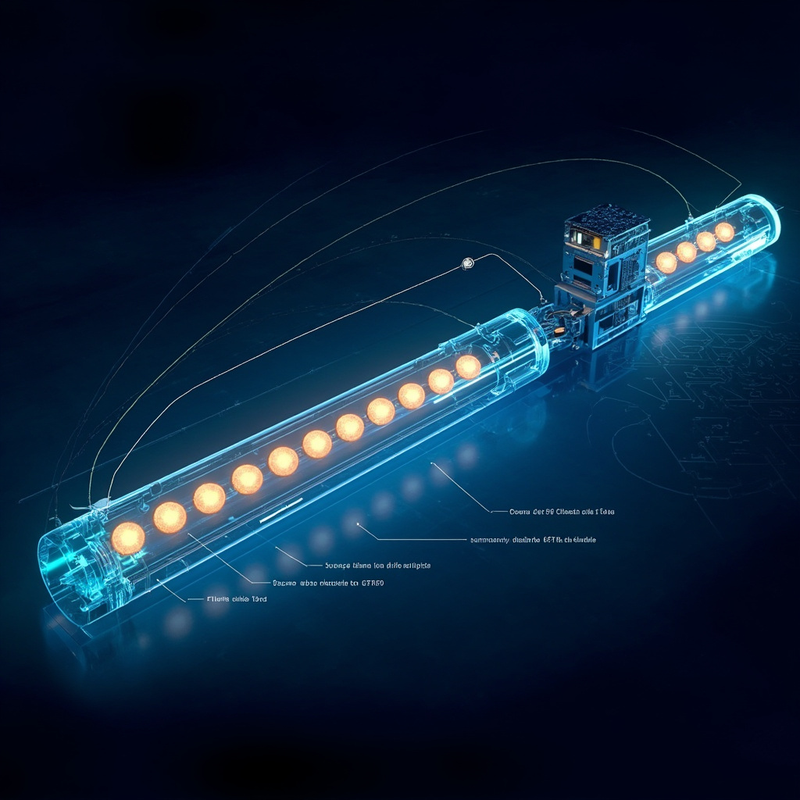


The IonQ trapped-ion system architecture, where surface-code syndromes from a chain of barium ion qubits are routed to a classical decoder that has to keep pace with each gate cycle


On 22 September 2026, IonQ researchers posted a paper that quietly removes one of the most stubborn bottlenecks in quantum computing. Nicolas Delfosse, Min Ye, and Andrii Maksymov showed that a real-time decoder for fault-tolerant quantum error correction can run end-to-end on a single commercial CPU — specifically a 12-core Apple M4 Max laptop chip (arXiv:2608.25027). The benchmark held 408 logical qubits alive across more than a million T gates while adding only 0.02 percent of “stretch” time on top of the quantum run. Until now, every credible demonstration of a useful fault-tolerant quantum computer assumed a fleet of FPGAs, custom silicon, or beefy GPU clusters babysitting the qubits in real time. IonQ just argued, with measurements, that one is enough.

That claim matters more than it sounds. Quantum error correction has been the field’s longest-running promise and its largest engineering gap. A physical qubit loses coherence in microseconds; without constant repair, no useful computation finishes. The standard fix — a surface code — spreads each logical qubit across hundreds or thousands of physical qubits, measures parity checks (“syndromes”) between them, and feeds the syndrome stream to a classical decoder that has to guess which physical qubit flipped and push a correction back before the next gate fires. The classical side has to keep up. If decoding lags behind the quantum cycle, the quantum computer idles. If decoding fails, the logical qubit decays. This real-time constraint has shaped every architecture choice since Peter Shor introduced the first quantum code in 1995 and John Preskill coined the term fault tolerance four years later.

What IonQ did, in plain engineering terms, was throw out the assumption that fault tolerance requires exotic hardware. The team benchmarked a decoder on a workload they call MegaQuOp: roughly a million quantum operations, the threshold at which any algorithm starts to do something useful. Their dual-decoder architecture runs simultaneously on the memory blocks where logical data lives and on magic-state factories where the resource states that produce T gates are distilled. On a trapped-ion machine with a 1–5 millisecond cycle time — slower than superconducting systems but far cleaner per operation — the decoder finished its work in tens of microseconds per round, leaving the qubits essentially idle for the rest of the cycle.

The benchmarks themselves were a tour of the workloads any fault-tolerant computer will face. One was a measurement-induced phase transition circuit: 40 layers of random two-qubit gates compiled into Clifford and T gates at an average cost of 538 T gates per random gate, producing more than a million T gates across 102 logical qubits (arXiv:2608.25027, Tables I–IV). Another was a single sixth-order Trotter step of a disordered Heisenberg model: 64 sites on 102 logical qubits, then 266 sites on all 408. These are not synthetic stress tests; they map onto the early problems a useful quantum computer will tackle — chemistry, materials, condensed-matter simulation. Running them in real time, on commodity silicon, is the kind of result that moves a roadmap from “lab demo” to “engineering project.”

The decoder IonQ used is a variation on the minimum-weight perfect-matching (MWPM) algorithm that has dominated surface codes since Daniel Gottesman published the foundational results in 1997. Each syndrome measurement is a small piece of evidence about where an error happened; the decoder has to connect those pieces into consistent error chains and infer the most likely physical failure. The classical challenge is that the matching problem scales superlinearly with the number of qubits and gates, and the latencies required are measured in microseconds, not milliseconds. The way IonQ kept it tractable was to use a fast, sparse-graph formulation and to split the workload between two decoders running in parallel — one for memory, one for factory — so neither saturates the CPU. The result is a workload that fits comfortably on a 12-core laptop, with cores to spare.

This is also why the “single CPU” claim is not a marketing trick. The alternative — running the decoder on a rack of FPGAs, or on a dedicated ASIC, or on a GPU cluster — has been the design choice at IBM, Google, and Quantinuum. Each approach works in a lab. Each one also adds cost, power, and integration risk at exactly the moment the industry is trying to scale from hundreds to thousands of logical qubits. IonQ is betting that trapped-ion hardware, with its longer cycles and cleaner qubits, lets a conventional CPU do the work that other architectures have had to throw specialized hardware at. If the bet holds, the unit economics of a fault-tolerant machine shift sharply: the classical co-processor stops being a separate procurement line and starts being a server in the rack.

The result lands inside IonQ’s broader architectural plan, the Walking Cat scheme for fault-tolerant trapped-ion computing. Walking Cat is the company’s response to one of the hardest problems in the field: ion traps do not scale the way superconducting lattices do, because all the ions in a trap see the same control fields. Walking Cat threads the qubits through a chain of zones — memory, factory, measurement — moving them physically between regions while the controller keeps the surface code coherent. A lightweight decoder that fits on a CPU is a precondition for that scheme, because every zone transition generates syndromes that have to be processed before the next move. The 408-qubit benchmark is, in effect, the first measurement that says this scheme is implementable at scale.

What changes because of this. The next twelve months in fault-tolerant quantum computing will look different than the last twelve. Demonstrations that used to require a roomful of custom electronics will fit on a workstation; university groups will be able to reproduce them without privileged access to ASIC foundries. For IonQ, the result is a public milestone on the path from 256 physical qubits to “industrial-scale platforms controlling thousands of qubits,” to use the wording of the company’s 22 September announcement. For the field, it is one of those rare engineering results that removes a future constraint rather than adding one. Quantum error correction is no longer waiting for hardware. It is waiting for algorithms — and that, finally, is the right order of operations.


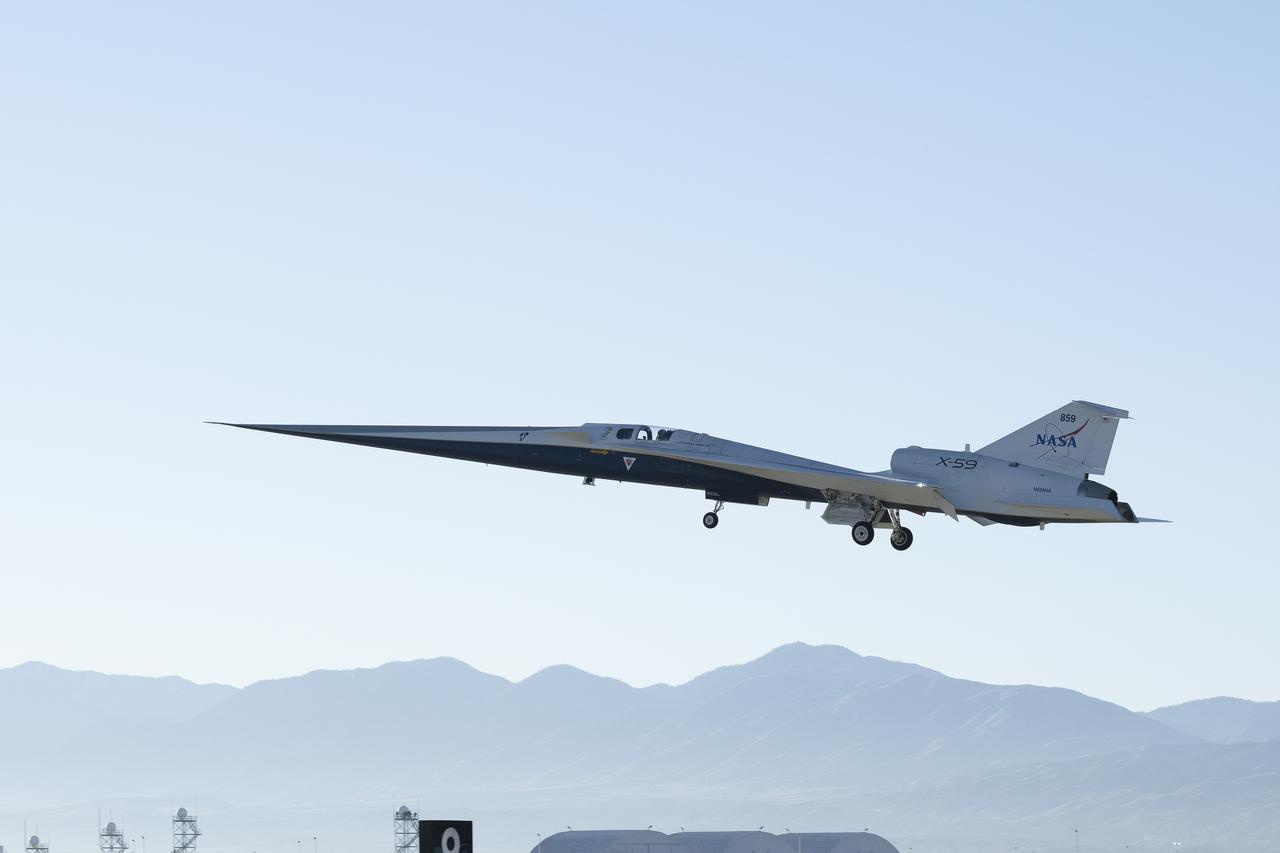
NASA's X-59 quiet supersonic research aircraft taxis under its own power at Lockheed Martin Skunk Works in Palmdale, California, ahead of the September 2026 flight envelope expansion campaign.


In the last week of September, NASA’s X-59 Quesst flew six times in four days. Two flights on September 22, then two more on the 24th, then two more on the 25th. The previous best was four, so the team didn’t just break its own record; it lapped it. One of those flights also pushed the aircraft to Mach 1.53, roughly 1,010 miles per hour, the fastest the X-59 has gone in the year since Lockheed Martin’s Skunk Works rolled it out of the Palmdale paint shop (NASA Quesst blog, October 2 2026). The run brought the program’s total to 38 test flights, and the aircraft is now in a scheduled three-week maintenance stand-down before the next phase of envelope expansion.

The X-59 is, on paper, the most unassuming supersonic jet ever built. It has no forward windshield. It is shaped like a long black arrow with a 33-foot nose spike, the cockpit pushed so far back that the pilot flies by reference to an external vision system, a four-camera array feeding a single high-resolution display. The whole point of the thing is what it does not do: it is designed so that the shock waves it generates at cruise do not coalesce into a single audible boom when they reach the ground. NASA wants the on-the-ground signature to come in around 75 effective perceived noise decibels, a level the agency compares to a car door closing two houses down (NASA, Quesst: The Vehicle; Lockheed Martin X-59 product page).

The reason that number matters has very little to do with engineering aesthetics and everything to do with regulation. Civil supersonic flight over land is, with limited exceptions, banned in the United States under FAA rules that trace directly back to the sonic boom problem. The Concorde, which flew at Mach 2.02 over the ocean and on a few chosen overland corridors at subsonic speeds, retired in 2003 partly because its boom made overland expansion politically impossible. Twenty-three years later, no commercial airliner has flown faster than sound over the contiguous United States. The X-59 is NASA’s bet that a different shape can produce a different shock structure, and that if the shock structure is quiet enough, regulators will eventually rewrite the rule.

The hardware story begins in February 2016, when NASA awarded Lockheed Martin a preliminary design contract under the Low-Boom Flight Demonstrator program. In April 2018, the agency converted that study into a $247.5 million build contract, the largest single X-plane procurement in a generation. Skunk Works in Palmdale, California, did the structural work. NASA Langley ran an 8%-scale model through three weeks of wind-tunnel testing in late 2017, sweeping angle of attack out to 50° and 88° at low speed to map the static margin and dynamic response of the unusually long forebody. The critical design review closed in September 2019, construction crossed the halfway line in late 2020, and the aircraft was rolled out, fully painted, in January 2024 (Lockheed Martin X-59 Quesst, Wikipedia; NASA Quesst gallery).

The first flight came on October 28 2025, subsonic, out of Armstrong Flight Research Center at Edwards Air Force Base in the Mojave. The aircraft stayed subsonic through the early envelope, and on April 3 2026 the team flew wheels-up for the first time, reaching 20,000 feet and roughly 460 mph. The first supersonic run came on June 5 2026, and a week later, on June 12, the X-59 reached its design cruise point of Mach 1.4 at 55,000 feet. What the late-September record set adds on top of those milestones is volume: not a single new speed or altitude, but the demonstrated ability to turn an experimental one-off into something that flies like a working test article, twice a day, on back-to-back days.

The underlying physics the aircraft is built to exploit is called Mach cutoff shaping, and it is older than the X-59 by several decades. A supersonic aircraft generates two main shock waves, one from the nose, one from the tail, and in a conventional shape those shocks hit the ground as two closely spaced impulses that the ear fuses into a single boom. The trick is to design the airframe so that the upper-frequency components of the pressure signature are refracted upward by the natural temperature gradient of the lower atmosphere, never reaching the surface. The rule of thumb is that a ray of the shock will be turned away from the ground if the local sound speed increases faster than the local Mach number falls as the ray climbs. In practice, that means the X-59 has to be flown within a tight band of altitude and speed; outside that band, the rays bend back down and the boom returns.

The airframe itself encodes the same idea geometrically. The 33-foot nose is shaped to spread the nose shock over a longer distance, lowering its peak overpressure. The planform is built around a long, thin fuselage with a single low-sweep wing and a horizontal tail deliberately set high enough to keep the tail shock from merging with the wing shock. Wind-tunnel Schlieren imaging in 2018 confirmed the resulting pressure signature on the ground: a rise time of about 6 milliseconds and a peak overpressure of about 0.5 pounds per square foot, low enough that listeners describe the event as a thump rather than a bang (Sonic boom, Wikipedia, Mach cutoff references; CNN, August 6 2026).

The reason nobody has been able to demonstrate this in commercial service yet is the public response. A 75 EPNdB thump is in the same A-weighted decibel range as a dishwasher running in the next room, but supersonic cruise would put that thump over populated areas that have never heard anything louder than a turboprop. To find out what people actually think, NASA plans community overflight tests in 2026 and 2027, dropping F/A-18 Hornets into shallow dives from 50,000 feet to reproduce the X-59’s signature without the X-59, then asking residents to rate the noise. The agency needs that data to take to the International Civil Aviation Organization’s Committee on Aviation Environmental Protection, which sets the supersonic noise standard, and to the FAA, which would have to amend 14 CFR Part 91 to permit overland cruise. Without that amendment, an aircraft that thumps instead of booms is still illegal to fly over Denver.

The next three weeks of maintenance, after the record run, are scheduled around exactly that preparation. When the X-59 returns to the air, the team plans to expand the flight envelope further before the first community-response flights. Whether the data ultimately change ICAO and FAA rules is not a question the engineers can answer; they can only build the airframe that makes the question worth asking. The September record tells you how far that build has come: from a concept on a Lockheed whiteboard a decade ago, to an aircraft that can fly two missions a day for three days in a row, faster than any civil airplane has flown over the United States in a generation.


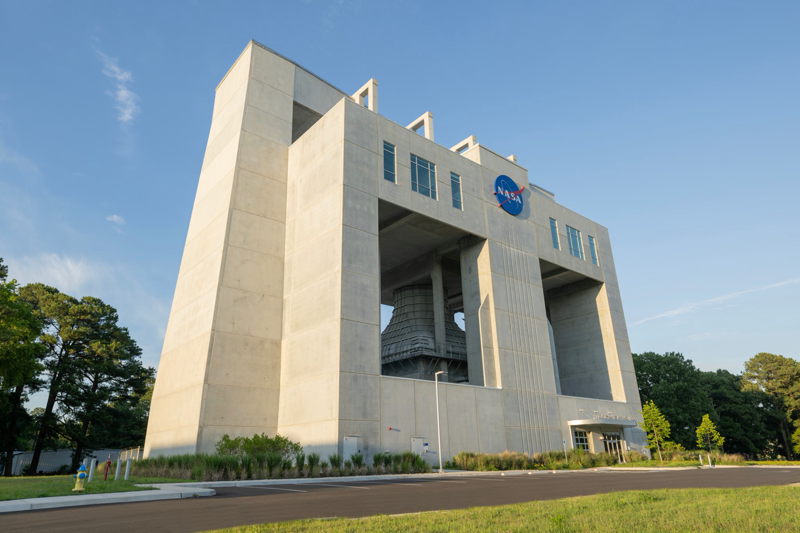
NASA's first new wind tunnel in 40 years opens at Langley. Image: 2026 08 01 flight dynamics research facility.


For more than 100 years, the wind tunnels at NASA’s Langley Research Center have shaped how aircraft fly and how spacecraft return to Earth. On July 31, 2026, the agency opened the Flight Dynamics Research Facility (FDRF), the first major wind tunnel NASA has built in more than 40 years. At 140 feet tall and roughly 25,000 square feet, the new facility in Hampton, Virginia, replaces two of the center’s oldest test rigs, the 1939 12-Foot Low-Speed Tunnel and the 1941 20-Foot Vertical Spin Tunnel, with a single vertical tunnel that can run faster, larger, and more detailed tests than either of its predecessors.

The opening is more than a ribbon-cutting. It is the first time in a generation that NASA has stood up a brand-new wind tunnel at all, and the FDRF arrives at a moment when the agency is preparing to return astronauts to the Moon, send a rotorcraft to Titan, and design aircraft for Mars.

Wind tunnels are the workhorse of every flight program that has ever flown. Before a new aircraft shape, a reentry capsule, or a supersonic body is committed to metal, engineers drop a scale model into a moving column of air and watch how it behaves. The data from those tests feeds the simulations that predict how the full-scale vehicle will handle turbulence, control inputs, parachute deployment, and spin recovery.

Langley in particular has been a center of that work since the NACA era. The 20-Foot Vertical Spin Tunnel was the only operational tunnel of its kind in the Western Hemisphere that could run free-spin tests on dynamically scaled aircraft models, and according to the NASA Langley Research Directorate and the agency’s facility page for the VST, nearly every USAF and USN fighter, trainer, and attack aircraft since World War II has been tested there. The 12-Foot Low-Speed Tunnel, which began operations in 1939, hosted everything from biplane-era stability studies to the X-29 forward-swept-wing demonstrator, the X-31 Enhanced Fighter Maneuverability aircraft, the X-59 quiet supersonic research plane, and the aeroshell for NASA’s Dragonfly rotorcraft now being prepared for a flight to Saturn’s largest moon.

Both tunnels were deactivated last year. Replacing them with a single facility that consolidates the capabilities of two NACA-era buildings is a deliberate move toward a more flexible, more efficient research platform, and a hedge against the maintenance burden of running machines that were already past their design lifetime.

On Friday morning, NASA Administrator Jared Isaacman, Langley Center Director Dr. Trina Dyal, U.S. General Services Administration Administrator Edward C. Forst, and a phalanx of Virginia state and local officials cut the ribbon on the FDRF at NASA Langley. The 140-foot building, the fourth new facility GSA has delivered to NASA under Langley’s 20-year campus revitalization plan, was built in partnership with GSA to replace aging infrastructure with an energy-efficient design that should reduce maintenance costs for the next several decades.

The FDRF’s signature feature is its vertical test section, where air moves upward through a 20-foot-diameter chamber, the largest such chamber ever operated at Langley. A model is dropped into the rising airflow and either flies freely to study stability and control, or is mounted on a rig to measure forces and moments directly. The fan system behind that airflow consists of four 750-horsepower motors, each driving a 14-foot-diameter, eight-bladed carbon fiber fan. Combined, the system can push the wind to 117 miles per hour, roughly twice the top speed of the two facilities it replaces, and enough to lift heavier scale models for free-flight simulations of full-scale vehicles flying at high altitude. That includes reentry capsules coming back from space.

The $57 million facility, per local coverage of the ribbon-cutting, is managed under the Aerosciences Evaluation and Test Capabilities portfolio in NASA’s Aeronautics Division, and its research portfolio is already mapped out. Engineers will use it to validate X-plane designs, study autonomous and drone flight, refine entry, descent, and landing systems for the Artemis program, and gather data for hypothetical Mars aircraft. Six wooden fan blades and the central metal fan hub from the 1939 12-Foot tunnel are on display inside the new control room; the lobby carries a timeline of both legacy facilities, with historic test models flanking the entrance.

A vertical wind tunnel is built around a deceptively simple idea. A model is dropped into a rising column of air, and the lift from that column holds the model aloft in the same way a wing’s lift holds an aircraft in the sky. By adjusting the airspeed and the model’s attitude, researchers can recreate the forces a real vehicle would feel in flight, including the asymmetric, unstable conditions of a stall or spin, without ever risking the full-scale vehicle. The original 20-Foot VST, which was designed to study stall and spin characteristics after deadly postwar accidents, used exactly this approach. Engineers hand-launched models into the rising airstream to evaluate how aircraft behaved when they lost lift.

The FDRF keeps the same physics but scales it up. The 20-foot test section admits more air around each model, which improves data accuracy and allows larger, more detailed test articles. The doubled airspeed means the tunnel can simulate higher-altitude flight regimes, where thinner atmosphere makes aerodynamic testing harder. Carbon fiber fan blades replace the heavier metal blades of the legacy tunnels, so the fan can change airspeed quickly during a free-flight test, a key capability for capturing transient events like a recovery from a spin or the deployment of a drogue chute.

Equipment reuse is part of the engineering story. Many of the major test rigs, instrumentation racks, and data systems from the 12-Foot Low-Speed Tunnel have been repurposed for the FDRF, which reduced both cost and the time needed to bring the new facility online. NASA’s Mike Fremaux, the retired chief engineer for Langley’s Intelligent Flight Systems division, who spent 30 years shepherding the project, frames the continuity in human terms as well: “You can’t have one without the other. Not just the buildings, the fans, and the motors, but also the expertise associated with those facilities.”

The facility will support three broad classes of work. First, atmospheric flight: X-planes, autonomous aircraft, military and commercial airframes, and high-altitude long-endurance drones. Second, planetary atmospheric flight: rotorcraft and fixed-wing concepts for Mars and Titan, where Dragonfly is the lead customer. Third, entry, descent, and landing: full-scale drop tests of capsule shapes returning from lunar and deep-space missions, where the FDRF’s 117 mph ceiling and large test section are uniquely well matched to the problem of stabilizing a vehicle that is descending through a thickening atmosphere.

Langley’s new wind tunnel opens with a workload that ranges from the near-term (X-plane and Artemis entry, descent, and landing) to the speculative (Mars aircraft, Titan rotorcraft). It also points to a longer arc. The 12-Foot tunnel that just closed supported 86 years of work, from biplanes to supersonic demonstrators; the VST that closed alongside it supported nearly every U.S. military aircraft since the 1940s. The 25,000-square-foot FDRF is built to do at least as much. The new control room, the lobby timeline, and the wooden fan blades on display are the agency’s way of saying that the next 86 years start now.

The first FDRF test campaigns are expected to begin in the coming months, with Artemis capsule stability work and Mars aircraft concept studies both on the early schedule.


A glowing neural network woven through the open pages of a NASA grant proposal, with the James Webb Space Telescope mirror in soft focus behind it, representing the intersection of peer review and super intelligence in American research


Two days before the second Tuesday in October, the same room at the U.S. Institute of Peace that has hosted peace talks for three decades filled instead with research administrators, lab directors, and the kind of people who can tell you the difference between a Bayesian prior and a proposal deadline. The occasion was the White House Office of Science and Technology Policy’s “Science: A New Golden Age Summit,” convened on October 8, 2026 to translate a July report to the President into a coordinated set of federal science bets. NASA showed up with two of them, and neither one was a new telescope.

The first was a quiet institutional commitment: a coordinated metascience program inside NASA’s Science Mission Directorate, with a permanent expansion of dual-anonymous peer review across the directorate’s research solicitations. The second was a fellowship: ten Genesis Mission Fellows, accelerated doctoral students who will be trained simultaneously in super intelligence and in a traditional NASA mission discipline, and placed inside NASA laboratories to work on real flight programs. Both came wrapped in Isaacman’s framing of a “new Golden Age” but, more usefully, both came with concrete structure: a named review mechanism that already exists, and a fellowship template lifted almost verbatim from a graduate research program that has been running since 2019.

Why does the peer-review expansion matter? The short version is that the agency has been running the experiment for six years and is now extending it. Dual-anonymous peer review, the form NASA Science began piloting in 2020 and folded into the Future Investigators in NASA Earth and Space Science and Technology (FINESST) solicitation in 2024, breaks the link between who writes a proposal and who grades it. Proposers rewrite their science cases to remove identifying details — author names, institution, even the kind of instrument references that flag a specific lab. Reviewers see only the science and the budget. The pilot was launched during the first Trump administration and is, in the agency’s own framing on its Dual Anonymous Peer Review page, a structural response to the cognitive biases Tversky and Kahneman laid out in 1974. The new initiative commits the Science Mission Directorate to expanding that practice further, into more of its Research Opportunities in Space and Earth Sciences (ROSES) programs, and to folding the operational lessons into a coordinated metascience capability that can study its own review outcomes in close to real time.

That is a quieter change than a new flagship, but it lands harder on day-to-day science. ROSES is the pipeline through which the bulk of NASA’s external science gets funded: a single solicitation umbrella that issues dozens of individual program elements each year, ranging from astrophysics theory to Earth-system modeling to heliophysics data analysis. If DAPR is the new default for most ROSES elements, then the median funded investigator — the one whose lab, whose postdocs, and whose instrument pipeline are not famous — is suddenly competing on a more level surface than they were a year ago. The biases that DAPR targets are not exotic. They are the usual ones: prestige-by-institution, halo effects from earlier work, name recognition that follows investigators across subfields. None of these are accusations against individual reviewers. They are properties of a system that puts people in front of proposals and asks them to choose.

The fellowship sits at a different altitude. Genesis Mission Fellows will be doctoral students whose training explicitly couples super intelligence — the federal government’s preferred term for advanced AI systems that can plan and reason across long horizons — with a traditional discipline, the way the original FINESST design already pairs a graduate student with a faculty mentor on a single research question. NASA will support ten such students in the first cohort, working on NASA mission areas at NASA laboratories. The fellowship inherits the bones of FINESST, including its structure as a research grant rather than a traditional fellowship and its $50,000-per-year award size, and bolts on the SI training component. The Department of Energy launched a parallel fellowship structure the same day, aimed at the same kind of dual-competency PhD, with the same general design and a 100-PhD-per-cohort scale, which makes the two programs the first coordinated federal attempt to grow a domestic SI-fluent research workforce rather than rent one from outside.

What makes this a coherent story is the compute underneath it. The White House fact sheet accompanying the announcements lists $2.4 billion in industry commitments to the Genesis Mission Consortium for SI compute and tooling: NVIDIA at $1 billion, AMD at $500 million, OpenAI at $200 million, Anthropic and Google at $150 million each, AMP and Emerald AI at $100 million each, and AWS, Armada, Crusoe, and Micron at $50 million each. That pool is the resource the new fellowships will be trained on, and the resource NASA’s metascience effort will be able to use to study its own review process. It is also the lever that the July expansion of the Genesis Mission pulled: the $5 billion federal commitment that pulled fifteen-plus agencies into the consortium, of which NASA’s two October 8 announcements are the first research-training deliverables.

The engineering question that makes or breaks this is whether the training tracks actually produce researchers who can do original work in their discipline, not researchers who can prompt an SI system about it. The federal design here leans on the rotation model: a doctoral student spends time inside a national lab, time inside an industry partner, and time inside the academic department that granted the degree. The expectation is that the rotation through an industry lab forces the AI work to meet engineering constraints — latency, cost, auditability, integration with real instruments — while the academic time forces it to meet peer-reviewed publication standards. The model is closer to the National Science Foundation’s Graduate Research Fellowships in structure than to anything AI-specific, and that is the point. The novel content is the SI training, not the fellowship scaffolding.

There are real risks. DAPR shifts work onto proposers, who have to rewrite their cases to strip identity, and onto panels, who have to learn to read proposals that read like abstracts. If the rewrite costs more time than the bias reduction saves, the program fails on its own terms. The fellowship, meanwhile, depends on industry partners actually opening their labs to doctoral students, and on academic departments accepting an SI training component that is not yet a recognized subfield. Both are bets about institutional behavior, not just about money.

What changes because of this is the federal science workforce itself. A decade from now, the average NASA principal investigator will be someone who competed for funding under DAPR and probably was reviewed by an anonymous panel rather than a familiar program officer. A cohort of researchers who finished their PhDs with hands-on super-intelligence experience inside a national lab will be the ones writing the next generation of mission proposals. Whether that produces better science depends on details that are still being written into the program’s implementation, but the direction is set. NASA has spent sixty-seven years building tools to look outward. Yesterday it turned two of those tools — peer review and graduate training — on its own house.


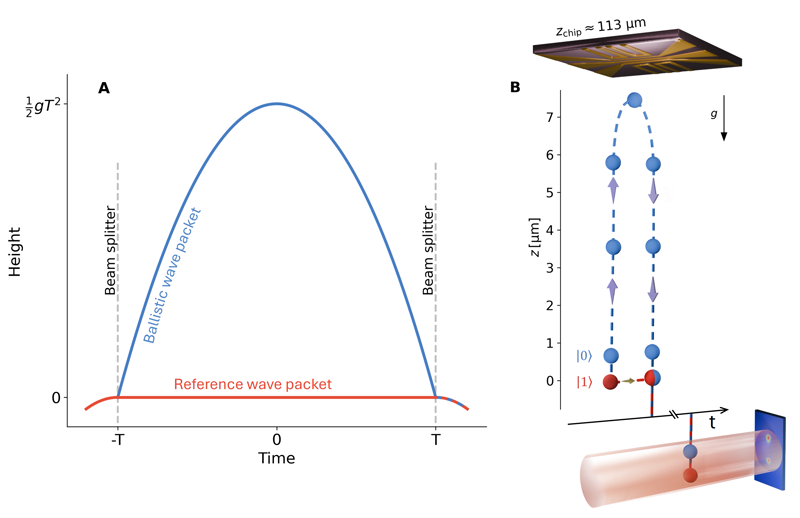
A scientific schematic of the Quantum Galileo Interferometer showing the spacetime trajectories of two wave packets in panel A and the vertical geometry of the atom chip, atom cloud and glass cell in panel B.


In a basement lab at Ben-Gurion University of the Negev, a cloud of about 20,000 rubidium atoms has just answered a question physicists have been asking for nearly a century. Cooled to a few nanokelvin above absolute zero and held still by microscopic wires on a fingernail-sized chip, the atoms were nudged into a quantum superposition in which one half of the cloud rose a few micrometres and fell back under gravity while the other half stayed put. When the two halves were brought back together, the interference pattern between them showed a clean phase shift, and that phase shift matched Einstein’s prediction to within 2.5 percent.

The result, published in Science Advances on 2 September 2026 by Dobkowski, Folman, Penrose, Vedral, Schleich and a dozen other collaborators, is the first direct measurement of the quantum phase accumulated by a freely falling particle. It is also a fresh check on Einstein’s equivalence principle, the assumption that gravity disappears for an observer in free fall. The principle works fine for billiard balls and spacecraft. Until now, no one had checked whether it still works when the falling object is in a quantum superposition of two places at once, which is what the Ben-Gurion group, along with partners at Oxford and Ulm, set out to do. That the check matters at all is because general relativity and quantum mechanics describe the universe with completely different mathematical machinery, and they have resisted every attempt to combine them for almost a century. Most attempts to unify the two assume, implicitly, that the equivalence principle still applies at quantum scales, and this result is the first empirical reason to believe that assumption is correct.

Building the right kind of interferometer took the Folman group years. Ordinary atom interferometers, which have existed since the early 1990s, can compare two paths that both involve motion, one slightly higher than the other or one slightly accelerated with respect to the other. What they cannot do is compare a path that is genuinely free of forces against a path that is held artificially still, which is exactly the situation an equivalence-principle test requires, as Ars Technica reported on 11 September 2026. The team called the new device the Quantum Galileo Interferometer, or QGI, in honour of Galileo’s original observations of free fall, and the underlying method is laid out in detail on arXiv.

Inside a glass cell held under vacuum, a few micrograms of rubidium-87 gas is cooled into a Bose-Einstein condensate, a quantum state in which all the atoms share a single wave function. The condensate floats about 113 micrometres beneath an atom chip, a flat substrate etched with microscopic current-carrying wires that paint the surrounding space with carefully shaped magnetic fields. The chip itself is mounted upside down, with the wires facing the atoms, so the magnetic gradient can levitate the condensate in place. The whole apparatus is small enough to fit on a desk, which is part of why a single lab group could afford to spend years getting it to work, but the measurement it produces has implications for the largest questions in fundamental physics.

The reason it took so long is that interference, the property the experiment depends on, is fragile. Interference only appears when there is no way, even in principle, to tell which path a particle took; any measurement that distinguishes the two paths destroys the quantum superposition and forces the particle to behave like a localised classical object. Wave packets that have fallen under gravity are moving fast, while stationary wave packets are not, and that difference in speed is itself information about the path, so a naive setup would never produce an interference pattern at all. Folman and his colleagues had to design a sequence of pulses that cancels the path information without cancelling the phase information they actually wanted to measure.

Once the atoms are ready, the experiment unfolds in four microwave and magnetic pulses, summarised in Figure 1 of the arXiv preprint. The first pulse puts every atom into a superposition of two spin states: one that feels the magnetic field and one that does not. A magnetic pulse then kicks the magnetically sensitive state upward, launching it on a ballistic arc, while the insensitive state stays put. A second microwave pulse swaps the roles: the rising atom becomes magnetically insensitive and falls freely under gravity, while the stationary atom becomes magnetically sensitive and is held hovering by a field tuned to exactly cancel its weight. A final magnetic pulse acts as a parachute, gently braking the falling atom so it lands back where it started, where the two halves of each atom can interfere. At their farthest apart, the two trajectories were about 7.5 micrometres apart and the longest free-fall time was about two milliseconds. The interference pattern at the end of each run depends on the phase that the falling path accumulated during its trip. The longer the fall, the more phase, and the chirp in those oscillations is the signature the theory predicts. As the team lengthened the fall duration, the measured phase grew in proportion to gT squared, exactly as general relativity predicts for a classical trajectory and as the equivalence principle predicts for a quantum one.

The interpretation is the part that makes the result satisfying rather than just technical. From the perspective of the falling atom, there is no gravity at all: it is in free fall, the way an astronaut is in orbit, and its wave should pick up no extra phase. From the perspective of the laboratory, the same atom is being pulled downward at 9.81 metres per second squared, and its wave should accumulate a phase proportional to gT squared. The two views should agree, and Einstein’s equivalence principle says they do. The QGI measures the lab-frame phase directly and shows that, to within the experiment’s precision, the falling quantum wave accumulates exactly the phase that gravity predicts. As The Brighter Side reported, the measurement is a checkpoint on the boundary between two theories that physicists are still trying to merge. The result does not say which, if either, will eventually have to give way, but it sets a baseline that future versions of the experiment will sharpen.

A first upgrade is already under construction at Ben-Gurion. The next-generation QGI is being designed to put nanodiamonds, particles roughly ten orders of magnitude heavier than rubidium atoms, into the same kind of superposition. Nanodiamonds sit in a mass range where several competing quantum-gravity models and collapse theories make different, falsifiable predictions, and putting a nanodiamond in superposition for any usable time has not yet been achieved. Folman told Ars Technica that his lab is already working on a design that he hopes will let the heavier experiment run within the next four or five years, though he was clear that it is “a very, very challenging project.” If it works, the team would have a direct laboratory test of the boundary between quantum mechanics and gravity in a regime where competing theories actually disagree.

In the meantime, the September result establishes something that has been assumed but not shown. When an atom falls, the quantum phase it picks up is the phase that gravity, applied classically, would predict. The equivalence principle, written down by Einstein in 1907 and tested for classical masses by Galileo, Newton, Bessel and Eötvös, has now been demonstrated, in a single careful experiment, for a particle that is in two places at once. The result does not resolve the long-standing tension between general relativity and quantum mechanics, but it removes one of the most reasonable doubts about how the two might eventually be unified: that the equivalence principle, which is foundational to general relativity, might quietly break at quantum scales. It does not appear to.