
OrbitalHub

Where curiosity reaches escape velocity.

Domain is for sale. $50,000,000.00 USD. Direct any inquiries to contact@orbitalhub.com.

Archive for the Space Telescopes category


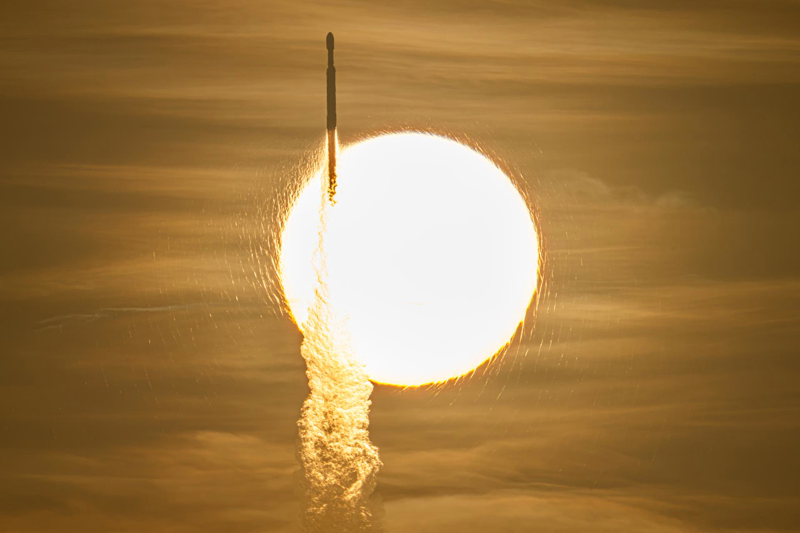
A SpaceX Falcon Heavy with NASA's Roman Space Telescope transiting the rising Sun, captured by photographer John Kraus during the August 30, 2026 launch from Kennedy Space Center Launch Complex 39A. (NASA/John Kraus source image)


A SpaceX Falcon Heavy climbed off Launch Complex 39A at 7:26 a.m. EDT on Sunday, August 30, 2026, with NASA’s Nancy Grace Roman Space Telescope pinned under its shroud. About seven minutes later, the ground team at Goddard Space Flight Center received the first telemetry, and 31 minutes after liftoff the second stage separated cleanly from the observatory. Photographers caught the moment the rocket transited the rising Sun (Figure 1), the exhaust plume drawing a line straight through the disk as the booster climbed through the morning sky over Kennedy Space Center. Roman is now on a three-month cruise to a halo orbit around the second Sun-Earth Lagrange point, about 1.5 million kilometers from Earth, where it will start a five-year infrared survey of the universe that NASA Administrator Jared Isaacman said was delivered “ahead of schedule and on budget”.

The launch marks the start of an observatory that has been on the astronomy community’s wish list since 2010. Roman will look for the same physics the Nancy Grace Roman mission was conceived to probe: dark energy, dark matter, and planets in other star systems. Three of the things it does best, drawing on a 2.4-meter primary mirror donated by the National Reconnaissance Office in 2012 and an infrared camera that the same NASA press release puts at 300 megapixels, have not been done by any previous space telescope in this combination.

The headline number is the field of view. Roman’s Wide Field Instrument images 0.28 square degrees per pointing, more than a hundred times the sky area Hubble’s cameras can capture in a single exposure. Roman is expected to survey the same area roughly a thousand times faster than Hubble, according to NASA’s press kit, which is what enables a five-year mission that returns 1.4 terabytes of data every day, a rate NASA calls the highest of any astrophysics mission. The WFI also runs 18 4K-scale infrared detectors, each about the size of a saltine cracker, which gives the instrument enough resolution to both find exoplanets via gravitational microlensing and map the same patches of deep field at multiple wavelengths.

The trade-off is one the Wide Field Infrared Survey Telescope (WFIRST) study teams accepted as long ago as 2012, when the National Reconnaissance Office offered two spare 2.4-meter reconnaissance telescopes to NASA. The optics have the same diameter as Hubble but a much shorter focal length, so the optical design supports a wide field of view, per the Wikipedia summary of the AFTA-era concept. That same optical design is what makes the coronagraph possible. The Coronagraph Instrument will demonstrate starlight suppression at the part-per-billion level, the kind of technology that a future Habitable Worlds Observatory would need to actually image Earth-like planets rather than infer them from transits.

The mission sits in a quiet but real moment for cosmology. The original WFIRST concept was the top recommendation of the National Research Council’s 2010 Decadal Survey, and Congress funded it across multiple administrations despite at least one cancellation attempt. The 2026-08-30 launch closes that arc.

Sunday’s countdown ran cleanly. The Falcon Heavy lifted off at 11:26:04 UTC from Pad 39A, per the Wikipedia entry’s launch parameters, separating the observatory 31 minutes into the flight. The ground controllers at Goddard received the first telemetry packet seven minutes after launch, and the booster recovery proceeded normally, with the two side boosters returning to the Cape for refurbishment. About an hour and 23 minutes after liftoff, the spacecraft confirmed that its solar panels and the lower instrument sun shade had deployed.

The Near Space Network’s ground stations and relay satellites carried the first part of the flight, and about 70 minutes in the Deep Space Network took over, picking up Roman’s signal first at the Canberra Deep Space Communication Complex in Australia and then handing off to Madrid and Goldstone, according to NASA’s August 30 press release. Roman’s high-gain antenna, the deployable aperture cover, the first mid-course correction and the Coronagraph Instrument’s power-on are queued up over the next several days. The Wide Field Instrument will activate a few weeks into the mission.

The mission is the fourth primary payload SpaceX has launched for NASA on a Falcon Heavy, according to the same release, and the agency moved the date up to fit the telescope’s early completion. After the in-space commissioning window, NASA expects the first science images in early 2027. The institute partners listed in the press release include the Space Telescope Science Institute (STScI) in Baltimore, NASA’s Jet Propulsion Laboratory, Caltech/IPAC in Pasadena, BAE Systems, L3Harris and Teledyne, with contributions from ESA, JAXA, the French CNES and the Max Planck Institute for Astronomy.

Roman shares most of its optical structure with an older mission. The 2.4-meter primary, the same diameter as Hubble’s, was originally built by Harris Corporation for a reconnaissance satellite and was offered to NASA in 2012 for the WFIRST-AFTA study. The optical design is a three-mirror anastigmat with an f/7.9 focal ratio and a wavelength range of 0.48 to 2.30 micrometers, spanning visible blue into near-infrared, per the Wikipedia infobox on the telescope. That range covers most of the light that escapes from distant galaxies, so a wide-field infrared survey has the same statistical power per square degree that Hubble got with smaller exposures.

The Wide Field Instrument is the instrument that actually does the survey. Its focal plane is a 4×4 array (with two corners intentionally blank) of 18 H4RG-10 mercury-cadmium-telluride detectors built by Teledyne, as described in the mission history. The detectors deliver 300.8 megapixels at 0.11 arcsecond resolution. The filter wheel carries eight science filters plus one wide band and two slitless spectroscopy elements (a grism and a prism), which means the same exposure can be used for photometry or for low-resolution spectra.

The Coronagraph Instrument is the new piece. It operates between 575 and 825 nanometers, with two deformable mirrors and a focal-plane mask to suppress starlight. The instrument targets a 1e-9 contrast ratio, the most aggressive starlight suppression NASA has flown, with the goal of imaging Jupiter-like planets at angular separations as small as 0.15 arcseconds from their host stars. The early-2010s orbit trade study left L2 as the eventual choice for thermal stability and a calmer radiation environment, per the mission history. Communications run over S-band for command and Ka-band for science downlink at 290 Mbit/s.

The first science images arrive in early 2027, after about three months of calibration and instrument commissioning at L2. Astronomers will get their first look at the three Core Community Surveys (the High-Latitude Wide-Area, High-Latitude Time-Domain, and Galactic Bulge Time-Domain Surveys), which were selected by the Roman Observatory Telescope Allocation Committee in April 2025. Citizen scientists and machine-learning pipelines will help triage the 1.4 terabyte per day stream that NASA expects once the mission is operational, since no human team can read that volume in real time.

NASA’s Roman team has set hard follow-up milestones: deployable aperture cover, high-gain antenna and the first mid-course correction are due in the first week; the Coronagraph Instrument’s power-on is the early-September checkpoint; the Wide Field Instrument activates a few weeks into the cruise. Watching those deployments land is the first thing to look for in the coming weeks, with first light as the second.


Roughly 1,000 light-years from Earth, astronomers have identified an enormous protoplanetary disk surrounding a young star system, a structure so large that it extends nearly 400 billion miles across. Nicknamed “Dracula’s Chivito,” the disk is now recognized as the largest protoplanetary disk ever imaged in visible light, offering astronomers a rare opportunity to study the early stages of planetary system formation on an unusually large scale.

The name itself reflects the backgrounds of the researchers involved in the discovery. One astronomer came from Transylvania, historically associated with Dracula, while another came from Uruguay, where the chivito sandwich is considered a national dish. Despite the playful nickname, the scientific significance of the object is substantial. The disk provides a direct observational window into the processes that shape young planetary systems and may help researchers better understand how systems like our own Solar System formed billions of years ago.

The observations were made using the Hubble Space Telescope, whose optical resolution and long operational history continue to make it one of the most important instruments for studying circumstellar environments. Protoplanetary disks are difficult observational targets because they are composed largely of diffuse gas and dust surrounding extremely bright young stars. Imaging them requires both high spatial resolution and careful control of scattered light.

A protoplanetary disk forms during the early stages of star formation. As a molecular cloud collapses under gravity, conservation of angular momentum causes the infalling material to flatten into a rotating disk around the newly forming star. Over time, dust grains within the disk collide and aggregate into progressively larger bodies, eventually forming planetesimals and planets. Gas dynamics, turbulence, magnetic fields, and gravitational interactions all influence this evolution.

Dracula’s Chivito stands out primarily because of its scale. The disk extends approximately 40 times farther than the diameter of our Solar System measured out to the Kuiper Belt. At these distances, the physical conditions differ substantially from those in the inner regions of more typical protoplanetary disks. Material density decreases, orbital periods become extremely long, and interactions with the surrounding interstellar environment may become increasingly important.

The disk was observed nearly edge-on from Earth’s perspective, a geometry that is scientifically useful because it enhances visibility of the dust structure. In edge-on systems, the dense central plane of dust blocks direct starlight, allowing the surrounding scattered light to reveal the disk’s shape and vertical structure. Hubble’s imaging shows a dark central lane surrounded by extended illuminated material, tracing the distribution of dust particles suspended above and below the disk midplane.

The science behind these observations involves the interaction between starlight and microscopic dust grains. Dust particles scatter and absorb light depending on their size, composition, and spatial distribution. By analyzing the brightness and structure of the scattered light, astronomers can estimate properties such as particle size distribution, disk thickness, and density gradients.

One important question concerns the stability of such a large disk. At extreme distances from the central star, the gravitational influence of the star weakens, making the outer regions more susceptible to disruption from nearby stars, interstellar gas clouds, or internal instabilities. Studying these outer regions helps researchers test models of disk evolution and understand the limits of planet formation processes.

The observations may also provide insight into how giant planets form at large orbital distances. Traditional models of core accretion become less efficient farther from the star because material densities are lower and orbital timescales are longer. Alternative formation mechanisms, such as gravitational instability within the disk itself, may play a larger role in these environments. Detailed imaging of large disks like Dracula’s Chivito helps constrain these theoretical models.

From an engineering perspective, capturing this image required both the optical stability of Hubble and advanced image-processing techniques. The telescope operates above Earth’s atmosphere, avoiding atmospheric turbulence that would otherwise blur fine structures. Hubble’s pointing system maintains extremely stable alignment during long exposures, allowing faint scattered light from the disk to be resolved against the much brighter central star.

Image processing is equally important. Observations of circumstellar disks often require subtraction of residual starlight and instrumental artifacts to reveal faint surrounding structures. Calibration procedures remove detector noise, cosmic ray events, and optical distortions. Multiple exposures may be combined to improve signal-to-noise ratio and recover subtle features in the disk.

The scale of the disk also emphasizes the diversity of planetary systems in the galaxy. Early models of planetary formation were strongly influenced by the architecture of the Solar System because it was the only known example. Modern observations have shown that planetary systems exhibit enormous variation in size, orbital structure, and composition. Some contain tightly packed planets orbiting close to their stars, while others possess extended debris structures spanning hundreds of billions of miles.

Dracula’s Chivito contributes to this broader picture by demonstrating that protoplanetary disks themselves can exist at scales much larger than previously observed. Understanding how such systems evolve may help explain the origin of wide-orbit planets and extended debris populations detected around other stars.

The observations also highlight the continued scientific relevance of Hubble more than three decades after launch. Although newer observatories such as the James Webb Space Telescope provide expanded infrared capabilities, Hubble remains highly effective for visible-light imaging of circumstellar structures. The combination of optical and infrared observations allows astronomers to study both scattered starlight and thermal emission from dust, providing complementary information about disk composition and structure.

Future observations may further refine understanding of the system. Spectroscopic analysis could help determine the chemical composition of the disk material, while higher-resolution infrared observations may reveal substructures such as gaps, rings, or asymmetries associated with forming planets. Long-term monitoring could also detect dynamical evolution within the disk over time.

In practical terms, Dracula’s Chivito is a large-scale example of processes believed to have shaped the early Solar System. The disk represents a phase in stellar evolution where gas and dust are actively organizing into more complex structures that may eventually produce planetary systems. By observing such systems directly, astronomers can compare theoretical models with real physical environments.

The discovery provides a detailed observational dataset for studying how stars and planets form together, how disks evolve over time, and how diverse planetary systems can become under different initial conditions.

Video credit: NASA Goddard


With a launch now scheduled for September 2026—well ahead of its required readiness date—Nancy Grace Roman Space Telescope has completed the most critical phase of its development: environmental qualification. These tests are not demonstrations of capability in the scientific sense; they are validations of survivability and stability. A space observatory must operate at the limits of measurement precision, but it must first endure the mechanical and thermal stresses of launch and the transition to the space environment without degradation of performance. The recent test campaign confirms that Roman meets those requirements.

The purpose of environmental testing is to replicate, within controlled facilities, the physical conditions the spacecraft will encounter from liftoff through on-orbit operation. This includes high acoustic loads, structural vibration, and exposure to vacuum and extreme temperatures. Each test isolates a class of stressors, allowing engineers to verify both structural integrity and functional performance under conditions that cannot be fully reproduced in flight until it is too late to intervene.

Acoustic testing simulates the intense sound pressure environment generated during launch. Rocket engines produce broadband acoustic energy that couples into the payload fairing and the spacecraft structure. These pressure waves can induce vibrations in panels, fasteners, and optical assemblies. Roman was exposed to high-intensity acoustic fields in a controlled chamber to validate that its structure, instrument mounts, and fasteners remain within allowable limits. The underlying physics is straightforward: fluctuating pressure fields create dynamic loads on surfaces. The engineering challenge is ensuring that these loads do not excite resonant modes that could amplify motion beyond acceptable thresholds.

Complementing acoustic tests are direct vibration tests. In this phase, the observatory is mounted on a shaker system that applies controlled accelerations across multiple axes. These inputs replicate the mechanical environment of ascent, including engine thrust oscillations and aerodynamic loads transmitted through the launch vehicle. Roman underwent vibration testing while enclosed in a protective clean tent to maintain contamination control for its sensitive optics and detectors. The goal is to verify that structural elements maintain alignment and that subsystems—such as avionics, harnessing, and instrument assemblies—remain functional after exposure. Engineers analyze responses using accelerometers and strain gauges, comparing measured data against predicted modal characteristics from structural models.

A second launch simulation further validates the integrated system response. While individual tests target specific stressors, combined simulations provide confidence that interactions between subsystems do not introduce unexpected behavior. This is particularly important for an observatory like Roman, where optical performance depends on the precise alignment of mirrors and detectors. Even small shifts can affect image quality and calibration.

Thermal vacuum testing addresses the transition from Earth’s environment to space. Once deployed, Roman will operate near the Sun–Earth L2 point, where it will experience a stable but extreme thermal environment and high vacuum. In a thermal vacuum chamber, the observatory is placed under vacuum conditions and subjected to controlled temperature cycles that replicate on-orbit conditions. Radiative heat transfer becomes the dominant mechanism, as convection is absent. Engineers cool the observatory to its operational temperature range and monitor the behavior of materials, electronics, and instruments.

Thermal stability is critical for Roman’s science objectives. The Wide Field Instrument operates in the near-infrared, where detector performance is sensitive to temperature. Variations can introduce noise, alter calibration, and affect measurement accuracy. The thermal design uses a combination of passive elements—such as multilayer insulation and radiators—and active control systems to maintain stability. During testing, temperature sensors distributed throughout the observatory provide data to verify that gradients and absolute temperatures remain within specified limits.

Vacuum conditions also test outgassing and contamination control. Materials used in spacecraft can release volatile compounds in vacuum, which may condense on optical surfaces. Roman’s test campaign ensures that materials and coatings meet stringent cleanliness requirements, preserving optical throughput and minimizing stray light.

Throughout the environmental test sequence, functional testing is performed to confirm that systems operate as intended. This includes powering instruments, validating data paths, and checking command and telemetry interfaces. The philosophy is to verify not only that the observatory survives the environment, but that it remains fully operational after exposure.

The engineering approach relies on a combination of analysis, test, and margin. Structural and thermal models predict how the observatory should respond. Environmental tests provide empirical data to validate those models. Margins are included to account for uncertainties, ensuring that the system can tolerate conditions slightly beyond expected levels. The agreement between test results and predictions is a key indicator of readiness.

The outcome of this campaign is a reduction in programmatic risk. By demonstrating that Roman can withstand launch and operate in space-like conditions, the project confirms that the observatory is ready to proceed toward flight. Advancing the launch date reflects confidence in both the hardware and the verification process.

While the environmental tests do not directly measure scientific performance, they are prerequisites for it. Roman’s primary objectives—wide-field surveys in the near-infrared, studies of large-scale structure, and measurements related to dark matter and dark energy—depend on stable, well-calibrated instruments. The ability to maintain optical alignment, thermal stability, and detector performance is what enables those measurements.

In summary, the environmental qualification of the Nancy Grace Roman Space Telescope demonstrates that the observatory meets the mechanical and thermal requirements of launch and space operation. The combination of acoustic, vibration, and thermal vacuum testing provides a comprehensive validation of its design. With these tests complete and an earlier launch date established, Roman transitions from a development program to a flight-ready observatory prepared to begin its operational mission.

Video credit: NASA Goddard


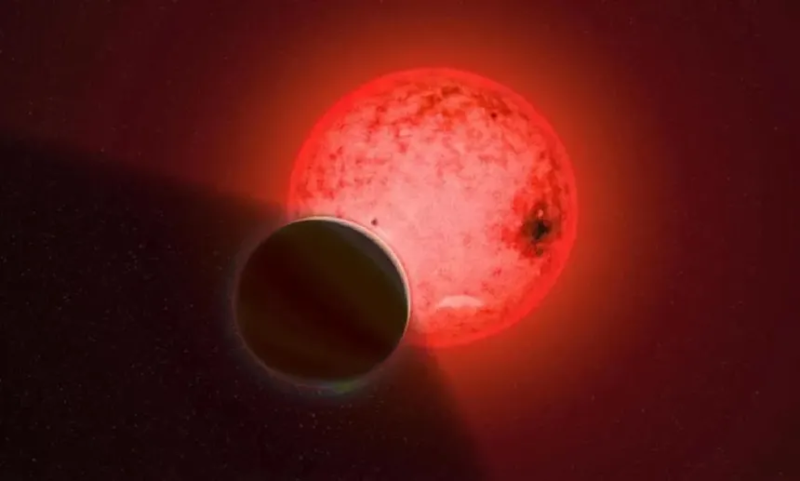
A remarkable discovery announced in early April 2026 has revealed the atmospheric composition of a giant planet orbiting one of the smallest stars known to host such a world, challenging fundamental assumptions about how planets form and evolve around red dwarf stars. The James Webb Space Telescope’s observations of TOI-5205b represent the first detailed atmospheric analysis of a gas giant orbiting a star with roughly 40% of the Sun’s mass, a combination that theorists had considered unlikely to produce massive planetary companions.

TOI-5205b was first identified as a candidate exoplanet by NASA’s Transiting Exoplanet Survey Satellite in 2023, based on the characteristic dimming of its host star when the planet passes between the star and Earth. The planet orbits at a distance of only 0.15 astronomical units from its host star, completing one orbit in approximately 7.8 days. This proximity places the planet well within the standard formation zones where giant planets might be expected, yet the host star’s small size raised questions about whether sufficient material existed in the protoplanetary disk to form such a large planet.

The JWST observations, conducted as part of the Guaranteed Time Observation programs known as GEMS and JEDI, used transmission spectroscopy to analyze starlight that passed through the planet’s atmosphere during transits. The telescope’s infrared sensitivity allowed detection of molecules that would be invisible to shorter-wavelength observations, revealing the presence of methane, hydrogen sulfide, and water vapor in the atmosphere. These findings, published in the Astronomical Journal on April 6, 2026, provide the first detailed chemical inventory of an exoplanet atmosphere around such a small star.

The unexpected result from these observations concerns the metallicity of the atmosphere, which measures the abundance of elements heavier than hydrogen and helium. Giant planets in our solar system show a correlation between metallicity and the mass of their host star, with more massive stars tending to host planets with lower metallicities. TOI-5205b breaks this pattern, showing significantly lower metallicity than expected for a planet of its mass orbiting a star of this size.

This discrepancy suggests that our current models of planet formation may be incomplete, particularly for the environment around small red dwarf stars. The leading hypothesis suggests thatTOI-5205b may have formed through gravitational instability in the protoplanetary disk rather than the core accretion process that built the giant planets in our solar system. This alternative formation pathway would produce planets with different compositions than those formed through core accretion.

The host star itself, known by its catalog designation TOI-5205 (and also as Gliese 4114 in some listings), is a red dwarf with a surface temperature of approximately 3,400 degrees Celsius, less than half the Sun’s photospheric temperature. The star’s small size means that TOI-5205b, despite being somewhat larger than Jupiter, appears as a relatively large silhouette against the stellar disk during transits, enabling the transmission spectroscopy that revealed its atmospheric composition.

The GEMS and JEDI observation programs represent substantial investments of JWST time, allocated to ensure comprehensive studies of exoplanet atmospheres. These observations build on earlier findings from the telescope, including discoveries of water vapor, carbon dioxide, and other molecules in the atmospheres of hot Jupiters and sub-Neptunes. The TOI-5205b observations add a new category of worlds to this growing inventory.

Transmission spectroscopy works by comparing the spectrum of starlight during a transit to the spectrum when the planet is not transiting. The difference between these spectra reveals absorption features from molecules in the planet’s atmosphere, which remove specific wavelengths from the light that passes through. The depth of these absorption features increases with the scale height of the atmosphere, making expanded atmospheres easier to detect.

JWST’s infrared instrumentation is particularly well-suited to this work because many important molecules have strong absorption features at longer wavelengths. Water vapor, methane, and carbon dioxide all have characteristic signatures in the mid-infrared that can be detected with the telescope’s spectroscopy instruments. The resolution of these instruments allows individual spectral lines to be resolved, enabling precise identification of the molecules present.

The challenge of detecting atmospheres around small planets increases with decreasing planet size. Earth-sized planets have atmospheres with scale heights too small to detect with current technology, making the slightly larger sub-Neptunes and super-Earths the smallest worlds whose atmospheres can be characterized. TOI-5205b, being larger than Jupiter, provides an ideal target for these studies.

The detection of hydrogen sulfide in TOI-5205b’s atmosphere marks only the second known instance of this molecule in an exoplanet atmosphere. On Earth, hydrogen sulfide is associated with biological processes in certain environments, though its presence in an exoplanet atmosphere does not indicate life—only that sulfur chemistry is active in the planetary environment.


Astronomy often reveals the universe in slow motion. Galaxies drift apart over billions of years, stars evolve over millions, and planetary systems assemble over spans so vast that human observers usually see only the end results. Yet every once in a while, the cosmos offers a fleeting glimpse of something far more dynamic. NASA’s Hubble Space Telescope has captured such a moment near the bright star Fomalhaut, observing what appears to be the aftermath of a massive collision between two large bodies in a distant planetary system. It is a rare cosmic accident caught almost in real time, and it offers scientists an extraordinary opportunity to study how planetary systems evolve through violence as much as through calm.

Fomalhaut itself is not an obscure star. Located roughly twenty-five light-years away in the constellation Piscis Austrinus, it is one of the brightest stars visible in Earth’s night sky. Astronomers have long known that Fomalhaut is surrounded by a vast disk of debris composed of dust, ice, and rocky fragments. Such debris disks are thought to be the leftover building materials of planetary systems, similar to the asteroid belt and Kuiper Belt in our own Solar System. Within these disks, countless objects—from dust grains to planet-sized bodies—move along intersecting paths, occasionally colliding and reshaping the architecture of the system.

For years, astronomers suspected that something unusual was happening inside the Fomalhaut system. In 2008, Hubble captured images of what appeared to be a faint object moving within the debris disk, initially thought to be a possible exoplanet. However, as scientists continued to observe the region over the following years, the object behaved strangely. Instead of remaining compact like a planet, it gradually expanded and faded. The mysterious cloud appeared to grow larger while becoming dimmer, suggesting that it was not a solid body at all, but rather an expanding cloud of dust created by a catastrophic collision.

The idea that Hubble might have witnessed the aftermath of a massive collision between two planetary building blocks was both surprising and exciting. Planetary collisions are thought to be common during the early stages of solar system formation. Our own Moon likely formed when a Mars-sized body struck the young Earth billions of years ago. But observing such an event directly in another star system has proven extraordinarily difficult. The distances involved, combined with the relatively small size of planetary bodies, usually make these collisions invisible to telescopes. What Hubble saw near Fomalhaut may represent the first clear observation of the debris from a large-scale collision unfolding over time.

Understanding this event requires both scientific insight and remarkable engineering. The Hubble Space Telescope, launched in 1990 and operating more than 500 kilometers above Earth, was designed to observe the universe without the distortions caused by Earth’s atmosphere. Its 2.4-meter mirror collects light with extraordinary clarity, and its suite of cameras and spectrographs allows astronomers to study objects across multiple wavelengths. Over the decades, upgrades performed by astronauts during servicing missions transformed Hubble into one of the most capable astronomical observatories ever built.

The observations of the Fomalhaut collision relied on Hubble’s ability to capture extremely high-contrast images. Observing faint structures near bright stars is notoriously difficult because the star’s glare overwhelms nearby objects. To overcome this problem, Hubble uses a technique called coronagraphy. A coronagraph blocks the intense light from a star, allowing astronomers to see faint material orbiting nearby. With this method, Hubble was able to reveal the faint expanding cloud of debris around Fomalhaut.

By comparing images taken over several years, scientists noticed that the dust cloud was moving outward and expanding. Careful analysis showed that the cloud’s growth was consistent with the debris from a collision between two large objects, likely hundreds of kilometers in diameter. When such bodies collide at high speeds—often several kilometers per second—the impact releases enormous energy. Instead of forming a single merged object, the bodies can shatter, producing a spray of fragments and dust that expands outward into space.

Computer models helped researchers reconstruct what might have happened. In the dense debris disk surrounding Fomalhaut, two large planetesimals—primitive building blocks of planets—may have crossed paths. The collision would have instantly vaporized or shattered large portions of both bodies, sending material outward in a rapidly expanding cloud. Over time, radiation from the star and interactions with surrounding dust gradually disperse the debris, causing the cloud to expand and fade until it eventually becomes indistinguishable from the background disk.

What makes the Fomalhaut event so compelling is that it offers a glimpse of the chaotic processes that shape planetary systems. Planet formation is often described as a gradual process in which small particles stick together and slowly grow into larger bodies. Yet collisions play an equally important role. Throughout the history of a planetary system, impacts can destroy worlds as easily as they create them. Asteroids collide, planetary embryos merge, and occasionally entire planets can be reshaped or even obliterated.

Observations like this one help astronomers understand how often such events occur and how they influence the final arrangement of planets. The Fomalhaut debris disk is thought to resemble the early Solar System billions of years ago, when Earth, Mars, and the other rocky planets were still forming. Watching a collision unfold in that distant system is almost like peering back into our own planet’s past.

The event also highlights the importance of long-term observations. Hubble did not capture a single dramatic explosion. Instead, it recorded subtle changes over many years, allowing scientists to piece together the story gradually. The expanding cloud revealed itself through patience and persistence, reminding us that astronomy often advances through careful observation rather than sudden discovery.

Even after more than three decades in orbit, Hubble continues to produce groundbreaking science. Its ability to track faint objects over long periods makes it uniquely suited to studying phenomena like the Fomalhaut collision. Newer observatories such as the James Webb Space Telescope may provide additional insights by observing the system in infrared wavelengths, where warm dust and debris are easier to detect.

For now, the expanding cloud around Fomalhaut remains a rare window into the violent processes that shape planetary systems. It reminds us that the serene appearance of the night sky hides a universe filled with collisions, transformations, and dramatic events. Somewhere in the distant reaches of that system, two ancient bodies met in a catastrophic encounter, scattering fragments across space. And thanks to the engineering triumph of the Hubble Space Telescope, humanity has been able to witness the aftermath of that cosmic crash unfolding light-years away.

Video credit: NASA Goddard


The James Webb Space Telescope continues to transform our understanding of galactic structure and evolution, with researchers announcing multiple significant discoveries in early 2026. New observations have revealed both stunning visual details of nearby spiral galaxies and unexpected findings about galactic architecture in the early universe.

A team of researchers using Webb data announced the discovery of a barred spiral galaxy existing a remarkably short time after the Big Bang, challenging existing models of galactic formation and evolution. The galaxy, informally designated Alaknanda, shows structural maturity typically associated with galaxies billions of years older. The discovery suggests that physical processes driving galaxy formation, including gas accretion, disk settling, and spiral density wave development, may operate more efficiently than current theoretical models predict.

Dr. Amanda Garfield, an astrophysicist at the University of Pittsburgh and lead author of the study, noted that finding such a well-organized spiral disk at this epoch was unexpected. The bar structure, a linear feature extending from galactic centers that helps funnel material inward, was thought to require substantial time to develop through gravitational interactions and dynamical evolution.

The observations indicate that the universe was capable of producing structurally mature galaxies much earlier than previously believed. This finding has prompted astrophysicists to reconsider the initial conditions and feedback mechanisms involved in galaxy formation, potentially requiring revisions to cosmological simulations that model the evolution of cosmic structure.

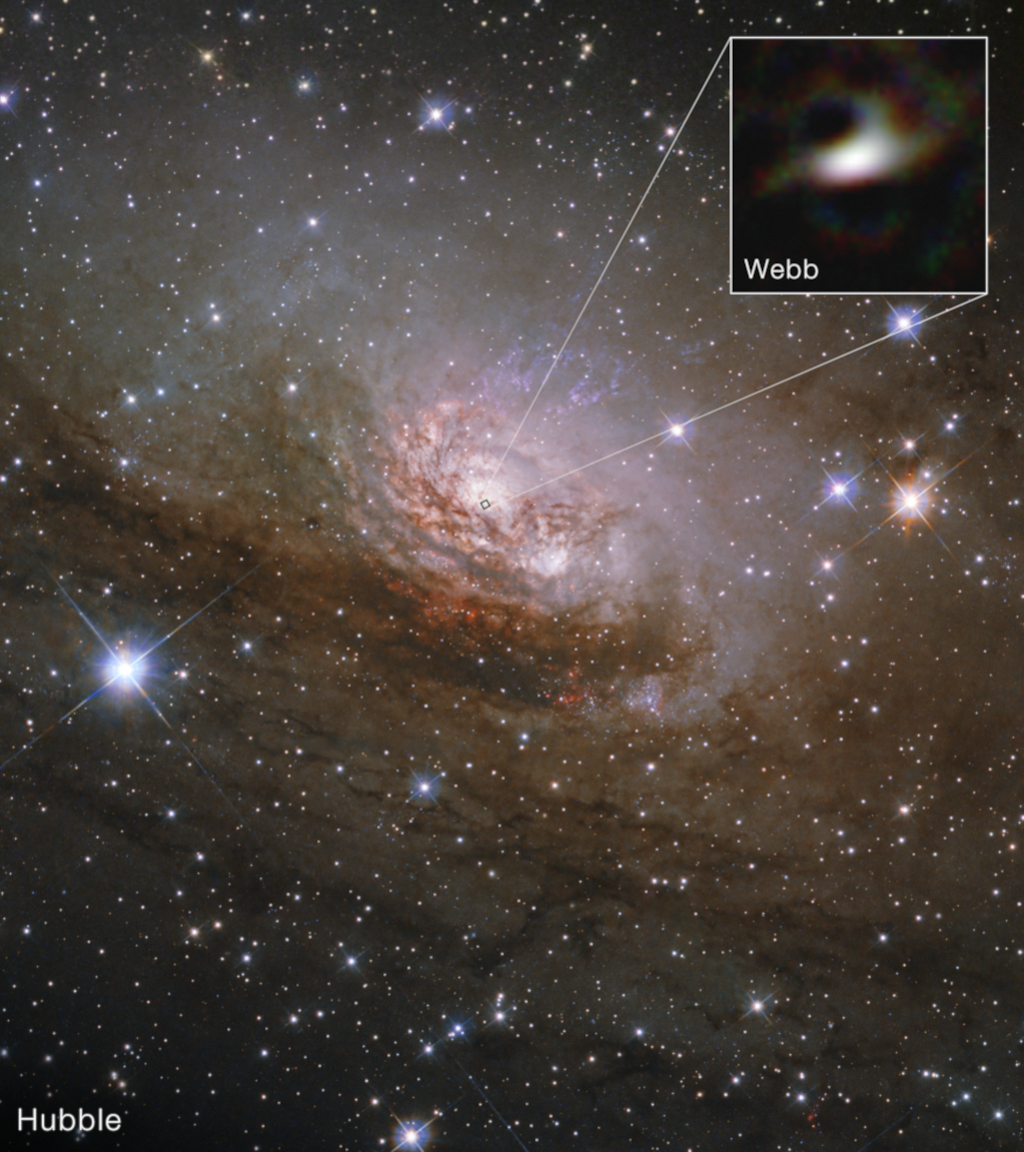
In separate observations, Webb captured a spectacular new image of the Circinus Galaxy, located approximately 14 million light-years from Earth in the constellation Circinus. The composite visualization combines data from both the Hubble Space Telescope and the James Webb Space Telescope, revealing details invisible to previous observatories. Webb’s infrared capabilities penetrate the thick dust clouds that obscure the galactic center in optical images, exposing the glowing inner regions of the active galactic nucleus.

The Circinus Galaxy represents a Seyfert galaxy, a class of active galaxies characterized by extremely luminous cores powered by accretion onto a supermassive black hole. Webb’s mid-infrared observations reveal the structure of the torus-shaped dust cloud surrounding the central engine, providing new data about the physical conditions in these energetic galactic regions.

The telescope’s high-resolution imaging also continues to yield detailed views of stellar nurseries within spiral arms. The intricate networks of dusty filaments and hot young star clusters, previously obscured by interstellar dust, are now visible in unprecedented detail. These observations help astronomers understand the cycle of star formation and the ways that massive stars influence their galactic environments through radiation pressure, stellar winds, and supernova explosions.

The 19 nearby spiral galaxies observed as part of Webb’s PHANGS (Physics at High Angular Resolution in Nearby Galaxies) program have provided a statistical sample for studying the relationship between galactic structure and star formation. The combination of near-infrared and mid-infrared imaging allows researchers to simultaneously observe both the older stellar populations in galactic cores and the youngest stellar objects embedded in dust clouds along spiral arms.

Webb’s capabilities have fundamentally changed the field of extragalactic astronomy in the years since its launch. The observatory’s large mirror and sensitive infrared instruments enable observations that were previously impossible, opening new windows into galactic dynamics, black hole physics, and the early universe. Researchers around the world continue to analyze the torrent of data flowing from the telescope, with each discovery raising new questions about the nature of cosmic structure and evolution.





