OrbitalHub

Where curiosity reaches escape velocity.

Domain is for sale. $50,000,000.00 USD. Direct any inquiries to contact@orbitalhub.com.

Archive for the Engineering category


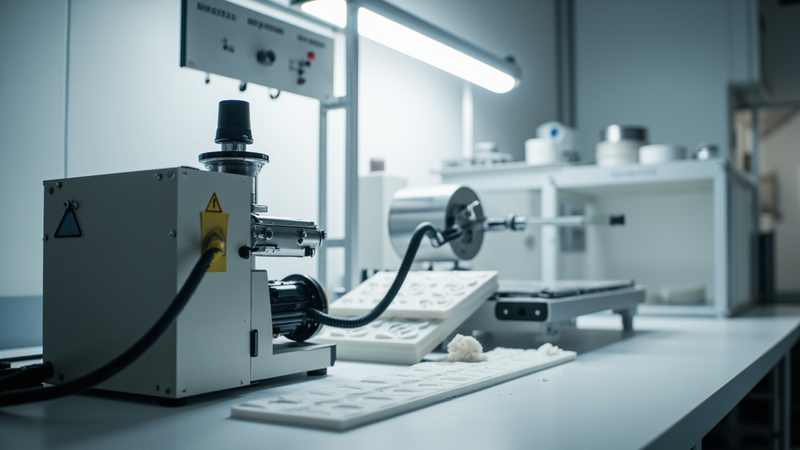
A laboratory recycling workstation: a small shredder feeds a 3D-printer filament extruder beside a heat press with PVDF foam tiles and printed parts


On the morning of August 28, 2026, in an engineering building on the campus of the University of Alabama in Tuscaloosa, fourteen teams competed in the finale of NASA’s LunaRecycle Challenge. The contestants included graduate students, hobbyists, a Wyoming aerospace LLC, an Austin 3D-printer company, and a doctoral cohort from MIT that calls itself CERBERUZ. None of them were building rockets or rovers. They were building trash compactors. The wrinkle: the trash had to be turned back into useful parts, on the Moon, in vacuum, in partial gravity, without resupply shipments from Earth.

Their brief was deceptively ordinary. Take a kilogram of dirty foam, plastic bags, Nomex flight jackets, and aluminum food wrappers — the kind of stuff astronauts throw away every day — and turn it into something a habitat can actually use. The competition carried a $3 million purse, a 1,200-team applicant pool, and a NASA program manager who announced the winners live at noon, CDT (NASA Centennial Challenges, August 28 2026).

Astronauts on the International Space Station produce roughly 2.5 kilograms of “non-metabolic” trash per crew member per day — packaging, food pouches, hygiene items, clothing offcuts, broken equipment. On the ISS, most of that ends up loaded onto a Progress cargo freighter and incinerated in the atmosphere. For a Mars mission lasting two and a half years, you can’t do that. For a permanent Artemis Base Camp on the lunar south pole, you can’t do that either, because every kilogram launched from Earth currently costs somewhere in the high five figures by the time it sits on the regolith.

The economics flip if you can keep what you bring. Recycling turns an “input” into a “stockpile.” Foam becomes a habitat tile. A torn glove becomes feedstock for a replacement bracket. The MIT team’s prototype grinds mixed waste into powder, then extrudes it into filament for a 3D printer or pellets for an injection mold. The first-place prize money — $500,000 for the prototype, $275,000 for the digital twin — is small change compared to a single Falcon Heavy launch.

Phase 1 of LunaRecycle launched in September 2024, ran through June 2025, and pulled 1,200 registrations — the largest response to any Centennial Challenge in NASA’s 20-year prize history (Wikipedia, Centennial Challenges). Seventeen teams were named Phase 1 winners from five countries and nine U.S. states. Phase 2 opened to U.S. teams only and required them to build a working prototype, optionally backed by a “digital twin” — a high-fidelity virtual model of the recycling line.

Sixteen teams cleared the Phase 2 milestone round in March 2026. They converged on Tuscaloosa from August 24 through August 28 to test their hardware at McAbee Construction, a local industry partner, with a public industry day and winners’ ceremony in H.M. Comer Hall (University of Alabama Engineering News, March 10 2026).

The first prize went to CERBERUZ, a team of undergraduate, graduate, and doctoral students at MIT. Their system — described in NASA’s award announcement as “Composites for Extraterrestrial Recycling By Engineering the Reuse and Upcycling of Zotek” — accepts mixed logistics waste, grinds it to a uniform powder, and remanufactures it into filament and injection-molded parts. The team’s insight was to stop treating the foam as contamination. Zotek F30, a closed-cell polyvinylidene fluoride foam from the British manufacturer Zotefoams, is what most aerospace interiors are made of — seat cushions, environmental control system ducting, equipment packaging. Once shredded, the foam acts as a reinforcing filler rather than a contaminant, and the resulting composite can be printed or molded into a fresh bracket or handle (NASA Centennial Challenges, August 28 2026).

The other nine teams on the prototype track ran the technology tree in different directions. Terasynth, an Orlando company, took second place with the Lunar Re-Forge System, which converts mixed waste into 3D-printing filament and recovers metals. Penn State’s RECLAIM team used microwave heating to convert plastic and metal waste into cast parts and fuel precursors — unusual because microwave heating penetrates materials volumetrically, not just at the surface. Cislune’s CRAFTER system from Rosemead, California ran pyrolysis, decomposing waste without oxygen to recover carbon, metal feedstock, and construction material. ACME Space LLC in Cheyenne, Wyoming compressed and thermally melted Zotek foam into dense tiles for lightweight structural panels (University of Alabama Engineering News, March 10 2026).

Five additional teams competed at the finale without milestone prizes, including Phoenix Loom (recycling cotton textiles), KLAW Industries (regolith-composite reinforcement), and Space Copy (foam-regolith extrusion).

The MIT team’s choice of PVDF is not incidental. PVDF is a semicrystalline fluoropolymer with a melting point of 177 °C and a density of 1.78 g/cm³ — higher than most commodity plastics, but inert to most solvents, acids, and hydrocarbons (Wikipedia, Polyvinylidene fluoride). In a vacuum-rated environment, the polymer also outgasses less than polyethylene or polyurethane, which matters when every gram of off-gassing condenses on a nearby optical surface. The Zotek F30 variant is a nitrogen-expanded closed-cell foam with densities from 30 to 150 kg/m³, thermally stable to 160 °C, and certified to the OSU heat-release and smoke-density standards required for commercial aircraft interiors (Zotefoams technical data sheet, 2024).

The grinding-and-reinforcement trick relies on a simple rule of composites. A short-fiber or particulate filler, well-dispersed, raises the modulus of a polymer matrix. The foam’s cells collapse into platelet-like fragments under the grinder, and the resulting powder behaves mechanically like a high-aspect-ratio reinforcement when re-melted with a virgin or reclaimed polymer carrier. The team’s digital twin — for which they also took first place — modeled throughput, energy use, and final-part mechanical properties under simulated lunar gravity (1.62 m/s², roughly one-sixth of Earth).

The microwave-based RECLAIM approach uses different physics. Microwaves at 2.45 GHz couple to polar molecules and lossy dielectrics; metal-bearing waste heats volumetrically, while pure plastics heat more weakly. That lets a single chamber process mixed trash without pre-sorting. Pyrolysis sidesteps oxygen entirely: at 400-700 °C under inert gas, polymers break into volatile tars, non-condensable gases, and a solid char. The char fraction typically retains 30-50% of the input carbon mass as a usable feedstock, while the gas fraction can be reformed into methane or hydrogen for fuel cells.

The throughput numbers matter as much as the chemistry. NASA’s challenge brief required finalist systems to demonstrate meaningful mass efficiency — converting a useful fraction of input waste into finished parts without prohibitive energy or astronaut time. The Highest Mass Efficiency award went to Cislune’s CRAFTER; the Most Trash Types Recycled award went to Bob Jones University’s LunaBrix, which combines recycled content with regolith simulant into stackable bricks. The Most Innovative prize went to RECLAIM for the microwave reactor. The People’s Choice went to Terasynth for the autonomous Lunar Re-Forge System (NASA Centennial Challenges, August 28 2026).

LunaRecycle is what NASA’s Centennial Challenges are designed for: a narrow, well-scoped problem with measurable success criteria, open to anyone with the engineering chops. It also happens to be one of the cheapest ways to test a piece of the Artemis program — $3 million, mostly going to small teams with no government contract overhead.

Two things will tell us whether this work matters. First, whether NASA pulls any of the prototypes into a flight experiment on a Commercial Lunar Payload Services lander or a Gateway resupply manifest. Second, whether the same chemistry shows up in the closed-loop life-support trade studies for Mars.

The deeper question is whether a Moon base can be a base at all if it cannot reuse what it already has. The fourteen teams in Tuscaloosa just spent a week making the engineering answer sound like yes.
 

September 22, 2026

A six-band eye for fire

Posted by


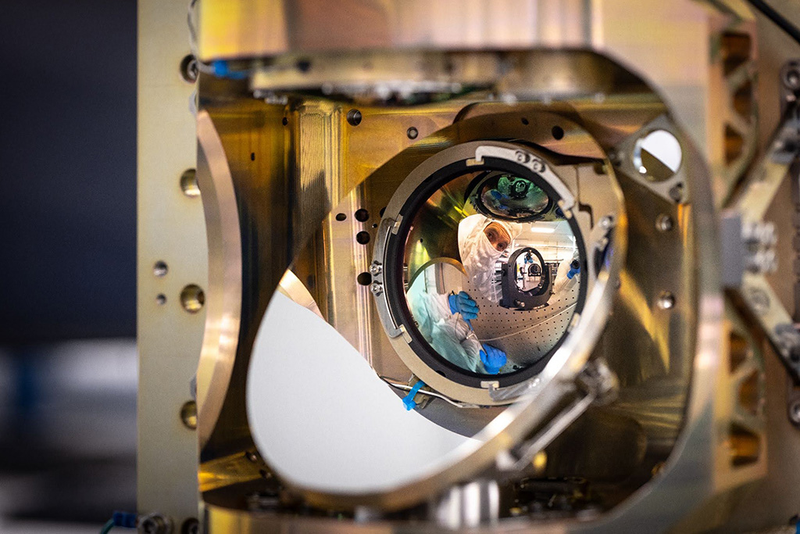
The Quickbeam six-channel infrared instrument onboard FireSat. Credit: Muon Space.


At 03:12 UTC on July 7, 2026, a Falcon 9 lifted off from Vandenberg Space Force Base carrying the heaviest single rideshare payload SpaceX had ever dispatched from California: SpaceX’s Transporter-17 mission. Buried among dozens of small satellites were three boxy 100-kilogram buses built by Muon Space, each carrying an instrument the company calls Quickbeam, a six-channel multispectral infrared imager built for one job: spotting wildfires smaller than a suburban kitchen before they become the next headline (SpaceNews, July 2026).

Two weeks earlier, the same instrument on the FireSat Protoflight demonstrator had imaged a small roadside fire northwest of Medford, Oregon, on June 23, 2025. The fire was missed by every other orbital sensor. By the time ground crews arrived, the flames had burned 0.4 hectares. The Protoflight data, published by the Earth Fire Alliance (EFA) on July 23, 2025, made a quiet case for the constellation now commissioning in low Earth orbit: a new generation of spacecraft designed not to study weather or map land cover, but to catch the first watt of heat a forest fire gives off.

Wildfire managers call the first hour after ignition the golden hour. If a fire is suppressed within sixty minutes of ignition, the cost of attack falls by an order of magnitude; if not, the same fire becomes the kind of runaway that closes highways, evacuates towns, and sends smoke across continents (CAL FIRE briefing, October 2025). The problem is that almost every existing satellite fire product was built for something else. MODIS on Terra and Aqua, the workhorse of orbital fire detection for twenty-five years, returns a pixel every ~1 km. VIIRS on Suomi-NPP and JPSS improves that to 375 m. Both see fires only after they are big enough to saturate the detector, and both push alerts in hours, not minutes, because the data lands in a research processing pipeline rather than a dispatch queue.

What fire agencies wanted was a sensor with three properties that the older instruments could not deliver together: spatial resolution sharp enough to resolve a single-campfire ignition, thermal sensitivity high enough to read temperatures below 600 K without saturating, and a latency path short enough to put an alert into a dispatcher’s screen before the wind changes. Quickbeam is the first instrument designed to satisfy all three (Earth Fire Alliance, program overview, 2025).

Quickbeam is a six-channel multispectral imager spanning short-wave infrared (SWIR), mid-wave infrared (MWIR), and long-wave infrared (LWIR). Three of the channels sit in the SWIR at 1.0–2.5 µm, where they map vegetation moisture and burn scars and pick up reflected sunlight on daylight passes. A single MWIR channel covers 3.0–5.0 µm, the fire-detection sweet spot: hot surfaces near 800 K peak here, and atmospheric transmission is high enough that the band survives most smoke columns. The remaining two channels work the LWIR at 8.0–12.5 µm, useful for background temperature, cloud masks, and the dual-use atmospheric work the U.S. Space Force funded as part of the same instrument (Muon Space product brief, 2025).

The 5 × 5 meter ground sample distance per pixel is roughly forty times finer than what VIIRS delivers in its active-fire band. Each satellite flies in a sun-synchronous orbit at ~600 km altitude and images a 1,500 km swath on every pass. With three satellites phasing that orbit, the constellation returns to any fire-prone region at least twice a day today, with a target of one global revisit per hour by 2029 once the full 50-satellite constellation is in place (Earth Fire Alliance roadmap, 2026).

The hardware underneath the optics matters as much as the optics themselves. FireSat rides on Muon’s Condor-M bus, a 100-kg-class small satellite built around what the company calls a CarefulCOTS approach: every commercial part is selected by analysis for radiation, thermal, vacuum, and shock resilience, then qualified per GSFC-STD-7000 or SMC-S-016 with universal derating per NASA EEE-INST-002 (Muon Space, Condor-M spec sheet, 2025).

The numbers tell the rest of the story. The bus delivers 500 W of peak payload power and 200 W orbit-average, supports 30 Gbps payload data interfaces, and dumps 5 TB per day through its RF downlink (50 TB per day if the customer buys the optical comms option). Pointing knowledge is 5 arcseconds 1σ, control is 15 arcseconds 1σ — fine enough that a 5 m pixel stays a 5 m pixel after stacking. Onboard Δv of 3 km/s lets the constellation maintain its precise spacing without waiting for atmospheric drag to do the work over months.

CarefulCOTS, rather than full radiation hardening, is what lets the satellite cost what it costs. A traditional aerospace IR imager of similar capability can run into the hundreds of millions per copy. FireSat is built to a price point closer to a commercial imaging smallsat, which is the only way a 50-satellite constellation makes sense.

Latency is the part most coverage misses. A fire detection that travels satellite → ground station → processing center → alert API is still thirty minutes old by the time it reaches a dispatcher. FireSat runs a Google Research convolutional neural network directly on the satellite’s edge inference chip, assigning a probability score to every 5 × 5 m tile during the same orbital pass that collected the imagery. Alerts with confidence above 85% are pushed over optical inter-satellite links and dispatched directly into CAL FIRE, US Forest Service, and partner-agency APIs within five minutes of acquisition (Earth Fire Alliance technical brief, 2026).

This is a substantial change in how Earth-observation data flows. The traditional pipeline treats satellites as data factories whose product is then mined by analysts. FireSat treats the satellite as a sensor that produces decisions. The downstream user receives an alert keyed to a confidence score, not a raw image. Below threshold, no alert fires; above, the alert is geo-referenced and time-stamped in the same message.

The three satellites launched on Transporter-17 are now in a three-month commissioning and calibration period, with first operational data expected in October 2026. CAL FIRE, the Colorado Division of Fire Prevention and Control, and agencies in Texas, Oregon, the Amazon, Portugal, Australia, and three African countries are signed up as early adopters. The full constellation target is fifty-plus satellites by 2030, with a goal of a twenty-minute global revisit and a nine-minute revisit for the most fire-prone corridors.

What FireSat is really testing is whether a single-purpose constellation, designed around one metric (median time from ignition to alert), can outperform decades of general-purpose Earth-observation infrastructure. The Protoflight demonstration, the Medford fire, the Oregon roadside ignition nobody else saw: these are the early evidence. If the operational constellation hits its five-minute latency goal at 5 m resolution, the cost-benefit math on wildfire suppression shifts in a way that no amount of MODIS data ever could.

FireSat is a reminder that “satellite for X” can mean something other than “satellite that happens to be useful for X.” Every previous fire-detection system inherited its design from weather, land-imaging, or atmospheric-chemistry missions. Quickbeam was built from a detector layout upward to optimize for the MWIR fire peak, smoke penetration, and edge inference. The constellation is sized not to map the planet but to return to a wildfire fast enough that suppression still works. If it hits its numbers, the next decade of wildfire management will look less like remote sensing and more like an alert service, and the first hour of a fire will start to look very different from the last twenty years.


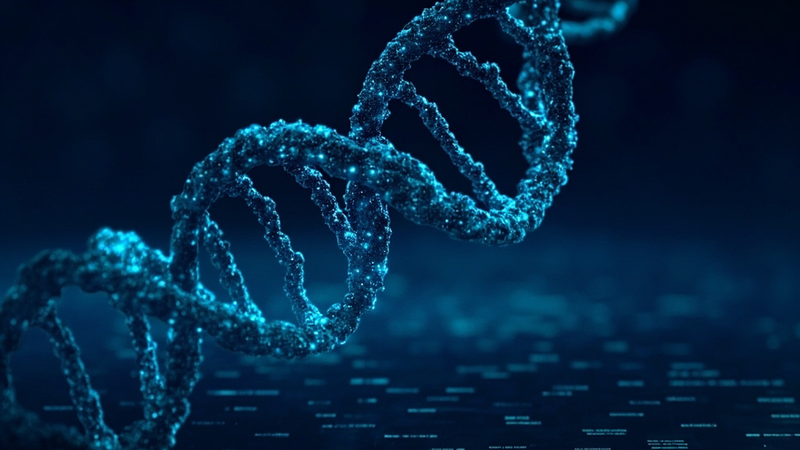
A glowing DNA double helix unfurling into a grid of single-letter variant predictions, with genome browser tracks for splicing, expression, and chromatin at the base


For a patient whose genome has just been sequenced, the diagnostic question usually is not whether a strange variant exists. There will be dozens. The question is which one of them is making them sick. On 8 September 2026, Google DeepMind released AlphaGenome Atlas, a one-petabyte, nine-billion-row table that aims to make that triage a single look-up instead of a multi-month investigation. It is the largest precomputed biological dataset the company has ever released, more than thirty times the size of the AlphaFold Protein Structure Database at launch (DeepMind, 2026), and it covers the 98 percent of the human genome that does not code for proteins at all.

What the team has done is straightforward to describe and almost absurd in its engineering ambition: take the AlphaGenome sequence-to-function model they published in Nature in January 2026, run it across every possible single-letter substitution at every one of the roughly three billion positions of the human reference genome, store the predictions, and serve them on the open web. Every variant. In advance. With feature attributions attached. With a single composite score, the AlphaGenome Variant Impact (AVI), that collapses the predictions into a number clinical researchers can rank variants by. The bottleneck in human genetics, in other words, has just moved.

To see why this matters, it helps to remember where the field stood a decade ago. In the early 2010s, the human genome was widely described as 98 percent “junk DNA.” That framing did not survive contact with ENCODE, the Roadmap Epigenomics Project, GTEx, or any of the consortium-scale projects that mapped chromatin accessibility, transcription factor binding, histone modifications, and three-dimensional genome contacts across hundreds of cell types. By the early 2020s the consensus was unambiguous: most of the variants statistically associated with common traits and many rare diseases live outside coding exons, in regulatory regions whose effect on the organism can only be inferred by reading the sequence around them and computing what those regions should be doing (Nature, Avsec et al., 2026). The Human Cell Atlas, the 4D Nucleome, FANTOM5 — they produced the data. Predicting the effect of any given mutation on gene expression, splicing, or chromatin, on demand, was the missing piece.

DeepMind’s path to Atlas runs through three increasingly ambitious releases. AlphaFold, in 2020, solved the decades-old protein folding problem and earned Demis Hassabis and John Jumper a share of the 2024 Nobel Prize in Chemistry (Nobel Foundation, 2024). AlphaMissense, in 2023, classified all 71 million possible missense variants in the protein-coding part of the genome as likely benign or pathogenic. Both tools covered only the 2 percent that codes for proteins. AlphaGenome, first released for non-commercial research in June 2025 and described in Nature in January 2026, covers the other 98 percent. Atlas is the precomputed, freely searchable version of that model (DeepMind, 2026; Avsec et al., Nature, 2026).

The early-access users announced alongside the release illustrate what shifts when the bottleneck moves. Laura Covill and Anne O’Donnell-Luria at the Broad Institute used the AVI score to reprioritise a variant in DNM1, a gene strongly linked to epileptic encephalopathy, that had been overlooked in earlier analyses; AlphaGenome predicted an abnormal splice site extending the resulting protein, a mechanism subsequently confirmed by laboratory experiments (DeepMind, 2026). Gareth Hawkes, an MRC fellow at the University of Exeter, ran the Atlas over whole-genome data from more than 54,000 UK Biobank participants and reported 22 percent more non-coding genetic associations than prior pipelines surfaced, including regulatory variants affecting PLA2G7 and EGLN1 and nineteen new regions linked to body mass index. At the Stowers Institute, Julia Zeitlinger and Melanie Weilert used the database to separate transcription factors by their regulatory effects on chromatin, a problem that has resisted biochemical characterisation for two decades.

The architecture behind those results is what makes the engineering tractable. AlphaGenome uses a U-Net-style neural network: an encoder that compresses one million base pairs of input DNA into a dense representation, a stack of transformer blocks that pass information between distant regulatory elements across that window, and a decoder that reconstructs base-pair-resolution predictions across eleven molecular modalities — gene expression, RNA splicing, chromatin accessibility, histone modification, transcription factor binding, three-dimensional contacts, and others — for hundreds of human and mouse cell types (Avsec et al., Nature, 2026). The model was pre-trained on 256 Google TPUv3 chips working in parallel over data from ENCODE, GTEx, the 4D Nucleome, and FANTOM5, and then distilled into a smaller student model that completes the full all-modality, all-cell-type prediction for a single variant in under one second on a single NVIDIA H100 GPU. DeepMind’s genomics lead Žiga Avsec told reporters the team needed an 80-fold speedup over their initial pipeline to make Atlas feasible; they reached it through a combination of model distillation, GPU kernel optimisation, and aggressive elimination of redundant computation (DeepMind, 2026).

The AVI score itself is what lets researchers act on those predictions. It folds the eleven AlphaGenome modalities together with AlphaMissense’s protein-impact estimates and an evolutionary-conservation signal into a single number. On solved rare-disease cases from the GREGoR Consortium, the score placed the known causal variant in the top fifty candidates 29.5 percent of the time; CADD, the most widely used genome-wide variant scoring system in clinical genomics today, managed 12.5 percent on the same benchmark — a 2.4-fold improvement on the metric that matters most to a clinician staring at a patient’s exome (DeepMind, 2026). Each AVI score is paired with feature attributions that say which modality is doing the heavy lifting for any given variant, so a researcher can see not just that a mutation looks bad but why it looks bad.

What changes now is the geometry of the work. Before Atlas, a clinical genomics group that wanted to score a list of candidate variants had to either run a model themselves, rent the compute, or wait on a collaborator who could. After Atlas, they open a browser, type a chromosome coordinate, and read off the score. The cost has collapsed from days of GPU time and a real infrastructure bill to a single API call. The companion AlphaGenome Variant Impact score is freely available through a web portal and API for non-commercial research now, with commercial availability on Google Cloud slated to follow. DeepMind is explicit that the output is not approved for clinical use, and independent reviewers have flagged the obvious limits: many diseases involve multiple interacting variants rather than a single mutation, and some enhancers act over distances longer than the one-million-base-pair window AlphaGenome examines, so their effects fall outside what the model can see (NeoScienceHub, 2026).

The next twenty years of precision medicine will be shaped less by any single sequencing technology than by how quickly reference databases like this one become the substrate that all downstream tools assume exists. AlphaFold did that for structural biology between 2021 and 2025: a problem that used to take a graduate student a year collapsed into something a high schooler could look up. AlphaGenome Atlas has now attempted the same move for the rest of the genome. Whether it actually accelerates diagnoses and mechanism discovery at scale will not be settled in the press release; it will be settled in the next five years of clinical genetics journals, where the question of how often a researcher who never had to run the model themselves first ends up reading the right page of the answer.


September 21, 2026

Rapidus, IBM, and Japan’s 2nm gamble

Posted by


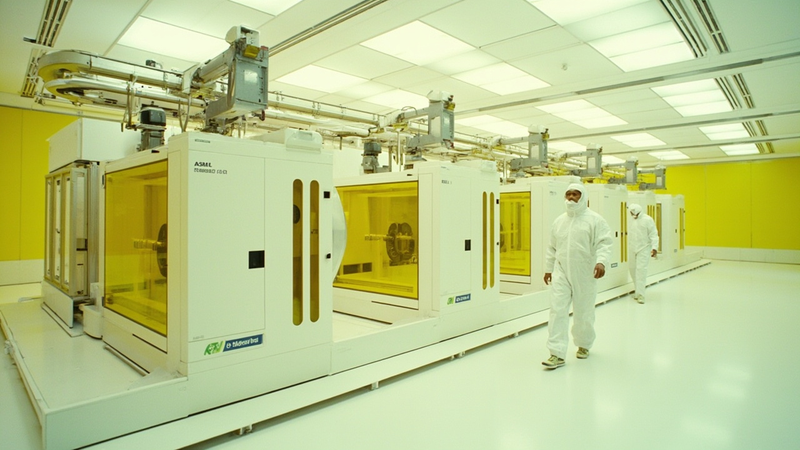
A row of EUV lithography scanners inside a modern semiconductor cleanroom, similar to the equipment installed at Rapidus's IIM-1 pilot fab in Chitose, Hokkaido.


For the past year, the headlines about leading-edge chips have read like a closed case. TSMC pulled the first 2 nm wafers off its Hsinchu line in late 2025, with Apple taking the first slice. Samsung’s competing gate-all-around (GAA) node followed shortly after. Intel’s 18A staggered through yield issues. The story was supposed to be a foundry duopoly asserting itself once again.

Then there is a small company in Chitose, Hokkaido, with a cleanroom the size of an aircraft hangar and a different idea about how a fab should run. Rapidus is trying to do something the rest of the industry has decided is impossible: build leading-edge logic chips one wafer at a time, ship a customer’s design back in fifty days, and enter mass production in 2027, about two years behind the leaders. The bet is not that Japan can outspend Taiwan. It is that some chip buyers no longer want a foundry that treats them like a queue number.

Three things are happening at once. Demand for AI training and inference silicon is growing roughly 30 percent a year. Geopolitics is making the concentration of leading-edge fabs in one corner of the Pacific a strategic liability. And the cost of a new fab has crossed the line where only a sovereign wealth fund, the U.S. CHIPS Act, or a national budget can write the check. TSMC is on track to push 2 nm capacity past 100,000 wafers a month by the end of 2026 and is already sampling A16 (1.6 nm) with backside power delivery to its largest customers.

That concentration is what Rapidus was created to dilute. The Japanese government has put in roughly 1.4 trillion yen directly. Private investors added 920 billion yen in a February 2026 round, taking cumulative support past 2.35 trillion yen. Sony, Toyota, Kioxia, Denso, NEC, SoftBank, and Canon now sit on the shareholder list. The state is the largest single holder.

What they bought is a thesis: that the foundry business can be unbundled. Volume production belongs to TSMC and Samsung. Fast-turn prototyping and small-batch manufacturing for AI startups and Japanese industrial customers can be a separate business. Tenstorrent, the AI chip company led by Jim Keller, signed on as an early customer. Canon became the first major Japanese anchor in March 2026 with a 40 billion yen joint program for image-processing silicon.

Rapidus did not start as a chip company. It started in 2022 as a question inside Japan’s Ministry of Economy, Trade and Industry: who would build the country’s processors if access to TSMC at 5 nm and below were cut off? In roughly eighteen months, the answer became a state-backed foundry that would license IBM’s most advanced transistor design and build a cleanroom around it.

The IBM connection is the keystone. In May 2021, IBM demonstrated a 2 nm test chip on a GAA nanosheet architecture at its Albany NanoTech Complex in New York, a research fab jointly funded by IBM, the State University of New York, and a rotating set of equipment vendors. Albany is a lab, not a production line. IBM has not owned a fab since selling its chip business to GlobalFoundries in 2015. It needed a partner willing to take its research and run it for real.

Rapidus signed on in December 2022 and sent 150 engineers to Albany for two years; half have now rotated back. The cleanroom, IIM-1 (Innovative Integration for Manufacturing), broke ground in September 2023. The first ASML NXE:3800E extreme ultraviolet (EUV) scanner arrived in December 2024 and printed its first wafer in April 2025. By July 18, 2025, Rapidus had working 2 nm GAA transistors on a prototype wafer, with electrical characteristics the company said met its targets (Rapidus press release, July 2025).

The harder work has come since. CTO Kazunari Ishimaru acknowledged in a March 2026 interview that the July 2025 milestone had been announced “ahead of full readiness,” with significant work done between September and November 2025 to bring transistor performance in line. A Process Design Kit went out to customers in Q1 2026. Customer test chips are scheduled to start running in late 2026, with mass production targeted for the second half of 2027.

The pricing target is roughly 3 to 3.5 million yen per wafer, a 50 percent premium over TSMC’s mature nodes but reportedly competitive with N2. Capacity is 6,000 wafer starts per month initially, ramping to 25,000 in the first year. To put that in scale, TSMC’s 2 nm output alone is expected to exceed 100,000 wafers a month by mid-2026. Rapidus is not trying to match that volume. It is trying to make the customer interaction different.

The reason Rapidus is in the conversation at all is the transistor. For twenty years the industry rode a structure called FinFET: a vertical fin of silicon with the gate wrapped around three sides. FinFETs scaled cleanly to about 5 nm. Below that, leakage through the bottom of the fin starts to dominate, and the supply voltage V_DD cannot drop further without losing switching speed.

A gate-all-around nanosheet transistor solves this by replacing the fin with a stack of thin horizontal silicon sheets, each fully surrounded on all four sides by the gate stack. The electrostatic coupling between gate and channel is described by a term called the subthreshold swing, and the relevant limit is

S = (kT / q) * ln(10) * (1 + C_dep / C_ox)

where kT / q is the thermal voltage (about 26 mV at room temperature), C_dep is the depletion capacitance in the channel, and C_ox is the gate oxide capacitance. As C_ox grows relative to C_dep, S falls toward 60 mV per decade, the theoretical minimum, and off-state leakage drops with it. Wrapping the gate on all four sides drives C_ox up, which is why GAA is the only way to keep scaling below 3 nm.

The engineering cost is enormous. GAA nanosheets require multiple epitaxial growth steps, selective layer reductions to set the threshold voltage, and extreme ultraviolet lithography at a 13.5 nm wavelength. Each NXE:3800E EUV scanner costs roughly 200 million dollars and runs at about 195 wafers per hour. Rapidus has installed more than 200 such tools in IIM-1 in less than a year.

Single-wafer processing, moving each wafer through every step individually rather than batching in lots of 25, is the other bet. Batch processing is faster per step but extends the cycle time. A typical TSMC N3 wafer takes about 120 days from order to delivery; Rapidus is targeting 50. Achieving that means tighter scheduling, more material-handling automation, and a manufacturing execution system that can coordinate several hundred tool types in real time.

Rapidus will probably not threaten TSMC’s volume business. Apple alone will consume more 2 nm wafers in 2026 than Rapidus plans to ship in its first year of mass production. The geopolitical and ecosystem advantages TSMC has built are not moveable in a single fab cycle.

What Rapidus may do is create a third option for chip designers who have spent a decade with two. Tenstorrent’s bet is that fast tape-out and design-manufacturing co-optimization can compress the time between a new AI model and a chip that runs it. Canon’s bet is that having a domestic 2 nm source for image processing matters more than having the cheapest one. The state’s bet is that 2.35 trillion yen is worth the option of not being locked out of the leading edge by 2030.

Whether any of these bets pay off will be visible in the defect density charts of late 2027. Until then, the most interesting question in semiconductors is not who is winning the 2 nm race. It is whether there is room for someone who is not in it at all.