OrbitalHub

Where curiosity reaches escape velocity.

Domain is for sale. $50,000,000.00 USD. Direct any inquiries to contact@orbitalhub.com.

Archive for the Launchers category


An illustration of a fully stacked Starship and Super Heavy standing on a Starbase launch pad at sunrise, the configuration Ship 41 and Booster 21 will take once stacking for Flight 14 is complete


Twenty-six Starlink V3 satellites are bound for the payload bay of Ship 41 at Starbase, Texas, on a flight that has not yet left the ground. SpaceX is now targeting Monday 28 September 2026 for Starship Flight 14, with the window opening at 7:15 a.m. Central Time, 12:15 UTC, from Pad B. That is the fourth date set for this mission: attempts on 15, 18 and 22 September were each stood down, and the 28 September slot is still pending final regulatory approval. Ship 41 has completed its cryogenic proof testing and its static fire campaign, and Booster 21 has been moved to the pad for stacking. If the count reaches zero, Booster 21 will lift Ship 41 off the pad and, for the first time in the program’s three-year test campaign, hand a Starship upper stage enough velocity to circle the planet. The flight, designated IFT-14, would be the first orbital mission of the world’s largest operational rocket. Every previous Starship test, including the successful Flight 13 on 24 July 2026, was flown on a deliberately suborbital arc that splashed down either in the Indian Ocean or the Pacific (SpaceX, September 2026).

What changes because of this is the shape of the test program itself. For thirteen flights, SpaceX used the upper stage’s engines to push it downrange without ever crossing the orbital velocity threshold of roughly 7.8 km/s. The result was a “passively safe” trajectory that guaranteed reentry and splashdown at a known point even if all vehicle control was lost (Ars Technica, 15 September 2026). To stay on a closed orbit around Earth, Ship 41 will have to perform two burns in space, a coast phase of nearly ten hours, and a controlled deorbit burn at the end of the mission, all while carrying real revenue payload. That last detail is why SpaceX Chief Financial Officer Bret Johnsen told the Goldman Sachs Communacopia and Technology Conference audience on 10 September 2026 that this is “a revenue-generating flight” (TeslaNorth, 10 September 2026). No previous Starship test ever carried satellites that were intended to serve paying customers.

The procurement story behind the announcement starts with Starlink V3 itself. Each V3 satellite adds about 1 Tbps of downlink capacity and 160 Gbps of uplink capacity to the constellation, roughly ten times faster on the downlink and twenty-two times faster on the uplink than a V2 mini Starlink (PCMag via BaseNor, 15 September 2026). Twenty-six of them on Flight 14 will add a combined 26 Tbps of capacity in a single mission, more than ten times what a Falcon 9 V2 mini launch delivers (TeslaNorth, 16 September 2026). V3 satellites are too large to fit inside a Falcon 9 fairing; they can only reach orbit on Starship (SpaceX IPO filing, May 2026; azmth.space, 15 September 2026). The first batch of twenty V3s flew inside Ship 40 on Flight 13 in late July. This is the second and larger batch, with three of the twenty-six modified to carry cameras aimed back at the ship’s heat shield during deployment.

The engineering choices that make the orbit possible begin with Booster 21’s hardware fix. On Flight 13, Booster 20 had successfully used all thirty-three of its Raptor 3 engines during boostback, the first time a Block 3 Super Heavy had done so, before the terminal phase of the landing burn went wrong. Three of the thirteen center engines showed signs of ice clogging and triggered an early shutdown, leaving only eight engines to complete the burn before the booster splashed down hard in the Gulf of Mexico (Tech Times, 16 September 2026). The cause was straightforward. Liquid oxygen, stored at roughly −183 °C, draws moisture into propellant feed lines and filters where it can freeze into crystals. The center engines of the booster feed from a dedicated liquid-oxygen header tank used only during terminal deceleration, and that header tank’s filters were not sized to keep the contamination out under flight loads. Booster 21 carries redesigned filters on the propellant path between the header tank and the center cluster, along with new software for relight reliability (SpaceX, 15 September 2026). A successful landing burn on Flight 14 will be the qualification event for that change before SpaceX attempts the first tower catch of a Block 3 booster on Flight 15.

Ship 41’s heat shield is the second engineering story of the day. SpaceX recovered Ship 40 from the Indian Ocean in early August largely intact, harvested two of its ceramic heat-shield tiles, and plans to refly them on Ship 41 (Ars Technica, 15 September 2026). Three upgrades followed. Stronger retention mechanisms on tiles in regions at highest risk of shedding during ascent. Additional shielding against plasma flow paths behind the tile field. And a curved tile design that has shown it can reduce heating in the gaps between individual tiles. Three of the twenty-six V3 satellites carry cameras pointed back at the ship’s flank during their deployment sequence, so the mission returns not just operational spacecraft but a heat-shield health dataset from inside the bay.

The trajectory is also new. All earlier Starship flights followed ballistic arcs aimed at splashdown zones west of the Bahamas, in the Indian Ocean, or, in the case of the catch attempts, at Starbase itself. Flight 14 will splash Ship 41 down in the Pacific Ocean west of Chile, the geometry forced by a true orbital insertion at 275 km altitude. The booster will attempt a controlled splashdown in the Gulf of America on its own landing burn, not a tower catch (SpaceX, 15 September 2026). SpaceX has not yet received regulatory approval for an upper-stage tower catch in this campaign; that step is reserved for later flights.

The numbers underneath are what make the orbital geometry work. A Block 3 Super Heavy at liftoff carries 3,650 tonnes of methalox propellant across its two stages, with the booster delivering 89.5 Meganewtons of thrust from thirty-three Raptor 3 engines and the upper stage pushing six engines of its own, three of them Raptor Vacuum variants with a vacuum specific impulse of 380 seconds (Wikipedia, SpaceX Starship; SpaceX, 2024). The orbital velocity target of 7.8 km/s, multiplied by the natural logarithm of the mass ratio, gives the rocket equation Δv = v_e * ln(m_0 / m_f) that Tsiolkovsky wrote in 1903 and that every orbital mission since has had to satisfy. For a single-stage-to-orbit architecture, the ratio m_0 / m_f must clear roughly twenty. Two stages let Starship keep both ratios smaller, with Booster 21 shedding its structure shortly after its boostback burn and Ship 41 climbing to operational orbit on its own.

The mission control plan adds one explicit safety gate. Ship 41 will execute the burn to enter orbit only after the flight control team has confirmed “sufficient redundancy on hardware critical” to the later deorbit burn (SpaceX, 15 September 2026). If the ship is not healthy enough to come back down on command, it stays on its initial suborbital trajectory and splashes down in the Pacific regardless. The decision is made in flight, after launch and stage separation, rather than at any point in the ground count.

What’s next is the catch. Musk confirmed in mid-September 2026 that Flight 15 will attempt the first Block 3 booster tower catch, building directly on the Flight 14 landing burn (Starlust, 15 September 2026). From there, SpaceX’s published roadmap points toward higher flight cadences, larger payloads of up to sixty V3 satellites per launch, and the eventual test of orbital propellant transfer, the unproven technology that still gates every Mars mission. Flight 14 is not the destination. It is the flight that would end Starship’s run as a suborbital demonstrator and finally make it what it was always meant to be: a vehicle that goes around.
 

September 14, 2026

Three solid stages and a 3D-printed engine

Posted by


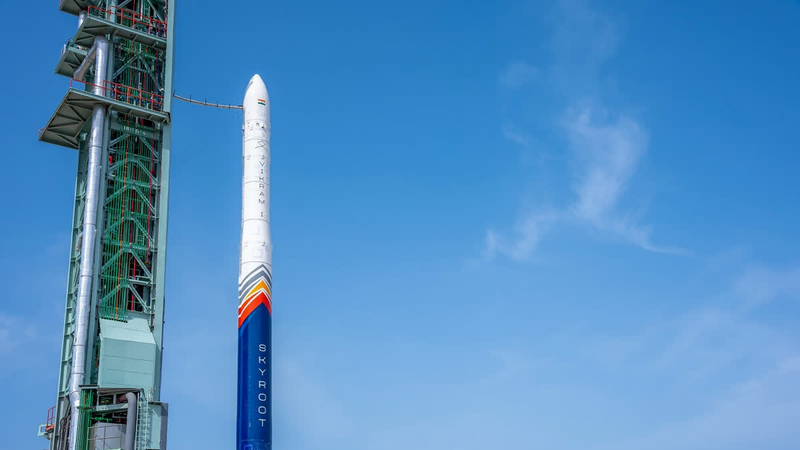
Vikram-1 on the First Launch Pad at SDSC-SHAR before Mission Aagaman. Credit: IANS / Skyroot Aerospace via ETV Bharat.


On July 18, 2026, at 06:35 UTC, a 22-meter rocket lifted off from the First Launch Pad at the Satish Dhawan Space Centre on Sriharikota island. Twelve minutes later, four payloads were floating in a 450-kilometer orbit at a 60-degree inclination, marking the first time an Indian private company had reached orbit under its own name. The rocket was built by Hyderabad-based Skyroot Aerospace, and the mission was named Aagaman, Sanskrit for “arrival.” It gave India a third-country credential — only the United States and China have carried one since 2008.

For two decades, India’s orbital launches have carried the same institutional stamp: the Indian Space Research Organisation, ISRO. PSLV, GSLV, and the upcoming GSLV Mk III have flown from the same two pads at Sriharikota since 1993. When the government created the Indian National Space Promotion and Authorisation Centre, IN-SPACe, in June 2020, the explicit goal was to break that monopoly. Funding followed: India’s private space sector pulled in roughly $353 million from 2020 through 2024, with another $150 million in fiscal 2025, and the startup count climbed from a handful to more than 200 (Financial Express, 2026).

What was still missing was a proof of orbit. Suborbital hops like Vikram-S in November 2022 showed that a private firm could build a rocket and reach space. They did not show that one could deliver a payload to a precise altitude and inclination. Vikram-1 closes that gap. With Mission Aagaman complete, Skyroot joined SpaceX and Rocket Lab in the United States and LandSpace’s Zhuque-2 in China as the only commercial operators to have reached orbit with a privately developed first stage (Reuters, July 18 2026).

The market is large enough to make the milestone more than symbolic. India already runs one of the more aggressive small-satellite launch programs in Asia, and Chandana told CNBC that 70 to 80 percent of Skyroot’s eventual customers will sit outside India, across the United States, Europe, and Southeast Asia. A dedicated small-sat ride at roughly $15,000 per kilogram or less could undercut dedicated Electron and Taurus-Mini flights for payloads under 350 kilograms.

The two founders met at ISRO. Pawan Kumar Chandana had spent six years on Indian launch vehicle programs, mostly at the Vikram Sarabhai Space Centre (VSSC). Naga Bharath Daka had designed avionics modules for flight computers. Both studied at IIT Kharagpur. They left ISRO in 2018, raised about $1.35 million from Myntra founder Mukesh Bansal and CureFit co-founder Ankit Nagori, and registered Skyroot Aerospace on June 12, 2018, two years before any private launch regulation existed.

IN-SPACe arrived in 2020, after Skyroot had already begun carbon-fiber airframe tooling. By 2022 the company launched Vikram-S on Mission Prarambh, a suborbital flight that reached about 89 kilometers and validated roughly 80 percent of the technology stack: the all-carbon composite airframe, the solid propulsion, the thermal protection, and the avionics.

Vikram-1 took another three and a half years. The three solid stages (Kalam-1200, Kalam-250, and Kalam-100, named for missile scientist A. P. J. Abdul Kalam) each had to be static-fired at ISRO’s STEX/VAST complex at Sriharikota. The liquid Orbital Adjustment Module with its Raman engine was hot-tested at the ISRO Propulsion Complex at Mahendragiri under IN-SPACe oversight. Skyroot’s first 100 percent 3D-printed bipropellant injector ran successfully in 2020; a Raman-II hot fire at Mahendragiri ran 10 seconds in July 2023 at a chamber pressure of 8.5 bar.

The launch attempt slipped from 2024 into a 23-day window opening July 12, 2026. Chandana told CNBC-TV18 that “we have done everything that could be done to test Vikram-1 on ground.” On July 18 an automated hold extended the countdown while engineers rechecked navigation parameters; lift-off came at 12:05 PM IST, roughly 35 minutes behind the original schedule. Payload separation finished by T+900 seconds, and Skyroot declared mission success. At least one more developmental flight sits between Aagaman and any commercial manifest.

Vikram-1 is a four-stage rocket, 22 meters tall and 1.7 meters in diameter, the first orbital launcher in India built entirely from carbon-fiber-reinforced polymer (CFRP). The material choice matters because CFRP motor cases weigh roughly 30 to 50 percent less than equivalent steel or aluminum cases at the same burst pressure (Nature 2021, CFRP motor-case studies). For a small launcher, that drop translates directly into payload fraction: every kilogram saved in dry mass leaves room for a kilogram of propellant, and propellant is cheaper to deliver to orbit than structure.

The three solid motors run a typical Indian composite propellant: about 68 percent ammonium perchlorate oxidizer, 18 percent aluminum powder, and 14 percent hydroxyl-terminated polybutadiene (HTPB) binder. The first-stage casing, the Kalam-1200, is the longest monolithic composite motor built at ISRO’s Solid Propellant Space Booster Plant, 11 meters long and 1.7 meters in diameter, loaded with about 30 tonnes of propellant. The case is filament-wound at angles of roughly ±55 and ±20 degrees over the cylinder, transitioning to ±45 and 80 degrees at the domes, an arrangement tuned to balance hoop stress, axial load, and torsional stiffness. Inside the case, an EPDM rubber insulator protects the carbon fiber from 3,000-Kelvin combustion gas. Thrust vector control on the upper solid stages uses a carbon-ablative flex nozzle deflecting the throat a few degrees with hydraulic actuators.

The fourth stage, the Orbital Adjustment Module, is a cluster of four Raman engines burning monomethylhydrazine against nitrogen tetroxide (MMH/NTO), the classic hypergolic storable bipropellant. Hypergolic ignition fires the moment the two liquids touch: no spark, no igniter, no start sequence to fail. That property lets the module relight multiple times during a single mission, which is the whole selling point for rideshare flights where each payload owner wants a slightly different altitude.

The Raman engine uses 100 percent 3D-printed injector and chamber hardware. According to Skyroot, additive manufacturing cuts injector mass by roughly 50 percent and trims part count and lead time by roughly 80 percent compared with machined injector plates. A single laser powder-bed-fusion build produces the injector in one piece, eliminating several hundred discrete passages and brazed joints. That kind of simplification makes a small team viable against larger state programs.

For the sizing math: with a 1,200-kilonewton first stage, a specific impulse near 270 seconds at sea level, and a structural mass fraction in the 0.10 to 0.12 range, the ideal delta-v budget for a 450-kilometer circular orbit at 60-degree inclination comes to about 9.4 kilometers per second. The four stages roughly hit that, leaving a margin near 1.2 kilometers per second for gravity and drag losses, in line with industry norms for small launchers.

The full Vikram family still has to come online: Vikram-2 with its 3D-printed Dhawan cryogenic engine in 2027, then Vikram-3. The team is now 500 engineers, working from a 60,000-square-foot “Max-Q” campus in Hyderabad that the company describes as the largest private rocket development facility in South Asia. Investment caught up in May 2026, when Skyroot became India’s first space-tech unicorn at a $1.1 billion valuation after a $60 million round that included GIC, BlackRock, Sherpalo Ventures, and Playbook Partners.

The wider lesson is structural. India did not get a private space industry by accident; it got one by writing rules, opening access to shared test stands, and waiting long enough for the engineering to mature. The flight on July 18 was a scheduled checkpoint on a plan that started in 2020, not a surprise ending. Other countries will study whether that same sequence (regulator first, infrastructure second, orbital capability third) can run faster in their own markets. That question will probably matter more than Vikram-1 itself.


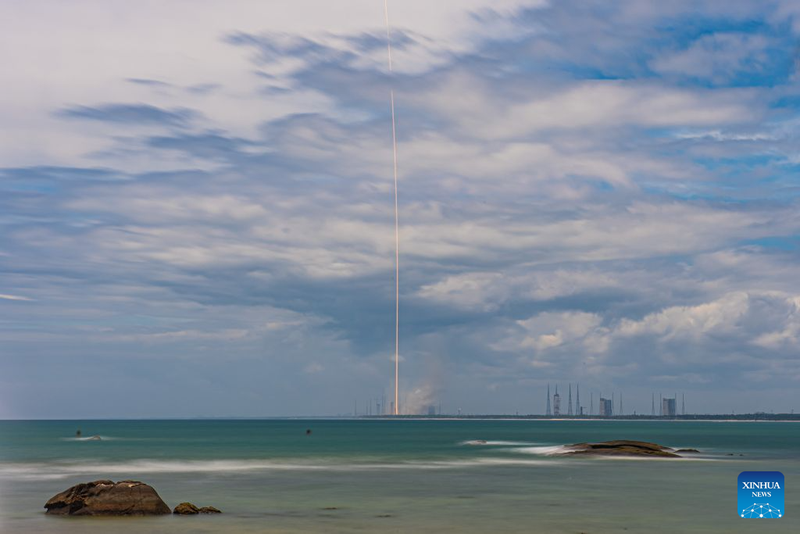
A Long March-10B rocket lifts off from Hainan on July 10, 2026, in a long-exposure photograph taken from across the bay. (Xinhua/Pu Xiaoxu)


On the morning of July 10, 2026, a 63-meter rocket climbed off a brand-new launch pad on Hainan Island, deposited an unnamed payload into a low orbit, and then — six minutes later — fell back out of the sky and let a steel net on a ship catch it. The vehicle was the Long March 10B, designated CZ-10B in China’s rocket catalog, and the flight was its maiden voyage. Both halves of the mission succeeded, which made China only the second country, after the United States, to propulsively recover an orbital-class booster. The second thing that mattered was that the recovery hardware was nothing like SpaceX’s drone-ship landings: no deployable legs, no tower catch, no hover-slam. The booster carried four hooks and used them to latch onto a cross-shaped steel cable net strung across the deck of a ship called Linghangzhe. Chinese state media called it the world’s first successful wire-arrestment recovery of a carrier rocket (Xinhua, July 10, 2026). For an industry that has spent the last decade copying the Falcon 9 playbook, the choice to do something different is the story.

Reusability is no longer optional in the commercial launch market. Reusing a first stage is the single largest lever on launch cost, and the cost gap between an expendable booster and a flight-proven one is roughly a factor of two on Falcon 9 (SpaceX stated figures cited in SpaceNews, 2025). The industry consensus for the last decade has been that vertical propulsive landing is the only path: relight a few engines, fall ballistically through the upper atmosphere, use grid fins to keep the stack on course, throttle down, set down on legs. China has just demonstrated a working alternative, which suggests the engineers at CALT made a deliberate trade.

The arguments are mostly about mass. Landing legs, deployment hinges, hydraulic dampers, the extra beef in the engine bay to absorb landing loads, and the reserve propellant for a hoverslam all eat into payload. Falcon 9 sets aside on the order of 6% of its first-stage propellant load for a drone-ship landing and roughly 30% for a return-to-launch-site profile (SpaceX public estimates; Flight Club reconstructions). A booster that does not have to carry legs can carry more propellant or more payload. CALT’s published commentary frames the net as a way to “shift the structural burden from the vehicle to the sea-based platform.” The ship, not the rocket, holds the arrestment load.

Geography helps. Wenchang sits on the east coast of Hainan, and the standard launch azimuths send boosters downrange over the South China Sea. A recovery vessel can sit offshore and the booster has a flat ocean to fall into, with no populated land downrange and no steep boostback burn. Linghangzhe is the first ship purpose-built for this. It is 144 meters long, 50 meters wide, displaces 25,000 tonnes at full load, has DP2 dynamic positioning, and carries the arrestment net on a steel frame taller than a six-story building (CASC, July 2026). LiDAR units at the corners of the frame feed an automated capture loop. No one on deck is steering.

Liftoff came at 12:15 p.m. Beijing time on July 10. Seven YF-100K engines, each rated at about 1,250 kilonewtons of sea-level thrust, lit together to push the 760-tonne stack off the pad (Xinhua, July 10, 2026; CALT engine specifications, 2024). The seven-engine cluster is notable: this is the LOX-kerosene YF-100 in its latest pump-back-swing variant, with the thrust chamber gimbaled while the turbopumps stay fixed. That rearrangement is what lets CALT fit seven of them into a 5-meter core. About 150 seconds into the flight, at roughly 100 kilometers of altitude, the first stage separated and the second stage’s single YF-219 methane-LOX engine took over to deliver the satellite. The first stage then began a six-minute return: unpowered coast to apogee, attitude turn using cold-gas thrusters, a reentry burn to scrub velocity, aerodynamic deceleration with titanium grid fins steering, and then a final descent burn that cut off just before the hooks met the cables.

The flight was an operational test of the recovery system and engines. The booster caught in the net has to be inspected, refurbished, and flown again. CASC said it intends to refly this exact first stage before the end of 2026. If that happens, China will have skipped the long Falcon 9 march from 2013 to 2017 that SpaceX needed to land and re-fly the same booster.

The CZ-10B is the middle child of a three-rocket family. The crew-rated CZ-10A will launch astronauts in the Mengzhou spacecraft to the Tiangong station. The heavy-lift CZ-10 — three cores bundled together, 92.5 meters tall, 21 engines — will eventually carry the Mengzhou and Lanyue lander to the Moon with roughly 27 tonnes on a trans-lunar trajectory. The 10B is the test bed: same diameter, same first-stage engines, with a methane upper stage optimized for commercial missions rather than crew.

The trick that makes the architecture work is the propulsion. Specific impulse is the engine-design figure of merit: how many seconds of thrust one kilogram of propellant produces. The YF-100K runs an oxidizer-rich staged combustion cycle at a chamber pressure near 18 megapascals, with a sea-level specific impulse around 302 seconds and a vacuum number near 338 seconds (CALT YF-100K specification sheet, 2024). For comparison, the Merlin 1D on Falcon 9 produces about 282 seconds at sea level. Higher Isp means less propellant mass buys a given delta-v, which the rocket equation makes unforgiving:

Δv = v_e * ln(m_0 / m_f)

Every kilogram of dead mass stripped off the first stage translates, through that logarithm, into more kilograms of payload at orbit.

Methane on the upper stage is the second bet. LOX-methane engines run cooler, leave less coking residue, and are easier to turn around between flights than kerolox. That matters more for an upper stage than for a booster, because the upper stage burns for several minutes and accumulates more thermal soak-back. The YF-219 has been a long-running CALT development, and the 10B flight is its first orbital demonstration.

The recovery system is the engineering story most worth lingering on. The cross-shaped net is built from high-strength steel cables with hydraulic buffers at the four corners that absorb kinetic energy. Four hooks on the booster engage the cables at low speed (the descent burn throttles the booster down to a few meters per second before capture). Once the cables take the load, hydraulic winches stabilize the booster against wind and waves, and an automated locking platform clamps it for the trip back to port. The sequence is unmanned: LiDAR tracks the booster, the position-keeping system holds the ship steady, and the capture happens in software.

The CZ-10B was a single Friday-morning launch, but the chain it pulls on is longer. The 10A will use the same first stage (minus the net hardware) to put Mengzhou crews into low orbit; the heavy CZ-10 will use it again, three at a time, to support China’s crewed lunar program before 2030. If CASC can fly, catch, inspect, and re-fly a first stage in 2026, the company buys a launch cadence for the Guowang megaconstellation and Tiangong that costs a fraction of an expendable fleet. The United States spent the better part of a decade proving booster reuse was physically possible. China has, in a single afternoon, suggested there is more than one way.

The lesson for the rest of the industry is straightforward. Reusability is the destination, not the route. The path that SpaceX blazed — vertical landing on legs — is one road. A net on a ship is another. Both work. Both have trade-offs. The only thing that no longer works is to keep throwing away 70% of a rocket.


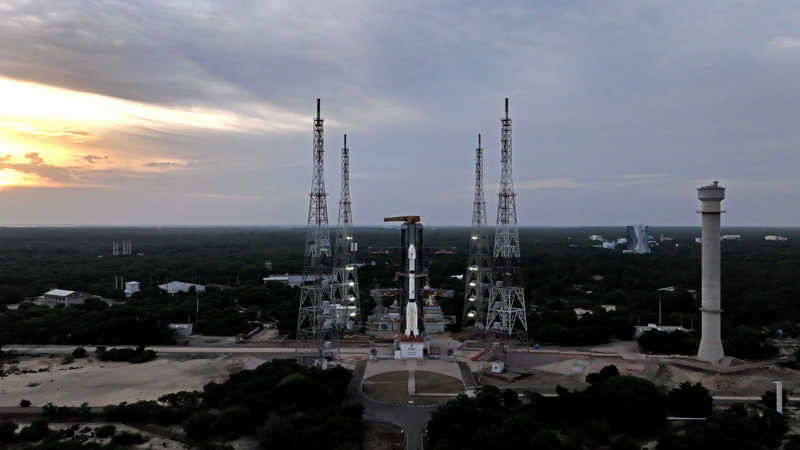
GSLV-F17 on the Second Launch Pad at Satish Dhawan Space Centre at dusk, with the four lightning towers and the umbilical tower flanking the 51.7 m rocket and the cryogenic upper stage visible at the top.


A 51.7-metre rocket lifted off in the dark hours of Friday morning at Sriharikota, on India’s southeast coast, and put a roughly 2,367-kilogram Earth-observation satellite into a Sub-Geosynchronous Transfer Orbit. ISRO’s GSLV-F17 mission was scheduled for 2:55 am IST on 4 September 2026 from the Second Launch Pad at Satish Dhawan Space Centre (ISRO mission page), and the launch itself went according to plan. What made it more than routine was that EOS-05 is the country’s first imaging satellite to operate from a geosynchronous perch, and it flew on a launcher that India’s space agency has spent more than two decades trying to make reliable.

The Geostationary Imaging Satellite programme goes back nearly a decade, to an earlier concept called GISAT-1 that was meant to give India a continuous, fixed-eye view of the subcontinent from 36,000 km up. The original GISAT-1 launch in 2020 was called off because of a technical issue with the cryogenic stage, and a second attempt the following year failed to ignite the cryogenic engine in flight. That delay had already pushed India’s geosynchronous imaging ambition by roughly five years before EOS-05 picked up the work as a direct replacement, with design updates informed by the failure analysis (TechTimes coverage). This time the cryogenic stage behaved. The third stage, designated CUS15, burned for about 814 seconds with the indigenous CE-7.5 engine, which ISRO developed to replace a Russian KVD-1 design after the Missile Technology Control Regime complications of the early 2000s (CE-7.5 Wikipedia entry). The launch matters because India’s earth-observation fleet has until now operated almost entirely from low Earth orbit, where a satellite passes over any given patch of ground for only a few minutes per orbit. From 36,000 km up, EOS-05 will sit over a fixed longitude and stare down at the same region continuously, day and night, gathering visible, near-infrared and shortwave-infrared imagery across roughly the whole visible disc (Wikipedia: EOS-05). That is a qualitatively different tool. A polar-orbiting imager gives you high spatial resolution at the cost of infrequent revisits; a geostationary imager gives you continuous revisits at coarser spatial resolution. EOS-05 is aimed at the second regime, with a 700 mm Ritchey-Chrétien optical telescope tuned for agricultural monitoring, cyclone tracking, and rapid disaster mapping over India, its 7,500-kilometre coastline and the surrounding maritime zones (Times of India mission summary).

This was the 19th flight of the GSLV and only the fifth to use the Mk II configuration with the indigenous cryogenic upper stage, which is the part of the rocket that has historically given ISRO the most trouble. The Mk II stands 51.7 metres tall, weighs 420.5 tonnes at lift-off, and uses a stack of three stages wrapped by a four-metre composite ogive fairing. The first stage is the S139 solid core with four L40H liquid strap-ons clustered around it; the second is the GL40HT liquid-propellant stage; and the third is the cryogenic CUS15 (ISRO mission brochure summary). That third stage is what makes GSLV comparable to other medium-lift geosynchronous launchers in the world: liquid hydrogen and liquid oxygen are notoriously hard to handle because they sit at around -253 °C, which is why cryogenic upper-stage development is often the single largest non-recurring engineering cost for any space agency building a geosynchronous launcher.

The mission was also a deliberate break from a difficult 18 months for the Indian launch programme. PSLV, the workhorse polar-orbit rocket, suffered consecutive failures in May 2025 and again in January 2026, and the investigations into both kept most of ISRO’s launch manifest on the ground (Indian Express on the PSLV investigations). NDTV called GSLV the “Naughty Boy” of the Indian fleet in its post-launch coverage, an affectionate reference to the launcher’s long history of partial failures and stand-downs (NDTV: How ISRO’s ‘Naughty Boy’ Rocket Delivered A Big Win For India). Putting EOS-05 into a precise Sub-GTO is exactly the kind of success that rebuilds confidence launch by launch; ISRO Chairman V. Narayanan confirmed after the mission that the cryogenic upper stage had performed as designed and that the satellite’s Liquid Apogee Motor would now do the work of raising the orbit to its final geosynchronous station.

The CE-7.5 engine that powered that critical third stage is itself the product of a long-running technology development programme. It is a regeneratively cooled, fuel-rich, staged-combustion-cycle engine, which is the same thermodynamic cycle used by the Space Shuttle’s RS-25 main engines (CE-7.5 details). The engine is about 2.14 m long and 1.56 m in diameter, runs at variable thrust, and has a specific impulse of around 454 seconds in vacuum. Staged combustion is the most efficient chemical cycle in practical use, because the propellants are partially burned in a preburner before the main chamber, which extracts more energy from the same mass of fuel. The trade-off is that the engine is harder to build and to test; the preburner runs at extremely high pressures and temperatures, and any leak of the hydrogen-rich preburner gas into the wrong part of the engine can damage it. That is why ISRO’s early GSLV flights used the Russian-supplied KVD-1 instead, which uses a simpler gas-generator cycle at the cost of lower efficiency. By replacing the Russian engine with a domestic one, ISRO removed a long-standing supply-chain risk and aligned the upper stage with India’s existing manufacturing base. It also brought the GSLV’s payload capacity to geosynchronous transfer orbit up to roughly 2,500 kg, which is enough for EOS-05 and for the heavier navigation and communications payloads ISRO has planned for the rest of the decade. The fact that EOS-05 was the first GEO imaging payload to fly on it is not coincidental; ISRO held the satellite back until it had a launcher it trusted enough to put an irreplaceable asset on.

For the broader commercial and strategic picture, EOS-05 also closes a gap that India’s civilian and military users have lived with for years. The Indian National Satellite System’s INSAT fleet has carried transponders for communications and weather imaging for decades, but it has not had a dedicated hyperspectral imager staring down from geostationary orbit. Hyperspectral means the imager splits incoming light into many narrow bands, which lets it distinguish, say, healthy crops from drought-stressed ones in ways that a conventional three-band imager cannot. Continuous coverage from geosynchronous orbit, in turn, lets disaster managers watch a cyclone’s eye wall reorganise in near-real-time or track the spread of a flood across a state hour by hour. The payload does not replace India’s existing low-Earth-orbit earth-observation satellites, which still do most of the heavy lifting on high-resolution mapping. It complements them.

The next test will be whether the satellite reaches its final station and powers up its instruments cleanly. ISRO’s GSLV-F15 in January 2025 placed a navigation satellite into GTO correctly but the satellite’s own Liquid Apogee Motor failed due to an oxidiser valve malfunction, leaving that spacecraft stuck in a transfer orbit (NDTV: What Back-to-Back PSLV Failure Means For ISRO). EOS-05 has the benefit of a fresh cryogenic upper-stage performance record and of a launch-to-orbit precision that should let its own propulsion system do less work. If all goes well, the satellite should be operational at its assigned geostationary slot above the equator within a few months, and India’s weather, agriculture, and disaster-management agencies will have their first continuous watch over the subcontinent.


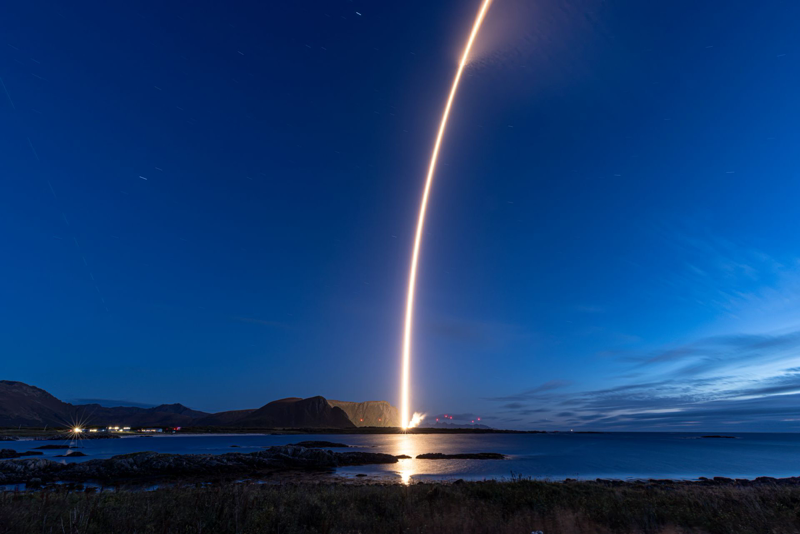
A bright rocket exhaust trail curves upward from a launch site beside a dark, calm sea and mountainous shoreline under a blue evening sky.

Image source: Isar Aerospace’s mission page. The image is a launch photograph supplied by Isar Aerospace; the official mission page identifies the flight and company source.


On the evening of 5 September, a narrow white line rose from the coast of northern Norway and bent across the darkening sky. It was the exhaust trail of Spectrum, a 28-metre rocket built by German startup Isar Aerospace. The vehicle left Andøya Spaceport at 22:12 CEST on the mission called Onward and Upward, then completed the sequence that a small launcher must get right: clear the pad, survive maximum aerodynamic pressure, separate its stages, restart the upper stage, and build enough horizontal speed to stay above Earth.

This time, it worked. Isar said the mission deployed its payloads into orbit on Spectrum’s second flight, making the company the first commercial space company from Europe to successfully deliver satellites to orbit. The distinction needs a little care. European rockets have launched from sites outside continental Europe for decades, especially from Europe’s Spaceport in French Guiana. This flight was about a privately developed European launcher operating from European soil. Isar Aerospace’s mission release describes the result and the company is still checking the status of the satellites with its customers.

That makes the photograph at the bottom of this post useful in a plain way. It shows the launch as a bright trail reflected in the sea, with the shoreline and mountains reduced to silhouettes. The image does not show the satellites or the rocket in orbit. It shows the first few minutes of a supply chain that ends there, far above the frame.

Launch capacity is the part of the space business that is easiest to underestimate. Designing a satellite is one problem; finding a rocket, a launch slot, the right orbit, and a place in the payload queue is another. A working small launcher gives customers a different schedule and a different set of possible inclinations. It also gives a government another option when access to space is treated as infrastructure rather than a one-off science project.

For Europe, the argument is also about control. The continent has major spacecraft manufacturers and a large scientific programme, but launch services have been concentrated in a small number of systems and locations. A rocket that is designed, assembled, tested, and launched by a European company does not remove every dependence on international supply chains. It does provide another route to orbit, and it lets European institutions buy a service from a newer supplier while the vehicle is still being qualified.

ESA supported the flight through its Boost! programme, while the payload selection came through the German Space Agency at DLR’s Microlauncher Competition. That connection matters because the first customers were not all large commercial operators. They included educational institutions and startups that needed a relatively inexpensive chance to put hardware in orbit. The launch therefore tested two things at once: the rocket’s flight system and the market around it.

The flight followed a difficult first attempt. Spectrum’s first test flight in March 2025 lasted 30 seconds, according to ESA’s pre-launch briefing. The vehicle cleared the launch pad, but it did not proceed to orbit. For a new launcher, that short flight is still useful data, but it leaves the next mission with a very specific burden: the company must demonstrate that it understood what happened and changed enough of the vehicle or its operation to make the next attempt meaningful.

The second flight was designated a qualification mission, not simply a repeat demonstration. ESA described it as an attempt to prove the Spectrum launch system in the context of the European Launcher Challenge, which requires selected launch-service providers to achieve an orbital launch no later than 2027. Isar’s own account says the vehicle passed maximum aerodynamic pressure, completed main-engine cutoff and stage separation, ignited its second stage, crossed the Kármán line at 100 kilometres, jettisoned the fairing, reached orbital velocity, completed its circularization burn, and separated the spacecraft.

Those milestones are a chain, not a checklist of independent tricks. The first stage must produce thrust while steering through a thickening aerodynamic environment. At maximum dynamic pressure, the vehicle feels the combined effect of air density and speed, so the guidance system cannot treat the rocket as if it were moving through a vacuum. Once the first stage has done its work, separation has to happen cleanly, and the second stage must ignite without upsetting the trajectory. A launcher can survive an engine problem and still fail to deploy a payload if the upper stage cannot finish the job.

Spectrum uses liquid oxygen and propane, with a multi-ignition second-stage engine, according to Isar’s vehicle description. The company lists a payload capacity of up to 1,000 kilograms to low Earth orbit. That number is a capability claim for the launch vehicle, not the mass carried on this mission. This flight carried five CubeSats and one non-separable experiment, the six passengers described by ESA before launch.

The physics behind orbital launch is less about reaching a particular altitude than reaching sideways fast enough. A satellite in low Earth orbit is continually falling toward Earth, but its horizontal velocity makes the ground curve away beneath it. The rocket spends much of its flight building that velocity while gravity pulls down and the atmosphere pushes back. The upper stage then uses a precisely timed burn to raise and circularize the trajectory. Crossing 100 kilometres is a useful boundary for describing spaceflight, but it is not the same as achieving an orbit that can carry a satellite for long.

Propellant choice shapes the engineering trade. Liquid oxygen is the oxidizer; propane is the fuel. The combination can be stored as a liquid at temperatures and pressures that fit a practical launch system, while the engine still needs turbomachinery, ignition hardware, cooling passages, valves, and controls capable of handling rapid changes in flow. Isar says the propellants offer a high density-specific impulse among carbon-based fuel options. That is a design advantage, not a promise that the rocket will have lower total environmental impact in every comparison.

The other design choice is industrial. Isar says Spectrum vehicles 3 through 7 are already in production and that a new 40,000-square-metre facility near Munich is intended to support production of up to 40 launch vehicles per year. These are plans and production targets, not a flight cadence already demonstrated. The difference is important. A rocket company can prove a vehicle once and still fail to create a dependable service if manufacturing, testing, range operations, and customer integration cannot keep pace.

Isar is also building a launch complex in Nova Scotia, Canada, for mid- to high-inclination orbits used by Earth-observation and communications missions. That site would complement Andøya rather than replace it. Different launch locations open different orbital geometries, but they also multiply the work: regulations, range safety, ground equipment, weather planning, logistics, and local operations all have to be made routine.

The next test is repetition. One successful orbital flight changes the conversation, but it does not yet establish a launch service with predictable timing and recovery from ordinary problems. Spectrum’s second flight showed that a European startup could move from a 30-second first test to payload deployment on the next attempt. The company now has to show that this was the beginning of a production programme rather than the high point of a long development cycle.

For the customers waiting on small satellites, the practical result is simple: there is now another European launcher with an orbital success on its record. The hard part starts after the photograph. Isar must turn a successful qualification flight into vehicles that can be built, tested, licensed, and launched often enough for customers to plan around them.


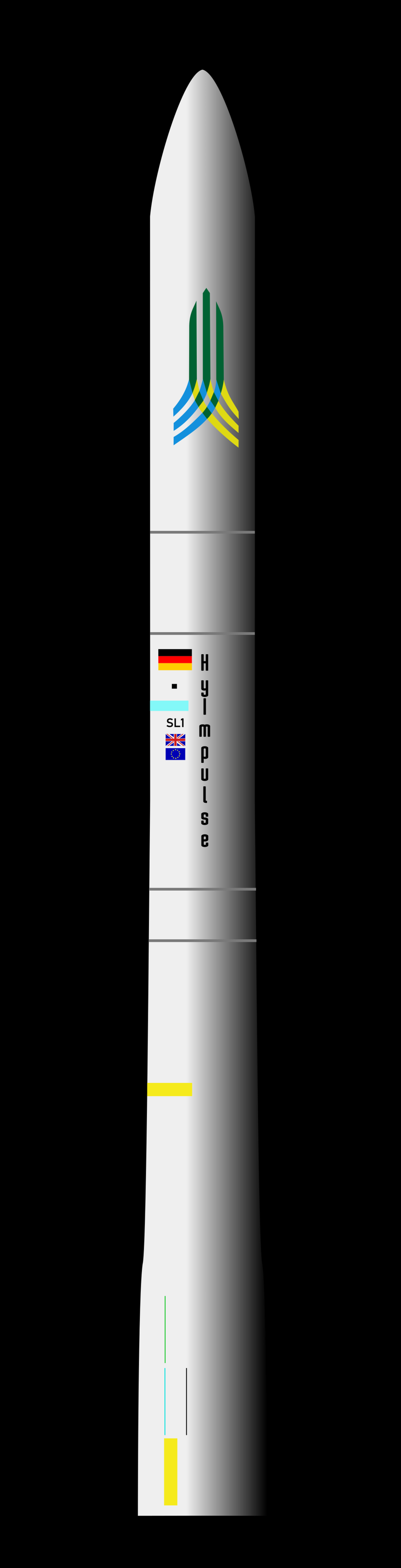
Artist's impression of HyImpulse's SL1 three-stage orbital rocket, with the HyImpulse logo and SL1 designation on the first stage. Image: HyImpulse, via Wikimedia Commons under CC BY-SA 4.0 (https://commons.wikimedia.org/wiki/File:Artists_Impression_of_the_SL1_from_HyImpulse.png).


On 2 September 2026, the German small-launch startup HyImpulse announced that it had closed a Series A extension of more than €50 million, lifting its lifetime equity and grant total to roughly €125 million and growing its commercial order book to over €350 million. The round was jointly led by JOIN Capital, a Berlin-based early-stage venture firm, and Ace Capital Partners, an Israeli aerospace and defence investor, neither of which had participated in the company’s initial €15 million Series A in October 2025. CEO Christian Schmierer framed the raise as Europe’s bid to build an “independent” small launcher: “While providers such as SpaceX offer a scheduled bus service to space, our solutions allow us to develop a flexible taxi service so that our customers can choose individual launch solutions and flexibly plan their schedules” (SpaceNews, European Spaceflight).

The funding matters because HyImpulse is the only European launch startup flying on a hybrid-propulsion architecture, and the first in the world with a published roadmap to put a paraffin-fuelled vehicle into orbit. Its suborbital SR75 has flown once, from the Koonibba Test Range in South Australia on 3 May 2024, and is preparing for a commercial re-flight from SaxaVord Spaceport in Shetland before the end of the year. Its larger orbital rocket, the SL1, has not yet flown but is now scheduled to attempt a maiden launch in 2027, a target the company has consistently described as a stretch goal contingent on further capital. The €50 million buys time on both fronts.

The company’s place in Europe’s launcher debate is awkward. Continent-wide, Ariane 6 and Vega C already provide operational access to space for medium and small payloads, with Ariane 6 capable of carrying over 21 tonnes to low Earth orbit and Vega C rated for up to 2,300 kilograms (European Spaceflight). At the bottom of the mass range, the SL1 is sized for payloads of up to 600 kilograms, small by European standards but large for the kind of responsive, single-customer rides that the global small-launch market has been chasing for a decade. The gap Schmierer is pointing at is real: European providers accounted for less than one per cent of all global launches in 2024, and ArianeGroup’s flagship is optimised for institutional rides, not the weekly cadence a single small-sat operator might want. Whether a hybrid rocket fills that gap, or duplicates it, is the question HyImpulse’s next eighteen months will answer.

HyImpulse was founded in March 2018 as a privately financed spin-off from the German Aerospace Center’s Institute of Space Propulsion at Lampoldshausen, the same facility where the V-2 and early post-war European rocket engines were tested (Wikipedia, DLR). The headquarters sit in Neuenstadt am Kocher in Baden-Württemberg, between Frankfurt and Stuttgart, and the team has grown out of the Lampoldshausen hybrid-motor programme that produced the research the company was built to commercialise. The German government separately committed €95 million in additional funding in late 2024 to support HyImpulse alongside two rival small-launch startups, Isar Aerospace and Rocket Factory Augsburg (European Spaceflight). The new equity raise sits alongside that public funding and brings HyImpulse’s total disclosed war chest close to €125 million in equity and grants combined.

The SR75 is a single-stage suborbital rocket. On its 3 May 2024 flight, named “Light this Candle”, the SR75 launched from the Koonibba Test Range in South Australia, reached an apogee of 50 kilometres, deployed parachutes, and was recovered intact (Southern Launch, ESA Multimedia). The Australian Space Agency called the launch one of the largest commercially launched rockets in Australian history at the time. The mission was supported through ESA’s Boost! programme, which is designed to fund commercial space transportation services in Europe. A second flight from SaxaVord Spaceport in Shetland, planned before the end of 2026, will mark the first launch from European soil under the company’s new agreement with the Scottish spaceport (BBC).

The SL1 is where the technology bet gets serious. The three-stage vehicle stands 33 metres tall, carries a payload fairing 2.2 metres in diameter, and has a lift-off mass of about 54 tonnes (HyImpulse SL1). Each stage burns the same propellant combination as the SR75 (aerospace-grade paraffin wax and liquid oxygen) through clusters of HyPLOX 75 turbopump-fed engines. The first stage carries eight of the engines, the second four, and the third one. According to the company, the SL1’s payload performance was boosted in 2024 to 600 kilograms to low Earth orbit, up from earlier estimates of 500 kilograms to a 400-kilometre sun-synchronous orbit (European Spaceflight – SL1 design update). The vehicle is designed for high flight cadence: the company states it is targeting up to 12 launches per year initially, with a goal of 50 per year by 2030, and turnaround times as short as three weeks between flights.

Hybrid propulsion is the architectural choice that distinguishes the SL1 from every other orbital launcher in development. A hybrid motor stores its fuel as a solid (paraffin in this case, a low-melting-point wax) and pumps its oxidiser as a liquid (cryogenic LOX) into the combustion chamber. The two never mix on the pad, which makes the rocket far safer to handle than a solid or bipropellant liquid stage: a hybrid cannot detonate, can be shut down by closing the oxidiser valve, and stores fuel at ambient temperature. The trade-off has historically been low regression rate and combustion instability, both of which constrain the achievable thrust-to-weight ratio. Paraffin wax partially solves the regression problem because it sublimes and vaporises under heat, exposing fresh surface area more quickly than a rubbery solid fuel like HTPB. The DLR research programme at Lampoldshausen spent more than a decade working on paraffin-LOX combustion, which is the line of work HyImpulse’s founders continued after spinning out (DLR electronic library). The published performance estimates, very high specific impulse comparable to LOX-kerosene bipropellant engines, depend on those gains holding up at full scale. The SR75 proved the motor at suborbital scale; the SL1 will test it at orbital scale.

Whether the SL1 reaches orbit on its first attempt in 2027 is the single question that matters for HyImpulse. The company has booked a €350 million order book, but orders are commitments, not revenue, and small-launch startups have a long history of paper demand evaporating after a failed first flight. The SaxaVord SR75 flight, if it succeeds in the December quarter, will mark the first time a European commercial operator has flown a hybrid rocket from European soil. The SL1 maiden flight, whenever it lands, will be the first attempt to put a paraffin-fuelled orbital launcher on a real flight profile. Both milestones are tractable engineering problems rather than physics ones; whether HyImpulse reaches them on schedule will depend on how fast the new €50 million lets it close the gap between a motor that has flown suborbitally and a launch system that can deliver a payload to orbit. The runway just got longer.