OrbitalHub

Where curiosity reaches escape velocity.

Domain is for sale. $50,000,000.00 USD. Direct any inquiries to contact@orbitalhub.com.

Archive for October, 2026

October 24, 2026

Mega-Earths may be stellar noise

Posted by


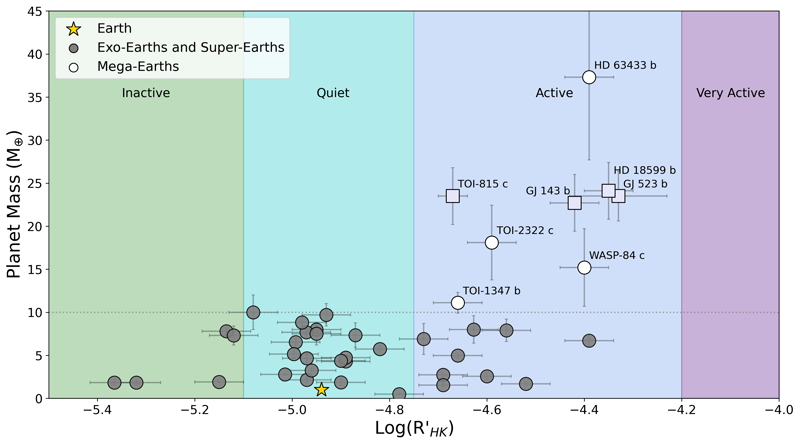
Planet mass plotted against host stellar activity for 333 small exoplanets, with Mega-Earth candidates as open white circles clustered on the Active and Very Active side and ordinary rocky planets as gray circles spanning the inactive through active range


A planet heavier than Neptune but the size of Earth should not, by the rules of how planets form, be a rock. Anything above roughly ten Earth masses is supposed to grab gas from the protoplanetary disk and become a sub-Neptune or larger. Yet a small catalog of worlds has long carried the label “Mega-Earth,” rocky objects sitting above that ten-Earth-mass line, and that label itself colors what people assume about planet formation at the upper end of rocky worlds. A paper published today by Casey Brinkman and Nicolas Cowan at McGill’s Trottier Space Institute argues that the entire category may be a measurement artifact (Brinkman & Cowan 2026, arXiv:2610.12600, reported on by Astrobiology.com the same day). Every candidate Mega-Earth in the literature, the authors show, orbits a magnetically active star. Active starspots and plages mimic and inflate the radial-velocity signal of an orbiting planet, and the chance that all of these outliers would land on active hosts by coincidence is below one percent. The implication is uncomfortable but specific. The Mega-Earths were never there. The detection technique was just seeing starlight flicker, and the label stuck because the underlying objects were just hard enough to disprove.

The category was supposed to mark the upper edge of rocky planet formation. When Xavier Dumusque and colleagues at the Harvard-Smithsonian Center for Astrophysics used the HARPS-N spectrograph on La Palma in 2014 to weigh Kepler-10c, the result landed at seventeen Earth masses packed into a radius only 2.35 times Earth’s (Harvard Gazette, June 2014). That density, on the order of seven grams per cubic centimeter, was consistent with a compressed rocky interior under extreme pressure. The team coined the term “Mega-Earth” (Wikipedia: Mega-Earth) on stage at the Boston meeting of the American Astronomical Society, and Dimitar Sasselov called Kepler-10c the “Godzilla of Earths.” The discovery paper was published in The Astrophysical Journal in June 2014. Subsequent surveys added more candidates with apparent masses between ten and forty Earth masses and radii sitting inside the rocky planet regime, and at various points the literature has listed six to eight such worlds, depending on which mass-radius cuts are applied. Each one pressed against a theoretical limit set by collisional mantle stripping and post-formation erosion that no primordial rocky planet should be able to cross.

What jumps out of the resulting scatter plot is that every white-circle Mega-Earth candidate lies on the active side, while the gray-circle population of ordinary rocky and sub-Neptune-mass planets spans inactive through quiet. The four Mega-Earths the authors identify, WASP-84 c, TOI-1347 b, TOI-2322 c, and HD 63433 b, all orbit stars with log R prime HK above negative four point seven five. Three additional planets sit close to the Mega-Earth density regime: GJ 523 b, TOI-815 c, and HD 18599 b. All seven orbit active stars. The probability of that alignment by chance, given how many inactive and quiet-host rocky systems exist in the same sample, comes out below one percent. The authors also note that a previously Mega-Earth-classified world, HD 119130 b, was already re-measured by another group and found to have an inflated mass caused by constructive interference between the planet’s orbital signal and the star’s rotational modulation.

The mechanism behind the contamination is well known but tricky to remove. Starspots and the brighter magnetic regions called plages move across the disk of a rotating star and produce Doppler shifts in the integrated starlight that are indistinguishable, in many pipelines, from the reflex motion of a planet. Starspots suppress local convection and produce false radial-velocity signals at the star’s rotation period. Plages do the same at somewhat different amplitudes. When a planet’s orbital period happens to land near an integer or half-integer multiple of the star’s rotation period, the two signals can constructively interfere and inflate the inferred planet mass by a factor of two or more. That is the situation for several of the candidate Mega-Earth hosts, whose TESS light curves show clean rotational modulation at periods from roughly four to fourteen days. The full radial-velocity datasets that yielded the published masses came from public archives including the NASA Exoplanet Archive, which compiled discovery spectra from HARPS, PFS, and TESS follow-up campaigns. Gaussian-process regression, the tool most often used to handle stellar activity in radial-velocity fits, is only as good as its kernel choices and its priors. When the kernel is too smooth, the process absorbs genuine planetary motion as activity noise. When it is too wiggly, activity noise leaks into the planetary model and inflates the mass.

What the paper does not do is rule out rocky planets above ten Earth masses on theoretical grounds. The runaway gas accretion argument sets ten Earth masses as the threshold above which a core cannot avoid grabbing gas during formation, but it is a threshold, not a wall. Collisional mantle stripping after disk dispersal or photoevaporation of a once-larger planet’s envelope can, in principle, leave a bare rocky remnant. The authors are explicit that those pathways remain possible, just unproven. The Mega-Earth label, in their framing, has been applied to planets whose mass measurements cannot yet distinguish between a real ultra-dense rocky world and a noisy radial-velocity fit around an active star. Re-observing these systems with ESPRESSO on the Very Large Telescope, with HARPS on the TESS-Keck Survey infrastructure, or with NIRPS at La Silla, all of which have the spectral resolution to see activity-induced line-profile variations directly, would settle the question. Several of the candidate Mega-Earths have already been on those queues. The paper, which appeared on the arXiv preprint server on 8 October 2026 and is now in the resubmission cycle for The Astrophysical Journal Letters, lands in a catalog of corrections that have repeatedly eaten specific claimed populations of extreme exoplanets. Stellar contamination has eaten mini-Neptunes hiding inside hot-Jupiter mass measurements, cold Jupiters past ice lines that were artifacts of magnetic cycles, and small-radius planets that turned out to be diluted binaries. Each time, the underlying detection method is sound for inactive host stars and quietly wrong for active ones. Adding Mega-Earths to that list is, in a way, an expected move. The catalog of rocky worlds stays grounded. The Ultra-Massive Rocky Planet threshold, if it exists at all, moves somewhere more difficult to measure from the ground, perhaps requiring JWST transmission spectroscopy of these same systems to constrain atmospheric mass, or years of radial-velocity monitoring as activity cycles rotate through minimum phases. For now the simple chart is enough: a horizontal line at ten Earth masses, with seven suspected outliers sitting on the active side and zero on the quiet side. Pattern recognition cut the question in half.
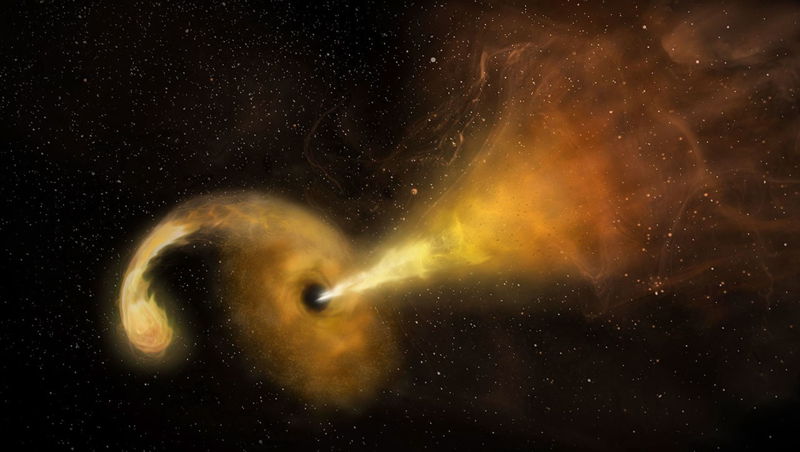


Artist's concept of a black hole pulling apart a star, with glowing debris curling into a disk and a bright jet streaming to the right


A flare appeared in November 2025 near the outer edge of a galaxy in Cetus. It shone in ultraviolet light with roughly the output of 10 billion Suns and, for a few months, outshone the galaxy itself. That sounds like the sort of event astronomers would notice immediately. The awkward part was its address.

The flare sat more than 30,000 light-years from the galaxy’s center, nowhere near the central supermassive black hole that should have been capable of producing it. Follow-up observations nevertheless showed the signature of a star pulled apart by a massive black hole. The event, named TDE 2025abcr, had exposed an otherwise dark object wandering through the galactic outskirts.

The NASA account of the discovery describes it as the most distant-from-center example of its kind. More important than the record is how it was found: a search deliberately stopped assuming that a galaxy’s biggest black holes must stay in the middle.

Artist’s concept of a tidal disruption event. Credit: NRAO/AUI/NSF/NASA. NASA JPL image page.

Supermassive black holes are usually found through their effects rather than by seeing the objects themselves. At a galaxy’s center, the surrounding stars and gas provide several ways to measure an unseen mass. Far from the nucleus, a quiet black hole can disappear against the sky. It may reveal itself only when matter falls in.

Tidal disruption events offer that brief illumination. NASA estimates that one occurs in a given galaxy about once every 100,000 years, while surveys find roughly 30 across the sky each year. Until recently, optical searches concentrated on galactic nuclei. That was a reasonable filter because known supermassive black holes lived there, but it also built the expected answer into the search.

TDE 2025abcr shows what happens when that positional filter is relaxed. The accepted paper and open preprint calls it the first optical tidal disruption event discovered in the outskirts of a host galaxy. Its inferred black hole mass is about 10^6.09 solar masses, far below the roughly 10^8.82-solar-mass black hole estimated at the host’s center. One galaxy may therefore contain two massive black holes with very different histories and locations.

Finding more such objects would put numbers on a poorly measured population. Wandering black holes preserve evidence of galaxy mergers, stripped dwarf galaxies, and gravitational encounters among black holes. They also test whether catalogs built around bright galactic centers have missed a class of massive objects hiding in plain sight.

The Zwicky Transient Facility, or ZTF, first flagged the brightening in November 2025. ZTF surveys the northern sky from Palomar Observatory and produces an enormous stream of changing points. According to NASA, about half a million flashes are detected each night. A custom version of the machine-learning classifier tdescore examined that stream without requiring candidates to coincide with a galaxy nucleus. It recognized the light curve of TDE 2025abcr even though the source was well off-center.

That initial match was only a prompt for more observing. The galaxy WISEA J014656.04-152214.7 lies about 750 million light-years away. The transient was separated from its nucleus by 9.5 arcseconds, corresponding to a projected distance of 9.3 kiloparsecs. Spectra from ground-based telescopes, including the SOAR telescope in Chile, showed hydrogen and helium emission associated with a tidal disruption event. NASA’s Neil Gehrels Swift Observatory then supplied ultraviolet and X-ray measurements unavailable from the ground. Swift’s ultraviolet telescope measured a temperature near 30,000 degrees Celsius.

Together, the light curve, spectrum, temperature, and location ruled out more ordinary explanations. The researchers classified the source as a hydrogen-and-helium tidal disruption event. Scaling relations between peak luminosity and black hole mass gave an estimate of 10^6.09 solar masses, with an uncertainty of 0.53 dex. That uncertainty is broad, but the result still separates the wandering object from the much heavier black hole expected in the main galaxy’s nucleus.

How did it get there? The team offers two possibilities. In one, several galaxies merged and the interaction among their central black holes ejected the lightest one toward the outskirts. In the other, the black hole remains at the center of a faint dwarf galaxy now being stripped during a minor merger. The dwarf’s stars may be too dim or too dispersed to stand out in current images.

Those explanations can be tested. Deep late-time imaging, after the flare fades, could expose a faint stellar system around the black hole. More off-nuclear events would reveal whether large offsets favor one merger history over another. The paper places the rate of events more than 3 kiloparsecs from a nucleus below 10 percent of the nuclear TDE rate, while predicting that the Vera C. Rubin Observatory could find dozens with resolvable offsets each year.

The timing has an engineering wrinkle. Swift’s pointed observations are temporarily suspended while the mission awaits an orbit boost. Its primary mission ran from 2004 to 2006, yet it has continued watching the changing sky for more than two decades. Rubin can supply a much larger optical sample, and NASA’s Roman telescope can extend the search to greater distances. Swift, once normal operations resume, remains useful for the ultraviolet and X-ray follow-up that turns an unusual point of light into a physical diagnosis.

A tidal disruption begins with a gradient. Gravity is stronger on the side of a star facing a black hole than on the far side. If the star passes close enough, that difference overwhelms the star’s self-gravity. The star stretches, breaks apart, and becomes a stream of gas. As the NASA tidal disruption explainer shows, some debris escapes while some returns, collides, heats up, and gathers around the black hole.

The rough boundary is the tidal radius, often written as r_t approximately equal to R_star times (M_BH/M_star)^(1/3). A larger star is disrupted farther out. A more massive black hole also raises the tidal radius, but only with the cube root of its mass. The event horizon, by contrast, grows directly with black hole mass. This difference explains why a million-solar-mass black hole can tear a Sun-like star apart outside its horizon, where the hot debris remains visible.

The flare is not a photograph of the black hole. It is radiation from gas responding to extreme gravity. Ultraviolet temperature constrains the hot emitting region. Spectral lines identify elements and track changing velocities. X-rays probe hotter material closer to the compact object. None of these measurements alone settles the case; their agreement does.

The classifier solves a different problem. A survey camera records real transients alongside variable stars, supernovae, moving objects, and instrumental artifacts. A model trained on known tidal disruption light curves can rank candidates, but a model trained only on nuclear examples may learn location as a shortcut. The off-nuclear version of tdescore removed that shortcut. Its success is a clean lesson in survey design: changing a selection rule can reveal objects the telescope had already become capable of seeing.

TDE 2025abcr did not make a wandering black hole appear. It made one observable for a few months. A star supplied the fuel, ZTF caught the changing light, and Swift helped establish what produced it. The result is a black hole of roughly a million solar masses projected 9.3 kiloparsecs from the center of a massive galaxy.

The remaining question is whether this object was kicked out of a galactic nucleus or still occupies the fading core of a stripped dwarf. Late-time imaging may answer that for this system. Rubin’s larger alert stream can answer the population question by finding enough examples to compare.

The useful change was modest: researchers searched outside the place where theory and habit told them to look. If Rubin finds the predicted dozens of resolvable off-center events each year, TDE 2025abcr will become less of an oddity and more of a map marker for a hidden population moving through galactic outskirts.


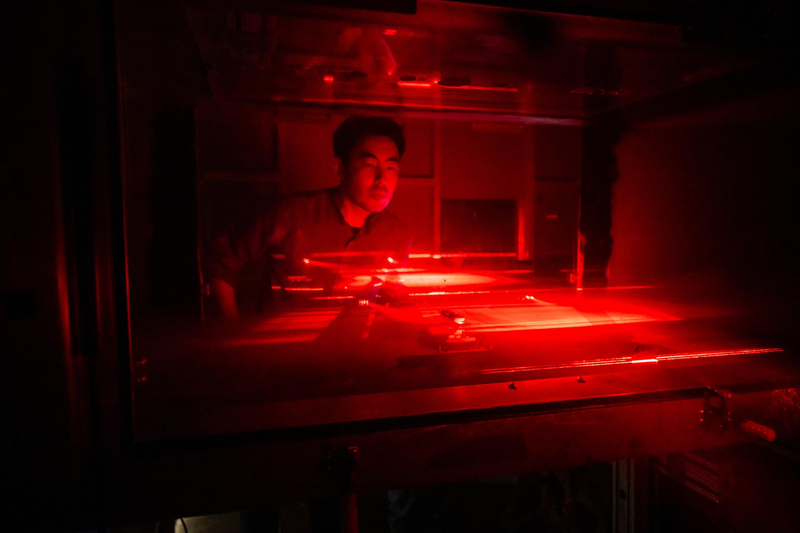
Engineer Chullhee (Chace) Cho performing wind tunnel testing on a hardware component of the Deep Atmosphere Venus Investigation of Noble gases, Chemistry, and Imaging (DAVINCI) descent sphere at NASA Goddard, August 5, 2026.


For an hour, the ceramic-lined furnace at Rex Heat Treat in Bedford, Pennsylvania, climbed from room temperature to 465 degrees Celsius. The vessel inside was titanium, about a meter across, the size of an exercise ball. The DAVINCI team put it through that profile six times. Six times it came out the same shape it went in. Each run mimicked the way the probe will heat up over the fifty-five to sixty minutes of its one-way trip through the atmosphere of Venus, a place whose surface sits at 740 kelvin and a pressure equivalent to nine hundred meters of seawater. The fact that the engineering development unit survived its own near-death preview is the news from NASA Goddard this week, and the reason scientists who study Venus are starting to plan around a real measurement instead of a hypothesis (NASA Science, 24 September 2026).

What DAVINCI is after is older than the program. Venus and Earth started as near twins, similar size, similar rock, similar distance from a young Sun. Today one is a temperate water world and the other is a planet whose surface would crush a submarine and whose clouds rain sulfuric acid. The question of when and how that divergence happened, and whether Venus ever had liquid oceans, has been the central question of inner-Solar-System science for two generations. The Pioneer Venus Multiprobe dropped four small entry probes in 1978, and Vega 2 carried the Soviet Vega program’s last successful lander to the surface in 1984. Venera 14 returned the only close-up images of Venus’s surface, and they are forty-four years old. Every chemical measurement below forty kilometers of altitude that exists today was made by instruments that fit inside a Soviet-era school bus and ran for a few minutes before the heat killed them (Garvin et al., 2022, Planetary Science Journal 3, 117).

The mission NASA picked to fill that gap is named, improbably, after Leonardo. Deep Atmosphere Venus Investigation of Noble gases, Chemistry, and Imaging started as a Discovery proposal in 2015, lost to Lucy and Psyche, came back as DAVINCI+ in 2019, and was selected in June 2021 alongside its companion orbiter VERITAS. The flight system is two pieces: a Lockheed Martin carrier that will perform two flybys of Venus to map cloud motions and surface composition, and a descent probe that will be released about two days before atmospheric entry. The current schedule puts launch in December 2030, atmospheric entry in 2034 or 2035, and a one-hour descent that ends at Alpha Regio, a tessera, a piece of the old continent-like crust that may hold the chemistry of whatever ocean Venus once had (NASA, Discovery Program selection, 2 June 2021; Wikipedia, DAVINCI).

The August furnace tests at Rex Heat Treat are about the inside of the probe, not the heat shield. The DAVINCI descent sphere, an oblate titanium pressure vessel about 0.98 meters by 0.85 meters and roughly two hundred kilograms, is what carries the science instruments down. The carbon-phenolic aeroshell that surrounds it for entry, a 2.24-meter cone designed to absorb peak heating above ten thousand degrees Celsius during the minutes of peak dynamic pressure, burns away and falls off below the cloud layer. After that the descent sphere is on its own, passively cooled by a layered thermal-soak design and by the buoyancy of the lower atmosphere, broadcasting measurements for an hour through a relay on the carrier spacecraft nine thousand kilometers overhead. The team put more than a hundred thermal sensors on instrument simulators inside the development unit and watched them through every cycle. Kristen Brown, the probe manager at Goddard, called the system a huge engineering challenge because the instruments have to be kept alive while the probe deliberately lets hot Venus gas in through inlet ports to feed the mass spectrometer and tunable laser spectrometer. The tests verified that the layered insulation, the inlet geometry, and the internal layout can do both at once (NASA Science, 24 September 2026; Garvin et al., 2022).

The science payload is the reason anyone cares about an hour of in-situ measurement. DAVINCI carries five primary instruments inside the descent sphere plus a context imager. The Venus Mass Spectrometer and the Venus Tunable Laser Spectrometer are tuned to read the ratios of noble gases, sulfur species, and water-related molecules with enough precision to test the leading hypothesis for Venus’s history. That hypothesis goes like this: early Venus was hot but had water; the water dissociated in the upper atmosphere, the hydrogen escaped to space, and a runaway greenhouse locked the planet into its present state. If the mass spec finds a primordial argon and neon inventory that matches a wet early Venus, the runaway model survives; if the ratios look like the mantle of a dry planet, the story changes. The Venus Descent Imager and the Venus Imaging System for Observational Reconnaissance, riding on the descent sphere and the carrier respectively, will produce the first sub-hundred-meter pixel-scale images of tessera terrain and the highest-resolution images of the surface since the Venera landers. Below the clouds the descent sphere’s pressure rises to roughly ninety-two bar and the temperature pins to four hundred and sixty-seven degrees Celsius, conditions the instruments are rated for, but only if the thermal design lets them keep measuring all the way down (Garvin et al., 2022; Wikipedia, Atmosphere of Venus).

Two engineering choices make that possible. First, the descent sphere is hermetically sealed: every gas path between the hot outside and the cold inside is broken by a long, narrow inlet that lets flow in without letting heat conduct in. Second, the relay link to the carrier operates at X-band through a high-gain antenna on the back shell, with the carrier recording the descent and playing it back to Earth later. Together the choices turn the descent sphere into something like a deep-ocean submersible, a thin titanium shell, internally cold, externally roasting, surviving because the thermal mass of the vessel is large compared to the heat leaking in through the instrument feed-throughs. The descent profile is also gentler than a Mars entry. Venus’s thick atmosphere is itself the brake, dropping entry velocity to about thirty meters per second by the time the parachute stage jettisons and the sphere free-falls the last thirty kilometers of cloudy, acidic air to the surface.

The test campaign is the second of two major engineering milestones the team targeted for 2026. The first, in June at Crater Island in Utah, was a VADIX helicopter demonstration of the descent imager concept under realistic lighting and dust; the second, just completed in Bedford, was the thermal survival test of the descent sphere itself. The team now turns to final design and fabrication, with a third milestone likely in 2027 covering full-up entry-vehicle qualification, then integration with the carrier and launch from Cape Canaveral in the December 2030 window. If the schedule holds, the first new measurements from below Venus’s cloud base in fifty years will arrive on Earth in the spring of 2035. They will not settle the runaway-greenhouse question on their own, but they will give planetary scientists a starting point that no present model of Venus has, measured chemistry, measured wind, measured surface composition, at every altitude from seventy kilometers down. That dataset, not the next spectacular image, is what will change the science.


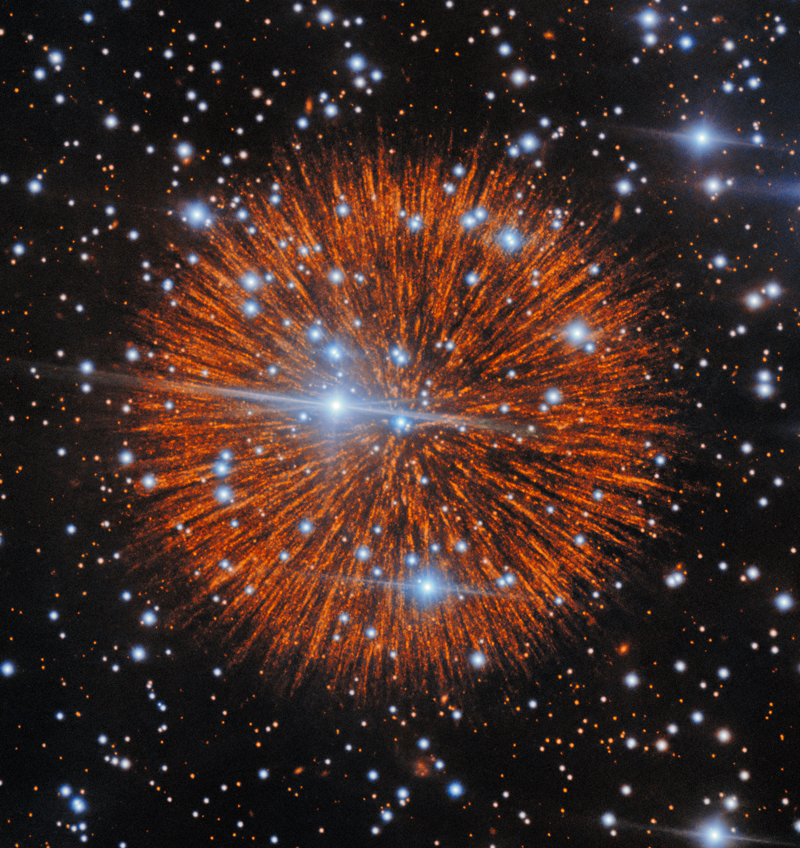
Gemini North narrowband image of the supernova remnant Pa 30, captured with GMOS in [S II] and [O III] filters showing the orange radial filaments resolved into cascades of small knots around the bright blue central star, IRAS 00500+6713.


In the constellation Cassiopeia there is a small, oddly symmetrical puff of gas that, on the best nights, looks like a firework frozen at the instant it bursts. Astronomers call it Pa 30, and it is the leading candidate for the remains of a supernova that flared over China, Japan, and the medieval Middle East in the summer of 1181. New narrowband imaging from the Gemini North telescope on Maunakea, published on 6 October 2026 in The Astrophysical Journal, shows that Pa 30’s famous radial filaments are not smooth streamers at all. They are chains of small, evenly spaced knots of gas, lined up like beads on a string along every spoke of the nebula, and the new observations resolve about ten times more of them than any previous study had seen (Cunningham et al. 2026 ApJ; NOIRLab press release). That changes what astronomers thought they were looking at, and it gives the field a way to measure how the ejecta of an 850-year-old failed thermonuclear supernova actually broke up as it ran outward.

Pa 30 was nothing more than an entry in a star catalogue until 2013, when an American amateur astronomer named Dana Patchick, sorting through Wide-field Infrared Survey Explorer data for a citizen-science hunt for planetary nebulae, picked out a previously unrecognized infrared source he labelled “Pa 30” (Sci.News). Follow-up imaging on the 2.1-metre telescope at Kitt Peak and then the 2.4-metre Hiltner telescope revealed a faint nebula threaded by remarkably straight radial filaments, almost perfectly circular in outline, with a hot blue star at the centre (Cunningham et al. 2026 arXiv:2610.06424). The reason that matters is that a normal Type Ia supernova is the catastrophic disruption of a white dwarf that has been pushed over the Chandrasekhar mass limit by accretion from a companion. The white dwarf is destroyed completely; no central star survives; the expanding debris forms a roughly spherical shell with no heartbeat. Pa 30 has a star at its centre that is still very much alive and very hot. Spectra put its surface temperature at roughly 200,000 kelvin and its stellar wind at about 16,000 kilometres per second (Cunningham et al. 2026 ApJ). That is the calling card of the much rarer Type Iax class, a family of faint thermonuclear explosions in which the white dwarf survives the blast, sometimes barely. Only a handful of Type Iax events have been catalogued, and Pa 30 is the only confirmed one whose remnant we can resolve in detail.

The 1181 identification is what turns Pa 30 from a curiosity into a calibration point. Eight separate texts record that a “guest star” appeared in Cassiopeia between 4 and 6 August 1181 and remained visible to the naked eye for 185 days. For decades the historical remnant was confused with the radio pulsar wind nebula 3C 58, but 3C 58 turned out to be too old to match. In 2021, Andreas Ritter and a team at Queen’s University Belfast identified Pa 30, with its associated central star (which they dubbed Parker’s Star after the Hong Kong astronomer Quentin Parker), as the much more plausible remnant of the 1181 event (Sci.News). The geometry fit: an age of roughly 850 years, a position consistent with the historical records, and an ejecta velocity near 1,000 kilometres per second. The 2026 Gemini North campaign, led by Tim Cunningham, then at the Center for Astrophysics at Harvard and Smithsonian and now at the University of Warwick, with Ilaria Caiazzo at the Institute of Science and Technology Austria, John Raymond, and Scott Kenyon, set out to see what was hidden in the filaments at the highest resolution available from the ground. They used the Gemini Multi-Object Spectrograph (GMOS) in narrowband filters tuned to the [S II] and [O III] emission lines of low-ionization gas, and took very long exposures to pull faint substructure out of the background. Each radial spoke resolved into a string of small bright knots separated by fainter gaps, marching outward from near the central object, and the [O III] imaging produced the first confirmation that the diffuse oxygen emission in the nebula is co-spatial with the sulphur filaments rather than being a separate, smoother component (Cunningham et al. 2026 ApJ).

The other headline from the same campaign is a quiet one: the centre of the nebula sits almost exactly where the central star sits. Surviving supernova remnants are expected to recoil, and models of double-white-dwarf mergers predict a kick of anywhere from a few to several hundred kilometres per second for whatever survives the blast. Cunningham and colleagues used their imaging to pin the geometric centre of Pa 30 with a Monte Carlo Markov chain and compared it to the position of the central star, concluding that any transverse kick must be under about 100 kilometres per second at the 3-sigma level (Cunningham et al. 2026 arXiv:2610.06424). That is unusually small for a merger survivor. It tightens the constraint on how energetic and asymmetric the explosion could have been, and it adds another piece of evidence that the 1181 event really was a Type Iax: a comparatively gentle thermonuclear runaway in which much of the white dwarf’s mass was ejected but a substantial core remained intact, sitting nearly where it began. What the knots themselves are made of is the open question the new data sets up. If the filaments were once smooth, their beaded structure implies either that the ejecta itself was clumpy on small scales when it was launched, or that the interstellar or circumstellar material the ejecta ran into was inhomogeneous enough to break the flow up into discrete radiative-cooling zones. The characteristic spacing Cunningham’s team measures, around 10^16 centimetres per knot, is roughly the size scale that Rayleigh-Taylor fingers in supernova remnants are expected to produce, and strings of similar knot cascades can be seen in the core-collapse remnant Cassiopeia A, although without Pa 30’s strict radial geometry (Cunningham et al. 2026 ApJ).

Follow-up is already in the queue. STScI program 18082, accepted in June 2026, will pair the Gemini narrowband imaging with a 16-orbit Hubble WFC3 campaign in [S II] to map Pa 30’s filaments across their full length, and JWST program 9111, in parallel, is using MIRI’s integral-field unit to obtain mid-infrared spectra of six bright filaments to measure their dust content and cooling balance. The combination should let the team tie the optical knots to specific ejecta species (oxygen, neon, sulphur) and to the dust that survived the explosion, and to test whether the beading is consistent with a clumpy progenitor or a clumpy medium. There is also a separate, very recent coda to the Pa 30 story: a separate team announced in early October 2026 that the central star, IRAS 00500+6713, has a measurable green tint in its visible-light spectrum, the first white dwarf to show one, painting it with the same mechanism that gives oxygen-rich Wolf-Rayet stars their colour (NASA APOD 2026 October 7). The 1181 supernova is the only historical Milky Way Type Ia-class event whose remnant we can resolve and the only Type Iax remnant at all, and with knots now measurable one by one, a quiet central star that did not fly away, and a Hubble and JWST follow-up in flight, it is the closest thing the field has to a benchmark for what a failed-but-not-quite thermonuclear supernova looks like 850 years after it happened.


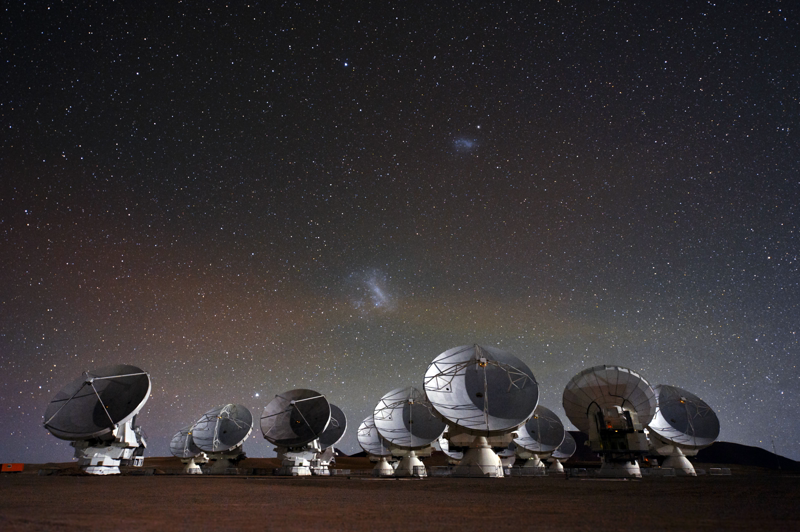
ALMA antennas on the Chajnantor plateau under the Magellanic Clouds


SETI has spent decades listening for narrowband radio signals, mostly below a few gigahertz. Most of that listening has been concentrated in a small slice of the radio dial. A new analysis from the University of Manchester points at a different slice and asks what has been there the whole time.

Louisa Mason, a PhD researcher at Manchester, used four archived observations from the Atacama Large Millimeter/submillimeter Array (ALMA) in Chile to run the telescope’s first SETI survey. The work, published in the Monthly Notices of the Royal Astronomical Society, focuses on ALMA’s Band 3 receivers and two narrow frequency windows near 90.642 GHz and 93.151 GHz. Those frequencies sit well above the traditional SETI bands and have barely been searched for narrowband technosignatures.

No candidate signals exceeded the survey’s detection thresholds. That is the expected result for a first pass, and the researchers describe the result as an opening of parameter space rather than a discovery.

SETI is shaped as much by instrumentation as by theory. Most narrowband technosignature work has relied on telescopes such as the Green Bank Telescope, the Parkes Murriyang telescope, and the Allen Telescope Array. Those instruments are excellent in their ranges but were not built for the millimeter and submillimeter bands. ALMA is sensitive above 35 GHz in a way few other facilities can match, and it has been producing archived data since 2011.

The implication is straightforward. A signal at 90 GHz could be present in ALMA data right now without anyone having looked. The new analysis is the first structured attempt to check.

There is a secondary finding, also presented at the Royal Astronomical Society’s National Astronomy Meeting in 2026. The same team used Gaia stellar catalogues to revisit the number of stars that earlier SETI surveys actually covered. ScienceDaily’s summary notes that the Manchester group found prior published counts may have understated the real coverage by more than an order of magnitude, with one estimate moving from roughly 288,000 stars to over 6 million once Gaia cross-matching was done properly.

The headline numbers are different from the search itself, but they are linked. Both findings argue that SETI has been sampling the sky less carefully than the literature suggests.

Mason did not request new ALMA time. The survey pulled four archived calibrator scans from the ALMA archive. Calibration observations are short, pointed at bright reference sources, and usually discarded after the data are reduced. Mason treated each scan as a science observation in its own right, looked at the stars that happened to fall in each antenna’s field of view, and searched for narrowband signals inside two narrow windows in Band 3.

The search covered 28 stars in total. They are a mix of main-sequence stars and white dwarfs, drawn from Gaia cross-matches. For each star, the analysis looked for narrowband emissions that would not be consistent with known natural processes in the band. Carbon monoxide, hydrogen cyanide, and diazenylium all produce molecular lines in this frequency range, so a SETI search needs to avoid flagging those as candidates.

The paper’s conclusion is that no candidate technosignatures passed the threshold. The survey’s sensitivity, the bandwidth of the search windows, and the relatively small star sample all limit how much can be inferred from a null result. The University of Manchester’s research record makes the same point in a more compact form.

Universe Today’s coverage walks through Mason’s quote that the millimeter and submillimeter bands “remain almost completely unexplored for SETI,” which is why the team framed the work as opening parameter space rather than confirming or refuting a particular hypothesis.

The Manchester team also pulled out a comparison with existing facilities. The figure in the MNRAS paper shows the frequency coverage each instrument could probe for narrowband SETI work. ALMA’s coverage sits in a region where other radio observatories are not conducting technosignature searches. That is both a justification for the work and an invitation to others to design complementary searches.

SETI looks for narrowband radio signals. The reasoning has not changed much since the early 1970s. Natural astrophysical sources tend to emit across broad frequency ranges, often with characteristic molecular or thermal signatures. A transmitter that uses a stable oscillator and a high-gain antenna concentrates its power into a narrow slice of spectrum. The narrower the signal, the harder it is to explain without technology.

A typical SETI pipeline breaks the recorded spectrum into fine channels, looks for narrow features, and checks that the candidate signal is consistent with the receiver’s beam shape and the motion of the telescope and the target. Drift rates, polarization, and the on-off pattern that comes from tracking a star are all used to separate terrestrial interference from real signals.

ALMA complicates this picture. ALMA is an interferometer, meaning it combines signals from many individual antennas. Each antenna has a defined field of view, and the dishes can resolve sources on the sky. At 90 GHz, that field of view is small. The good news is that any signal coming from a real source on the sky will appear in the antennas that were pointed at it, with a pattern that reflects the interferometer’s geometry. The bad news is that the same geometry creates challenges for confirming a narrowband signal across multiple baselines.

The Mason paper is explicit about these complications. Drift rates at high frequencies are larger because a transmitter of fixed velocity produces a larger Doppler shift per unit time when the carrier frequency is higher. The interferometer’s “undistorted field of view” sets a hard limit on how far off-axis a source can be and still be observed cleanly. The paper treats these as engineering constraints to design around rather than showstoppers.

The four archived scans used in the analysis were calibrator observations pointed at bright sources, not deep integrations. Each scan covers a few minutes of data. A real SETI survey would want longer integrations and a wider range of calibrator fields, but the short data are enough to demonstrate the analysis pipeline and to put a first constraint on narrowband signals at 90 GHz from a small star sample.

The Gaia cross-match that drives the higher star count is a separate but related piece of work. Previous published counts tended to use a single pointing on the sky and the simple catalog of stars within that beam. Cross-matching against Gaia, which has astrometry and stellar parameters for nearly two billion sources, lets researchers classify the targets and identify white dwarfs separately. White dwarfs are interesting for SETI because they are compact, old, and bright at optical wavelengths, and they often have stable proper motions.

The combined message is methodological. SETI can be expanded by re-examining existing archives, and existing surveys can be more ambitious about how they characterize their coverage. ALMA’s archive, described by the National Radio Astronomy Observatory as containing public data from 66 high-precision antennas in Chile, is the obvious next place to look. The European Southern Observatory’s ALMA instrument page adds the same picture from the operator side: a fifty-antenna main array plus a compact array of 12-meter and 7-meter dishes, all working as a single interferometer.

SETI’s search volume has been bounded more by receiver design than by theory. The Manchester group made that bound visible by stepping outside the usual bands and re-examining published star counts. Neither move produced a signal, but together they reset the baseline.

The next test is whether the technique scales. A follow-up that runs the same pipeline across the full ALMA calibrator archive, including longer integrations and additional Band 3 frequencies, would not require new telescope time. It would need a researcher willing to spend the weeks of compute and the careful bookkeeping the analysis demands.

Until that happens, the cleanest summary is also the most honest: SETI has more sky to listen to than it has listened to, and the millimeter bands are still open.


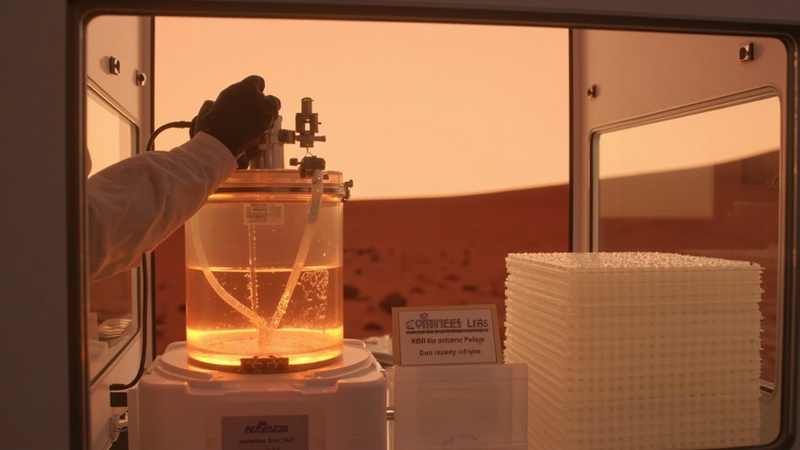
A benchtop bioreactor glowing amber inside a glovebox, with a Mars-red landscape visible through a viewport and 3D-printed bioplastic habitat panels stacked beside it


For the first time, an engineered bacterium has built a useful polymer using only what Mars has on the surface. No Earth fertilizer, no pre-processed feedstock, no shipped-in sugar. The strain, called sPL.001, was announced in late September by Pioneer Labs, a small nonprofit in Emeryville, California, and the underlying paper landed on bioRxiv on 14 September 2026 (Martin et al., DOI 10.64898/2026.09.14.748363). It is the first of five microbes the team plans to field on Mars, and the first to clear a load-bearing question that has hung over every serious terraforming proposal for forty years: can Earth life actually eat Martian dirt?

The case for carrying biology to Mars goes back to the early days of in-situ resource utilization. The standard playbook for a future base assumes you will land everything, refine everything, and recycle almost nothing; biology changes that calculus by adding a self-replicating partner. Pioneer Labs was founded in 2024 by synthetic biologist Erika DeBenedictis, who had cut her teeth on interplanetary mission design as a JPL undergraduate, and the company has spent the last two years narrowing the most ambitious version of the idea down to a single concrete first step (Pioneer Labs, 28 September 2026). The first strain had to be useful on day one, on the path to terraforming, and provably unable to escape and survive in the wild. sPL.001 is the answer they settled on.

What the strain does is unglamorous and important. It pulls carbon, nitrogen, phosphorus, and trace metals out of a slurry of leached Mars regolith, fixes acetate the bioreactor makes from atmospheric carbon dioxide, and stores what it cannot immediately burn as polyhydroxyalkanoate (PHA), the same class of biodegradable polyester that already shows up in compostable cups and medical implants. C. necator H16, the parent, is one of the best-studied PHA factories in biotechnology, with gram-per-liter yields from sugar feedstocks on Earth that have kept industrial microbiologists employed since the 1970s. The trouble is that the Martian surface is a hostile place for it. The regolith is loaded with perchlorate salts, the water activity is negligible, the temperature swings are 80 °C, and the only carbon comes from a thin CO2 atmosphere measured in millibars.

The team’s first move was to screen sixteen candidate chassis organisms in a chemically defined Mars medium that mirrored the soluble fraction of regolith without shipping the actual dirt. C. necator H16 and Pseudomonas putida KT2440 both grew, badly; everything else either stalled or died. They then put the survivors through more than 10^12 cumulative cell divisions of adaptive laboratory evolution, serial passaging under progressively higher acetate and perchlorate stress until a single C. necator isolate, sPL.001, kept dividing. The headline result is a more than three-fold increase in PHA titer compared with the parent strain under the same simulated Mars conditions (bioRxiv preprint, 14 September 2026). That is the engineering win: not a new species, but a strain whose metabolism is rewired for a chemistry no Earth bacterium has ever seen concentrated in one place.

PHA itself is a microbial carbon-storage polymer, a polyester that the cell lays down as intracellular granules when carbon is plentiful and another nutrient, usually nitrogen, is not. The monomer in sPL.001’s case is overwhelmingly 3-hydroxybutyrate, so the material is poly-3-hydroxybutyrate (PHB), a thermoplastic with tensile properties in the same neighborhood as polypropylene and a melting point around 175 °C, both of which matter for habitat shells. In a Mars bioreactor the polymer is harvested from lysed cells, dried, and fed into an extruder or a 3D printer; the resulting panels can be radiation-shielded, pressurized, and stacked into a shell whose raw atoms are 100% Martian (Pioneer Labs, 28 September 2026). That is the second engineering win, and it is the one DeBenedictis leans on: the first rocket lands one bioreactor’s worth of kit, and four years later you have a settlement’s worth of plastic.

The physics of the bioreactor is what makes the system honest. The cells are kept at 30 °C in a stirred, heated vessel that shields them from Mars ambient temperature, vacuum, and UV; they are fed a continuous trickle of acetate from an electrochemical cell running on compressed CO2 and a small amount of water. Outside that controlled environment, the strain is engineered to be helpless. sPL.001 is not photosynthetic, so without the fed acetate it cannot multiply, and without multiplication it cannot evolve. In dry, irradiated, water-starved regolith, desiccation alone sterilizes the cells within hours. A separate arXiv paper, posted in late September 2026 under DOI 10.48550/arXiv.2609.12015, walks through the contamination math: even a catastrophic leak of an industrial-scale Mars bioreactor, the team argues, would clear the COSPAR planetary protection threshold by a factor of several hundred. The numbers do not yet constitute a regulatory verdict, but they are the first quantitative case that an early industrial bioprocess on Mars can coexist with the unfinished business of searching for extant life.

The reception inside astrobiology is measured. Chris McKay, a planetary scientist at NASA Ames, told Scientific American that the organism is “neither revolutionary nor particularly complex” (Scientific American, 2 October 2026). He meant it as a description, not a dismissal. Cupriavidus necator has been in industrial culture collections for half a century, and the pathway that converts acetate into PHA granules is the same one that runs in any overfed microbe on Earth. What is new is the substrate. Neveda Naz, an astrobiologist at Tufts who has grown microbes in material from actual Martian meteorites, called the work a “useful engineering technique” because the team “picked an organism, adapted it to a defined Mars-relevant chemical environment, and demonstrated improved production of a useful material” (Scientific American, 2 October 2026). In other words, the contribution is not the bacterium, but the proof that the bacterium can run on Mars dirt alone, at yields that scale.

That distinction is what makes this a story about engineering, not biology in the usual sense. The bioreactor is a chemical plant whose feedstocks are regolith, water, and air, and whose product is a structural material. The cells are the catalyst. The same logic, run in reverse, is what makes every modern biorefinery work: the organism is a black box that turns cheap local feed into a polymer you would otherwise have to import. The local feed here is just unusually inhospitable, and the polymer ends up holding up a habitat instead of going into a trash can. DeBenedictis has framed it in exactly that language: she called the project “a recipe for building the log-cabin equivalent for Mars” (Asimov Press, 22 September 2026), the first dwelling in a long chain of manufactured ones.

What comes next is the harder part. Pioneer Labs is already engineering a second strain, a perchlorate-eater that would let biology work on regolith that has not been rinsed, and three more chassis organisms are planned to handle nitrogen fixation, photosynthesis, and food-chain starter cultures respectively. None of those will be as photogenic as the first, because the first gets to do the simple thing, eat acetate, store plastic, and stop. The next four have to wrangle Martian chemistry in the open, and the planetary protection math gets tighter with each one. A first launch is years away, and an actual bioreactor on the surface is years past that, but the science question that used to sit on top of the program, can Earth life actually run on what Mars already has, has now been answered in the affirmative, in a peer-reviewable preprint, with a strain whose kill switch is the absence of a feed line.