


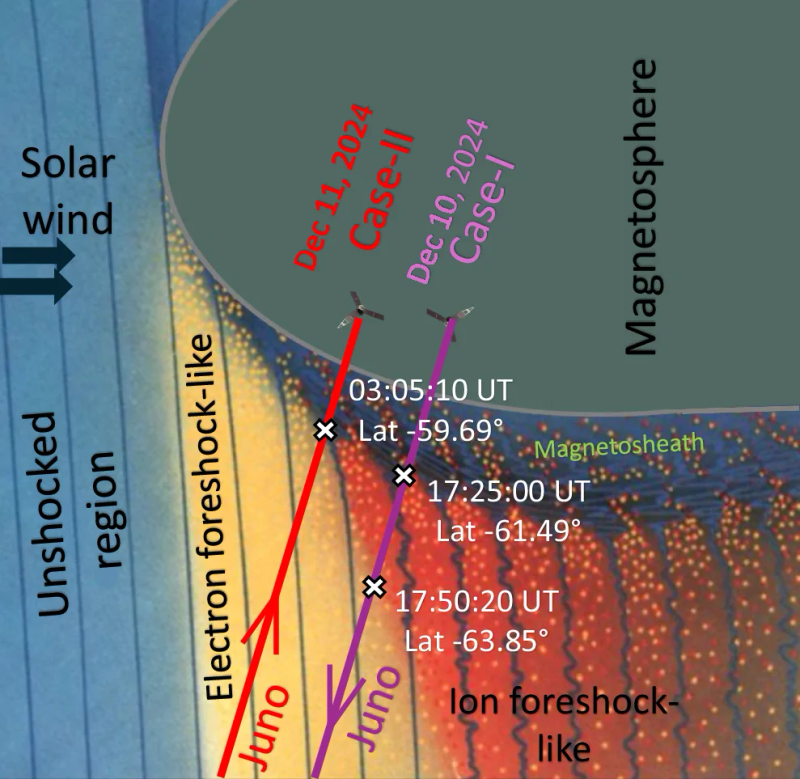
Figure 2 from the Nature Communications paper, reused under CC BY 4.0.
The solar wind is a planetary-scale leak from the Sun, a supersonic flow of protons and electrons that leaves the corona at several hundred kilometres per second and needs a little over three weeks to cross the 780 million kilometres to Jupiter. It cannot simply be stopped. Wherever it meets something immovable the flow has to decelerate, and conservation of energy does not care how gently anyone would prefer that to happen. In front of Jupiter the meeting point sits about 5.8 million kilometres from the planet, roughly 81 planetary radii, on the sunward side of the strongest magnetic field any planet generates. A University of Iowa team has now taken the most detailed look yet at that boundary, and their conclusion is that Jupiter does not meet the solar wind with a single shock but with a layered structure that keeps rebuilding itself, powered by plasma waves that are richer and far more violent than anything measured at Earth (Joseph et al., Nature Communications, 31 July 2026).
Why a shock has to be built out of waves explains why the instrument mattered more than the spacecraft. In an ordinary gas a shock dissipates energy through collisions: ordered motion becomes random motion, the flow slows, the pressure jumps, the gas heats. Plasma obeys the same conservation laws, but the relevant collisions are Coulomb collisions between ions and electrons, and in the solar wind they are far too rare to account for the heating that instruments actually measure across Earth’s bow shock. Something else has to do the work, and for three decades the leading candidate has been wave-particle interactions at ion scales. Earth measurements support that picture, with ion-acoustic waves, electrostatic solitary waves and waves driven by the electron cyclotron drift instability all implicated in heating the flow. What they do not support is the idea that the same handful of modes suffice everywhere. Jupiter’s shock is harder. The solar wind there runs at a higher multiple of the Alfvén speed, the plasma pressure-to-field ratio is lower, and the relevant length scales are larger. On the two crossings in question the Alfvénic Mach number was about 9, the jump in ion temperature across the shock was roughly 80 against about 18 at Earth, and the electron temperature ratio near 10 against roughly 5.
Eight spacecraft had crossed Jupiter’s bow shock before Juno, and each found the same thing: a step in the magnetic field where the solar wind was forced to change direction. Pioneers 10 and 11, Voyagers 1 and 2, Ulysses, Galileo, Cassini and New Horizons all left that step behind. Voyagers’ few high-resolution electric field snapshots came back with four bits of amplitude resolution, which flattened exactly the fine structure anyone was looking for. Juno’s Waves instrument, built by physicists at the University of Iowa, carried burst-mode waveform capture from the start of the mission but was not pointed at the bow shock until November 2024, because telemetry is a finite budget. By then the spacecraft had been flying its stretched 53-day polar orbit since July 2016, carrying two whip antennas that form an electric dipole and a search coil wound with ten thousand turns of fine copper wire on a 15-centimetre Mu-metal rod.
The payoff came on 10 and 11 December 2024. Juno left the magnetosheath at about 17:25 UT on the 10th, crossing outbound, and came back across around 03:05 UT on the 11th, inbound. Both crossings were at essentially the same distance, 81.44 Jupiter radii, and both sat on the dusk flank near magnetic local time 16, at southern magnetic latitudes of 61.5 and 59.7 degrees. The geometry was not the same, though. Applying the coplanarity theorem to the mean upstream and downstream fields, the outbound shock presented an angle between the upstream field and the shock normal of 16.5 degrees plus or minus 14.3, while the inbound shock presented 53.5 degrees plus or minus 7.9. That is the difference between a nearly parallel shock and a nearly perpendicular one, and it changes what a spacecraft sees on the way in. At a shallow angle, protons reflected off the shock escape upstream rather than coming back, filling a long ion foreshock with wave activity. At a steep angle they execute partial gyro-orbits and pile into a narrow foot just ahead of the ramp. The two cases duly looked different. The outbound pass crossed an extended ion foreshock-like region carrying ultra-low-frequency magnetic oscillations near 7 millihertz, with reflected solar wind protons whose count rate fluctuated by a factor of about two, followed by an electron foreshock-like region where electrons accelerated at the shock and reflected back drove strong Langmuir waves near 9 kilohertz. The inbound pass had only a compact foot, Langmuir waves beside it, and something new: magnetic field structures repeating every 8.3 seconds, with the ramp peaking near 10.5 nanotesla, two earlier foot peaks at about 7.1 and 5.6 nanotesla, and four downstream peaks above 8 nanotesla.
The 8.3-second repeat carries the most weight of all, because it comes down to what one spacecraft can and cannot distinguish. A repeating magnetic sequence in a single record could mean the shock surface is flapping under pushes from foreshock waves or solar wind fluctuations, or it could mean the shock is rebuilding itself. Flapping produces irregular spacing on timescales much longer than a fraction of a proton gyroperiod, and the inbound case showed no foreshock driving and no consistent sign of solar wind variability. What remained was shock self-reformation. The numbers agree: with an upstream field of about 2 nanotesla the proton gyroperiod is 32 seconds, so 8.3 seconds is 0.26 of a gyroperiod, the only timescale in the problem that could be responsible. The authors stay careful about the edge of their evidence, noting that Juno’s ion instrument samples only every 120 seconds, so direct confirmation of ion reflection at an eight-second cadence is out of reach.
The waves are the more striking half of the story. In the quasi-perpendicular crossing the ion-acoustic wave had a fundamental frequency of 5,610 hertz, and between 03:05:55.786 and 03:05:55.806 the electric field waveform was not a clean sinusoid but a distorted one with flattened tops, the signature of a steepened wave carrying trapped electrons. The spectrum showed the second harmonic at 11,130 hertz and the third at 16,680 hertz, and the amplitudes sat far below the converter’s saturation threshold, so this was physics rather than clipping. The local electron gyrofrequency was 196 hertz and the plasma frequency 9.6 kilohertz, putting the fundamental neatly between them. Trapping electrons in a wave’s potential well and dumping them at the crests heats plasma far more efficiently than simple nonlinear steepening, and each added harmonic widens the band of electrons able to resonate with the wave. The electron cyclotron drift instability comes out of the relative drift between incoming electrons and shock-reflected ions, and it grows when that drift speed exceeds the perpendicular electron thermal speed. Since the electron thermal speed scales with the magnetic field, and the field at 5 astronomical units is roughly a tenth of Earth’s, the same shock conditions produce a far more favourable ratio in the outer heliosphere. The measurements bear that out. Juno logged 18 to 20 electron cyclotron drift harmonics, while the Earth events tabulated beside them for comparison yielded 3, 5, 10 and 13. Scored as harmonics times gyrofrequency over plasma frequency, the Jupiter crossings came out at 0.56, 0.65 and 0.66 against 0.02 to 0.11 for the four terrestrial cases.
Scale is why any of this reaches past Jupiter. Shock waves with far more energy than a planetary bow shock sit around supernova remnants, and the same wave-particle microphysics governs how flow energy turns into heat in those expanding clouds. Jupiter offers the nearest place where that physics can be measured with instruments in hand. There are real limits to what has been established, though. Juno returns three-axis magnetic field data at 8 hertz and a single-axis electric field at 50 kilohertz in one burst out of eight, so estimates of how much power the waves actually dissipate stay qualitative, and a single probe cannot recover wave polarization or phase velocity. The team’s own conclusion is appropriately narrow: wave-particle interactions at moderately high Mach number and low plasma beta shocks in the outer planets resemble Earth’s, with nonlinear behaviour appearing more often, and more crossings are needed before anyone can say how often. Juno remains in good health and is still returning data, but its most recent extension expired in September 2025 and NASA has not said whether another will follow (Ars Technica, March 2026). The spacecraft that found the answer may not be the one to tell us how general it is.
 Subscribe to our RSS feed









There are no comments.
Add A Comment