OrbitalHub

Where curiosity reaches escape velocity.

Domain is for sale. $50,000,000.00 USD. Direct any inquiries to contact@orbitalhub.com.

Archive for the Spacecraft Design category


Vast, the California-based startup developing what it calls the world’s first commercial space station, announced significant progress in March and April 2026 as Haven-1 moves toward its target launch in the first quarter of 2027. The company secured $500 million in Series C funding in March 2026, led by the Qatar Investment Authority with participation from Mitsui, MUFG, and Balerion Space Ventures.

The funding will accelerate production of the Haven-1 station and support development of the follow-on Haven-2 design. Vast has also expanded manufacturing facilities in Long Beach, California, where the station modules are being assembled. The company’s workforce has grown to over 400 employees, up from approximately 200 in early 2025.

Haven-1 entered the full integration phase in January 2026, with the spacecraft’s major subsystems being assembled and tested together for the first time. Life support systems, critical for sustaining crew members, have undergone extended testing including模拟 long-duration missions. The station’s interior has been outfitted with cargo storage systems, crew accommodations, and research equipment.

The Haven Demo mission, which tested key technologies in orbit, completed a successful deorbit in February 2026 after 49 experiments. The test validated systems including the station’s attitude control, thermal management, and communications infrastructure. Data from the mission has informed final modifications to the Haven-1 design.

Vast received a Private Astronaut Mission (PAM) award from NASA in February 2026, designating the company to conduct a commercial crewed mission to Haven-1 in late 2026 or 2027. This contract represents one of the first awards under NASA’s post-ISS transition strategy and validates the company’s technical approach.

The station design calls for a single large module approximately 12 meters in length, providing volume comparable to the International Space Station’s node modules. The station will initially accommodate up to four crew members, with expansion potential through additional modules. Each crew member will have a dedicated sleep station and access to galley facilities for food preparation.

Research facilities on Haven-1 will support experiments in fluid physics, materials science, and biological studies. The station’s location at approximately 500 kilometers altitude, slightly lower than the ISS, provides a stable microgravity environment while minimizing exposure to the South Atlantic Anomaly where Earth’s radiation belts dip closest to the planet’s surface.

Vast faces competition from Axiom Space, which is developing its own commercial station with the backing of NASA. Axiom raised $350 million in February 2026 and is targeting 2028 for initial station elements. The two companies represent different approaches: Vast designed its station from the ground up for commercial operations, while Axiom is building on heritage from its ISS visiting mission experience.

The commercial station market is emerging in response to the planned retirement of the ISS around 2030. NASA has indicated it will purchase services from private stations as a customer rather than an operator, fundamentally changing the agency’s role in human spaceflight. This transition presents both opportunities for private companies and risks regarding the continuity of human presence in low Earth orbit.

The choice of orbital altitude for a space station involves trade-offs between accessibility, decay rate, and radiation exposure. At 500 kilometers, Haven-1 experiences atmospheric drag that requires periodic reboosting to maintain altitude. The ISS orbits at approximately 420 kilometers for similar reasons, balancing the propellant cost of station-keeping against the difficulty of reaching higher orbits.

The orbital decay rate depends on atmospheric density, which varies with solar activity. During periods of high solar output, Earth’s upper atmosphere expands, increasing drag and accelerating orbital decay. Station operators must monitor solar activity and plan reboost maneuvers accordingly.

The station’s orbital plane also determines lighting conditions for Earth observation and solar power generation. Most stations operate in inclinations that provide coverage of most of Earth’s surface while allowing launch and landing from mid-latitude facilities. The specific inclination is chosen to balance these factors against launch site limitations.
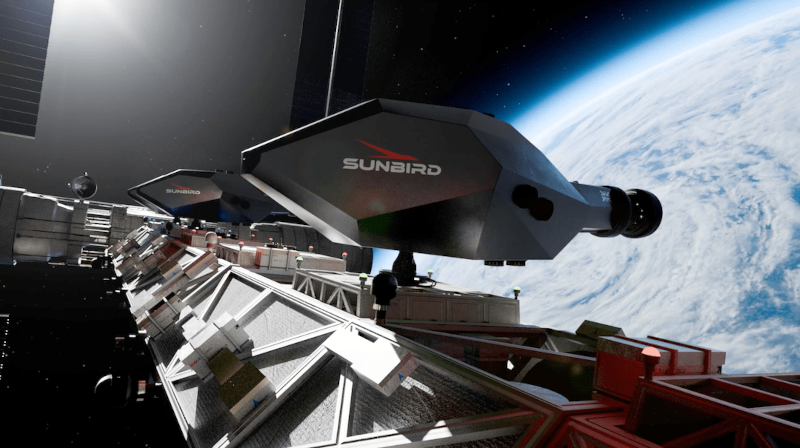


For as long as humans have imagined traveling between worlds, one limitation has remained stubbornly in place: time. Even the most powerful rockets ever built still rely on chemical reactions, releasing energy stored in molecular bonds. These reactions are violent, effective, and well understood, but they are ultimately constrained. They push spacecraft away from Earth with immense force, yet once the fuel is spent, the journey continues in silence, governed by inertia alone. To truly shorten the distances between planets, something more powerful is required—something that does not merely burn fuel, but transforms matter itself into energy.

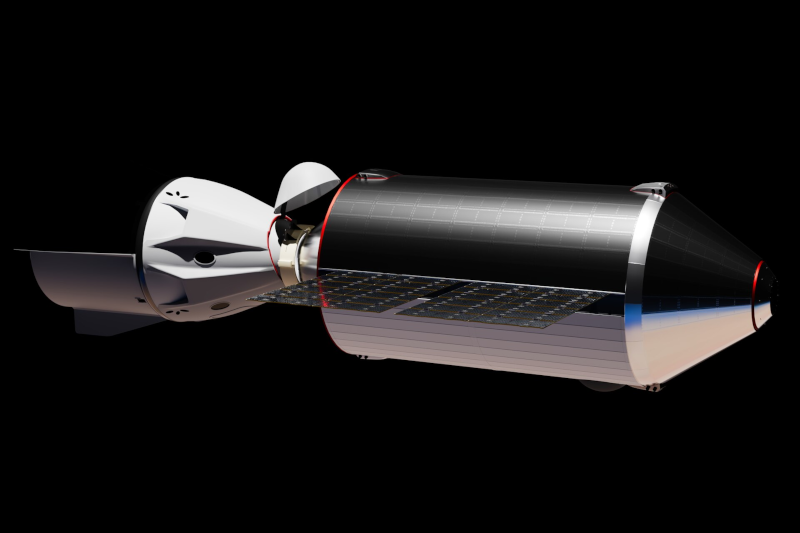
This is the promise behind the Sunbird spacecraft concept, developed by Pulsar Fusion. Sunbird is not designed as a traditional spacecraft, nor even as a standalone mission vehicle. Instead, it is envisioned as a space tug, operating in orbit and attaching to other spacecraft to accelerate them across the Solar System. At its core lies a propulsion system that has long been considered the ultimate prize in aerospace engineering: a nuclear fusion engine.

Fusion is the process that powers the stars. It occurs when light atomic nuclei combine under extreme conditions, releasing vast amounts of energy. Unlike chemical reactions, which rearrange electrons in atoms, fusion rearranges the nuclei themselves, tapping into the fundamental forces that bind matter together. The energy density of fusion is orders of magnitude greater than that of chemical fuels. In principle, it offers the ability to sustain thrust over long durations while achieving velocities far beyond what conventional propulsion can deliver.

Sunbird’s propulsion system is based on what Pulsar Fusion calls a Dual Direct Fusion Drive. The concept is both elegant and demanding. Instead of using fusion merely as a heat source to generate electricity or drive a conventional engine, the system aims to convert fusion energy directly into thrust. In this approach, charged particles produced by fusion reactions are guided and accelerated by magnetic fields, forming an exhaust stream that produces propulsion without the need for traditional propellant expulsion in the chemical sense.

The choice of fuel is critical. Sunbird is designed to use a mixture of deuterium and helium-3, isotopes that offer a pathway toward cleaner fusion reactions. When these nuclei fuse, they produce high-energy charged particles with relatively low neutron output compared to other fusion reactions. This is significant because neutrons, lacking an electric charge, are difficult to control and can damage reactor materials over time. By favoring reactions that produce charged particles, the engine can more effectively channel energy into directed thrust using magnetic confinement.

The engineering challenges behind such a system are immense. Fusion requires extreme conditions—temperatures of millions of degrees and precise control of plasma behavior. On Earth, experimental fusion reactors rely on large, complex facilities such as tokamaks and stellarators to confine plasma using powerful magnetic fields. Translating this technology into a compact, space-based system demands innovation at every level.

Magnetic confinement becomes the central mechanism. Superconducting magnets generate intense magnetic fields that hold the plasma in place, preventing it from contacting the reactor walls. These fields must be stable and precisely controlled, as even small instabilities can lead to energy losses or disruptions. At the same time, the system must allow for the extraction of energy in a controlled manner, directing charged particles out of the reactor to produce thrust.

Thermal management presents another critical challenge. Even with aneutronic fusion reactions, significant heat is generated within the system. In the vacuum of space, there is no atmosphere to carry heat away, so the spacecraft must rely on radiative cooling. Large radiators may be required to dissipate excess heat, adding complexity to the design and influencing the overall architecture of the vehicle.

The concept of Sunbird as a space tug introduces an additional layer of strategic thinking. Rather than equipping every spacecraft with its own fusion engine, Sunbird would operate as an orbital asset. Spacecraft launched from Earth using conventional rockets would rendezvous with the tug in low Earth orbit. Once attached, Sunbird would provide sustained acceleration, gradually increasing velocity over time. This approach leverages the strengths of both chemical and fusion propulsion, combining the high thrust of rockets for launch with the high efficiency of fusion for deep-space travel.

The physics of continuous acceleration opens new possibilities for mission design. Instead of following purely ballistic trajectories, spacecraft could maintain thrust for extended periods, reducing travel times significantly. Missions to Mars, which currently take months, could potentially be shortened. Journeys to the outer planets could become more practical, enabling more ambitious exploration and even the transport of larger payloads.

Yet Sunbird remains, for now, a concept in development. The transition from theoretical design to operational system requires rigorous testing and validation. Plasma behavior must be understood under the specific conditions of the engine. Materials must be developed that can withstand the harsh environment inside the reactor. Control systems must be capable of maintaining stability over long durations. Each of these challenges represents a frontier in its own right.

What makes Sunbird compelling is not just its potential speed, but what that speed represents. It is a step toward a future where the Solar System is not defined by distance in the same way it is today. If fusion propulsion can be made practical, it could transform how we think about space travel, shifting the focus from isolated missions to sustained movement between worlds.

There is a certain symmetry in this vision. The same process that powers the Sun—fusion—becomes the engine that carries humanity outward. The energy that has shaped the cosmos becomes a tool for exploring it. In this sense, Sunbird is not just a spacecraft concept. It is an attempt to harness the most fundamental source of energy in the universe and turn it into motion.

Whether Sunbird ultimately achieves its goals remains to be seen. But the effort itself reflects a broader trend in space exploration: the search for propulsion systems that go beyond the limits of chemistry, reaching into the realm of fundamental physics. It is a reminder that the journey to other worlds is not just about where we go, but about how we get there.

And if that journey is ever powered by fusion, it may mark the moment when the distances between planets begin to feel, at last, a little smaller.


April 13, 2026

Raptor 3: When Engineering Disappears

Posted by


There are moments in engineering when progress is obvious. A machine becomes larger, more powerful, more complex. New systems are added, performance improves, and the path forward feels incremental. And then there are moments when progress looks like subtraction—when engineers begin removing things instead of adding them. The result can feel almost unsettling, as if the machine has been stripped down to something too simple to be possible. The Raptor 3 engine belongs to that second category.

At first glance, the numbers alone are enough to command attention. A rocket engine producing roughly 280 tons of thrust while weighing just over 1.5 metric tons occupies a regime where performance approaches the practical limits of chemical propulsion. But what makes Raptor 3 remarkable is not just its thrust-to-weight ratio. It is the way that performance has been achieved—through the systematic elimination of complexity.

To understand why this matters, one must step back into the fundamentals of rocket propulsion. A rocket engine is, in essence, a device that converts chemical energy into directed momentum. Propellants are mixed, burned, and expelled at high velocity, producing thrust through Newton’s third law. The efficiency of this process depends on how completely and how rapidly the chemical energy can be converted into kinetic energy in the exhaust.

Most high-performance engines rely on staged combustion cycles to achieve this efficiency. In such a system, propellants are partially burned in preburners to drive turbopumps, and the resulting gases are then fed into the main combustion chamber. This approach allows for high chamber pressures and improved efficiency, but it comes at a cost. The plumbing required to route propellants, the thermal shielding needed to protect components, and the structural complexity of the system all add mass and potential failure points.

Earlier generations of engines embraced this complexity. Tubes, manifolds, valves, and cooling lines formed intricate networks across the engine’s surface. Each component served a purpose, but together they created a system that was difficult to manufacture, maintain, and scale.

Raptor 3 takes a different path. Instead of refining complexity, it removes it. External tubing is minimized or eliminated. Components that were once separate are integrated into unified structures. Thermal management is no longer an afterthought wrapped around the engine, but a core part of its design. The result is an engine that appears almost monolithic, as if it were carved rather than assembled.

This approach is made possible by advances in materials and manufacturing. Modern superalloys and high-temperature metals allow components to operate closer to their thermal limits without failure. Additive manufacturing enables geometries that would be impossible with traditional machining, integrating cooling channels directly into structural elements. These internal channels allow cryogenic propellants—liquid methane and liquid oxygen in the case of Raptor—to flow through the engine walls, absorbing heat and preventing structural degradation.

This technique, known as regenerative cooling, is not new. What is new is the extent to which it has been integrated into the engine’s architecture. In Raptor 3, cooling is not a separate system; it is inseparable from the structure itself. The walls of the combustion chamber and nozzle are both load-bearing elements and thermal management systems. By merging these functions, engineers reduce the need for additional components, lowering mass while improving reliability.

The elimination of external plumbing also has implications for fluid dynamics. Every bend, junction, and valve in a propellant line introduces pressure losses and potential instability. By simplifying flow paths and embedding them within the engine, Raptor 3 reduces these losses, allowing for more efficient delivery of propellants to the combustion chamber. This contributes to higher chamber pressures, which in turn increase exhaust velocity and overall engine performance.

Chamber pressure is one of the key parameters in rocket engine design. Higher pressures generally lead to higher efficiency, but they also place greater demands on materials and structural integrity. The fact that Raptor 3 operates at extremely high pressures while maintaining a relatively low mass is a testament to the precision of its design. It reflects a deep understanding of how to balance competing constraints—thermal, mechanical, and fluid—within a single system.

Another aspect of the engine’s design is its use of full-flow staged combustion, a cycle in which both the fuel and oxidizer are fully gasified before entering the main chamber. This approach maximizes efficiency and reduces thermal stress by ensuring more uniform combustion conditions. However, it also requires precise control of turbomachinery and flow rates, as both propellant streams must be carefully balanced to maintain stability.

In Raptor 3, the integration of systems extends into this domain as well. Turbopumps, preburners, and injectors are designed to operate as part of a cohesive whole rather than as discrete subsystems. The boundaries between components blur, creating an engine that behaves less like an assembly of parts and more like a single, continuous machine.

The implications of this design philosophy extend beyond performance metrics. By reducing the number of parts and simplifying assembly, the engine becomes more amenable to mass production. This is a critical factor for a company like SpaceX, whose ambitions rely on building large numbers of engines for vehicles like Starship. Manufacturing efficiency, reliability, and cost all become intertwined with the engine’s physical design.

There is also a psychological dimension to this shift. Traditional engineering often equates complexity with capability. More components, more systems, more layers of redundancy—these are seen as signs of sophistication. Raptor 3 challenges that notion. It suggests that true sophistication may lie in reduction, in the ability to achieve more with less.

This does not mean the engine is simple. On the contrary, its simplicity is the result of extraordinary complexity hidden within its design and fabrication. The absence of visible components is not an absence of engineering, but a concentration of it. Complexity has not been removed; it has been internalized.

In the broader context of rocket development, Raptor 3 represents a maturation of chemical propulsion. It pushes the limits of what can be achieved with known physics, approaching the theoretical boundaries of efficiency and performance. It does not introduce a new propulsion paradigm, but it refines the existing one to a degree that was previously unattainable.

And yet, there is something more subtle at work. When engineers begin to remove rather than add, they are often approaching a kind of asymptote—a point where further improvements become increasingly difficult, where each gain requires disproportionate effort. Raptor 3 may be approaching that boundary, where the remaining inefficiencies are not easily eliminated.

If that is the case, then the engine stands as both an achievement and a marker. It shows how far chemical propulsion can be pushed, and it hints at the need for new approaches beyond it—fusion, electric propulsion, or entirely new concepts that operate on different principles.

For now, though, Raptor 3 is a demonstration of what is possible when engineering is driven not by accumulation, but by refinement. It is a machine that achieves its power not through visible complexity, but through the quiet removal of everything that is not essential.

In that sense, it is not just an engine. It is a statement about the nature of progress—that sometimes, the most advanced designs are the ones that appear to have almost nothing left.


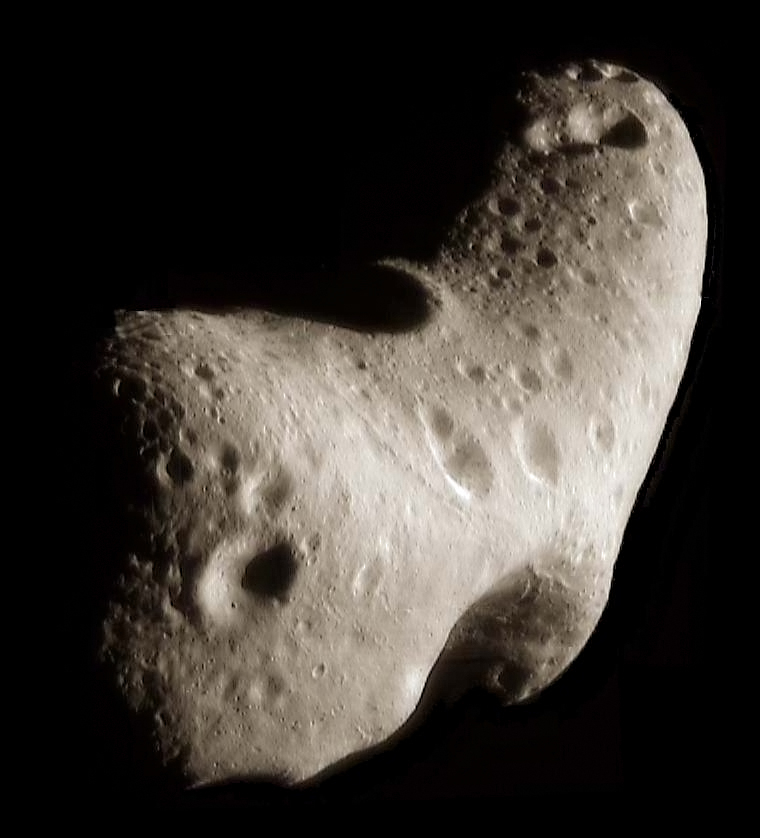
TransAstra, a NASA-backed startup, announced in March 2026 a groundbreaking study to capture and relocate a near-Earth asteroid approximately 100 tons in mass, marking a significant escalation in the commercial asteroid mining industry. The study, conducted in partnership with the space agency, explores methods for enveloping the asteroid in an inflatable container and moving it to lunar orbit for eventual resource extraction.

The concept builds on technology already tested aboard the International Space Station in 2025, where TransAstra demonstrated its “bag” system in low Earth orbit. The inflatable structure, designed to surround a small asteroid and contain its fragments during capture, passed initial verification tests showing it can survive the thermal and structural demands of space operations. The new study extends this approach to much larger objects, representing a fundamental leap in scale from previous demonstrations.

The company’s approach addresses one of the fundamental challenges in asteroid resource extraction: accessing material that would be prohibitively expensive to mine through traditional methods. Rather than sending mining equipment to distant asteroids and returning processed materials to Earth, the TransAstra concept involves moving the asteroid itself to a convenient location where continuous resource extraction becomes practical.

Funding for the study reflects growing government interest in asteroid resources. The U.S. Space Force has provided additional investment to scale the technology, recognizing potential applications for in-space manufacturing and propellant production. As orbital operations expand, the ability to extract materials from near-Earth asteroids could reduce dependence on Earth-launched resources, lowering the cost of sustained space operations.

TransAstra is not alone in pursuing asteroid mining. AstroForge, another U.S.-based company, has raised approximately $55 million toward extracting platinum-group metals from asteroids. The company experienced a spacecraft setback but continues preparing for asteroid landing tests. Karman+ secured $20 million in February 2025 to develop autonomous spacecraft for near-Earth asteroid mining, targeting a demonstration mission in 2027.

The asteroid mining market is projected to grow from $2.49 billion in 2026 to $5.42 billion by 2030, representing a compound annual growth rate of 21.4 percent. This expansion reflects anticipated demand for rare metals and the strategic value of establishing in-space resource extraction capabilities before lunar and Mars ambitions require substantial material support.

Moving a 100-ton asteroid requires careful consideration of momentum and energy. The asteroid’s orbital velocity around the Sun determines the energy required to alter its trajectory, with even small changes requiring substantial thrust when applied to objects with such great mass. TransAstra’s approach involves applying gentle continuous force rather than sudden impulse, using solar electric propulsion to gradually modify the asteroid’s orbit over months or years.

The thermal environment during the capture operation presents unique challenges. Asteroids rotate, presenting changing thermal profiles to the sun as they tumble through space. The inflatable capture bag must maintain structural integrity across temperature extremes that could reach minus 100 degrees Celsius in shadow and positive 100 degrees Celsius in direct sunlight. Materials selection focuses on thermal resilience and resistance to micrometeoroid puncture.

Containment of the asteroid once captured requires the bag to maintain its shape despite the irregular shape of most asteroid surfaces. The inflatable structure must distribute forces evenly across contact points, avoiding concentrated loads that could tear the material. TransAstra’s design incorporates multiple redundant chambers, allowing the bag to maintain containment even if some sections experience damage.


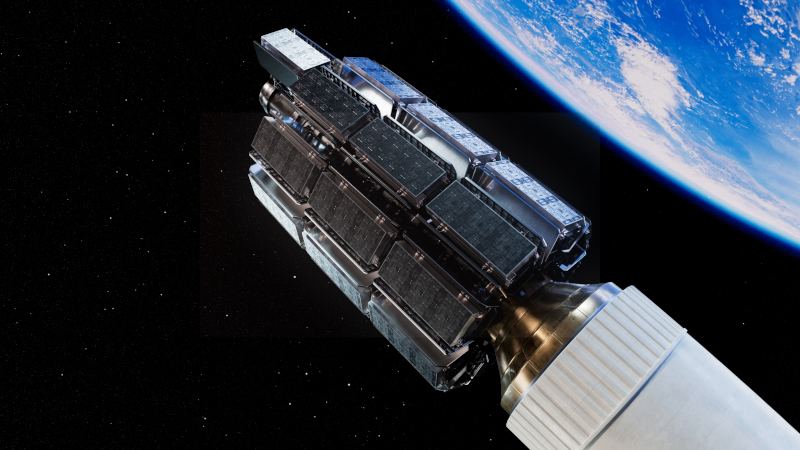
Amazon announced on March 23, 2026, that it plans to double the annual launch rate for its Project Kuiper low Earth orbit broadband constellation to more than 20 missions, with the acceleration driven by pressure from a key Federal Communications Commission milestone requiring deployment of half its planned 3,232 first-generation satellites by July 30, 2026.

The company stated it is on pace to complete 11 launches in the first year of deployment since kicking off the campaign in April 2025, with three more missions slated in the coming weeks. As of mid-March, Amazon reported six fully stacked payloads at its satellite processing facility in Florida, representing more than 200 satellites in total, with another payload being prepared in French Guiana.

While 212 Amazon Leo satellites have been deployed so far, hundreds more await launch as the company seeks relief from the FCC deadline. Amazon is asking the regulatory body to extend the deadline by two years or waive it entirely, arguing that launch vehicle availability and other constraints have prevented the originally contemplated deployment pace.

Amazon has booked more than 100 launches for the constellation, including missions with United Launch Alliance, Arianespace, Blue Origin, and SpaceX. The company noted that Ariane 64, New Glenn, and Vulcan are expected to carry increasing numbers of Amazon Leo satellites as vehicle performance improves.

The next major milestone is a ULA Atlas 5 mission on March 29, set to carry 29 Amazon Leo satellites, up from the usual 27, following an engine upgrade enabling its heaviest payload to date. Another Atlas 5 is due in April, along with a second Ariane 64 launch for the constellation. The first Ariane 64 mission last month was Arianespace’s first using the rocket’s more powerful four-booster variant and carried 32 satellites.

According to Amazon, future upgrades will enable Ariane 64 to support even larger payloads. Most launches for the constellation this year are scheduled to use heavy-lift rockets, including Blue Origin’s New Glenn, expected to carry about 48 satellites initially, and ULA’s Vulcan Centaur, with capacity for around 40 from the start.

The company has invested more than $200 million in upgrading ULA facilities at Cape Canaveral to help increase launch cadence and improve turnaround times. These upgrades support the accelerated deployment that Amazon says is necessary to meet its contractual obligations and service commitments.

Amazon can build as many as 30 satellites per week from its facility in Kirkland, Washington, though this rate has slowed to reflect launch vehicle readiness and availability. The manufacturing capacity exists; the challenge lies in getting satellites to orbit on the planned schedule.

The FCC milestone requiring deployment of 1,616 satellites by July 30 reflects the commission’s interest in ensuring that spectrum allocated for broadband constellations is actually used. Waiving or extending the deadline would require Amazon to demonstrate that circumstances beyond its control have prevented compliance, and that the public interest would be served by granting relief.

Building and deploying a constellation of thousands of satellites requires fundamentally different economics than traditional satellite programs. The per-satellite cost must be low enough that total constellation expense remains manageable, while launch costs must be sufficiently controlled to avoid having transportation dominate the budget.

Amazon has pursued vertical integration as a primary strategy, manufacturing satellites in-house at its Kirkland facility rather than purchasing from traditional satellite builders. This approach provides greater control over costs and schedule but requires substantial capital investment in manufacturing infrastructure and expertise.

The launch procurement strategy spreads risk across multiple providers, ensuring that delays from any single vehicle do not halt the entire constellation deployment. However, this also means that Amazon must coordinate across different launch systems, each with its own interfaces, procedures, and performance characteristics.

The FCC deadline applies to the first-generation constellation of 3,232 satellites, but Amazon has indicated plans for additional satellites beyond that initial deployment. The regulatory framework requires operators to demonstrate meaningful deployment within specific timeframes to maintain spectrum rights, creating incentives to launch satellites even before they can be fully utilized in the network.

Satellite life expectancy in LEO typically ranges from three to seven years, depending on orbital altitude and design. This limited operational lifetime means that constellation operators must continuously launch replacement satellites to maintain service levels, adding ongoing launch costs to the initial deployment expense.


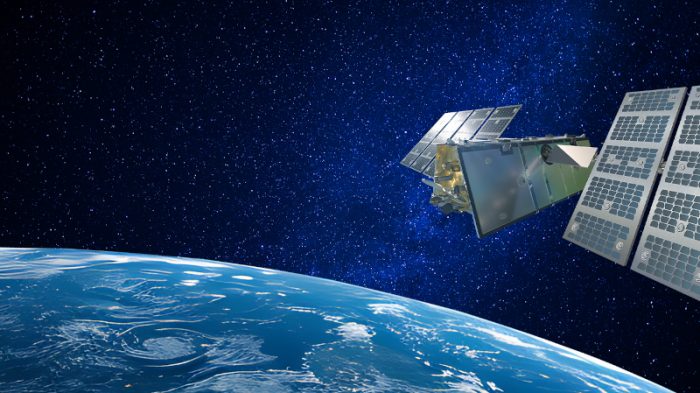
Telesat is positioning its Lightspeed low Earth orbit constellation as a critical component of defense communications networks, with a planned laser communications demonstration in 2027 that could validate the system for high-demand applications including missile defense. The Canadian satellite operator announced the strategy during the Satellite 2026 conference in Washington, D.C., highlighting changes to the system design aimed at military compatibility.

The company plans to launch the first two Lightspeed satellites in December 2026, with a laser communications relay demonstration scheduled for 2027 under a $30 million NASA contract awarded in 2022. The test will simulate a data relay scenario in orbit: one satellite will act as a mission spacecraft, the other as a relay node. A subsequent phase will involve a Planet Labs imaging satellite equipped with an optical terminal, which will send data through the Lightspeed system to a ground station.

Chuck Cynamon, president of Telesat Government Solutions, emphasized that the demonstration represents a proof point for the Pentagon’s growing interest in space-based data networks. “There’s a demand for hybrid architectures,” Cynamon stated, pointing to the Space Force’s development of what it calls a “space data network” intended to connect satellites, sensors, and weapons into a unified real-time architecture.

The Golden Dome missile defense initiative would depend on such networks as its core transport layer, routing data between sensors, command systems, and interceptors in near real time. Gen. Michael Guetlein, who leads Golden Dome, has indicated that funding for the space data network is increasing, with Cynamon noting that “there’s probably no limit on how much capability is going to be needed on orbit from a space data network.”

The company has modified its system design to align with military requirements, including adding military Ka-band frequencies aligned with the Pentagon’s existing wideband satcom systems. Each of the planned 198 Lightspeed satellites will carry four optical terminals supplied by Tesat-Spacecom, enabling high-speed links between spacecraft that can move large volumes of information with low latency while reducing exposure to jamming or interception.

The capacity pool model Telesat intends to offer the government would allow access to Lightspeed’s bandwidth and potentially optical connections without owning satellites. “We could also offer a pool of optical connections on a daily, weekly or monthly basis,” Cynamon explained, reflecting a broader shift toward hybrid architectures that blend military and commercial infrastructure.

Telesat expects to begin commercial service in 2028 after deploying the first 156 satellites, with launches contracted to SpaceX in batches of roughly 15 spacecraft. The company enters a competitive field dominated by SpaceX’s Starlink and Starshield, along with emerging systems such as Amazon LEO. Both competitors are pursuing defense business and deploying optical inter-satellite links.

One emerging demand driver is the concept of orbital data centers, which Cynamon noted could further increase pressure on satellite networks to expand capacity and move data more quickly between space and the ground. “I think it’s going to put pressure on the ability to have large pipes and land data quickly on the ground,” he observed.

Optical communications between satellites operate at frequencies far higher than traditional radio-frequency links, typically using near-infrared wavelengths around 1550 nanometers. This frequency choice offers several advantages for space-based communications, including narrower beam divergence that enables higher data rates while reducing interference between neighboring links.

The fundamental principle involves modulating a laser beam with data and directing it precisely at a receiving terminal, requiring extremely precise pointing and tracking systems. The transmitting terminal must aim its beam with accuracy measured in microradians, roughly equivalent to aligning two lasers pointed from opposite ends of a football field and having them meet at the 50-yard line.

Data rates for optical links can reach 10 gigabits per second or higher, compared to typical radio-frequency satellite links measured in megabits per second. This capacity advantage becomes particularly significant for applications involving large data volumes, such as high-resolution imagery or video from Earth observation satellites.

The laser links used in satellite constellations employ coherent detection, where the receiving terminal mixes the incoming optical signal with a locally generated laser to extract the data. This technique provides sensitivity improvements over direct detection methods, enabling links across distances of thousands of kilometers with minimal transmit power.

Atmospheric effects present challenges for optical links that radio frequencies avoid, including scattering by molecules and aerosols, absorption by water vapor, and turbulence that can cause beam wander and scintillation. For inter-satellite links above Earth’s atmosphere, these effects largely disappear, making optical communications most attractive for links between spacecraft rather than from space to ground.