OrbitalHub

Where curiosity reaches escape velocity.

Domain is for sale. $50,000,000.00 USD. Direct any inquiries to contact@orbitalhub.com.

Archive for the Space Exploration category

November 30, 2009

Carnival of Space #130

Posted by


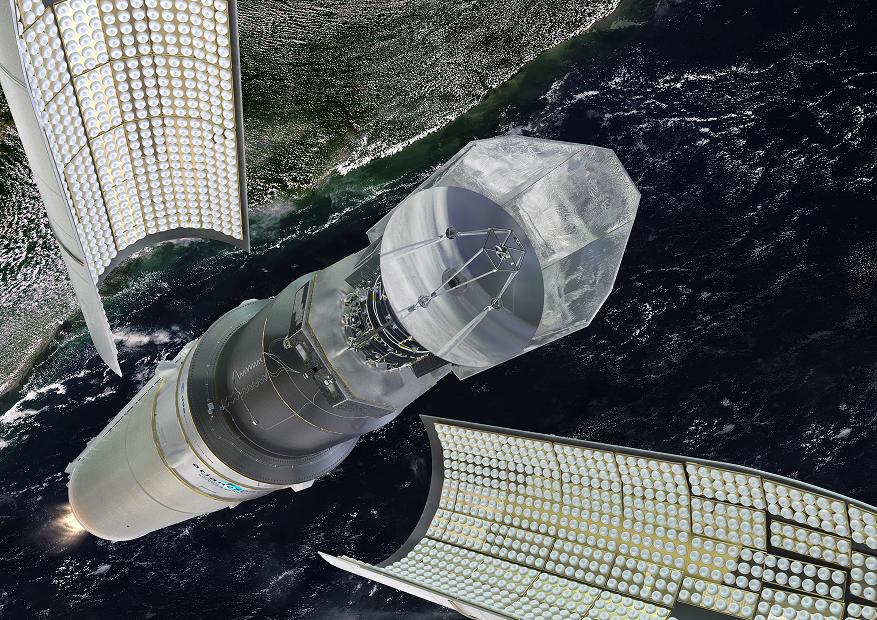
Credits: ESA


Carnival of Space #130 is hosted by Megan Watzke & Kim Arcand at Chandra Blog.


The blog posts cover topics like the future wonders of the Solar System, the Kepler mission, the Super Guppy aircraft, Herschel Space Observatory, chemistry of stars, the VASMIR spacecraft, and much more.


November 19, 2009

Carnival of Space #129

Posted by


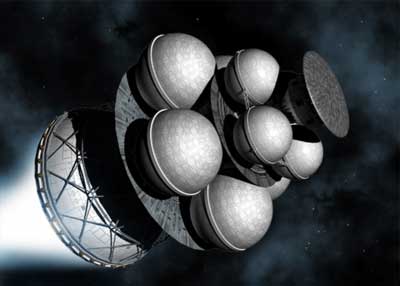
Credits: The British Interplanetary Society


Carnival of Space #129 is hosted by Tracy Zollinger Turner at Tiny Mantras.


The blog posts cover topics like the Chandra X-Ray Observatory, the Rosetta spacecraft, Olympus Mons, Neptune’s dark spot, water ice found by LCROSS, the Leonid meteor shower, Project Icarus, microsatellites designed and built at the University of Kentucky, and much more.


November 14, 2009

Rosetta Performed Final Earth Swingby

Posted by


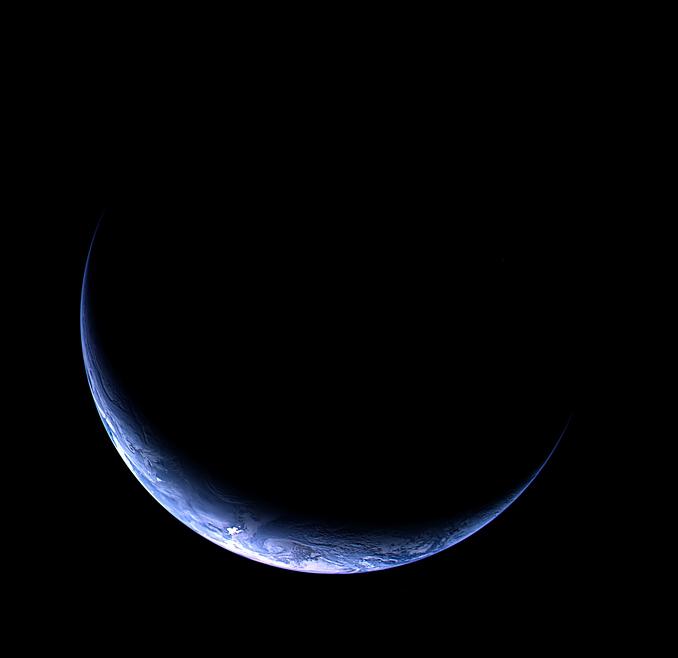
Credits: ESA OSIRIS Team MPS/UPD/LAM/IAA/RSSD/INTA/UPM/DASP/IDA


On November 13, 2009, at 8:45 AM CET, ESA’s comet chaser Rosetta swung by Earth. Rosetta passed just South of the Indonesian island of Java at an altitude of 2481 km. Its speed relative to Earth was 13.34 km/s. The maneuver provided a boost of 3.6 km/s.


Rosetta’s OSIRIS (Optical Spectroscopic and Infrared Remote Imaging System) narrow-angle camera was used to image the Earth once every hour for 24 hours.


Rosetta will meet asteroid 21 Lutetia in 2010. The final destination of Rosetta is the comet 67P/Churyumov-Gerasimenko, which the spacecraft will reach in 2014. Rosetta will deploy a lander to the surface of the comet, and will also orbit the nucleus of the comet and fly alongside as it heads towards the inner Solar System. Most of the time, the probe will hibernate with the majority of its systems shut down in order to optimize the power consumption.


You can find more information about Rosetta’s swing by on ESA’s Rosetta Blog website.


November 13, 2009

Carnival of Space #128

Posted by


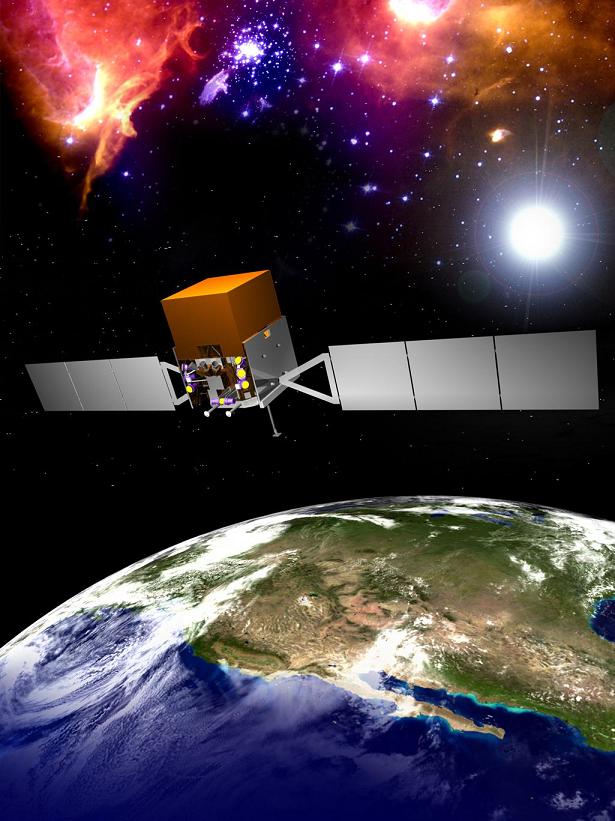
Credits: General Dynamics C4 Systems


Carnival of Space #128 is hosted by Peter Lake at AARTScope Blog.


The blog posts cover topics like a race in Spain to build a space hotel, the Grumman Lunar Lander Challenge competition, commercial space satellites, various forms of space travel being researched and proposed, NASA’s Fermi Gamma ray telescope, the Sun’s gravitational lens, naming of the Martian meteorites found by the Opportunity and Spirit rovers, the Space Station Crew Return Vehicle, and much more.


November 6, 2009

Carnival of Space #127

Posted by


Credits: NASA/Sandra Joseph and Kevin O’Connel


Carnival of Space #127 is hosted by Brian Wang at Next Big Future.


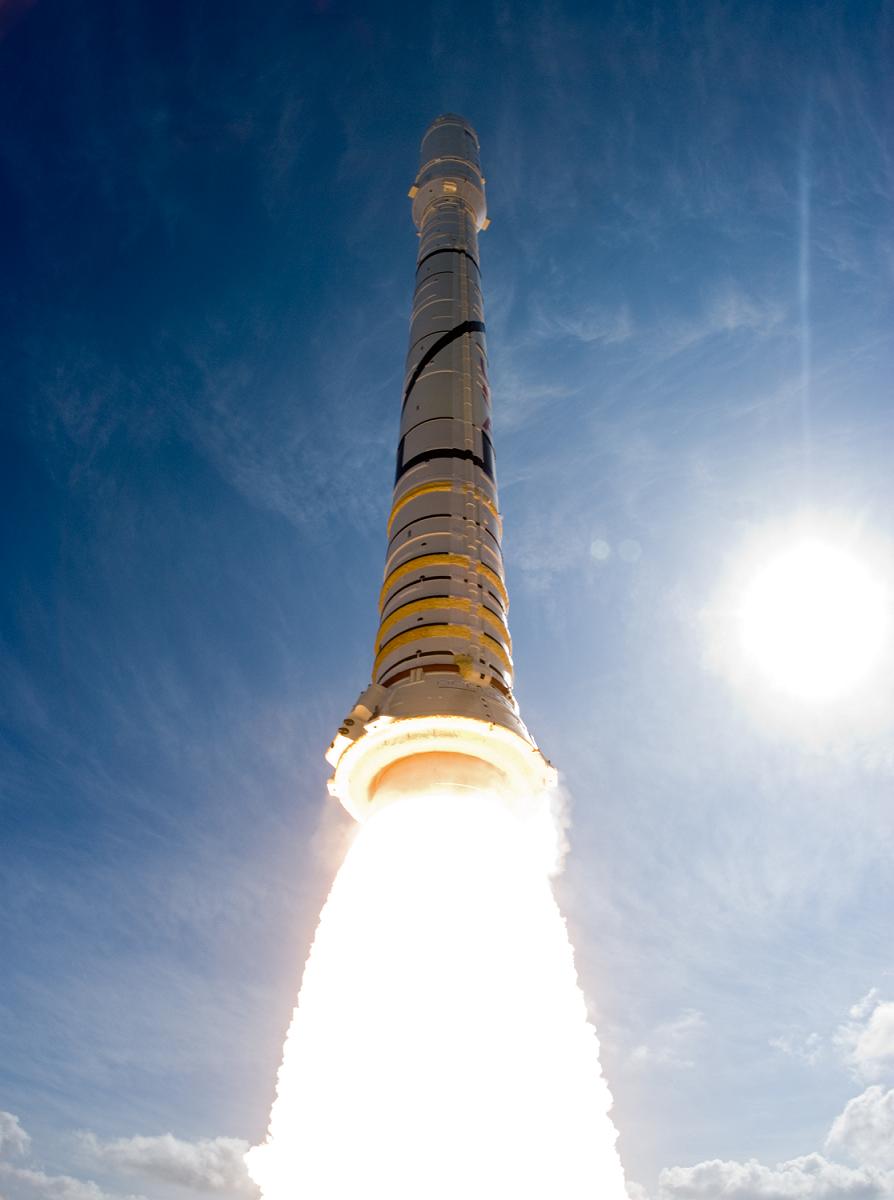
The blog posts cover topics like the Ares I-X flight, NASA’s Institute for Advanced Concepts (NIAC), the Lunar Reconnaissance Orbiter, which is currently orbiting the Moon just 50 km off the surface, the HiRISE view of Phoenix in the Martian spring, armadas of robots exploring distant planets, the Chandra Source Catalog, which was loaded onto Google Sky, the Skylon Spaceplane, EMDrive propulsion system, and much more.


Credits: CNES


Back in January 2009, I announced the 4th Global Trajectory Optimization Competition organized by CNES (Centre National d’Etudes Spatiales).


The purpose of the competition is to stimulate research of techniques for finding the optimal trajectory for different space missions. I came across the GTOC4 competition results and I would like to share them.


A total of 47 teams registered for the competition! The competition problem was disclosed on March 2, 2009, while March 30, 2009, was the deadline for submitting the solutions. In June the presenters were selected and in September 2009 the teams presented their methods and solutions during a one-day workshop held in Toulouse, France.


The problem proposed to the teams this year was called How to maximize the relevance of a rendezvous mission to a given NEA by visiting the largest set of intermediate asteroids.


The formulation of the problem proposed by CNES was


“… let us assume that a spacecraft is launched from the Earth. This spacecraft has to visit (flyby) a maximum number of asteroids (from a given list of NEAs). Finally, it must rendezvous with a last asteroid of that same list within ten years from departure.


The performance index to be maximized is the number of visited asteroids, but when two solutions are associated with the same number of visited NEAs, a secondary performance index has to be maximized: the final mass of the spacecraft.


Moreover, we assume that the spacecraft is equipped with an electric propulsion system and that gravity assists are not allowed during the mission.”


The CNES team mentioned that the proposed problem aimed at fulfilling some important criteria: “the design space is large and leads to an important number of local optima, the problem is complex but in any case it can be solved within the 4-week period allowed for the competition, its formulation is simple enough so that it can be solved by researchers not experienced in astrodynamics, and even if some registered teams have already developed their own optimization tools for interplanetary missions, the problem specificities make it new to all the teams.”


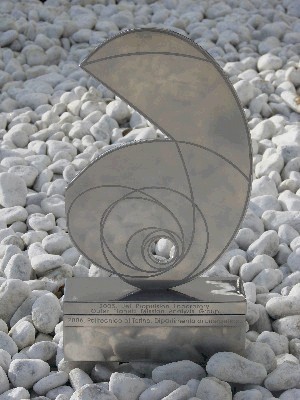
The winner of the GTOC4 competition is Moscow State University, followed closely by The Aerospace Corporation and the Advanced Concepts Team, ESA.