OrbitalHub

Where curiosity reaches escape velocity.

Domain is for sale. $50,000,000.00 USD. Direct any inquiries to contact@orbitalhub.com.

Archive for the Space Exploration category

February 7, 2010

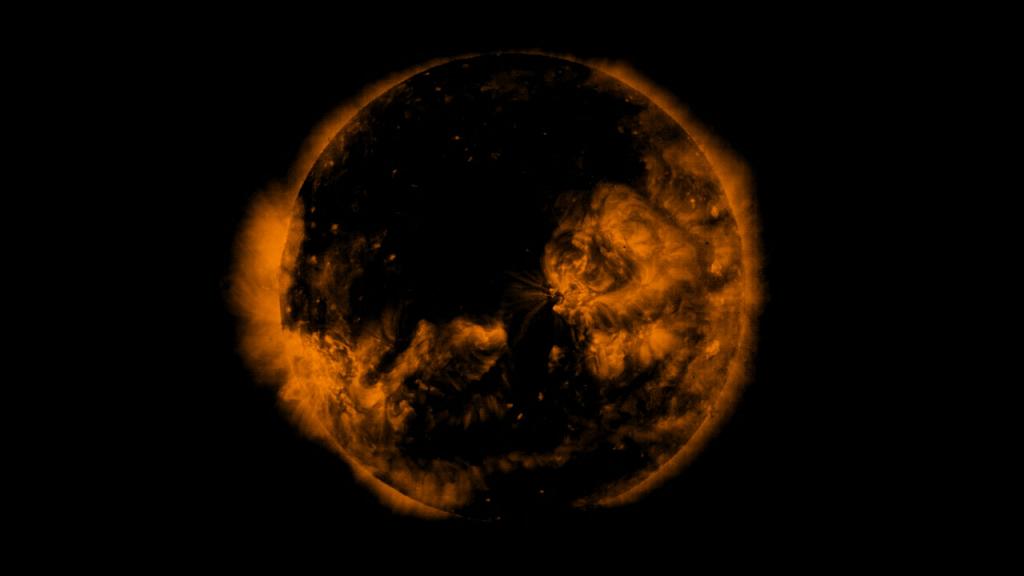
Solar Dynamics Observatory

Posted by


Credits: NASA/Goddard Space Flight Center Scientific Visualization Studio


Predictions of space weather are important as the effects of magnetic storms can be very significant: disruptions in radio communications, radiation hazards to astronauts in LEO, and power lines surges, just to name a few. The goal of NASA’s Living With a Star (LWS) Program is to understand the changing Sun and its effects on the Solar System. The Solar Dynamics Observatory (SDO) is one of NASA’s LWS missions.


SDO will take measurements of the solar activity. There are seven science questions SDO will try to answer. Among them, what is the mechanism that drives the cycles of solar activity? How do the EUV variations relate to the magnetic activity of the Sun? Is it possible to make predictions regarding the space weather and climate? The last question, if answered, will make choosing the launch windows for future interplanetary manned missions an easier task.


The spacecraft is 2.2 x 2.2 x 4.5 m and 3-axis stabilized. At launch, it has a mass of 3200 kg (270 kg the payload and 1400 kg the fuel). The solar panels are 6.5 m across, cover 6.6 m2, and produce up to 1540 W of power.
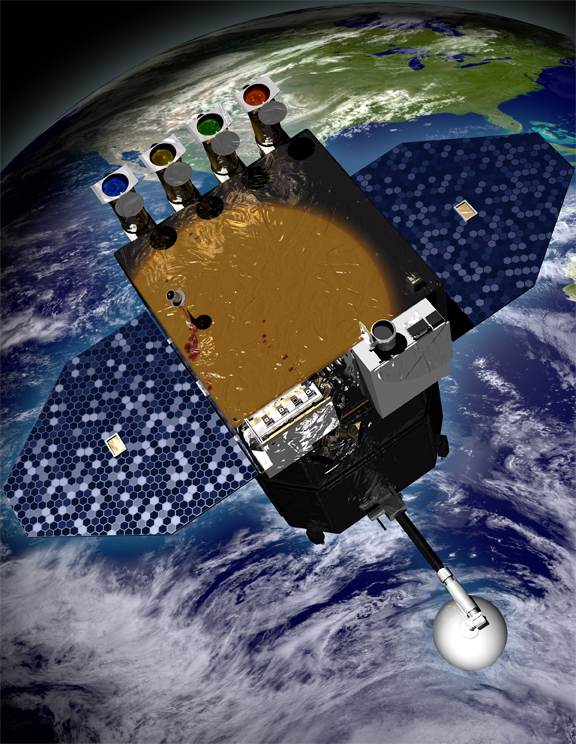
 

Credits: NASA


SDO carries three instruments: the Atmospheric Imaging Assembly (AIA), EUV Variability Experiment (EVE), and the Helioseismic and Magnetic Imager (HMI). The instruments will take measurements that will reveal at a very high rate the variations of the Sun.


The HMI was developed at Stanford University and it will extend the SOHO/MDI instrument. The HMI will help to study the origin of variability and the various components of the magnetic activity of the Sun. The measurements aim at understanding the origin and evolution of sunspots, sources and drivers of solar activity and disturbances, connections between the internal processes and the dynamics of the corona and the heliosphere.


You can find more information about the instrument on the HMI page on Stanford University’s web site.


The AIA will capture images of the solar atmosphere in ten wavelengths every ten seconds. The data collected by the instrument will improve the understanding of the activity in the solar atmosphere. The instrument was developed by Lockheed Martin.


EVE was developed at University of Colorado at Boulder. EVE will measure the solar extreme ultraviolet irradiance.


The SDO will launch aboard an Atlas V launch vehicle from SLC 41 at Cape Canaveral. SDO will operate on a geosynchronous orbit, which will allow continuous observations of the Sun. The orbit will also allow a continuous contact with a single dedicated ground station. The high data acquisition rate required such a mission profile, as a large on-board storage system would add to the overall complexity of the system.


You can find more information about SDO on NASA’s website.
 

January 30, 2010

Carnival of Space #138

Posted by


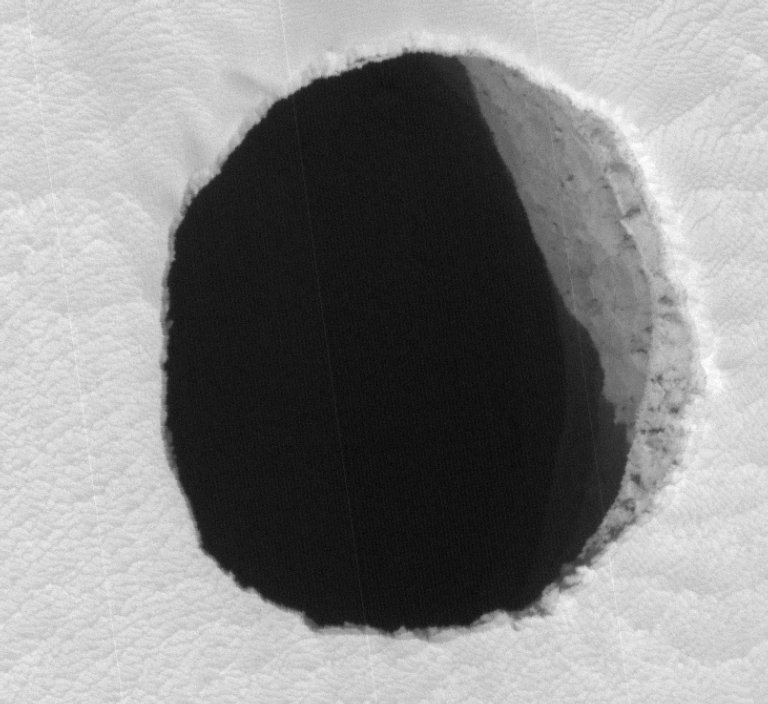
Credits: NASA/JPL-Caltech/University of Arizona


Carnival of Space #138 is hosted by Nancy Atkinson.


This week you can see new images of dunes on Mars, read about the whereabouts of MER Opportunity, the NASA announcement that the public can choose locations for the HiRISE camera to image, planet killers, get the latest updates on the Allen Telescope Array, and much more.


January 21, 2010

Carnival of Space #137

Posted by
January 17, 2010

Sentinel

Posted by


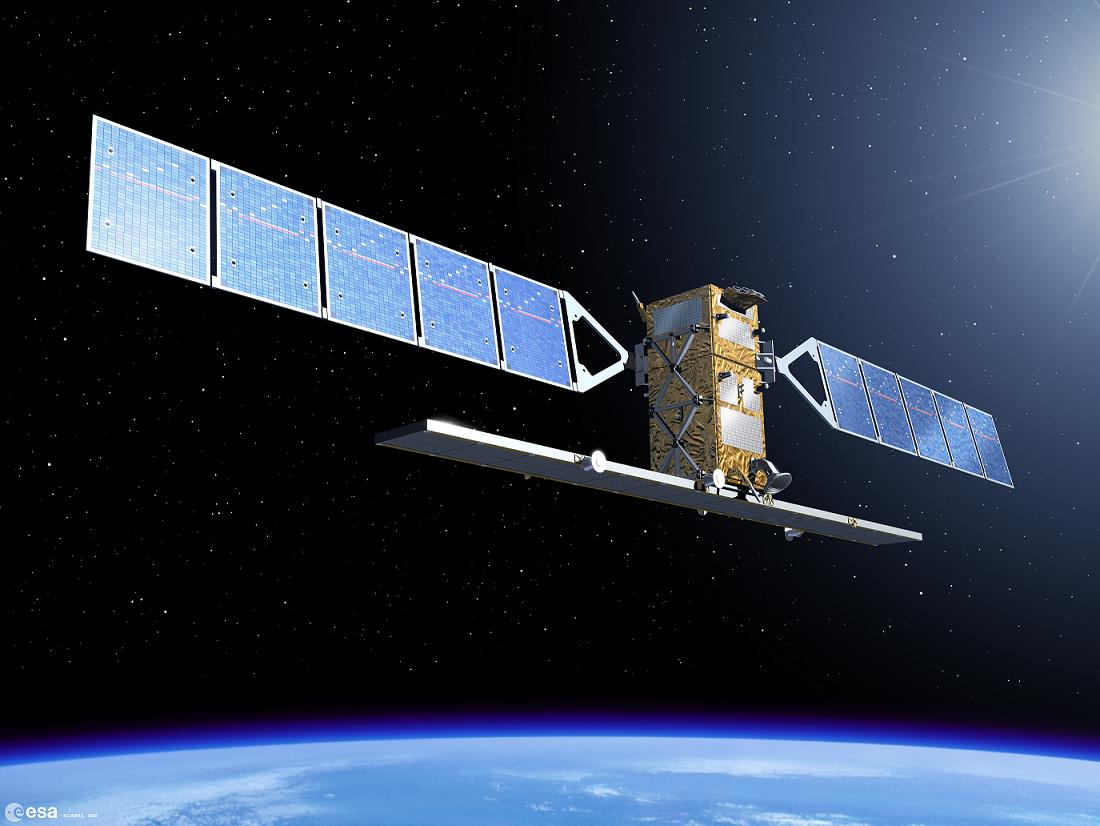
Credits: ESA – P.Carril


The European Union’s Global Monitoring for Environment and Security (GMES) initiative was born as the result of a growing need for accurate and accessible information about the environment, the effects of climate change, and civil security. GMES uses as its main information feed the data collected by satellites developed by ESA. Data is also collected by instruments carried by aircraft, floating in the ocean, or located on the ground.


GMES provides services that can be grouped into five main categories: land management, marine environment, atmosphere, aid emergency response, and security.


There are five Sentinel missions designed as components of the GMES initiative. These missions will complement the national initiatives of the EU members involved. The missions will collect data for land and ocean monitoring, and atmospheric composition monitoring, making use of all-weather radar and optical imaging. Each of the Sentinel missions is based on a constellation of two satellites.


Sentinel-1 is an all-weather radar-imaging mission. The satellites will have polar orbits and collect data for the GMES land and ocean services. The first satellite is scheduled for launch in 2012. Sentinel-1 will ensure the continuity of Synthetic Aperture Radar (SAR) applications, taking over from systems carried by ERS-1, ERS-2, Envisat, and Radarsat. Sentinel-1 satellites will be carried to orbit by Soyuz launch vehicles lifting off from Kourou.


Sentinel-2 will provide high-resolution multi-spectral imagery of vegetation, soil, and water, and will cover inland waterways and coastal areas. Sentinel-2 is designed for the data continuity of missions like Landsat or SPOT (Satellite Pour l’Observation de la Terre). Each satellite will carry a Multi-Spectral Imager (MSI) that can ‘see’ in thirteen spectral bands spanning from the visible and near infrared (VNIR) to the shortwave infrared (SWIR). The first Sentinel-2 is planned to launch in 2013. Vega will provide launch services for Sentinel-2 missions.


Credits: ESA – P.Carril


Sentinel-3 will determine parameters such as sea-surface topography and sea and land surface temperature. It will also determine ocean and land colour with high accuracy. The first Sentinel-3 satellite is expected to reach orbit in 2013. The spacecraft bus has a three-meter accuracy real-time orbit determination capability based on GPS and Kalman filtering.


Sentinel-4 is devoted to atmospheric monitoring and it will consist of payloads carried by Meteosat Third Generation (MTG) satellites that are planned to launch in 2017 and 2024. Sentinel-5 will be used for atmospheric monitoring as well. The payload will be carried by a post-EUMETSAT Polar System (EPS) spacecraft, planned to launch in 2020. A Sentinel-5 precursor will ensure that no data gap will exist between the Envisat missions and Sentinel-5.


You can find out more about the GMES initiative and the Sentinel missions on a dedicated page on ESA’s website.


January 12, 2010

Carnival of Space #136

Posted by


Credits: NASA/ESA/G. Bacon (STScI)


Carnival of Space #136 is hosted by Mike Simonsen at Simostronomy.


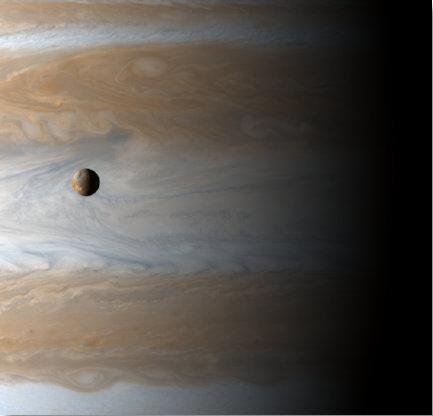
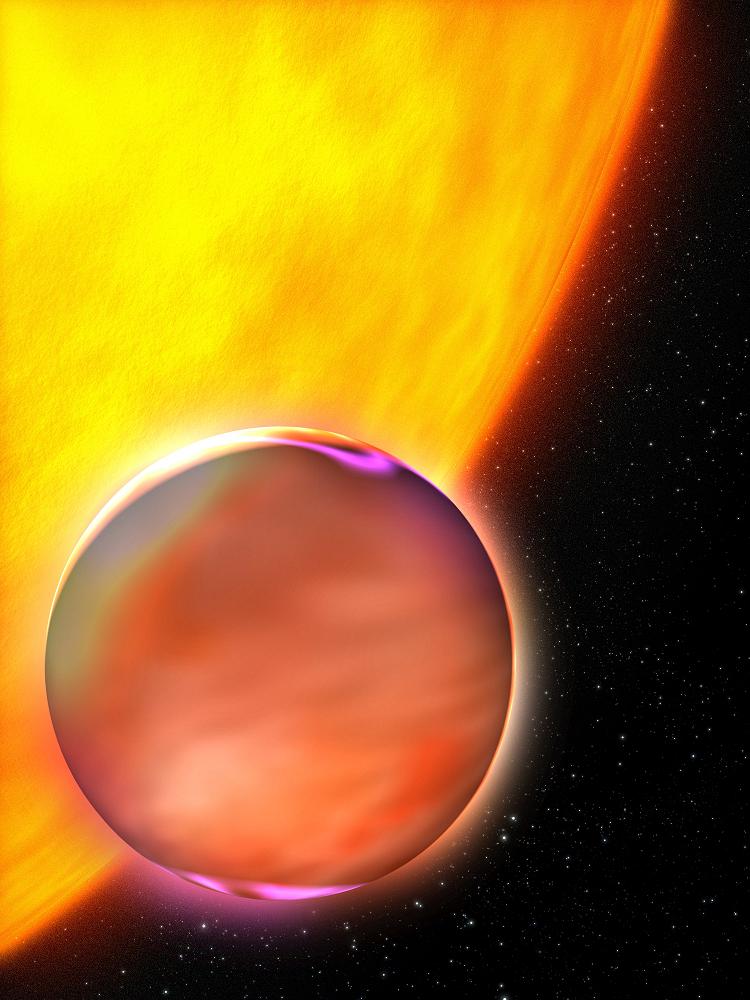
This week you can read an interview with Team Selenokhod, one of the most recent entrants in the Google Lunar X Prize Competition, learn about the sixth anniversary of the MER Spirit, explore topics related to the discovery of the Galilean moons, discover a new, refined age of the solar system, find out how scientists detect water on the surface of exoplanets, read about the recurrent nova T Pyxidis, the newest Hubble Space Telescope image of faint galaxies, how to use ‘interstellar cycler’ to reach the stars, and much more.


January 6, 2010

Carnival of Space #135

Posted by


Credits: David Seal


Carnival of Space #135 is hosted at Steve’s Astro Corner.


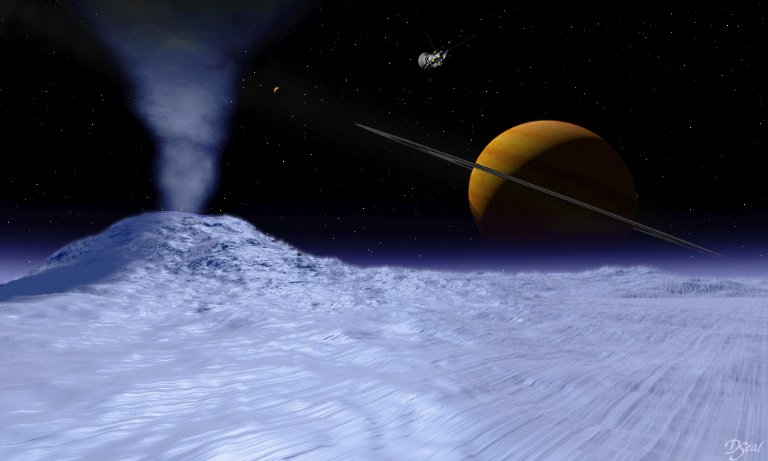
This week you can read about a partial lunar eclipse, the chemical composition of Io, Titan explorers, the wreck of the Mars Polar Lander, Sun spots, geysers on the surface of Enceladus, and much more.