OrbitalHub

Where curiosity reaches escape velocity.

Domain is for sale. $50,000,000.00 USD. Direct any inquiries to contact@orbitalhub.com.

Archive for the Robotic Exploration category


Private companies aiming to extract resources from asteroids are advancing rapidly in 2026, with multiple startups targeting their first deep space missions. AstroForge, Karman+, and TransAstra are pursuing different approaches to what analysts describe as a potential trillion-dollar industry, though significant technical and regulatory hurdles remain before commercial operations become reality.

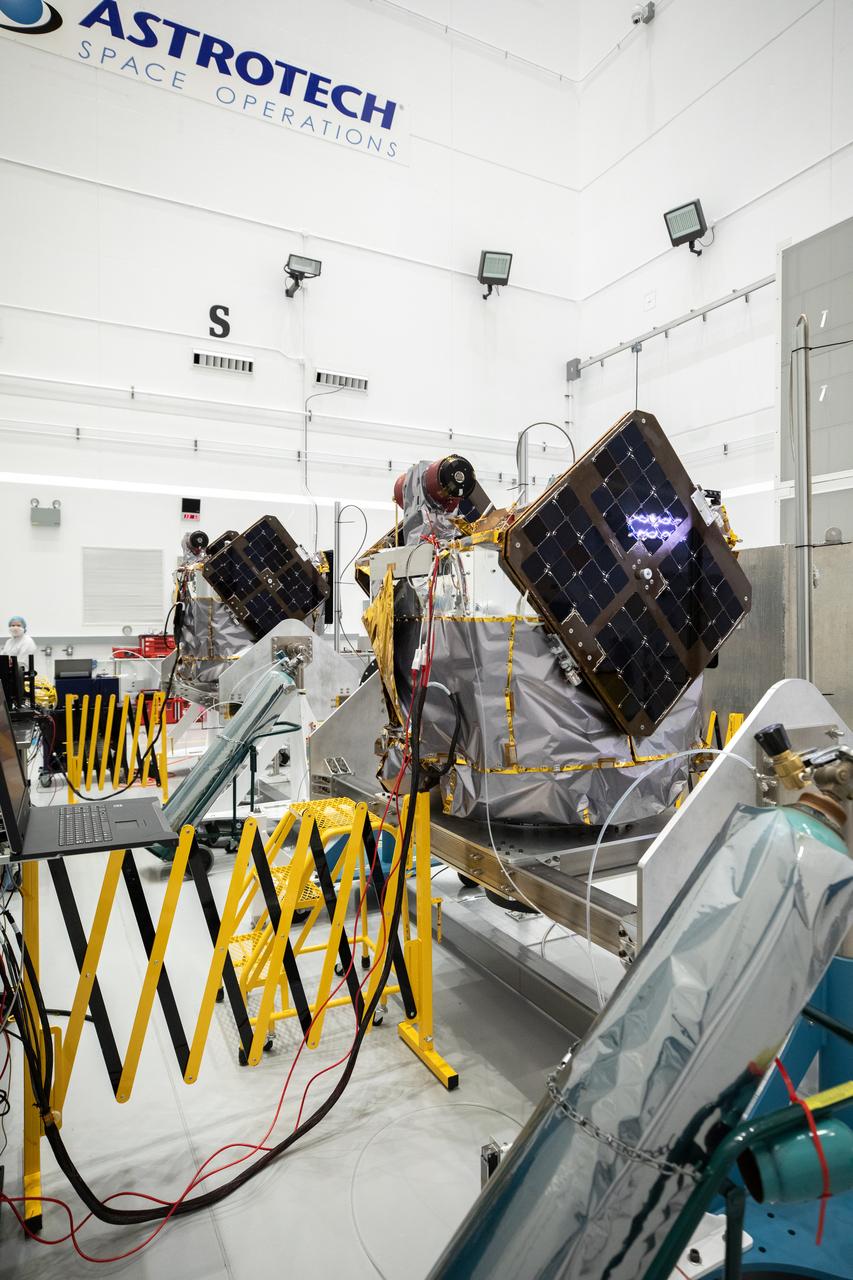
AstroForge, a California-based startup, is preparing for its DeepSpace-2 mission in 2026, which aims to become the first private spacecraft to land on an asteroid outside Earth’s planetary gravity well. The mission follows earlier tests and targets platinum-group metals that exist in concentrated quantities on certain asteroids. The company has designed scalable spacecraft specifically for deep-space prospecting, moving beyond the concept stage to flight hardware.

Karman+ raised 20 million dollars in 2025 and is targeting 2026 for its first autonomous asteroid-mining demonstration. The company’s technology focuses on extraction systems that could process water and metals in the low-gravity environment of small bodies. This “second wave” of space mining companies has learned from earlier efforts that encountered technical challenges, applying those lessons to more robust system designs.

TransAstra has taken a more ambitious approach, proposing what it calls the “Honey Bee” vehicle for optical mining of water and metals. The company’s most publicized concept involves bagging a house-sized near-Earth asteroid and relocating it for processing over 900,000 miles from Earth. While still conceptual, the approach has attracted attention and investment, though the engineering challenges of capturing and moving an asteroid remain substantial.

Market analysts project the asteroid mining sector could grow from approximately 2 to 2.5 billion dollars in 2025-2026 to over 5 billion dollars by 2030, representing compound annual growth exceeding 20 percent. The theoretical resource potential is enormous: a single metal-rich asteroid could contain more platinum than has been mined throughout human history.

However, the legal framework governing asteroid resources remains uncertain. No clear international framework exists for ownership claims or environmental protections in space. The 2015 U.S. Commercial Space Launch Competitiveness Act grants American companies property rights over extracted resources, but this position is not universally accepted internationally.

NASA continues to monitor the sector, with interest in asteroid tracking capabilities that have both mining and planetary defense applications. The space agency’s Psyche mission, which arrived at the metal-rich asteroid 16 Psyche in 2024, provides data relevant to understanding potential mining targets, though no NASA-funded mining missions are planned for 2026.

Extracting resources from asteroids differs fundamentally from terrestrial mining operations. On small bodies with surface gravity less than one-thousandth of Earth’s, even modest thrust can overcome gravitational binding, enabling extraction techniques impossible on Earth.

Optical mining, as proposed by TransAstra, uses concentrated sunlight to heat asteroid surface material, causing volatile compounds to sublimate and become collectable. The water content of certain near-Earth asteroids makes this approach attractive for potential propellant production in space.

The mechanical properties of asteroid material present challenges for traditional drilling or excavation approaches. Many asteroids appear to be “rubble piles,” collections of debris held together by weak gravity rather than solid rock. This structure affects how materials respond to extraction efforts.

The value proposition for asteroid resources depends heavily on the target material. Water ice, if processable into liquid hydrogen and oxygen, could serve as rocket propellant in space, avoiding the need to launch propellant from Earth’s surface. Platinum-group metals, valuable on Earth, would require return to surface markets to realize value, adding transportation costs and complexity.
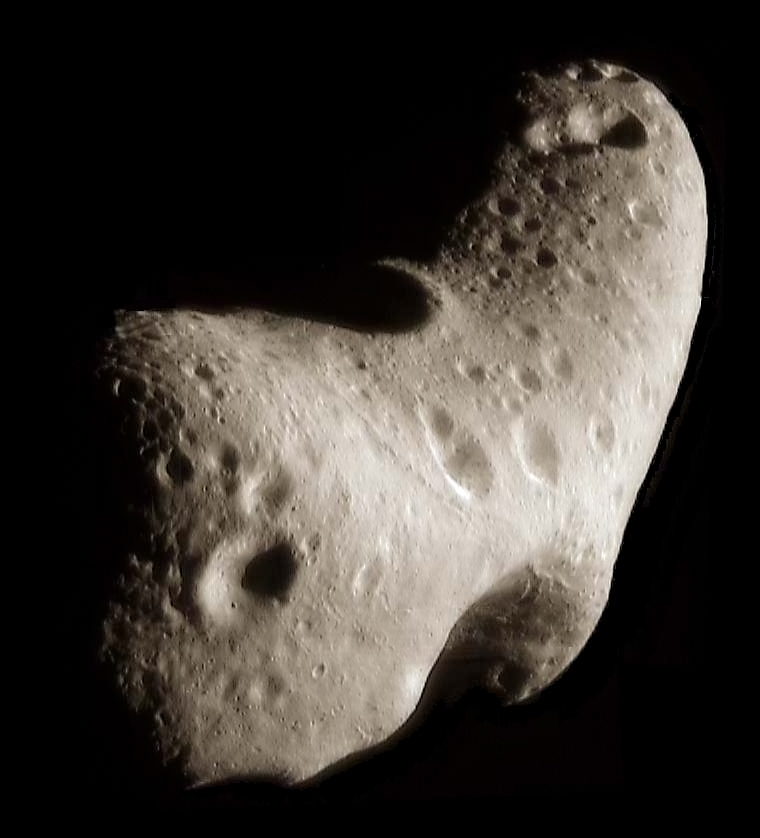


TransAstra, a NASA-backed startup, announced in March 2026 a groundbreaking study to capture and relocate a near-Earth asteroid approximately 100 tons in mass, marking a significant escalation in the commercial asteroid mining industry. The study, conducted in partnership with the space agency, explores methods for enveloping the asteroid in an inflatable container and moving it to lunar orbit for eventual resource extraction.

The concept builds on technology already tested aboard the International Space Station in 2025, where TransAstra demonstrated its “bag” system in low Earth orbit. The inflatable structure, designed to surround a small asteroid and contain its fragments during capture, passed initial verification tests showing it can survive the thermal and structural demands of space operations. The new study extends this approach to much larger objects, representing a fundamental leap in scale from previous demonstrations.

The company’s approach addresses one of the fundamental challenges in asteroid resource extraction: accessing material that would be prohibitively expensive to mine through traditional methods. Rather than sending mining equipment to distant asteroids and returning processed materials to Earth, the TransAstra concept involves moving the asteroid itself to a convenient location where continuous resource extraction becomes practical.

Funding for the study reflects growing government interest in asteroid resources. The U.S. Space Force has provided additional investment to scale the technology, recognizing potential applications for in-space manufacturing and propellant production. As orbital operations expand, the ability to extract materials from near-Earth asteroids could reduce dependence on Earth-launched resources, lowering the cost of sustained space operations.

TransAstra is not alone in pursuing asteroid mining. AstroForge, another U.S.-based company, has raised approximately $55 million toward extracting platinum-group metals from asteroids. The company experienced a spacecraft setback but continues preparing for asteroid landing tests. Karman+ secured $20 million in February 2025 to develop autonomous spacecraft for near-Earth asteroid mining, targeting a demonstration mission in 2027.

The asteroid mining market is projected to grow from $2.49 billion in 2026 to $5.42 billion by 2030, representing a compound annual growth rate of 21.4 percent. This expansion reflects anticipated demand for rare metals and the strategic value of establishing in-space resource extraction capabilities before lunar and Mars ambitions require substantial material support.

Moving a 100-ton asteroid requires careful consideration of momentum and energy. The asteroid’s orbital velocity around the Sun determines the energy required to alter its trajectory, with even small changes requiring substantial thrust when applied to objects with such great mass. TransAstra’s approach involves applying gentle continuous force rather than sudden impulse, using solar electric propulsion to gradually modify the asteroid’s orbit over months or years.

The thermal environment during the capture operation presents unique challenges. Asteroids rotate, presenting changing thermal profiles to the sun as they tumble through space. The inflatable capture bag must maintain structural integrity across temperature extremes that could reach minus 100 degrees Celsius in shadow and positive 100 degrees Celsius in direct sunlight. Materials selection focuses on thermal resilience and resistance to micrometeoroid puncture.

Containment of the asteroid once captured requires the bag to maintain its shape despite the irregular shape of most asteroid surfaces. The inflatable structure must distribute forces evenly across contact points, avoiding concentrated loads that could tear the material. TransAstra’s design incorporates multiple redundant chambers, allowing the bag to maintain containment even if some sections experience damage.


The United States Congress effectively terminated NASA’s Mars Sample Return program in January 2026, redirecting $110 million to a new “Mars Future Missions” line item while explicitly stating that the existing program would not receive support. The decision marks one of the most significant shifts in NASA’s planetary exploration strategy in decades, leaving approximately 30 samples collected by the Perseverance rover stranded on the Martian surface indefinitely.

The cancellation emerged from the Fiscal Year 2026 budget process, where the Trump administration proposed terminating Mars Sample Return due to escalating costs and projected timelines. Estimates placed the total cost at up to $11 billion, with samples potentially not returning until 2040 at the earliest. These figures proved unacceptable to congressional appropriators, who instead passed a compromise spending bill that explicitly excluded support for the existing program.

The Mars Sample Return campaign represented a joint NASA-ESA effort to bring Martian material to Earth for detailed laboratory analysis. Perseverance has been collecting samples since 2021, caching them at strategic locations across Jezero Crater for later retrieval. The original architecture called for a complex sequence of missions: an ascent vehicle to launch the samples into Martian orbit, a transfer spacecraft to capture them, and a return vehicle to bring them to Earth.

The program’s troubles predated the 2026 cancellation. Independent reviews in 2023 and 2024 criticized the architecture as overly complex and expensive, with the Planetary Science Decadal Survey recommending that NASA seek a more affordable approach. The agency paused architecture work and studied alternatives, but cost estimates remained prohibitively high regardless of the chosen approach.

The decision to cut Mars Sample Return has generated substantial criticism from the scientific community. Researchers note that laboratory analysis of Martian material could address fundamental questions about Mars’s past habitability and whether life ever existed on the planet. The samples collected by Perseverance include formations that show potential biosignatures, making their analysis particularly compelling.

ESA, which had committed significant resources to the program, is now reassessing its role in Mars exploration. The European agency’s contributions included the Earth Return Orbiter, which would have captured the sample container in Martian orbit and returned it to Earth. With the NASA program cancelled, ESA faces decisions about whether to pursue independent or alternative approaches.

The $110 million redirected to “Mars Future Missions” could support technology development for future sample retrieval attempts, including work on Mars landing systems and sample containment technologies. However, no specific mission has been proposed, and the funding level represents a fraction of what the full program would have required.

The cancellation leaves China potentially positioned as the first nation to return Martian samples to Earth. That country’s Tianwen-1 mission included an orbiter and lander, though not a sample return component. However, Chinese scientists have discussed sample return ambitions, and the U.S. decision may accelerate those plans.

For now, the samples collected by Perseverance remain where they were deposited, scattered across the floor of Jezero Crater. The rover continues operating, collecting additional samples and conducting scientific investigations, though the ultimate purpose of those samples remains uncertain. Future missions may retrieve them, or they may remain as artifacts of a program that came close to achieving something unprecedented before falling to budget realities.

Returning material from Mars presents one of the most challenging problems in spaceflight. The planet’s gravitational well requires substantial energy to escape, with a velocity delta of approximately 5.6 kilometers per second needed to reach low Mars orbit. This is comparable to the total velocity change required to reach Mars from Earth in the first place.

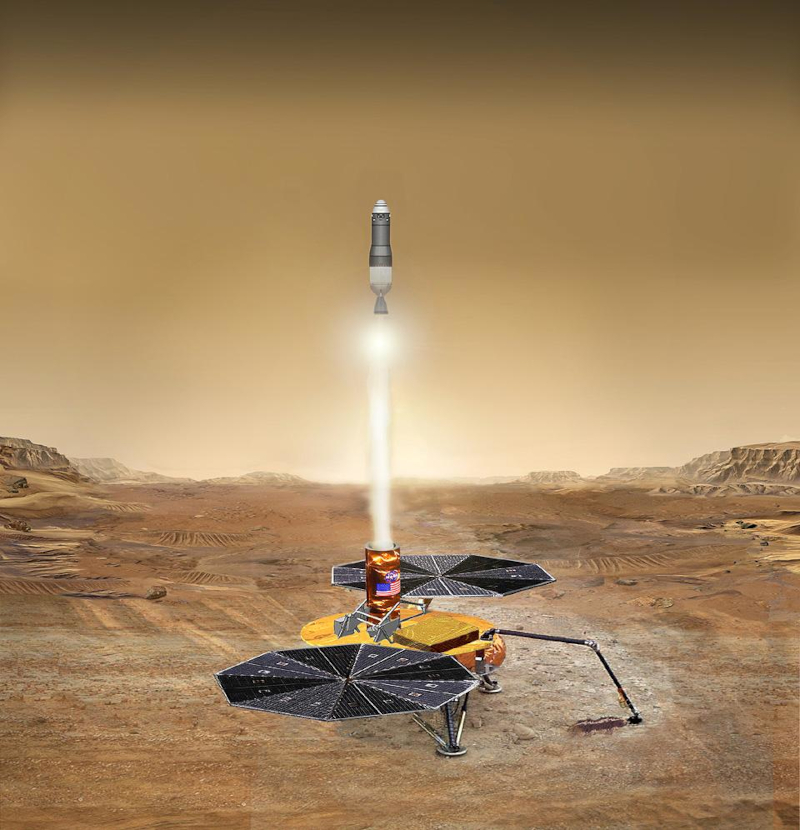
The Mars Sample Return architecture addressed this challenge through multiple vehicles. A Mars Ascent Vehicle would launch from the surface carrying the sample container, achieving orbital insertion without relying on atmospheric drag for deceleration. An Earth Return Orbiter would then capture this container in orbit and perform the much larger maneuver needed to transfer to an Earth-return trajectory.

The thermal protection required for Earth reentry adds complexity. The sample container would strike Earth’s atmosphere at velocities approaching 12 kilometers per second, generating temperatures exceeding 2,000 degrees Celsius. The capsule design incorporates heat shields similar to those used on Apollo return vehicles, sized appropriately for the mass and velocity of the return trajectory.

Containment represents a critical requirement given the possibility of Martian material posing biological hazards. The samples must remain sealed throughout reentry and landing, with containment verified before any potential exposure to Earth’s biosphere. This requirement adds mass and complexity to the return vehicle, as the sealed container must survive the entire descent and recovery process intact.


NASA’s Perseverance rover has entered a new era of autonomous exploration on Mars, with a system debuted in February 2026 that gives the vehicle GPS-like self-localization capabilities without requiring input from Earth. The Mars Global Localization system, first used in operations on February 2 and again on February 16, represents a fundamental shift in how the rover navigates the Martian surface, enabling longer drives with greater precision than ever before.

The system works by comparing navigation camera panoramas to stored orbital maps from the Mars Reconnaissance Orbiter. This matching process takes approximately two minutes and achieves positioning accuracy of 10 inches (25 centimeters), a dramatic improvement over previous visual odometry methods that accumulated errors potentially exceeding 100 feet over long drives. Previously, uncertainty about the rover’s precise position limited how far controllers would allow it to drive in a single sol, or Martian day.

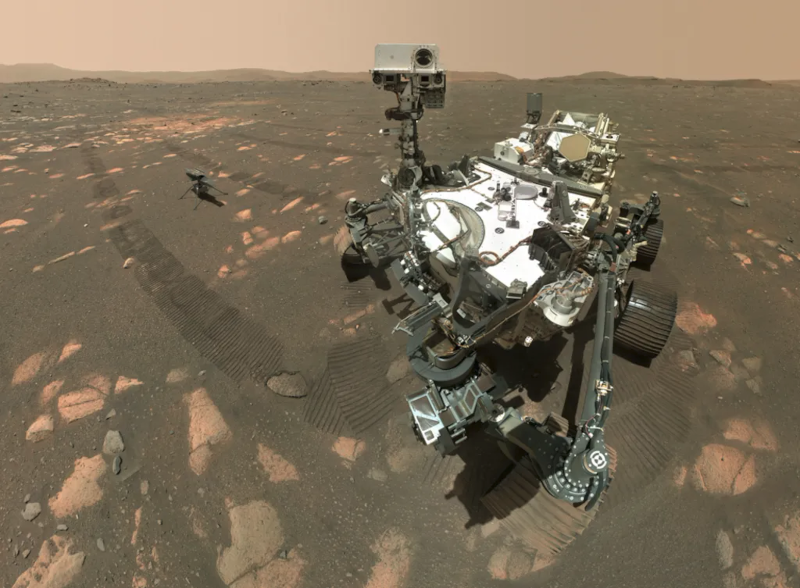
The Mars Global Localization algorithm runs on hardware repurposed from the Ingenuity helicopter’s base station. This processor, roughly 100 times faster than the rover’s main computers and based on technology from the mid-2010s smartphone era, proved adequate for the computationally intensive matching process. The algorithm includes sanity checks to ensure reliability, preventing the rover from accepting obviously incorrect position estimates.

This development builds on earlier autonomy milestones. In December 2025, Perseverance completed its first fully AI-planned drives, with ground-based generative AI analyzing HiRISE orbital images and elevation data to generate safe waypoint paths. The rover drove 689 feet on December 8 and 807 feet on December 10, autonomously following routes that avoided boulders, sand ripples, bedrock, and outcrops identified by the AI system.

The combination of AI planning and autonomous localization has pushed the rover’s independence to approximately 90 percent of its travels without human input. This represents a fundamental shift in mission operations, where controllers no longer need to micromanage every aspect of each drive. The rover can receive high-level objectives and execute them with minimal oversight, dramatically increasing scientific productivity.

Perseverance continues its exploration of Jezero Crater, having traveled over 30 kilometers since landing on February 18, 2021. The vehicle has collected 24 rock and regolith samples, along with one air sample, for potential future return to Earth. Notably, the “Sapphire Canyon” sample collected from the Cheyava Falls rock in 2024 shows potential biosignatures that were validated in a September 2025 Nature paper, making it one of the most significant samples collected during the mission.

The autonomy advances have particular importance for future Mars missions. With the Mars Sample Return program effectively cancelled by Congress in January 2026, the samples collected by Perseverance will remain on the Martian surface indefinitely unless a new retrieval mission emerges. However, the technologies demonstrated by the rover pave the way for more ambitious autonomous explorers capable of operating independently across greater distances.

Navigating on Mars presents unique challenges absent in terrestrial robotics. The planet lacks any global navigation satellite system, meaning rovers cannot rely on GPS or GLONASS for positioning. Communication delays between Earth and Mars range from 4 to 24 minutes one way, making real-time remote control impossible and requiring the rover to make decisions autonomously.

Previous rovers used visual odometry, comparing successive images to estimate motion between positions. While effective for short distances, this method accumulates error over time as small estimation mistakes compound. After driving hundreds of meters, the rover’s position estimate might be significantly off, requiring ground controllers to carefully verify progress through orbital imagery.

The Mars Global Localization system sidesteps this problem by leveraging the extensive imaging data already collected by orbital missions. The Mars Reconnaissance Orbiter’s HiRISE camera has captured high-resolution images covering much of the Martian surface, creating a detailed map against which the rover can compare its own images. This approach works similarly to how facial recognition systems match images against databases.

The computational requirements for real-time image matching are substantial, requiring significant processing power to compare feature-rich navcam panoramas against large orbital map databases. The repurposed Ingenuity processor proved adequate for this task, demonstrating how hardware originally designed for one purpose can find new life in spacecraft applications.


At the southernmost reaches of the Moon, where sunlight skims the horizon and shadows stretch for kilometers, lies one of the most intriguing frontiers in space exploration. The lunar South Pole is a place of extremes—regions of near-eternal light sit beside craters that have not seen the Sun for billions of years. Within those permanently shadowed regions, scientists believe water ice may be preserved, locked away in darkness and cold. It is here, in this landscape of contrast and possibility, that NASA’s MoonFall mission begins its story.

MoonFall is not a mission of astronauts, at least not at first. It is a mission of scouts—four highly mobile drones that will descend to the lunar surface ahead of human explorers, mapping terrain, probing shadows, and revealing secrets hidden in the coldest corners of the Moon. Built on the legacy of the Ingenuity Mars Helicopter, these drones represent a new class of planetary explorers: small, agile, and capable of reaching places that traditional rovers cannot.

The idea behind MoonFall is as much about preparation as it is about discovery. NASA’s Artemis program aims to return humans to the Moon, and the South Pole has been chosen as a primary destination because of its scientific potential and resource availability. Yet the terrain is treacherous. Craters, steep slopes, and deep shadows create an environment that is difficult to navigate and poorly understood. Before astronauts set foot there, the landscape must be mapped in detail, hazards identified, and resources confirmed. MoonFall is designed to do exactly that.

The mission begins high above the lunar surface. As the carrier spacecraft descends toward the South Pole, the four drones are released, each entering its own controlled descent. Unlike traditional landers that touch down as a single unit, MoonFall disperses its explorers across a wider area, increasing coverage and redundancy. Each drone lands independently, unfolding its systems and preparing for a series of flights that will take place over the course of a lunar day—approximately fourteen Earth days of continuous sunlight.

The engineering challenge behind these drones is profound. Flying on the Moon is fundamentally different from flying on Mars or Earth. The Moon has no atmosphere to provide lift. There is no air for rotors to push against, no aerodynamic surfaces to generate lift. Instead, MoonFall drones rely entirely on propulsive flight, using thrusters to lift off, maneuver, and land. In this sense, they behave more like miniature spacecraft than traditional aircraft.

This propulsion-based approach introduces a new set of constraints. Every flight requires careful management of fuel, thrust, and stability. The drones must balance their mass and propulsion systems precisely to achieve controlled motion in a vacuum. Guidance, navigation, and control systems must operate with extreme precision, using onboard sensors to track position relative to the lunar surface. Without atmospheric drag, even small errors can lead to significant deviations over time.

The heritage of Ingenuity plays a crucial role here, not in its aerodynamic design, but in its autonomy. Ingenuity demonstrated that a small, lightweight vehicle could operate independently on another world, making real-time decisions about navigation and flight. MoonFall builds on this capability, extending it into a more demanding environment. Each drone must be able to plan and execute its own flights, avoid hazards, and adapt to changing conditions without direct human control. Communication delays between Earth and the Moon are shorter than those to Mars, but autonomy remains essential for efficient operations.

The scientific instruments aboard the drones are designed to turn mobility into insight. High-definition optical cameras will capture detailed images of the terrain, revealing surface features at resolutions far beyond what orbital instruments can provide. These images will help scientists understand the geological history of the region, identify safe landing sites, and map potential resources.

Perhaps the most compelling targets are the permanently shadowed regions, or PSRs. These areas, hidden from sunlight for billions of years, are among the coldest places in the Solar System. Temperatures can drop below minus 200 degrees Celsius, creating conditions where volatile substances like water ice can remain stable over geological timescales. Detecting and characterizing this ice is a key objective of the Artemis program, as it could provide a source of water, oxygen, and even rocket fuel for future missions.

Reaching these shadowed regions is no trivial task. Rovers struggle to navigate steep crater walls and operate in darkness. MoonFall drones, however, can approach from above, descending into these regions briefly to collect data before returning to sunlight. This ability to hop across the landscape, covering up to 50 kilometers over multiple flights, transforms how exploration can be conducted. Instead of being confined to a single path, the drones can sample multiple sites, building a more comprehensive picture of the environment.

The physics of operating in such extreme conditions adds another layer of complexity. Thermal management becomes critical, as the drones must endure rapid temperature changes between sunlit and shadowed areas. Power systems, likely based on solar energy and onboard batteries, must be carefully managed to sustain operations throughout the lunar day. Dust, a persistent challenge on the Moon, can interfere with sensors and mechanical components, requiring robust design and mitigation strategies.

Yet within these challenges lies the mission’s promise. MoonFall represents a shift in how we explore other worlds. Instead of relying solely on large, complex spacecraft, it embraces distributed systems—multiple smaller vehicles working together to achieve a common goal. This approach increases resilience, as the loss of a single drone does not end the mission, and enhances coverage, allowing more ground to be explored in less time.

As the drones move across the lunar surface, each flight becomes part of a larger narrative. Images stream back to Earth, revealing landscapes that have never been seen in detail. Data accumulates, mapping the distribution of ice, the structure of the terrain, and the conditions that future astronauts will face. Slowly, the unknown becomes known.

In the quiet arcs of these propulsive flights, one can see the future of exploration taking shape. The Moon is no longer just a destination; it is becoming a place of preparation, a proving ground for technologies and strategies that will one day be applied to Mars and beyond. MoonFall’s drones are not just scouts for Artemis—they are prototypes for a new generation of explorers that can navigate the most challenging environments in the Solar System.

When astronauts finally arrive at the lunar South Pole, they will not be stepping into the unknown. They will be following paths first traced by machines that flew through shadow and light, mapping a world that has waited billions of years to be explored.

Video credit: NASA Jet Propulsion Laboratory


Two small spacecraft currently traversing the void between Earth and Mars are rewriting the playbook for how robotic missions reach the Red Planet. NASA’s ESCAPADE mission, comprising twin spacecraft nicknamed Blue and Gold, launched aboard a Blue Origin New Glenn rocket in November 2025, but they will not arrive at Mars until September 2027. This unusual trajectory represents a deliberate choice to wait for optimal planetary alignment, demonstrating how small spacecraft can offer flexibility that larger missions cannot match.

The ESCAPADE twins carry instruments designed to investigate one of Mars’ most enduring mysteries: how the planet lost the thick atmosphere that scientists believe once permitted flowing water on its surface. Researchers have long suspected the solar wind, a constant stream of charged particles emanating from the Sun, played a central role in stripping away the Martian air over billions of years. The ESCAPADE spacecraft will observe this process directly, measuring how solar wind interacts with Mars’ magnetic field and causes atmospheric gases to escape into space.

What makes the current phase of the mission particularly intriguing is the bonus science the spacecraft are conducting while awaiting their Mars arrival. As of February 2026, both spacecraft have activated their science instruments and are collecting data on Earth’s distant magnetotail, the region of our planet’s magnetic environment that extends away from the Sun. This region has never been studied at such distances, giving scientists their first opportunity to observe how Earth’s magnetic field behaves in the outer reaches of its influence.

The twin spacecraft approach represents a first for Mars exploration. Previous missions to the Red Planet have relied on single spacecraft, limiting observations to one location at any given time. ESCAPADE will provide what mission scientists describe as a stereo perspective, allowing them to observe cause and effect relationships in the Martian magnetosphere from two different vantage points simultaneously. When one spacecraft measures the incoming solar wind while the other measures the planet’s response, researchers can connect these observations to understand the fundamental processes governing atmospheric loss.

The mission’s principal investigator, Rob Lillis of the University of California, Berkeley, has emphasized how the dual-spacecraft configuration enables measurements impossible for single platforms. By observing identical regions at slightly different times, the spacecraft can detect how the Martian magnetosphere changes on timescales as short as two minutes. This temporal resolution will reveal dynamics that previous Mars missions could never capture, potentially answering questions that have puzzled scientists for decades.

Once the spacecraft arrive at Mars in 2027, they will spend approximately six months in complementary orbits before beginning their primary science mission in spring 2028. One spacecraft will remain closer to the planet while the other travels farther away, allowing simultaneous measurement of both the upstream solar wind and the planet’s magnetospheric response. This configuration mirrors the approach used by missions studying Earth’s space weather but represents a first at Mars.

Understanding Mars’ lost atmosphere requires grasp of several interconnected physical processes. The solar wind consists primarily of protons and electrons traveling at speeds typically between 300 and 800 kilometers per second, carrying the Sun’s magnetic field outward through interplanetary space. When this magnetized plasma encounters Mars, it interacts with the planet’s weak magnetic environment, transferring energy and momentum to charged particles in the upper atmosphere.

Mars lacks Earth’s global magnetic field, which shields our planet by deflecting solar wind around the planet like a stone diverting a stream. Instead, Mars possesses scattered regions of remnant magnetization in its crust, along with a dynamically generated magnetic field created when solar wind interacts with charged particles in the ionosphere. This hybrid magnetosphere provides only partial protection, allowing solar wind to directly impact the upper atmosphere in many regions.

The process of atmospheric escape takes multiple forms. Ion pickup involves charged particles from the ionosphere being accelerated by the solar wind and thrown away from the planet. Sputtering occurs when incoming solar wind particles strike atmospheric molecules with enough energy to eject them into space. The most dramatic form, sometimes called atmospheric stripping, happens when solar wind pressure physically pushes atmosphere off the planet, particularly from regions where magnetic protection is weakest.

Measuring these processes requires precise instrumentation capable of detecting low-energy ions and electrons in the tenuous Martian atmosphere. ESCAPADE carries multiple instruments designed specifically for this purpose, allowing scientists to quantify exactly how much atmosphere Mars loses each second and how that loss rate varies with solar wind conditions. This data will not only explain Mars’ past but also inform planning for future human missions, which will need to understand the radiation environment astronauts will encounter.