OrbitalHub

Where curiosity reaches escape velocity.

Domain is for sale. $50,000,000.00 USD. Direct any inquiries to contact@orbitalhub.com.

Archive for the Mars Explorers category


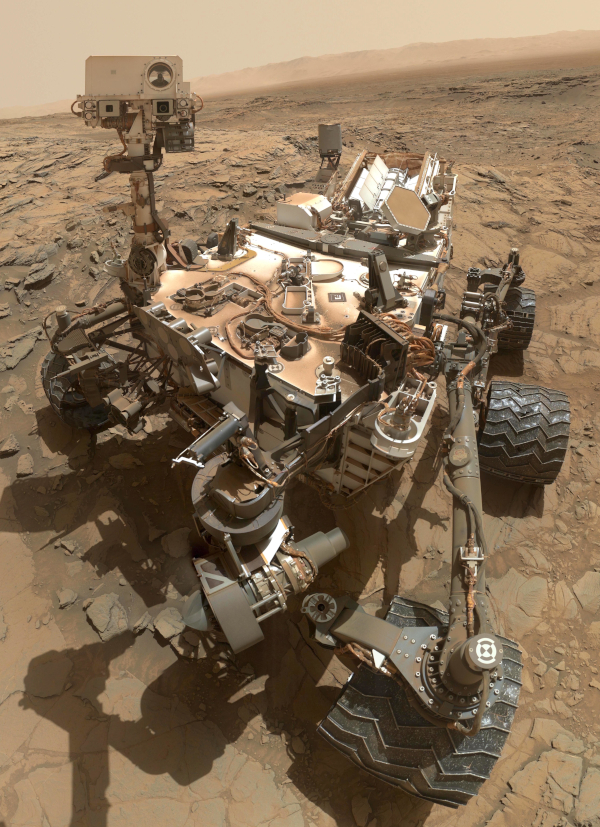
The search for signs of past life on Mars crossed a significant threshold in late April 2026, when an international team of researchers announced that NASA’s Curiosity rover had identified more than 20 distinct organic molecules preserved in ancient Martian rocks, including a nitrogen-containing compound whose structure resembles one of the building blocks of DNA. The findings, published on April 21, 2026, in the journal Nature Communications, represent the most diverse inventory of organic compounds ever detected on the Red Planet and demonstrate that the Martian subsurface is capable of protecting complex carbon-based chemistry for billions of years.

The discovery came from a chemical experiment conducted on another planet for the first time in history. Scientists used the Sample Analysis at Mars instrument suite, known as SAM, aboard Curiosity to analyze regolith and rock powder collected in the Glen Torridon region of Gale Crater. This area, explored by the rover in 2020, sits on the flanks of Mount Sharp and contains clay minerals that formed in the presence of liquid water approximately 3.5 billion years ago. Clay-rich environments are especially effective at trapping and shielding organic material from the radiation and oxidation that would otherwise destroy complex molecules near the Martian surface.

The experiment employed a chemical reagent called tetramethylammonium hydroxide, abbreviated TMAH, to break down larger organic molecules into smaller fragments that the SAM instruments could vaporize and characterize. The reagent is commonly used in geochemistry laboratories on Earth to liberate organic compounds from rock matrices without destroying them. Because Curiosity carries only a limited supply of TMAH, researchers spent considerable time selecting the optimal sampling site and timing the experiment to maximize scientific return. The successful execution of this procedure on Mars marks a milestone in analytical chemistry performed by robotic spacecraft at interplanetary distances.

Among the compounds detected, the nitrogen-containing molecule attracted particular attention. Its structure resembles nucleobases, the units that encode genetic information in DNA and RNA on Earth. The same class of molecules has been found in carbonaceous meteorites, which deliver organic material to planetary surfaces throughout the solar system. “The same stuff that rained down on Mars from meteorites is what rained down on Earth, and it probably provided the building blocks for life as we know it on our planet,” said Amy Williams, a geological sciences professor at the University of Florida and a member of both the Curiosity and Perseverance science teams, in a statement accompanying the paper’s release.

The rover also detected benzothiophene, a sulfur-containing molecule with a double-ring structure that is commonly found in meteorites and is associated with organic matter delivered from space rather than biological processes. This underscores a central challenge in interpreting organic detections on Mars: distinguishing between compounds that arrived via meteorite infall and those that might have a more local or biological origin. The Glen Torridon samples contained molecules in sufficient quantity and variety that the researchers concluded they were examining genuinely preserved ancient organic matter, rather than terrestrial contamination or trace amounts consistent with meteorite delivery alone.

Gale Crater was chosen as Curiosity’s landing site precisely because orbital spectroscopy had identified clay minerals in the region, suggesting a past environment where liquid water was stable and potentially hospitable to life. The rover arrived in August 2012 and has spent the subsequent years traversing the crater floor and ascending Mount Sharp, analyzing rock formations that record billions of years of Martian geological history. The Glen Torridon stop represented a particularly promising target because the clay minerals there act as molecular sponges, capturing and preserving organic compounds that would otherwise be degraded by cosmic rays and perchlorate chemicals in the Martian soil.

The detection of preserved organics in the shallow subsurface has direct implications for how scientists plan the next phase of Mars exploration. The ESA Rosalind Franklin rover, scheduled to launch on a SpaceX Falcon Heavy in late 2028, will carry a version of the TMAH extraction technique to a different landing site on Oxia Planum, where clay-rich deposits also exist. NASA’s Dragonfly mission to Saturn’s moon Titan, currently targeting launch in the 2030s, will employ similar chemical analysis methods on organic-rich sediments on that distant world’s surface. The success of the SAM TMAH experiment on Curiosity validates the approach and builds confidence that robotic chemistry can recover meaningful organic signatures without requiring sample return to Earth.

The authors of the Nature Communications paper are careful to note that the presence of these molecules does not constitute evidence of past life on Mars. The compounds could have arrived via meteorite infall, formed through geochemical processes in the Martian crust, or been delivered by hydrothermal systems that once operated in Gale Crater. What the discovery demonstrates is that the chemistry of life, or its precursors, has existed on Mars in sufficient quantity and diversity to be detectable after 3.5 billion years of preservation. The question of whether that chemistry ever organized itself into anything resembling living systems remains unanswered and will only be resolved when Martian samples are returned to terrestrial laboratories.

NASA’s Perseverance rover, which landed in Jezero Crater in 2021, is actively collecting and caching rock samples for eventual return to Earth as part of the Mars Sample Return campaign. The campaign, involving NASA and ESA, plans to launch the collected samples aboard a small rocket from the Martian surface and rendezvous them with an Earth return orbiter for delivery to scientists on the ground. That mission architecture is currently undergoing review and development, with the first sample return targeted for the early 2030s. Until Martian material can be examined with the full arsenal of instruments available in terrestrial laboratories, Curiosity’s latest finding stands as the most compelling indication yet that the raw ingredients for life were present on our neighboring planet at a time when life was also emerging on Earth.

Understanding why organic molecules survive on Mars requires examining the planet’s unusual surface chemistry. The Martian regolith contains perchlorate salts at concentrations of up to one percent in some soils. Perchlorates are powerful oxidizing agents that break down organic compounds when activated by ultraviolet radiation from the Sun. This chemical environment, combined with the constant bombardment of cosmic rays and solar particles that penetrate the thin Martian atmosphere, should in theory destroy exposed organic molecules within millions of years.

The clay minerals in formations like Glen Torridon offer a protective environment that substantially extends this timescale. Smectite clays, the class of clay minerals dominant in Gale Crater, have a layered sheet structure that traps molecules between the layers and shields them from radiation and reactive chemicals. The same property makes these clays useful in contamination remediation on Earth, where they are employed to immobilize organic pollutants in soils and groundwater.

The TMAH extraction process works by dissolving the clay matrix and releasing the trapped molecules for analysis. The reagent acts as a strong base that breaks the chemical bonds between the clay layers and the organic compounds, allowing the molecules to enter solution where they can be vaporized and analyzed by mass spectrometry. The SAM instrument heats the extracted samples to temperatures that ionize the organic molecules, then separates the ions by mass-to-charge ratio to identify the constituent compounds. This technique, routine in terrestrial geochemistry, had never been applied on another planet until Curiosity’s team adapted it for the SAM instrument’s constraints on mass, power, and consumables.
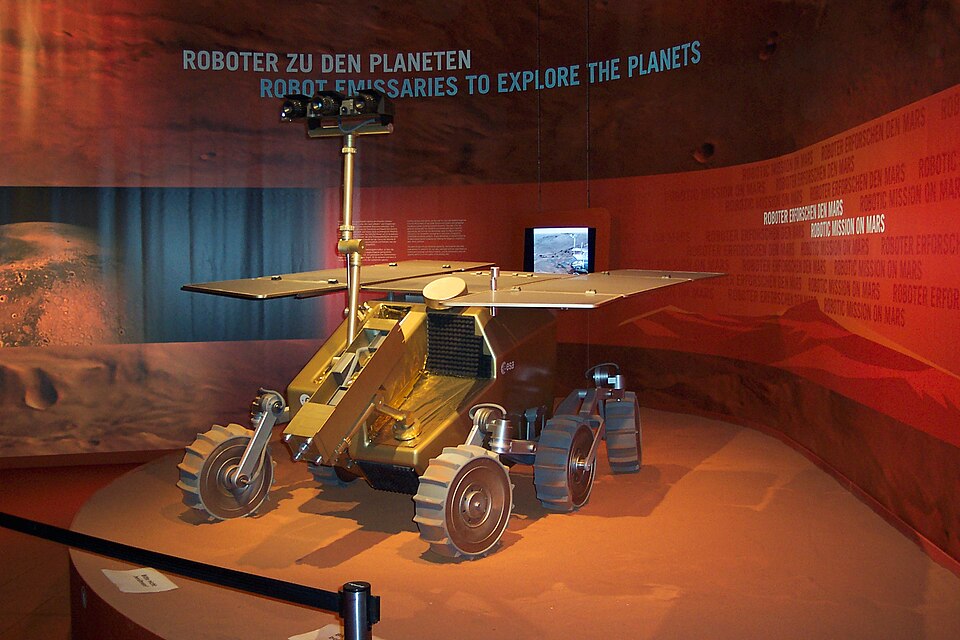
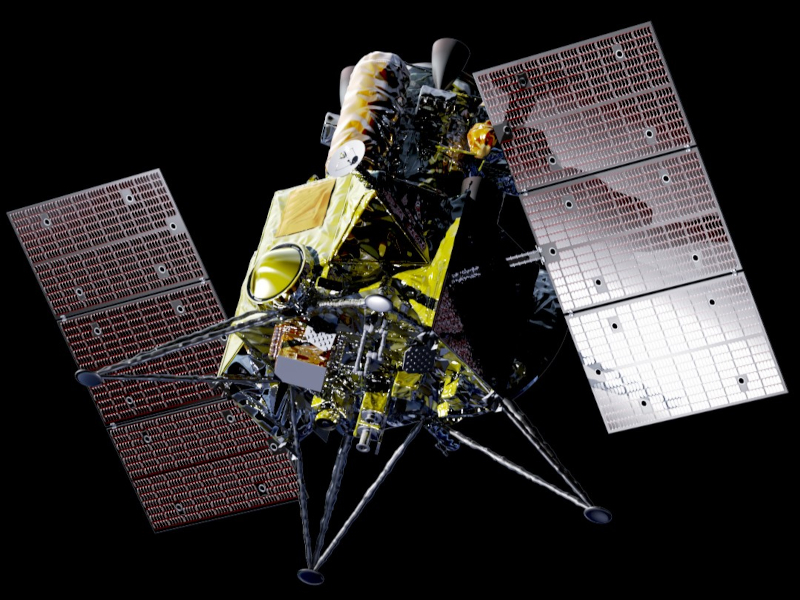


After more than a decade of delays, geopolitical shifts, and mission redesigns, ESA’s Rosalind Franklin rover finally has a confirmed launch provider. NASA announced on April 16, 2026, that SpaceX’s Falcon Heavy will launch the European Mars rover from Kennedy Space Center’s Launch Complex 39A in late 2028, with arrival on the Red Planet expected around late 2030. The contract, worth approximately $176 million through NASA’s Launch Services program, marks SpaceX’s first interplanetary mission to Mars and the culmination of an arduous journey for Europe’s first Mars rover.

The mission’s history reads like a geopolitical drama spanning multiple continents and two decades. Originally conceived in 2001 as part of ESA’s Aurora Programme, the rover was designed to search for biosignatures of past or present life on Mars through the most ambitious subsurface drilling attempt ever attempted on another world. The original plan called for a Russian-provided launch vehicle and landing platform through a partnership with Roscosmos, the Russian space agency. That partnership dissolved following Russia’s invasion of Ukraine in 2022, when ESA member states voted to suspend cooperation with Russia.

The rover’s scientific payload centers on a 2-meter drilling system, nearly double the depth achieved by any previous Mars rover. NASA’s Perseverance, for comparison, drills to 7 centimeters, while the Soviet-era Lunokhod rovers never attempted subsurface sampling on another world. The drill retrieves core samples that have been shielded from the harsh Martian surface radiation and oxidation that destroys organic compounds near the top layer of regolith. Once collected, the samples enter the Analytical Laboratory Drawer, where nine instruments including the Panoramic Camera and mass spectrometer characterize the composition.

The landing site, Oxia Planum, was selected after years of debate among planetary scientists. This region shows evidence of ancient clay mineral formation, which requires liquid water to create. Clay minerals serve as excellent preservers of organic compounds, as they can trap and shield complex molecules from degradation. The choice reflects the mission’s core hypothesis: if life ever arose on Mars, the chemical traces would be most likely to survive in protected subsurface environments.

NASA’s role extends beyond launch services. The agency is providing radioisotope heater units, tiny devices that use the decay heat of plutonium-238 to keep electronics warm during the frigid Martian nights. Without these units, the rover would not survive the temperature swings that plunge to minus 100 degrees Celsius. The Trump administration’s FY2027 budget proposed cutting approximately $100 million from NASA’s ROSA program that funds these contributions, but NASA proceeded with the SpaceX contract regardless, signaling continued commitment to international science partnerships despite broader budget pressures.

The selection of Falcon Heavy from Launch Complex 39A places the mission alongside NASA’s own heavy-lift ambitions. LC-39A has hosted Apollo missions, space shuttles, and Falcon Heavy launches including the historic Tesla Roadster flight in 2018. The capacity to lift approximately 3.5 tonnes to trans-Mars injection provides the delta-v needed for the eight-month journey. The backup launch windows in 2030 avoid the Mars dust storm season that historically has disrupted landing operations.

Drilling into bedrock on Mars presents challenges that exceed any previous subsurface expedition. The 2-meter drill must operate in temperatures ranging from minus 80 degrees to plus 20 degrees Celsius, with the mechanical systems enduring thermal cycling that weakens metals through repeated expansion and contraction. The drill string uses a percussive mechanism similar to rotary hammers, powered by electric motors that must produce sufficient torque while drawing minimal current from the solar panels.

The sample retrieval mechanism seals the cores in containers that maintain the terrestrial context of each sample. On Earth, contamination from drilling fluids and equipment can obscure the scientific signal, so the rover’s sample handling system was designed to minimize terrestrial organic contact. Each core breaks into fragments that fit into the analytical instruments, where the mass spectrometer detects organic compounds through vaporization and ion separation.

Solar power at Mars delivers approximately 40 percent of the energy available at Earth, requiring the largest solar array ever deployed on a planetary rover. The 1,200-watt-hour daily capacity must power movement, drilling operations, instrument analysis, and communications while maintaining survival systems through the Martian night. During dust storms, the array may produce only a fraction of rated power, limiting operations until conditions improve.


NASA’s proposed SkyFall mission represents a logical progression in planetary exploration, building directly on the demonstrated success of the Ingenuity Mars Helicopter. Ingenuity proved that powered, controlled flight is possible in the extremely thin Martian atmosphere, a milestone that fundamentally changed how surface exploration can be approached. SkyFall takes that capability and scales it into a mission architecture designed to support future human exploration.

The central objective of SkyFall is to deploy a team of next-generation Mars helicopters using a mid-air release system. Unlike traditional lander-based missions, where a single rover or platform touches down and begins operations, SkyFall introduces a distributed exploration model. Multiple aerial vehicles are deployed during descent, allowing them to land independently and operate across a wider geographic area. This approach increases coverage, redundancy, and mission flexibility.

The engineering challenge begins with the deployment itself. Mid-air release requires precise timing and control. As the entry vehicle descends through the Martian atmosphere, it must reach a velocity and altitude regime where safe separation of the helicopters is possible. Each helicopter must be released in a controlled manner, avoiding interference with the descent vehicle and with each other. After release, the helicopters must stabilize their orientation, deploy any necessary components, and transition into a controlled descent phase before landing.

Mars presents a unique aerodynamic environment. The atmospheric density is less than one percent of Earth’s at the surface, which significantly reduces the available lift for rotorcraft. Ingenuity addressed this challenge with large, high-speed rotors operating at several thousand revolutions per minute. SkyFall helicopters are expected to build on this design, incorporating larger rotor diameters, improved blade aerodynamics, and more efficient motors to generate sufficient lift.

The physics of flight in such conditions requires careful balancing of mass, rotor speed, and power consumption. Lift is proportional to air density, rotor area, and the square of rotor velocity. With density fixed at a low value, the system must compensate through rotor design and rotational speed. However, increasing rotor speed introduces structural and control challenges, including vibration, material stress, and aerodynamic instability. Advances in lightweight materials and high-performance electric motors are essential to making these designs viable.

Power systems are another critical aspect of the mission. Like Ingenuity, SkyFall helicopters are expected to rely on solar energy combined with onboard batteries. Mars receives less solar energy than Earth, and dust accumulation can further reduce efficiency. Energy management must therefore be optimized to support flight operations, data collection, and communication while maintaining sufficient reserves for survival during the cold Martian night.

Once deployed and operational, the helicopters will perform reconnaissance tasks that are difficult or impossible for ground-based systems. One of the primary scientific goals is the mapping of subsurface water ice. Water ice is a key resource for future human missions, as it can be used for life support, fuel production, and radiation shielding. Identifying accessible deposits is therefore a priority.

Detecting subsurface ice from the air requires specialized instrumentation. Ground-penetrating radar is one potential approach, transmitting radio waves into the surface and analyzing the signal to identify subsurface structures. Variations in dielectric properties can indicate the presence of ice beneath the regolith. Thermal imaging may also contribute, as subsurface ice can influence surface temperature patterns over time. High-resolution optical imaging complements these methods by providing detailed context for interpreting sensor data.

The mobility of aerial platforms provides a significant advantage. Rovers are constrained by terrain, moving slowly and limited by obstacles such as rocks, slopes, and sand. Helicopters can traverse these features directly, accessing regions that would otherwise remain unexplored. This capability is particularly important when scouting potential human landing sites, where both safety and resource availability must be evaluated.

Navigation and autonomy are central to mission success. Communication delays between Earth and Mars prevent real-time control, requiring the helicopters to operate independently. Onboard systems must process sensor data, estimate position and velocity, and plan flight paths. Visual-inertial odometry, which combines camera imagery with inertial measurements, is commonly used to track motion relative to the surface. Terrain-relative navigation allows the system to identify landmarks and maintain situational awareness.

The distributed nature of the SkyFall mission introduces additional coordination challenges. Multiple helicopters operating in the same region must avoid collisions and manage shared resources such as communication bandwidth. This may require a form of decentralized coordination, where each unit operates independently but shares data with others to improve overall mission efficiency.

From an engineering perspective, SkyFall represents a shift toward scalable exploration architectures. Instead of relying on a single, highly complex vehicle, the mission distributes capability across multiple simpler units. This reduces the impact of individual failures and allows the system to adapt dynamically to conditions on the ground.

The implications for future human exploration are significant. By providing detailed maps of terrain and subsurface resources, SkyFall can reduce uncertainty in mission planning. Identifying safe landing zones, assessing environmental hazards, and locating water ice deposits are all critical steps in establishing a sustained human presence on Mars. The data collected by the helicopters will inform decisions about where to land, where to build infrastructure, and how to utilize local resources.

SkyFall also serves as a technology demonstration for aerial systems on other planetary bodies. The principles developed for Mars could be adapted for use on other worlds with atmospheres, such as Titan, where different environmental conditions would require different design approaches but similar underlying concepts.

SkyFall builds on proven technology while introducing new capabilities that expand the scope of planetary exploration. It integrates advances in aerodynamics, autonomy, sensing, and systems engineering into a mission designed to support the next phase of human activity beyond Earth. By extending aerial exploration on Mars, it provides both scientific insight and practical information essential for future missions.

Video credit: NASA Jet Propulsion Laboratory


Japan’s ambitious mission to explore the moons of Mars is entering its final phase of preparation at the Tanegashima Space Center, with launch targeted for the latter half of 2026 aboard the country’s H3 rocket. The Martian Moons eXploration, or MMX, represents one of the most complex interplanetary missions ever undertaken by the Japan Aerospace Exploration Agency, combining multiple scientific objectives with demanding navigation and operations in the relatively unexplored environment around the Red Planet’s two small moons, Phobos and Deimos.

The spacecraft, developed by JAXA in partnership with Mitsubishi Electric and numerous international contributors, arrived at the Tanegashima Space Center in early April 2026 following its transport from Mitsubishi Electric’s manufacturing facilities. The spacecraft is now undergoing protoflight testing in the Spacecraft Test and Assembly Building, where engineers will verify that all systems function correctly in simulated space conditions before committing to launch. This testing phase represents the final major milestone before the mission receives its launch window confirmation.

The scientific objectives of MMX address fundamental questions about the origin and evolution of Mars and its moons. Phobos and Deimos, with their irregular shapes and relatively low densities, have long puzzled planetary scientists. Several competing theories suggest they could be captured asteroids, remnants of a disrupted moon, or debris from a giant impact on Mars. MMX carries instruments designed to determine which hypothesis is correct by characterizing the moons’ composition, internal structure, and surface geology in unprecedented detail.

The spacecraft is equipped with a suite of scientific instruments from multiple space agencies. NASA’s contribution includes a neutron spectrometer and a gamma-ray spectrometer that will measure the elemental composition of the moon surfaces. The European Space Agency provides a hyperspectral camera system capable of mapping mineral distributions across the moons’ surfaces. France’s CNES contributed the microphone instrument, which will attempt to detect seismic signals from marsquakes transmitted through the moons themselves. Germany and Italy round out the international partnership with additional sensors and support systems.

One of the most ambitious elements of the mission involves a small rover that will land on Phobos and explore its surface. The rover, designed with contributions from both JAXA and the German Aerospace Center, uses a hopping mobility system that allows it to traverse the low-gravity environment of the moon, where conventional wheeled rovers would struggle. The rover carries instruments to analyze the composition of Phobos regolith and will collect samples for return to Earth.

The sample return component of MMX represents a critical capability that has not been attempted at Mars since the Soviet Union’s Phobos 2 mission in the 1980s. The mission plans to collect surface material from Phobos using a pneumatic sampling system and return it to Earth aboard a dedicated return capsule. The samples will be analyzed in laboratories worldwide, where researchers can apply the full range of analytical techniques impossible to duplicate with remote sensing instruments.

The navigation challenges of MMX are substantial. The spacecraft must arrive at Mars during a specific window when the orbital geometries allow efficient insertion into Mars orbit and subsequent approach to Phobos. The moon orbits at only approximately 6,000 kilometers above the Martian surface, placing it well within the planet’s gravitational influence. Maintaining a stable orbit around this small body requires precise understanding of its gravitational field, which scientists have been refinement through analysis of data from previous Mars missions.

The mission timeline calls for approximately one year of operations at Mars, beginning with a period of remote observation from Mars orbit before any descent attempts. During this reconnaissance phase, the spacecraft will map the surface of Phobos to identify safe landing sites and scientific targets of interest. The descent and landing operations will occur during a subsequent phase, with the rover deployment following successful touchdown.

Phobos, the larger of Mars’s two moons, measures approximately 22.4 kilometers in its longest dimension, making it one of the smaller objects ever orbited by a spacecraft. The moon’s gravitational acceleration at its surface is only approximately 0.008 meters per second squared, less than one thousandth of Earth’s surface gravity. This weak gravitational field presents unique challenges for orbital operations.

A spacecraft orbiting such a small body experiences perturbations from multiple sources. Mars’s gravitational influence dominates the orbital dynamics, causing the spacecraft’s orbit to precess rapidly. The irregular shape of Phobos creates variations in gravitational acceleration across the moon, which can cause orbital instability if the spacecraft approaches too closely. The MMX mission plans to operate at orbital distances that balance scientific observation needs against navigation safety.

The low-gravity environment also affects how the spacecraft must approach for landing. A simple descent trajectory would require constant thrust to avoid accelerating into the surface, unlike landing on larger bodies where ballistic trajectories are possible. The MMX spacecraft uses a combination of chemical propulsion and gravity-turn guidance to achieve controlled descents to the moon’s surface.


For as long as humans have imagined traveling between worlds, one limitation has remained stubbornly in place: time. Even the most powerful rockets ever built still rely on chemical reactions, releasing energy stored in molecular bonds. These reactions are violent, effective, and well understood, but they are ultimately constrained. They push spacecraft away from Earth with immense force, yet once the fuel is spent, the journey continues in silence, governed by inertia alone. To truly shorten the distances between planets, something more powerful is required—something that does not merely burn fuel, but transforms matter itself into energy.

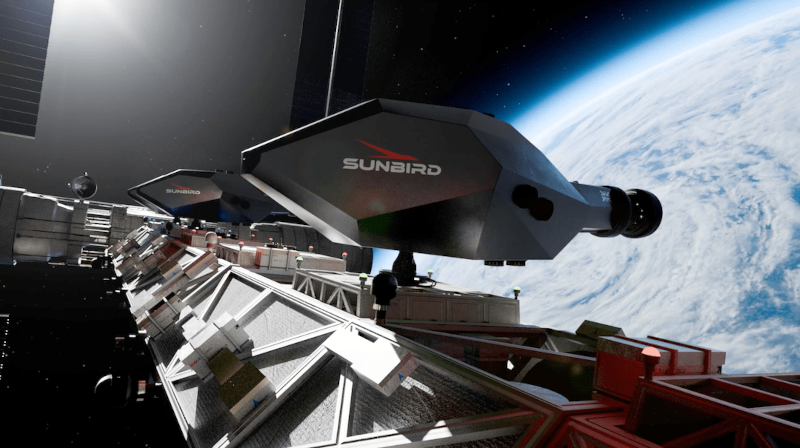
This is the promise behind the Sunbird spacecraft concept, developed by Pulsar Fusion. Sunbird is not designed as a traditional spacecraft, nor even as a standalone mission vehicle. Instead, it is envisioned as a space tug, operating in orbit and attaching to other spacecraft to accelerate them across the Solar System. At its core lies a propulsion system that has long been considered the ultimate prize in aerospace engineering: a nuclear fusion engine.

Fusion is the process that powers the stars. It occurs when light atomic nuclei combine under extreme conditions, releasing vast amounts of energy. Unlike chemical reactions, which rearrange electrons in atoms, fusion rearranges the nuclei themselves, tapping into the fundamental forces that bind matter together. The energy density of fusion is orders of magnitude greater than that of chemical fuels. In principle, it offers the ability to sustain thrust over long durations while achieving velocities far beyond what conventional propulsion can deliver.

Sunbird’s propulsion system is based on what Pulsar Fusion calls a Dual Direct Fusion Drive. The concept is both elegant and demanding. Instead of using fusion merely as a heat source to generate electricity or drive a conventional engine, the system aims to convert fusion energy directly into thrust. In this approach, charged particles produced by fusion reactions are guided and accelerated by magnetic fields, forming an exhaust stream that produces propulsion without the need for traditional propellant expulsion in the chemical sense.

The choice of fuel is critical. Sunbird is designed to use a mixture of deuterium and helium-3, isotopes that offer a pathway toward cleaner fusion reactions. When these nuclei fuse, they produce high-energy charged particles with relatively low neutron output compared to other fusion reactions. This is significant because neutrons, lacking an electric charge, are difficult to control and can damage reactor materials over time. By favoring reactions that produce charged particles, the engine can more effectively channel energy into directed thrust using magnetic confinement.

The engineering challenges behind such a system are immense. Fusion requires extreme conditions—temperatures of millions of degrees and precise control of plasma behavior. On Earth, experimental fusion reactors rely on large, complex facilities such as tokamaks and stellarators to confine plasma using powerful magnetic fields. Translating this technology into a compact, space-based system demands innovation at every level.

Magnetic confinement becomes the central mechanism. Superconducting magnets generate intense magnetic fields that hold the plasma in place, preventing it from contacting the reactor walls. These fields must be stable and precisely controlled, as even small instabilities can lead to energy losses or disruptions. At the same time, the system must allow for the extraction of energy in a controlled manner, directing charged particles out of the reactor to produce thrust.

Thermal management presents another critical challenge. Even with aneutronic fusion reactions, significant heat is generated within the system. In the vacuum of space, there is no atmosphere to carry heat away, so the spacecraft must rely on radiative cooling. Large radiators may be required to dissipate excess heat, adding complexity to the design and influencing the overall architecture of the vehicle.

The concept of Sunbird as a space tug introduces an additional layer of strategic thinking. Rather than equipping every spacecraft with its own fusion engine, Sunbird would operate as an orbital asset. Spacecraft launched from Earth using conventional rockets would rendezvous with the tug in low Earth orbit. Once attached, Sunbird would provide sustained acceleration, gradually increasing velocity over time. This approach leverages the strengths of both chemical and fusion propulsion, combining the high thrust of rockets for launch with the high efficiency of fusion for deep-space travel.

The physics of continuous acceleration opens new possibilities for mission design. Instead of following purely ballistic trajectories, spacecraft could maintain thrust for extended periods, reducing travel times significantly. Missions to Mars, which currently take months, could potentially be shortened. Journeys to the outer planets could become more practical, enabling more ambitious exploration and even the transport of larger payloads.

Yet Sunbird remains, for now, a concept in development. The transition from theoretical design to operational system requires rigorous testing and validation. Plasma behavior must be understood under the specific conditions of the engine. Materials must be developed that can withstand the harsh environment inside the reactor. Control systems must be capable of maintaining stability over long durations. Each of these challenges represents a frontier in its own right.

What makes Sunbird compelling is not just its potential speed, but what that speed represents. It is a step toward a future where the Solar System is not defined by distance in the same way it is today. If fusion propulsion can be made practical, it could transform how we think about space travel, shifting the focus from isolated missions to sustained movement between worlds.

There is a certain symmetry in this vision. The same process that powers the Sun—fusion—becomes the engine that carries humanity outward. The energy that has shaped the cosmos becomes a tool for exploring it. In this sense, Sunbird is not just a spacecraft concept. It is an attempt to harness the most fundamental source of energy in the universe and turn it into motion.

Whether Sunbird ultimately achieves its goals remains to be seen. But the effort itself reflects a broader trend in space exploration: the search for propulsion systems that go beyond the limits of chemistry, reaching into the realm of fundamental physics. It is a reminder that the journey to other worlds is not just about where we go, but about how we get there.

And if that journey is ever powered by fusion, it may mark the moment when the distances between planets begin to feel, at last, a little smaller.


April 13, 2026

Raptor 3: When Engineering Disappears

Posted by


There are moments in engineering when progress is obvious. A machine becomes larger, more powerful, more complex. New systems are added, performance improves, and the path forward feels incremental. And then there are moments when progress looks like subtraction—when engineers begin removing things instead of adding them. The result can feel almost unsettling, as if the machine has been stripped down to something too simple to be possible. The Raptor 3 engine belongs to that second category.

At first glance, the numbers alone are enough to command attention. A rocket engine producing roughly 280 tons of thrust while weighing just over 1.5 metric tons occupies a regime where performance approaches the practical limits of chemical propulsion. But what makes Raptor 3 remarkable is not just its thrust-to-weight ratio. It is the way that performance has been achieved—through the systematic elimination of complexity.

To understand why this matters, one must step back into the fundamentals of rocket propulsion. A rocket engine is, in essence, a device that converts chemical energy into directed momentum. Propellants are mixed, burned, and expelled at high velocity, producing thrust through Newton’s third law. The efficiency of this process depends on how completely and how rapidly the chemical energy can be converted into kinetic energy in the exhaust.

Most high-performance engines rely on staged combustion cycles to achieve this efficiency. In such a system, propellants are partially burned in preburners to drive turbopumps, and the resulting gases are then fed into the main combustion chamber. This approach allows for high chamber pressures and improved efficiency, but it comes at a cost. The plumbing required to route propellants, the thermal shielding needed to protect components, and the structural complexity of the system all add mass and potential failure points.

Earlier generations of engines embraced this complexity. Tubes, manifolds, valves, and cooling lines formed intricate networks across the engine’s surface. Each component served a purpose, but together they created a system that was difficult to manufacture, maintain, and scale.

Raptor 3 takes a different path. Instead of refining complexity, it removes it. External tubing is minimized or eliminated. Components that were once separate are integrated into unified structures. Thermal management is no longer an afterthought wrapped around the engine, but a core part of its design. The result is an engine that appears almost monolithic, as if it were carved rather than assembled.

This approach is made possible by advances in materials and manufacturing. Modern superalloys and high-temperature metals allow components to operate closer to their thermal limits without failure. Additive manufacturing enables geometries that would be impossible with traditional machining, integrating cooling channels directly into structural elements. These internal channels allow cryogenic propellants—liquid methane and liquid oxygen in the case of Raptor—to flow through the engine walls, absorbing heat and preventing structural degradation.

This technique, known as regenerative cooling, is not new. What is new is the extent to which it has been integrated into the engine’s architecture. In Raptor 3, cooling is not a separate system; it is inseparable from the structure itself. The walls of the combustion chamber and nozzle are both load-bearing elements and thermal management systems. By merging these functions, engineers reduce the need for additional components, lowering mass while improving reliability.

The elimination of external plumbing also has implications for fluid dynamics. Every bend, junction, and valve in a propellant line introduces pressure losses and potential instability. By simplifying flow paths and embedding them within the engine, Raptor 3 reduces these losses, allowing for more efficient delivery of propellants to the combustion chamber. This contributes to higher chamber pressures, which in turn increase exhaust velocity and overall engine performance.

Chamber pressure is one of the key parameters in rocket engine design. Higher pressures generally lead to higher efficiency, but they also place greater demands on materials and structural integrity. The fact that Raptor 3 operates at extremely high pressures while maintaining a relatively low mass is a testament to the precision of its design. It reflects a deep understanding of how to balance competing constraints—thermal, mechanical, and fluid—within a single system.

Another aspect of the engine’s design is its use of full-flow staged combustion, a cycle in which both the fuel and oxidizer are fully gasified before entering the main chamber. This approach maximizes efficiency and reduces thermal stress by ensuring more uniform combustion conditions. However, it also requires precise control of turbomachinery and flow rates, as both propellant streams must be carefully balanced to maintain stability.

In Raptor 3, the integration of systems extends into this domain as well. Turbopumps, preburners, and injectors are designed to operate as part of a cohesive whole rather than as discrete subsystems. The boundaries between components blur, creating an engine that behaves less like an assembly of parts and more like a single, continuous machine.

The implications of this design philosophy extend beyond performance metrics. By reducing the number of parts and simplifying assembly, the engine becomes more amenable to mass production. This is a critical factor for a company like SpaceX, whose ambitions rely on building large numbers of engines for vehicles like Starship. Manufacturing efficiency, reliability, and cost all become intertwined with the engine’s physical design.

There is also a psychological dimension to this shift. Traditional engineering often equates complexity with capability. More components, more systems, more layers of redundancy—these are seen as signs of sophistication. Raptor 3 challenges that notion. It suggests that true sophistication may lie in reduction, in the ability to achieve more with less.

This does not mean the engine is simple. On the contrary, its simplicity is the result of extraordinary complexity hidden within its design and fabrication. The absence of visible components is not an absence of engineering, but a concentration of it. Complexity has not been removed; it has been internalized.

In the broader context of rocket development, Raptor 3 represents a maturation of chemical propulsion. It pushes the limits of what can be achieved with known physics, approaching the theoretical boundaries of efficiency and performance. It does not introduce a new propulsion paradigm, but it refines the existing one to a degree that was previously unattainable.

And yet, there is something more subtle at work. When engineers begin to remove rather than add, they are often approaching a kind of asymptote—a point where further improvements become increasingly difficult, where each gain requires disproportionate effort. Raptor 3 may be approaching that boundary, where the remaining inefficiencies are not easily eliminated.

If that is the case, then the engine stands as both an achievement and a marker. It shows how far chemical propulsion can be pushed, and it hints at the need for new approaches beyond it—fusion, electric propulsion, or entirely new concepts that operate on different principles.

For now, though, Raptor 3 is a demonstration of what is possible when engineering is driven not by accumulation, but by refinement. It is a machine that achieves its power not through visible complexity, but through the quiet removal of everything that is not essential.

In that sense, it is not just an engine. It is a statement about the nature of progress—that sometimes, the most advanced designs are the ones that appear to have almost nothing left.