OrbitalHub

Where curiosity reaches escape velocity.

Domain is for sale. $50,000,000.00 USD. Direct any inquiries to contact@orbitalhub.com.

November 27, 2008

GOSAT a.k.a. IBUKI Scheduled For Launch

Posted by


Credits: JAXA


If measures are not taken to address the effects of the greenhouse gases produced by our civilization, extreme climate changes will occur: droughts, heat waves, and floods.


Understanding the behavior of greenhouse gases is critical for developing effective measures to fight climate change.


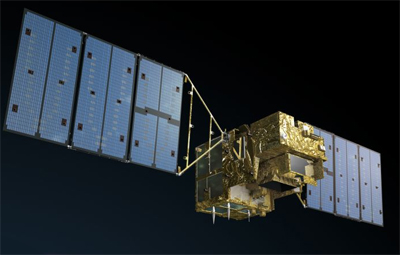
The Greenhouse Gases Observing Satellite (GOSAT) is the first satellite to observe greenhouse gases from space. The main contributors behind GOSAT are the Japan Aerospace Exploration Agency (JAXA), the National Institute for Environmental Studies (NIES), and the Ministry of Environment (MOE). The chosen nickname for GOSAT is IBUKI, which means breath or puff.


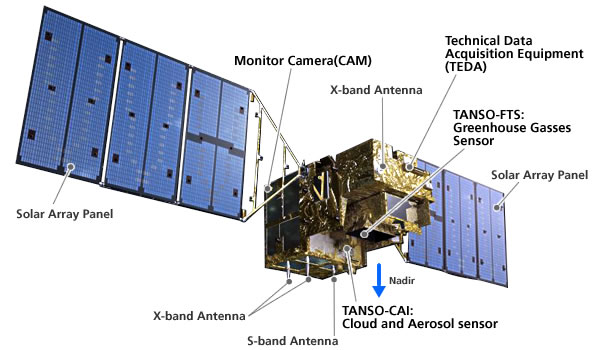
The data collected by the GOSAT satellite will help us make better estimates as to how different areas on Earth contribute to global warming through the emission of greenhouse gases. The data will also help us understand the behavior of the greenhouse gases by combining global observation data collected on orbit with data collected on the ground, and it will also help us improve simulation models.
 

Credits: JAXA


The observation instrument onboard GOSAT is called the Thermal And Near-infrared Sensor for carbon Observation (TANSO).


There are two sensors that collect data for the instrument: a Fourier Transform Spectrometer (FTS) and a Cloud Aerosol Imager (CAI).


The sensors will observe the infrared light from the Earth’s surface and will return measurements that can be used to calculate the abundance of carbon dioxide (CO2) and methane (CH4).


The operational orbit will allow GOSAT to circle the Earth in roughly 100 minutes and to return above the same Earth coordinates every three days. One thing to mention here is that the observations can be done only on cloud-free areas, meaning that on average only ten percent of the total number of measurements can be used for calculating the abundance of CO2 and CH4. However, the number of measurement points surpasses the current number of ground measuring points (under 200) and areas that have never been monitored will be covered by GOSAT observations.
 

Credits: JAXA / MHI


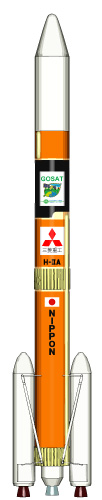
A Mitsubishi H-IIA launch vehicle will inject GOSAT into its predetermined orbit: a sun-synchronous sub-recurrent orbit at a perigee altitude of 667 km, apogee altitude of 683 km, and an inclination of 98 degrees. It will be the fifteenth flight of an H-IIA. The model used for this launch, H2A202, has two solid rocket boosters.


Besides GOSAT, which is the main payload, the payload includes several piggyback payloads. In the case of an excessive launch capability, it is common practice to include in the payload small satellites that are made by private companies or universities.


Seven micro-satellites, six selected through public tender and one JAXA satellite, will be launched by the H-IIA launch vehicle with Ibuki: KAGAYAKI / SORUN CORPORATION (debris detection and Aurora electric current observation mission), STARS / Kagawa University (tether space robot demonstration), KKS-1 / Tokyo Metropolitan College of Industrial Technology (demonstration of the micro cluster and three axis attitude control functions), PRISM / The University of Tokyo (earth image acquisition by using an expandable refracting telescope), SOHLA-1 / ASTRO TECHNOLOGY SOHLA (measurements of thunder and lightning), SPRITE-SAT / Tohoku University (observations of the sprite phenomenon and gamma radiation of the Earth’s origin), and Small Demonstration Satellite-1 (SDS-1) / JAXA (on-orbit verification of the space wire demonstration).


For more details on the additional payload for the GOSAT/Ibuki mission, you can check out the piggyback payload web page on the JAXA web site. Some of the links on the page require knowledge of Japanese or hands-on experience with the Google translation tool.


The launch date for GOSAT/Ibuki has been set. The H-IIA Launch Vehicle No.15 will liftoff sometime between 12:54 and 1:16 PM on January 21, 2009.


Check out the GOSAT / IBUKI program page on the JAXA web site for more information.


Credits: SpaceX


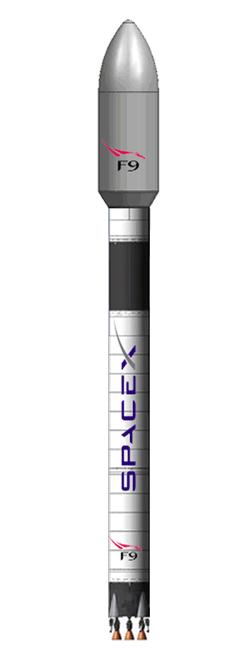
The nine Merlin engines that power the first stage of the Falcon 9 launcher have been successfully tested. At the McGregor Test Facility in Texas, a full mission-length firing test of the first stage of the launcher was conducted on November 22, 2008. The engines, fired for 178 seconds, consumed over half a million pounds of propellant.


During the last eighteen seconds of the test, two of the engines were shut down in order to test the ability of the first stage to complete a mission in the event of an engine being lost during flight.


According to SpaceX CEO, Elon Musk, the first liftoff of a Falcon 9 launcher from Cape Canaveral will occur in 2009.


Falcon 9 is a two-stage launch vehicle. It is powered by liquid oxygen and rocket grade kerosene. Nine Merlin engines power the first stage of the launcher. The second stage of the Falcon 9 launcher is powered by one Merlin engine.


Falcon 9 has a length of 54.9 m, a diameter of 3.6 m, and can have a mass of 333,400 kg for a low Earth orbit (LEO) mission, and 332,800 kg for a geosynchronous transfer orbit (GTO) mission. It can inject 12,500 kg payloads into LEO (200 km) and 4,640 kg payloads into GTO (185×35,788 km). SpaceX will charge $36.75M for a LEO mission, and $46.75M for a trans-lunar injection (TLI) mission. For GTO missions, the price ranges from $36.75M to $57.75M.


For more details about the Falcon 9 launcher, you can visit the Falcon 9 overview web page on the SpaceX web site.


Check out the video with the 3 minute test of the Merlin engines on the SpaceX web site.


November 22, 2008

Carnival of Space #80

Posted by


Credits: NASA


The Carnival of Space #80 is up at Starts With A Bang!. This edition of the Carnival of Space is orbiting around an Authentic Thanksgiving menu. Oceans on Mars, Russian cosmonauts, the ISS, and Moon rovers are among the topics you can read about at this carnival.


OrbitalHub has added to the menu a post about the European-built MPLM.


November 22, 2008

ESA Prepares For The Next Step

Posted by


Credits: ESA


The European presence in space has become more prominent over the years. The development of the Columbus Laboratory and the introduction of the Automated Transport Vehicle (ATV) are two major milestones that have opened a new era for Europe’s presence in space.


Europe now aspires to consolidate its independence with the Large Cargo Return (LCR) and the Crew Transport Vehicle (CTV).


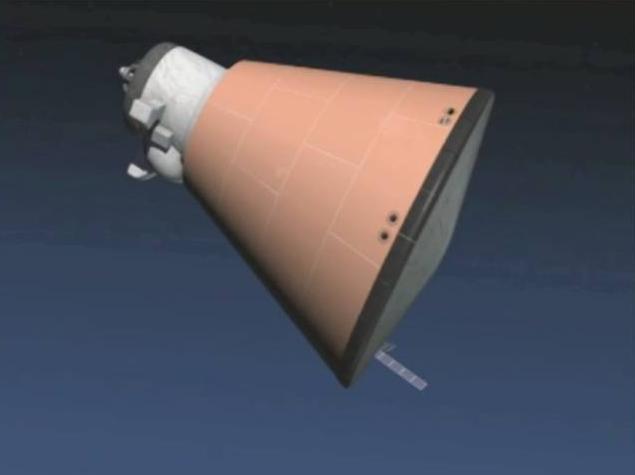
The LCR and the CTV are the new versions of the ATV that are now being considered by ESA’s Human Spaceflight Directorate. These versions of the ATV reuse the service module of the ATV configuration. A capsule with re-entry capability will replace the integrated cargo carrier. In the first phase, the capsule will bring cargo from the ISS down to Earth. The ultimate goal is to be able to carry a full crew up to the ISS and bring the crew back to Earth.


Credits: ESA


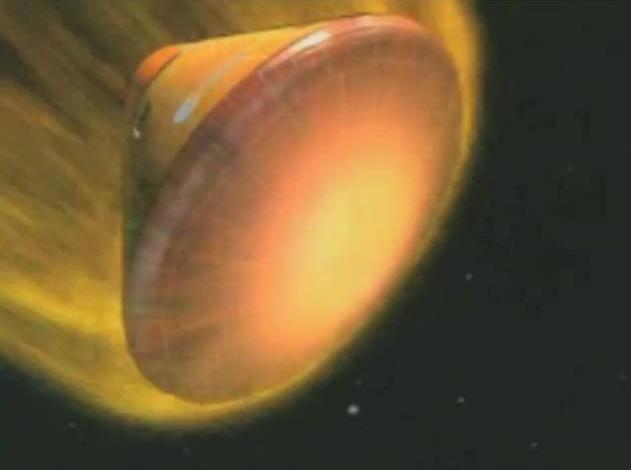
Atmospheric re-entry is not a new challenge for ESA engineers.


Past programs – like the Atmospheric Re-entry Demonstrator – and future programs – like the Intermediate Experimental Vehicle (IXV) – will help validate models used for the simulation of the re-entry phase and also provide a solid base in designing materials for the thermal protection system.


However, one challenge that needs to be addressed is the ejection system for the CTV/Ariane V configuration. The safety of the crew has to be ensured in the case of an anomaly on the launch pad or during the ascent phase of the flight. ESA will have to develop new technologies to satisfy this crucial requirement.


Credits: ESA


ESA has already proposed the LCR and the CTV versions of the ATV as the next step in the evolution of the ATV. However, the decision to go forward lies with the Council of the European Space Ministers. If ESA proposals are approved, the first flight of the LCR is expected in 2015, and the CTV could be docking to the ISS by 2020.


Check out ESA’s podcast about the new proposed programs that are based on the ATV.


November 20, 2008

MPLM Has Two More Missions To Go

Posted by


Credits: NASA


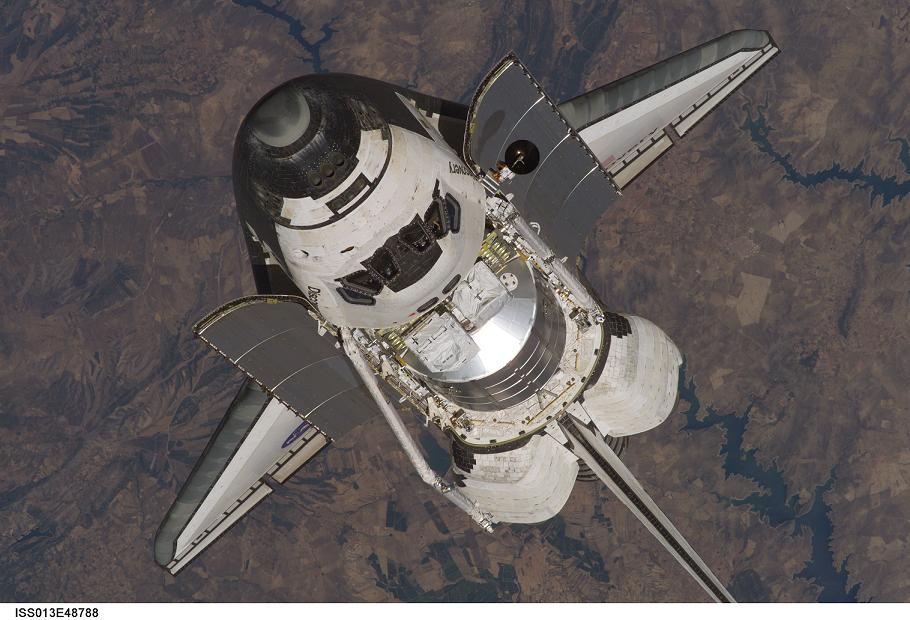
The Multi-Purpose Logistics Module (MPLM) is a pressurized module that is used on Space Shuttle missions to transfer cargo to and from the International Space Station (ISS).


A typical MPLM mission starts in the cargo bay of a Space Shuttle. The MPLM is carried to the ISS and berthed to one of the docking modules by the Canadian robotic arm. The supplies are offloaded and then finished experiments and waste are loaded on to the module. At the end of the mission, the MPLM is moved to the Space Shuttle cargo bay and returned to Earth.


The Italian Space Agency (ASI) provides the modules to NASA. Three MPLMs have been built and delivered to NASA thus far. NASA owns the MPLMs and ASI receives research time on ISS in exchange. The MPLMs were named after great figures in Italian history: Leonardo, Raffaello, and Donatello. However, some of the mission badges display the ninja turtles instead.


The construction of the first MPLM – Leonardo – began in April 1996. Leonardo was delivered to NASA in August 1998. Raffaello and Donatello followed in August 1999 and February 2001, respectively. Each MPLM can make 25 return trips to space.


Credits: NASA


The MPLM is 6.4 meters long and 4.6 meters in diameter. The module weighs 4.5 tons and it can deliver up to 10 tons to the ISS. The design of the module resembles the payload module that is part of the ATV. In addition, ATV has a service module that offers autonomy. Obviously, ATV was the direct beneficiary of the knowledge gained during the design and operational phases of the MPLM.


There is room for sixteen standard payload racks (International Standard Payload Racks – ISPR) in the MPLM. Even if it is not used to carry a human crew, MPLM has its own life-support system. Furthermore, it has a 3 KW internal power supply.


Credits: NASA


The current Space Shuttle mission – STS 126 – has delivered the MPLM Leonardo to the ISS. Leonardo is on its fifth spaceflight and hauled over 14,000 pounds of supplies and equipment to ISS.


Part (a small part) of the payload was turkey, candied yams, stuffing, and dessert for a Thanksgiving meal at the station.


A special piece of equipment, the GLACIER, was also delivered to the station. GLACIER stands for General Laboratory Active Cryogenic ISS Experiment Refrigerator. GLACIER is a double locker cryogenic freezer that will be used for transporting and preserving science experiments. The payload also included a galley for the Destiny laboratory, an advanced Resistive Exercise Device (aRED), and two new crew quarter racks for the expanded station crew.


Credits: NASA


There are two more MPLM missions scheduled before the Space Shuttle retires. STS-128 will carry Leonardo in July 2009, and Raffaello will be docked to ISS during the STS-131 mission in February 2010.


November 18, 2008

Carnival of Space #79

Posted by


Credits: ESA – S. Corvaja 2007


The Carnival of Space #79 is hosted by Nicole at One Astronomer’s Noise.


There are a lot of interesting stories to be found in this edition of the carnival: garden shed-sized nuclear reactors, alien abductions, space and politics, the Phoenix Mars Lander, and Kuiper Belt Objects, among other topics. OrbitalHub submitted a post about the Russian Soyuz launch vehicle.