OrbitalHub

Where curiosity reaches escape velocity.

Domain is for sale. $50,000,000.00 USD. Direct any inquiries to contact@orbitalhub.com.

December 8, 2008

Carnival of Space #82

Posted by


Credits: NASA


The Carnival of Space #82 is up on Space Disco. This edition is a videotastic edition of the carnival. Dave Mosher presents the wooden plank on Mars, the biggest star in the Universe, the Venus, Jupiter, and Moon conjunction, and many other stories.


OrbitalHub presents the James Webb Space Telescope in this edition of the Carnival of Space.


December 5, 2008

The James Webb Space Telescope

Posted by


Credits: NASA


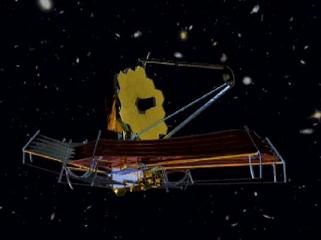
The James Webb Space Telescope (JWST) is the successor of the Hubble Space Telescope (HST). While Hubble looks at the sky in the visible and ultraviolet light, JWST will operate in the infrared.


JWST is a joint mission of NASA, ESA, and the Canadian Space Agency.


The project started in 1996 and was initially known as the Next Generation Space Telescope (NGST). In 2002, the project was renamed the James Webb Space Telescope in honor of NASA administrator James E. Webb, who led the agency from February 1961 to October 1968.


The JWST will use a large deployable sunshade to keep the temperature of the telescope to about 35K. Operating at this temperature gives the telescope exceptional performance in near-infrared and mid-infrared wavebands. The JWST observatory will have a five to ten year lifetime and it will not be serviceable by astronauts.


JWST will be able to see the first galaxies that formed in the early Universe, and how the young stars formed planetary systems.
 

Credits: NASA


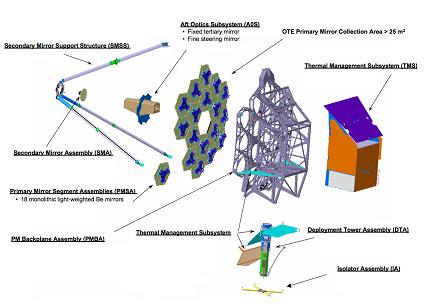
The JWST observatory includes the Integrated Science Instrument Module (ISIM), the Optical Telescope Element (OTE), and the Spacecraft Element containing a spacecraft bus (which offers the support functions for the observatory) and the sunshield.


I will say a few words about each one of them.


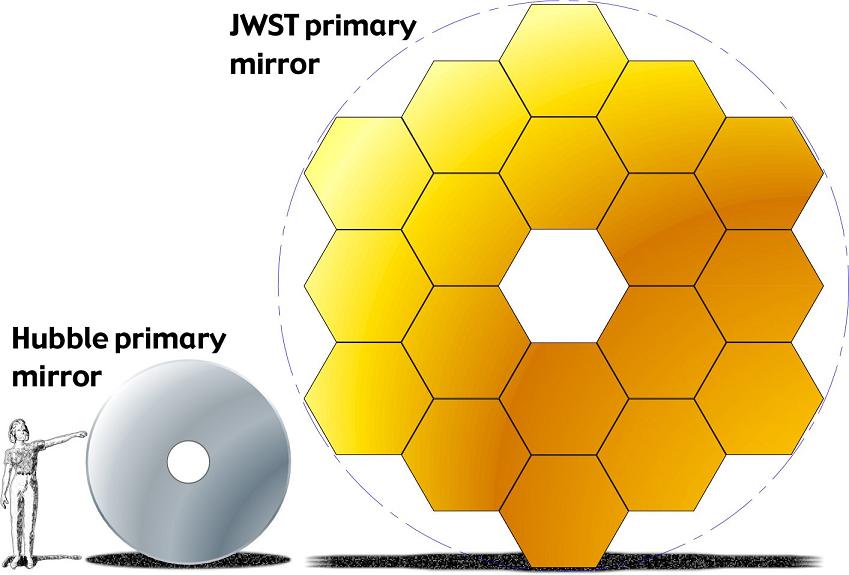
The Optical Telescope Element (OTE) collects the light coming from space. Thanks to a 6.5 meter primary mirror, JWST will be able to see the galaxies from the beginning of the Universe. The OTE is also composed of the Fine Steering Mirror (FSM), the secondary mirror support structure (SMSS), and the primary mirror backplane assembly (PMBA). Other subsystems of the OTE are the tertiary mirror and the fine steering mirror. The PMBA contains the Integrated Instrument Module (IIM).


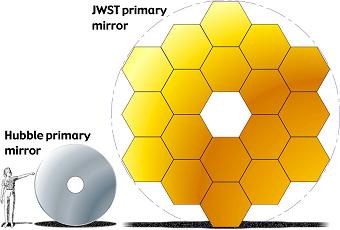
Because the primary mirror is too large to fit inside any available payload fairing, it had to be made out of eighteen hexagonal segments. Some of the elements will be folded before the launch and unfolded during the commissioning phase at the L2 point. NASA made available some neat animations showing how the observatory will be folded in order to fit into the launcher payload, and how the sun shields and the primary mirror will unfold before the observatory becomes operational.
 

Credits: NASA


The sunshield will keep the scientific payload of the observatory away from any light from the Sun, the Earth, or the Moon. Because JWST will observe primarily the infrared light from very distant objects, the temperature of the scientific payload must be maintained at very low values (under 50K). This requirement is so important that even a part of the observatory (the spacecraft bus) had to be placed on the warm side of the sunshield.


The sunshield not only protects the scientific instruments from the heat of the Sun, the Earth, the Moon, and the warm spacecraft bus electronics, but it also provides a stable thermal environment. This is necessary in order to maintain the alignment of the eighteen hexagonal components of the mirror while the observatory changes its orientation relative to the Sun.


The primary mirror is the essential component of a telescope. The design of the primary mirror was driven by a number of important requirements: the size, the mass, and the temperature at which the mirror will operate.


Credits: NASA


In order to be able to see galaxies from thirteen billion light-years away, scientists determined that the mirror must have a diameter of at least 6.5 meters.


The weight of the primary mirror has only one tenth of the mass of Hubble’s mirror per unit area. Considering the size of the mirror, this made the task of launching the telescope into space achievable.


Due to the fact that the telescope will observe the light in the infrared spectrum, the temperature of the mirror has to be as low as –220 degrees Celsius. If operating at the same temperature as the ground telescopes do, the infrared glow of the mirror would interfere with the light received from distant galaxies. Basically, these distant galaxies would disappear in the noise generated by the telescope.


The engineering challenge that scientists faced was to build a lightweight mirror that would preserve its optical and geometric properties when cooled to –220 degrees Celsius. Using beryllium was the solution. Beryllium is lightweight (it is widely used in the aerospace industry) and it is very good at holding its shape across a range of temperatures.


As we mentioned above, the PMBA contains the Integrated Instrument Module (IIM), which is the scientific payload onboard the observatory. The scientific payload includes the following scientific instruments: the Mid-Infrared Instrument (MIRI), the Near-Infrared Spectrograph (NIRSpec), the Near-Infrared Camera (NIRCam), and the Fine Guidance Sensor (FGS).


The MIRI is an imager/spectrograph that covers the wavelength range from 5 to 27 micrometers. The nominal operating temperature for the MIRI is 7K. The NIRSpec covers two wavelength ranges: from 1 to 5 micrometers (medium-resolution spectroscopy) and from 0.6 to 5 micrometers (lower-resolution spectroscopy). The NIRCam was provided by the University of Arizona. NIRCam covers the spectrum from 0.6 to 5 micrometers. The FGS is a broadband guide camera that is used for guide star acquisition and fine pointing.
 

Credits: ESA


The spacecraft bus is composed of every subsystem of the observatory minus the sunshield and the scientific payload, and it provides the necessary support functions for the operations of the observatory. The spacecraft bus contains the Electrical Power Subsystem (EPS), the Attitude Control Subsystem (ACS), the Communication Subsystem (CS), the Command and Data Handling Subsystem (C&DHS), the Propulsion Subsystem (PS), and the Thermal Control Subsystem (TCS).


One interesting thing I would like to mention here is that the C&DH subsystem is using a solid-state recorder as memory/data storage for the observatory. I cannot envision a hard disk drive taking all of the vibrations during the launch and running for ten years without any flaws, so the choice of using radiation hardened solid-state memory units on long-term space mission spacecrafts seems to be the optimal choice.


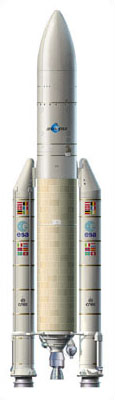
The launch vehicle chosen for this mission is the European Ariane 5. The Ariane 5, carrying the James Webb Space Telescope, will liftoff from Guiana sometime in 2013. The space telescope will operate from the L2 point of the Sun-Earth system.


All three agencies that are part of the project, ESA, NASA, and CSA, have web pages dedicated to the JWST observatory.



Credits: NASA


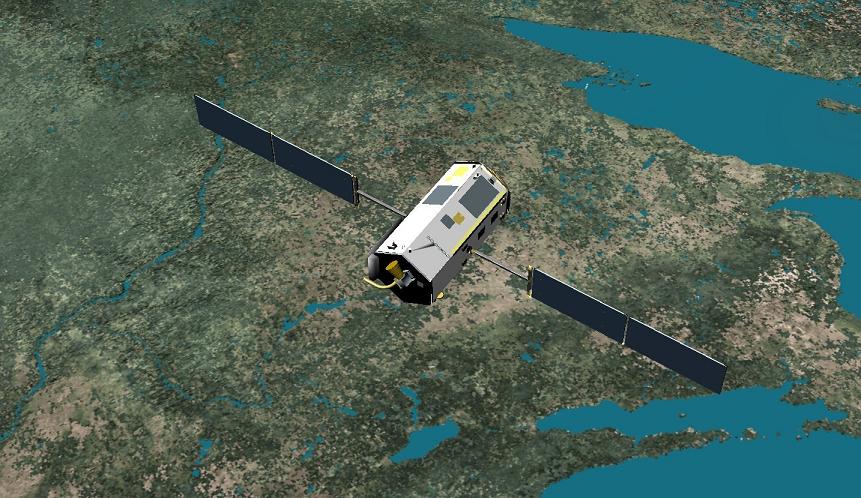
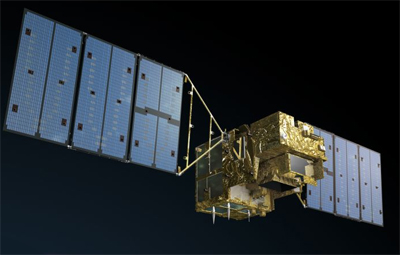
Last week we presented GOSAT a.k.a. Ibuki, a mission that has as its objective the mapping of carbon dioxide and methane in the Earth’s atmosphere. A similar mission is getting ready to launch on the other side of the Pacific: the Orbiting Carbon Observatory (OCO). OCO is a NASA Earth System Science Pathfinder (ESSP) Program mission.


The mission team includes the Orbital Sciences Corporation, the Jet Propulsion Laboratory, and Hamilton Sundstrand Sensor Systems.


The atmospheric carbon dioxide (CO2) is an important greenhouse gas. CO2 absorbs and traps infrared radiation emitted by the Earth’s surface, preventing it from escaping to space. OCO will provide global CO2 measurements from space. The data collected during the mission will help scientists understand the global carbon cycle. This understanding is essential to improve the predictions of future atmospheric CO2 increases and its impact on the climate.


The OCO has a mass of 407 kg. The two GaAs solar arrays will provide 324 W orbit average for the scientific payload onboard. The satellite will use hydrazine thrusters for stabilization while on orbit. The estimated life span for the mission is 24 months.


The scientific payload includes three spectrometers. The spectrometers can detect what gases are in the Earth’s atmosphere and determine their amounts. The measurements will translate into monthly estimates of atmospheric CO2 over 621-square-mile regions of the Earth’s surface. From its sun-synchronous orbit, OCO will map the globe once every sixteen days. These maps will help locate CO2 sources and sinks.


Credits: NASA / Orbital


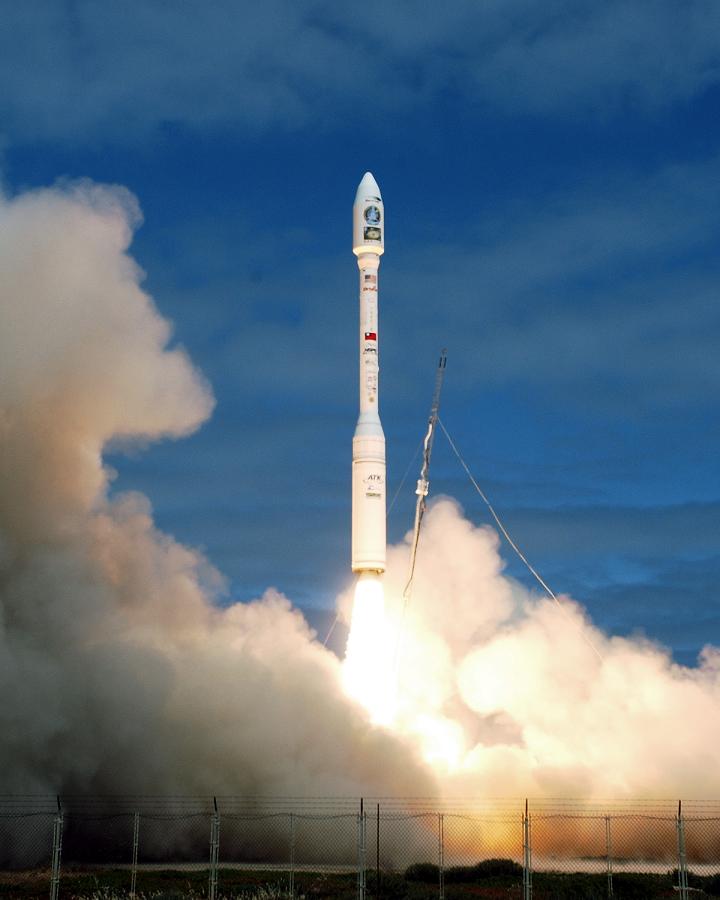
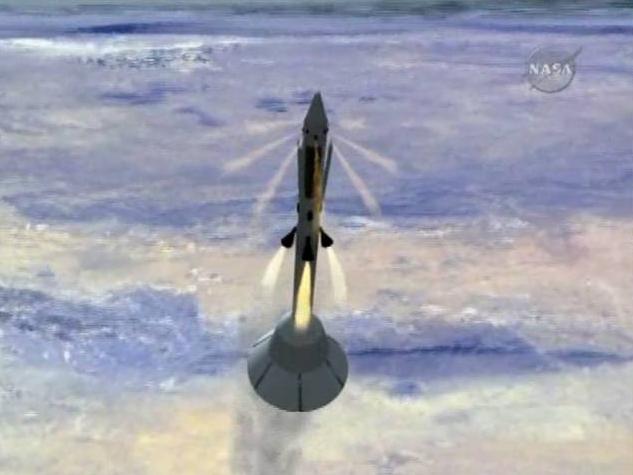
OCO will be placed on orbit by a Taurus XL launch vehicle. Taurus XL is a solid fuel launch vehicle built by the Orbital Sciences Corporation. According to the Taurus fact sheet, it provides launch capability for satellites weighing up to 1,590 kg. The range of launch missions supported by Taurus include low inclination low Earth orbit (LEO), polar LEO, sun-synchronous LEO, geo-transfer orbit, and interplanetary trajectory.


Depending on the configuration, Taurus can have a mass from 69,000 to 77,000 kg and can have a length from 27 to 32 m.


The mission launch is scheduled for early 2009. The Taurus XL launch vehicle will lift off from Vandenberg Air Force Base, California.


December 1, 2008

ASX Space Movie Nights in Toronto

Posted by


Credits: NASA


The University of Toronto Astronomy and Space Exploration Society (ASX for short) has started a very nice tradition: the space movie night.


I received an invitation for Friday, November 28, 2008, and I could not refuse it. The last time I attended an ASX event I was not disappointed, and I was sure this time would not be any different.


The movies presented were The Rocketeers and The Last Empty Sky. The Rocketeers presented the history of the X series of aircraft (the rocket planes that broke the sound barrier and put the first American pilots into space), and the The Last Empty Sky presented the development of rocket between 1920 and 1957.


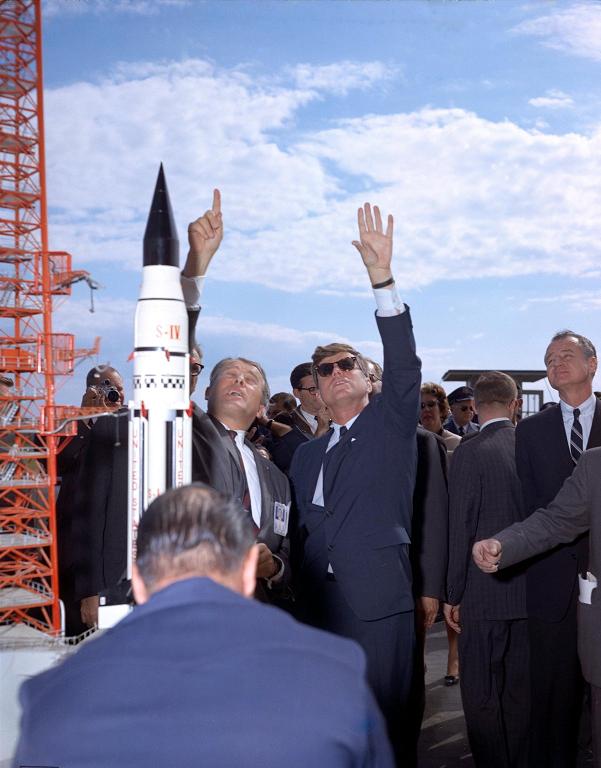
It was interesting to follow the story of Werner Von Braun and how he managed to build the Saturn family of rockets using the technology available at the end of the World War Two.


I hope that ASX will continue the movie night tradition and present more movies about space exploration. For sure, I will be the first to respond to their invitation. Thank you, ASX!


If you know about similar events in your hometown, please share the information with OrbitalHub readers in the comments section.


November 30, 2008

Carnival of Space #81

Posted by


Credits: JAXA


The Carnival of Space #81 is up on Tiny Mantras. There are many interesting stories that you can read about this week: tips for buying a telescope, a zero-g coffee mug, tracking meteorites, and much more.


GOSAT/Ibuki was the story OrbitalHub contributed to the Carnival. We hope you will enjoy reading this week’s selection from around the space blogosphere.


November 27, 2008

The Orion Module Launch Abort System

Posted by


Credits: NASA


One of the crucial requirements for a man-rated launch system is a reliable Launch Abort System (LAS). LAS is basically a top-mounted rocket connected to a crew module and it is used to separate the crew module from the rest of the launch vehicle in case of emergency.


An emergency can be anything from an explosion of the launch vehicle on the launch pad to a failed separation of the lower stage during flight.


In the case of the Orion Module, several designs were considered for the LAS: the Multiple External Service Module Abort Motor concept, the Crew Module Strap On Motors concept, and the In-Line Tandem Tractor (Tower) concept. The latter concept was incorporated in the Ares I/Orion design.


The Tandem Tractor (Tower) design of the LAS has three motors: an Attitude Control Motor (eight nozzles), a Jettison Motor (four aft nozzles), and the Abort Motor (four exposed flow nozzles). These motors will make possible the separation of the module and the control of the flight after the separation from the launch vehicle. An important component of the LAS is the Boost Protective Cover (BPC), which protects the crew module from the exhaust of the motors.


Credits: NASA


The LAS is designed to perform on the launch pad as well as during the first 300,000 feet after the launch. There are three possible scenarios for the abort procedure: on the launch pad, on the mid-altitude flight segment (up to an altitude of 150,000 feet), and on the high-altitude flight segment (from 150,000 feet to 300,000 feet, where the LAS is jettisoned on a nominal flight). Tests will have to be performed to cover these scenarios: on the launch pad as well in flight.


NASA has made available animations of the test flights planned for the LAS. One is the animation of the Orion Module LAS pad abort flight test. The second presents the Orion Module LAS ascent abort flight test.


Credits: NASA


Currently, the Launch Abort System of the Orion Module is under development.


The first full-scale test fire of the motor that powers the LAS was completed on November 20, 2008. This was the first time a LAS test has been conducted since the 1960s, when the LAS for the Apollo Program was tested.