 |
| Credits: NASA |
Understanding the Earth’s energy balance is important in order to anticipate changes to the climate. The Glory mission will make a significant contribution towards explaining the Earth’s energy budget.
There are two scientific objectives set for the Glory mission: mapping the global distribution, properties, and chemical composition of natural and anthropogenic aerosols, and the continued measurement of solar irradiance. Both will lead to a reliable quantification of the aerosol and Sun’s direct and indirect effects on Earth’s climate.
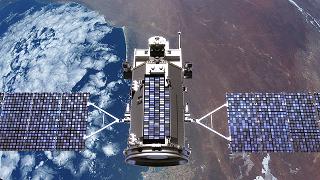
The Glory spacecraft uses Orbital’s LEOStar bus design. The structure of the bus consists of an octagonal aluminum space frame with two 750 W deployable solar panels and a 100 W body-mounted solar panel. Glory will have a launch mass of 545 kg.
Forty-five kilograms of hydrazine powers a propulsion module, which will provide orbital maneuvering and attitude control capabilities for the projected 36-month lifespan of the spacecraft. The spacecraft bus also provides 3-axis stabilization, X-band/S-band RF communication capabilities, payload power, command, telemetry, science data interfaces, and an attitude control subsystem to support science instrument requirements.
 |
| Credits: NASA |
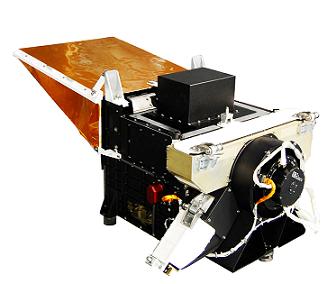
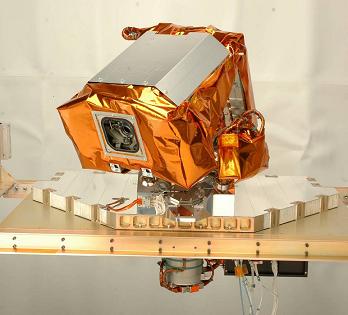
Three instruments will be mounted on Glory: the Aerosol Polarimetry Sensor (APS), the Total Irradiance Monitor (TIM), and the Cloud Camera Sensor Package (CCSP).
The APS will map the global aerosol distribution by measuring the light reflected within the solar reflective spectrum region of Earth’s atmosphere (which is visible, near- infrared, and short-wave infrared light scattered from aerosols).
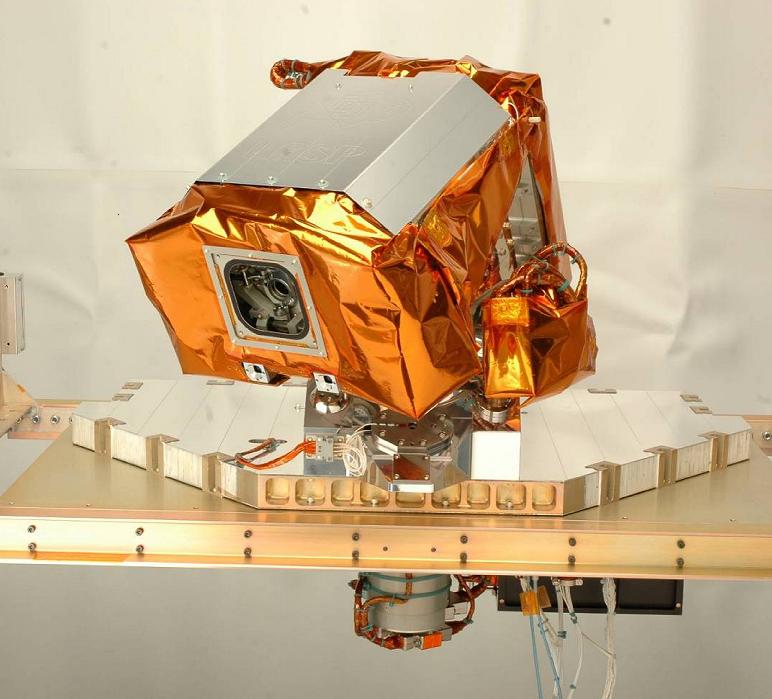
TIM will collect measurements of the total solar irradiance (TSI), which is the amount of solar radiation in the Earth’s atmosphere over a period of time. TIM consists of four electrical substitution radiometers (ESRs) that are pointed towards the Sun, independently of the position of the spacecraft. TIM was developed by the University of Colorado’s Laboratory for Atmospheric and Space Physics (LASP). TIM inherited the design of an instrument flown on SORCE satellite, which was launched in 2003. A presentation of the TIM design and on-orbit functionality was published by Greg Kopp, George Lawrence, and Gary Rottman of LASP.
The CCSP will be used to distinguish between measurements done on clear or cloud- filled areas, as clouds can have a significant impact on the quality of the measurements. CCSP is a dual-band (blue and near-infrared) imager that uses non-scanning detector arrays similar to those used in star trackers.
 |
| Credits: NASA |
Glory will be launched from Vandenberg Air Force Base, California, on top of a Taurus XL launch vehicle. The operational orbit is a 705 km, sun-synchronous, circular, 98.2 degree inclination, low Earth orbit (LEO). The launch date is set for Fall 2009.
Read more about Glory at the Glory Mission page on NASA Goddard Space Flight Center’s website. A Glory Fact Sheet is also available on Orbital Sciences Corporation’s website.



 Subscribe to blog posts using RSS








