OrbitalHub

Where curiosity reaches escape velocity.

Domain is for sale. $50,000,000.00 USD. Direct any inquiries to contact@orbitalhub.com.

Archive for the The Best Of category


Credits: SpaceX


Disruptive technology is a very bizarre (and scary) concept, but it is not a bizarre or scary idea. The concept was introduced by Clayton Christensen. In one of his books, The Innovator’s Dilemma, The Revolutionary Book That Will Change the Way You Do Business, Christensen proves that, under certain circumstances, companies that do things right can lose their market share or even get out of business. He also presents a set of rules that can help companies capitalizing on disruptive innovation.


While I am not trying to give a lecture on economics, I would like to understand how to apply (if possible) the principles of disruptive technologies to the space industry. A very good example is quite at hand… SpaceX.


We can start by defining the key concepts: sustaining technology and disruptive technology. These are the textbook definitions: A sustaining technology is a new technology that improves the performance of established products, the performance being perceived along the dimensions that mainstream customers value. A disruptive technology is a new technology that brings to market a radical value proposition. They underperform products in mainstream markets, but they have features that are valued by some customers.


What is not obvious is that even though disruptive technologies may result in worse product performance in the short term, they can be fully competitive in the same market in the long run because technologies tend to progress faster than market demand.


Now let us see what are the 5 principles of disruptive technologies (as defined by Clayton Christensen):

Principle #1: Companies depend on customers and investors for resources (at the end of the day, the customers and the investors dictate how a company spends its money).

Principle #2: Small markets do not solve the growth needs of large companies (large companies wait until small markets become interesting and to enter a small market at the moment when it becomes interesting is often too late).

Principle #3: Markets that do not exist cannot be analyzed (there are no established methods to study or to make predictions for emerging markets, as there is no data to infer from).

Principle #4: An organization’s capabilities define its disabilities (we all have our blind spots).

Principle #5: Technology supply may not equal market demand (as established companies move towards higher-margin markets, the vacuum created at lower price points is filled by companies employing disruptive technologies).


Why do you think established companies fail to adopt disruptive technologies? Established companies listen to their customers, invest aggressively only in new technologies that provide customers more and better products that they want, and they study their markets and allocate investment capital only to innovations that promise best return. Good management is sometimes the best reason why established companies fail to stay atop their industries.


And this is why technology startups can fill in the niche… Many of the good management principles widely accepted are only situationally appropriate. Sometimes it is right not to listen to your customers, right to invest in technology that promise lower margins, and right to pursue small markets. This can happen in a small company, a technology startup where big outside stakeholders are not vested, and where new technology development is the big drive.


Now that the lecture has been delivered, it is time to ask the questions. Why is SpaceX perceived as disruptive? Is SpaceX really disruptive? In what way?


The declared goal of SpaceX is to make space more accessible, that is to bring the kg-to-LEO prices down. If you have a basic knowledge of launch systems, you know that the propulsion technology employed today is pretty much the same used by Mercury, Gemini, and Apollo space programs: liquid fuel rocket engines. The Russian Soyuz, for which the basic rocket engine design has not changed much since the Semyorka days, is a living proof that rocket engineers do not want to fix things that work well. While aerospike engines and nuclear rocket engines make the front page from time to time, the good old liquid fuel expansion nozzle rocket engines will be here to stay for a long time.


Given the circumstances, how to bring the manufacturing and launch costs down? As a software engineer who spent a number of years in a software startup, I can recognize a number of patterns… First, Musk knows how to motivate his engineers. Doing something cool is a big driver. I know that. And working on a space launch system than one day may put the first human colonists on Mars must be a hell of a motivator.


Modular design… software engineering principles are at work. Build reliable components and gradually increase the complexity of your design. Falcon 9 and Falcon Heavy, are built on a modular design that has at the core the Merlin 1D engine. And an important detail to mention here, SpaceX builds the hardware in-house. Obviously, outsourcing would increase the manufacturing costs.


If you are familiar with the Russian Soyuz launch vehicle, you will acknowledge that Musk has borrowed proven (and cheaper) technology for Falcon launch vehicles: LOX/RP-1 as fuel, vernier thrusters, and horizontal integration for the first stage, second stage, and the Dragon spacecraft. These choices simplify the overall design and bring the costs down substantially.


To put it the way SpaceX many times did: “simplicity, reliability, and low cost can go hand-in-hand.”


One thing to notice is that the most important innovation introduced by SpaceX is in the design and manufacturing process, which is in-house and as flat as possible. Rearranging the pieces of the puzzle can often give the competitive advantage. Lean and mean is the new way.


SpaceX is not just trying to bring down the launch prices, it is actually trying to disrupt the status quo… and this makes the battle harder. SpaceX dixit: “SpaceX’s goal is to renew a sense of excellence in the space industry by disrupting the current paradigm of complacency and replacing it with innovation and commercialized price points; laying the foundation for a truly space-faring human civilization.”


When developing the theory around disruptive technologies, Clayton Christensen has studied the hard disk drive and the mechanical excavator industries. The US space industry is a different ecosystem. Do the 5 principles presented above need adjustment?


Not really. Principle #1 is valid and applies in this case as well. Self-funded SpaceX followed a market strategy not dictated by customers or investors. The small payload launcher market, targeted by SpaceX with Falcon 1 and Falcon 1e, was an area neglected by established space companies as Principle #2 states. Principle #3 explains why established companies have neglected the small payload market.


Does mastering the small payload launcher technology qualifies one to enter the heavy launcher market? SpaceX managed to overcome Principle #4. Will SpaceX retire its Falcon 1 launch vehicles and leave the small launcher market for good? In this case, I would see Principle #5 as a warning. While the heavy launchers offer better profit margins, would it be a smart move to leave an emerging market (currently) offering low profit margins? This remains to be seen.


Credits: NASA


The International Organization for Standardization (ISO) has implemented the UN Space Debris Mitigation guidelines in a number of standards.


The standards prescribe requirements that are derived from already existing international guidelines, but they capture industry best practices and contain specific actions to be taken by hardware manufactures to achieve compliance.


The highest level debris mitigation requirements are contained in a Space Debris Mitigation standard. This standard defines the main space debris mitigation requirements applicable over the life cycle of a space system and provides links to lower-level implementation standards. It is also important to be able to assess, reduce, and control the potential risks that space vehicles that re-enter Earth’s atmosphere pose to people and the environment. The Re-entry Risk Management standard provides a framework that is useful in this regard.


The seven guidelines endorsed by the United Nations Committee on the Peaceful Uses of Outer Space (COPUOS), also known as the Space Debris Mitigation Guidelines of COPUOS, are:

“limit debris released during normal operations;

minimize the potential for break-ups during operational phases;

limit the probability of accidental collision in orbit;

avoid intentional destruction and other harmful activities;

minimize potential for post-mission break-ups resulting from stored energy;

limit the long-term presence of spacecraft and launch vehicle orbital stages in LEO after the end of their mission;

limit the long-term interference of spacecraft and launch vehicle orbital stages with GEO region after the end of their mission;”


The good news is that as of the end of 2010, most of the space faring nations have implemented regulations on space debris mitigation at the national level.


Credits: CSA


Canada is actively involved in space debris mitigation research and development activities. At the international level, Canada hosted the International Conference on Protection of Materials and Structures from the Space Environment (ICPMSE) in May 2008, and contributed to the 37th Committee on Space Research (COSPAR) Scientific Assembly in July 2008.


At the national level, the space debris research and development activities are coordinated by the Canadian Space Agency (CSA), which formed the Orbital Debris Working Group (ODWG). The group was formed in order to address a number of objectives:

“to increase the Scientific and Technical (S&T) knowledge and awareness of orbital debris in the space community;

to identify and encourage targeted Research and Development (R&D) in orbital debris and mitigation measures;

to identify and encourage development of orbital debris detection and collision avoidance techniques and technologies;

to promote Scientific and Technical (S&T) collaboration across Canada and with our international partners;

to identify Scientific and Technical (S&T) opportunities in relation to future potential missions which can directly benefit from the results of targeted Research and Development (R&D) and novel operational techniques, and develop and coordinate technical solution in Canada and with international partners; and

to establish and maintain technical liaison with our international partners in order to foster a sustainable space environment.”


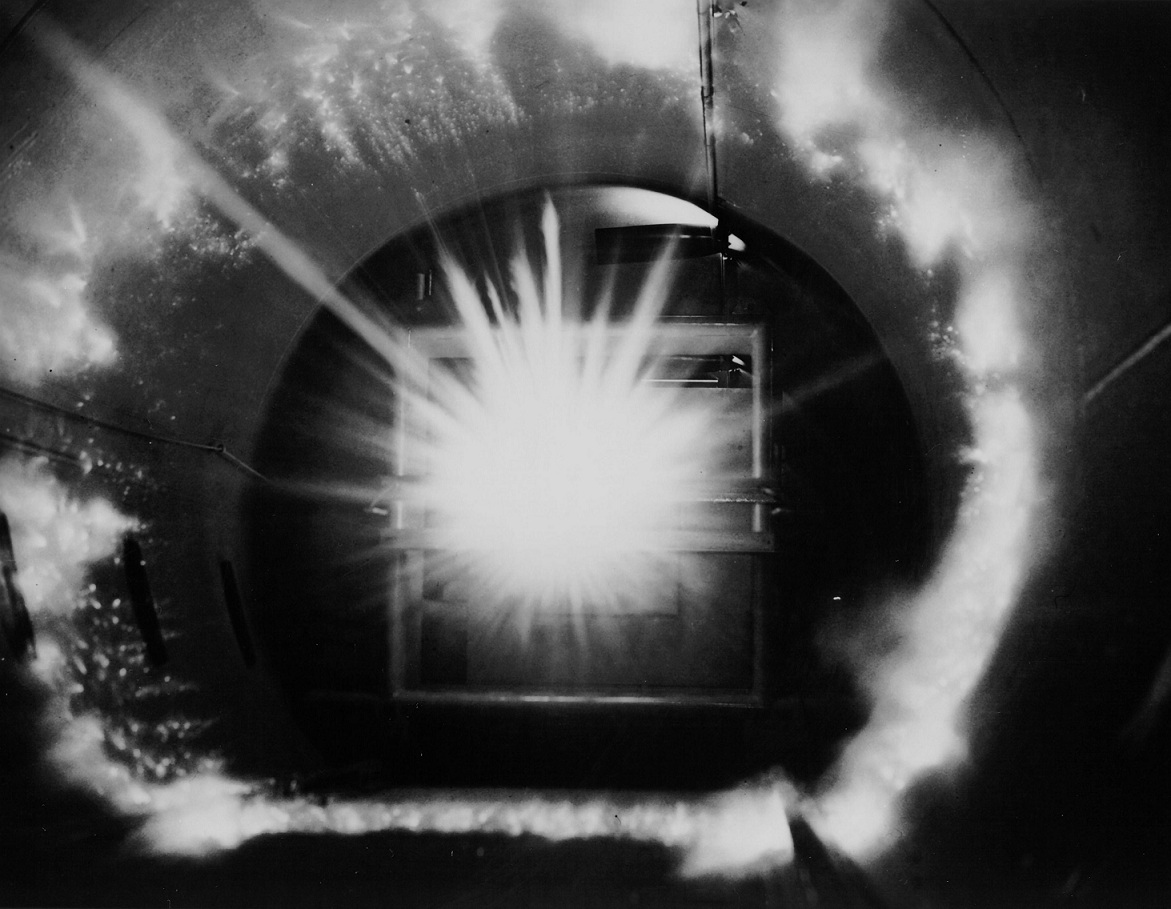
The Canadian space debris mitigation research and development activities are focused on three main areas: hypervelocity impact facilities, debris mitigation and self healing materials, and spacecraft demise technologies. Hypervelocity impact facilities are facilities that are capable of accelerating projectiles to velocities of more than 10 km/s. Canada is developing an implosion-driven hypervelocity launcher facility. Such a facility could accelerate projectiles having a mass of 10 g to speeds of 10 km/s, facilitating meaningful impact studies. Self healing materials have the capability to initiate a self healing process after an impact, being an in-situ mitigation of space debris damage on board spacecraft. The Canadian Space Agency has supported the efforts to develop and test a self healing concept demonstrator. The spacecraft demise technologies ensure intentional and integral disintegration during re-entry, so that no debris reaches Earth. In this direction, studies that investigate various technologies that could be used to de-orbit micro- and nanosatellites have been conducted.


In Canada, the space operators and manufacturers are adopting the space debris mitigation measures on a voluntary basis. The Inter-Agency Space Debris (IADC) guidelines are used for monitoring activities to prevent on-orbit collisions and conduct post-mission disposal. There are also strict requirements integrated in its policies and regulations that address the post-mission disposal of satellites. For example, as required by the Canadian Remote Sensing Space System Act, space system manufacturers have to provide information regarding the method of disposal for the satellite, the estimated duration of the satellite disposal operation, the probability of loss of human life, the amount of debris expected to reach the surface of the Earth upon re-entry, an estimate of the orbital debris expected to be released by the satellite during normal operations by explosion, etc. There are also interesting recommendations made for the operation and post-mission disposal of satellites in Geostationary Orbits. The Environmental Protection of the Geostationary Satellite Orbit recommends “that as little debris as possible should be released into the geostationary orbit during the placement of a satellite in orbit”, and also that “a geostationary satellite at the end of its life should be transferred, before complete exhaustion of its propellant, to a super synchronous graveyard orbit”, where the recommended minimum re-orbiting altitude is given as 300 km.


Credits: NASA


Let us see how the areas mentioned in the previous Sustainability in LEO post are covered at national level in the United States.


The United States has implemented a space traffic management program in the form of the Joint Space Operations Center (JSpOC) of the U.S. Strategic Command at Vandenberg Air Force Base in California.


JSpOC conducts periodic conjunction assessments for all NASA programs and projects that operate maneuverable spacecraft in low Earth orbits (LEO) or in geosynchronous orbits (GEO). Depending on the mission, the conjunction assessments can be performed up to three times daily. If JSpOC identifies an object that is expected to come in the proximity of a NASA spacecraft, and the collision risk is high enough (for manned missions the minimal value accepted is 1 in 10,000, while for robotic missions the threshold is 1 in 1,000), a conjunction assessment alert message is sent to the mission control in order to have collision avoidance maneuver commands sent to the spacecraft. The alert messages contain the predicted time and distance at closest approach, as well as the uncertainty associated with the prediction.


The control of the creation of space debris is addressed by orbital debris mitigation standard practices in four major areas: normal operations, accidental explosions, safe flight profile and operational configuration, and post-mission disposal of space structures. There are also NASA standards and processes that aim at limiting the generation of orbital debris.


The commonly-adopted mitigation methods, which focus on minimization of space debris creation, will not preserve the near-Earth environment for the future generations. As a matter of fact, the debris population increase will be worse than predicted by LEGEND-generated models due to ongoing launch activities and unexpected (but possible) major breakups. Here is where active space debris environment remediation comes into play.


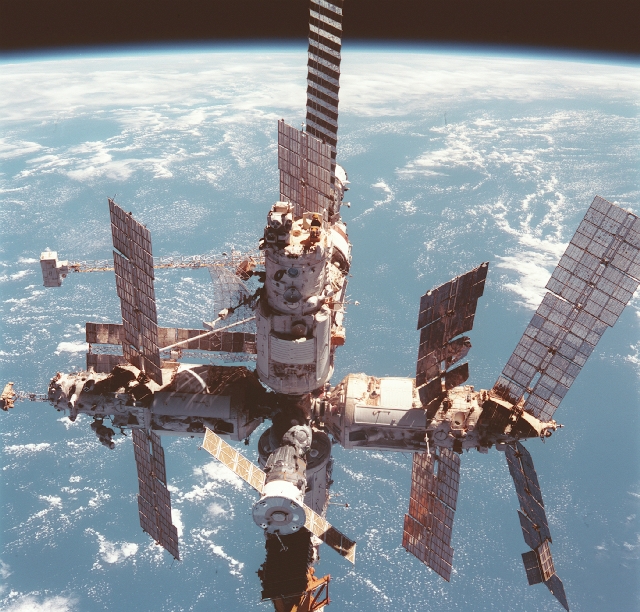
The active space debris environment remediation is mainly concerned with the removal of large objects from orbit. Such large objects are defunct spacecraft (i.e. communication satellites that exceeded their operational life), upper stages of launch vehicles, and other mission-related objects. The removal of large objects from orbit is known as Active Debris Removal (ADR). Several innovative concepts are under study. Among them, tethers used for momentum exchange or electro-dynamic drag force, aerodynamic drag, solar sails, and auxiliary propulsion units. LEGEND studies have revealed that ADR is a viable control method as long as an effective removal selection criterion based on mass and collision probability is used, and there are at least five objects removed from orbit every year. The electrodynamic tethers seem to lead the competition so far, as they have a low mass requirement and can remove spent or dysfunctional spacecraft from low Earth orbit rapidly and safely.


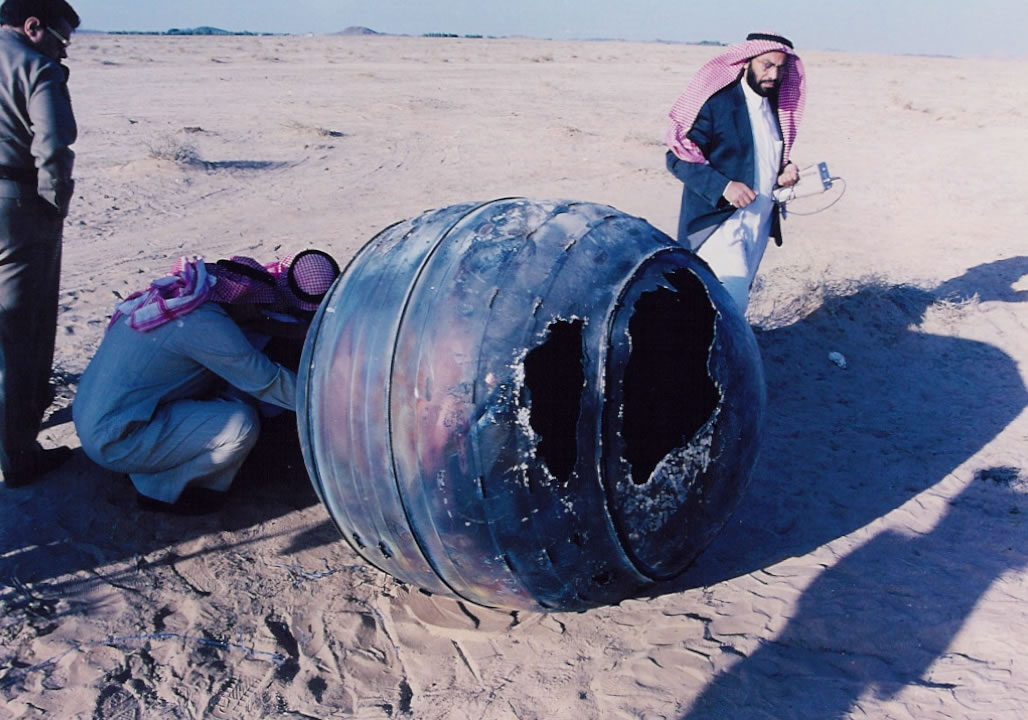
Re-entry in the Earth’s atmosphere of space mission related objects is an important aspect to be considered in this context. Even though no casualties or injuries have been reported so far being caused by components of re-entering spacecraft, fragments from space hardware pose a risk to human life and property on the ground. One big concern is caused by the fact that the point of impact from uncontrolled re-entries cannot be calculated exactly. The uncertainties are due to a large number of parameters that affect the trajectory and the heat of ablation of objects re-entering the atmosphere.


Credits: NASA


Space debris mitigation measures address issues in two major areas: protection from space debris and reduction of the space debris population growth.


Protection methods vary depending on the size of the space debris. Space debris fragments smaller than 0.1 mm in diameter do not have enough energy to penetrate protection panels. Even spacecraft thermal blankets and structural panels can offer protection from such small kinetic impactors.


However, larger debris fragments pose a more serious threat and there are few active measures that can be adopted to minimize the possibility or the consequences of impacts.


First, avoiding space debris is the method that always proves successful, so flying at altitudes and inclinations where space debris density is low should always be considered. Second, orienting sensitive surfaces away from or mounting a bumper on the leading edge can offer more protection for the spacecraft. Multilayered bumpers cause the fragmentation of the space debris and also prevent ejected material from dispersing from the point of impact. Bumpers add mass and volume to the spacecraft and this is why few space missions can exercise this option.


A promising new method for protection from orbital debris impact is shielding with metallic foams. Extensive research and experimental impact campaigns have proven that metallic open-cell foams provide improved protection against hypervelocity impacts with almost no ejecta generated at impact, while offering comparable mechanical and thermal performance to honeycomb structures, which are currently used for shielding. The fact that no ejecta are generated is of great importance, as fragments generated at impact can add to the already existing debris population in Earth orbit.


At this point, it appears that the best protection method is avoiding the creation of space debris.


The long-term projections of the space debris environment generated by models like LEGEND or DELTA have proven that only active methods can maintain a stable environment of artificial objects in Earth orbit. It is quite obvious that unchanged operational practices or even an immediate stop to launch and release activities will not prevent the collisions between already existing space hardware. Scenarios like the one proposed by NASA scientist Donald J. Kessler in 1978 are very likely to occur. In the scenario proposed by Kessler, which is also known as the Kessler Syndrome, space exploration and the use of satellites in proximity of Earth will become unfeasible due to an exponential growth of the debris population caused by collisional cascading. The exponential growth is due to the fact that the material ejected during a hypervelocity impact becomes space debris itself. Laboratory experiments have shown that as a result of such an impact, 1 kg of aluminum can form several hundred thousand 1 mm sized particles.


Failure to address the potential uncontrollable growth of the space debris population will lead to major restrictions on the ability to exploit space. There is a debate in the scientific community over whether or not critical density has already been reached in certain orbital regions and if we are beyond the point where we can address the growth of the debris population.


There are various classifications of the space debris mitigation methods. For example, two broad categories might include, on one hand, measures that restrict the generation of space debris in the near future, such as limiting the production of mission-related objects and the avoidance of breakups, and, on the other hand, measures that restrict their generation for the long term, which include post-mission disposal methods and active measures to remove space debris from protected regions.


There are three major areas that could allow space faring nations to maintain a stable debris environment: space traffic management, control the creation of space debris, and active space debris environment remediation.


Credits: NASA


As mentioned in a previous post, only a small fraction of the existing space debris population is detectable and tracked by ground systems. A smaller fraction is catalogued by special programs and/or departments of national space agencies. This is where statistics comes into play. Numerous models have been created in order to assess present collision risks associated with certain orbits and to predict future evolution of the debris environment around Earth.


The National Aeronautics and Space Administration (NASA) has developed two categories of applications for modeling of space debris environment and risk analysis. The first category, based on evolutionary models such as NASA’s long term debris environment evolutionary model (LEO-to-GEO Environment Debris model or LEGEND), are designed to predict the evolution of the debris environment.


These models cover the near-Earth space between 200 km and 50,000 km, provide space debris characteristics for a debris population consisting of particles as small as 1 mm, and have a typical projection period of 100 years. The second category, which consists of engineering models like ORDEM2000, is used for debris impact risk assessment for spacecraft and satellites, and also as benchmarks for ground-based debris measurements and observations.


The European Space Agency (ESA) has a different set of tools used for modeling the space debris environment and assessing risk associated with collisions in Earth orbit. The DISCOS database (the Database and Information System Characterizing Objects in Space) consolidates the knowledge on all known objects tracked since Sputnik-1, and it is recognized as a reliable and dependable source of information on space objects in Earth orbit. MASTER (Meteoroid and Space Debris Terrestrial Environment Reference) is the agency’s most prominent debris risk assessment tool, which uses statistical methods to determine the impact flux information from all recorded historic debris generation events. ESA also uses DELTA (Debris Environment Long-Term Analysis) to conduct analysis of the effectiveness of debris mitigation measures on the stability of the debris population. Such analysis can cover 100 to 200 year time spans.