OrbitalHub

Where curiosity reaches escape velocity.

Domain is for sale. $50,000,000.00 USD. Direct any inquiries to contact@orbitalhub.com.

Archive for the Space Exploration category

June 8, 2009

Carnival of Space #106

Posted by


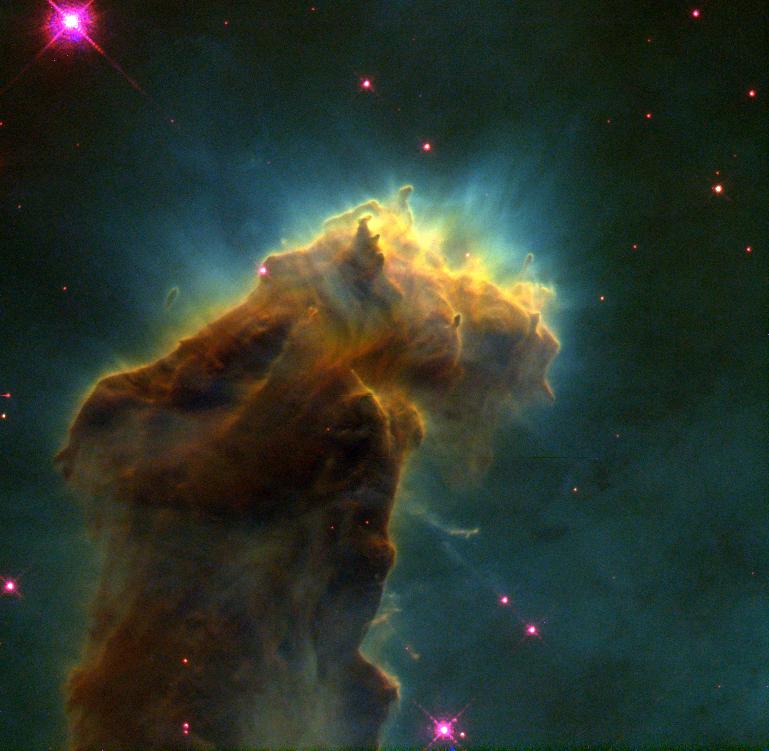
Credits: NASA/ESA/STScI


Carnival of Space #106 is hosted by Brian Wang at Next Big Future.


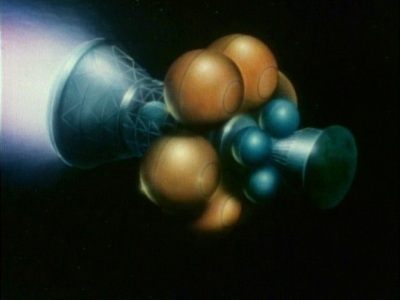
This week you can read about the Catalytic Nuclear Fusion Interstellar Ramjet, an analysis of antimatter propulsion, the aging Global Positioning System, an interview with Dr. Andrew Drake, online lunar maps at the LPI, a full-scale mockup of the Altair lunar lander, and much more.


OrbitalHub presents Hubble – Imaging Space And Time, a book authored by David DeVorkin and Robert W. Smith.


June 1, 2009

Carnival of Space #105

Posted by


Credits: British Interplanetary Society


Carnival of Space #105 is hosted by Ian O’Neill at Space Disco.


This week you can read about STEREO, plans for manned missions to Mercury (sunscreen must be in the inventory box), the Virtual Astronomy Metadata Project, rotating space elevators, interstellar probes, presence of water on the surface of Mars, and much more.


June 1, 2009

GOCE Free-Falls At Last

Posted by


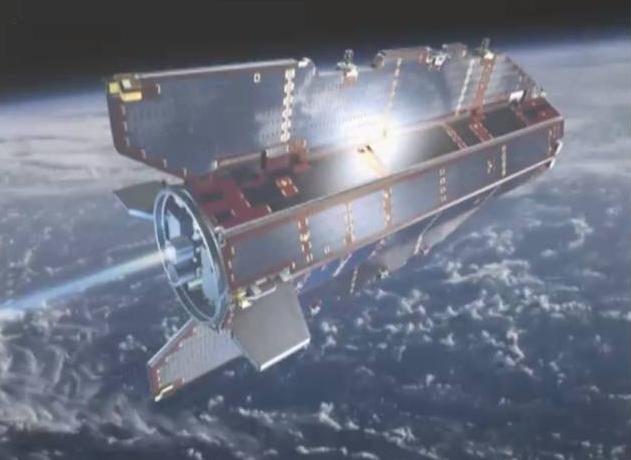
Credits: ESA


After a successful launch from the Plesetsk Cosmodrome in northern Russia by a Rockot launch vehicle, GOCE has to go through a number of preparation stages before becoming operational and starting to collect three-dimensional gravity data all over the globe.


On April 6, 2009, the GOCE’s propulsion system was switched on. The system was confirmed to be operating normally. Two days later, on April 8, 2009, the gradiometer was switched on as well. The instrument started to produce data instantly.


“With the ion engine and the gradiometer working, we have started to tune the satellite and its instruments,” GOCE System Manager Michael Fehringer said.


The payload, an Electrostatic Gravity Gradiometer, consists of six accelerometers mounted in pairs on three perpendicular axes on an ultra-stable carbon-carbon structure. Measurements of the tiny differences in the readings from the accelerometer pairs will render very accurate results for the geoid altitude and the detection of gravity-field anomalies.


Given the unique payload onboard the spacecraft, GOCE has to provide an undisturbed environment for the instruments. Two additional accelerometers mounted on the velocity axes will control the two low-power xenon ion engines in order to compensate for the atmospheric drag. The ion engines each can provide only 1 to 20 milli-Newtons of thrust, which does not sound like very much, but it is enough to overcome the drag experienced by the spacecraft in orbit.


GOCE has been losing altitude at a rate of 150m to 200m a day, until May 26, 2009, when the spacecraft entered the drag-free mode.


Rune Floberghagen, ESA’s GOCE Mission Manager, stated that, “Knowing that the drag-free control system works perfectly means we now have everything in place to carry out the complex process of calibrating the gradiometer instrument. Once calibration has been completed we will be able to see the true excellence of GOCE’s gravity-field measurements.”


The instruments have to undergo a further six weeks of commissioning and calibration. Mission operations are scheduled to start in summer 2009.


You can read more about the GOCE mission on the dedicated page on ESA’s web site.



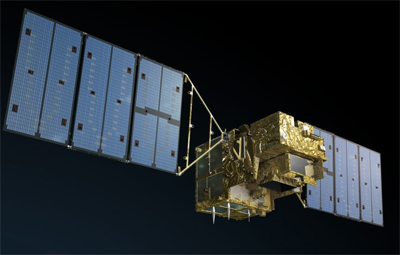
The data gathered so far by GOSAT, which describes the concentrations of carbon dioxide and methane, is preliminary and it needs further calibration and validation. JAXA is currently performing the initial calibration of the sensors mounted on GOSAT, as well as the tuning of the computer systems used to process the data downloaded from the satellite. The validation of the measurements consists of comparisons with ground-based observations.


JAXA plans to release validated carbon dioxide and methane distribution maps in late 2010. You can read more about GOSAT on the GOSAT Project web page.


May 27, 2009

Carnival of Space #104

Posted by


Credits: NASA


Carnival of Space #104, the Arrow edition, is hosted by Mang (433rd) at Mang’s Bat Page.


This week you can read the story of Canada’s CF-105 Avro Arrow. You can also read about a full-scale Moonbase mock up, the Comet C/2008 Q3 Garrad, the Hubble repair missions, Centauri planets, Herschel and Planck, and much more.


May 25, 2009

Carnival of Space #103

Posted by


Credits: NASA


Carnival of Space #103 is hosted by Megan Watzke at The Chandra Blog.


This week the focus is on the STS-125 mission, which is the final servicing mission to the Hubble Space Telescope. You can also read about a 1970-planned lunar base, space-based solar energy, naming asteroids, and much more.