OrbitalHub

Where curiosity reaches escape velocity.

Domain is for sale. $50,000,000.00 USD. Direct any inquiries to contact@orbitalhub.com.

Archive for the Robotic Exploration category

November 18, 2008

PHOENIX

Posted by


Credits: NASA


In 2002, an instrument on the Mars Odyssey spacecraft detected hydrogen under the Martian surface. This was regarded as clear evidence that there is subsurface water ice on Mars.


In 2003, NASA decided to revive a mission that was cancelled in 2001 due to the fact that a previous mission, the Mars Polar Lander, was lost in 1999. The revived mission was named Phoenix.


A Lander that could reach out and touch the ice was needed. The half-built spacecraft for the previously cancelled mission already had in place a 7.7-foot robotic arm that could do the trick.


A JPL team reviewed the data from the failed mission in 1999 and corrected the mistakes made. Every system used in the previous design was taken apart, tested, and examined. The suspected culprits were the retrorockets used during landing. More than a dozen issues that could have caused a failure of the new planned mission were found and fixed.
 

Credits: NASA / JPL


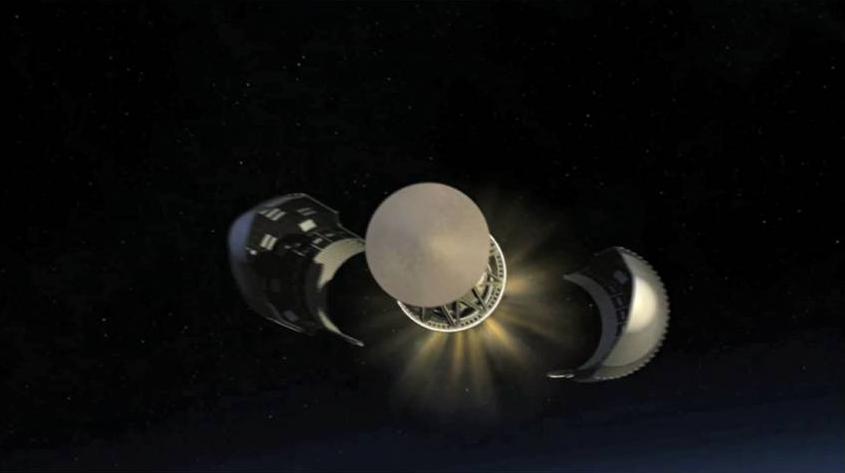
The Phoenix mission inherited a capable spacecraft partially built for the Mars Surveyor Program 2001. As we mentioned, the lessons learned from the Mars Polar Lander helped improve the existing systems. As for any other space mission, the conditions in which the spacecraft operates dictate the design.


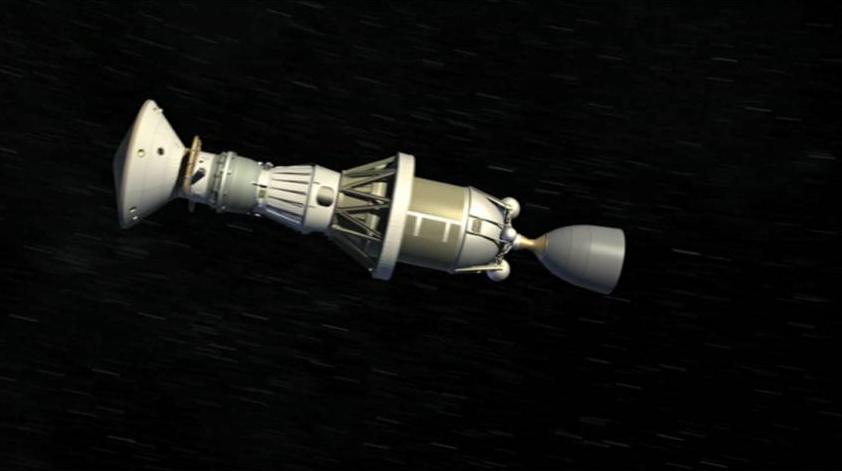
In the case of the Phoenix mission, the following phases were considered: the launch, the cruise, the atmospheric entry, the touchdown, and the surface operations phase. The launch induces tremendous load forces and vibrations. The 10-month cruise to Mars exposes the spacecraft to the vacuum of space, solar radiation, and possible impacts with micrometeorites. During the atmospheric entry, the spacecraft is heated to thousands of degrees due to aero braking, and has to withstand tremendous deceleration during the parachute deployment. The extremely cold temperatures of the Martian arctic and the dust storms must be considered during the surface operations phase.
 

Credits: NASA / JPL


Several instruments are mounted on the Lander: the robotic arm (RA), the robotic arm camera (RAC), the thermal and evolved gas analyzer (TEGA), the Mars descent imager (MARDI), the meteorological station (MET), the surface stereo imager (SSI), and the microscopy, electrochemistry, and conductivity analyzer (MECA).


The RA was built by the Jet Propulsion Laboratory and was designed to perform the scouting operations on Mars, such as digging trenches and scooping the soil and water ice samples. RA delivered the samples to the TEGA and the MECA. RA is 2.35 meters long, it has an elbow joint in the middle, and it is capable of digging trenches 0.5 meters deep in the Martian soil.


The University of Arizona and the Max Planck Institute in Germany built the RAC. The camera is attached to the RA, just above the scoop placed at the end of the arm. RAC provided close-up, full-color images.


Credits: NASA / JPL


TEGA was developed by the University of Arizona and University of Texas, Dallas. TEGA used eight tiny ovens to analyze eight unique ice and soil samples. By employing a process called scanning calorimetry, and by using a mass spectrometer to analyze the gas obtained in the furnaces as the temperature raised to 1000 degrees Celsius, TEGA determined the ratio of various isotopes of hydrogen, oxygen, carbon, and nitrogen.


MARDI was built by Malin Space Science Systems. From what I could gather, the MARDI was not used by the Lander due to some integration issues.


The Canadian Space Agency (YAY Canada!) was responsible for the overall development of the meteorological station (MET). Two companies from Ontario, MD Robotics and Optech Inc., provided the instruments for the station.


The SSI served as the eyes of the Phoenix mission. SSI provided high-resolution, stereo, panoramic images of the Martian arctic. An extended mast holds the SSI, so the images were recorded from two meters above the ground.


Credits: NASA / JPL


MECA was built by the Jet Propulsion Laboratory. The instrument was used to characterize the soil by dissolving small amounts of soil in water. MECA determined the pH, the mineral composition, as well as the concentration of dissolved oxygen and carbon dioxide in the soil samples that were collected.


We would like to highlight some of the important moments during the mission:


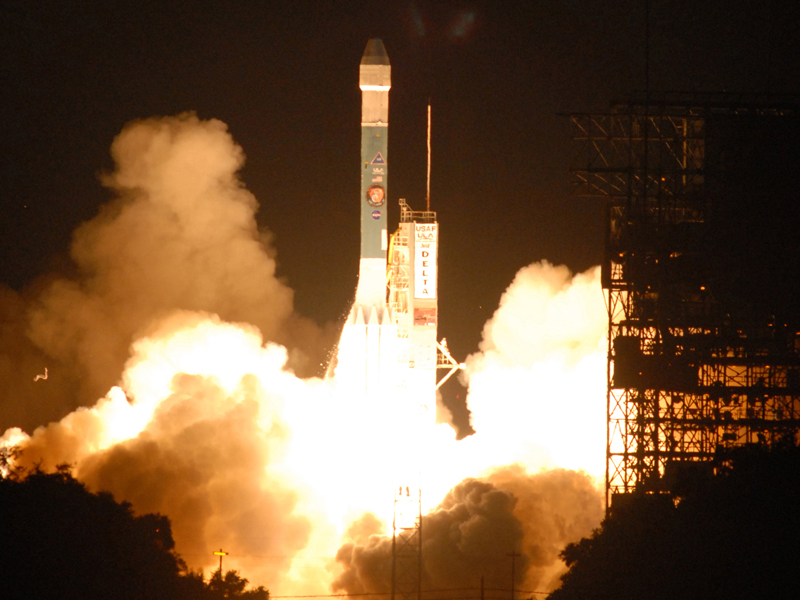
August 4, 2007 – Delta II rocket launch from Cape Canaveral. The three-stage Delta II rocket with nine solid rocket boosters lifted off from Cape Canaveral, carrying the Phoenix spacecraft on the first leg of its journey to Mars.
 

Credits: NASA / JPL -Caltech / University of Arizona


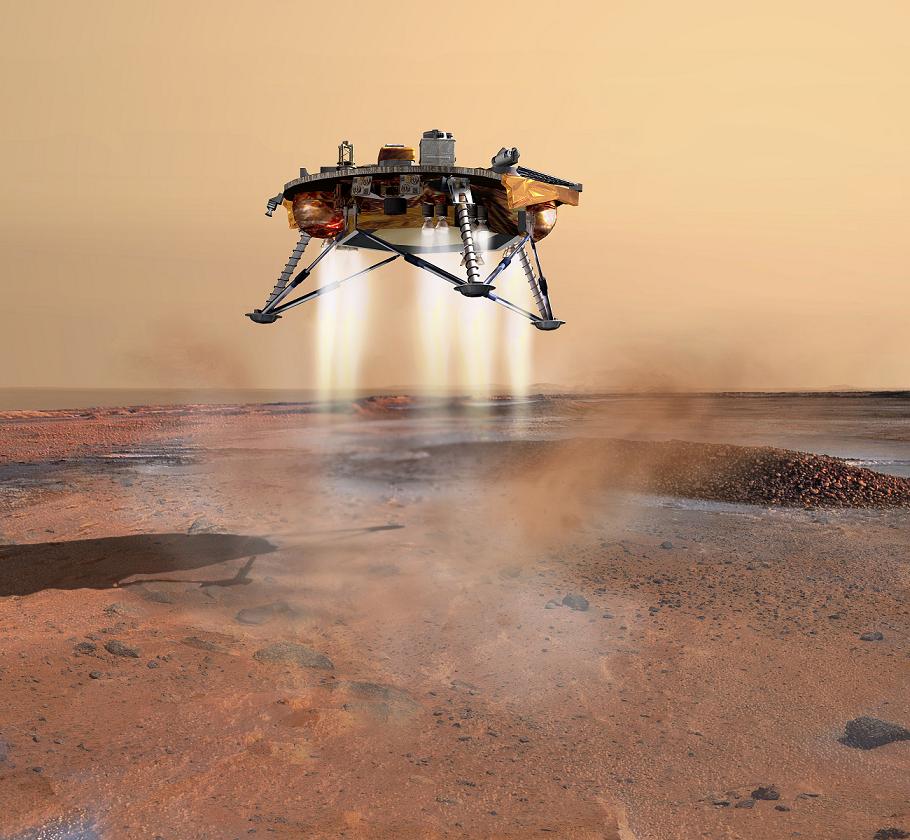
May 25, 2008 – Phoenix Mars Lander touchdown. The Phoenix entered the Martian atmosphere at 13,000 mph. It took 7 minutes for the Lander to slow down with the aid of a parachute and to land using its retrorockets. The mission team did not have to wait long before discovering ice because the blasts from the retrorockets had blown away the topsoil during landing and revealed ice patches under the lander.


November 2, 2008 – Last signal received from the Lander. On this date, communication was established for the last time with Phoenix. Due to the latitude of the landing site, not enough sunlight is available and the solar arrays are unable to collect the power necessary to charge the batteries that operate the instruments mounted on the Lander. At the landing site, the weather conditions are worsening.


November 10, 2008 – Mission declared completed. NASA declares that the Mars Phoenix Lander has completed a successful mission on the Red Planet. Phoenix Mars Lander has ceased communications after being operational for more than five months (the designed operational life of the mission was 90 days).


November 13, 2008 – Mission Honored. NASA’s Phoenix Mars Lander was awarded Best of What’s New Grand Award in the aviation and space category by Popular Science magazine.


Credits: NASA / JPL


The Mars Phoenix Lander made significant contributions to the study of the Red Planet. Phoenix verified the presence of water ice under the Martian surface, and it returned thousands of pictures from Mars. Phoenix also found small concentrations of salts that could be nutrients for life, it discovered perchlorate salt, and calcium carbonate, which is a marker of effects of liquid water.


Phoenix provided a mission long weather record, with data on temperature, pressure, humidity, and wind, as well as observations on snow, haze, clouds, frost, and whirlwinds.


Principal Investigator Peter H. Smith of the University of Arizona led the Phoenix mission. The project management was done at NASA’s Jet Propulsion Laboratory and the development at Lockheed Martin Space Systems in Denver. Other contributors were the Canadian Space Agency, the University of Neuchatel (Switzerland), the University of Copenhagen (Denmark), the Max Planck Institute (Germany), and the Finnish Meteorological Institute.


For more information about the Phoenix mission, check out the NASA Phoenix Mars Lander Page.


October 29, 2008

Herschel, Planck’s Big Brother

Posted by


Credits: ESA/AOES Medialab


In a previous post, we presented the Planck spacecraft. We would like to dedicate this post to Planck’s big brother, Herschel. Why b(r)other? Because Planck and Herschel will be launched into space by the same Ariane 5 launcher and they will share the fairing section during the launch phase of the mission. Why big? Well, because Herschel is a larger spacecraft than Planck… actually Herschel is the largest space telescope ever built.


Just to have an idea about the size of the infrared telescope onboard the Herschel spacecraft, the primary mirror has a diameter of 3.5 m and a mass of only 350 kg. In comparison, the mirror of the Hubble space telescope has a diameter of 2.4 m and a mass of 1.5 tons. Obviously, a great deal of effort has been put into minimizing the mass of the telescope, an advance made possible by present-day technology.


The infrared telescope will become operational four months after its launch and will have a nominal mission lifetime of three years. The objectives that ESA set for the Herschel Space Observatory are ambitious: the study of the galaxies in the early universe, the investigation of the creation of stars, the observation of the chemical composition of the atmosphere and surfaces of comets, planets and satellites, as well as examining the molecular chemistry of the universe.


Like Planck, Herschel will observe the sky from the second Lagrangean Point (L2) of the Sun-Earth system. The instruments onboard Herschel will collect long-wavelength infrared radiation. Herschel will be the only space observatory to cover the spectral range from the far infrared to sub-millimeter, which is the reason why the initial name of the space observatory was Far Infrared and Sub-millimeter Telescope (FIRST).


Credits: ESA


The Herschel spacecraft will have 3.3 tons at launch, with a length of 7.5 m and a cross section of 4×4 m. The spacecraft comprises of two modules: the service module and the payload module. While the service module contains the systems for power conditioning, attitude control, data handling and communications, and the warm parts of the scientific instruments, the payload module contains the telescope, the optical bench, the cold parts of the scientific instruments and the cooling system. A sunshield protects the telescope and the cryostat from solar radiation. The sunshield also carries solar cells for power generation.


In order to make accurate observations of the infrared spectrum, parts of the scientific instruments onboard have to be cooled to temperatures close to absolute zero. Two thousand liters of liquid helium will be used for primary cooling during the mission. In addition, each detector onboard is equipped with additional cooling systems.


Credits: ESA/Guarniero


Herschel will not be the first infrared telescope launched into space. There are three predecessors that we would like to mention here: IRAS, the US-Dutch-British satellite launched in 1983, ISO – launched by ESA in 1995, and the NASA’s Spitzer Space Telescope – launched in 2003. However, these three infrared space telescopes were operated on Earth orbits. As we mentioned, Herschel will operate in the L2 point, away from any interference that would affect the scientific instruments onboard. Operating in the L2 point will also help with regard to thermal stability because the spacecraft will not move in and out of eclipse regions.


The launch date is set for early 2009. The journey to the final operational position will take around four months. The European Space Operations Control Center (ESOC) in Darmstadt will coordinate the mission.


October 18, 2008

NASA’s IBEX Ready For Launch

Posted by


Credits: NASA GSFC


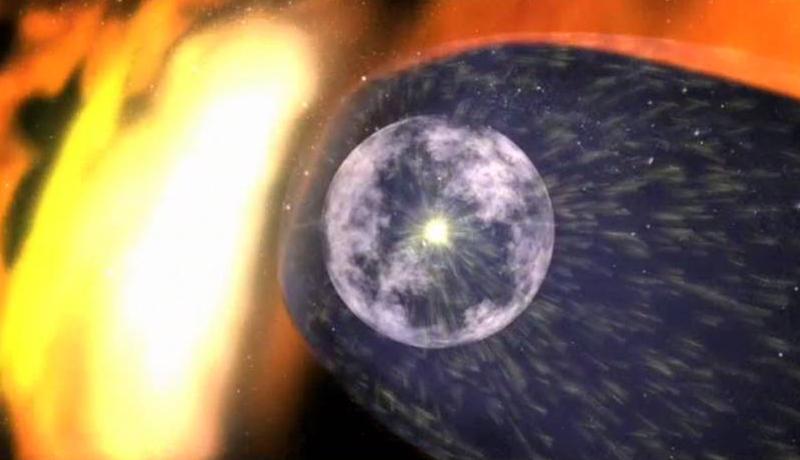
The solar wind generated by our Sun carves out a protective bubble around the solar system, called the heliosphere. The interstellar medium, consisting of the gas and the dust found between the galaxies, interacts with the solar wind and defines the actual boundary, which is called the termination shock.


NASA has designed a mission to map the boundary of the solar system. The mission is called IBEX (Interstellar Boundary Explorer) and it is ready to launch. The data collected by IBEX will allow scientists to understand the interaction between our Sun and the galaxy for the first time. Understanding this interaction will help us protect future astronauts from the danger of galactic cosmic rays.


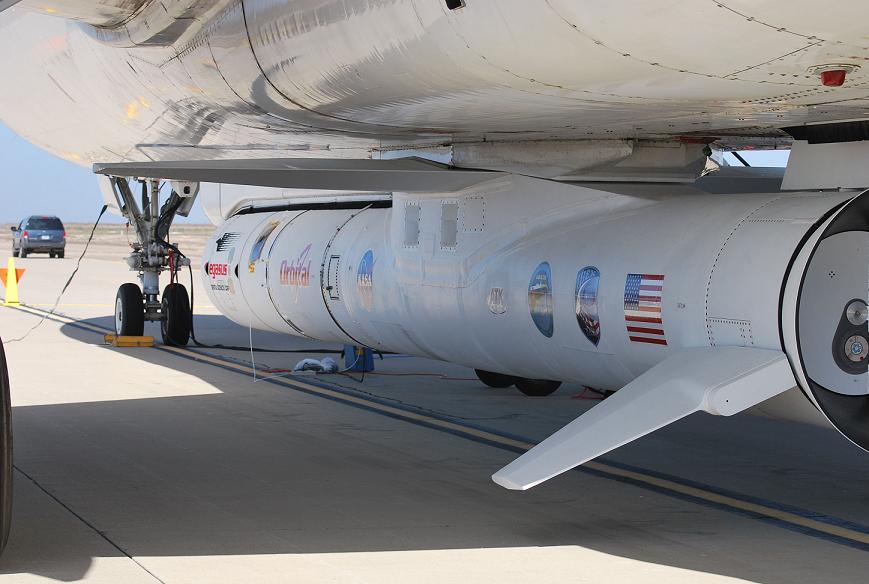
In January 2005, the Orbital Science Corporation was selected to develop, build, and launch a small spacecraft for NASA’s IBEX mission. The IBEX spacecraft is based on an already existing bus: the MicroStar satellite. IBEX will be launched by a Pegasus XL rocket, which will be dropped from an aircraft flying over the Pacific Ocean.


Credits: NASA GSFC


Pegasus began its commercial career in April 1990, and since then it has launched more than 80 satellites into space.


Pegasus is a three-stage launching system used to deploy small satellites weighing up to 1,000 pounds into Low Earth Orbit (LEO). An aircraft carries Pegasus to an altitude of 40,000 feet.


The rocket is released and free-falls before igniting its engines. It takes roughly ten minutes for Pegasus to deliver a satellite into orbit.


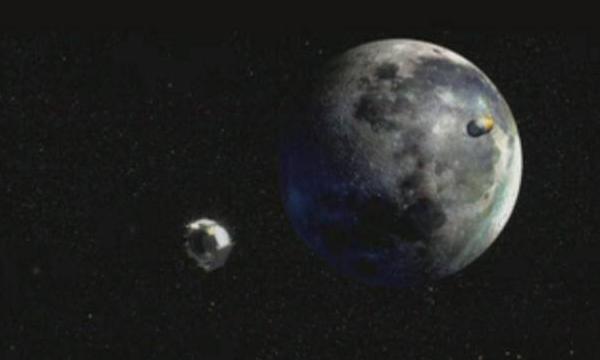
Pegasus will place IBEX into a 130 mile altitude orbit. An extra solid-fueled rocket will boost the spacecraft from the LEO. IBEX’s final orbit will be a highly elliptical orbit with the perigee at an altitude of 7,000 km and the apogee at 236,000 km. IBEX has to operate in this orbit because any interference from the Earth’s magnetosphere would make it impossible to take accurate measurements with the scientific instruments onboard.


Credits: NASA GSFC


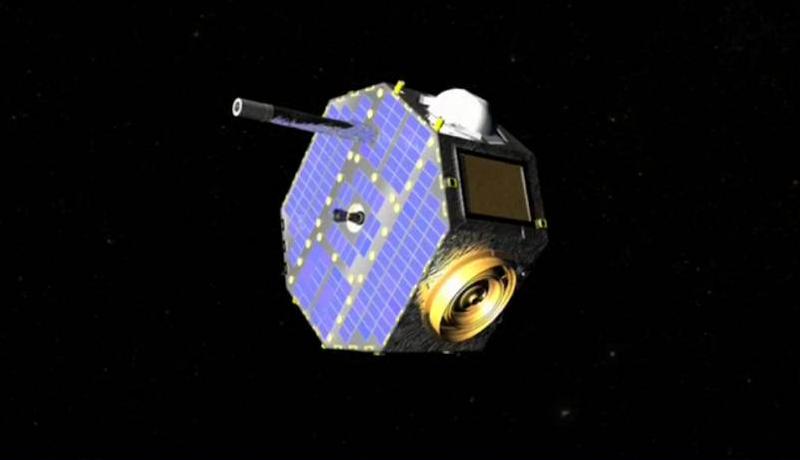
IBEX has a mass of only 83.33 lbs (roughly 38 kg) and is described by NASA as being the size of a bus tire. The instruments onboard IBEX will collect particles called energetic neutral atoms (ENAs). The ENAs are radiated from the termination shock region. The ENA hits recorded by the instruments onboard IBEX will be used to create a map of this region.


The mission is scheduled to launch tomorrow, October 19th, 2008. The spacecraft will be operational for 24 months. You can find out more about the IBEX spacecraft on NASA’s IBEX mission web page.


October 15, 2008

Scouting the Moon (III)

Posted by


Credits: NASA


In the previous two posts in this series, we presented NASA’s Lunar Reconnaissance Orbiter (LRO) and the Chandrayaan-1 mission, which was designed and developed by ISRO. These two missions are typical lunar scouting missions: the spacecraft with onboard remote-sensing instruments will orbit the Moon, collect scientific data, and relay it back to Earth.


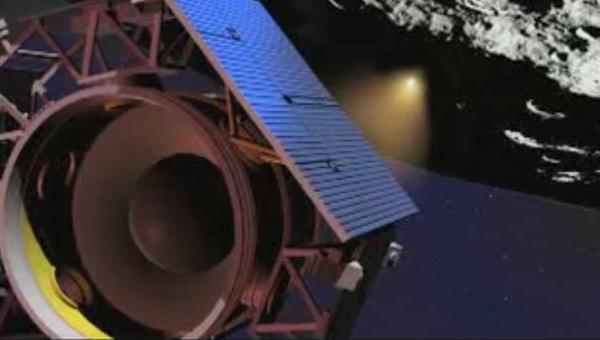
NASA will launch another lunar scouting spacecraft on the same Atlas V rocket with LRO: the Lunar Crater Observation and Sensing Satellite (LCROSS). This mission is not a typical scouting mission and we will see why in this post.


In 1999, a precursor of LRO and LCROSS called the Lunar Prospector detected traces of concentrated hydrogen at the lunar poles. As a result, the LCROSS mission’s main goal is to confirm the presence or absence of water in a permanently shadowed crater near a lunar polar region. At the present time, landing a probe on the lunar surface and performing excavations or drilling would be very expensive. A less expensive solution for the LCROSS mission is to use a kinetic impactor to excavate a crater on the surface of the Moon.


Credits: NASA


After the launch, LRO will separate from LCROSS, and continue on a solo journey to the Moon. LCROSS will remain attached to the Centaur upper stage of the Atlas V launch system.


While LRO will follow a trajectory that will place it in a polar lunar orbit, LCROSS will execute a flyby of the Moon, and use an elongated Earth orbit to position itself on an impact trajectory. During this time, the LCROSS mission team will perform instrument calibration and corrections for the impact trajectory. The target of the impact will be the lunar south pole.


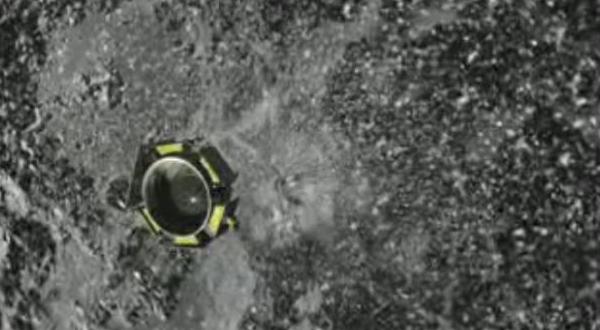
Seven minutes before the impact, LCROSS will separate from Centaur. The Centaur will be used as a kinetic impactor. Having a mass of approximately 2,200 kg, on impact, it will excavate a crater 20 meters wide and 3 meters deep. According to NASA scientists, more than 250 tons of lunar material will be propelled into space.


Credits: NASA


LCROSS will then fly through the debris of the previous impact. The instruments onboard LCROSS will collect scientific data and the spacecraft will relay it back to Earth. LCROSS will end its mission four minutes after the Centaur impact by creating its own impact crater on the lunar surface. The last S in LCROSS should stand for Smasher instead of Satellite considering the final act of the mission!


The scientific instruments onboard LCROSS cover a wide spectrum: two near-infrared spectrometers, a visible light spectrometer, two mid-infrared cameras, two near-infrared cameras, a visible camera, and a visible radiometer. The instruments can detect traces of organics, hydrocarbons, hydrated minerals, water ice, and water vapor. More details about the LCROSS scientific payload can be found on LCROSS mission page.


I wonder to what extent the debris caused by the impact of Centaur and LCROSS will interfere with the scientific instruments onboard LRO and Chandrayaan-1. Both LRO and Chandrayaan-1 will be orbiting the Moon on polar orbits at that time.


October 8, 2008

Scouting the Moon (II)

Posted by


We presented in a previous post the Lunar Reconnaissance Orbiter (LRO) mission. The goals of the LRO mission are to map the lunar resources and to create a detailed 3D map of the lunar surface in preparation for future NASA missions to the Moon. However, NASA is not the only space agency that has high hopes regarding the exploration of the Moon. The Indian Space Research Organization (ISRO) is another agency heavily involved in space activities.


Credits: ISRO


Interest in undertaking a lunar scientific mission was sparked at a meeting of the Indian Academy of Sciences in 1999. One year later, the Astronautical Society of India made a recommendation supporting the idea.


The ISRO formed a National Lunar Mission Task Force that involved leading Indian scientists. The Task Force provided an assessment on the feasibility of such a mission. The mission, called Chandrayaan-1, was approved in November 2003 for an estimated cost of $83 million USD.


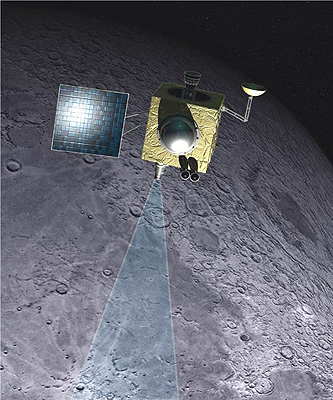
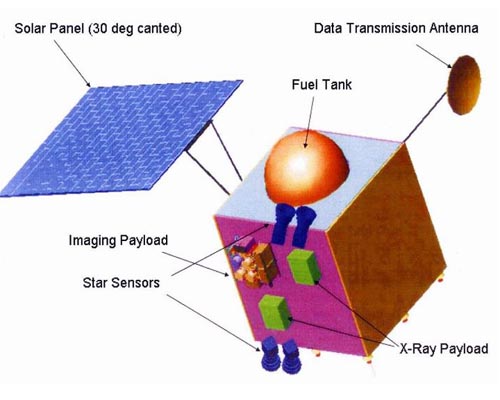
The Chandrayaan-1 spacecraft is a 1.5 meter cube with a weight mass of approximately 523 kg. The spacecraft bus is based on an already developed meteorological satellite. Chandrayaan-1 will carry a 30 kg probe that will be released to penetrate the lunar surface. The power for the onboard systems is generated by a solar panel. The 750 watts generated by the solar panel will be stored by the rechargeable batteries onboard the spacecraft. Maneuvering in the lunar orbit is done using a bipropellant propulsion system.


Credits: ISRO


The scientific payload contains a diverse collection of instruments. The instruments were designed and developed by ISRO, ESA, NASA, and the Bulgarian Space Agency.


There are two instruments that will map the surface of the Moon: the Terrain Mapping Camera (TMC) will produce a 5 meter resolution map of the surface, and the Lunar Laser Ranging Instrument (LLRI) will scan the lunar surface and determine the surface topography.


The X-ray spectrometer onboard the spacecraft has three components: the Imaging X-ray Spectrometer (CIXS), the High Energy X-ray/gamma ray spectrometer (HEX), and the Solar X-ray Monitor (SXM). The X-ray spectrometer will measure the concentration of certain elements on the lunar surface as well as monitor the solar flux in order to normalize the results of the measurements taken.


The mineralogical configuration of the surface will be mapped by four instruments: the Hyper Spectral Imager (HySI), the Sub-keV Atom Reflecting Analyzer (SARA), the Moon Mineralogy Mapper (M3), and the Near-Infrared Spectrometer (SIR-2).


The Radiation Dose Monitor (RADOM-7) will record the radiation levels in the lunar orbit.


Credits: ISRO


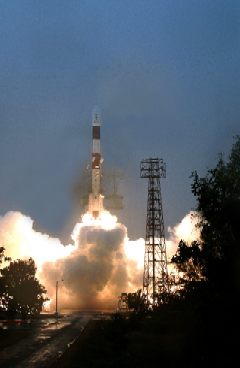
ISRO has two operational launch vehicles: the Polar Satellite Launch Vehicle (PSLV) and the Geosynchronous Satellite Launch Vehicle (GSLV). For Chandrayaan-1, ISRO has chosen to use PSLV as a launch vehicle. The PSLV developmental flights were completed in 1996 and the rocket has had 12 successful missions since then. PSLV is 44.43 meters tall and has a weight of 294 tonnes at launch. It can inject a payload of 1,000 kg – 1,200 kg into a polar orbit.


The launch of the Chandrayaan-1 mission is scheduled for the end of October 2008. The PSLV rocket will take off from the Satish Dhawan Space Center in Sriharikota on the southeast coast of India. The transfer to the lunar orbit will take approximately five days and after additional maneuvers the spacecraft will reach its final polar orbit, 100 km above the surface. The spacecraft will be operational for two years.


The Chandrayaan-1 mission opens the door to future lunar missions. ISRO has already committed to a second Chandrayaan mission that will land a rover on the surface of the Moon. The rover will perform a number of experiments on the lunar surface and the results will be relayed to Earth by the Chandrayaan-2 orbiter.


We will come back with more details about the Chandrayaan-1 mission as the events unfold. Please stay tuned on the OrbitalHub frequency.


October 1, 2008

ESA to Study the Birth of the Universe

Posted by


Some of the most important questions asked in modern science are: how did the Universe begin, how did it evolve to its present state, and how will it continue to evolve in the future? To ask these questions, the remnant radiation that filled the Universe immediately after the Big Bang must be analyzed. This remnant radiation is known as the Cosmic Microwave Background (CMB).


Credits: ESA


ESA plans to answer these questions with Planck: the first European mission to study the birth of the Universe. The Planck Mission will collect CMB radiation measurements using highly sensitive sensors that are operating at very low temperatures. The measurements will be used to map the smallest variations of the CMB detected to date.


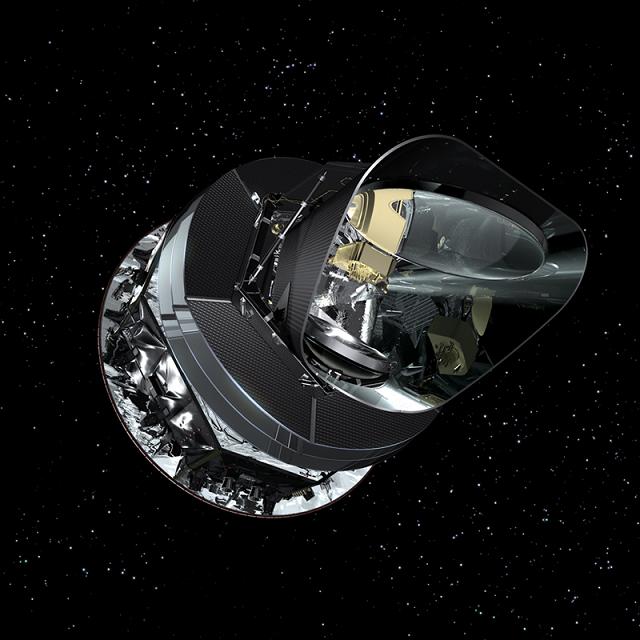
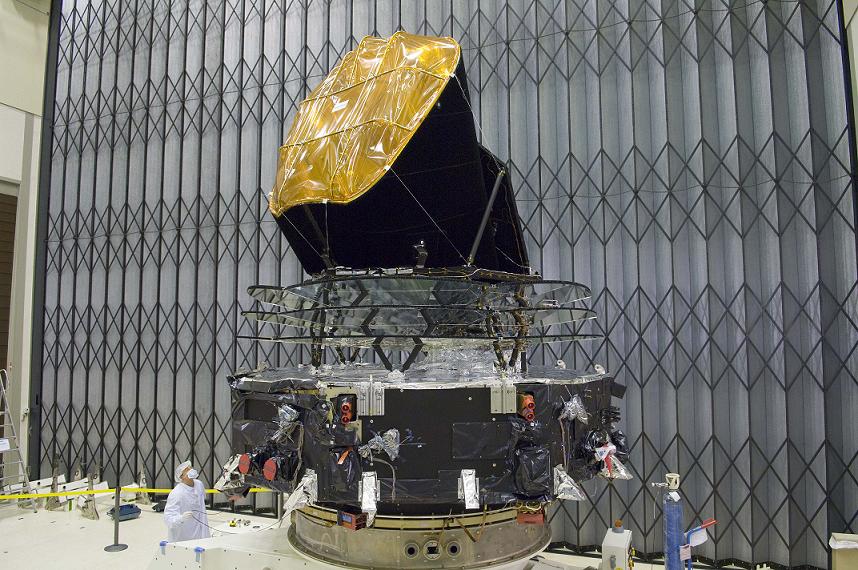
The Planck spacecraft will weigh around 1,900 kg at launch. It is 4.2 m high and has a maximum diameter of 4.2 m. There are two modules that comprise the spacecraft: a service module and the payload module.


The service module contains the systems for power generation, attitude control, data handling and communication, and the warm components of the scientific payload. The payload module contains the telescope, the optical bench, the detectors, and the cooling system (which is of critical importance, as we shall see).


The telescope is an important onboard component. The Planck telescope is a Gregorian telescope with an off-axis parabolic primary mirror 1.75 x 1.5 meters in size. A secondary mirror focuses the incoming microwave radiation on two sets of highly sensitive detectors: the Low Frequency Instrument (LFI) and the High Frequency Instrument (HFI). The Gregorian design offers two key advantages: it is compact and it does not block the optical path.


Credits: ESA/Thales


The LFI will be operating at –253 degrees Celsius. The array of twenty-two tuned radio receivers that comprise LFI will produce high-sensitivity, multi-frequency measurements of the microwave sky in the frequency range of 27 GHz to 77 GHz.


The HFI has to be cooled to –272.9 degrees Celsius in order to operate (one tenth of one degree above the absolute zero!). HFI’s fifty-two bolometric detectors will produce high-sensitivity, multi-frequency measurements of the diffuse sky radiation in the frequency range of 84 GHz to 1 THz.


A baffle surrounds the telescope and instruments. The baffle prevents light from the Sun and the Moon from altering the measurements. A complex system of refrigerators is used onboard the spacecraft in order to achieve the temperatures needed for nominal operation. The detectors have to work at temperatures close to the absolute zero, otherwise their own emissions can alter the measurements.


The two instruments will be used to measure the small variations of the CMB across the sky. By combining the measurements, a full sky map of unprecedented precision will be produced. The map will help astronomers decide which theories on the birth and the evolution of the Universe are correct. Questions like ‘what is the age of the Universe?’ or ‘what is the nature of the dark-matter?’ will be answered.


The mission was initially designed as COBRAS/SAMBA (Cosmic Background Radiation Anisotropy Satellite and Satellite for Measurement of Background Anisotropies) because it grew out of two mission proposals that had similar objectives. When the mission was approved in 1996, it was also renamed as Planck in honor of the German scientist Max Planck (1858 – 1947). Max Planck was awarded the Nobel Prize for Physics in 1918.


Credits: ESA


The mission is a collaborative effort. The Planck spacecraft was designed and built by a consortium led by Alcatel Alenia Space (Cannes, France). The telescope mirrors are manufactured by EADS Astrium (Friedrichshafen, Germany). The Low Frequency Instrument (LFI) was designed and built by a consortium led by the Instituto di Astrofisica Spaziale e Fisica Cosmica (IASF) in Bologna, Italy. The High Frequency Instrument (HFI) was designed and built by a consortium led by the Institut d’Astrophysique Spatiale (CNRS) in Orsay, France.


The Planck Mission has two predecessors: the Cosmic Background Explorer (COBE) and the Wilkinson Microwave Anisotropy Probe (WMAP).


Credits: ESA


The Planck spacecraft will be launched in early 2009 from Kourou, French Guiana. An Ariane 5 booster will place the spacecraft in a trajectory towards the L2 point. The L2 point stands for Second Lagrangian Point and it is located around 1.5 million kilometers away from Earth in a direction diametrically opposite the Sun. It will be a dual launch configuration, as the Herschel spacecraft will be launched together with Planck.


Between four to six months after the launch, Planck will reach its final position. It will take six more months before Planck will be declared operational.


Planck will perform scientific measurements for fifteen months, allowing two complete sky surveys. The spacecraft will be operational as along as there are resources for the cooling systems onboard.


For more details on the ESA’s Planck Mission you can visit the mission’s home page on the ESA website.