OrbitalHub

Where curiosity reaches escape velocity.

Domain is for sale. $50,000,000.00 USD. Direct any inquiries to contact@orbitalhub.com.

Archive for the Spacecraft Design category


Aircraft are most vulnerable during takeoff and landing. At these lower speeds, wings must generate significantly more lift than during cruise flight while maintaining stability and control close to the ground. This phase of flight places complex aerodynamic demands on the aircraft, particularly around the wing surfaces, flaps, and slats collectively known as high-lift systems. Understanding how air behaves around these structures is one of the most challenging problems in aerospace engineering.

To address this problem, NASA and its international research partners are using a shared experimental and computational framework known as the High Lift Common Research Model, or CRM-HL. The project provides a standardized wing and aircraft geometry that can be tested across multiple wind tunnels, simulation platforms, and research institutions. By using the same baseline design everywhere, researchers can directly compare results from different facilities and computational methods, improving confidence in the accuracy of aerodynamic predictions.

The effort reflects a broader challenge in modern aerospace engineering. Computational fluid dynamics, or CFD, has become one of the primary tools for aircraft design. Engineers now rely heavily on large-scale simulations to predict airflow behavior around aircraft before physical prototypes are built. However, CFD models are only as reliable as the assumptions, turbulence models, and numerical methods underlying them. Small differences in simulation setup or experimental conditions can produce different results, especially in highly turbulent flow regimes such as those encountered during takeoff and landing.

The High Lift Common Research Model was created to reduce this uncertainty by establishing a common reference geometry for validation studies. The model includes realistic high-lift devices such as deployed flaps and slats, allowing researchers to study airflow structures representative of actual transport aircraft configurations. Because the geometry is shared internationally, multiple organizations can independently analyze the same aerodynamic problem using their own tools and facilities.

The physics involved in high-lift aerodynamics is significantly more complicated than cruise flight. During cruise, airflow around a wing is relatively smooth and attached, meaning the air follows the contour of the wing surface. At low speeds, however, wings must operate at higher angles of attack to generate sufficient lift. This increases the risk of flow separation, where the airflow detaches from the wing surface and becomes highly turbulent.

High-lift devices help manage this problem. Slats on the leading edge of the wing allow air to flow through narrow gaps, energizing the boundary layer and delaying separation. Flaps on the trailing edge increase the wing’s effective curvature and surface area, allowing greater lift generation at lower speeds. These devices create highly three-dimensional flow structures involving vortices, shear layers, and turbulent wakes.

Capturing these phenomena accurately is difficult both experimentally and computationally. Wind tunnel testing remains one of the most important tools for studying complex aerodynamic behavior. Scaled physical models are placed in controlled airflow environments where sensors measure pressure distribution, lift, drag, and flow structure. Advanced visualization techniques such as particle image velocimetry and pressure-sensitive paint can reveal detailed flow patterns across the wing.

The CRM-HL tests include models at various scales, including a 5.2% scale version used for detailed aerodynamic studies. Scaling introduces its own engineering considerations because aerodynamic similarity depends on dimensionless parameters such as Reynolds number and Mach number. Researchers must carefully design test conditions to ensure that scaled models reproduce the relevant physical behavior of full-size aircraft as closely as possible.

Computational simulations complement these physical experiments. CFD software divides the airflow around the aircraft into millions or even billions of small computational cells. The governing equations of fluid motion—the Navier-Stokes equations—are then solved numerically across this grid. These equations describe conservation of mass, momentum, and energy within the fluid.

Directly resolving all turbulent scales in realistic aircraft flows is computationally impractical for most engineering applications. Instead, researchers use turbulence models to approximate the effects of smaller turbulent structures. Different turbulence models can produce different results, particularly in separated flow regions, which is one reason cross-validation against experimental data is essential.

The CRM-HL project allows researchers to compare computational predictions against wind tunnel measurements under controlled conditions. If multiple independent CFD approaches converge toward the same results and match experimental data, confidence in those methods increases. Discrepancies help identify limitations in modeling approaches and guide improvements in numerical techniques.

One of the major benefits of the project is standardization across facilities. Different wind tunnels have different wall effects, flow quality characteristics, and instrumentation systems. Similarly, computational platforms may use different mesh generation strategies, solvers, and turbulence models. By applying all of these methods to the same geometry, researchers can isolate the influence of methodological differences and improve consistency across the aerospace industry.

This collaborative approach is increasingly important as aircraft design becomes more dependent on digital engineering workflows. Modern aerospace programs aim to reduce the number of expensive physical prototypes by relying more heavily on validated simulations during early design phases. Accurate CFD tools can shorten development timelines, reduce costs, and allow engineers to explore a wider range of configurations before committing to manufacturing.

The research also contributes directly to operational improvements. Better understanding of airflow during takeoff and landing can lead to more efficient wing designs, reduced fuel consumption, lower noise levels, and improved safety margins. High-lift systems influence runway performance, stall behavior, and handling characteristics, all of which are critical for commercial aviation.

The simulations produced within the CRM-HL effort provide additional insight into the detailed structure of airflow. Visualizations reveal vortices forming near flap edges, turbulent mixing regions behind deployed surfaces, and pressure gradients across the wing. These features are difficult to measure comprehensively in physical tests alone, making computational analysis a valuable complement.

At a broader level, the project reflects the evolving relationship between experimentation and simulation in aerospace engineering. Wind tunnels remain essential because they provide empirical validation, but computational tools increasingly allow engineers to study phenomena in ways impossible through testing alone. The combination of both approaches creates a more complete understanding of aerodynamic systems.

The High Lift Common Research Model therefore serves not only as a wing design, but as a shared scientific framework. It allows researchers across countries and institutions to evaluate methods against a common reference point, improving the reliability of aerodynamic prediction tools used throughout the aerospace industry.

As aircraft become more efficient and design margins become tighter, this type of coordinated validation effort becomes increasingly important. The airflow around a wing during landing may appear simple from a distance, but in reality it involves some of the most complex fluid dynamics encountered in engineering. Understanding that airflow with precision is essential to the next generation of aircraft design.

Video credit: NASA
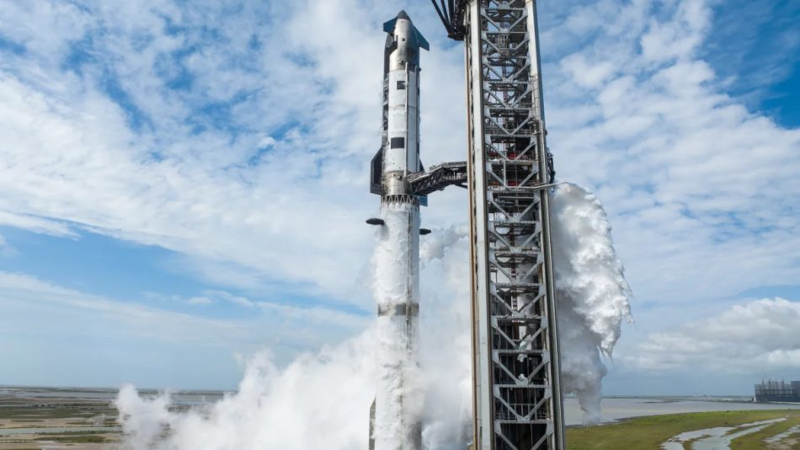


SpaceX has set no earlier than May 19, 2026, for the first flight of Starship in its Version 3 configuration, a significant step in the development of the vehicle that NASA has contracted to land astronauts on the Moon and that SpaceX intends to use for missions to Mars. The upcoming flight, designated Flight 12, will lift off from Starbase in South Texas with a window opening around 5:30 to 6:30 p.m. ET, with a backup opportunity on May 20 if weather or technical issues require it.

The Version 3 configuration represents the most capable iteration of the Starship and Super Heavy system yet built. The vehicle stands approximately 150 meters tall with the upper stage stacked on the booster, making it the largest flying object ever constructed. The Super Heavy booster carries 33 Raptor engines — the full complement — compared to the 33-engine configuration that flew in earlier tests, but V3 introduces upgraded engines with higher thrust output and improved longevity. The upper stage, Ship 39, carries the same engine count as its predecessors but benefits from the thermal protection and reusability improvements that the SpaceX team has refined through the program’s rapid iteration cycle.

On May 11 and 12, SpaceX completed a full launch rehearsal that included propellant loading and a 33-engine static fire of Booster 19 with Ship 39 stacked on top. The test was the first time V3 hardware had been subjected to a full-duration static fire with all engines firing simultaneously, and it verified the vehicle’s readiness for flight conditions. The rehearsal included loading cryogenic propellants — liquid oxygen and liquid methane — into both stages, a process that takes hours and involves managing thermal gradients and boil-off rates that are significantly more complex for a vehicle of Starship’s scale than for any prior rocket.

The May 19 target has been in development for several weeks. SpaceX had originally planned an earlier V3 debut but chose to extend the testing and validation phase after discovering a hardware issue during pre-flight inspections. The conservative approach reflects a pattern the company has followed throughout the Starship program: when something does not look right, the team stops, diagnoses, and fixes rather than proceeding and hoping for the best. The strategy has produced a flight rate that is slower than early projections suggested, but it has also produced a vehicle that, by the time it flies, has been tested against the conditions it will actually face.

Flight 12 will be the first Starship flight of 2026 and the twelfth overall test flight in the program’s history. SpaceX has been flying approximately one Starship mission every few months as the vehicle matures, with each flight serving as both a test of new hardware and a demonstration of capabilities that have been validated in previous flights. The Version 3 hardware will attempt to complete the full mission profile: a full-duration burn of both stages, a controlled descent of the booster back toward the launch site where it will be caught by the mechanical arm system, and an upper stage that will perform a controlled splashdown in the Indian Ocean after completing one or more orbits of Earth.

The vehicle’s role in NASA’s Artemis program gives the program a significance that extends beyond SpaceX’s own ambitions. The Human Landing System contract that NASA awarded to Starship requires the vehicle to demonstrate crewed lunar landing capability before astronauts from the Artemis III mission descend to the lunar surface. That demonstration is years away, but the hardware being tested in the V3 flights is the same hardware that will eventually attempt the lunar descent. Each test flight, even if it ends in a loss of vehicle, produces data that refines the engineering and reduces the risk of the crewed mission later.

The May 19 window is specific enough that it suggests the team has high confidence in the timeline, but not so specific that it implies a guarantee. SpaceX has shown, repeatedly, that it will delay a launch rather than fly a vehicle it has reason to doubt. For a rocket program that has redefined what rapid iteration means in aerospace, the patience to wait for the right conditions is not a contradiction — it is the discipline that makes the iteration sustainable.

Super Heavy’s 33-engine first stage is a study in the engineering trade-offs that define modern launch vehicle design. Each Raptor engine produces a specific thrust at sea level, and the total thrust at liftoff is the sum of all 33 engines burning simultaneously. The challenge is not generating that thrust but managing the physical interactions between engines, the structure, and the propellant flow at the scale Super Heavy requires.

The Raptor engine uses a full-flow staged combustion cycle, which means that all of the fuel and oxidizer are gasified before they enter the combustion chamber. This approach produces very high efficiency — specific impulse in the range of 380 seconds at sea level — but it requires turbomachinery that can handle extreme temperatures and pressures without failing. The engineering challenge is not just the performance but the durability: an engine that will be fired multiple times must maintain its tolerances across many cycles of heating and cooling, which is why the V3 engines include upgrades to materials and cooling passages that extend engine life.

At liftoff, the structural loads on Super Heavy are enormous. The vehicle weighs approximately 4,000 metric tons at full propellant, and the acceleration from zero to thousands of meters per second in a few minutes requires structural integrity in the airframe that can withstand both the axial loads along the body and the bending moments produced by the aerodynamic forces acting along the vehicle’s length. The stainless steel construction that SpaceX chose for Starship is not a cost-cutting measure but an engineering decision that trades away the weight efficiency of carbon composites for the fracture toughness and reusability of a material that can survive the thermal and structural extremes of repeated flights without developing the microcracks that compromise composite structures over time.

The catch mechanism — the mechanical arms at the launch tower that are designed to catch the returning booster rather than landing it on legs — remains one of the more ambitious elements of the Starship reusability architecture. The system requires precise trajectory control during descent, a structure on the booster that can interface with the catcher arms, and software that can execute the maneuver reliably at the end of a ballistic arc. The May 19 flight will be the first V3 attempt at this catch, and whether the system works on the first try or requires iteration will define the timeline for the operational reusability that SpaceX has designed the vehicle around.


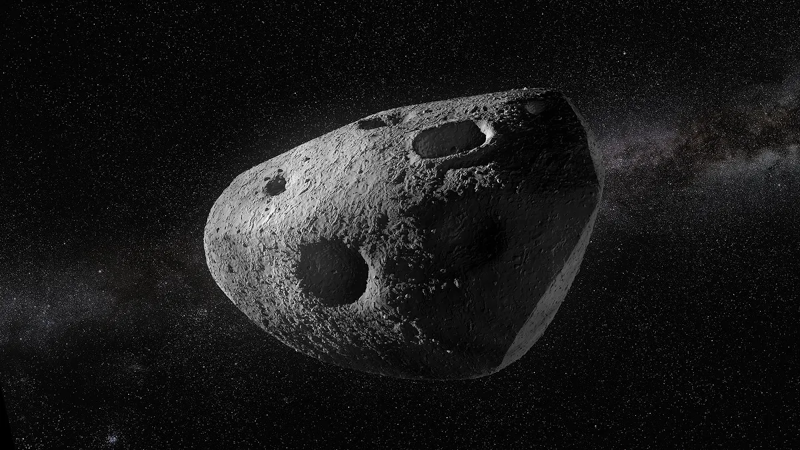
The European Space Agency announced in February 2026 that contracts for the Ramses spacecraft had been awarded following a successful final design review, clearing the path for a launch window opening in mid-April 2028. The mission targets asteroid 99942 Apophis, a 375-meter near-Earth object that will pass within approximately 32,000 kilometers of Earth on April 13, 2029. The encounter will bring Apophis closer than some Earth-orbiting satellites, creating conditions for scientific observation and planetary defense data collection that no spacecraft has previously had the opportunity to gather at such a precisely predicted event.

Apophis has occupied a unique place in planetary defense calculations since its discovery in 2004, when initial observations suggested a meaningful probability of impact with Earth in 2029. Subsequent radar observations refined the orbital calculation, eliminating the impact risk for 2029 and for every subsequent orbit for at least the next century. The 2029 flyby nonetheless represents a rare opportunity because Apophis will be large enough and close enough to observe with ground-based radar, space telescopes, and a rendezvous spacecraft simultaneously, producing a comprehensive dataset on an asteroid’s response to gravitational forces from a major planet.

The Ramses mission profile calls for launch in the April-to-May 2028 window aboard an Ariane 6 rocket from French Guiana, with direct trajectory to Apophis. The spacecraft will arrive in February 2029, approximately two months before the Earth flyby, allowing it to establish orbit around or near the asteroid and begin scientific observations before planetary proximity changes the environment. The tight timeline means Ramses must leverage existing technology and mission-proven systems, a constraint that shaped the spacecraft’s design and instrument payload. The mission builds directly on the Hera spacecraft currently approaching Didymos, using the same spacecraft bus architecture and many of the same instrument designs to reduce development time and risk.

Upon arrival at Apophis, Ramses will characterize the asteroid’s size, shape, mass, spin state, and surface composition through a combination of imaging, spectroscopy, and radar measurements. The spacecraft’s primary scientific objective during the approach and early encounter phase is to document how Earth’s gravitational field alters the asteroid’s physical state. The tidal forces from a close planetary passage can stretch and compress an asteroid, potentially triggering seismic activity, landslides, or the ejection of surface material. Apophis is large enough and passing close enough to Earth that these effects should be measurable, providing a direct test of models that predict asteroid physical evolution during planetary encounters.

The instruments aboard Ramses include a wide-angle camera for surface mapping, a thermal infrared spectrometer for mineralogical analysis, and a radar instrument capable of probing subsurface structure to depths of several meters. These tools will build a comprehensive picture of Apophis that will remain scientifically valuable long after the 2029 flyby. The radar data in particular will illuminate the internal structure of an asteroid that has been shaped by millions of years of collisions and thermal cycling, offering insights into how rubble pile objects like Apophis assembled and evolved.

Ramses will accompany Apophis through the April 2029 Earth encounter, maintaining proximity as the asteroid’s trajectory bends by approximately 1.7 degrees due to Earth’s gravity. The change in Apophis’s trajectory, while small in angular terms, represents a significant perturbation for an object in solar orbit, and measuring it precisely will improve the accuracy of future orbital predictions for Apophis and other near-Earth objects. The spacecraft will also observe Apophis’s rotation state during the encounter, as tidal torques from Earth can alter the rotation period and axis orientation of an asteroid passing at close range. This effect has been documented for other asteroids during planetary flybys but has never been directly measured by a spacecraft at the time of closest approach.

The decision to commit to the Ramses mission reflects a broader shift in European planetary defense strategy toward active characterization of known threats rather than purely detection-focused approaches. ESA’s Space Safety Programme, which funds Ramses, also encompasses the Hera mission at Didymos and the development of impact monitoring systems that track near-Earth objects for potential threat assessment. The cumulative program represents Europe’s contribution to an international network that includes NASA’s Planetary Defense Coordination Office, JAXA’s contributions to radar observation campaigns, and ongoing coordination through the United Nations Committee on the Peaceful Uses of Outer Space.

The timeline for Ramses is aggressive by planetary science standards. From contract award in early 2026 to launch in mid-2028 is approximately 26 months, compressing a development process that typically spans four to five years for a interplanetary spacecraft. The approach works because Ramses inherits much of its design from Hera, which itself benefits from heritage systems developed for ESA’s earlier planetary missions. The spacecraft bus uses the same carbon fiber composite structure, the same propulsion system architecture, and the same power distribution and thermal control designs. What changes is the scientific payload, which Ramses adapts for the specific observation requirements of the Apophis encounter.

When an asteroid passes near a planet, the planet’s gravitational field exerts slightly different forces on the near and far sides of the asteroid. The difference between these forces, called the tidal force, scales with the inverse cube of the distance between the two bodies. At 32,000 kilometers, the tidal acceleration at Apophis’s surface from Earth reaches approximately 0.003 meters per second squared, a small but sustained perturbation that acts continuously as the asteroid passes.

The resulting stress distribution within the asteroid depends on its internal structure. A solid monolithic object responds to tidal loading by deforming slightly and building internal stress that is relieved after the planetary encounter ends. A rubble pile object, where individual fragments are held together by gravity and interlocking rather than cohesive forces, may behave differently. The tidal forces can cause individual blocks to shift, potentially generating seismic disturbances that cause surface material to move or eject. The distinction matters for planetary defense because it affects whether an asteroid is more likely to fragment during an Earth encounter, which would change the risk calculation for future close approaches.

Apophis’s size class, around 375 meters, sits near the boundary where asteroid internal structure transitions from predominantly monolithic to predominantly rubble pile. Objects below approximately 300 meters tend to be solid, while larger objects are more likely to have fragmented and reassembled over cosmic timescales. Radar observations from the 2021 Apophis flyby suggested the asteroid has a smooth region on one side and rougher terrain elsewhere, consistent with a surface that has been reworked by impact events but may retain some internal coherence.

The rotation state of Apophis will be carefully monitored as the encounter approaches. Tidal torque from Earth can transfer angular momentum to the asteroid, speeding up or slowing down its rotation depending on its initial spin axis orientation relative to the approach trajectory. The effect is typically small for single-pass encounters but can accumulate over multiple close approaches. Apophis will not make another comparably close Earth approach for at least several centuries, limiting the cumulative effect, but the 2029 encounter provides a valuable data point for validating tidal torque models used in asteroid evolution studies.


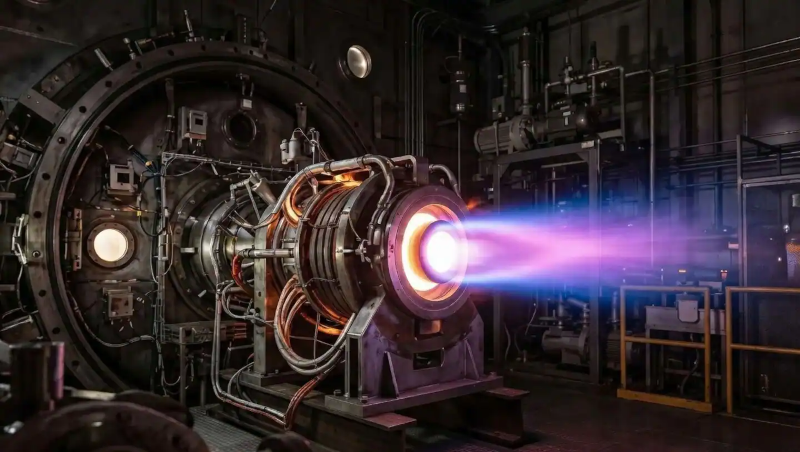
On February 24, 2026, inside a specialized vacuum chamber at NASA’s Jet Propulsion Laboratory in Pasadena, California, a team of engineers and scientists ignited a prototype thruster that had been more than two and a half years in development. The device, a lithium-fed magnetoplasmadynamic thruster, produced a plasma plume that glowed incandescent red as it pushed against the simulated void of space. Over five separate ignitions, the thruster operated at power levels reaching 120 kilowatts, exceeding by more than 25 times the power output of the highest-performance electric thrusters currently operating on any NASA spacecraft. The test marked the first time in the United States that an electric propulsion system had operated at power levels this high, representing a step change in the technology readiness of systems needed to send humans to Mars.

Electric propulsion differs fundamentally from the chemical rockets that have powered virtually every human spaceflight to date. Chemical rockets achieve high thrust by burning fuel and oxidizer in a combustion chamber, expelling the resulting gases at high velocity through a nozzle. The energy comes from the chemical reaction itself. Electric propulsion instead uses external energy sources, typically solar panels or nuclear reactors, to accelerate a propellant to velocities far exceeding those achievable chemically, albeit at much lower thrust levels. The tradeoff enables spacecraft to use propellant far more efficiently. NASA’s Psyche spacecraft, currently operating its solar-electric propulsion system on a journey to the main-belt asteroid of the same name, uses approximately 90 percent less propellant per unit of thrust than an equivalent chemical system would require.

The magnetoplasmadynamic thruster tested at JPL pushes this principle further by relying on electromagnetic acceleration rather than electrostatic forces. A high electrical current passes through the lithium plasma, interacting with the self-generated magnetic field to produce a Lorentz force that accelerates the plasma out of the thruster’s nozzle. The lithium metal, chosen because it vaporizes at manageable temperatures and has a low atomic mass suitable for high exhaust velocities, serves as the propellant. The system requires extraordinarily high power to generate meaningful thrust, which is why the 120-kilowatt demonstration represents a meaningful milestone.

James Polk, a senior research scientist at JPL who has worked on lithium-fed MPD thrusters since the 1990s, observed the first firing through a small viewport in the eight-meter-long water-cooled vacuum chamber. The tungsten electrode at the center of the thruster glowed white-hot, reaching temperatures above 5,000 degrees Fahrenheit. “We not only showed the thruster works, but we also hit the power levels we were targeting,” Polk said in a JPL statement. The test provided data on electrode erosion, thermal management, and plasma stability that will inform the next round of engineering development.

The long-term goal of NASA’s Space Nuclear Propulsion project, which funds the MPD thruster work through the Space Technology Mission Directorate, is to develop thruster systems capable of operating at 500 kilowatts to one megawatt per unit. A crewed Mars mission would require two to four megawatts of electric propulsion power, meaning multiple thrusters operating in concert. The system would need to run for more than 23,000 hours over the course of a Mars mission, exposing components to the extreme temperatures and particle bombardment that such operation entails. Proving that hardware can survive these conditions is the central challenge facing the program.

The 120-kilowatt test at JPL falls well short of megawatt-class operation, but it establishes the foundational physics and engineering that later systems will build upon. The CoMeT vacuum facility, formally the Condensable Metal Propellant vacuum facility, is a unique national asset capable of testing metal-vapor thrusters at power levels up to megawatt-class. The facility’s ability to safely contain lithium metal vapor in a vacuum environment is essential to the program, as lithium is highly reactive and requires specialized handling procedures that differ from those of conventional electric propulsion propellants like xenon.

NASA Administrator Jared Isaacman, who has overseen a significant expansion of the agency’s technology development portfolio since taking office, characterized the test as evidence that the agency is maintaining its commitment to Mars even as current missions capture public attention. “This marks the first time in the United States that an electric propulsion system has operated at power levels this high,” Isaacman said. “We will continue to make strategic investments that will propel that next giant leap.” The remarks reflect an acknowledgment that crewed Mars missions remain decades away in capability terms, even as the political rhetoric around them intensifies.

The development of high-power electric propulsion for Mars has been a stated objective of NASA’s human exploration program for years, but progress has been uneven. The Psyche mission, launched in October 2023, validated solar-electric propulsion at the power levels needed for deep space missions but used xenon as its propellant rather than lithium. Xenon is heavier than lithium and cannot be stored as densely, making it less suitable for the high-throughput, long-duration missions that Mars architectures envision. The lithium-fed approach addresses the propellant storage and performance issues but introduces new engineering challenges related to material compatibility and thermal management that the current test program is working to resolve.

The broader architecture for Mars exploration that NASA has discussed involves nuclear electric propulsion, in which a fission reactor provides the electrical power needed to run multiple high-power thrusters simultaneously. This approach differs from chemical propulsion systems in that the reactor provides continuous power generation over months or years of operation, while the thrusters convert that power into incremental velocity changes that add up over time. The resulting trajectories to Mars are slower than those achievable with chemical propulsion but consume far less mass in propellant, potentially enabling spacecraft with large crew habitats and cargo to reach Mars without the mass penalties that chemical systems would impose.

Magnetoplasmadynamic thrusters operate on principles derived from plasma physics and electromagnetic theory. When an electrical current flows through a plasma, the moving charges generate a magnetic field that surrounds the current path. That magnetic field interacts with the current itself, producing a Lorentz force that acts on the charged particles in the plasma. In a self-field MPD thruster, the current flows from an electrode at the thruster’s center through the plasma to an outer electrode, and the magnetic field generated by that current drives the plasma toward the exhaust end of the device.

The thrust produced by the thruster scales with the square of the current and inversely with the distance between electrodes. This relationship means that achieving high thrust requires either very high currents or very small electrode gaps, both of which present engineering challenges. As current increases, the electrodes experience greater resistive heating and erosion from ion bombardment. The electrode gap cannot be made arbitrarily small without restricting the flow of propellant through the thruster.

The lithium propellant enters the system as a solid or liquid metal that is vaporized before entering the discharge chamber. The vapor is introduced near the electrodes, where it is ionized by the high current flowing through the plasma. The resulting lithium ions and electrons constitute the conducting medium through which the electromagnetic acceleration occurs. The choice of lithium over other propellants like xenon or argon reflects its low ionization potential, which reduces the energy required to create the plasma, and its low atomic mass, which means that each ion carries less momentum for a given kinetic energy but the exhaust velocity can be made higher.

The efficiency of an MPD thruster depends on how effectively the electrical power is converted into kinetic energy of the exhaust plume rather than being lost to heat, radiation, or electrode erosion. At the power levels demonstrated in February 2026, the thruster achieved efficiencies that justify continued development but fall short of the performance projections for megawatt-class systems. The difference arises because electrode processes, plasma instabilities, and boundary layer effects that are manageable at lower power become more significant at higher power densities.


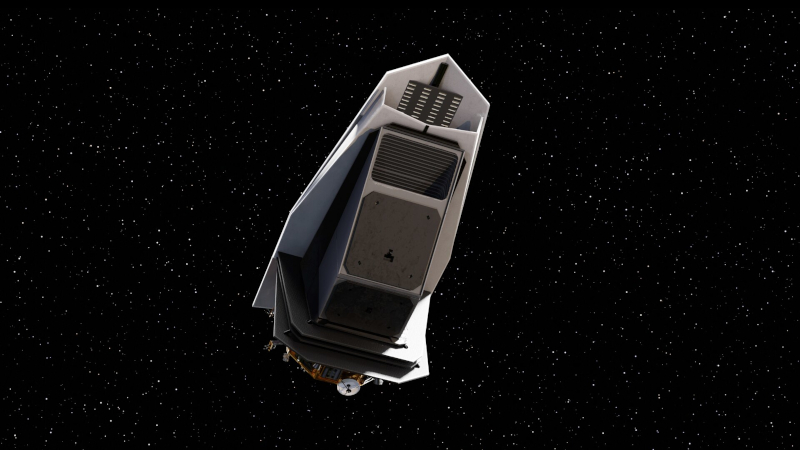
At a facility in Logan, Utah, engineers and scientists are assembling a spacecraft designed for a specific and increasingly important purpose: finding potentially hazardous objects before they find Earth. NEO Surveyor, NASA’s first space telescope built specifically for planetary defense, has now entered integration and testing at Utah State University’s Space Dynamics Laboratory. With a launch targeted no earlier than September 2027, the mission is transitioning from design and subsystem development into full spacecraft assembly and operational validation.

The mission addresses a well-defined problem in planetary science and risk management. Near-Earth objects, or NEOs, are asteroids and comets whose orbits bring them close to Earth’s orbital path around the Sun. Most are harmless, but some are large enough that an impact could produce severe regional or global consequences. The challenge is not only detecting these objects, but accurately determining their size, composition, trajectory, and long-term orbital evolution.

Traditional asteroid surveys rely heavily on visible-light telescopes. These systems detect sunlight reflected from an object’s surface. While effective, visible-light observations introduce ambiguity because brightness depends on both size and reflectivity. A small, highly reflective asteroid can appear similar to a much larger, darker one. This uncertainty complicates risk assessment.

NEO Surveyor approaches the problem differently by observing in the infrared. Instead of measuring reflected sunlight, the telescope measures thermal radiation emitted by objects themselves. Every object with a temperature above absolute zero emits infrared energy, and the intensity of that radiation depends strongly on the object’s size and temperature. By observing thermal emission directly, astronomers can estimate asteroid size with much greater accuracy than visible-light observations alone allow.

The spacecraft uses two heat-sensitive infrared imaging channels optimized for detecting and characterizing NEOs. These detectors operate at wavelengths where asteroids emit strongly after being heated by sunlight. The engineering challenge is substantial because infrared instruments are extremely sensitive to heat generated by the spacecraft itself. Any excess thermal emission from onboard systems can overwhelm faint asteroid signals.

To address this, NEO Surveyor incorporates a carefully designed thermal architecture. Passive cooling systems, including sunshields and radiative surfaces, help maintain the telescope and detectors at low temperatures. The observatory’s orientation relative to the Sun is tightly controlled to minimize thermal loading. This thermal stability is critical for detector sensitivity and calibration consistency over the mission lifetime.

The mission’s observing location also plays an important role. NEO Surveyor is expected to operate near the Sun-Earth L1 Lagrange point, a gravitationally stable region approximately 1.5 million kilometers from Earth toward the Sun. From this location, the telescope can maintain a continuous view of space near Earth’s orbit while operating in a thermally stable environment. The vantage point also allows the observatory to detect objects approaching from directions difficult to observe from Earth-based telescopes, particularly those coming from the daytime side of the sky.

The science objectives are directly tied to NASA’s planetary defense strategy. During its five-year baseline mission, NEO Surveyor aims to detect at least two-thirds of near-Earth objects larger than approximately 460 feet, or 140 meters, in diameter. Objects of this scale are considered capable of causing major regional damage in the event of an impact. Identifying and tracking them significantly improves Earth’s preparedness and response options.

Detection alone, however, is only part of the mission. The infrared data collected by NEO Surveyor will also help characterize asteroid composition and physical properties. By measuring thermal behavior over time, scientists can infer surface characteristics such as roughness and thermal inertia. Combined with rotational observations, these measurements provide insight into shape, spin state, and internal structure.

This information is scientifically valuable beyond planetary defense. Asteroids are remnants of the early Solar System, preserving material from the era of planetary formation. Their compositions reveal details about the distribution of minerals, volatiles, and organic compounds billions of years ago. Understanding asteroid populations also improves models of Solar System dynamics and long-term orbital evolution.

The engineering effort behind NEO Surveyor extends beyond the spacecraft itself. The mission will generate extremely large volumes of observational data, requiring advanced processing systems capable of identifying moving objects against dense stellar backgrounds. Software pipelines are being developed to automatically detect candidate NEOs, correlate repeated observations, and calculate preliminary orbits.

This data-processing challenge is significant because asteroids move relative to background stars, often appearing as faint, shifting points of light. Algorithms must distinguish genuine moving objects from detector noise, cosmic ray events, and background artifacts. Once detections are confirmed, orbital determination software calculates trajectories and predicts future positions. These calculations must account for gravitational interactions with planets and subtle non-gravitational effects such as the Yarkovsky effect, where uneven thermal emission gradually alters an asteroid’s orbit over time.

Integration and testing at the Space Dynamics Laboratory represent the stage where these systems begin operating together as a unified observatory. Spacecraft structure, avionics, thermal systems, detectors, and software must all function as an integrated system under simulated launch and space conditions. Environmental testing will expose the observatory to vibration, acoustic loads, vacuum conditions, and thermal extremes to verify readiness for launch and long-duration operation.

Reliability is especially important for a planetary defense mission. NEO Surveyor is intended to operate continuously for years with minimal intervention. Detector calibration, pointing accuracy, onboard data handling, and communication systems must remain stable over extended periods. Even small degradations in sensitivity or pointing precision can affect detection performance for faint objects.

The broader significance of NEO Surveyor lies in its role as infrastructure for planetary defense. Previous asteroid discoveries have largely come from general-purpose astronomical surveys. NEO Surveyor is different because it is purpose-built. Every aspect of the observatory—from wavelength selection to orbital placement—is optimized for detecting hazardous objects efficiently and systematically.

This represents a maturation of planetary defense from a research activity into an operational capability. Instead of relying on incidental discoveries, the mission establishes a dedicated system for identifying and tracking threats. The earlier a hazardous object is detected, the more response options become available, ranging from evacuation planning to potential deflection missions.

As assembly and testing continue toward launch readiness, NEO Surveyor is moving closer to becoming a permanent observational asset for Earth. Its task is straightforward in concept but demanding in execution: continuously scan the Solar System for objects that could one day intersect our planet’s path.

In practical terms, the mission is about measurement and detection. In strategic terms, it is about reducing uncertainty. By expanding humanity’s ability to identify and characterize near-Earth objects, NEO Surveyor strengthens the scientific and technical foundation of planetary defense while also deepening our understanding of the Solar System’s small-body population.


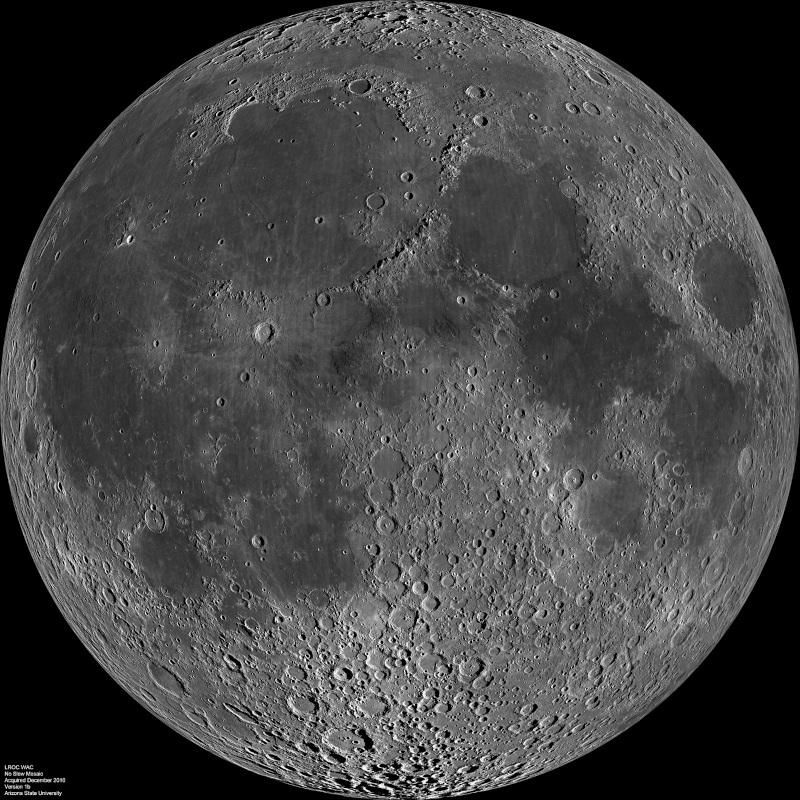
On April 27, 2026, NASA filed paperwork indicating it would increase the maximum value of its Commercial Lunar Payload Services contract from $2.6 billion to $4.2 billion, a move that reflects ambitions laid out in March at an agency event called Ignition, where officials described plans to establish what they simply called a Moon Base and dramatically increase the cadence of robotic landings on the lunar surface. The filing, posted on the System for Award Management, signals that NASA expects to purchase substantially more lunar lander missions over the next two years than the current contract structure was designed to accommodate.

The CLPS program currently lists 13 companies eligible to compete for task orders delivering scientific instruments and technology demonstrations to the Moon. Task orders awarded to date total less than $2 billion, and with the program averaging roughly two awards per year, the original ceiling would not have been reached until 2028. The planned increase to $4.2 billion suggests NASA intends to accelerate that pace considerably, buying missions at a rate that would support the lunar base construction schedule officials described at Ignition.

That schedule calls for nine lunar landings in 2027 and ten in 2028, a dramatic leap from the current flight rate. In 2025, NASA conducted two CLPS missions: one by Firefly Aerospace and another by Intuitive Machines. For 2026, the agency projects up to four lander missions, though internal charts shown at the Ignition event displayed only two projected landings for the year. The gap between the published projection of four and the Ignition chart showing two reflects the uncertainty that industry observers have noted about whether the supply chain and manufacturing capacity can support the proposed cadence.

Speaking at the Lunar Surface Innovation Consortium spring meeting on April 29, Joel Kearns, deputy associate administrator for exploration in NASA’s Science Mission Directorate, acknowledged the agency’s intention to buy more missions. We are looking into opportunities to buy into that ramp of demand for the very short term even as we work on issuing the CLPS 2.0 contract competition, he said. The agency needs to start ramping now into this higher cadence, with a target of monthly landings, to bring some of the things to the surface very, very soon for Moon Base.

The companies vying for CLPS task orders have been expanding their manufacturing capacity in response to the signals from NASA. Firefly Aerospace has three Blue Ghost landers in production, numbered 2, 3, and 4, and has built out additional clean room space capable of supporting eight spacecraft simultaneously. Blue Origin is completing thermal vacuum testing of its first Blue Moon Mark 1 lander, named Endurance, at its Florida factory, and is already manufacturing components for a second Mark 1 to be used for NASA’s VIPER rover in 2027. The company’s Lunar Plant 1 facility spans 190,000 square feet dedicated to lunar lander production.

Astrobotic, which experienced a failure with its first Peregrine lander in January 2024, has scaled its facilities for multiple concurrent lander builds. Intuitive Machines, which has completed three CLPS missions including one that landed successfully in February 2024 and another that tipped over on its side, is working to standardize its lander designs as production rates increase. The company received the IM-5 task order at the Ignition event, with a launch projected for 2030, the same year the company was selected for a south polar landing mission.

One of the central questions about the accelerated cadence is whether the supply chain for lander components can keep pace. Representatives from the CLPS companies noted during the April 29 panel that early landers were essentially bespoke, modified for each mission’s specific payload requirements. Standardization would allow build-to-print manufacturing at higher rates, reducing cost and increasing throughput. The industry response to NASA’s call has been cautious but willing. We have heard the call. We know this is NASA’s initiative, and we want to do more and more, said Farah Zuberi, director of spacecraft mission management at Firefly. Having that signal is really important. We know that this is coming. We can set ourselves up for success.

The Moon Base concept as presented at Ignition represents a shift from NASA’s earlier approach, which emphasized the Gateway, a small space station in lunar orbit that was to serve as a staging point for surface missions. NASA has paused work on the Gateway to focus on surface infrastructure, a decision that affects international partners including the European Space Agency and Japan’s JAXA, which had been developing components for the orbital outpost. The rescaling of plans does not eliminate the need for lunar communication and navigation infrastructure, but it changes the sequence in which capabilities are delivered to the surface.

Scaling lander production from one or two vehicles per year to monthly landings requires changes throughout the manufacturing process. A lunar lander contains thousands of components sourced from dozens of suppliers, and each component must meet the reliability standards that NASA imposes for missions to the Moon. The challenge is not merely assembling more vehicles; it is maintaining quality and traceability across a higher production volume while reducing the per-unit cost enough to make the business case work.

One approach companies are adopting is modular design, where the lander bus remains largely constant across missions while payload accommodation is standardized through interface control documents. This allows the same structural frame, propulsion system, and thermal control to be manufactured in larger batches, improving quality control and reducing the engineering time spent on each individual vehicle. The payload interface, which historically required custom work for each mission’s instruments, is being standardized to the point where a new payload can be integrated without modifying the lander’s core systems.

The supply chain for propulsion components is one of the limiting factors in lander production. Thrusters, valves, propellant tanks, and associated electronics each require precision manufacturing and testing that cannot be accelerated arbitrarily. Companies are responding by qualifying multiple suppliers for critical components, bringing assembly in-house for subsystems where external vendors create bottlenecks, and building inventory of long-lead items in advance of mission awards. These strategies reduce the manufacturing timeline but introduce cost and risk that smaller production runs do not bear.

Testing protocols for landers also require adaptation. A spacecraft destined for the lunar surface must survive the vibration of launch, the vacuum of space, the thermal environment of lunar orbit, and the descent to the surface. Each test requires facilities, equipment, and time that scale with production volume. Companies are investing in additional thermal vacuum chambers and vibration test stands to handle the higher throughput, but the facility investment is substantial and must be justified by a production rate that may not materialize if NASA adjusts its acquisition strategy.