The Carnival of Space #75 is hosted this week at the Lounge of the Lab Lemming.
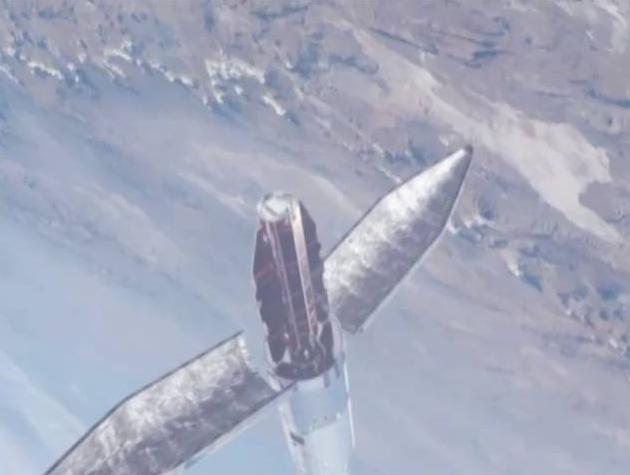
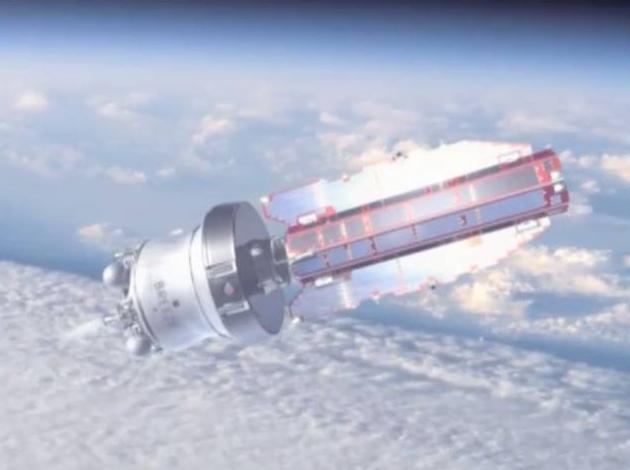
OrbitalHub is hosted under the second carnival tent and is presenting ESA’s GOCE spacecraft. We hope you will enjoy reading our submission to this week’s space carnival.
The Carnival of Space #75 is hosted this week at the Lounge of the Lab Lemming.
OrbitalHub is hosted under the second carnival tent and is presenting ESA’s GOCE spacecraft. We hope you will enjoy reading our submission to this week’s space carnival.
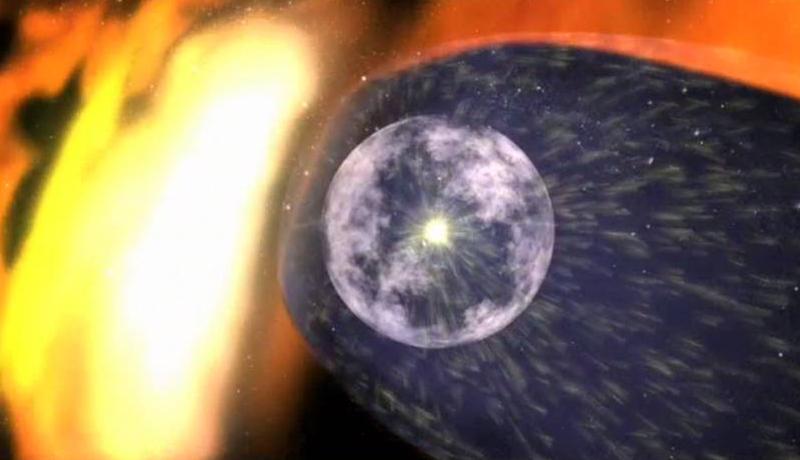
The solar wind generated by our Sun carves out a protective bubble around the solar system, called the heliosphere. The interstellar medium, consisting of the gas and the dust found between the galaxies, interacts with the solar wind and defines the actual boundary, which is called the termination shock.
NASA has designed a mission to map the boundary of the solar system. The mission is called IBEX (Interstellar Boundary Explorer) and it is ready to launch. The data collected by IBEX will allow scientists to understand the interaction between our Sun and the galaxy for the first time. Understanding this interaction will help us protect future astronauts from the danger of galactic cosmic rays.
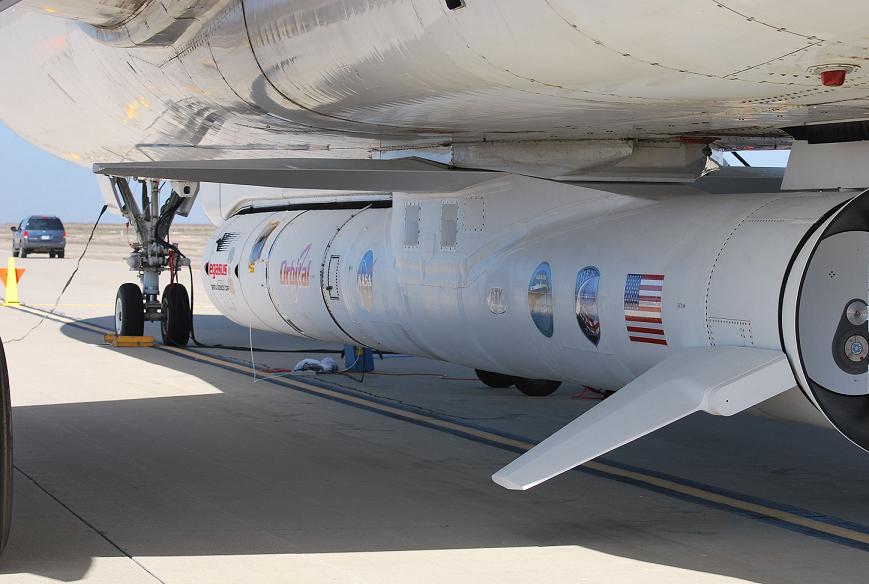
In January 2005, the Orbital Science Corporation was selected to develop, build, and launch a small spacecraft for NASA’s IBEX mission. The IBEX spacecraft is based on an already existing bus: the MicroStar satellite. IBEX will be launched by a Pegasus XL rocket, which will be dropped from an aircraft flying over the Pacific Ocean.
Pegasus began its commercial career in April 1990, and since then it has launched more than 80 satellites into space.
Pegasus is a three-stage launching system used to deploy small satellites weighing up to 1,000 pounds into Low Earth Orbit (LEO). An aircraft carries Pegasus to an altitude of 40,000 feet.
The rocket is released and free-falls before igniting its engines. It takes roughly ten minutes for Pegasus to deliver a satellite into orbit.
Pegasus will place IBEX into a 130 mile altitude orbit. An extra solid-fueled rocket will boost the spacecraft from the LEO. IBEX’s final orbit will be a highly elliptical orbit with the perigee at an altitude of 7,000 km and the apogee at 236,000 km. IBEX has to operate in this orbit because any interference from the Earth’s magnetosphere would make it impossible to take accurate measurements with the scientific instruments onboard.
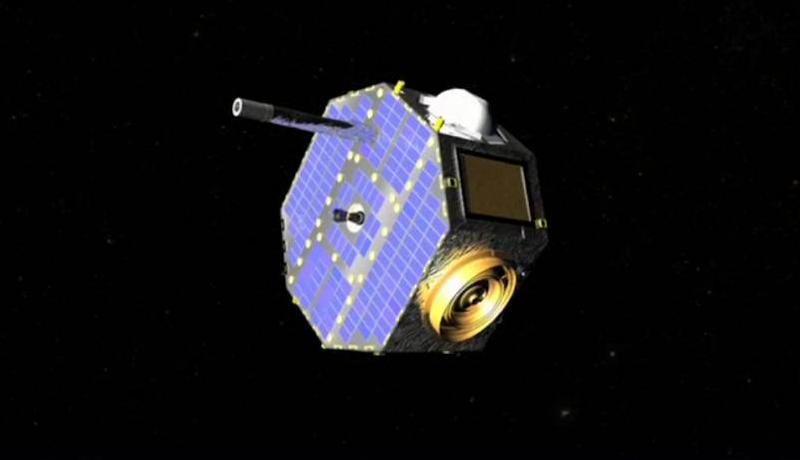
IBEX has a mass of only 83.33 lbs (roughly 38 kg) and is described by NASA as being the size of a bus tire. The instruments onboard IBEX will collect particles called energetic neutral atoms (ENAs). The ENAs are radiated from the termination shock region. The ENA hits recorded by the instruments onboard IBEX will be used to create a map of this region.
The mission is scheduled to launch tomorrow, October 19th, 2008. The spacecraft will be operational for 24 months. You can find out more about the IBEX spacecraft on NASA’s IBEX mission web page.
In the previous two posts in this series, we presented NASA’s Lunar Reconnaissance Orbiter (LRO) and the Chandrayaan-1 mission, which was designed and developed by ISRO. These two missions are typical lunar scouting missions: the spacecraft with onboard remote-sensing instruments will orbit the Moon, collect scientific data, and relay it back to Earth.
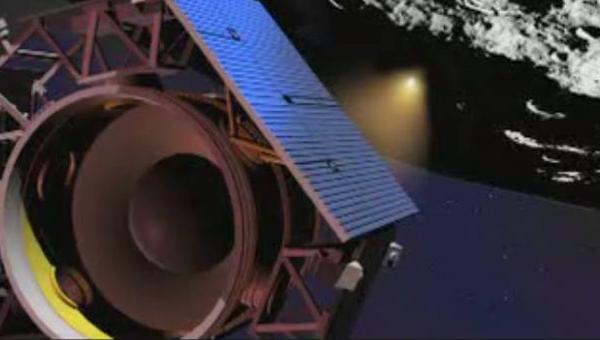
NASA will launch another lunar scouting spacecraft on the same Atlas V rocket with LRO: the Lunar Crater Observation and Sensing Satellite (LCROSS). This mission is not a typical scouting mission and we will see why in this post.
In 1999, a precursor of LRO and LCROSS called the Lunar Prospector detected traces of concentrated hydrogen at the lunar poles. As a result, the LCROSS mission’s main goal is to confirm the presence or absence of water in a permanently shadowed crater near a lunar polar region. At the present time, landing a probe on the lunar surface and performing excavations or drilling would be very expensive. A less expensive solution for the LCROSS mission is to use a kinetic impactor to excavate a crater on the surface of the Moon.
After the launch, LRO will separate from LCROSS, and continue on a solo journey to the Moon. LCROSS will remain attached to the Centaur upper stage of the Atlas V launch system.
While LRO will follow a trajectory that will place it in a polar lunar orbit, LCROSS will execute a flyby of the Moon, and use an elongated Earth orbit to position itself on an impact trajectory. During this time, the LCROSS mission team will perform instrument calibration and corrections for the impact trajectory. The target of the impact will be the lunar south pole.
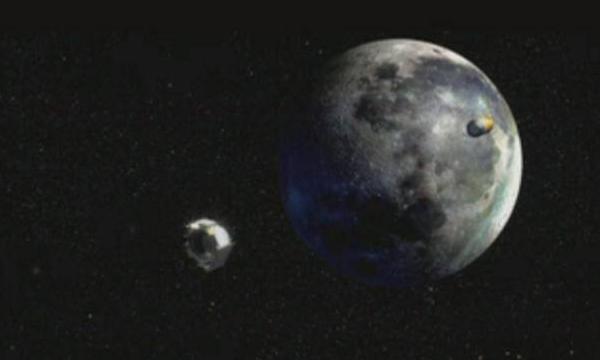
Seven minutes before the impact, LCROSS will separate from Centaur. The Centaur will be used as a kinetic impactor. Having a mass of approximately 2,200 kg, on impact, it will excavate a crater 20 meters wide and 3 meters deep. According to NASA scientists, more than 250 tons of lunar material will be propelled into space.
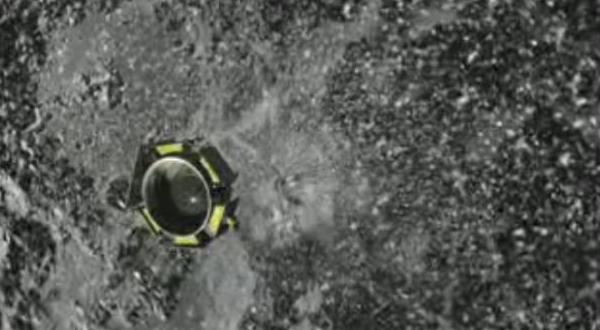
LCROSS will then fly through the debris of the previous impact. The instruments onboard LCROSS will collect scientific data and the spacecraft will relay it back to Earth. LCROSS will end its mission four minutes after the Centaur impact by creating its own impact crater on the lunar surface. The last S in LCROSS should stand for Smasher instead of Satellite considering the final act of the mission!
The scientific instruments onboard LCROSS cover a wide spectrum: two near-infrared spectrometers, a visible light spectrometer, two mid-infrared cameras, two near-infrared cameras, a visible camera, and a visible radiometer. The instruments can detect traces of organics, hydrocarbons, hydrated minerals, water ice, and water vapor. More details about the LCROSS scientific payload can be found on LCROSS mission page.
I wonder to what extent the debris caused by the impact of Centaur and LCROSS will interfere with the scientific instruments onboard LRO and Chandrayaan-1. Both LRO and Chandrayaan-1 will be orbiting the Moon on polar orbits at that time.
ESA is about to launch a satellite capable of measuring very small variations in the Earth’s gravitational field. Even if it is a common-sense assumption that the force of gravity on the surface of the Earth has a constant value, there are subtle variations caused by the rotation of the Earth, the position of the mountains and ocean trenches, and by the variations of the Earth’s inner density. Determining the variations in the Earth’s gravitational field will improve our knowledge of ocean circulation, and will also help to make advances in geodesy and surveying.
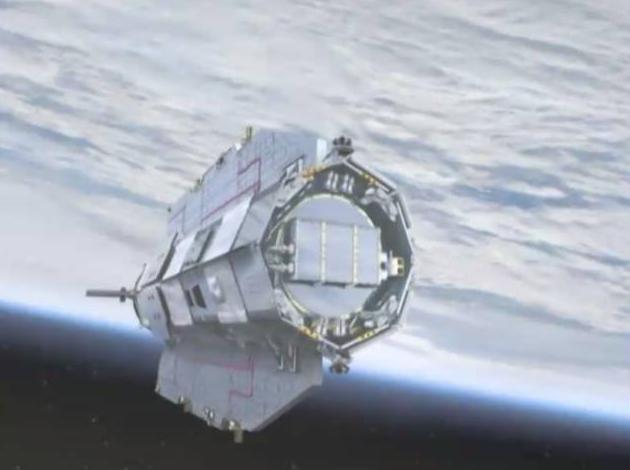
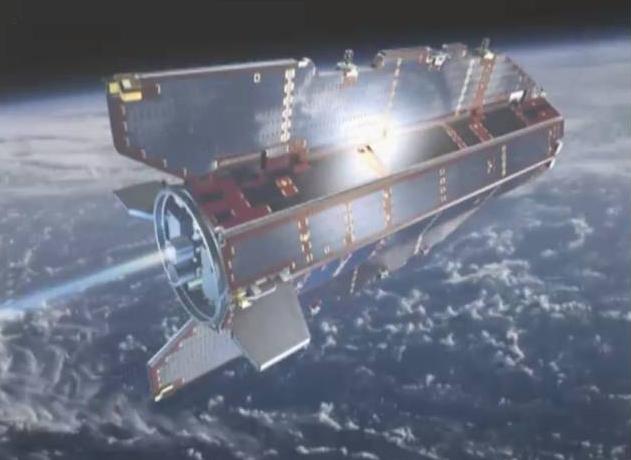
The Gravity field and steady-state Ocean Circulation Explorer (GOCE) satellite will measure the small variations of the gravitational field. GOCE is the most advanced gravity space mission to date. Scientists will build a detailed map of Earth’s gravity using data collected by GOCE.
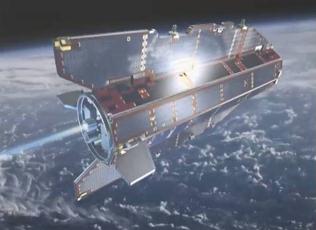
In order to make accurate measurements, the GOCE satellite will orbit in a low altitude orbit, around 250 km above the surface of the Earth.
An elongated shape has been chosen for the satellite design to minimize the atmospheric drag. GOCE is five meters long, one meter in diameter, and has a mass of roughly 1050 kg.
The heart of the GOCE satellite is a scientific instrument called gradiometer. The gradiometer consists of three pairs of accelerometers, and it measures acceleration variations over short distances between proof masses inside the satellite. One important thing to mention here is that the calibration of the gradiometer takes place after launch. The reason? The instrument cannot be calibrated on the ground, under the force of gravity.
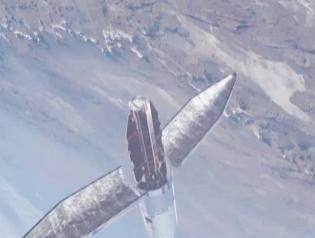
You can find out more about the calibration of the GOCE instrument by reading an interesting article on ESA’s website.
Daniel Lamarre, a Canadian national working at ESA’s European Space Research and Technology Centre (ESTEC), is the inventor and the developer of the method used for the calibration of the instrument. He won an ESA award for developing the calibration method.
The GOCE satellite will be launched from the Plesetsk Cosmodrome in northern Russia. Eurockot Launch Services GmbH, a company that provides commercial launch services with the Rockot launch system, will be the launch provider for the GOCE mission. Eurockot was formed in 1993. EADS Astrium, located in Bremen, Germany, holds 51 percent of the company. The Khrunichev State Research and Production Space Center in Moscow, Russia, owns the remaining 49 percent.
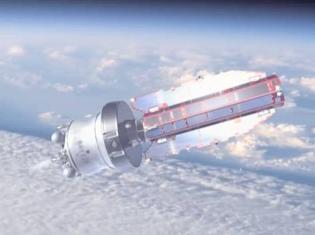
The Rockot launcher is based on the SS-19 Intercontinental Ballistic Missiles. The upper stage of the launch system, Breeze KM, extends the performance capabilities of the Rockot lower stages. The system is capable of injecting a 1950 kg payload into Low Earth Orbit (LEO). The re-ignitable main engine of the Breeze KM allows various injection schemes for the payload. The length of the launch vehicle is 29 meters, with a launch mass of 107 tons. The external diameter of the three stages is 2.5 meters, while the payload fairing has an external diameter of 2.6 meters and a height of 6.7 meters.
The initial launch date was postponed due to an anomaly identified in the guidance and navigation subsystem of the Breeze KM upper stage. The new launch date has been scheduled for Monday, October 27th, 2008.

The Carnival of Space #74 is hosted this week at Kentucky Space. A really good collection this week!
ESA plans to design and build an autonomous lifting and aerodynamically controlled re-entry system. Critical technologies are being tested: instrumentation for aerodynamics and aerothermodynamics, thermal protection and hot-structure solutions, guidance, navigation, and flight control using a combination of jets and aerodynamic flaps. The Intermediate Experimental Vehicle (IXV) will be the European platform for in-flight testing of re-entry technologies.
The design activities are already underway; the development of the spacecraft is scheduled to begin in January 2009.
The mission is planned to launch from the European spaceport at Kourou, French Guiana. In 2012, a new launch vehicle will inject IXV into a low Earth orbit. The small spacecraft will perform a controlled re-entry, its descent slowed by a parachute, and will land in the Pacific Ocean.