
OrbitalHub

Where curiosity reaches escape velocity.

Domain is for sale. $50,000,000.00 USD. Direct any inquiries to contact@orbitalhub.com.

April 2, 2009

NuSTAR And Hard X-Ray Astronomy

Posted by


Credits: NASA/JPL


The Nuclear Spectroscopic Telescope Array (NuSTAR) is a high-energy X-ray space telescope that will expand our understanding of the origins and the development of stars and galaxies.


NuSTAR was proposed to NASA in May 2003. In 2006, while NuSTAR was undergoing an extended feasibility study, NASA cancelled the program due to budgetary constraints. However, in September 2007, the program was restarted.


In 2007, Orbital Sciences Corporation was selected by NASA to design, manufacture, and test the NuSTAR telescope.


The spacecraft is based on a proven design, used by Orbital for other NASA Small Explorer missions: SORGE, GALEX, AIM, and OCO. NuSTAR will have a launch mass of 360 kg, and will be powered by articulated solar arrays providing 600 W.


The spacecraft incorporates a ten-meter long extendable mast. The mast allows the telescope to fit into a small launch vehicle.


The technology used to build the telescope is not new. A team of researchers, led by Dr. Fiona Harrison, professor of physics and astronomy at Caltech, has been improving the NuSTAR technology for the last ten years. A previous high energy X-ray telescope (High Energy Focusing Telescope or HEFT) was developed as part of a high altitude balloon payload.


The currently operational X-ray telescopes, Chandra and XMM-Newton, observe the sky in the low energy X-ray spectrum (X-ray energies less than 10 keV). NuSTAR will make observations in a higher range, up to 79 keV. As much of the energy emitted by a black hole is absorbed by the surrounding gas and dust, observations in the high-energy X-ray spectrum can reveal in greater detail what is happening closer to the event horizon.
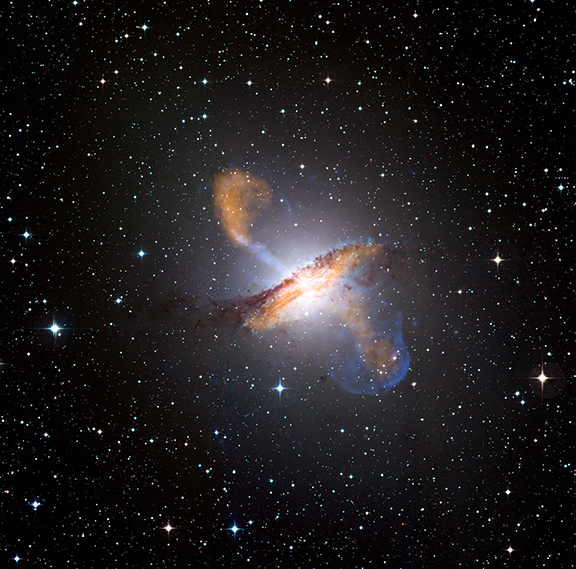
 

Credit: NASA/CXC/CfA/R.Kraft et al./MPIfR/ESO/APEX/A.Weiss et al./ESO/WFI


The NuSTAR telescope will have a sensitivity two orders of magnitude greater than any other instrument used to detect black holes. NuSTAR will help scientists understand how black holes are distributed throughout the universe, and what powers the most active galaxies.


The NuSTAR instrument consists of two co-aligned hard X-ray telescopes. The ten-meter mast mentioned above separates the mirrors and the imaging detectors. The detectors are Cadmium Zinc Telluride (CdZnTe) detectors and do not require cryogenic operation.


On February 9, 2009, NASA awarded Orbital the launch services contract for the NuSTAR mission. The telescope will be launched in 2011 aboard a Pegasus XL launch vehicle. Pegasus XL will be carried beneath a L-1011 aircraft and released over the Pacific Ocean. The air-launch system is very cost-effective, providing flexibility during operation and requiring minimal ground support.


NuSTAR will be deployed into a 525×525 km low Earth orbit (LEO) with a twenty-seven degree inclination.


For more details about the science of NuSTAR, you can visit the mission’s home page at Caltech. Orbital has also posted a NuSTAR fact sheet on their web site.
 

April 2, 2009

Ares I-X Test Flight

Posted by


NASA is close to the first test flight of the Ares I Crew Launch Vehicle. The first flight will be a suborbital flight. The solid rocket booster will have a fifth inert segment, and will carry a dummy second stage above the Atlantic Ocean.


March 30, 2009

ESA Conference On Space Debris

Posted by


Credits: ESA


The Fifth European Conference on Space Debris is hosted by ESA. The conference takes place at ESA’s Space Operations Centre (ESOC) in Darmstadt, Germany, for four days beginning March 30.


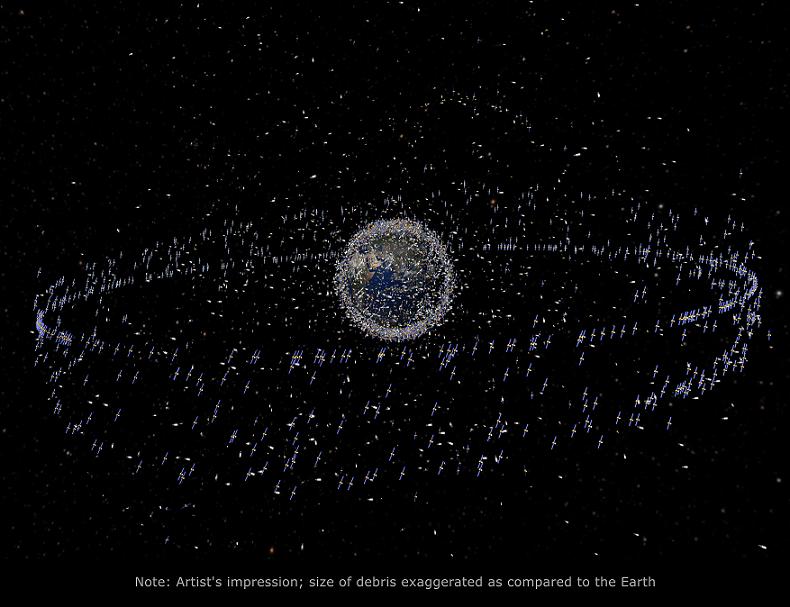
The space debris in Earth orbit has been attracting attention due to the direct threat that it poses to current and future space missions. Long-term protection of the low-Earth and geosynchronous orbital zones is essential for the development of commercial activities in space.


“Our ability to safely use outer space in the long term is not guaranteed,” said Gerard Brachet, a past Chairman of the UN Committee on the Peaceful Uses of Outer Space (UNCOPUOS), speaking during today’s opening speech. He added that: “Increased crowding in low Earth orbits as well as the geostationary orbit creates new challenges.”


The first artificial satellite was launched in 1957 by the Soviet Union. Since then, almost 5000 launches have placed around 6000 satellites into orbit. Today, the 800 operational satellites count for only six percent of the catalogued orbit population. Decommissioned satellites, spent upper stages, mission-related objects, and fragments make up the rest. More than half of the debris originates from around 200 fragmentations that occurred in orbit. Except for few accidental collisions, these fragmentations were explosions of spacecraft and upper stages.


Mitigation measures have to be implemented. Among these, reducing the number of explosions, minimizing the number of objects released during spacecraft operations (also known as mission-related objects or MRO), re-orbiting satellites, and returning spacecraft and rocket stages to Earth after completion of their mission.


The main sponsor of the conference is ESA and co-sponsors are the Italian space agency (ASI), the British National Space Centre (BNSC), the French space agency (CNES), the German Aerospace Center (DLR), the Committee on Space Research (COSPAR), and the International Academy of Astronautics (IAA).


For more details about the conference, you can visit the ESA website.


March 30, 2009

Carnival of Space #96

Posted by


Credits: Orbital


Carnival of Space #96 is hosted by Ian O’Neill at astroENGINE.


Lots of good questions and answers this week. I will borrow a few from Ian… Who was the first woman to travel in space? Can liquid water exist on the surface of Mars? Where are the most energetic particles in the Universe born? You can find the answers at astroENGINE.


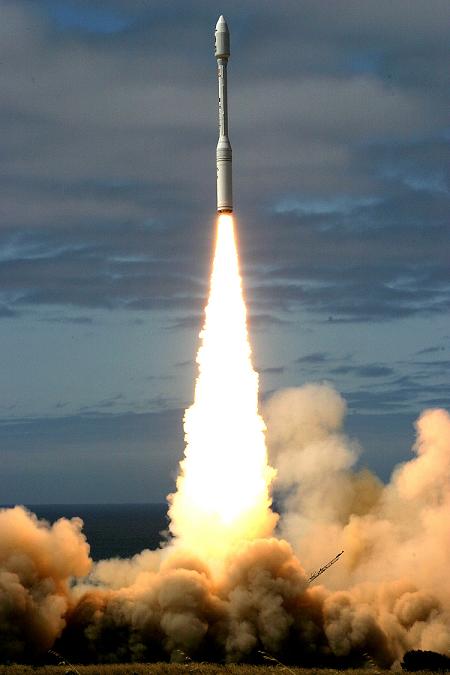
This week, OrbitalHub presents the Taurus launch vehicle. Taurus is a four-stage, inertially guided, all solid fuel, ground launched vehicle, designed and built by Orbital Sciences Corporation. In a typical mission, Taurus can inject a 1,350 kg payload in low Earth orbit (LEO).


March 29, 2009

An Alternative To Constellation

Posted by


DIRECT is an alternative approach to launching missions planned under NASA\’s new mandate: The Vision for Space Exploration (VSE). DIRECT is proposing one single “Jupiter” launch vehicle. “Jupiter” would be able to perform both roles of Ares-I Crew Launch Vehicle (CLV) and Ares-V Cargo Launch Vehicle (CaLV).

Read more about DIRECT…


March 27, 2009

Soyuz TMA-14 Launch

Posted by


Soyuz TMA-14 launched from Baikonur Cosmodrome on March 26, 2009. This is a Soyuz flight to the International Space Station, carrying two members of the Expedition 19 crew (Gennadi Padalka and Michael Barratt) and spaceflight participant Charles Simonyi on his second paying flight to the station.





