OrbitalHub

Where curiosity reaches escape velocity.

Domain is for sale. $50,000,000.00 USD. Direct any inquiries to contact@orbitalhub.com.

November 13, 2009

Programming Robot Controllers

Posted by


In a world dominated by personal computers, there is room left for applications running on microcontrollers. Beginning with home appliances and ending with robotic manipulators used in space missions, microcontrollers are still the optimal choice of many system designers. It seems that in computer-land you do not have to be big, strong, and/or fast in order to be smart… there are even examples of Kalman filter implementations running on microcontrollers.


Today I recommend you a book on programming microcontrollers – Programming Robot Controllers. The book focuses on using microcontrollers for robot control and has the declared goal to provide robot designers with the knowledge and the tools that will help guarantee that his/her robot will perform to expectation and specification and can be easily modified.


Myke Predko, the author, uses the Microchip PICmicro PIC16F627 chip for the example circuits presented in the book. Despite the modest performances of the microcontroller (PIC16F627 is a 18-pin device, providing 1K instruction space and 68 bytes of variable memory, two 8-bit timers, a 16-bit timer, serial communications, and a single-vector interrupt capability), it is very popular for robot applications. Assembly language enthusiasts might be a little bit disappointed because the code examples in the book are written in C. But there is an advantage to that… if you want to port the robot code, the compiler will do most of the work for you.


The author introduces three different spectrums in describing how software is written for robots. Depending on the requirements for the code response/execution speed, the code can be biologic, mechalogic, and elelogic. Don’t bother to look up the last two in the dictionary… they are new terms. In a nutshell, the biologic code makes the high-level decisions providing the high-level intelligence demonstrated by the robot, the mechalogic code controls the mechanical devices built into the robot, and the elelogic code provides intercomputer communications and some interface and output functions.


After an introduction focused on the specifics of software development for microcontrollers and a detailed description of the microcontroller itself, the book presents devices that are external to the microcontroller and how they can be integrated into a general robot architecture: RS-232 interfaces, LEDs, LCDs, IR sensors, sound sensors, motor controllers, odometers, and radio control servos. The author points out that it is easy to build a robot, but it is much more difficult to get it to work properly or as expected. The conclusion is that designing the robot system is an important step of the process.


If you plan to build your own exploration rover, design a micro-satellite bus, or put together a robot manipulator, Programming Robot Controllers is a good book to start with.
 

November 12, 2009

MRM2 docks to the ISS

Posted by


A new component of the International Station, the Mini-Research Module 2 or Poisk (the Russian term for search, seek, and explore), docked to the station on November 12, 2009, at 10:41 AM EST. The new module will serve as docking port for Soyuz and Progress spacecraft and as an airlock for spacewalks, and also provide space for scientific experiments.

Read more about the International Space Station…


November 8, 2009

The Earth Viewed From The ISS

Posted by


Amazing images of Earth….


November 6, 2009

Carnival of Space #127

Posted by


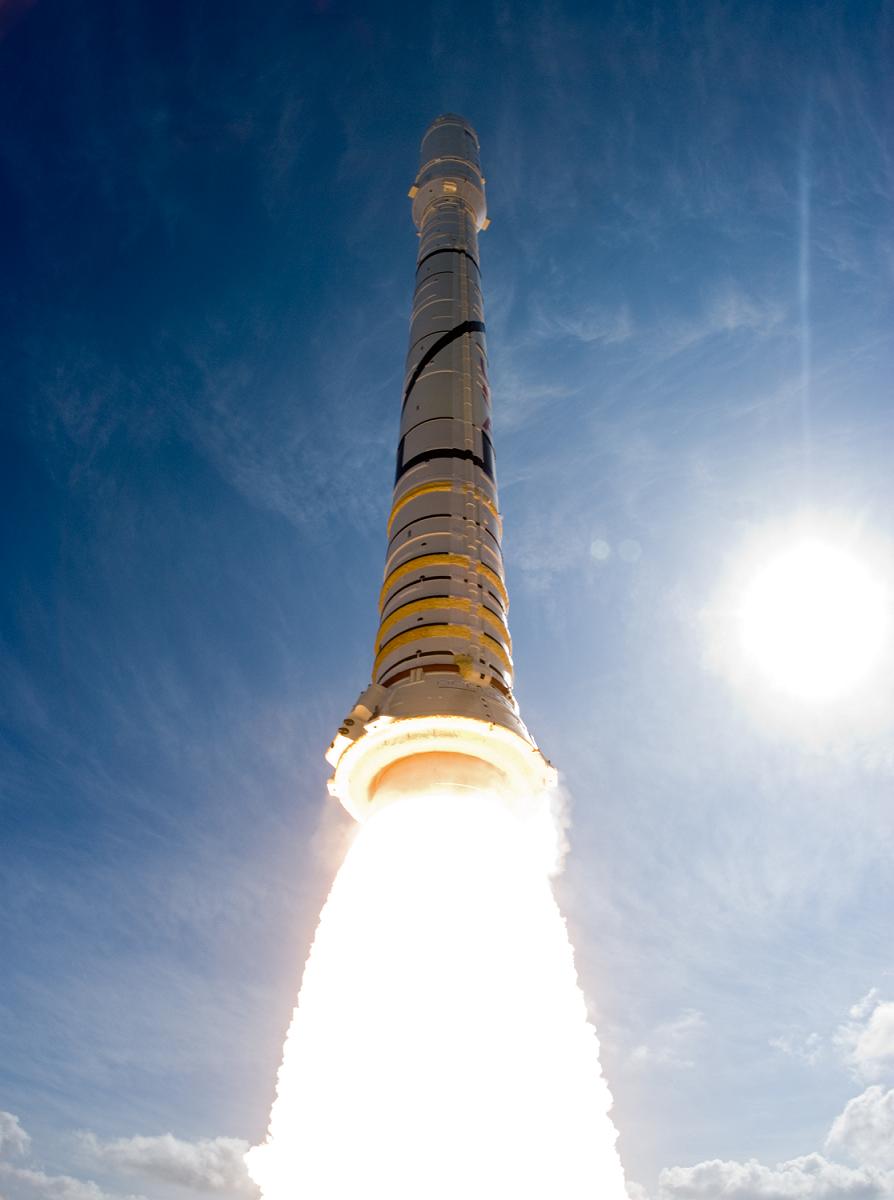
Credits: NASA/Sandra Joseph and Kevin O’Connel


Carnival of Space #127 is hosted by Brian Wang at Next Big Future.


The blog posts cover topics like the Ares I-X flight, NASA’s Institute for Advanced Concepts (NIAC), the Lunar Reconnaissance Orbiter, which is currently orbiting the Moon just 50 km off the surface, the HiRISE view of Phoenix in the Martian spring, armadas of robots exploring distant planets, the Chandra Source Catalog, which was loaded onto Google Sky, the Skylon Spaceplane, EMDrive propulsion system, and much more.


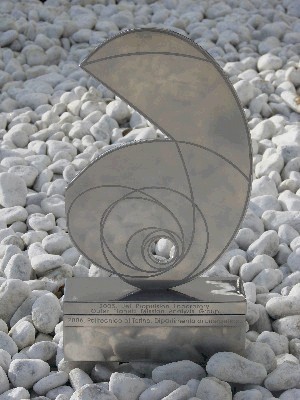
Credits: CNES


Back in January 2009, I announced the 4th Global Trajectory Optimization Competition organized by CNES (Centre National d’Etudes Spatiales).


The purpose of the competition is to stimulate research of techniques for finding the optimal trajectory for different space missions. I came across the GTOC4 competition results and I would like to share them.


A total of 47 teams registered for the competition! The competition problem was disclosed on March 2, 2009, while March 30, 2009, was the deadline for submitting the solutions. In June the presenters were selected and in September 2009 the teams presented their methods and solutions during a one-day workshop held in Toulouse, France.


The problem proposed to the teams this year was called How to maximize the relevance of a rendezvous mission to a given NEA by visiting the largest set of intermediate asteroids.


The formulation of the problem proposed by CNES was


“… let us assume that a spacecraft is launched from the Earth. This spacecraft has to visit (flyby) a maximum number of asteroids (from a given list of NEAs). Finally, it must rendezvous with a last asteroid of that same list within ten years from departure.


The performance index to be maximized is the number of visited asteroids, but when two solutions are associated with the same number of visited NEAs, a secondary performance index has to be maximized: the final mass of the spacecraft.


Moreover, we assume that the spacecraft is equipped with an electric propulsion system and that gravity assists are not allowed during the mission.”


The CNES team mentioned that the proposed problem aimed at fulfilling some important criteria: “the design space is large and leads to an important number of local optima, the problem is complex but in any case it can be solved within the 4-week period allowed for the competition, its formulation is simple enough so that it can be solved by researchers not experienced in astrodynamics, and even if some registered teams have already developed their own optimization tools for interplanetary missions, the problem specificities make it new to all the teams.”


The winner of the GTOC4 competition is Moscow State University, followed closely by The Aerospace Corporation and the Advanced Concepts Team, ESA.


November 3, 2009

Carnival of Space #126

Posted by


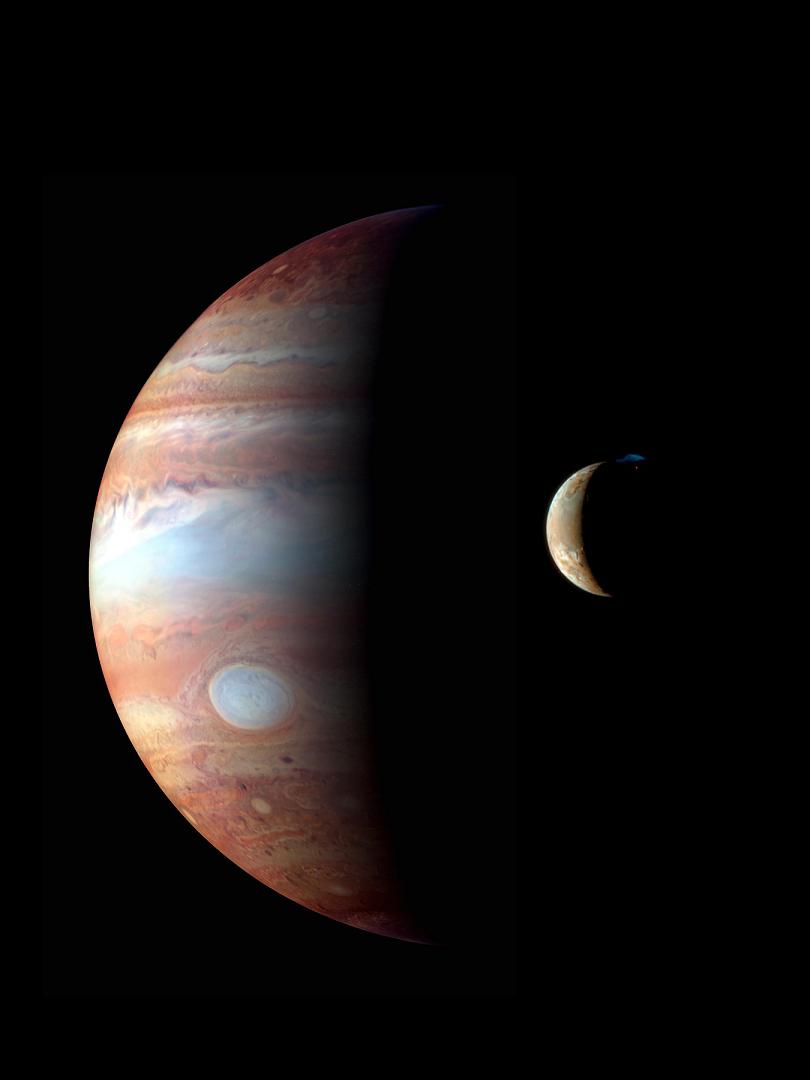
Credits: NASA/JPL


Carnival of Space #126 is hosted by Jason Perry at The Gish Bar Times.


The blog posts cover topics like LCROSS and Kaguya missions, the final report of the Augustine Commission, the potential of moonbases, the Space Elevator Games beaming competition, a new geologic map of the volcano Prometheus on Io, a new visualization of the Chandra Source Catalog, and much more.