


JWST finds that the early universe’s biggest galaxies hide most of their mass in small stars
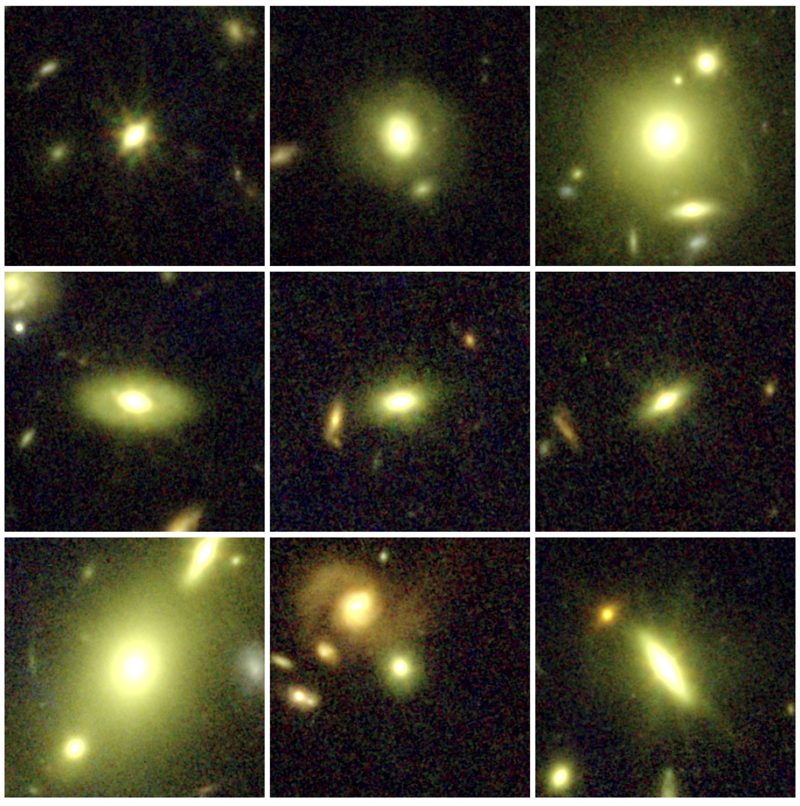
Nine of the most massive galaxies in the nearby young universe have just told astronomers that the way they weigh themselves on paper has been wrong, and the correction makes them three to four times heavier than the previous best estimates. The galaxies sit at redshift z roughly 0.7, so their light left when the universe was about six billion years old, and they have already stopped forming stars in any meaningful quantity. A team led by Chloe Cheng at Leiden University, working inside the JWST-IMFERNO program, used the Near Infrared Spectrograph on the James Webb Space Telescope to take spectra deep enough to pick out the absorption features of low-mass stars in these distant systems for the first time. The result, published in Nature Astronomy on 18 August 2026 as Cheng, Slob, Kriek et al. 2026, is that the most massive early galaxies have a bottom-heavy initial mass function (IMF): they make a much larger fraction of low-mass stars than the Milky Way does. The implication is uncomfortable: the galaxies JWST has been finding “impossibly early” at z greater than 10 are now under even more pressure to have grown absurdly fast.
Astronomers measure the masses of galaxies the way a tax accountant estimates a person’s wealth from a bank statement: by counting the bright signals and assuming the rest scales the way it usually does. For galaxies, the “bright signals” are the few massive stars that dominate a spectrum, and the assumption is the IMF, the relative number of stars of different masses that a population of new stars produces. In the Milky Way and its immediate neighbourhood, the IMF has been calibrated against direct star counts: there is a fixed proportion of stars born above and below one solar mass, and that proportion is consistent across star-forming regions. Apply that same IMF to a distant galaxy and you can convert its total light into a stellar mass.
The problem is that the low-mass stars dominate the mass but barely contribute to the light. In the Milky Way, stars below about 0.7 solar masses make up roughly half the stellar mass but contribute only a few percent of the optical luminosity. Their presence has to be inferred. As the Leiden University press release frames it, “the brightest stars would be the skyscrapers you can immediately see from far away,” and the question has always been how many ordinary houses are hidden behind them.
JWST-IMFERNO answered that question for nine galaxies that finished forming their stars roughly six billion years ago. According to the team’s spectral fits, the two oldest galaxies in the sample carry so many low-mass stars that their true stellar masses are three to four times higher than the Milky-Way-IMF calculation would suggest. Joel Leja at Penn State, a co-author, told the Penn State press office that these systems have “three or four times more mass than we expected.” That correction pushes the most extreme galaxies further into territory galaxy formation models were already failing to reach.
The JWST-IMFERNO program (programme ID 5629, PIs Mariska Kriek, Aliza Beverage and Chloe Cheng) ran NIRSpec micro-shutter-array spectroscopy on May 3, 4 and 25 of 2025, taking extremely deep spectra of nine massive quiescent galaxies selected from the LEGA-C survey. LEGA-C, the Large Early Galaxy Astrophysics Census carried out with the VIMOS spectrograph on ESO’s Very Large Telescope, had already provided optical-wavelength spectra deep enough to measure stellar ages and metallicities for galaxies at z around 0.6 to 1.0. JWST’s NIRSpec extends the wavelength coverage into the near-infrared, where the absorption features that diagnose the low-mass stellar population live.
The sample was chosen to be representative of the most massive quiescent galaxies at that epoch: stellar masses above about 10 to the 11 solar masses, old stellar populations, low specific star formation rates. Cheng, finishing her PhD at Leiden, led the spectral fitting with state-of-the-art stellar population synthesis models. The procedure compares the observed spectrum against a grid of models that vary both the IMF shape and the standard population parameters (age, metallicity, dust). The Milky Way IMF, which has a characteristic mass near 0.2 solar masses and a slope that flattens at the low-mass end, served as the reference. The team found that the data prefer a steeper low-mass slope, in some cases a power-law index that produces many more stars below 0.5 solar masses.
A Space.com writeup by Robert Lea places the result in the broader context of the JWST “impossibly early” galaxy problem, the cluster of papers since 2023 reporting massive quiescent galaxies at z greater than 4 and even z greater than 10. The Cheng et al. result does not make that problem harder directly, because JWST-IMFERNO measured galaxies at z around 0.7, not the higher redshifts where the tension is sharpest. It does make it harder indirectly: if these z equals 0.7 descendants already carry a bottom-heavy IMF, then the IMF in their progenitors at z greater than 4 is likely to have been at least as bottom-heavy, and the stellar masses inferred for those progenitors from a Milky Way IMF would be too low by an even larger factor.
The paper appeared on arXiv on 28 January 2026 and passed peer review at Nature Astronomy in the spring and summer, with publication on 18 August 2026. The Leiden press release appeared the same day; the Penn State and Space.com writeups followed on 21 August, with ScienceDaily and phys.org coverage shortly after.
The technical content sits in three layers. The first is the spectral fitting: distinguishing a low-mass-star-dominated spectrum from a young, dust-reddened one requires very high signal-to-noise ratios and stable models. JWST-IMFERNO’s spectra reach signal-to-noise ratios near 100 per pixel, an order of magnitude deeper than anything previously published for galaxies at this redshift.
The second layer is the IMF parameterisation. The Milky Way IMF can be approximated as a broken power law with a characteristic mass near 0.2 solar masses and a slope that flattens below about 0.5 solar masses. A “bottom-heavy” IMF steepens that low-mass slope, so the same total light budget comes from a much larger number of low-mass stars. The Cheng et al. fits prefer a low-mass slope between roughly 2.5 and 3.0 in the targeted galaxies, versus about 1.3 for the Milky Way. The mass contribution from stars below 0.5 solar masses rises from roughly 30 percent in a Milky Way population to more than half in the bottom-heavy case.
The third layer is what the result does to cosmology. Stellar mass is the primary input to galaxy formation models: how fast galaxies convert gas into stars, how they grow their black holes, how they shut down star formation. If the most massive galaxies at z equals 0.7 are three to four times heavier than previously assumed, their stellar-mass densities are three to four times higher, their star-formation histories had to peak earlier, and the gas reservoirs that fed them had to be correspondingly larger. As the Leiden press release puts it, “models of galaxy formation must now explain how such enormous numbers of stars could have formed so early in the history of the Universe.”
The figure shows the nine JWST-IMFERNO galaxies as a 3-by-3 mosaic. Each panel is a postage stamp of one galaxy, with the characteristic yellow-red colour of an old, massive, quiescent stellar population. The visual sameness is part of the point: these are ordinary ancestors of today’s cluster ellipticals, and they share the bottom-heavy signature.
A single JWST program has now turned the most uncertain part of an extragalactic mass measurement (the contribution of stars too faint to see) from an assumption into a measurement. For nine massive galaxies at z roughly 0.7, the IMF is not the Milky Way’s. The two oldest galaxies in the sample are three to four times heavier than the old calculations said. The next JWST cycles will extend IMFERNO to higher redshifts, fainter galaxies, and galaxies with different star-formation histories. If the bottom-heavy signature persists, the textbook mass functions of early galaxies will be redrawn, and the timeline by which the universe assembled its first massive galaxies will be shorter than any current model predicts.
 Subscribe to our RSS feed









There are no comments.
Add A Comment