


NASA and IBM Open-Source a Foundation Model for the Moon
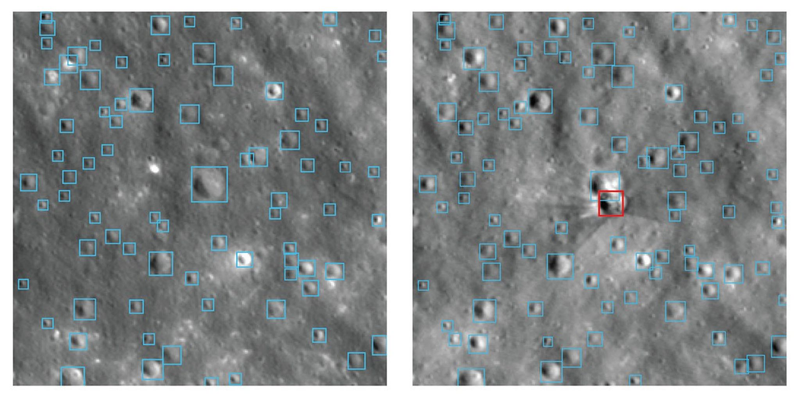
In 2009, the Lunar Reconnaissance Orbiter finished its commissioning burns and started taking the highest-resolution pictures of the Moon anyone had ever made. Seventeen years later, on 10 September 2026, IBM and NASA published a free neural network that reads those pictures better than anything before it. The NASA-IBM Lunar Foundation Model, released under Apache 2.0 on Hugging Face, identifies lunar ice with 22 percent less error than the strongest dedicated algorithm, maps craters 19 percent more accurately at coarse resolution using half the labelled data, and traces volcanic deposits about 3 percent more cleanly with less fine-tuning (NASA Science and IBM Research, 10 September 2026). For the first time, planetary science has a single foundation model built specifically for Earth’s oldest companion.
The work matters because the next humans on the Moon are scheduled to land somewhere most maps refuse to draw. The Artemis program targets the lunar south pole, a region ringed by permanently shadowed regions — craters so deep that the Sun never rises more than a few degrees above their rims. Floor temperatures there bottom out near 40 kelvin, cold enough that water molecules arriving on the solar wind or from cometary impacts can survive for billions of years instead of sublimating away (Vasavada et al., Icarus, 1999). NASA estimates that the lunar north pole alone may hold roughly 600 million metric tons of water ice, enough to fill at least 240,000 Olympic swimming pools; the south pole is expected to hold comparable reserves (IBM Research, 10 September 2026). Ice is propellant, drinking water, and oxygen in waiting. Every kilogram of hydrogen and oxygen a crew can mine on the surface is a kilogram a Falcon Heavy does not have to lift off Earth. The economic case for Artemis depends on how cleanly geologists can rank those PSRs before a lander commits to one.
What the new model solves is a different problem that has quietly paralyzed the field: data fragmentation. LRO has produced more raw imaging data than every other NASA planetary mission combined (NASA Science, 10 September 2026). Some of it is camera imagery at one-meter-per-pixel ground sampling in seven spectral bands. GRAIL, in 2012, mapped the gravity field at roughly 20 kilometers per pixel — the shape of the interior rather than the surface. Japan’s SELENE (Kaguya) orbiter layered in mineralogical maps and laser altimetry. For sixty years, lunar science has lived in a stack of incompatible file formats. Combining them was a graduate student’s summer project, repeated for every paper.
The Foundation Model replaces that summer project with one download. IBM and NASA call the accompanying release SomBench, the first open-source, machine-learning-ready unified lunar dataset (Hugging Face, NASA-IBM-Lunar-Foundation-Model, 2026). SomBench aggregates more than 30 spatially aligned data layers from nine instruments across four missions — principally LRO and GRAIL plus complementary observations from SELENE — into roughly two million co-registered image tiles (CNET, 10 September 2026). The training corpus itself exceeds one million high-resolution images at one-meter resolution and close to 964,000 multispectral tiles at 100-meter resolution (NASA Science, 10 September 2026). Tiles have already been re-projected onto a common grid.
The people behind the release come from a partnership that reaches back to Apollo. IBM and NASA have worked together since the 1960s, when IBM guidance computers flew on Saturn V. Kevin Murphy, NASA’s chief science data officer, said in the joint release: “We also have to make data easier for scientists to explore and use” (NASA Science, 10 September 2026). Campbell Watson, the IBM Research senior manager who led the build, told CNET the team wanted a “shared foundation that researchers can adapt” (CNET, 10 September 2026). Juan Bernabé-Moreno of IBM Research put it as travel advice: “Experienced travelers know to get the lay of the land before setting out for a foreign destination” (IBM Research, 10 September 2026).
The machine-learning choices under the hood explain why the gains are real. The architecture is a Vision Transformer Base encoder-decoder — 768 hidden dimensions, 12 transformer layers, 12 attention heads — adapted from TerraMind, the Earth-observation foundation model IBM had previously built with ESA (Tech Times, 11 September 2026). The transformer self-attention operator at the heart of each block computes pairwise token affinities scaled by 1/sqrt(d_k), with d_k set to 64 in the 12-head configuration; the softmax of those affinities is what lets the network learn which patches of the input relate to which. TerraMind’s special sauce is its cross-modal pretraining, which forces the model to learn correlations between disparate sensor streams, so that a noisy radar channel can be reconstructed by attending to what a multispectral camera saw of the same surface. On the Moon, that trick becomes a way to fill in what the PSRs will not give an optical camera: a thermal map from the Diviner instrument over a shadowed crater can be cross-referenced with a gravity anomaly from GRAIL, and the model learns that combination as a single latent representation rather than two independent ones.
Training was masked-autoencoder pretraining on the full two-million-tile corpus, where the model is asked to reconstruct randomly masked patches and in doing so must learn the statistics of lunar terrain. To prevent the network from memorising a few well-imaged tiles, the team held out distinct geographic “wedges” of the Moon for testing (Time News, 11 September 2026). The technical report lists three downstream gains. For ice detection, the model cut root-mean-square error by up to 22 percent over a SwinV2-B transformer pretrained on ImageNet. For crater detection at 100-meter context, it outperformed the same baseline by nearly 19 percent with half the labelled training tiles; at meter scale it matches state-of-the-art head-to-head. For irregular mare patches — the subtle volcanic features whose ages are reshaping the chronology of lunar cooling — the model improved extent accuracy by about 3 percent at lower fine-tuning cost (NASA-IBM Lunar Foundation Model technical report, Hugging Face, 2026).
The physics gives those percentages meaning. Ice stability inside a PSR depends on local temperature integrated over a full precession cycle and on burial depth below the gardening reach of micrometeorite impacts. A model that has internalised those thermophysical correlations can rank candidate deposits the way a specialist would, across the whole Moon. Crater counts age a surface because the impact flux is approximately known, and a model trained on the full LRO catalogue has absorbed what an impact signature looks like at every illumination angle — critical for a sensor whose parent body has a 29.5-day day-night cycle. Even IMP detection improves because the model has learned that young volcanic features are defined by a bundle of morphological and compositional cues, not by any single texture.
What changes because of this release is the slope of the field. The model is not a substitute for a graduate-level lunar geologist; it lets researchers who previously spent six months pre-processing a single tile bundle ask questions across the whole catalogue in an afternoon. Apache 2.0 means any team — a Chinese lunar university, an Indian student, a Brazilian startup — can build on the same backbone. The Prithvi family IBM and NASA open-sourced for Earth observation will likely pick up a lunar cousin by year’s end, and the codebase sits on GitHub at NASA-IMPACT, where custom fine-tunes for new instruments (Lunar Trailblazer, India’s Chandrayaan follow-ons, China’s Chang’e 7 imaging) can be trained without revisiting the data-integration problem. If the 22 percent lead against SwinV2-B holds once independent teams retrain on their own data, the rest of the 2020s will inherit a Moon that, for the first time, is machine-readable at planetary scale.
 Subscribe to our RSS feed









There are no comments.
Add A Comment