


A sunspot is the last thing to show up. Long before a dark patch breaks through the Sun’s visible surface, the magnetic field that will produce it has already been gathering underneath, and the first reliable hints of its arrival are not in light but in sound. Waves travelling through the Sun’s interior are subtly bent and absorbed as that rising magnetic field pushes through them. Until recently those changes were too small to read reliably. On 14 August 2026, a team led by New Jersey Institute of Technology undergraduate Jonas Tirona reported in the Journal of Geophysical Research: Machine Learning and Computation that a Transformer model they call EarlyDetect can pick out those faint acoustic fingerprints about 9.24 hours before the corresponding sunspots are visible. NASA’s COFFIES team press release confirms the result, and the same paper sits on arXiv as 2601.13144 for those who want to read the full text.
Forecasting storms on Earth usually means watching for the ingredients of a storm and giving people time to react. The same logic is starting to govern space weather, the stream of high-energy radiation and charged particles the Sun sends our way when active regions erupt. Solar flares and coronal mass ejections can disable satellites, disrupt radio communications, and put astronauts at risk, which is why NASA’s Moon to Mars program and NOAA’s Space Weather Prediction Center track every visible sunspot the moment it darkens on the disk. Predicting where and when the next sunspot group will emerge, rather than just classifying one that is already there, has been a long-standing gap in operational forecasting. The current approach relies on human analysts at NOAA and the US Air Force characterizing regions that are already on the disk and estimating their odds of producing a flare. It is reactive by construction. EarlyDetect, if it can be made operationally reliable, would be the first step toward a forecast that announces an active region before it has even arrived.
The team built the model around a sliding-window Transformer architecture, the broad family of neural networks that underpins large language models, and trained it on observations from NASA’s Solar Dynamics Observatory, which has been staring at the Sun continuously since 2010. The Helioseismic and Magnetic Imager aboard SDO records full-disk images at 617.3 nm (the Fe I absorption line) every 45 seconds; from those, the researchers assembled hourly maps of acoustic power over the disk and overlaid them with magnetic field measurements. They then searched for the characteristic dip in acoustic power that happens when a magnetic field rising through the convective zone begins to disturb the normal pattern of solar oscillations. The Transformer, sliding a fixed-size window across a long stream of these hourly maps, picked up the dips and learned to associate them with the appearance of a visible sunspot a few hours later. Once trained, the model was tested against a held-out set of active regions it had never seen. Average lead time was 9.24 hours; the model outperformed both a baseline Transformer and a long short-term memory network that the same group had been developing earlier.
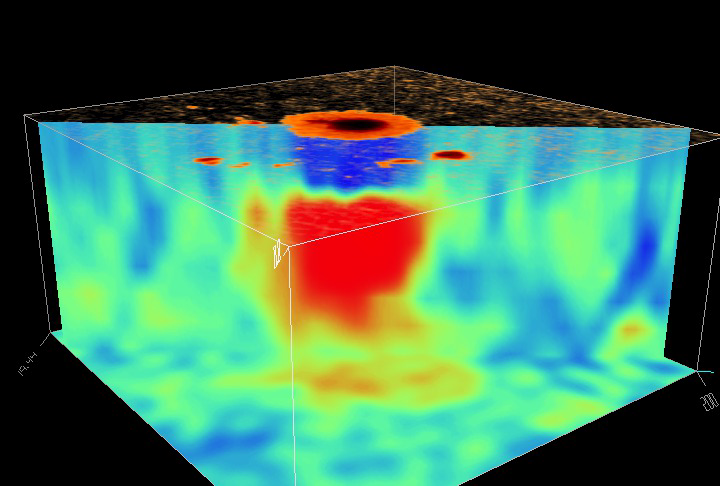
What surprised the team was how much standard preprocessing worked against them. Researchers often smooth acoustic time series to filter out noise and make the underlying trends easier to see, but the cleaned-up signal made the model worse. Tirona and his colleagues Irina N. Kitiashvili at NASA Ames and Alexander G. Kosovichev at NJIT argued in the paper that the temporal smoothing layers averaged away the faintest high-frequency dips the model was supposed to find. The faint signals turned out to be carrying the early warning. Kosovichev compared the effect to hearing a slight change in rhythm within a very noisy orchestra; the louder instruments had to be removed for the quieter beat to count, and Tirona put it more bluntly: noise-cancelling filters, which usually help, were detrimental in almost every case in this specific application. The detection itself relies on an older idea: that the Sun rings like a bell, and you can listen to its hum to learn what is happening inside. Helioseismology, the same field that mapped the rotation of the solar core and the structure of sunspot magnetic fields decades ago, supplies the raw material the Transformer chews on. A helioseismic cutaway of a sunspot’s subsurface structure is visible in the NASA SVS visualization by Kosovichev and colleagues; acoustic waves bounce between the surface and deeper layers of the convection zone, and when a magnetic flux tube pushes up from below, it bends the wave paths and changes how much energy reaches the surface in any given frequency band. Visually, the sunspot at the surface gets all the attention, but the subsurface acoustic distortion has been there for hours, waiting to be read.
The team did not stop at the paper. They released the Solar Active Region Emergence Dataset (SolARED), a curated set of SDO observations of labelled active region emergence events, plus the Solar Active Region Portal at NJIT, an interactive platform for downloading and exploring them. Mengjia Xu, the principal investigator, called SolARED the first public dataset of its kind and positioned it as a shared resource for both the machine learning and heliophysics communities to develop and test new approaches. That kind of release is what turns a single result into a research program. The caveats still matter. Detecting that an active region is about to emerge is not the same as predicting that it will erupt; many active regions, even large ones, never produce a major flare or coronal mass ejection, and the lead time of 9.24 hours is statistical, not deterministic. The paper tested against held-out active regions rather than in real time, so operational performance on live data is still an open question, and the SciTechDaily writeup notes Tirona’s own caution that the model is not yet operational and can still produce false alarms or predictions that arrive too late.
The next milestone is a real-time test. EarlyDetect trained on historical data; running it on the SDO feed as observations arrive, and proving that the 9.24-hour average translates into useful forecasts on individual events, is the open problem. The data and code being public should mean other teams can run that test without waiting for the NJIT group to do it themselves. NASA’s COFFIES program, which funded the work alongside NJIT’s Grace Hopper AI Research Institute, has been working since 2020 to bridge heliophysics theory and the kind of high-cadence data work that machine learning was built for. The 14 August paper is the first concrete demonstration that the bridge can carry weight in both directions.
 Subscribe to our RSS feed









There are no comments.
Add A Comment