


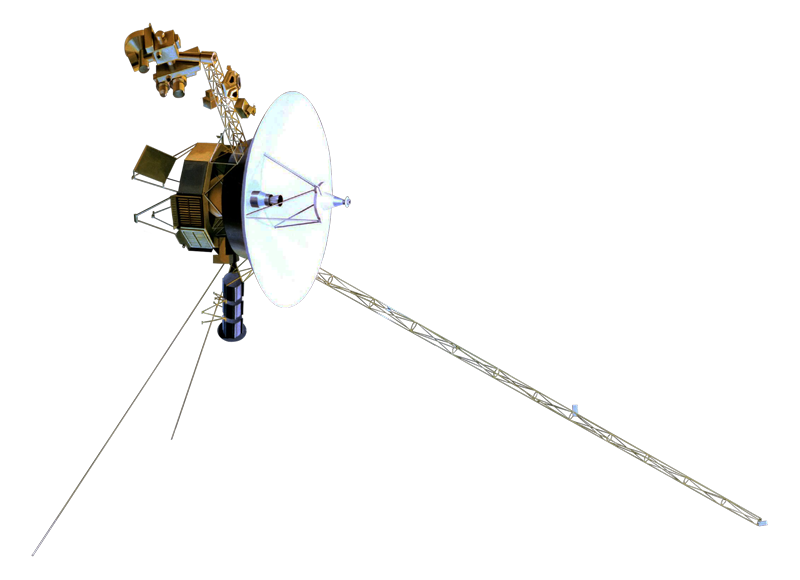
On August 4, 2026, with a single coordinated command sequence, engineers at NASA’s Jet Propulsion Laboratory switched three power-hungry heaters on Voyager 2 for three lower-power substitutes and turned off a redundant device whose residual heat was already doing the job. The maneuver was nicknamed the “Big Bang” by the mission team because it had to be executed in one uninterrupted block: the probe cannot tolerate a half-finished sequence when the new configuration leaves critical fuel lines running on borrowed thermal margins. Forty-eight years after launch, with plutonium steadily depleting inside its three radioisotope thermoelectric generators, Voyager 2 was running on roughly four watts less available power than it had the year before, and the mission was weeks from a forced instrument shutdown. The swap changed that math. The savings should keep all three of Voyager 2’s remaining science instruments returning data from interstellar space for at least another year before the team has to choose which one to power down next.
Voyager 2 crossed the heliopause in November 2018 and is currently the only spacecraft in the solar system making direct in-situ measurements of the plasma, magnetic field, and energetic particle environment beyond the Sun’s magnetic bubble. Voyager 1 crossed the boundary six years earlier, but Voyager 2 is still returning plasma data that Voyager 1 cannot, because Voyager 1’s plasma science instrument failed in 1980 and was never replaced. The two spacecraft together form humanity’s only working sensor network in the local interstellar medium, and every instrument shutdown is permanent. Once powered off, Voyager’s 1970s electronics cannot be brought back. With Voyager 1 already down to two operating instruments after an unexpected February 2025 power drop forced the LECP shutdown in April of that year, losing a third instrument on Voyager 2 would have left the interstellar mission with a thinner, more asymmetric scientific footprint. The Big Bang also matters as an engineering template. Voyager’s power budget is now so thin that similar swaps will be needed every year or two until the RTGs decay below the threshold needed to run any science instruments at all, which NASA estimates will happen sometime in the 2030s. The procedure the JPL team developed for this swap is the same procedure they will repeat on Voyager 1, and likely on both spacecraft multiple more times before the mission ends.
The Voyager 2 swap was first reported by NASA’s Voyager mission blog on August 4, 2026. The Register’s follow-up the next day added the most concrete engineering detail: a NASA spokesperson told the paper that the swap involved “two heaters and a device that was being kept on since its residual heat was in the right location and it used less power than the actual nearby heater.” The trio was replaced with another three components that together still generated enough heat to keep the fuel lines warm, but at lower wattage. Past swaps on the Voyager spacecraft were usually one-for-one. The Big Bang’s innovation was doing three replacements at once and accepting the temporary thermal risk to the fuel lines in exchange for the combined power savings. Voyager 2 carries a single 70-centimeter titanium tank holding about 100 kilograms of hydrazine at launch, used for attitude control and trajectory correction maneuvers; keeping that fuel from freezing in interstellar space is one of the load-bearing thermal jobs on the spacecraft, and it is the constraint that bounds how aggressively JPL can trade heat-generating components for power savings. Voyager 2’s LECP instrument had already been turned off in March 2025; the plasma science instrument was shut down in September 2024; a third instrument on each Voyager has been off since long before that, leaving three on Voyager 2 and two on Voyager 1. Without the Big Bang, NASA confirmed, another Voyager 2 instrument would have had to be switched off before the end of 2026. With the savings from the swap, that decision has been pushed into 2027 at the earliest. JPL plans to run the same swap on Voyager 1 in the coming months. Voyager 1 is currently farther from Earth than Voyager 2, and both probes are still inside the solar system in the strict astronomical sense, even though both are now in the interstellar medium.
The Voyager power budget is governed by three multihundred-watt radioisotope thermoelectric generators, each containing 24 pressed plutonium-238 oxide spheres. At launch in August 1977, the three RTGs together produced about 470 watts of electrical power. The plutonium-238 half-life is 87.7 years, so the electrical output has dropped by roughly a factor of two over the mission’s lifetime. The probes lose about 4 watts of available power per year, and the drop is accelerating slowly as the thermocouple junctions age and the thermal gradient they exploit shrinks. NASA first began drawing on a backup power reservoir in April 2023; without that step, the mission would have lost at least one more instrument sooner. The thermal architecture is what makes the Big Bang clever. Many components on Voyager 2 give off waste heat as a side effect of operating, and several of those components are physically adjacent to fuel lines, propulsion latches, or science instruments that need to stay above their minimum operating temperatures. Replacing a high-power heater with a lower-power one usually means the heat budget has to be rearranged, but if the old heater was already heating something the new heater does not need to heat, the swap can be near-power-neutral. The Big Bang worked because the three devices that were turned off had already been “ghost heating” their neighbors, with the residual heat in the right place. The three replacements are less powerful individually, but together they keep the fuel lines and adjacent subsystems at the required temperature with a net lower draw from the RTGs. The constraint is sequencing. If the swap had been interrupted partway through, the spacecraft would have been left with an underheated fuel line and an instrument bay that was relying on a component that was about to be turned off. JPL engineers therefore treated the Big Bang as a single atomic operation, sent the entire command sequence as one batch, and then waited more than 23 hours for the signal to reach Voyager 2 and another 23 hours for the engineering telemetry to return confirming the new configuration was stable. The same near-24-hour round trip will apply when the team runs the swap on Voyager 1.
Voyager 2 is now expected to keep all three of its remaining science instruments (the magnetometer, the plasma wave subsystem, and the cosmic ray subsystem) returning interstellar data through at least late 2027, with the team planning to run the same Big Bang swap on Voyager 1 within the next several months. The next decision point is whether the LECP instrument that was shut off on Voyager 1 in April 2025 can be brought back online after that swap, which would give Voyager 1 a third working instrument for the first time in roughly a year. Beyond that, the Voyager power budget will continue to tighten by about four watts per year, and JPL will likely need to run a similar coordinated swap every twelve to twenty-four months until the RTGs decay below the threshold needed for any science operation sometime in the 2030s. The Big Bang is not a permanent fix. It is a way of buying one more year of an interstellar science mission that is now forty-eight years past its design life, using only the hardware that is already aboard the spacecraft.
Source: Wikimedia Commons file page.
 Subscribe to our RSS feed









There are no comments.
Add A Comment