


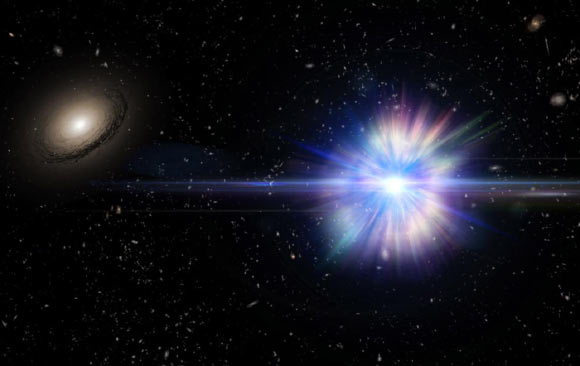
A decade after Type Ia supernovae earned half of the 2011 Nobel Prize in Physics for revealing that the expansion of the universe is accelerating, the same class of explosion is now driving the sharpest empirical challenge yet to the explanation behind that acceleration. In two companion papers posted to arXiv on 2 September 2026, a team led by University of Queensland PhD candidate Ryan Camilleri has stitched together 2,884 Type Ia supernovae drawn from the Pantheon+ and Dark Energy Survey five-year samples into a single, internally consistent compilation called Unite. When Unite is combined with cosmic microwave background and baryon acoustic oscillation data, the best-fit cosmology is no longer one with a constant dark-energy density. It is a flat universe whose dark-energy equation of state evolves with cosmic time, parameterised by today’s value w0 = -0.86 and a running slope wa = -0.60. That combination fits the combined data noticeably better than the cosmological constant, and the second paper reports that the host-galaxy mass corrections that make the sample consistent push the significance for time-evolving dark energy from 3.4 to 4.0 sigma relative to the older Pantheon+ result.
Why this matters is the size of the cosmological constant in the standard model and the conspicuous lack of a physical explanation for it. The standard Lambda-CDM picture of cosmology, described in detail in the Wikipedia dark-energy entry, treats dark energy as a fixed energy density, the cosmological constant, that fills space uniformly and does not change with cosmic time. That assumption has held up against every supernova sample, every galaxy-cluster count, and every CMB map for nearly three decades. It is also the assumption under which the accelerating expansion discovered in 1998 won a Nobel Prize. A growing body of independent probes, including the Dark Energy Spectroscopic Instrument’s measurement of the sound horizon from over six million galaxies and the second data release of the Dark Energy Survey, has begun to show small but coherent deviations from that picture. A w0-wa cosmology, in which the dark-energy density changes with the epoch, was long considered an unlikely complication that would die with more data. The Unite compilation is the first dataset large and internally consistent enough to push that complication past the four-sigma mark by combining supernovae with the CMB and baryon acoustic oscillations, two of the most precise cosmological probes available.
The story behind Unite runs back through the major supernova cosmology programs of the last fifteen years. Pantheon+ is the spectroscopic Hubble diagram assembled by Scolnic and collaborators from the PanSTARRS, Sloan, SNLS, and several earlier samples, totalling roughly 1,500 light curves; it became the workhorse sample for supernova cosmology after the original Pantheon release in 2018. DES-SN5YR is the Dark Energy Survey’s five-year photometric supernova program, which has now grown to be the largest homogeneous sample of Type Ia light curves from a single survey, with around 1,800 light curves of its own. Camilleri’s group combines the two into a single Hubble diagram by reanalysing Pantheon+ with the methodology that DES had already validated on its own data, then running both through the same bias corrections and selection cuts. The combined sample is 2,884 events with a consistent treatment of light-curve shape, colour, and host-galaxy stellar mass, and the team also redetermines host-galaxy stellar masses on a common framework that covers 98% of the sample. The earlier DES analysis of just the DES sample, reported in 2024, had already shown hints of a time-varying dark-energy equation of state. Unite shows the same hint pointing in a slightly different direction, and at a stronger significance when combined with the other probes. As Tamara Davis, the University of Queensland professor who oversaw the work, put it, two independent measurements now point in the same direction, which is what one looks for when the standard model starts to creak.
The deep dive into why supernova systematics matter so much centres on the host-galaxy mass step. Once a Type Ia supernova’s light curve has been standardised by its shape and colour, its peak brightness still depends, at the level of a few hundredths of a magnitude, on the stellar mass of the galaxy that hosted it. Brighter supernovae prefer galaxies with younger stellar populations, while fainter ones tend to land in older, more massive hosts. If that dependence is ignored, the standardised brightness comes out wrong, and the cosmological fit drifts. Earlier work by Vincenzi and collaborators compared the host-mass estimates used in Pantheon+ and DES-SN5YR, and showed that the choice of host-mass measurement alone contributes enough to the standardised magnitudes to flip the supernova-vs-CMB tension on or off. Lee and colleagues re-measure host masses for almost every supernova in Unite using aperture photometry and SED fitting on a single framework. Their masses differ from the values Pantheon+ released, partly because of a redshift-dependent internal inconsistency inside Pantheon+ that the new measurements expose. When the Pantheon+ subset of Unite is combined with baryon acoustic oscillations and the CMB, swapping in the new masses moves the significance for evolving dark energy from 3.4 sigma to 4.0 sigma. The same pair of papers also incorporates gravitational lensing magnification corrections, which slightly blur the standardisation but do not erase the deviation from a constant dark-energy density.
The combination itself is now decisive in a way that earlier work was not. For a flat universe with a constant equation of state, the SN-only fit returns a matter density of Omega_m = 0.310, very close to the standard value. For a flat universe in which the dark-energy equation of state evolves linearly with redshift (the so-called CPL parameterisation), the combined fit to supernovae, the CMB, and BAO returns Omega_m = 0.305, w0 = -0.86, and wa = -0.60, with a dark-energy figure of merit of 315. That value of w0 is less than -1, which means the dark-energy density was higher in the past than it is today. Wa is also negative, which means the dark-energy density is falling faster than the cosmological constant would imply. The combined dataset prefers this picture at the four-sigma level, and the paper’s own figure of merit shows a roughly 30% reduction in the w0-wa confidence region compared with Pantheon+ alone.
The takeaway is that the supernova case for evolving dark energy is now strong enough to be taken seriously, and the question is what kind of evolving. A dark-energy density that decreases with cosmic time is not the same as modified gravity, a quintessence field, or any of the more exotic options the literature considers, but it is no longer the cosmological constant either. The two independent DESI and supernova measurements, one based on sound waves in the early universe and one based on the brightness of stellar explosions in the late universe, now agree on the direction of the deviation, and the supernova side has just gotten both bigger and more internally consistent. The next year or two of data, from the still-pending third year of DES-SN5YR and from the rest of DESI’s first five-year BAO program, will tell whether the deviation grows or shrinks. If it grows, the 2011 textbook picture of dark energy is going to need a rewrite.
 Subscribe to our RSS feed









There are no comments.
Add A Comment