


The Captain Who Made Us Look Up: Remembering Sir Patrick Stewart
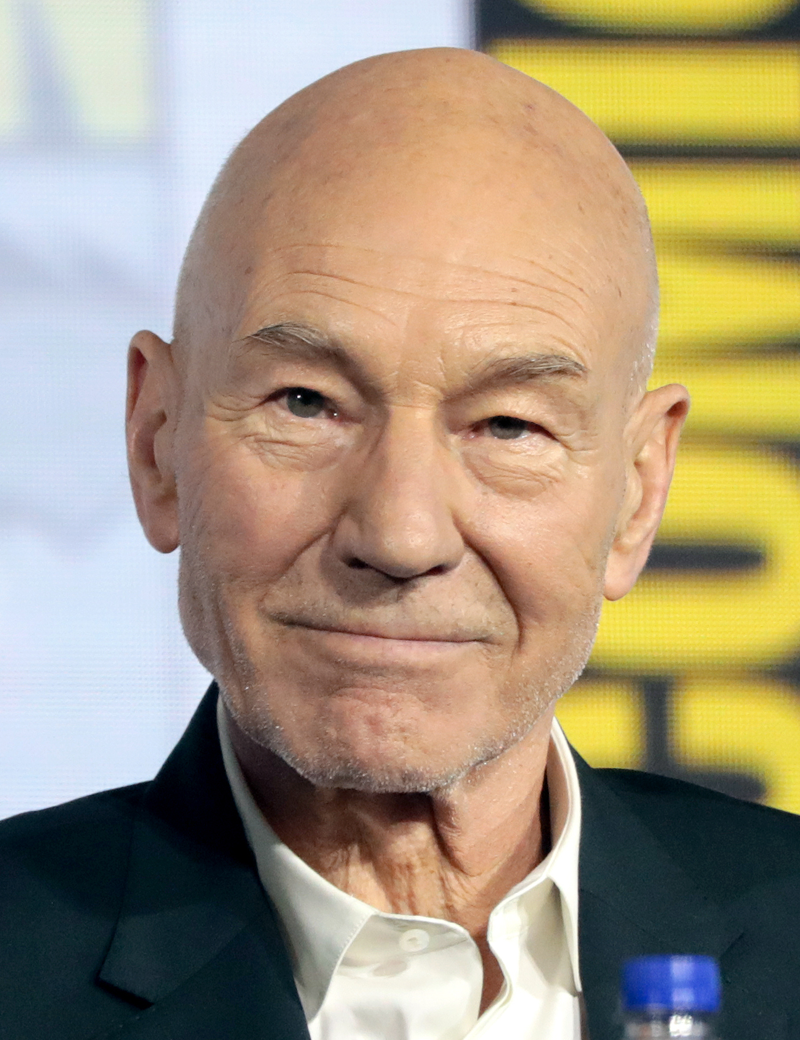
The day the captain left the bridge
I heard the news today, and I’m still sitting with it. Sir Patrick Stewart has died at 86. To the world he was many things: a Shakespearean actor, a knight, Professor X. To me, he will always be Captain Jean-Luc Picard first.
I first met him on the bridge of the USS Enterprise. I was 14 when I first watched The Next Generation. He didn’t swagger the way TV heroes usually did. He sat down, tugged his uniform straight, listened to his crew, and then made a decision.
Something about that calm made the stars feel reachable. Picard is the reason I started reading about real space exploration: rockets, orbits, probes, the people who actually build the ships. I know I’m not the only one. Today is a loss for a whole generation who looked up because a quiet man in a red uniform told us there was something worth finding out there.
More than a captain
Patrick Stewart was born in 1940 in Mirfield, a small mill town in West Yorkshire. His childhood was difficult, and he spoke openly about it later in life. He turned that pain into decades of public campaigning against domestic violence.
He found the stage young and never really left it. In 1966 he joined the Royal Shakespeare Company, and he spent years playing kings, villains and fools in front of live audiences. That training shows in everything he did afterwards: the voice, the stillness, the way a single pause could carry a whole scene.
In 1987 he was cast as Jean-Luc Picard in Star Trek: The Next Generation. Plenty of people doubted that a bald, middle-aged British stage actor could lead an American TV franchise. He proved them wrong across seven seasons and four feature films, and the show became one of the most loved in television history.
In 2000 a new generation met him as Professor Charles Xavier in X-Men, the patient teacher who believed people who were different deserved a place in the world. He played the role for nearly two decades, ending with a heartbreaking turn in Logan in 2017. In 2010 he was knighted for services to drama.
Then, at nearly 80, he did something few actors ever get to do. He came back to Picard in Star Trek: Picard, which ran for three seasons from 2020 to 2023. We got to see our captain grow old, doubt himself, and still choose to do the right thing.
What Picard stood for
Picard was a different kind of captain. He reached for diplomacy before phasers, and he treated every new species as something to understand rather than defeat. He read Shakespeare, loved archaeology, and listened to the people around him before he gave an order.
A few moments stay with me:
• The Measure of a Man. Picard defends the android Data in a hearing over whether he is property or a person. It is a courtroom drama about what makes a mind worthy of rights, and it feels more relevant every year.
• The Inner Light. A probe lets Picard live an entire lifetime on a dying planet in what is only minutes on the Enterprise. He comes back carrying a family, a community and a flute. It may be the best hour Star Trek ever made.
• Chain of Command. Captured and tortured, Picard refuses to say he sees five lights when there are four. It is a lesson in holding on to the truth when everything pushes you to give it up.
Even his catchphrases said something about leadership. “Make it so” meant he trusted his crew to carry out the plan. “Engage” meant the thinking was done, and now we go.
Above all, Picard showed that exploration could be a mature, curious, peaceful act. The point of going out there was never conquest. It was to learn, to meet others, and to come back a little wiser.
From the bridge to the launch pad
Star Trek has always had a habit of turning viewers into scientists. Engineers, astronomers and astronauts have said for decades that the show is why they first looked up. Mae Jemison, the first African American woman in space, credited Star Trek as an early inspiration, and she later appeared in an episode of The Next Generation, sharing the screen with Picard’s crew.
That loop between fiction and reality is the part of his legacy I care about most. Picard made the future look like a place you’d want to live: a place where curiosity was a career and science was something you did together. For a lot of kids, and a lot of adults, that was enough to start asking real questions.
For me it started small. I wanted to know how a ship actually gets to orbit, why some missions take years to reach their target, and who decides where we go next. One question led to the next, and space exploration became a lasting interest rather than a TV backdrop.
The real version is slower and messier than warp drive, but it is happening. Space telescopes are looking back to the earliest galaxies, robots are roaming Mars, and crewed missions are aiming at the Moon again. None of it is the Enterprise. All of it carries a little of the spirit Picard stood for: go carefully, go together, and go to learn.
Engage
It’s strange to grieve someone you never met. But Patrick Stewart spent decades in our living rooms, and for many of us he helped shape who we became. He gave us a captain who led with his mind and his conscience, and he showed us what a decent person in charge could look like.
The best way I know to honour him is to keep doing what Picard taught me to do. Stay curious. Listen before deciding. Treat the unknown as something to understand, not something to fear. And keep looking up.
Thank you, Sir Patrick. The bridge is quieter tonight, but the course you set is still laid in.
Engage.
Image: Patrick Stewart at the 2019 San Diego Comic-Con International. Credit: Gage Skidmore, CC BY-SA 3.0, via Wikimedia Commons.
 Subscribe to our RSS feed









There are no comments.
Add A Comment