OrbitalHub

The place where space exploration, science, and engineering meet

Domain is for sale. $50,000,000.00 USD. Direct any inquiries to contact@orbitalhub.com.

Archive for March, 2026


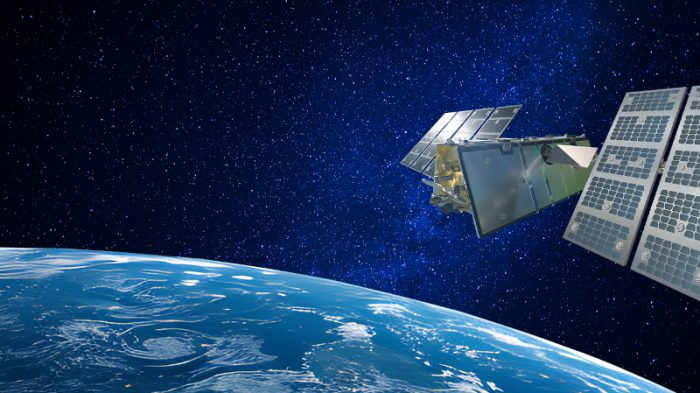
Telesat is positioning its Lightspeed low Earth orbit constellation as a critical component of defense communications networks, with a planned laser communications demonstration in 2027 that could validate the system for high-demand applications including missile defense. The Canadian satellite operator announced the strategy during the Satellite 2026 conference in Washington, D.C., highlighting changes to the system design aimed at military compatibility.

The company plans to launch the first two Lightspeed satellites in December 2026, with a laser communications relay demonstration scheduled for 2027 under a $30 million NASA contract awarded in 2022. The test will simulate a data relay scenario in orbit: one satellite will act as a mission spacecraft, the other as a relay node. A subsequent phase will involve a Planet Labs imaging satellite equipped with an optical terminal, which will send data through the Lightspeed system to a ground station.

Chuck Cynamon, president of Telesat Government Solutions, emphasized that the demonstration represents a proof point for the Pentagon’s growing interest in space-based data networks. “There’s a demand for hybrid architectures,” Cynamon stated, pointing to the Space Force’s development of what it calls a “space data network” intended to connect satellites, sensors, and weapons into a unified real-time architecture.

The Golden Dome missile defense initiative would depend on such networks as its core transport layer, routing data between sensors, command systems, and interceptors in near real time. Gen. Michael Guetlein, who leads Golden Dome, has indicated that funding for the space data network is increasing, with Cynamon noting that “there’s probably no limit on how much capability is going to be needed on orbit from a space data network.”

The company has modified its system design to align with military requirements, including adding military Ka-band frequencies aligned with the Pentagon’s existing wideband satcom systems. Each of the planned 198 Lightspeed satellites will carry four optical terminals supplied by Tesat-Spacecom, enabling high-speed links between spacecraft that can move large volumes of information with low latency while reducing exposure to jamming or interception.

The capacity pool model Telesat intends to offer the government would allow access to Lightspeed’s bandwidth and potentially optical connections without owning satellites. “We could also offer a pool of optical connections on a daily, weekly or monthly basis,” Cynamon explained, reflecting a broader shift toward hybrid architectures that blend military and commercial infrastructure.

Telesat expects to begin commercial service in 2028 after deploying the first 156 satellites, with launches contracted to SpaceX in batches of roughly 15 spacecraft. The company enters a competitive field dominated by SpaceX’s Starlink and Starshield, along with emerging systems such as Amazon LEO. Both competitors are pursuing defense business and deploying optical inter-satellite links.

One emerging demand driver is the concept of orbital data centers, which Cynamon noted could further increase pressure on satellite networks to expand capacity and move data more quickly between space and the ground. “I think it’s going to put pressure on the ability to have large pipes and land data quickly on the ground,” he observed.

Optical communications between satellites operate at frequencies far higher than traditional radio-frequency links, typically using near-infrared wavelengths around 1550 nanometers. This frequency choice offers several advantages for space-based communications, including narrower beam divergence that enables higher data rates while reducing interference between neighboring links.

The fundamental principle involves modulating a laser beam with data and directing it precisely at a receiving terminal, requiring extremely precise pointing and tracking systems. The transmitting terminal must aim its beam with accuracy measured in microradians, roughly equivalent to aligning two lasers pointed from opposite ends of a football field and having them meet at the 50-yard line.

Data rates for optical links can reach 10 gigabits per second or higher, compared to typical radio-frequency satellite links measured in megabits per second. This capacity advantage becomes particularly significant for applications involving large data volumes, such as high-resolution imagery or video from Earth observation satellites.

The laser links used in satellite constellations employ coherent detection, where the receiving terminal mixes the incoming optical signal with a locally generated laser to extract the data. This technique provides sensitivity improvements over direct detection methods, enabling links across distances of thousands of kilometers with minimal transmit power.

Atmospheric effects present challenges for optical links that radio frequencies avoid, including scattering by molecules and aerosols, absorption by water vapor, and turbulence that can cause beam wander and scintillation. For inter-satellite links above Earth’s atmosphere, these effects largely disappear, making optical communications most attractive for links between spacecraft rather than from space to ground.


  • Facebook
  • Google
  • Slashdot
  • Reddit
  • Live
  • TwitThis


At the southernmost reaches of the Moon, where sunlight skims the horizon and shadows stretch for kilometers, lies one of the most intriguing frontiers in space exploration. The lunar South Pole is a place of extremes—regions of near-eternal light sit beside craters that have not seen the Sun for billions of years. Within those permanently shadowed regions, scientists believe water ice may be preserved, locked away in darkness and cold. It is here, in this landscape of contrast and possibility, that NASA’s MoonFall mission begins its story.

MoonFall is not a mission of astronauts, at least not at first. It is a mission of scouts—four highly mobile drones that will descend to the lunar surface ahead of human explorers, mapping terrain, probing shadows, and revealing secrets hidden in the coldest corners of the Moon. Built on the legacy of the Ingenuity Mars Helicopter, these drones represent a new class of planetary explorers: small, agile, and capable of reaching places that traditional rovers cannot.

The idea behind MoonFall is as much about preparation as it is about discovery. NASA’s Artemis program aims to return humans to the Moon, and the South Pole has been chosen as a primary destination because of its scientific potential and resource availability. Yet the terrain is treacherous. Craters, steep slopes, and deep shadows create an environment that is difficult to navigate and poorly understood. Before astronauts set foot there, the landscape must be mapped in detail, hazards identified, and resources confirmed. MoonFall is designed to do exactly that.

The mission begins high above the lunar surface. As the carrier spacecraft descends toward the South Pole, the four drones are released, each entering its own controlled descent. Unlike traditional landers that touch down as a single unit, MoonFall disperses its explorers across a wider area, increasing coverage and redundancy. Each drone lands independently, unfolding its systems and preparing for a series of flights that will take place over the course of a lunar day—approximately fourteen Earth days of continuous sunlight.

The engineering challenge behind these drones is profound. Flying on the Moon is fundamentally different from flying on Mars or Earth. The Moon has no atmosphere to provide lift. There is no air for rotors to push against, no aerodynamic surfaces to generate lift. Instead, MoonFall drones rely entirely on propulsive flight, using thrusters to lift off, maneuver, and land. In this sense, they behave more like miniature spacecraft than traditional aircraft.

This propulsion-based approach introduces a new set of constraints. Every flight requires careful management of fuel, thrust, and stability. The drones must balance their mass and propulsion systems precisely to achieve controlled motion in a vacuum. Guidance, navigation, and control systems must operate with extreme precision, using onboard sensors to track position relative to the lunar surface. Without atmospheric drag, even small errors can lead to significant deviations over time.

The heritage of Ingenuity plays a crucial role here, not in its aerodynamic design, but in its autonomy. Ingenuity demonstrated that a small, lightweight vehicle could operate independently on another world, making real-time decisions about navigation and flight. MoonFall builds on this capability, extending it into a more demanding environment. Each drone must be able to plan and execute its own flights, avoid hazards, and adapt to changing conditions without direct human control. Communication delays between Earth and the Moon are shorter than those to Mars, but autonomy remains essential for efficient operations.

The scientific instruments aboard the drones are designed to turn mobility into insight. High-definition optical cameras will capture detailed images of the terrain, revealing surface features at resolutions far beyond what orbital instruments can provide. These images will help scientists understand the geological history of the region, identify safe landing sites, and map potential resources.

Perhaps the most compelling targets are the permanently shadowed regions, or PSRs. These areas, hidden from sunlight for billions of years, are among the coldest places in the Solar System. Temperatures can drop below minus 200 degrees Celsius, creating conditions where volatile substances like water ice can remain stable over geological timescales. Detecting and characterizing this ice is a key objective of the Artemis program, as it could provide a source of water, oxygen, and even rocket fuel for future missions.

Reaching these shadowed regions is no trivial task. Rovers struggle to navigate steep crater walls and operate in darkness. MoonFall drones, however, can approach from above, descending into these regions briefly to collect data before returning to sunlight. This ability to hop across the landscape, covering up to 50 kilometers over multiple flights, transforms how exploration can be conducted. Instead of being confined to a single path, the drones can sample multiple sites, building a more comprehensive picture of the environment.

The physics of operating in such extreme conditions adds another layer of complexity. Thermal management becomes critical, as the drones must endure rapid temperature changes between sunlit and shadowed areas. Power systems, likely based on solar energy and onboard batteries, must be carefully managed to sustain operations throughout the lunar day. Dust, a persistent challenge on the Moon, can interfere with sensors and mechanical components, requiring robust design and mitigation strategies.

Yet within these challenges lies the mission’s promise. MoonFall represents a shift in how we explore other worlds. Instead of relying solely on large, complex spacecraft, it embraces distributed systems—multiple smaller vehicles working together to achieve a common goal. This approach increases resilience, as the loss of a single drone does not end the mission, and enhances coverage, allowing more ground to be explored in less time.

As the drones move across the lunar surface, each flight becomes part of a larger narrative. Images stream back to Earth, revealing landscapes that have never been seen in detail. Data accumulates, mapping the distribution of ice, the structure of the terrain, and the conditions that future astronauts will face. Slowly, the unknown becomes known.

In the quiet arcs of these propulsive flights, one can see the future of exploration taking shape. The Moon is no longer just a destination; it is becoming a place of preparation, a proving ground for technologies and strategies that will one day be applied to Mars and beyond. MoonFall’s drones are not just scouts for Artemis—they are prototypes for a new generation of explorers that can navigate the most challenging environments in the Solar System.

When astronauts finally arrive at the lunar South Pole, they will not be stepping into the unknown. They will be following paths first traced by machines that flew through shadow and light, mapping a world that has waited billions of years to be explored.

Video credit: NASA Jet Propulsion Laboratory


  • Facebook
  • Google
  • Slashdot
  • Reddit
  • Live
  • TwitThis


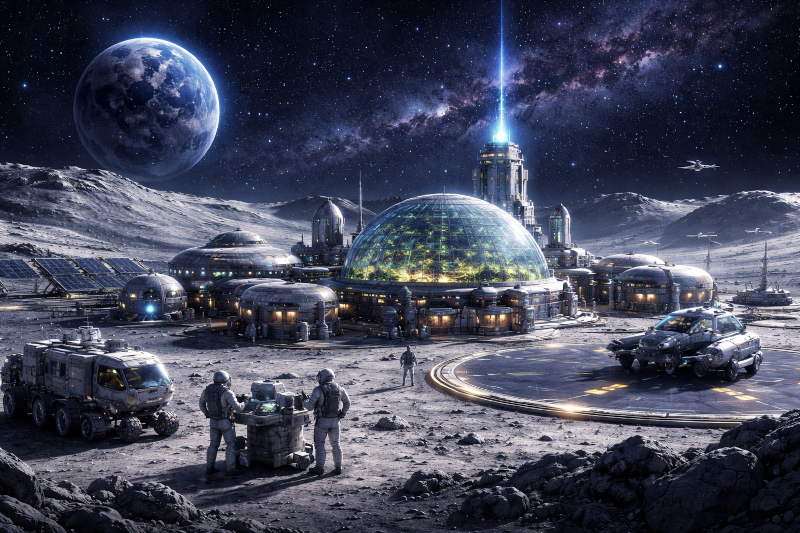
NASA announced a fundamental shift in its lunar architecture on March 24, 2026, halting development of the lunar Gateway in favor of building a permanent base on the Moon’s surface. The decision marks the most significant restructuring of the Artemis program since its inception, redirecting billions of dollars and years of engineering work toward a different vision of sustained human presence beyond Earth orbit.

During an event at NASA Headquarters titled “Ignition,” agency officials outlined plans to spend $20 billion over seven years developing a lunar base at the Moon’s south pole. Program executive Carlos Garcia-Galan described the approach as “building humanity’s first deep space outpost,” emphasizing that surface operations take priority over orbital infrastructure that had been in development for nearly a decade.

The lunar base will proceed in three phases. Phase 1, spanning 2026 to 2028, focuses on establishing reliable access to the lunar surface through increased landing missions via the Commercial Lunar Payload Services program. This phase prioritizes developing enabling technologies and gathering “ground truth” data about potential base locations near permanently shadowed craters where water ice deposits may exist. Phase 2, from 2029 through 2031, begins constructing the actual base infrastructure including communications, navigation, power systems, and supporting two crewed missions per year. Phase 3, beginning in 2032, enables what Garcia-Galan described as “long distance and long duration human exploration” with routine logistics deliveries and the first uncrewed cargo return missions from the lunar surface.

The financial commitment breaks down to approximately $10 billion each for Phases 1 and 2, with Phase 3 requiring an additional $10 billion or more extending through at least 2036. The funding represents a substantial reallocation from the Gateway program, which had received $2.6 billion in a budget reconciliation bill passed last July that defined the facility in law as “an outpost in orbit around the Moon.”

Gateway development will pause in its current form, though NASA will work to repurpose systems already under development, including the Power and Propulsion Element and the Habitation and Logistics Outpost, for use in the lunar base or other programs. Administrator Jared Isaacman stated that shifting workforce priorities to the surface “does not preclude revisiting the orbital outpost in the future,” leaving the door open for a potential Gateway return if circumstances change.

The decision reflects a fundamental reevaluation of what infrastructure actually enables human exploration. When NASA began developing the Gateway several years ago, the orbital facility was intended to support crewed landings at the lunar south pole, providing a staging point for descents to the surface. However, agency officials concluded that while the Gateway remains “relevant for future exploration goals, it is not required to accomplish our primary objectives” of establishing sustained surface operations.

The lunar base will incorporate new capabilities beyond existing programs. One example is MoonFall, a drone designed to hop between locations on the lunar surface, building on the heritage of Ingenuity, the small helicopter that operated on Mars. “We’re going to take everything that we learned from Ingenuity’s systems, the avionics, all of that, to build this,” Garcia-Galan noted.

The Lunar Terrain Vehicle program will also see significant changes. NASA concluded that the current approach would not deliver a crew-capable rover until 2030, which was deemed too slow. The agency is instead issuing a draft request for proposals for simplified rovers that could be developed more quickly but upgraded later as requirements evolve.

Any shift from the Gateway to a lunar base requires congressional approval, as current law defines the Gateway project in specific terms. NASA officials acknowledged this constraint but emphasized the urgency of the decision, arguing that the current trajectory would not achieve the agency’s stated goal of sustained human presence on the Moon.

Building a permanent base on the Moon presents engineering challenges fundamentally different from developing orbital infrastructure. The lunar surface experiences extreme temperature variations, with temperatures swinging from approximately 127 degrees Celsius during daylight to minus 173 degrees Celsius at night in equatorial regions. At the south pole, where NASA plans to locate the base, temperatures remain more stable in permanently shadowed regions but present other challenges related to lighting and access to water ice.

Power generation on the lunar surface relies primarily on solar energy, though the south pole location provides unique advantages. Within certain craters, sunlight never directly illuminates the surface, but rim regions receive nearly continuous illumination during the lunar day. This enables solar panels to generate power during approximately 80% of each Earth month, with the remaining period requiring stored energy from batteries or alternative sources.

Life support systems for a lunar base must recycle resources far more efficiently than the International Space Station, which receives regular resupply missions. NASA’s experience with the Environmental Control and Life Support System on the ISS has informed designs for closed-loop systems that recover water from atmospheric humidity, urine processing, and carbon dioxide removal using molecular sieves and regenerative systems.

Communications with Earth from the lunar surface involves a one-way light time of approximately 1.3 seconds, enabling near-real-time voice and data communication but requiring different protocols than ISS operations. Relay satellites in lunar orbit or at Earth-Sun Lagrange points could provide additional connectivity options and redundancy.

The regolith, the layer of loose material covering the lunar surface, poses both challenges and opportunities. Its abrasive properties require careful consideration for equipment operation, but it also contains resources that could support future in-situ resource utilization, including oxygen extracted from silicon oxide and metals from iron oxide. NASA plans to investigate these possibilities during Phase 1 as part of the base site characterization effort.


  • Facebook
  • Google
  • Slashdot
  • Reddit
  • Live
  • TwitThis


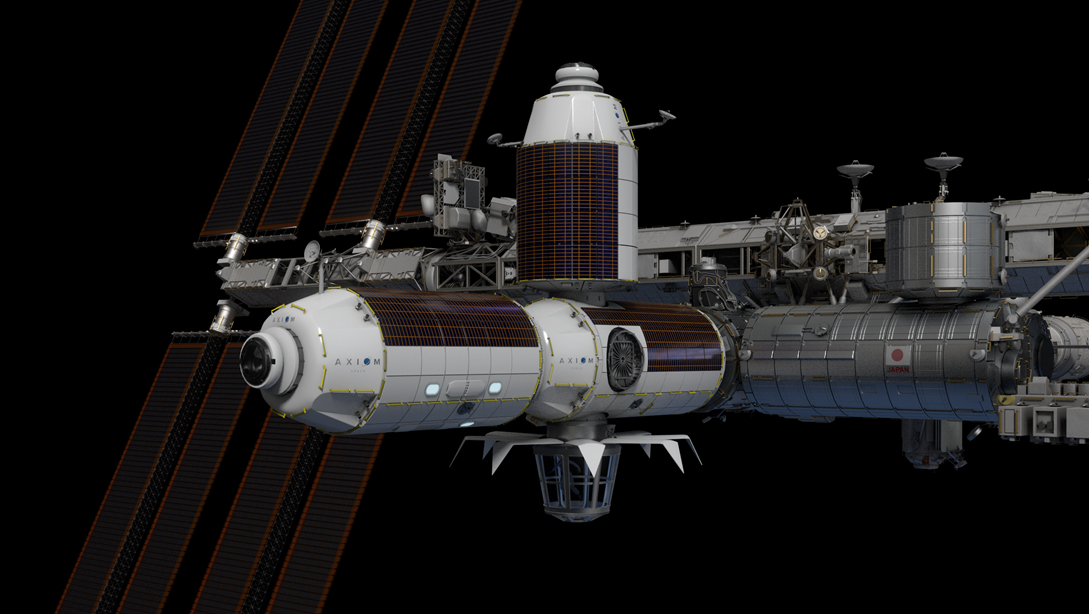
Axiom Space has closed a $350 million financing round in February 2026, accelerating development of what could become the world’s first commercial space station. The Houston-based company is building modular habitats designed to attach to the International Space Station before eventually separating to form a free-flying orbital facility. The funding provides critical capital as the company works toward launching its first module in 2027, pending continued progress on hardware development and NASA approvals.

The company’s architecture begins with the Payload Power Thermal Module, the foundational element that will connect to the ISS and provide infrastructure for research and payload operations. Subsequent modules will expand the station’s capabilities, adding crew quarters, research facilities, and an airlock for spacewalk operations. The station will initially rely on SpaceX Crew Dragon vehicles for crew transportation, with Axiom’s own AxEMU spacesuits providing capabilities for extravehicular activities.

Axiom has now completed NASA’s preliminary and critical design reviews, demonstrating that the proposed architecture meets agency requirements for safety and performance. Thales Alenia Space, the company’s primary manufacturing partner, is producing primary structures at facilities in Europe and the United States. The first flight hardware pieces have arrived in Houston for final integration, though the company still faces substantial work before the modules are ready for launch.

The commercial station concept addresses a critical transition in human spaceflight. The International Space Station, operated continuously since November 2000, faces an uncertain future as participating agencies evaluate options for continued operations beyond 2030. NASA has expressed support for commercial stations as successors to the ISS, believing that commercial operators can provide orbital research capabilities at lower cost than government-operated facilities. Axiom’s station represents the leading effort to make that vision a reality.

The company’s approach emphasizes research and manufacturing capabilities that could benefit from microgravity conditions. Pharmaceutical development, advanced materials processing, and biological research all show promise for improved outcomes when conducted in orbit. Axiom has already demonstrated interest through its private astronaut missions to the ISS, including the Ax-5 mission scheduled for January 2027 that will provide additional experience before the company’s own station becomes operational.

Designing space habitats that attach to existing infrastructure requires careful consideration of mechanical interfaces, power transfer, and data connectivity. The ISS provides power through solar arrays and thermal control through external radiators, but these systems were not designed to support significant additional loads. Axiom’s modules must integrate with existing systems without compromising station operations or crew safety, requiring extensive analysis and testing to verify compatibility.

The station’s expandable design allows for incremental capability growth as demand develops. Initial modules provide basic research and habitation space, with later additions offering specialized facilities for manufacturing or observatory operations. This approach mirrors how the ISS itself grew from a modest facility into a massive research complex over more than two decades of continuous assembly.

Power generation and thermal control present particular challenges for the larger station configuration. As modules are added, power requirements increase proportionally, necessitating expanded solar array capacity and more sophisticated thermal management. The station will need to dissipate heat generated by scientific equipment and life support systems while maintaining comfortable temperatures for crew members.


  • Facebook
  • Google
  • Slashdot
  • Reddit
  • Live
  • TwitThis


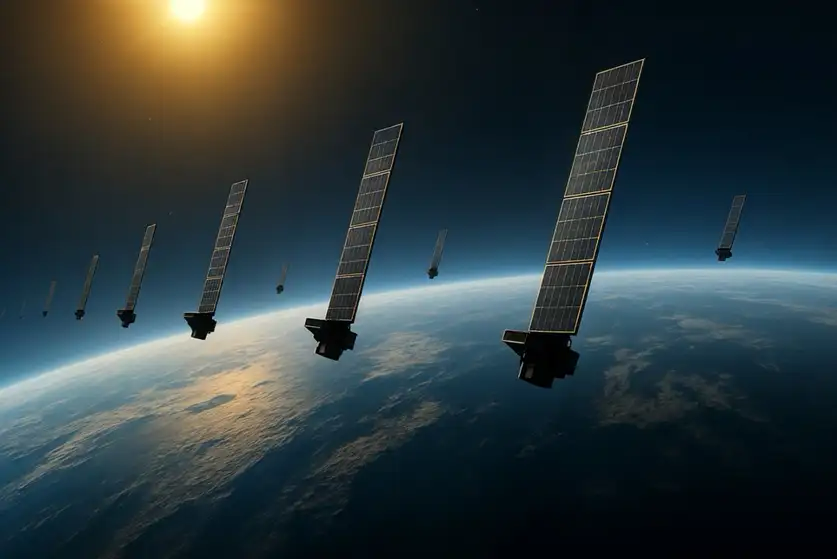
SpaceX achieved a significant milestone on March 16, 2026, when the Starlink constellation reached 10,000 satellites in orbit. The achievement marks another step in the company’s ambitious plan to provide global broadband internet coverage from low Earth orbit, fundamentally altering both the satellite communications industry and the orbital environment itself. The rapid deployment, accomplished in just over six years since the first operational satellites launched, represents an unprecedented rate of satellite construction and launch activity.

The Starlink network provides internet service to customers worldwide, with particular impact in remote and underserved regions where traditional infrastructure remains impractical. Subscribers use a small satellite dish to connect to passing satellites, receiving data directly from space rather than relying on undersea cables or terrestrial networks. The service has gained particular relevance following natural disasters that destroy ground-based infrastructure, providing emergency connectivity when cellular towers and power grids fail.

The constellation’s growth has not proceeded without controversy. Astronomers have raised persistent concerns about satellite brightness affecting ground-based observations of the night sky. The large number of reflective objects in low Earth orbit creates trails in telescope images that can obscure distant celestial objects. SpaceX has implemented various mitigation measures, including darkening treatments on newer satellites and experimental VisorSat designs intended to reduce reflectivity. However, the astronomical community remains divided on whether these efforts adequately address the concerns.

The 10,000-satellite milestone comes as SpaceX continues to expand service capabilities. The company has received regulatory approval to operate nearly 12,000 satellites in the initial constellation and has applied for authorization to add another 30,000 beyond that. Each generation of satellite incorporates improvements in communications bandwidth, onboard processing, and operational lifetime. The most recent versions feature laser inter-satellite links that allow data to hop between satellites without passing through ground stations, reducing latency and expanding coverage to polar regions and oceans far from gateway antennas.

Orbital debris concerns accompany every addition to the constellation. With thousands of satellites operating in similar orbital shells, the risk of collisions increases. SpaceX has equipped its satellites with autonomous collision avoidance systems that calculate potential conjunctions and execute avoidance maneuvers when necessary. The company has also implemented controlled deorbiting procedures, using remaining fuel to direct satellites into Earth’s atmosphere at end of life rather than leaving them as derelict objects. This approach aims to maintain sustainable use of low Earth orbit for future generations.

The commercial success of Starlink has prompted competitors to pursue similar constellation concepts. Amazon’s Project Kuiper, OneWeb, and other companies have announced plans for large satellite networks, though none have reached operational scale. SpaceX’s head start, combined with the company’s vertically integrated launch capability through its Falcon 9 rocket, has created significant competitive advantages that prove difficult for rivals to overcome. The 10,000-satellite milestone underscores how SpaceX has fundamentally changed the economics and scale of satellite communications.

Operating thousands of satellites in coordinated orbits presents unique engineering challenges. Each satellite must maintain precise timing synchronization to enable efficient handoffs as ground terminals transition between coverage areas. The satellites communicate with ground terminals using Ku-band and Ka-band frequencies, with newer generations adding V-band capabilities for increased bandwidth. The challenge lies in managing interference between satellites operating in similar frequency bands while maintaining service quality for millions of simultaneous users.

The constellation operates in shells at various altitudes, typically between 500 and 600 kilometers for polar-orbiting satellites. This altitude provides a balance between coverage area and orbital decay rates, requiring periodic station-keeping maneuvers to maintain altitude. At these altitudes, atmospheric drag remains significant enough that satellites require regular reboosting, consuming propellant that ultimately limits operational lifetime. SpaceX’s newer satellites incorporate improved thruster efficiency to maximize operational duration.


  • Facebook
  • Google
  • Slashdot
  • Reddit
  • Live
  • TwitThis


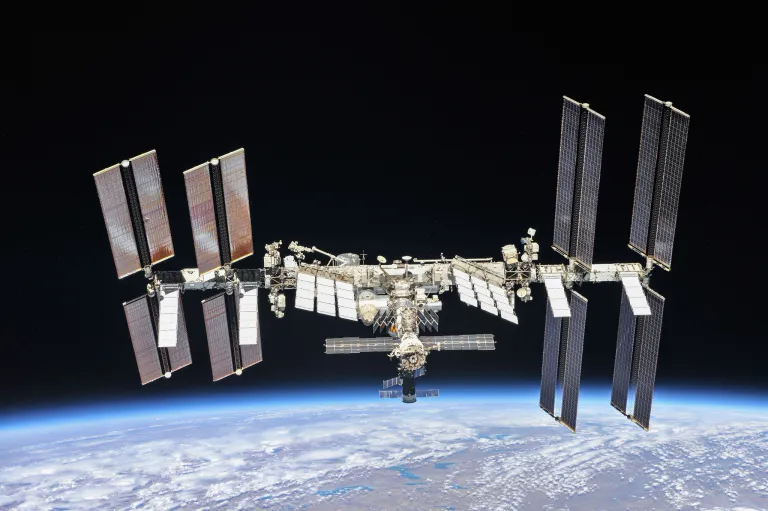
The European Space Agency has taken a significant step toward ensuring its astronauts continue flying to the International Space Station in the final years of the orbital laboratory’s life. On March 19, 2026, the ESA Council endorsed a project called ESA Provided Institutional Crew, or EPIC, which will send European astronauts to the ISS on a dedicated SpaceX Crew Dragon mission in early 2028. This marks a new chapter in European human spaceflight, moving beyond reliance on seats provided by NASA or commercial partners toward a fully European-operated crewed mission.

The decision emerged from a meeting of ESA member states in Paris, where Director General Josef Aschbacher emphasized the urgency of providing flight opportunities for the agency’s astronaut corps. Europe currently has five career astronauts who joined the agency in 2022, and only a limited number of ISS mission slots remain before the station’s planned retirement around 2030. “We have five career astronauts that I intend to fly in the next few years, and EPIC is one way of making sure that these career astronauts can go to the space station, do research and certainly also enlarge our experience,” Aschbacher stated at a press briefing following the council meeting.

ESA’s new astronaut corps has already begun its journey to space through other avenues. Sophie Adenot became the first of the 2022 class to reach the orbital laboratory, currently serving as part of NASA’s Crew-12 mission. RaphaĂ«l LiĂ©geois is expected to fly in late 2027 or early 2028. However, these assignments rely entirely on decisions made by NASA or commercial partners. EPIC gives ESA control over its own crew assignments and mission planning, a level of autonomy the agency has rarely enjoyed in its history of human spaceflight.

The EPIC mission will differ substantially from the short-duration commercial astronaut flights that European astronauts have participated in recently. Swedish astronaut Marcus Wandt flew on Axiom Space’s Ax-3 mission in 2024, and Polish astronaut SĹ‚awosz UznaĹ„ski-WiĹ›niewski followed on the Ax-4 mission in 2025. Both of those flights lasted approximately two weeks, focusing primarily on specific research experiments for which the astronauts trained. The EPIC mission will extend to one month, allowing European astronauts to participate more fully in station operations, including maintenance tasks that typically fall to the long-duration crew.

This extended duration also provides ESA with valuable experience in managing longer-duration missions that will prove essential when the International Space Station gives way to commercial alternatives. The agency has committed to participating in future commercial space stations but lacks the operational experience of conducting month-long missions independently. EPIC bridges that gap by giving European flight controllers and mission managers responsibility for a complete crewed flight from launch through landing.

The mission will operate as a fully ESA-led project, though international partners will participate. ESA will be responsible for crew selection, mission planning, and operations, with the spacecraft fully controlled by European mission controllers rather than NASA’s traditional flight director teams. This represents a significant expansion of European human spaceflight capabilities and establishes precedents that will inform how the agency operates on future commercial stations or lunar missions.

Funding details remain under discussion, and ESA has not disclosed the anticipated cost of chartering a Crew Dragon flight. However, the investment reflects strategic priorities that extend beyond the ISS era. As Aschbacher noted, the decision ensures European astronauts maintain their presence in low Earth orbit during a critical transition period when commercial stations are scheduled to begin operations and NASA’s focus shifts increasingly toward lunar exploration through the Artemis program.

SpaceX’s Crew Dragon represents the first commercial spacecraft designed to transport humans to and from orbit, developed through NASA’s Commercial Crew Program beginning in 2010. The spacecraft consists of a reusable crew capsule capable of carrying up to seven passengers, paired with a disposable service module that provides propulsion, electrical power, and life support consumables. The capsule returns to Earth through controlled descent, decelerating from orbital velocity using a heat shield before splashing down in the Atlantic Ocean under parachutes.

The spacecraft’s environmental control and life support systems maintain atmospheric pressure and composition throughout the mission, removing carbon dioxide and humidity while providing fresh oxygen. These systems must operate continuously for the duration of the mission, whether that spans two weeks or one month. The Crew Dragon also incorporates redundancies throughout critical systems, meeting NASA’s human-rating requirements for crew safety during launch, orbital operations, and return.

One of the spacecraft’s distinguishing features is its autonomous docking capability, which allows the vehicle to approach and attach to the International Space Station without crew intervention. This automation reduces crew workload during complex approaches and provides a backup if astronauts are incapacitated. The system performed successfully during initial operational flights and has become standard procedure for crewed approaches to the station.


  • Facebook
  • Google
  • Slashdot
  • Reddit
  • Live
  • TwitThis