


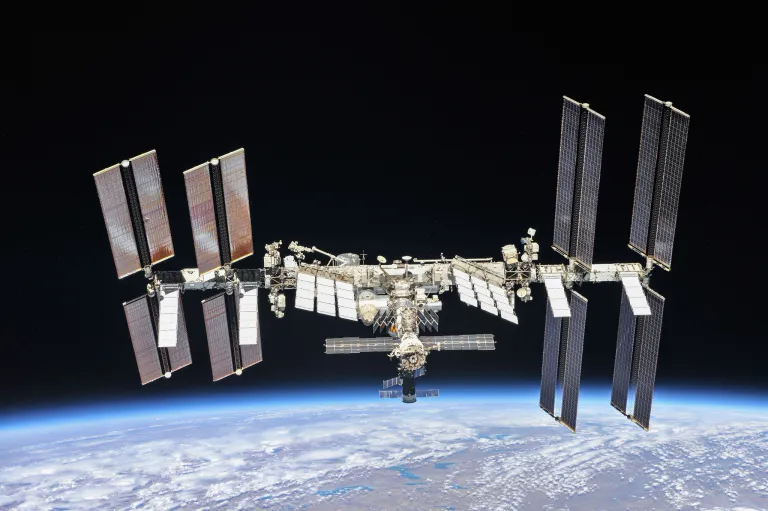
The European Space Agency has taken a significant step toward ensuring its astronauts continue flying to the International Space Station in the final years of the orbital laboratory’s life. On March 19, 2026, the ESA Council endorsed a project called ESA Provided Institutional Crew, or EPIC, which will send European astronauts to the ISS on a dedicated SpaceX Crew Dragon mission in early 2028. This marks a new chapter in European human spaceflight, moving beyond reliance on seats provided by NASA or commercial partners toward a fully European-operated crewed mission.
The decision emerged from a meeting of ESA member states in Paris, where Director General Josef Aschbacher emphasized the urgency of providing flight opportunities for the agency’s astronaut corps. Europe currently has five career astronauts who joined the agency in 2022, and only a limited number of ISS mission slots remain before the station’s planned retirement around 2030. “We have five career astronauts that I intend to fly in the next few years, and EPIC is one way of making sure that these career astronauts can go to the space station, do research and certainly also enlarge our experience,” Aschbacher stated at a press briefing following the council meeting.
ESA’s new astronaut corps has already begun its journey to space through other avenues. Sophie Adenot became the first of the 2022 class to reach the orbital laboratory, currently serving as part of NASA’s Crew-12 mission. Raphaël Liégeois is expected to fly in late 2027 or early 2028. However, these assignments rely entirely on decisions made by NASA or commercial partners. EPIC gives ESA control over its own crew assignments and mission planning, a level of autonomy the agency has rarely enjoyed in its history of human spaceflight.
The EPIC mission will differ substantially from the short-duration commercial astronaut flights that European astronauts have participated in recently. Swedish astronaut Marcus Wandt flew on Axiom Space’s Ax-3 mission in 2024, and Polish astronaut Sławosz Uznański-Wiśniewski followed on the Ax-4 mission in 2025. Both of those flights lasted approximately two weeks, focusing primarily on specific research experiments for which the astronauts trained. The EPIC mission will extend to one month, allowing European astronauts to participate more fully in station operations, including maintenance tasks that typically fall to the long-duration crew.
This extended duration also provides ESA with valuable experience in managing longer-duration missions that will prove essential when the International Space Station gives way to commercial alternatives. The agency has committed to participating in future commercial space stations but lacks the operational experience of conducting month-long missions independently. EPIC bridges that gap by giving European flight controllers and mission managers responsibility for a complete crewed flight from launch through landing.
The mission will operate as a fully ESA-led project, though international partners will participate. ESA will be responsible for crew selection, mission planning, and operations, with the spacecraft fully controlled by European mission controllers rather than NASA’s traditional flight director teams. This represents a significant expansion of European human spaceflight capabilities and establishes precedents that will inform how the agency operates on future commercial stations or lunar missions.
Funding details remain under discussion, and ESA has not disclosed the anticipated cost of chartering a Crew Dragon flight. However, the investment reflects strategic priorities that extend beyond the ISS era. As Aschbacher noted, the decision ensures European astronauts maintain their presence in low Earth orbit during a critical transition period when commercial stations are scheduled to begin operations and NASA’s focus shifts increasingly toward lunar exploration through the Artemis program.
SpaceX’s Crew Dragon represents the first commercial spacecraft designed to transport humans to and from orbit, developed through NASA’s Commercial Crew Program beginning in 2010. The spacecraft consists of a reusable crew capsule capable of carrying up to seven passengers, paired with a disposable service module that provides propulsion, electrical power, and life support consumables. The capsule returns to Earth through controlled descent, decelerating from orbital velocity using a heat shield before splashing down in the Atlantic Ocean under parachutes.
The spacecraft’s environmental control and life support systems maintain atmospheric pressure and composition throughout the mission, removing carbon dioxide and humidity while providing fresh oxygen. These systems must operate continuously for the duration of the mission, whether that spans two weeks or one month. The Crew Dragon also incorporates redundancies throughout critical systems, meeting NASA’s human-rating requirements for crew safety during launch, orbital operations, and return.
One of the spacecraft’s distinguishing features is its autonomous docking capability, which allows the vehicle to approach and attach to the International Space Station without crew intervention. This automation reduces crew workload during complex approaches and provides a backup if astronauts are incapacitated. The system performed successfully during initial operational flights and has become standard procedure for crewed approaches to the station.
 Subscribe to our RSS feed









There are no comments.
Add A Comment