


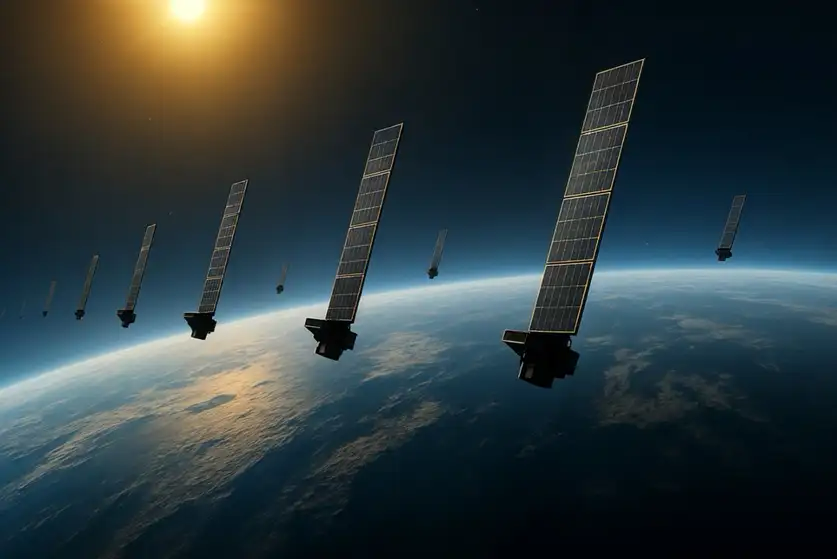
SpaceX achieved a significant milestone on March 16, 2026, when the Starlink constellation reached 10,000 satellites in orbit. The achievement marks another step in the company’s ambitious plan to provide global broadband internet coverage from low Earth orbit, fundamentally altering both the satellite communications industry and the orbital environment itself. The rapid deployment, accomplished in just over six years since the first operational satellites launched, represents an unprecedented rate of satellite construction and launch activity.
The Starlink network provides internet service to customers worldwide, with particular impact in remote and underserved regions where traditional infrastructure remains impractical. Subscribers use a small satellite dish to connect to passing satellites, receiving data directly from space rather than relying on undersea cables or terrestrial networks. The service has gained particular relevance following natural disasters that destroy ground-based infrastructure, providing emergency connectivity when cellular towers and power grids fail.
The constellation’s growth has not proceeded without controversy. Astronomers have raised persistent concerns about satellite brightness affecting ground-based observations of the night sky. The large number of reflective objects in low Earth orbit creates trails in telescope images that can obscure distant celestial objects. SpaceX has implemented various mitigation measures, including darkening treatments on newer satellites and experimental VisorSat designs intended to reduce reflectivity. However, the astronomical community remains divided on whether these efforts adequately address the concerns.
The 10,000-satellite milestone comes as SpaceX continues to expand service capabilities. The company has received regulatory approval to operate nearly 12,000 satellites in the initial constellation and has applied for authorization to add another 30,000 beyond that. Each generation of satellite incorporates improvements in communications bandwidth, onboard processing, and operational lifetime. The most recent versions feature laser inter-satellite links that allow data to hop between satellites without passing through ground stations, reducing latency and expanding coverage to polar regions and oceans far from gateway antennas.
Orbital debris concerns accompany every addition to the constellation. With thousands of satellites operating in similar orbital shells, the risk of collisions increases. SpaceX has equipped its satellites with autonomous collision avoidance systems that calculate potential conjunctions and execute avoidance maneuvers when necessary. The company has also implemented controlled deorbiting procedures, using remaining fuel to direct satellites into Earth’s atmosphere at end of life rather than leaving them as derelict objects. This approach aims to maintain sustainable use of low Earth orbit for future generations.
The commercial success of Starlink has prompted competitors to pursue similar constellation concepts. Amazon’s Project Kuiper, OneWeb, and other companies have announced plans for large satellite networks, though none have reached operational scale. SpaceX’s head start, combined with the company’s vertically integrated launch capability through its Falcon 9 rocket, has created significant competitive advantages that prove difficult for rivals to overcome. The 10,000-satellite milestone underscores how SpaceX has fundamentally changed the economics and scale of satellite communications.
Operating thousands of satellites in coordinated orbits presents unique engineering challenges. Each satellite must maintain precise timing synchronization to enable efficient handoffs as ground terminals transition between coverage areas. The satellites communicate with ground terminals using Ku-band and Ka-band frequencies, with newer generations adding V-band capabilities for increased bandwidth. The challenge lies in managing interference between satellites operating in similar frequency bands while maintaining service quality for millions of simultaneous users.
The constellation operates in shells at various altitudes, typically between 500 and 600 kilometers for polar-orbiting satellites. This altitude provides a balance between coverage area and orbital decay rates, requiring periodic station-keeping maneuvers to maintain altitude. At these altitudes, atmospheric drag remains significant enough that satellites require regular reboosting, consuming propellant that ultimately limits operational lifetime. SpaceX’s newer satellites incorporate improved thruster efficiency to maximize operational duration.
 Subscribe to our RSS feed









There are no comments.
Add A Comment