OrbitalHub

The place where space exploration, science, and engineering meet

Domain is for sale. $50,000,000.00 USD. Direct any inquiries to contact@orbitalhub.com.

Archive for 2026


SpaceX achieved a significant milestone on March 16, 2026, when the Starlink constellation reached 10,000 satellites in orbit. The achievement marks another step in the company’s ambitious plan to provide global broadband internet coverage from low Earth orbit, fundamentally altering both the satellite communications industry and the orbital environment itself. The rapid deployment, accomplished in just over six years since the first operational satellites launched, represents an unprecedented rate of satellite construction and launch activity.

The Starlink network provides internet service to customers worldwide, with particular impact in remote and underserved regions where traditional infrastructure remains impractical. Subscribers use a small satellite dish to connect to passing satellites, receiving data directly from space rather than relying on undersea cables or terrestrial networks. The service has gained particular relevance following natural disasters that destroy ground-based infrastructure, providing emergency connectivity when cellular towers and power grids fail.

The constellation’s growth has not proceeded without controversy. Astronomers have raised persistent concerns about satellite brightness affecting ground-based observations of the night sky. The large number of reflective objects in low Earth orbit creates trails in telescope images that can obscure distant celestial objects. SpaceX has implemented various mitigation measures, including darkening treatments on newer satellites and experimental VisorSat designs intended to reduce reflectivity. However, the astronomical community remains divided on whether these efforts adequately address the concerns.

The 10,000-satellite milestone comes as SpaceX continues to expand service capabilities. The company has received regulatory approval to operate nearly 12,000 satellites in the initial constellation and has applied for authorization to add another 30,000 beyond that. Each generation of satellite incorporates improvements in communications bandwidth, onboard processing, and operational lifetime. The most recent versions feature laser inter-satellite links that allow data to hop between satellites without passing through ground stations, reducing latency and expanding coverage to polar regions and oceans far from gateway antennas.

Orbital debris concerns accompany every addition to the constellation. With thousands of satellites operating in similar orbital shells, the risk of collisions increases. SpaceX has equipped its satellites with autonomous collision avoidance systems that calculate potential conjunctions and execute avoidance maneuvers when necessary. The company has also implemented controlled deorbiting procedures, using remaining fuel to direct satellites into Earth’s atmosphere at end of life rather than leaving them as derelict objects. This approach aims to maintain sustainable use of low Earth orbit for future generations.

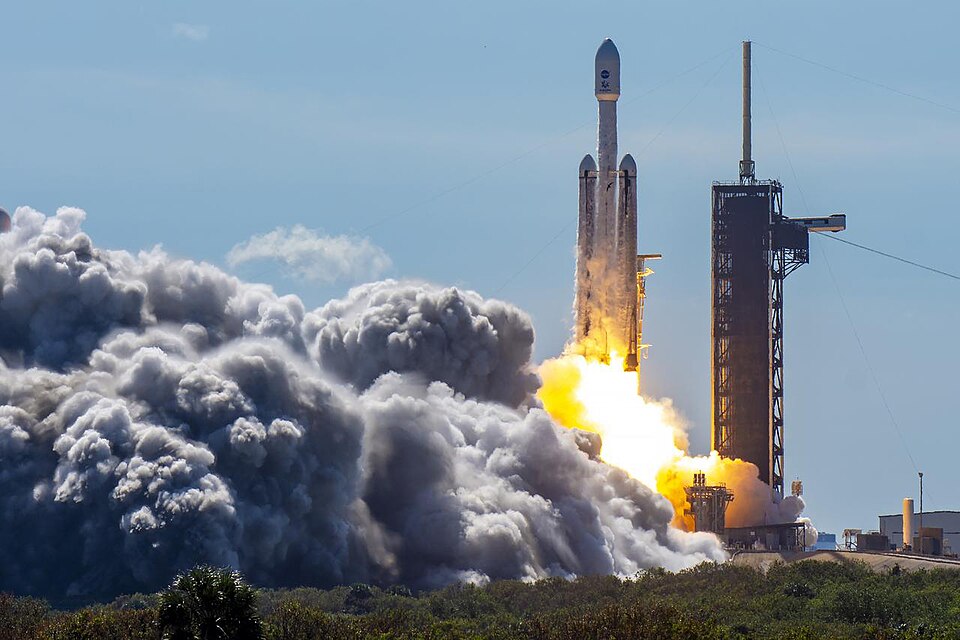
The commercial success of Starlink has prompted competitors to pursue similar constellation concepts. Amazon’s Project Kuiper, OneWeb, and other companies have announced plans for large satellite networks, though none have reached operational scale. SpaceX’s head start, combined with the company’s vertically integrated launch capability through its Falcon 9 rocket, has created significant competitive advantages that prove difficult for rivals to overcome. The 10,000-satellite milestone underscores how SpaceX has fundamentally changed the economics and scale of satellite communications.

Operating thousands of satellites in coordinated orbits presents unique engineering challenges. Each satellite must maintain precise timing synchronization to enable efficient handoffs as ground terminals transition between coverage areas. The satellites communicate with ground terminals using Ku-band and Ka-band frequencies, with newer generations adding V-band capabilities for increased bandwidth. The challenge lies in managing interference between satellites operating in similar frequency bands while maintaining service quality for millions of simultaneous users.

The constellation operates in shells at various altitudes, typically between 500 and 600 kilometers for polar-orbiting satellites. This altitude provides a balance between coverage area and orbital decay rates, requiring periodic station-keeping maneuvers to maintain altitude. At these altitudes, atmospheric drag remains significant enough that satellites require regular reboosting, consuming propellant that ultimately limits operational lifetime. SpaceX’s newer satellites incorporate improved thruster efficiency to maximize operational duration.


  • Facebook
  • Google
  • Slashdot
  • Reddit
  • Live
  • TwitThis


The European Space Agency has taken a significant step toward ensuring its astronauts continue flying to the International Space Station in the final years of the orbital laboratory’s life. On March 19, 2026, the ESA Council endorsed a project called ESA Provided Institutional Crew, or EPIC, which will send European astronauts to the ISS on a dedicated SpaceX Crew Dragon mission in early 2028. This marks a new chapter in European human spaceflight, moving beyond reliance on seats provided by NASA or commercial partners toward a fully European-operated crewed mission.

The decision emerged from a meeting of ESA member states in Paris, where Director General Josef Aschbacher emphasized the urgency of providing flight opportunities for the agency’s astronaut corps. Europe currently has five career astronauts who joined the agency in 2022, and only a limited number of ISS mission slots remain before the station’s planned retirement around 2030. “We have five career astronauts that I intend to fly in the next few years, and EPIC is one way of making sure that these career astronauts can go to the space station, do research and certainly also enlarge our experience,” Aschbacher stated at a press briefing following the council meeting.

ESA’s new astronaut corps has already begun its journey to space through other avenues. Sophie Adenot became the first of the 2022 class to reach the orbital laboratory, currently serving as part of NASA’s Crew-12 mission. RaphaĂ«l LiĂ©geois is expected to fly in late 2027 or early 2028. However, these assignments rely entirely on decisions made by NASA or commercial partners. EPIC gives ESA control over its own crew assignments and mission planning, a level of autonomy the agency has rarely enjoyed in its history of human spaceflight.

The EPIC mission will differ substantially from the short-duration commercial astronaut flights that European astronauts have participated in recently. Swedish astronaut Marcus Wandt flew on Axiom Space’s Ax-3 mission in 2024, and Polish astronaut SĹ‚awosz UznaĹ„ski-WiĹ›niewski followed on the Ax-4 mission in 2025. Both of those flights lasted approximately two weeks, focusing primarily on specific research experiments for which the astronauts trained. The EPIC mission will extend to one month, allowing European astronauts to participate more fully in station operations, including maintenance tasks that typically fall to the long-duration crew.

This extended duration also provides ESA with valuable experience in managing longer-duration missions that will prove essential when the International Space Station gives way to commercial alternatives. The agency has committed to participating in future commercial space stations but lacks the operational experience of conducting month-long missions independently. EPIC bridges that gap by giving European flight controllers and mission managers responsibility for a complete crewed flight from launch through landing.

The mission will operate as a fully ESA-led project, though international partners will participate. ESA will be responsible for crew selection, mission planning, and operations, with the spacecraft fully controlled by European mission controllers rather than NASA’s traditional flight director teams. This represents a significant expansion of European human spaceflight capabilities and establishes precedents that will inform how the agency operates on future commercial stations or lunar missions.

Funding details remain under discussion, and ESA has not disclosed the anticipated cost of chartering a Crew Dragon flight. However, the investment reflects strategic priorities that extend beyond the ISS era. As Aschbacher noted, the decision ensures European astronauts maintain their presence in low Earth orbit during a critical transition period when commercial stations are scheduled to begin operations and NASA’s focus shifts increasingly toward lunar exploration through the Artemis program.

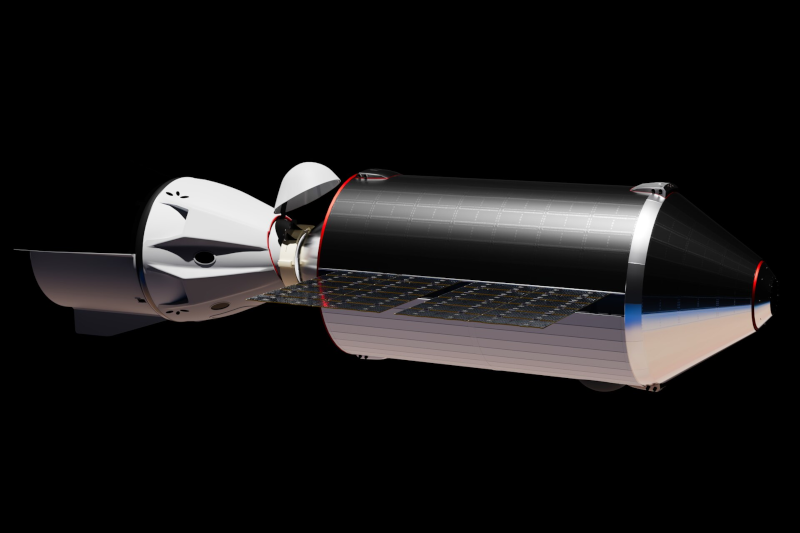
SpaceX’s Crew Dragon represents the first commercial spacecraft designed to transport humans to and from orbit, developed through NASA’s Commercial Crew Program beginning in 2010. The spacecraft consists of a reusable crew capsule capable of carrying up to seven passengers, paired with a disposable service module that provides propulsion, electrical power, and life support consumables. The capsule returns to Earth through controlled descent, decelerating from orbital velocity using a heat shield before splashing down in the Atlantic Ocean under parachutes.

The spacecraft’s environmental control and life support systems maintain atmospheric pressure and composition throughout the mission, removing carbon dioxide and humidity while providing fresh oxygen. These systems must operate continuously for the duration of the mission, whether that spans two weeks or one month. The Crew Dragon also incorporates redundancies throughout critical systems, meeting NASA’s human-rating requirements for crew safety during launch, orbital operations, and return.

One of the spacecraft’s distinguishing features is its autonomous docking capability, which allows the vehicle to approach and attach to the International Space Station without crew intervention. This automation reduces crew workload during complex approaches and provides a backup if astronauts are incapacitated. The system performed successfully during initial operational flights and has become standard procedure for crewed approaches to the station.


  • Facebook
  • Google
  • Slashdot
  • Reddit
  • Live
  • TwitThis


For as long as humans have pushed aircraft beyond the speed of sound, there has been a cost to that achievement—an invisible but unmistakable shockwave that ripples across the sky and crashes into the ground as a sonic boom. It is a sound that has fascinated engineers and frustrated communities in equal measure. For decades, it has been the reason supersonic flight over land has remained largely forbidden, a technological triumph constrained by its own consequences. Now, with NASA’s X-59 experimental aircraft, that story may be about to change.

The X-59 is not just another aircraft. It is the centerpiece of NASA’s Quesst mission, an ambitious effort to rewrite one of the fundamental limitations of high-speed flight. Instead of accepting the sonic boom as inevitable, engineers have asked a different question: can the physics of supersonic flight be reshaped so that the boom itself becomes something softer, something more like a distant thump than a disruptive crack?

The journey toward answering that question reached a major milestone on October 28, 2025, when the X-59 completed its first flight with NASA test pilot Nils Larson at the controls. That flight marked the transition from theory and design into reality. Since then, the aircraft has undergone meticulous inspection and maintenance, with engineers removing and reinstalling critical components—from the engine to structural panels—to ensure that every system performs exactly as intended. This careful process reflects the precision required for an aircraft that is not just flying faster than sound, but redefining how that speed interacts with the world below.

To understand what makes the X-59 different, one must first understand the physics of the sonic boom. When an aircraft travels slower than sound, pressure waves generated by its motion propagate outward in all directions. But once the aircraft exceeds the speed of sound, those waves can no longer outrun the vehicle. Instead, they compress and merge into powerful shockwaves that trail behind the aircraft in a cone-shaped pattern. When those shockwaves reach the ground, they are heard as a sudden, explosive boom.

Traditional supersonic aircraft, such as the Concorde, produced a distinctive “N-wave” pressure signature, characterized by a sharp rise in pressure, a gradual drop, and then another sharp rise. This pressure profile translates into the loud, disruptive sound associated with sonic booms. The challenge for NASA’s engineers has been to reshape that pressure signature entirely.

The X-59 approaches this challenge through geometry. Its long, slender fuselage stretches nearly 100 feet, tapering gradually from nose to tail. This shape is not aesthetic—it is aerodynamic in the most fundamental sense. By carefully controlling how air is compressed and displaced along the aircraft’s body, engineers can prevent shockwaves from coalescing into a single, powerful disturbance. Instead, the pressure changes are distributed along the length of the aircraft, resulting in a series of smaller, weaker shockwaves.

As these softened shockwaves travel toward the ground, they combine into what NASA calls a “low-boom” signature. Rather than the sharp crack of a traditional sonic boom, the sound becomes a quieter, more diffuse “thump.” The difference is subtle in terms of physics but profound in its implications. If the boom can be reduced to a level that is acceptable to people on the ground, the long-standing restrictions on supersonic flight over land could be reconsidered.

Achieving this outcome requires more than just shaping the aircraft’s exterior. The X-59 incorporates advanced computational fluid dynamics, allowing engineers to simulate airflow and shockwave behavior with extraordinary precision. Decades of research have gone into refining these models, ensuring that the aircraft’s design produces the desired pressure distribution under real-world conditions.

The engineering challenges extend into the cockpit as well. Because of its elongated nose, the X-59 does not have a traditional forward-facing window. Instead, the pilot relies on an external vision system, combining high-resolution cameras and displays to provide a synthetic view of the environment ahead. This system represents a significant departure from conventional aircraft design, requiring careful integration of imaging technology, flight controls, and pilot interface systems.

Behind the scenes, the aircraft’s propulsion system must also operate seamlessly within this carefully balanced aerodynamic environment. The engine is positioned on top of the fuselage to minimize its contribution to shockwave formation, reducing the impact of exhaust flow on the aircraft’s overall pressure signature. Every aspect of the design—from wing shape to engine placement—has been optimized to serve the same goal: controlling how the aircraft disturbs the air around it.

As the X-59 moves into expanded flight testing in 2026, NASA will push the aircraft to higher speeds and altitudes, validating its performance under a range of conditions. These tests are not simply about proving that the aircraft can fly supersonically—they are about confirming that it can do so quietly, consistently, and safely. Data collected during these flights will be used to refine models, verify predictions, and ensure that the low-boom concept holds true outside of simulations.

Perhaps the most unique phase of the mission will come after the technical validation is complete. NASA plans to fly the X-59 over selected communities, gathering data not just from instruments, but from people. Residents will be asked to describe what they hear, how noticeable it is, and whether it is disruptive. This human response will play a crucial role in shaping future regulations for supersonic flight.

The significance of the X-59 extends far beyond a single aircraft. If successful, it could open the door to a new generation of commercial supersonic travel, cutting flight times dramatically without the environmental and social constraints that have limited previous efforts. Flights across continents could become faster, more efficient, and more practical, transforming the way people and goods move around the world.

At its core, the story of the X-59 is one of refinement rather than revolution. The physics of supersonic flight has been understood for decades. What has changed is our ability to shape those physics with precision, to take something once considered unavoidable and redesign it from the ground up.

The sonic boom, once a defining feature of supersonic travel, may soon become a relic of the past—not eliminated, but transformed into something quieter, something more acceptable, something that allows speed and harmony to coexist. And in that transformation lies the true achievement of the X-59: not just flying faster than sound, but learning how to do so without shouting to the world below.


  • Facebook
  • Google
  • Slashdot
  • Reddit
  • Live
  • TwitThis


The growing threat of orbital debris has prompted a new generation of cleanup missions, and Isar Aerospace’s recent contract with Astroscale represents a significant step toward commercial active debris removal. Announced on March 16, 2026, the agreement will launch Astroscale’s ELSA-M (End-of-Life Service Mission) aboard Isar’s Spectrum launch vehicle from the company’s facility at Andøya Space in Norway. The mission aims to demonstrate the practical viability of capturing and removing defunct satellites from orbit, addressing what many consider the most pressing sustainability challenge in space exploration.

ELSA-M represents one of the world’s first commercial end-of-life services for satellites designed with docking interfaces. Unlike traditional spacecraft that cannot be captured, satellites built for servicing carry dedicated attachment points and structural provisions that enable a servicing vehicle to approach, rendezvous, and secure the target. Once captured, the servicing spacecraft can either deorbit the retired satellite into Earth’s atmosphere for destruction or relocate it to a disposal orbit.

The mission holds particular significance for Isar Aerospace as the company’s first involvement in an active debris removal project. Stella Guillen, Chief Commercial Officer, emphasized that the contract demonstrates Spectrum’s capability to deliver payloads to the specific orbits required for rendezvous operations, a more demanding requirement than standard satellite deployment. The precision needed for debris removal missions, where the launch vehicle must place the servicing spacecraft in precisely the right orbital plane and altitude, showcases the performance of Isar’s homegrown launch system.

Spectrum represents Isar’s entry into the small satellite launch market, designed, built, and operated entirely in-house with a high degree of automation. The vehicle uses a staged combustion cycle engine running on liquid oxygen and propane, a propellant combination that offers good performance while simplifying storage and handling. The company has focused on manufacturing scalability, using automated processes to increase production rates and reduce per-launch costs.

Astroscale’s ELSA-M mission receives support from the UK Space Agency through the European Space Agency’s ARTES program as part of the Sunrise Partnership Project, a public-private collaboration with satellite operator Eutelsat. The UK subsidiary of Astroscale Holdings Inc. has positioned itself as a leader in orbital debris removal technology, having previously demonstrated its capture capabilities in controlled tests.

The need for active debris removal has become increasingly urgent. Roughly 130 million objects larger than one millimeter orbit Earth, with approximately 36,000 objects large enough to cause catastrophic damage if they struck an operational spacecraft. Collisions between debris objects create additional fragments in a cascading process known as the Kessler Syndrome, potentially rendering entire orbital regions unusable for future missions.

Active debris removal requires spacecraft to perform complex relative navigation in three-dimensional space. Unlike launching a payload to a specific orbit, rendezvous operations demand precise control of position and velocity in relation to a target that may be tumbling or in an unpredictable orientation. The chaser spacecraft must approach slowly and carefully, typically using a combination of laser rangefinders, infrared sensors, and cameras to determine relative position.

Capture mechanisms vary depending on target design. For satellites built with servicing interfaces, magnetic or mechanical docking systems provide a secure connection. For legacy satellites lacking such provisions, alternative approaches include deploying nets, using robotic arms, or employing gripper mechanisms that attach to existing structural elements. The ClearSpace-1 mission being developed by ESA will test a four-armed robotic capture system designed to grab a defunct upper stage.

After capture, the debris removal spacecraft must perform a deorbit burn to lower the combined system’s perigee into the upper atmosphere, where drag causes eventual reentry and destruction. This process typically requires significant propellant, which is why servicing spacecraft carry substantial fuel reserves. The ultimate goal is to ensure that debris objects reenter within 25 years, the guideline established by the United Nations Committee on the Peaceful Uses of Outer Space for responsible space stewardship.


  • Facebook
  • Google
  • Slashdot
  • Reddit
  • Live
  • TwitThis


There are moments in the history of technology when an idea appears so simple in form and so vast in implication that it changes how we think about the future. The concept of a self-replicating machine—one that can travel, gather resources, and build copies of itself—belongs to that category. When Elon Musk suggested that a system like “Optimus + PV” could become the first practical Von Neumann probe, he was not just describing a new robot or spacecraft. He was pointing toward a profound shift in how humanity might expand beyond Earth.

The idea itself is not new. It traces back to the mathematician John von Neumann, who explored the theoretical possibility of machines capable of self-replication. In his work, he described systems that could read instructions, gather materials, and construct copies of themselves, including the instructions needed for further replication. In biological terms, this is what life has done for billions of years. DNA encodes information, cells interpret it, and organisms reproduce. The Von Neumann probe is an attempt to translate that biological principle into engineering.

At its core, the concept is deceptively straightforward. A spacecraft travels to a new location—an asteroid, a moon, or another planet. Once there, it uses local materials to construct a copy of itself. That copy then travels outward and repeats the process. Over time, a single probe could give rise to an expanding network of machines, spreading through the Solar System and beyond without requiring constant support from Earth. The implications are enormous. Exploration, resource extraction, and even the construction of infrastructure in space could proceed exponentially rather than linearly.

Yet turning this idea into reality requires solving some of the most difficult problems in science and engineering.

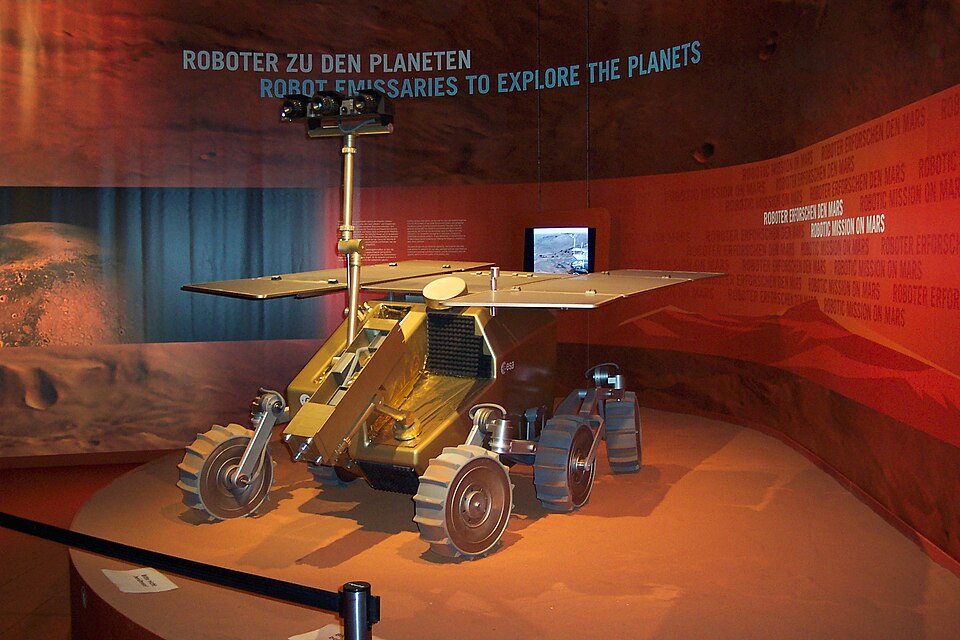
The first challenge is perception and manipulation. A self-replicating machine must be able to understand its environment in detail. It must identify raw materials, distinguish between useful and unusable resources, and manipulate those materials with precision. This requires advanced robotics, combining machine vision, tactile sensing, and dexterous control. NASA’s robotic systems on Mars have demonstrated aspects of this capability, but they are still far from the autonomy required for full self-replication.

The second challenge is materials processing. On Earth, manufacturing depends on highly specialized supply chains and controlled environments. A Von Neumann probe cannot rely on such infrastructure. It must extract metals, refine them, and fabricate components using whatever resources are available locally. This could involve melting regolith, separating elements through chemical or electrochemical processes, and using additive manufacturing techniques to build structural and mechanical parts. In space, these processes must operate in vacuum, under microgravity or low-gravity conditions, and with limited energy.

Energy itself is the third major challenge. Any self-replicating system must generate enough power to sustain its operations. This is where the “PV” component—presumably referring to photovoltaic systems—becomes critical. Solar energy is abundant in space, especially near the Sun, and photovoltaic arrays can convert sunlight into electricity with increasing efficiency. A self-replicating probe would likely deploy solar panels, use them to power its manufacturing processes, and then construct additional panels as part of its replication cycle. In this sense, energy generation becomes part of the replication process itself.

The fourth challenge is information. A machine cannot replicate itself unless it carries a complete description of its own structure and function. In biology, this role is played by DNA. In a Von Neumann probe, it would be a digital blueprint—a comprehensive dataset containing everything needed to build the machine from raw materials. This blueprint must be robust, error-resistant, and adaptable. It must also include the software required to interpret the instructions, control the manufacturing processes, and respond to unexpected conditions.

This brings us to autonomy. A self-replicating probe cannot rely on real-time control from Earth, especially as it moves farther into space. Communication delays, which can range from minutes to hours, make direct control impractical. The probe must make decisions independently, guided by artificial intelligence capable of planning, problem-solving, and learning. It must handle uncertainties, recover from errors, and adapt to environments that may differ significantly from those it was designed for.

When Musk refers to a system like “Optimus + PV,” he is implicitly combining several of these elements. Optimus, as a humanoid robotic platform, represents the manipulation and interaction capability—the ability to move, handle tools, and perform complex tasks. Photovoltaic systems provide the energy backbone. Together, they suggest a modular architecture in which a robotic workforce, powered by solar energy, carries out the processes needed for replication.

But even this is only a starting point. A true Von Neumann probe would require not just one robot, but an ecosystem of machines working together. Some would specialize in mining, others in processing materials, others in fabrication and assembly. The system would resemble a self-contained industrial base, capable of producing everything from structural components to electronic systems.

Electronics, in particular, present a unique challenge. While metals and structural materials can be extracted from many planetary surfaces, the fabrication of advanced semiconductors requires extreme precision and controlled environments. Building a fully self-sufficient probe may require simplifying electronics, developing new manufacturing techniques, or designing systems that can tolerate a degree of imperfection.

Despite these challenges, progress in multiple fields is converging toward the possibility of self-replication. Advances in robotics are making machines more capable and adaptable. Additive manufacturing is enabling the production of complex components with fewer steps and less infrastructure. Artificial intelligence is improving the ability of systems to operate autonomously. And space missions are expanding our understanding of how to work with extraterrestrial materials.

The potential impact of a functioning Von Neumann probe is difficult to overstate. Instead of launching every spacecraft from Earth at enormous cost, humanity could send a small number of seed systems that grow into large-scale infrastructure in space. Asteroid mining operations could expand naturally. Habitats could be constructed using local materials. Exploration could proceed outward at an accelerating pace, limited more by physics than by resources.

At the same time, the concept raises important questions. A system capable of self-replication must be carefully controlled to prevent unintended consequences. Safeguards would need to ensure that replication occurs only under defined conditions and does not continue indefinitely. The idea of machines multiplying beyond human oversight is not just a technical issue, but an ethical one.

In the end, the vision of a Von Neumann probe is both a continuation of a long tradition and a step into something entirely new. Humanity has always built tools to extend its reach, from ships crossing oceans to spacecraft exploring other worlds. A self-replicating machine would extend that reach in a fundamentally different way, allowing exploration to scale in ways that were previously unimaginable.

If such a system is ever realized, it will not arrive as a single breakthrough, but as the result of many incremental advances brought together into a coherent whole. It will be a machine that carries within it the ability not just to act, but to reproduce its own capability. And in doing so, it may mark the moment when exploration becomes not just something we do, but something we set in motion.


  • Facebook
  • Google
  • Slashdot
  • Reddit
  • Live
  • TwitThis


Two small spacecraft currently traversing the void between Earth and Mars are rewriting the playbook for how robotic missions reach the Red Planet. NASA’s ESCAPADE mission, comprising twin spacecraft nicknamed Blue and Gold, launched aboard a Blue Origin New Glenn rocket in November 2025, but they will not arrive at Mars until September 2027. This unusual trajectory represents a deliberate choice to wait for optimal planetary alignment, demonstrating how small spacecraft can offer flexibility that larger missions cannot match.

The ESCAPADE twins carry instruments designed to investigate one of Mars’ most enduring mysteries: how the planet lost the thick atmosphere that scientists believe once permitted flowing water on its surface. Researchers have long suspected the solar wind, a constant stream of charged particles emanating from the Sun, played a central role in stripping away the Martian air over billions of years. The ESCAPADE spacecraft will observe this process directly, measuring how solar wind interacts with Mars’ magnetic field and causes atmospheric gases to escape into space.

What makes the current phase of the mission particularly intriguing is the bonus science the spacecraft are conducting while awaiting their Mars arrival. As of February 2026, both spacecraft have activated their science instruments and are collecting data on Earth’s distant magnetotail, the region of our planet’s magnetic environment that extends away from the Sun. This region has never been studied at such distances, giving scientists their first opportunity to observe how Earth’s magnetic field behaves in the outer reaches of its influence.

The twin spacecraft approach represents a first for Mars exploration. Previous missions to the Red Planet have relied on single spacecraft, limiting observations to one location at any given time. ESCAPADE will provide what mission scientists describe as a stereo perspective, allowing them to observe cause and effect relationships in the Martian magnetosphere from two different vantage points simultaneously. When one spacecraft measures the incoming solar wind while the other measures the planet’s response, researchers can connect these observations to understand the fundamental processes governing atmospheric loss.

The mission’s principal investigator, Rob Lillis of the University of California, Berkeley, has emphasized how the dual-spacecraft configuration enables measurements impossible for single platforms. By observing identical regions at slightly different times, the spacecraft can detect how the Martian magnetosphere changes on timescales as short as two minutes. This temporal resolution will reveal dynamics that previous Mars missions could never capture, potentially answering questions that have puzzled scientists for decades.

Once the spacecraft arrive at Mars in 2027, they will spend approximately six months in complementary orbits before beginning their primary science mission in spring 2028. One spacecraft will remain closer to the planet while the other travels farther away, allowing simultaneous measurement of both the upstream solar wind and the planet’s magnetospheric response. This configuration mirrors the approach used by missions studying Earth’s space weather but represents a first at Mars.

Understanding Mars’ lost atmosphere requires grasp of several interconnected physical processes. The solar wind consists primarily of protons and electrons traveling at speeds typically between 300 and 800 kilometers per second, carrying the Sun’s magnetic field outward through interplanetary space. When this magnetized plasma encounters Mars, it interacts with the planet’s weak magnetic environment, transferring energy and momentum to charged particles in the upper atmosphere.

Mars lacks Earth’s global magnetic field, which shields our planet by deflecting solar wind around the planet like a stone diverting a stream. Instead, Mars possesses scattered regions of remnant magnetization in its crust, along with a dynamically generated magnetic field created when solar wind interacts with charged particles in the ionosphere. This hybrid magnetosphere provides only partial protection, allowing solar wind to directly impact the upper atmosphere in many regions.

The process of atmospheric escape takes multiple forms. Ion pickup involves charged particles from the ionosphere being accelerated by the solar wind and thrown away from the planet. Sputtering occurs when incoming solar wind particles strike atmospheric molecules with enough energy to eject them into space. The most dramatic form, sometimes called atmospheric stripping, happens when solar wind pressure physically pushes atmosphere off the planet, particularly from regions where magnetic protection is weakest.

Measuring these processes requires precise instrumentation capable of detecting low-energy ions and electrons in the tenuous Martian atmosphere. ESCAPADE carries multiple instruments designed specifically for this purpose, allowing scientists to quantify exactly how much atmosphere Mars loses each second and how that loss rate varies with solar wind conditions. This data will not only explain Mars’ past but also inform planning for future human missions, which will need to understand the radiation environment astronauts will encounter.


  • Facebook
  • Google
  • Slashdot
  • Reddit
  • Live
  • TwitThis