


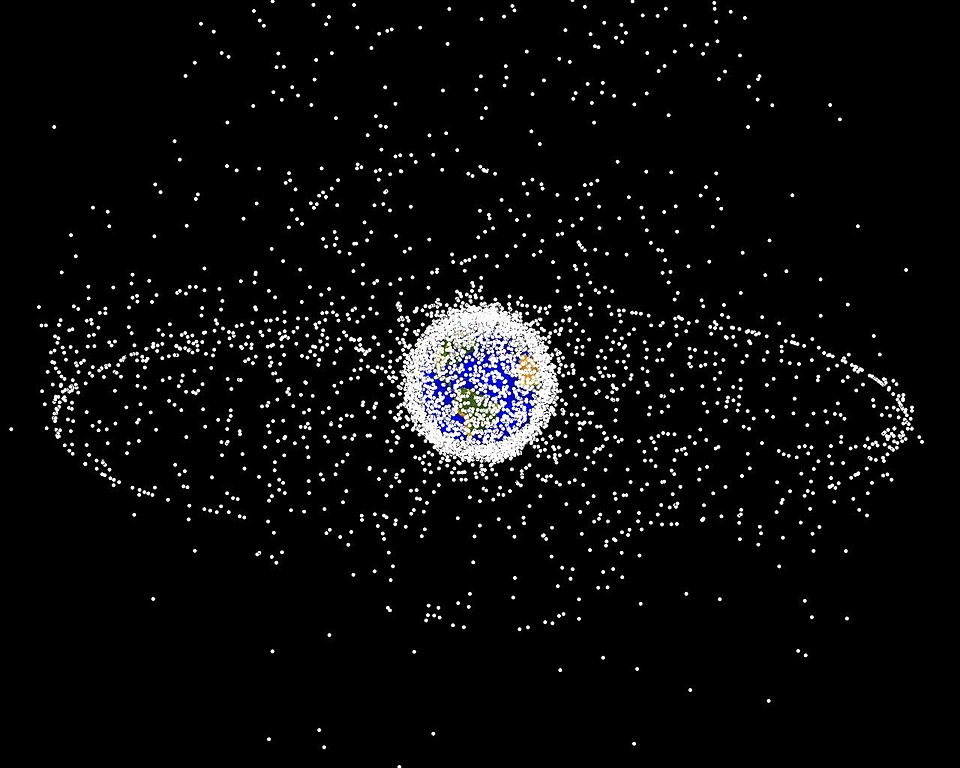
The growing threat of orbital debris has prompted a new generation of cleanup missions, and Isar Aerospace’s recent contract with Astroscale represents a significant step toward commercial active debris removal. Announced on March 16, 2026, the agreement will launch Astroscale’s ELSA-M (End-of-Life Service Mission) aboard Isar’s Spectrum launch vehicle from the company’s facility at Andøya Space in Norway. The mission aims to demonstrate the practical viability of capturing and removing defunct satellites from orbit, addressing what many consider the most pressing sustainability challenge in space exploration.
ELSA-M represents one of the world’s first commercial end-of-life services for satellites designed with docking interfaces. Unlike traditional spacecraft that cannot be captured, satellites built for servicing carry dedicated attachment points and structural provisions that enable a servicing vehicle to approach, rendezvous, and secure the target. Once captured, the servicing spacecraft can either deorbit the retired satellite into Earth’s atmosphere for destruction or relocate it to a disposal orbit.
The mission holds particular significance for Isar Aerospace as the company’s first involvement in an active debris removal project. Stella Guillen, Chief Commercial Officer, emphasized that the contract demonstrates Spectrum’s capability to deliver payloads to the specific orbits required for rendezvous operations, a more demanding requirement than standard satellite deployment. The precision needed for debris removal missions, where the launch vehicle must place the servicing spacecraft in precisely the right orbital plane and altitude, showcases the performance of Isar’s homegrown launch system.
Spectrum represents Isar’s entry into the small satellite launch market, designed, built, and operated entirely in-house with a high degree of automation. The vehicle uses a staged combustion cycle engine running on liquid oxygen and propane, a propellant combination that offers good performance while simplifying storage and handling. The company has focused on manufacturing scalability, using automated processes to increase production rates and reduce per-launch costs.
Astroscale’s ELSA-M mission receives support from the UK Space Agency through the European Space Agency’s ARTES program as part of the Sunrise Partnership Project, a public-private collaboration with satellite operator Eutelsat. The UK subsidiary of Astroscale Holdings Inc. has positioned itself as a leader in orbital debris removal technology, having previously demonstrated its capture capabilities in controlled tests.
The need for active debris removal has become increasingly urgent. Roughly 130 million objects larger than one millimeter orbit Earth, with approximately 36,000 objects large enough to cause catastrophic damage if they struck an operational spacecraft. Collisions between debris objects create additional fragments in a cascading process known as the Kessler Syndrome, potentially rendering entire orbital regions unusable for future missions.
Active debris removal requires spacecraft to perform complex relative navigation in three-dimensional space. Unlike launching a payload to a specific orbit, rendezvous operations demand precise control of position and velocity in relation to a target that may be tumbling or in an unpredictable orientation. The chaser spacecraft must approach slowly and carefully, typically using a combination of laser rangefinders, infrared sensors, and cameras to determine relative position.
Capture mechanisms vary depending on target design. For satellites built with servicing interfaces, magnetic or mechanical docking systems provide a secure connection. For legacy satellites lacking such provisions, alternative approaches include deploying nets, using robotic arms, or employing gripper mechanisms that attach to existing structural elements. The ClearSpace-1 mission being developed by ESA will test a four-armed robotic capture system designed to grab a defunct upper stage.
After capture, the debris removal spacecraft must perform a deorbit burn to lower the combined system’s perigee into the upper atmosphere, where drag causes eventual reentry and destruction. This process typically requires significant propellant, which is why servicing spacecraft carry substantial fuel reserves. The ultimate goal is to ensure that debris objects reenter within 25 years, the guideline established by the United Nations Committee on the Peaceful Uses of Outer Space for responsible space stewardship.
 Subscribe to our RSS feed









There are no comments.
Add A Comment