OrbitalHub

The place where space exploration, science, and engineering meet

Domain is for sale. $50,000,000.00 USD. Direct any inquiries to contact@orbitalhub.com.

02-21-09

Carnival of Space #91

Posted by


Credits: NASA/Jack Pfaller


Carnival of Space, edition 91, is hosted by Brian Wang at Next Big Future.


This week you can read about recent statistical treatments of the Drake Equation, the Texas Fireball, liquid water on Mars, the business, law, and economics of the new Space Age, the early Shuttle manipulator, sand dunes on Mars, and much more.


OrbitalHub has submitted a post about the Dawn mission. The Dawn spacecraft is currently performing the Mars flyby phase of its mission. The purpose of the Mars flyby is to alter the trajectory of the spacecraft in order to rendezvous with its first scientific target in the main asteroid belt.


  • Facebook
  • Google
  • Slashdot
  • Reddit
  • Live
  • TwitThis


Credits: NASA/MSFC


Solar sails have emerged as a revolutionary propulsion system for space travel. Due to increased interest in both theoretical and experimental research, the benefits of solar sailing have become clear and compelling.


Two leading experts in solar sail propulsion, Gregory Matloff and Les Johnson, have agreed to share their knowledge about this exciting topic with OrbitalHub readers.


Gregory Matloff teaches physics at the New York City College of Technology and consults for NASA’s Marshall Space Flight Center. Les Johnson is a physicist at NASA’s Marshall Space Flight Center, where he serves as the Deputy Manager of the Advanced Concepts Office.


DJ: From the whole range of space technology-related fields of research, why was it that solar sails attracted your attention?
Gregory Matloff: I was attracted to solar sailing because it is an example of space propulsion that requires no fuel. As such, it has the potential to achieve higher velocities at less cost.
Les Johnson: They are simple, elegant and very practical in that they do not require any fuel. We are extremely limited in our exploration of space because of our lack of efficient propulsion. Sails, which require no fuel, will enable some science and exploration missions that are currently impossible (using only chemical rockets).


DJ: In the Solar Sails book, you have presented the problems and limitations of chemical, nuclear, and ion rocket propulsion. Why do you think that, despite these limitations, the solar sail has not yet been adopted as a means of propulsion for interplanetary robotic missions?
G.M.: Solar sails have been slower to achieve operational readiness for a number of reasons. First, space agencies have developed vast rocket-based infrastructures. We simply have more experience with rockets. Second, rockets work on Earth as well as in space. We needed a lot of in-space experience before sail testing in space could begin. Third, space-mission planners are a conservative lot. They (correctly) will not risk their payloads to a sail until the technological readiness of solar sailing is sufficiently advanced.
L.J.: The reasons are simple. 1) Any mission conducted in space is expensive. When you are the owner of a multi-million dollar spacecraft, you tend to become very conservative and risk averse. Even though there are many benefits to be gained from using a solar sail, it is new and therefore risky. We’ve flown hundreds, if not thousands, of rocket engines and not a single solar sail. Would you risk your investment on a new (risky) propulsion system? 2) Anytime you use a new technology, the first flight will be more expensive. If you are paying for a space mission and your budget is limited, you must often choose between what is best (like a solar sail) and what is good enough (like the tried and true rocket engine). Tried and true seems to be the choice right now.
Let me be clear. This may be penny wise but it is pound foolish. If solar sails become an “off the shelf” option like some rocket engines, then we will be going new places and learning things that we simply cannot otherwise accomplish with “tried and true” technologies.


DJ: How many solar sail designs have been considered to date, and which one do you think will prove to be the most successful in the future?
G.M.: There are six or seven different sail designs. These include rectangular (or square), spinning-disc, heliogyro, parachute, hollow-body, parabolic and hoop sails. All these and various other configurations may find application to different missions.
L.J.: There is no clear answer here. NASA and DLR selected the square, 3-axis stabilized approach. The Russians, with their Znamya, appear to prefer a spinning solar sail. Others prefer the heliogyro. All appear to be feasible.


DJ: How well suited is the solar sail for manned space missions?
G.M.: Unfurled near Earth, solar-sails are slow to accelerate but can reach high velocities. Current Earth-launched sail designs could be uprated and enlarged to carry freight to support manned interplanetary expeditions. Future thinner, heat-tolerant and radiation resistant solar sails manufactured in space could result in faster interplanetary transfers and even slow interstellar travel.
L.J.: Any solar sail that we can foresee building in the near term will be useful only for robotic missions. These sails will be big enough — some nearly half a mile on a side! To get the materials and sizes required for a human mission will require advances in materials technology that are difficult to imagine happening anytime soon. Though I am optimistic that they will eventually occur, we prefer the incremental approach. We should begin with using sails to propel robots and move toward a capability for humans.


DJ: How do you think space propulsion systems will evolve in the near future? To what extent will they include solar sails?
G.M.: Future solar-sail evolution requires advances in space infrastructure — notably in-space manufacturing, and materials science. More theoretical work on space environment effects and theories of devices such as the perforated solar sail is also required. Also, space-based solar-pumped lasers could be developed to allow sail acceleration farther from the Sun.
L.J.: I believe we won’t be giving up chemical rockets anytime soon. We will see more and more flights of solar electric propulsion after the (assumed) success of the DAWN mission, which is currently enroute to asteroids Ceres and Vesta. THEN we might see the use of solar sails begin.


Les Johnson and Gregory L. Matloff are two of the co-authors of the book Solar Sails: A Novel Approach To Interplanetary Travel. A good review of the book was written by Paul A. Gilster of Centauri Dreams. I invite everyone to read it.


  • Facebook
  • Google
  • Slashdot
  • Reddit
  • Live
  • TwitThis
02-17-09

Dawn and the Flyby of Mars

Posted by


Credits: NASA/JPL


The Dawn spacecraft is currently performing the Mars flyby phase of its mission. The purpose of the Mars flyby is to alter the trajectory of the spacecraft in order to rendezvous with its first scientific target in the main asteroid belt.


The spacecraft will come within 549 km of the surface of Mars on February 17, 2009, at 4:28 PST.


The flyby is a gravity assist maneuver used in orbital mechanics to alter the trajectory of a spacecraft. The gravity assist is also known as a gravitational slingshot. The first ever gravity assist maneuver was performed by Mariner 10 in February 1974, and most of the interplanetary missions have made use of it since then.


The scientific objective of the Dawn mission is to answer important questions about the origin and the evolution of our solar system. The currently accepted theory about the formation of our solar system states that Jupiter’s gravity interfered with the accretion process, thereby preventing a planet from forming in the region between Jupiter and Mars. This led to the formation of the asteroid belt.


The asteroids chosen as scientific targets for the Dawn mission are Vesta and Ceres. Due to their size, they have survived the collisional phase, and it is believed that they have preserved the physical and chemical conditions of the early solar system. The asteroids have followed different evolutionary paths and have dissimilar characteristics, which makes them perfect research subjects.


Credits: NASA/JPL


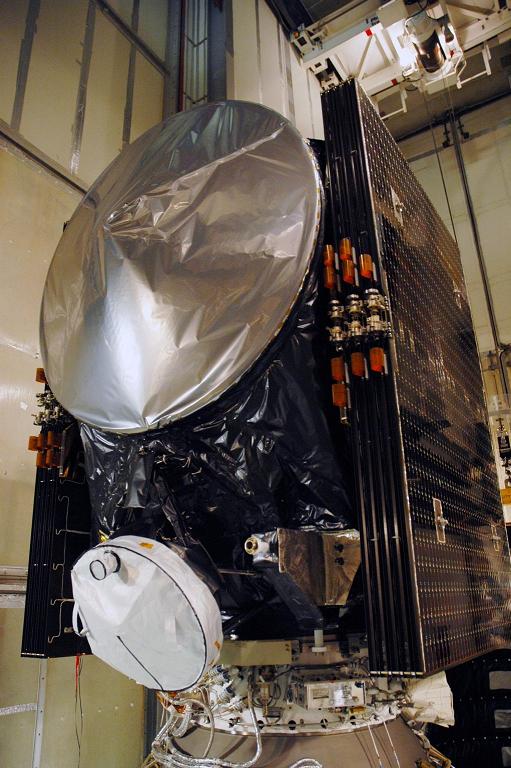
The design of the Dawn spacecraft is based on Orbital’s STAR-2 series, and uses flight-proven components from other Orbital and JPL spacecraft: the propulsion system is based on the design used on Deep Space 1, the attitude control system used on Orbview, a hydrazine-based reaction control system used on the Indostar spacecraft, and command and data handling, as well as flight software, from the Orbview program.


The core structure of the spacecraft is a graphite composite cylinder, while the panels are aluminum core with aluminum/composite face sheets.


The central cylinder hosts the hydrazine and xenon tanks. The hydrazine tank can store 45 kg of fuel, while the xenon tank has a capacity of 450 kg.


The attitude control system (ACS) uses star trackers to estimate attitudes in cruise mode. A coarse Sun sensor (CSS) allows ACS to keep the solar panels normal to the Sun-spacecraft line. ACS also uses the hydrazine-based reaction control system for the control of attitude and for desaturation of the reaction wheels.


Credits: NASA/George Shelton


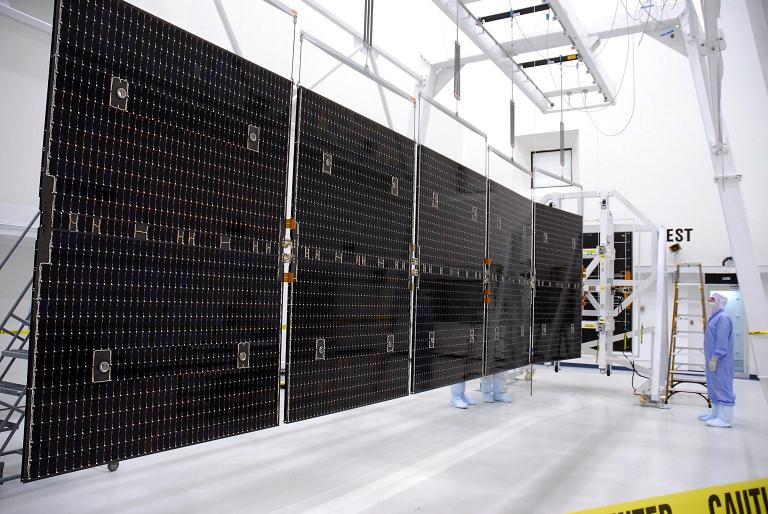
The solar panels are capable of producing more than 10 kW at 1 AU and 1 kW at 3 AU (on Ceres’ orbit).


The command and data handling system (CDHS) is based on a RAD6000 board running VxWorks. The software is written in C. There are 8GB available on the board as storage for engineering and scientific data.


The scientific payload consists of the Framing Camera (FC), the Gamma Ray and Neutron Detector (GRaND), and the visible and infrared (VIR) mapping spectrometer.


The FC will be used for determining the bulk density, the gravity field, for obtaining images of the surface, and for compiling topographic maps of Vesta and Ceres. In addition, the FC will capture images for optical navigation in the proximity of the asteroids. For reliability purposes, the payload includes two identical cameras that can run independently.


GRaND will serve for the determination of the elemental composition of the asteroids. GRaND is the result of the expertise accumulated during the Lunar Prospector and Mars Odyssey programs.


Credits: NASA/Jack Pfaller


VIR will help map the surface mineralogy of the asteroids. The instrument is a modified version of the visible and infrared spectrometer flying on the Rosetta mission.


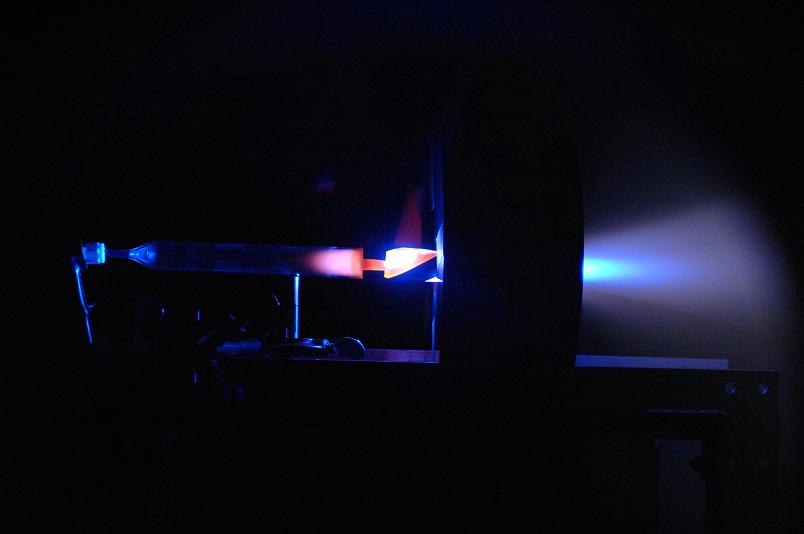
The Dawn spacecraft uses ion propulsion to make its journey to Vesta and Ceres. Ion propulsion will also be used by Dawn during the low altitude flights over the asteroids.


While the fact that Dawn’s engines have a thrust of only 90 mN can hardly impress a reader, the important detail to mention when discussing propulsion systems is the specific impulse. Dawn’s engines have a specific impulse of 3100 s. For a chemical rocket, the specific impulse ranges from 250 s for solid rockets to 450 s for bipropellant liquid rockets. The only drawback (if this can be regarded as a drawback) is that the ion engines must be fired for much longer in order to achieve an equivalent trajectory.


With such high specific impulse engines, Dawn makes use of the fuel onboard in a very efficient way. The fuel used is xenon, a heavy noble gas placed in group 8A of the periodic table. The power produced by the large solar panels is used to ionize the fuel and then accelerate it with an electric field between two grids. In order to maintain a neutral plasma, electrons are injected into the beam after acceleration.


Credits: NASA/Amanda Diller


Dawn was launched from Cape Canaveral Air Force Station and injected on an interplanetary trajectory by a Delta II launch vehicle.


The main contributors to the Dawn mission are the University of California in Los Angeles (science lead, science operations, data products, archiving, and analysis), the Jet Propulsion Laboratory (project management, systems engineering, mission assurance, payload, navigation, mission operations, level zero data), and the Orbital Sciences Corporation (spacecraft design and fabrication, quality assurance, and payload integration).


The scientific payload was provided by the Los Alamos National Laboratory, the German Aerospace Center, the Max Planck Institute, and the Italian Aerospace Center. The Deep Space Network is responsible for data return from the spacecraft.


For more information about Dawn, you can visit the Dawn Mission Home Page on the JPL web site.


  • Facebook
  • Google
  • Slashdot
  • Reddit
  • Live
  • TwitThis


Credits: NASA-JPL


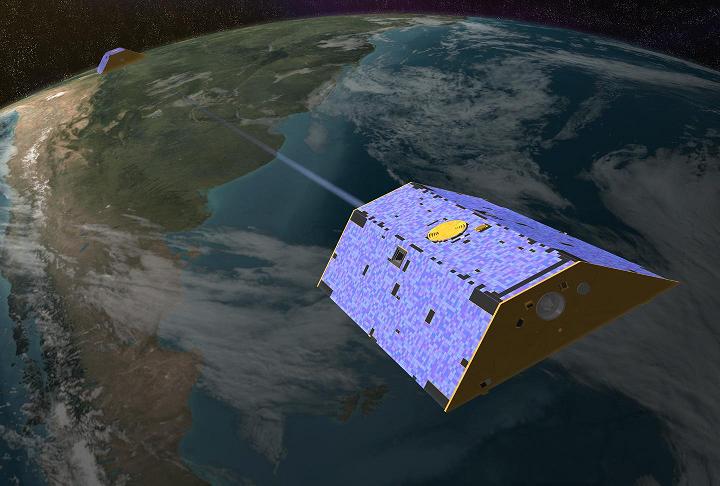
While the preparations for ESA’s GOCE mission are under way, NASA already has its own gravity mapping mission called GRACE, which was launched in March 2002.


NASA teamed up with the German Space Agency to launch GRACE (Gravity Recovery And Climate Experiment).


GRACE currently provides detailed measurements of the Earth’s gravity field, and these measurements help scientists better understand the effects of gravity on global climate change, oceans, and land masses. This will lead to better predictions about changes in water supply, weather forecasts, and natural hazards.


The data gathered by GRACE has been used to create the best map to date of Earth’s gravitational field. While common sense and introductory physics textbooks tell us that the weight of an object should not have different values at different locations on the surface of the Earth, measurements taken indicate that there are areas where gravity is slightly stronger or weaker than the average. Many of the peaks or valley on the maps put together by scientists can be attributed to surface features, like ridges or mountains. However, there are cases when the variations cannot be explained, and they might be related to high or low sub-surface densities.


The maps compiled from the scientific data returned by GRACE are 1,000 times more accurate then maps previously produced.


The GRACE mission consists of two satellites flying one behind another in near circular orbits at an altitude of 460 km and about 220 km apart. The satellites have really neat nicknames: Tom and Jerry. The leading satellite (that would be Jerry) sends a microwave signal to the trailing satellite (Tom) to precisely measure the distance between the two. GRACE can detect very small changes in the distance that separates the two spacecraft, down to one-tenth of the width of a human hair. The Global Positioning System (GPS) onboard Tom and Jerry is used to determine the precise location of the measurement taken.


Credits: NASA-JPL


What is the science involved in taking these measurements? When a satellite passes over an area where the gravity is stronger, it will experience a stronger gravitational pull and increase its speed. Conversely, the speed of the satellite will decrease when passing over areas with weaker gravity.


Going back to the satellites, the variations in the gravity field will cause the distance between the two spacecraft to vary slightly. On the ground, the measurements of the distance between the GRACE satellites are translated into variations of the gravity field, and this is how the maps are compiled.


GRACE maps the entire gravity field of Earth every thirty days. The snapshots allow the detection of changes in the polar ice sheets, sea level, ocean currents, the Earth’s water cycle, and even the interior structure of the Earth.


The list of applications is impressive. Measurements over ice sheets can indicate decreases in the ice sheet’s mass. Decreases in gravity can also indicate drying river basins. And not just changes in water above the ground can be measured, but also water stored in aquifers beneath the surface.


For more information about GRACE check out NASA’s web site or the dedicated web page at the University of Texas at Austin.


  • Facebook
  • Google
  • Slashdot
  • Reddit
  • Live
  • TwitThis


Credits: NASA


Kepler is the first NASA mission capable of finding terrestrial exo-planets. Of particular interest are the planets orbiting in the so-called habitable zone, where conditions are met so that liquid water can exist on the surface of the planet.


The observations made so far have brought clear evidence that planets orbiting around other stars are a common thing, rather than the exception to the rule. Due to the limitations of present technology, only gas giants, hot-super Earths in short period orbits, and ice giants have been discovered.


The Kepler mission, part of NASA’s Discovery Program, is designed to survey a portion of our region of the Milky Way. Kepler will survey a large number of stars, and explore the structure and diversity of many planetary systems.


The scientific objectives of the mission are very ambitious: determine the fraction of terrestrial planets in or near the habitable zone, determine the distribution of sizes and the orbits of exo-planets in the surveyed planetary systems, determine reflectivity, size, and density of short-period giant planets, estimate how many planets are in multiple-star systems, and determine the characteristics of the stars that have planets orbiting around them. Scientists hope to discover additional members of the planetary systems surveyed using other indirect techniques.


Credits: NASA/Ball Aerospace


The duration of the mission must be selected to allow the detection and confirm the periodic nature of the planet transits in or near the habitable zone. Due to the characteristics of orbits of such planets, a lifetime of three and a half years (as currently envisioned) would allow a four-transit detection of most orbits up to one year in length and a three-transit detection of orbits of length up to 1.75 years.


The mission lifetime will be extendible to at least six years. The extension will permit the detection of planets smaller than Earth with two-year orbits.


Kepler will be inserted in an Earth-trailing heliocentric orbit, then the spacecraft will slowly drift away from Earth. The selected orbit offers a very stable pointing attitude, and it avoids the high radiation dosage associated with an Earth orbit. However, Kepler will be exposed occasionally to solar flares.


The communication protocol with the spacecraft includes establishing contact twice a week for commanding, health, and status, and science data downlink contact once a month.


Credits: Jon Lomberg


There are two requirements that dictated the selection of the target field. The first requirement is the ability to monitor continuously the stars surveyed because transits last only a fraction of a day. This can be achieved by having the field of view out of the ecliptic plane, so the Sun will not interfere with the observations at any time during the year. The second requirement is to have the largest possible number of stars in the field of view.


To meet both requirements, a region in the Cygnus and Lyra constellations of our galaxy has been selected as the field of view.


Kepler will use the transit method for detecting exo-planets. The sensitivity of the photometer will allow the discovery of terrestrial exo-planets (planets comparable in size and composition to Earth that are orbiting other stars).


The transit occurs when a planet passes in front of its star as viewed by an observer. Depending on the size of the planet, the change in the brightness of the star has different amplitudes. Transits of terrestrial planets cause a change in the star’s brightness of about 1/10,000, and they last from two to sixteen hours.


Credits: NASA


Changes in star brightness that are produced by a planet transit must be periodic, and all transits produced by the same planet must cause the same variation of brightness and last the same amount of time.


Of course, the case when two or more planets are in transit at the same time must be considered, and this can make the detection method a little bit more complicated.


The method allows for the calculation of the orbit, the mass, and the characteristic temperature of the exo-planet. Once we know the characteristic temperature of an exo-planet, the question of whether or not the planet is habitable (by our standards) can be answered.


The Kepler instrument is a special telescope called photometer or light meter. The telescope has a very large field of view for an astronomical telescope, 105 square degrees. The primary mirror of the telescope is 0.95 m in diameter. The telescope needs a large field of view because it has to continuously monitor the brightness of more than 100,000 stars for the duration of the mission.


Credits: Ball Aerospace


The photometer is composed of one instrument, which is an array of charge-coupled devices (CCD), 42 in total. Each CCD is 50mm x 25mm and has 2200 x 1024 pixels. Data from the individual pixels that make up each star are recorded continuously and simultaneously.


The primary mirror of the photometer was coated with enhanced silver, which allows more light to reach the telescope’s detectors.


The spacecraft provides power, attitude control, and telemetry for the photometer. The mission requirements contributed to the simple design of the spacecraft. The only moving parts are the reaction wheels used to control the attitude of the spacecraft.


The launcher selected for the mission is Delta II. Delta II is a versatile launcher, and can be configured in two or three-stage vehicles in order to accommodate a variety of requirements.


Ball Aerospace is the prime contractor for the Kepler mission, building the photometer and the spacecraft, as well as managing the system integration and testing of the spacecraft. The Jet Propulsion Laboratory is managing mission development, while NASA Ames Research Center is responsible for ground system development, mission operations, and science data analysis.


Once the first observation results are downloaded from Kepler and made available to scientists, we will be able to place our solar system within the context of planetary systems in our galaxy.


The launch of Kepler is planned for March 5, 2009. For more information about the Kepler mission, you can visit the Kepler mission web page.


  • Facebook
  • Google
  • Slashdot
  • Reddit
  • Live
  • TwitThis
01-8-09

Taurus II and Cygnus

Posted by


Credits: NASA


Orbital will employ its Taurus II medium-lift launch vehicle and the Cygnus spacecraft in order to service the International Space Station (ISS) under the Commercial Resupply Services (CRS) contract.


Orbital is one of the two companies awarded CRS contracts under the Commercial Orbital Transportation Services Project (COTS).


NASA announced the COTS project on January 18, 2006. The purpose of the program is to stimulate the development of access to low Earth orbit (LEO) in the private sector. At the time, with the imminent retirement of the Space Shuttle fleet, NASA was faced with the option of buying orbital transportation services on foreign launch systems: the Russian Soyuz / Progress, the European Ariane 5 / ATV, or the Japanese H-II / HTV.


Another factor taken into consideration by NASA was that competition in the free market could lead to the development of more efficient and affordable launch systems compared to launch systems that a government agency could build and operate.


Credits: Orbital


Orbital relies on proven experience in launch vehicle technology. Taurus II is designed to provide low-cost and reliable access to space, and it uses systems from other members of Orbital’s family of successful launchers: Pegasus, Taurus, and Minotaur.


Taurus II is a two-stage launch vehicle that can use an additional third stage for achieving higher orbits. The payloads handled by Taurus II can have a mass of up to 5,400 kg.


Orbital is responsible for overall development and integration of the first stage. The two AJ26-62, designed and produced by Aerojet and Orbital, are powered by liquid oxygen and kerosene. The core design is driven by NPO Yuzhnoye, the designer of the Zenit launchers.


The AJ26-62 engines are basically the NK-33 engines designed by the Kuznetsov Design Bureau for the Russian N-1 launch vehicle, and remarketed by Aerojet under a new designation.


The second stage uses an ATK Castor-30 solid motor with thrust vectoring. This stage evolved from the Castor-120 solid stage.


The optional third stage is developed by Orbital. The stage was dubbed the Orbit Raising Kit (ORK) and it uses a helium pressure regulated bi-propellant propulsion system powered by nitrogen tetroxide and hydrazine. ORK evolved from the Orbital STAR Bus. Because it is a hypergolic stage, it allows several burns to be performed in orbit, and can be used for high-precision injections using various orbital profiles.


Credits: Orbital


Cygnus will only have cargo capability and will be able to deliver up to 2,300 kg of pressurized or un-pressurized cargo to the ISS. The spacecraft will also be able to return up to 1,200 kg of cargo from ISS to Earth.


The two components of the Cygnus spacecraft will be the service module and the cargo module.


The service module is based on the Orbital STAR bus (like the ORK stage), and will use two solar arrays for producing electrical power for the navigation systems onboard.


The pressurized cargo module is based on the Italian-built Multi-Purpose Logistics Module (MPLM). The un-pressurized cargo module is based on NASA’s ExPRESS Logistics Carrier.


Cygnus will not dock to the ISS in the same manner as the European ATV, but it will be able to maneuver close to the ISS where the Canadarm 2 robotic arm will be used to capture it and berth it to the Node 2 module, similar to the Japanese HTV or SpaceX’s Dragon spacecraft.


The Mid-Atlantic Regional Spaceport (MARS), located at NASA’s Wallops Island Flight Facility on Virginia’s Eastern shore, was chosen by Orbital to serve as the base of operations for the Taurus II launch vehicle.


MARS has two FAA licensed launch pads for LEO access. MARS also offers access to suborbital launchers, vehicle and payload storage, and processing and launch facilities.


Credits: NASA


Due to the location of the spaceport, latitude 37.8 degrees N, longitude 75.5 degrees W, optimal orbital inclinations for the launches performed at MARS are between 38 and 60 degrees. Polar and retrograde orbits can also be serviced with additional in-flight maneuvering.


The first flight of Orbital’s new Taurus II / Cygnus launch system under COTS is scheduled for late 2010.


  • Facebook
  • Google
  • Slashdot
  • Reddit
  • Live
  • TwitThis