OrbitalHub

The place where space exploration, science, and engineering meet

Domain is for sale. $50,000,000.00 USD. Direct any inquiries to contact@orbitalhub.com.


Credits: NASA


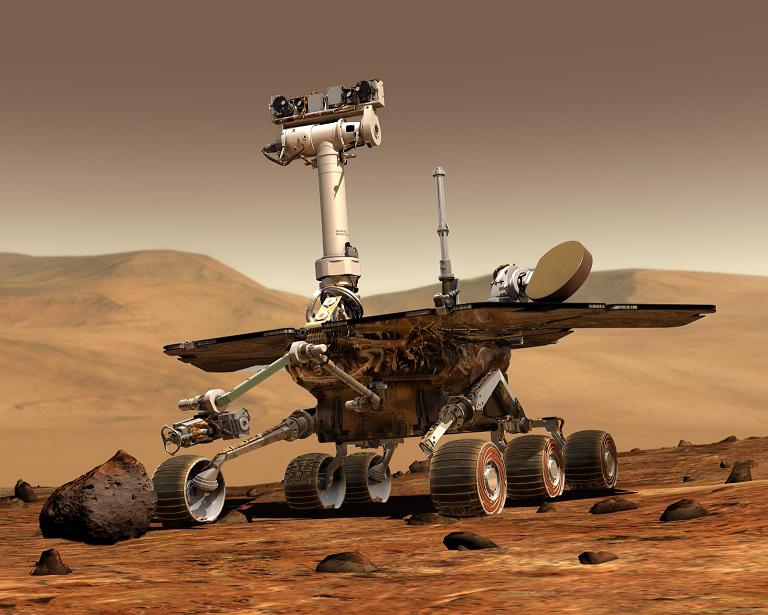
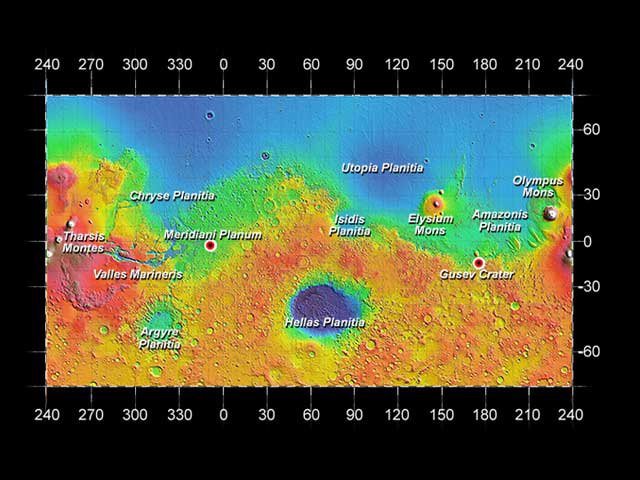
On January 3, 2004, the MER-A rover a.k.a. Spirit landed on Mars at the Gusev Crater. The second rover, MER-B a.k.a. Opportunity, followed twenty-one days later and landed at the Meridiani Planum.


They were both designed to operate for three months on the surface of Mars. Five years later, they are still operational and NASA has planned new missions for them.


Considering the harsh conditions on Mars, NASA’s twin rovers have accomplished remarkable things: they have returned a quarter-million images, driven more than thirteen miles, climbed a mountain, descended into impact craters, and survived dust storms. Using the Mars Odyssey orbiter as a communication relay, the rovers have sent more than 36 GB of scientific data back to Earth.


“These rovers are incredibly resilient considering the extreme environment the hardware experiences every day,” said John Callas, JPL project manager for Spirit and Opportunity. “We realize that a major rover component on either vehicle could fail at any time and end a mission with no advance notice, but on the other hand, we could accomplish the equivalent duration of four more prime missions on each rover in the year ahead.”


Credits: NASA


Digging into the MER mission archive, one detail caught my eye. The rovers carry plaques commemorating the crews of Columbia and Challenger, and some of the landmarks surrounding the landing sites of the rovers are dedicated to the astronauts of Apollo 1, Columbia, and Challenger.


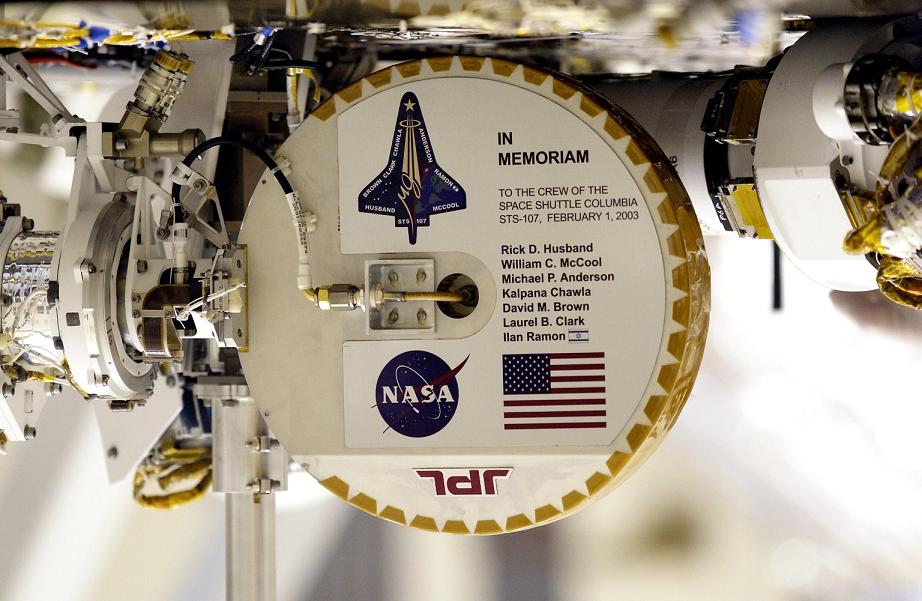
Spirit is carrying a plaque commemorating the STS-107 Space Shuttle Columbia crew, which has been mounted on the high-gain antenna of the rover.


The names of the STS-107 crew are inscribed on the plaque: Rick D. Husband, William C. McCool, Michael P. Anderson, Kalpana Chawla, David M. Brown, Laurel B. Clark, and Ilan Ramon. Their names are now looking over the Martian landscapes.


To further honor their memory, the landing site of the MER Spirit is called the Columbia Memorial Station.


Credits: NASA


Three of the hills surrounding the Columbia Memorial Station are dedicated to the Apollo 1 crew: Gus Grissom, Ed White, and Roger Chafee. Grissom Hill is located 7.5 km to the southwest of Columbia Memorial Station, White Hill is 11.2 km northwest of the landing site, and Chafee Hill is located 14.3 km south-southwest of the landing site.


The area where Opportunity landed in the Meridiani Planum is called Challenger Memorial Station, in memory of the last crew of the Space Shuttle Challenger: Francis R. Scobee, Michael J. Smith, Judith A. Resnik, Ellison S. Onizuka, Ronald E. McNair, Gregory B. Jarvis, and Sharon Christa McAuliffe. I remember that Sharon Christa McAuliffe was NASA’s first teacher in space.


“The journeys have been motivated by science, but have led to something else important,” said Steve Squyres of Cornell University, in Ithaca, N.Y. Squyres is principal investigator for the rover science instruments. “This has turned into humanity’s first overland expedition on another planet. When people look back on this period of Mars exploration decades from now, Spirit and Opportunity may be considered most significant not for the science they accomplished, but for the first time we truly went exploring across the surface of Mars.”


  • Facebook
  • Google
  • Slashdot
  • Reddit
  • Live
  • TwitThis


Credits: NASA


If you want free lecture notes, exams, and videos from MIT, without any registration required, you can find them at MIT Open Courseware.


MIT Open Courseware reflects most of the undergraduate and graduate subjects taught at MIT. One of the courses that caught my eye was an engineering course called Aircraft Systems Engineering.


Even if the formal title of the course is Aircraft Systems Engineering, the lectures are focused on Space Shuttle design. If you are a space enthusiast and have a technical background, you will probably enjoy these lectures.


The course was taught by Professor Jeff Hoffman and Professor Aaron Cohen.


Jeff Hoffman is a former Space Shuttle astronaut. He was a NASA astronaut from 1978 to 1997, having made five space flights and becoming the first astronaut to log 1,000 hours of flight time aboard the Space Shuttle. In 2001, Jeff Hoffman joined the MIT faculty, where he teaches courses on space operations and design and space policy. His principal areas of research are advanced EVA systems, space radiation protection, management of space science projects, and space systems architecture.


Aaron Cohen served as Director of NASA’s Lyndon B. Johnson Space Center in Houston, Texas. He was Manager of the Command and Service Module in the Apollo Spacecraft Program Office. In 1972, he was appointed Space Shuttle Orbiter Project Manager, responsible for design, development, production, and test flights. He also served for a year as the Acting Deputy Administrator for NASA.


One of the guest lecturers is Dale D. Myers. He was NASA Deputy Administrator between October 6, 1986 and May 13, 1989. In the first lecture of the course, Dale D. Myers gives a presentation on the beginning of the Space Shuttle program and describes how the external environment generated the requirements that forced the configuration of the Space Shuttle. This is a must-see, like any other lecture given by someone who has many years of experience under his/her belt. Watching this lecture reminded me of one of my professors back in university, who used to say that the must-have organ for a good engineer is the nose.


The course covers the subsystems of the Space Shuttle, including the requirements that shaped the design, the testing of each subsystem, and how they were operated. The structure of the orbiter, the thermal protection subsystem, the Space Shuttle main engines, landing and mechanical systems, the power systems, accident investigation, etc. are all covered by guest lecturers that were directly involved in the design and construction of the Space Shuttle.


I hope you enjoy the videos as much as I have. Happy New Year and all the best for 2009!


  • Facebook
  • Google
  • Slashdot
  • Reddit
  • Live
  • TwitThis


Credits: SpaceX


NASA has awarded two International Space Station (ISS) Commercial Resupply Services (CRS) contracts to Space Exploration Technologies (SpaceX) and Orbital Sciences Corporation (Orbital).


NASA has ordered eight flights valued at about $1.9 billion from Orbital and twelve flights valued at about $1.6 billion from SpaceX.


The maximum potential value of each contract is roughly $3.1 billion. Based on known requirements, the value of both contracts combined is projected at $3.5 billion.


Credits: Orbital


The awarded contracts are fixed-price indefinite delivery, indefinite quantity contracts. They will begin January 1, 2009, and are effective through December 31, 2016. SpaceX and Orbital each will have to deliver a minimum of twenty metric tons of cargo to the space station, and they will also have to deliver non-standard services in support of the cargo resupply, including analysis and special tasks as the government deems necessary.


SpaceX will service the ISS with its Falcon9/Dragon system.


“The SpaceX team is honored to have been selected by NASA as the winner of the Cargo Resupply Services contract,” said Elon Musk, CEO and CTO, SpaceX. “This is a tremendous responsibility, given the swiftly approaching retirement of the Space Shuttle and the significant future needs of the Space Station. This also demonstrates the success of the NASA COTS program, which has opened a new era for NASA in US Commercial spaceflight.”


Orbital will employ the Taurus IITM medium-lift launch vehicle and the CygnusTM maneuvering space vehicle.


“We are very appreciative of the trust NASA has placed with us to provide commercial cargo transportation services to and from the International Space Station, beginning with our demonstration flight scheduled in late 2010,” said Mr. David W. Thompson, Orbital’s Chairman and Chief Executive Officer. “The CRS program will serve as a showcase for the types of commercial services U.S. space companies can offer NASA, allowing the space agency to devote a greater proportion of its resources for the challenges of human spaceflight, deep space exploration and scientific investigations of our planet and the universe in which we live.”


Both Orbital and SpaceX have issued press releases with more details about the CRS contracts.


  • Facebook
  • Google
  • Slashdot
  • Reddit
  • Live
  • TwitThis


Credits: SpaceX


Another critical milestone has been reached by SpaceX with the arrival of Falcon 9 hardware at Cape Canaveral.


After the full mission-length firing test of the Falcon 9 first stage engines and the firing test of the Dragon maneuvering thruster, the arrival of the Falcon 9 first stage fuel tank fulfills SpaceX’s commitment to having Falcon 9 hardware at Cape Canaveral by year-end.


“Christmas has arrived a few days early for our team at the Cape,” said Brian Mosdell, Director of Florida Launch Operations for SpaceX. “The packages measure extra large this year, and they will keep everyone busy in the coming weeks.”


All of the Falcon 9 elements and the ground support hardware have already left the SpaceX manufacturing facility in Hawthorne, California. The hardware will make its way to the launch site at Cape Canaveral over the next two weeks. The Falcon 9 will then be assembled on horizontal and raised to vertical on the custom built erector.


Credits: SpaceX


There are four Falcon 9 launches scheduled for 2009. Two of these launches are demonstration flights with the Dragon spacecraft as part of the NASA Commercial Orbital Transportation Services (COTS) competition. A total of three flights of the Falcon 9/Dragon launch system will be conducted under the agreement, in order to demonstrate cargo delivery capability to the International Space Station (ISS).


NASA’s agreement with SpaceX can be extended to include demonstrating transport of crew to and from the ISS.


“2008 has been a year of rapid progress for SpaceX,” said Elon Musk, CEO and CTO of SpaceX. “The delivery of the Falcon 9 to the Cape is a major milestone in designing and deploying the most reliable, cost-efficient fleet of launch vehicles in the world. I applaud our SpaceX team who has worked 24/7 to make this happen.”


SpaceX has made available a video of Elon Musk giving a tour of the SpaceX Falcon 9 launch site at Space Launch Complex 40, Cape Canaveral AFS, Florida.


  • Facebook
  • Google
  • Slashdot
  • Reddit
  • Live
  • TwitThis


Credits: NASA/JPL

The Mars Reconnaissance Orbiter (MRO) has completed the first phase of its science mission. During this phase, the orbiter returned seventy-three terabits of science data to Earth, which is more than all earlier Mars missions combined. The next phase of the MRO mission will take two years.


The list of scientific discoveries and observations made by MRO is stunning. We know now that Mars has a long history of climate change and that water was present in liquid form on its surface for hundreds of millions of years.


Signatures of a variety of watery environments have been observed, so future missions will be aware of locations that might reveal evidence of past life on Mars, if it ever existed.


MRO has imaged nearly forty percent of the Martian surface at such a high resolution that house-sized objects can be seen in detail. MRO has also conducted a mineral survey of the planet, covering sixty percent of its surface. Global weather maps were assembled using the data returned by MRO, and profiles of the subsurface and the polar caps have been put together using the radar mounted on MRO.


Credits: NASA/KSC

“These observations are now at the level of detail necessary to test hypotheses about when and where water has changed Mars and where future missions will be most productive as they search for habitable regions on Mars,” said Richard Zurek, Mars Reconnaissance Orbiter project scientist.


The images returned by MRO have been used by the Phoenix team to change the spacecraft’s landing site, and will help the NASA scientists select landing sites for future missions, like the Mars Science Laboratory (MSL).


Another role played by MRO was to relay commands to and to return data from the Phoenix lander during the five months the lander was operational on the Martian surface. MRO shared this task with the Mars Odyssey Orbiter.


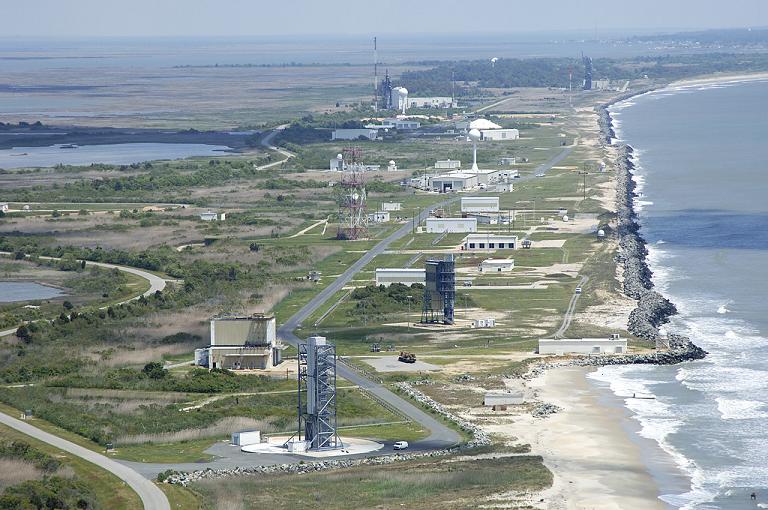
MRO lifted off on August 12, 2005, from launch Complex 41 at Cape Canaveral Air Force Station. The cruise phase of the mission lasted seven months, the spacecraft reaching Mars orbit on March 10, 2006, after traveling on an outbound arc intercept trajectory.


MRO entered the final low orbit suited for science-data collection on November 2006, after slowing down in the Martian atmosphere by using aerobraking for five months. The first phase of the mission consisted in gathering information about Mars, and the remaining time left of its operational life will be dedicated mainly to using the spacecraft as a communication relay.


Credits: NASA/KSC

The declared goals of the MRO mission are: to determine whether life ever arose on Mars, to characterize the climate of Mars, to characterize the geology of Mars, and to prepare for human exploration.


The launcher of choice for the MRO mission was the Atlas V-401 launch vehicle, the smallest of the Atlas V family. This was the first launch of an Atlas V on an interplanetary mission.


The Atlas V-401 is a two-stage launch vehicle that does not use solid rocket boosters. The Atlas V-401 is fifty-seven meters tall and has a total mass at liftoff of 333,000 kg. Out of this, about 305,000 kg is fuel. In order to reach Mars orbit, MRO was accelerated to 11 km per second.


The first stage of the Atlas V, the Common Core Booster, is powered by liquid oxygen and RP-1. For the MRO mission, the first stage used a RD-180 engine. The RD-180 engine has an interesting story. It is a Russian-developed rocket engine, derived from the RD-170 used for the Zenit rockets.


Credits: NASA/JPL/KSC/Lockheed Martin Space Systems

Rights to use the RD-180 engine were acquired by General Dynamics Space Systems Division (later purchased by Lockheed Martin) in the early 1990s. The engine is co-produced by Pratt & Whitney and all production to date has been in Russia. According to Pratt & Whitney, RD-180 delivers a ten percent performance increase over current operational U.S. booster engines.


The stage weighs approximately 305,000 kg at launch and it provides about four million Newton of thrust for four minutes.


The upper stage of the Atlas V is the Centaur Upper Stage Booster. The Centaur is powered by liquid oxygen and liquid hydrogen. In the case of the MRO mission, it provided the remaining energy necessary to send the spacecraft to Mars.


The payload fairing used for the MRO mission was four meters in diameter. The role of the payload fairing was to protect the spacecraft from the weather on the ground as well as from the dynamic pressure during the atmospheric phase of the launch.


Lockheed Martin Commercial Launch Services developed the Atlas V as part of the US Air Force Evolved Expendable Launch Vehicle (EELV) program.


There are six science instruments, three engineering instruments, and two science-facility experiments carried by the MRO. The low orbit on which MRO is operating allowed the observation of the surface, atmosphere, and subsurface of Mars in unprecedented detail.


The science instruments are the HiRISE camera (High Resolution Imaging Science Experiment), the CTX camera (Context Camera), the MARCI camera (Mars Color Imager), the CRISM spectrometer (Compact Reconnaissance Imaging Spectrometer for Mars), the MCS radiometer (Mars Climate Sounder), and the SHARAD radar (SHAllow RADar).


Credits: HiRISE/MRO/LPL/NASA


The HiRISE camera provided the highest-resolution images from orbit to date, while the SHARAD can probe the subsurface using radar waves in the 15-25 MHz frequency band (these waves can penetrate the Martian crust up to one kilometer).


The engineering instruments assist the spacecraft navigation and communication. The Electra UHF Communications and Navigation Package is used as a communication relay between the Earth and landed crafts on Mars. The Optical Navigation Camera serves as a high-precision camera to guide incoming spacecrafts as they approach Mars. The Ka-band Telecommunications Experiment Package demonstrated the use of the Ka-band for power effective communications.


The science facility experiments are the Gravity Field Investigation Package, used for mapping the gravity field of Mars, and the Atmospheric Structure Investigation Accelerometers, which helped scientists understand the structure of the Martian atmosphere.


For more details on the MRO scientific payload, you can check out the dedicated page on the MRO mission web site.


The MRO was built by Lockheed Martin for NASA’s Jet Propulsion Laboratory in California. Fully loaded, the spacecraft had a mass of almost two tons. The spacecraft carried 1,149 kg of propellant for trajectory correction maneuvers and for the burns needed for the Mars capture.


Credits: NASA/JPL


The main bus of the spacecraft presents two massive solar arrays that can generate 2,000 W of power. On top, the high-gain antenna is the main means of communication with both Earth and other spacecrafts. The SHARAD antenna is the long pole behind the bus.


Other visible features are the HiRISE camera, the Electra telecommunications package, and the Context Imager (CTX).


You can visit the home page of the MRO mission on the NASA web site.


  • Facebook
  • Google
  • Slashdot
  • Reddit
  • Live
  • TwitThis
12-12-08

Columbus

Posted by


Credits: ESA/NASA


Columbus is an integral part of the International Space Station (ISS), and it is the first European laboratory dedicated to long-term experimentation in zero-g conditions. The projected lifetime of the laboratory is ten years.


The laboratory is named after the famous Italian navigator and explorer Christoforo Columbus, who discovered the Americas in 1492.


The Columbus Laboratory is a large, pressurized aluminum cylinder measuring 4.5 meters in diameter and 6.9 meters in length. Its side walls contain eight research racks, with another two in the ceiling. Each one of these racks contains its own power and cooling systems. Video and data links systems feed information back to researchers and control centers on the Earth.


Columbus is the smallest ISS laboratory, but it has the same scientific, power, and data handling capacity as the other laboratories owned by Russia, USA, and Japan.


Credits: ESA/NASA


Scientific experiments started immediately on the Columbus because the laboratory arrived at the station with four scientific facilities pre-installed.


Columbus is used to carry out experiments in many different disciplines, including biology, biotechnology, fluid and material science, medicine, and human physiology.


The key element in these experiments is the micro gravity. In micro gravity, with gravitational forces much weaker than on the ground, processes that are obscured by gravity become noticeable. The research racks onboard Columbus are designed to investigate how micro gravity affects materials, biological specimens, and people.


Columbus contains the European Physiology Module Facility, the Fluid Science Laboratory, the BioLab, the Material Science Laboratory, and the European Drawer Rack, which can house a variety of small experiments.


Credits: ESA/NASA


Problems that are investigated on Columbus include the loss of bone cells by astronauts, plant growth in micro gravity, fluids behavior, and combustion of materials.


Experiments are also conducted outside of Columbus. These experiments are used to study the Earth or to expose materials to the harsh radiation, temperature, and the vacuum of space.


The mission that delivered the Columbus Laboratory to the ISS was STS-122. On February 7, 2008, the Space Shuttle Atlantis lifted off from Cape Canaveral, with Columbus docked into its cargo bay.


A vital part of the ISS and a prerequisite for the STS-122 mission, the Italian-built Node2 module (a.k.a. Harmony) was delivered to the ISS by the STS-120 mission in October 2007. The node is used as a connecting component for the Columbus Laboratory and the Kibo Laboratory. Node2 is also a docking port for the Space Shuttle.


Credits: ESA/NASA


Prior to the STS-122 mission , there were two spacewalks performed by the ISS Expedition 16 crew to prepare Node2 in order to receive the Columbus Laboratory.


ESA astronauts Léopold Eyharts from France and Hans Schlegel from Germany were members of the STS-122 mission. With five other NASA astronauts, they were part of the Columbus assembly and commissioning mission.


Schlegel spent twelve days in space and undertook two spacewalks to install the laboratory. Eyharts oversaw the installation and the start-up of the laboratory during a longer mission spent onboard the ISS.


Columbus was attached to the Harmony module on February 11, 2008, during the first spacewalk of the STS-122 mission. During this spacewalk, NASA astronauts Stanley Love and Rex Walheim spent nearly eight hours outside the ISS. The ISS robotic arm, Canadarm2, was used to move the laboratory from the cargo bay of the Space Shuttle to the starboard side of the Harmony module.


Credits: ESA/NASA


The second spacewalk of the mission lasted six hours and forty-five minutes. Schlegel and Walheim performed a regular station maintenance operation: they replaced the nitrogen tank that is used to pressurize the ammonia cooling system that runs on the ISS.


ESA was quite inspired to name the laboratory Columbus because it will open the world of micro gravity to a multitude of discoveries, in the same way that Christoforo Columbus opened up the New World to European explorers.


  • Facebook
  • Google
  • Slashdot
  • Reddit
  • Live
  • TwitThis