OrbitalHub

The place where space exploration, science, and engineering meet

Domain is for sale. $50,000,000.00 USD. Direct any inquiries to contact@orbitalhub.com.

01-17-10

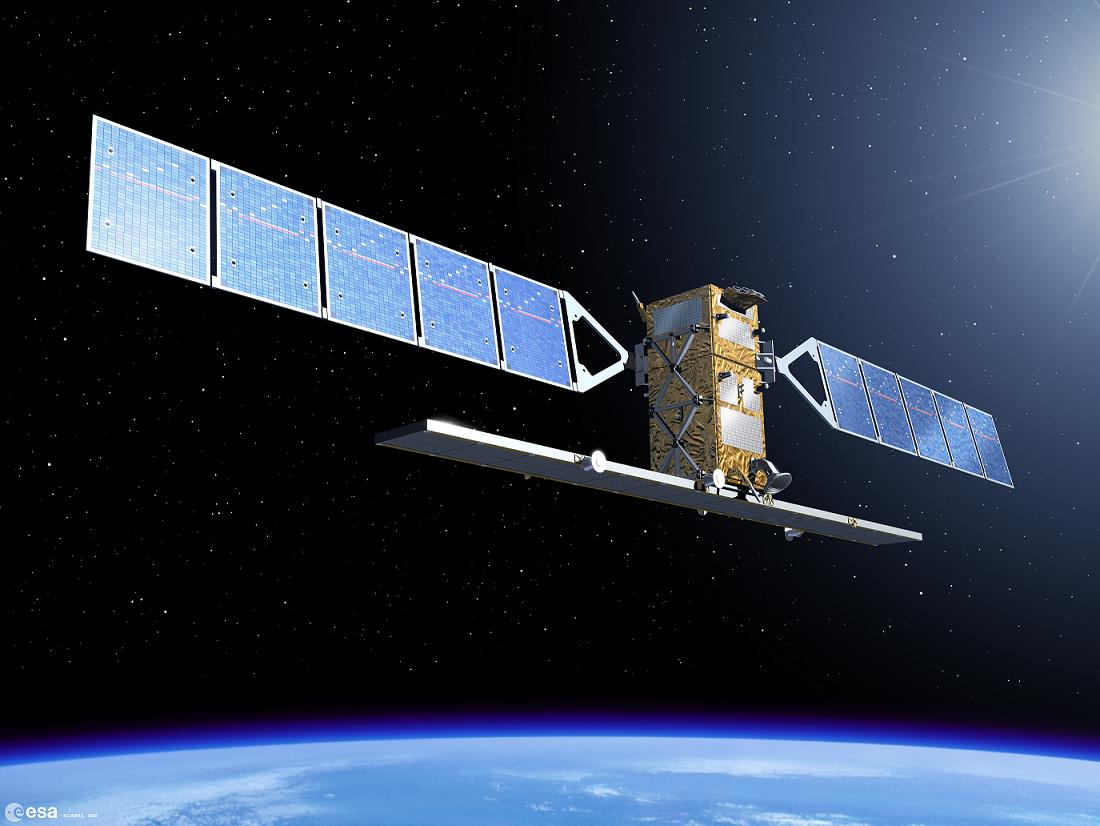
Sentinel

Posted by


Credits: ESA – P.Carril


The European Union’s Global Monitoring for Environment and Security (GMES) initiative was born as the result of a growing need for accurate and accessible information about the environment, the effects of climate change, and civil security. GMES uses as its main information feed the data collected by satellites developed by ESA. Data is also collected by instruments carried by aircraft, floating in the ocean, or located on the ground.


GMES provides services that can be grouped into five main categories: land management, marine environment, atmosphere, aid emergency response, and security.


There are five Sentinel missions designed as components of the GMES initiative. These missions will complement the national initiatives of the EU members involved. The missions will collect data for land and ocean monitoring, and atmospheric composition monitoring, making use of all-weather radar and optical imaging. Each of the Sentinel missions is based on a constellation of two satellites.


Sentinel-1 is an all-weather radar-imaging mission. The satellites will have polar orbits and collect data for the GMES land and ocean services. The first satellite is scheduled for launch in 2012. Sentinel-1 will ensure the continuity of Synthetic Aperture Radar (SAR) applications, taking over from systems carried by ERS-1, ERS-2, Envisat, and Radarsat. Sentinel-1 satellites will be carried to orbit by Soyuz launch vehicles lifting off from Kourou.


Sentinel-2 will provide high-resolution multi-spectral imagery of vegetation, soil, and water, and will cover inland waterways and coastal areas. Sentinel-2 is designed for the data continuity of missions like Landsat or SPOT (Satellite Pour l’Observation de la Terre). Each satellite will carry a Multi-Spectral Imager (MSI) that can ‘see’ in thirteen spectral bands spanning from the visible and near infrared (VNIR) to the shortwave infrared (SWIR). The first Sentinel-2 is planned to launch in 2013. Vega will provide launch services for Sentinel-2 missions.


Credits: ESA – P.Carril


Sentinel-3 will determine parameters such as sea-surface topography and sea and land surface temperature. It will also determine ocean and land colour with high accuracy. The first Sentinel-3 satellite is expected to reach orbit in 2013. The spacecraft bus has a three-meter accuracy real-time orbit determination capability based on GPS and Kalman filtering.


Sentinel-4 is devoted to atmospheric monitoring and it will consist of payloads carried by Meteosat Third Generation (MTG) satellites that are planned to launch in 2017 and 2024. Sentinel-5 will be used for atmospheric monitoring as well. The payload will be carried by a post-EUMETSAT Polar System (EPS) spacecraft, planned to launch in 2020. A Sentinel-5 precursor will ensure that no data gap will exist between the Envisat missions and Sentinel-5.


You can find out more about the GMES initiative and the Sentinel missions on a dedicated page on ESA’s website.


  • Facebook
  • Google
  • Slashdot
  • Reddit
  • Live
  • TwitThis
01-10-10

Arianespace 30th Anniversary

Posted by


Credits: ESA/CNES/Arianespace – Optique vidéo du CSG, L. Boyer


Arianespace was founded in 1980. With twenty-four shareholders from ten European countries (among which CNES holds 34% and EADS 30%), Arianespace is the world’s first commercial space transportation company.


The workhorse of Arianespace has been the Ariane launch vehicle.


Five versions of Ariane have served the company so far: Ariane 1, with the first successful launch on December 24, 1979, Ariane 2, launched for the first time on November 20, 1987, Ariane 3, starting its service on August 4, 1984, Ariane 4, launched on June 15, 1988, and Ariane 5, with the first successful flight on October 30, 1997.


The first launch of Ariane 5, a.k.a. Flight 501, ended with the vehicle being destroyed by its automated self-destruct system, after the high accelerations caused the inertial guidance system to crash. The crash was caused by, I quote, one of the most infamous computer bugs in history. If you like, you can take a look at the Ada code that caused the malfunction. But enough with the dark memories, this is an anniversary after all…


Since its inception, Arianespace has signed over 300 contracts that resulted in more than 277 satellite launches. According to Arianespace, Ariane launchers have delivered more than half of all commercial satellites now in service. The year 2009 was a very successful year for Ariane 5. The launcher orbited nine commercial satellites, the Herschel space telescope, the Planck scientific observatory, and the Helios 2B observation satellite. Ariane 5 has proven to be a versatile launch vehicle, capable of handling a wide range of missions.


The challenges for 2010 are many, as Arianespace is planning up to seven Ariane 5 launches. Two new launch vehicles will join Ariane 5 as part of the Arianespace family of launchers: the Vega small launcher and the Soyuz medium launcher.


You can read more about Arianespace, its mission, and the solutions provided to customers around the world on the Arianespace website.


  • Facebook
  • Google
  • Slashdot
  • Reddit
  • Live
  • TwitThis
11-19-09

Soyuz Update

Posted by


Credits: ESA – S. Corvaja, 2009


Arianespace is getting closer to the first Soyuz launch from Kourou, in French Guyana.


On November 7, 2009, two Soyuz launchers were loaded on MN Colibri, which transports them from Russia to French Guyana. The journey of the two Soyuz 2-1A launchers from St. Petersburg to Kourou takes two weeks.


Each launch vehicle is loaded in ten containers, which hold the four first-stage strap-on boosters, the Block A core stage, the Block I third stage, the Fregat upper stage, and the Soyuz 2-1A ST-type payload fairing. MN Colibri is also carrying the refined kerosene propellant used by the boosters, the Block A and Block I stages, as well as the unsymmetrical dimethylhydrazine (UDMH) and the nitrogen peroxide (N2O4) needed to fuel the Fregat upper stage.


The Soyuz launch site at Kourou is in its final stage of construction. While sharing common features with the cosmodromes at Baikonur in Kazakhstan and Plesetsk in Russia, the launch site at Kourou will have a fifty-two meter tall mobile gantry, which will be used for vertical payload integration and final pre-liftoff processing.


If you ask yourself how safe is Soyuz, it has been in production since 1957, continuously upgraded, and has more than 1,740 successful launches on record to date. Soyuz will become the medium-size launcher in the Arianespace family of launch vehicles. Taking advantage of the low latitude of the European spaceport, Soyuz will be able to deliver three-ton payloads to geostationary orbits.


  • Facebook
  • Google
  • Slashdot
  • Reddit
  • Live
  • TwitThis


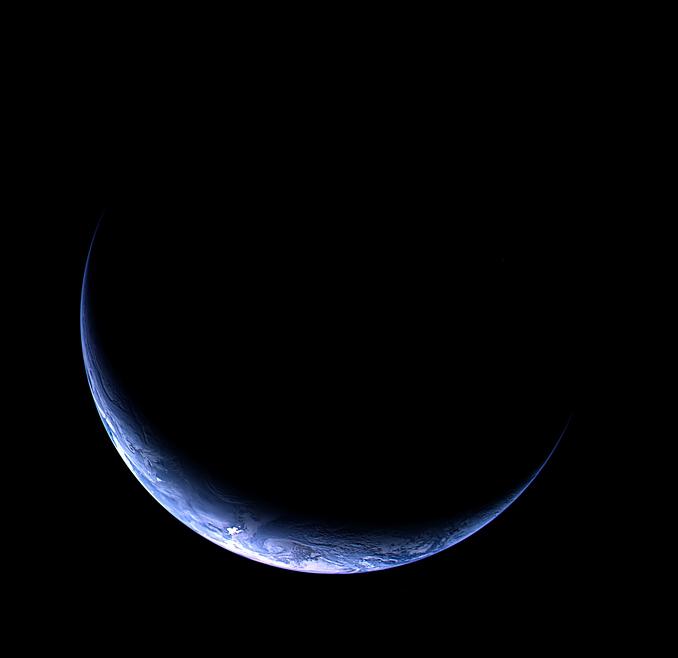
Credits: ESA OSIRIS Team MPS/UPD/LAM/IAA/RSSD/INTA/UPM/DASP/IDA


On November 13, 2009, at 8:45 AM CET, ESA’s comet chaser Rosetta swung by Earth. Rosetta passed just South of the Indonesian island of Java at an altitude of 2481 km. Its speed relative to Earth was 13.34 km/s. The maneuver provided a boost of 3.6 km/s.


Rosetta’s OSIRIS (Optical Spectroscopic and Infrared Remote Imaging System) narrow-angle camera was used to image the Earth once every hour for 24 hours.


Rosetta will meet asteroid 21 Lutetia in 2010. The final destination of Rosetta is the comet 67P/Churyumov-Gerasimenko, which the spacecraft will reach in 2014. Rosetta will deploy a lander to the surface of the comet, and will also orbit the nucleus of the comet and fly alongside as it heads towards the inner Solar System. Most of the time, the probe will hibernate with the majority of its systems shut down in order to optimize the power consumption.


You can find more information about Rosetta’s swing by on ESA’s Rosetta Blog website.


  • Facebook
  • Google
  • Slashdot
  • Reddit
  • Live
  • TwitThis


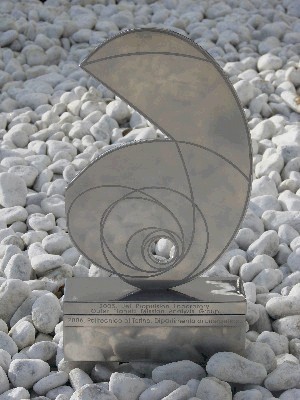
Credits: CNES


Back in January 2009, I announced the 4th Global Trajectory Optimization Competition organized by CNES (Centre National d’Etudes Spatiales).


The purpose of the competition is to stimulate research of techniques for finding the optimal trajectory for different space missions. I came across the GTOC4 competition results and I would like to share them.


A total of 47 teams registered for the competition! The competition problem was disclosed on March 2, 2009, while March 30, 2009, was the deadline for submitting the solutions. In June the presenters were selected and in September 2009 the teams presented their methods and solutions during a one-day workshop held in Toulouse, France.


The problem proposed to the teams this year was called How to maximize the relevance of a rendezvous mission to a given NEA by visiting the largest set of intermediate asteroids.


The formulation of the problem proposed by CNES was


“… let us assume that a spacecraft is launched from the Earth. This spacecraft has to visit (flyby) a maximum number of asteroids (from a given list of NEAs). Finally, it must rendezvous with a last asteroid of that same list within ten years from departure.


The performance index to be maximized is the number of visited asteroids, but when two solutions are associated with the same number of visited NEAs, a secondary performance index has to be maximized: the final mass of the spacecraft.


Moreover, we assume that the spacecraft is equipped with an electric propulsion system and that gravity assists are not allowed during the mission.”


The CNES team mentioned that the proposed problem aimed at fulfilling some important criteria: “the design space is large and leads to an important number of local optima, the problem is complex but in any case it can be solved within the 4-week period allowed for the competition, its formulation is simple enough so that it can be solved by researchers not experienced in astrodynamics, and even if some registered teams have already developed their own optimization tools for interplanetary missions, the problem specificities make it new to all the teams.”


The winner of the GTOC4 competition is Moscow State University, followed closely by The Aerospace Corporation and the Advanced Concepts Team, ESA.


  • Facebook
  • Google
  • Slashdot
  • Reddit
  • Live
  • TwitThis
11-3-09

SMOS And PROBA-2 Launch

Posted by


Credits: ESA


A Rockot launch vehicle lifted off from the Plesetsk Cosmodrome in northern Russia on November 2, 2009, at 02:50 CET. Rockot carried to orbit two new ESA satellites: SMOS and PROBA-2.


SMOS was released by the Breeze-KM upper stage some 70 minutes after the launch. After arriving at a lower orbit, the upper stage released Proba-2 around three hours after the launch.


The Soil Moisture and Ocean Salinity (SMOS) mission, which is the second Earth Explorer Opportunity mission to be developed as part of ESA’s Living Planet Program, will provide global maps of moisture over the Earth’s landmasses and salinity over the oceans. These observations will improve our understanding of hydrology and ocean circulation patterns.


PROBA-2 is part of an ESA program called In-Orbit Technology Demonstration Program, which is dedicated to the demonstration of innovative technologies. The PROBA-2 payload consists of scientific instruments that will make observations of the Sun in the ultraviolet portion of the spectrum and will measure certain properties of the plasma surrounding the spacecraft.


  • Facebook
  • Google
  • Slashdot
  • Reddit
  • Live
  • TwitThis