


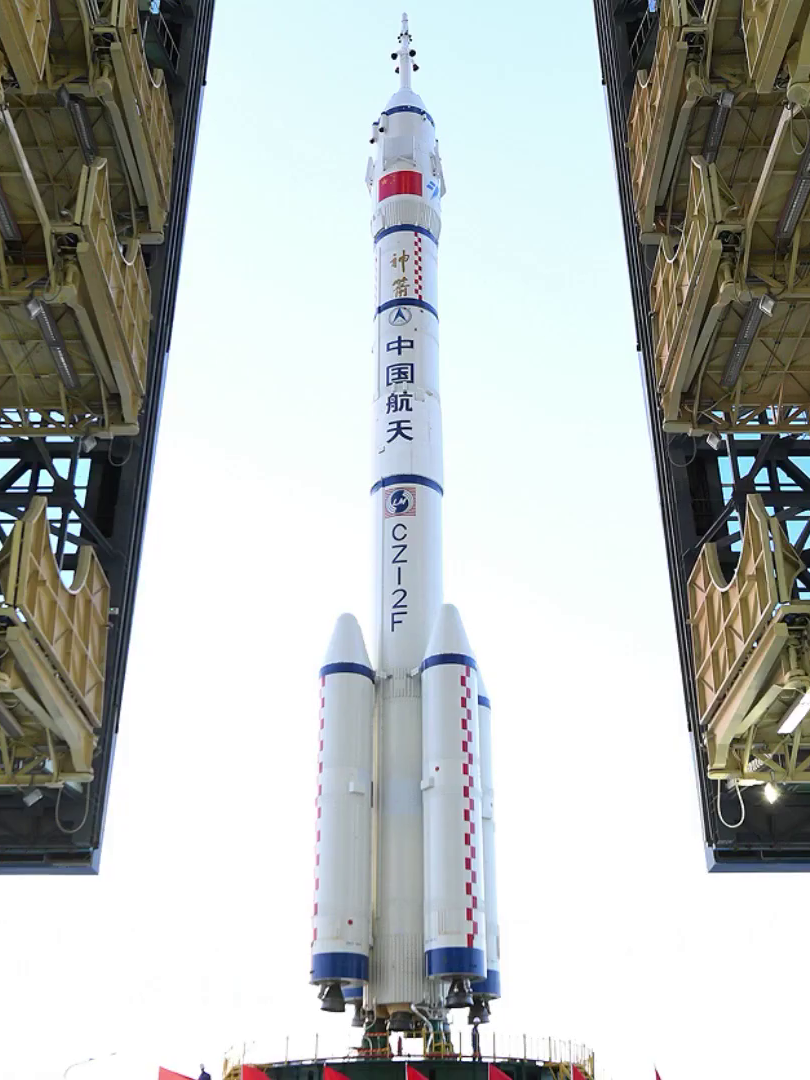
China has achieved a significant milestone in its human spaceflight program with the successful in-flight abort test of the new Mengzhou spacecraft. On February 11, 2026, China conducted a critical test that verified the spacecraft’s launch escape system performance, marking a crucial step toward the nation’s ambitious goal of sending astronauts to the Moon. This test represents one of the most important technical demonstrations in China’s quest to establish itself as a major power in lunar exploration, and it sends a clear message to the international community that China is serious about its long-term space ambitions. The successful completion of this test removes one of the final technical hurdles before China can begin operational crewed lunar missions.
The test involved the Mengzhou spacecraft riding atop a Long March 10A rocket, where the launch escape system was activated mid-flight to demonstrate its ability to pull the crew capsule to safety in the event of an emergency during ascent. What made this test particularly remarkable was the additional verification of the first stage’s ability to perform a soft landing on water, showcasing China’s commitment to rocket recoverability and reusable launch technology. The dual objectives of the mission demonstrated the sophistication of China’s aerospace engineering capabilities and represented a significant technical achievement that few nations have accomplished. This dual capability testing reflects a methodical approach to risk management.
This achievement places China among an elite group of nations capable of human spaceflight with robust safety systems. Only the United States and Russia have previously demonstrated such crew escape capabilities, with NASA’s Orion spacecraft and Russia’s Soyuz system representing the gold standard in crew safety. China’s entry into this exclusive club marks a significant shift in the global balance of human spaceflight capabilities and sets the stage for increased international competition in lunar exploration. The geopolitical implications of this development are substantial, as nations increasingly view space capability as a marker of national prestige and technological prowess.
The Mengzhou spacecraft represents China’s next-generation crew vehicle designed specifically for lunar missions. Unlike the Shenzhou spacecraft currently used for missions to the Tiangong space station, Mengzhou is being developed with the extreme conditions of deep space travel in mind. The spacecraft features advanced life support systems capable of sustaining astronauts for extended periods, improved heat shielding designed to withstand the higher velocities associated with lunar return, and a modular design that can accommodate various mission profiles from lunar orbit operations to potential Mars missions in the future. These capabilities represent a substantial upgrade from previous Chinese spacecraft.
Looking ahead, China plans to launch Mengzhou 1, the first operational mission of this new spacecraft, later in 2026. This will be followed by increasingly complex missions as the nation works toward its stated goal of landing astronauts on the Moon by the 2030s. The successful abort test removes one of the major technical uncertainties remaining in the program and demonstrates that Chinese engineers have mastered the critical safety systems required for human spaceflight beyond low-Earth orbit. Each subsequent mission will build upon this foundation, gradually expanding the operational capabilities of the Mengzhou system and moving China closer to its lunar goals.


 Subscribe to our RSS feed













There are no comments.
Add A Comment