


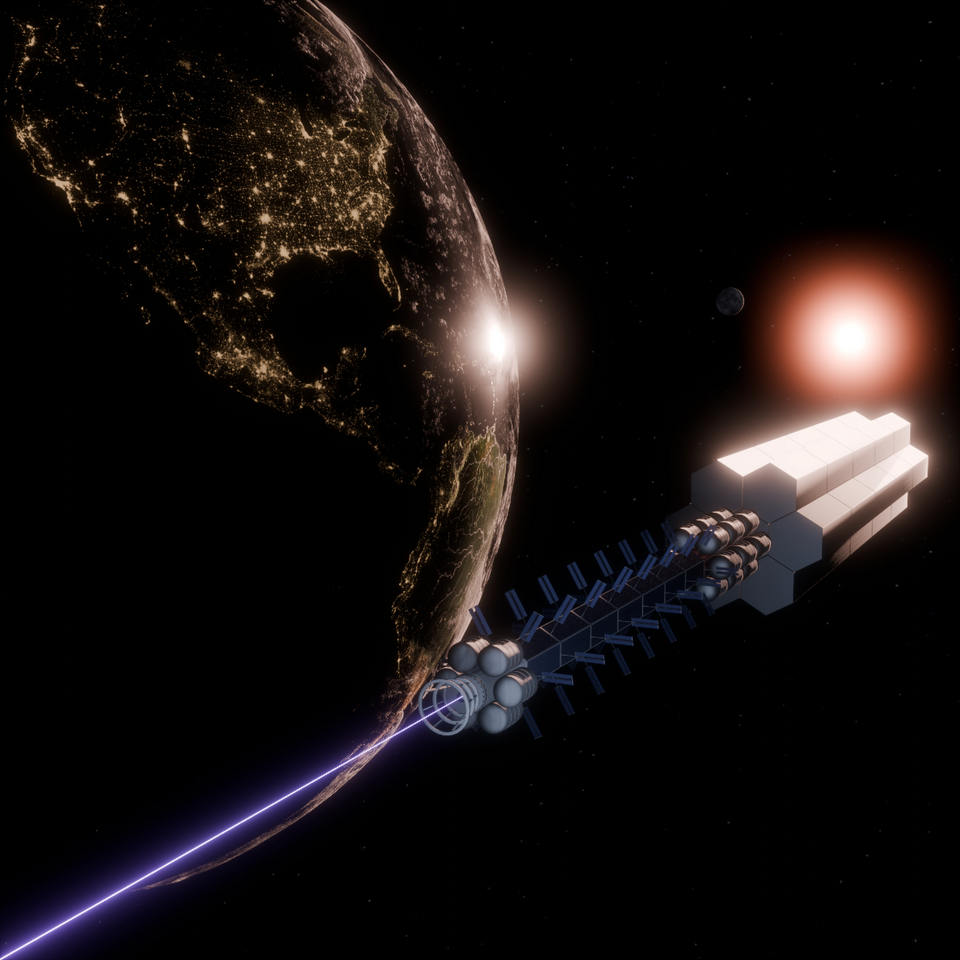
The American Institute of Aeronautics and Astronautics has released a groundbreaking report identifying ten technologies that will fundamentally reshape aerospace operations, manufacturing, and services over the next two decades. The comprehensive study, titled “Technologies Transforming Aerospace,” draws on insights from over 700 aerospace professionals and nearly two dozen senior technology leaders across industry, academia, and government. This represents the most extensive survey of its kind, capturing the collective wisdom of the aerospace community on the technologies that will define the future of flight and opening new frontiers in how we think about aviation and space exploration. The findings represent a consensus view of where the industry is heading.
Leading the list is AI-Aided Advanced Design and Engineering, which promises to revolutionize how aircraft and spacecraft are conceived and optimized. Machine learning algorithms can now explore design spaces that would take human engineers centuries to examine, leading to more efficient structures, improved aerodynamics, and innovative configurations that were previously unimaginable. This technology is already accelerating development cycles and reducing the cost of bringing new aerospace vehicles from concept to certification. The implications for the industry are profound, potentially democratizing aerospace design by making advanced tools accessible to smaller organizations that previously lacked the resources for extensive simulation and testing.
Alternative Aviation Fuels and Electric Aircraft represent the industry’s response to the imperative of decarbonization. As climate concerns intensify and regulatory pressure increases, aerospace engineers are developing propulsion systems that dramatically reduce carbon emissions. Electric aircraft, once considered science fiction, are now transitioning from experimental prototypes to viable commercial platforms for short-haul routes. The technology is maturing rapidly, with several manufacturers announcing plans for regional electric aircraft within the decade. This represents a fundamental shift in how we think about aircraft propulsion and could eventually transform the entire aviation industry.
Fully Reusable Launch Systems continue to transform the economics of space access. The success of SpaceX’s Falcon 9 has proven the concept, and numerous companies worldwide are developing their own reusable rockets. This technology is democratizing space, making it accessible to smaller nations and private companies that previously could not afford launch services. The economic implications are profound, potentially reducing launch costs by an order of magnitude and enabling entirely new categories of space-based applications that were previously economically unfeasible. The space economy is expanding rapidly as a result.
High-Temperature Materials and Hypersonic Propulsion are enabling the next generation of military and civilian aircraft capable of traveling at incredible speeds. Hypersonic vehicles that can traverse the globe in hours are moving from laboratory concepts to operational systems, potentially revolutionizing air travel and strategic capabilities. The materials required to survive the extreme temperatures generated by hypersonic flight represent a significant engineering challenge that is now being overcome through advances in ceramics, composites, and thermal management systems. This technology could compress international travel times dramatically and reshape global connectivity.
In-Space Manufacturing and Space Nuclear Power and Propulsion represent the frontier technologies that will enable permanent human presence beyond Earth. Manufacturing products in the microgravity environment of orbit opens possibilities impossible on our planet, from advanced materials to pharmaceuticals that cannot be produced in terrestrial environments. Nuclear propulsion could reduce travel times to Mars from months to weeks, making deep space exploration more practical and safe. These technologies remain in earlier stages of development but hold tremendous promise for the future of space exploration and could fundamentally change humanity’s relationship with the solar system.
The remaining technologies on the list Quantum Computing and Sensing, and Pilotless Aircraft round out a picture of an industry undergoing rapid transformation. Quantum computing will accelerate the development of all other technologies by enabling calculations currently impossible with classical computers, potentially revolutionizing everything from materials science to mission planning. Pilotless aircraft will transform both military and civilian aviation, potentially making air travel safer and more efficient while raising important questions about the role of human operators in aviation. The social and regulatory implications of this technology will be as significant as the technical ones.
The report emphasizes that these technologies are not developing in isolation but are converging to create unprecedented capabilities. The synergies between artificial intelligence, advanced materials, and new propulsion systems are creating opportunities that none of these technologies could achieve alone. For aerospace professionals and enthusiasts alike, this report provides a roadmap for understanding the technological landscape that will shape the next twenty years of aviation and space exploration. The future of aerospace is being written today, and these technologies will be the chapters that define it.
The convergence of these technologies also raises important questions about workforce development and education. As the aerospace industry transforms, the skills required for success are evolving rapidly. Engineers and technicians will need to become proficient in artificial intelligence, advanced materials science, and new propulsion technologies. Universities and training programs are already adapting their curricula to prepare the next generation of aerospace professionals for this transformed industry. The workforce implications are as significant as the technological ones.


 Subscribe to our RSS feed













There are no comments.
Add A Comment