OrbitalHub

The place where space exploration, science, and engineering meet

Domain is for sale. $50,000,000.00 USD. Direct any inquiries to contact@orbitalhub.com.

Archive for April, 2026


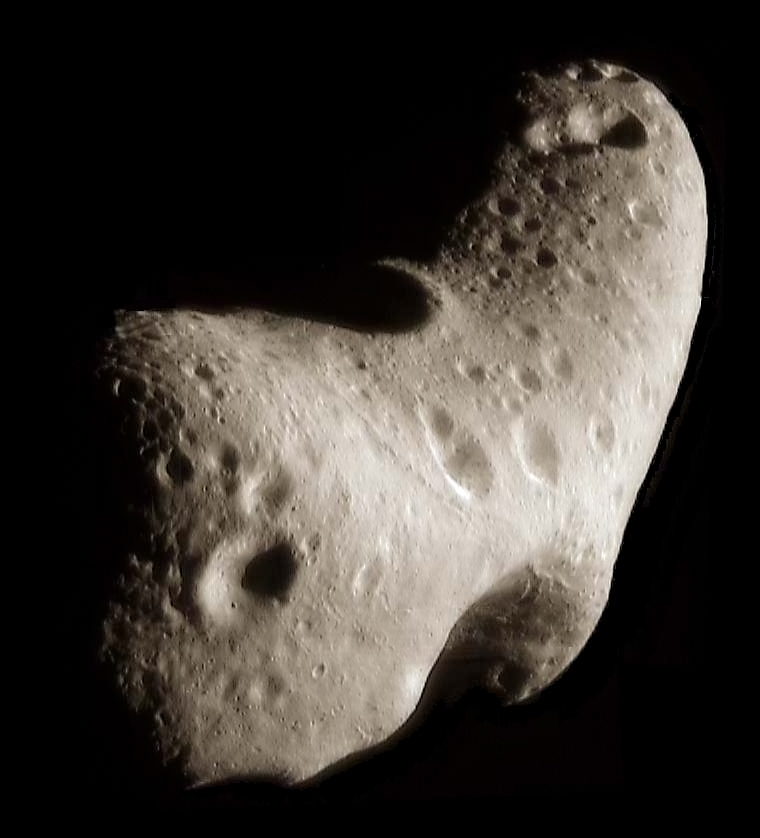
TransAstra, a NASA-backed startup, announced in March 2026 a groundbreaking study to capture and relocate a near-Earth asteroid approximately 100 tons in mass, marking a significant escalation in the commercial asteroid mining industry. The study, conducted in partnership with the space agency, explores methods for enveloping the asteroid in an inflatable container and moving it to lunar orbit for eventual resource extraction.

The concept builds on technology already tested aboard the International Space Station in 2025, where TransAstra demonstrated its “bag” system in low Earth orbit. The inflatable structure, designed to surround a small asteroid and contain its fragments during capture, passed initial verification tests showing it can survive the thermal and structural demands of space operations. The new study extends this approach to much larger objects, representing a fundamental leap in scale from previous demonstrations.

The company’s approach addresses one of the fundamental challenges in asteroid resource extraction: accessing material that would be prohibitively expensive to mine through traditional methods. Rather than sending mining equipment to distant asteroids and returning processed materials to Earth, the TransAstra concept involves moving the asteroid itself to a convenient location where continuous resource extraction becomes practical.

Funding for the study reflects growing government interest in asteroid resources. The U.S. Space Force has provided additional investment to scale the technology, recognizing potential applications for in-space manufacturing and propellant production. As orbital operations expand, the ability to extract materials from near-Earth asteroids could reduce dependence on Earth-launched resources, lowering the cost of sustained space operations.

TransAstra is not alone in pursuing asteroid mining. AstroForge, another U.S.-based company, has raised approximately $55 million toward extracting platinum-group metals from asteroids. The company experienced a spacecraft setback but continues preparing for asteroid landing tests. Karman+ secured $20 million in February 2025 to develop autonomous spacecraft for near-Earth asteroid mining, targeting a demonstration mission in 2027.

The asteroid mining market is projected to grow from $2.49 billion in 2026 to $5.42 billion by 2030, representing a compound annual growth rate of 21.4 percent. This expansion reflects anticipated demand for rare metals and the strategic value of establishing in-space resource extraction capabilities before lunar and Mars ambitions require substantial material support.

Moving a 100-ton asteroid requires careful consideration of momentum and energy. The asteroid’s orbital velocity around the Sun determines the energy required to alter its trajectory, with even small changes requiring substantial thrust when applied to objects with such great mass. TransAstra’s approach involves applying gentle continuous force rather than sudden impulse, using solar electric propulsion to gradually modify the asteroid’s orbit over months or years.

The thermal environment during the capture operation presents unique challenges. Asteroids rotate, presenting changing thermal profiles to the sun as they tumble through space. The inflatable capture bag must maintain structural integrity across temperature extremes that could reach minus 100 degrees Celsius in shadow and positive 100 degrees Celsius in direct sunlight. Materials selection focuses on thermal resilience and resistance to micrometeoroid puncture.

Containment of the asteroid once captured requires the bag to maintain its shape despite the irregular shape of most asteroid surfaces. The inflatable structure must distribute forces evenly across contact points, avoiding concentrated loads that could tear the material. TransAstra’s design incorporates multiple redundant chambers, allowing the bag to maintain containment even if some sections experience damage.


  • Facebook
  • Google
  • Slashdot
  • Reddit
  • Live
  • TwitThis


The United States Congress effectively terminated NASA’s Mars Sample Return program in January 2026, redirecting $110 million to a new “Mars Future Missions” line item while explicitly stating that the existing program would not receive support. The decision marks one of the most significant shifts in NASA’s planetary exploration strategy in decades, leaving approximately 30 samples collected by the Perseverance rover stranded on the Martian surface indefinitely.

The cancellation emerged from the Fiscal Year 2026 budget process, where the Trump administration proposed terminating Mars Sample Return due to escalating costs and projected timelines. Estimates placed the total cost at up to $11 billion, with samples potentially not returning until 2040 at the earliest. These figures proved unacceptable to congressional appropriators, who instead passed a compromise spending bill that explicitly excluded support for the existing program.

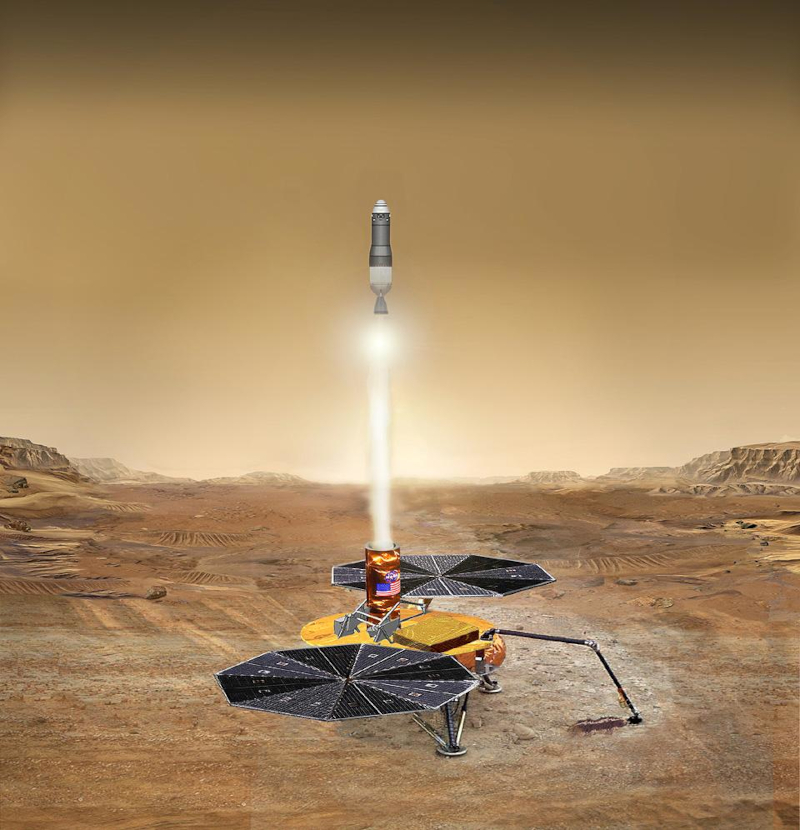
The Mars Sample Return campaign represented a joint NASA-ESA effort to bring Martian material to Earth for detailed laboratory analysis. Perseverance has been collecting samples since 2021, caching them at strategic locations across Jezero Crater for later retrieval. The original architecture called for a complex sequence of missions: an ascent vehicle to launch the samples into Martian orbit, a transfer spacecraft to capture them, and a return vehicle to bring them to Earth.

The program’s troubles predated the 2026 cancellation. Independent reviews in 2023 and 2024 criticized the architecture as overly complex and expensive, with the Planetary Science Decadal Survey recommending that NASA seek a more affordable approach. The agency paused architecture work and studied alternatives, but cost estimates remained prohibitively high regardless of the chosen approach.

The decision to cut Mars Sample Return has generated substantial criticism from the scientific community. Researchers note that laboratory analysis of Martian material could address fundamental questions about Mars’s past habitability and whether life ever existed on the planet. The samples collected by Perseverance include formations that show potential biosignatures, making their analysis particularly compelling.

ESA, which had committed significant resources to the program, is now reassessing its role in Mars exploration. The European agency’s contributions included the Earth Return Orbiter, which would have captured the sample container in Martian orbit and returned it to Earth. With the NASA program cancelled, ESA faces decisions about whether to pursue independent or alternative approaches.

The $110 million redirected to “Mars Future Missions” could support technology development for future sample retrieval attempts, including work on Mars landing systems and sample containment technologies. However, no specific mission has been proposed, and the funding level represents a fraction of what the full program would have required.

The cancellation leaves China potentially positioned as the first nation to return Martian samples to Earth. That country’s Tianwen-1 mission included an orbiter and lander, though not a sample return component. However, Chinese scientists have discussed sample return ambitions, and the U.S. decision may accelerate those plans.

For now, the samples collected by Perseverance remain where they were deposited, scattered across the floor of Jezero Crater. The rover continues operating, collecting additional samples and conducting scientific investigations, though the ultimate purpose of those samples remains uncertain. Future missions may retrieve them, or they may remain as artifacts of a program that came close to achieving something unprecedented before falling to budget realities.

Returning material from Mars presents one of the most challenging problems in spaceflight. The planet’s gravitational well requires substantial energy to escape, with a velocity delta of approximately 5.6 kilometers per second needed to reach low Mars orbit. This is comparable to the total velocity change required to reach Mars from Earth in the first place.

The Mars Sample Return architecture addressed this challenge through multiple vehicles. A Mars Ascent Vehicle would launch from the surface carrying the sample container, achieving orbital insertion without relying on atmospheric drag for deceleration. An Earth Return Orbiter would then capture this container in orbit and perform the much larger maneuver needed to transfer to an Earth-return trajectory.

The thermal protection required for Earth reentry adds complexity. The sample container would strike Earth’s atmosphere at velocities approaching 12 kilometers per second, generating temperatures exceeding 2,000 degrees Celsius. The capsule design incorporates heat shields similar to those used on Apollo return vehicles, sized appropriately for the mass and velocity of the return trajectory.

Containment represents a critical requirement given the possibility of Martian material posing biological hazards. The samples must remain sealed throughout reentry and landing, with containment verified before any potential exposure to Earth’s biosphere. This requirement adds mass and complexity to the return vehicle, as the sealed container must survive the entire descent and recovery process intact.


  • Facebook
  • Google
  • Slashdot
  • Reddit
  • Live
  • TwitThis


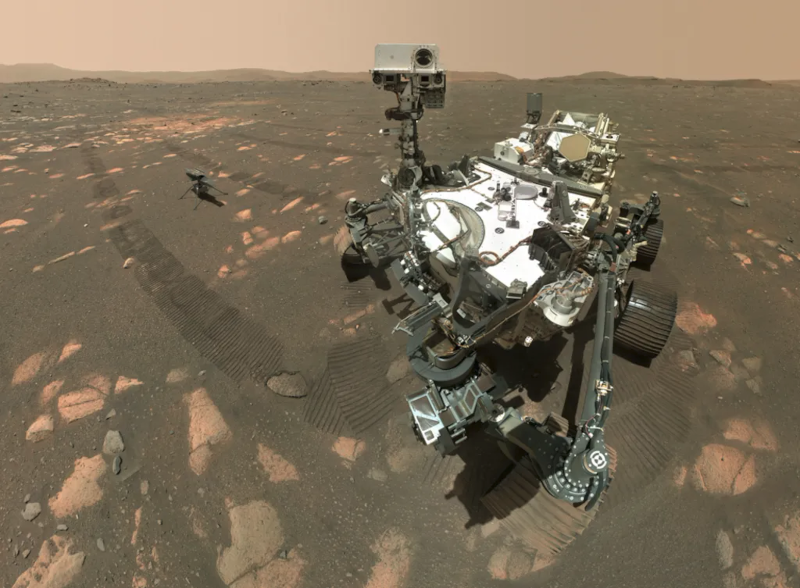
NASA’s Perseverance rover has entered a new era of autonomous exploration on Mars, with a system debuted in February 2026 that gives the vehicle GPS-like self-localization capabilities without requiring input from Earth. The Mars Global Localization system, first used in operations on February 2 and again on February 16, represents a fundamental shift in how the rover navigates the Martian surface, enabling longer drives with greater precision than ever before.

The system works by comparing navigation camera panoramas to stored orbital maps from the Mars Reconnaissance Orbiter. This matching process takes approximately two minutes and achieves positioning accuracy of 10 inches (25 centimeters), a dramatic improvement over previous visual odometry methods that accumulated errors potentially exceeding 100 feet over long drives. Previously, uncertainty about the rover’s precise position limited how far controllers would allow it to drive in a single sol, or Martian day.

The Mars Global Localization algorithm runs on hardware repurposed from the Ingenuity helicopter’s base station. This processor, roughly 100 times faster than the rover’s main computers and based on technology from the mid-2010s smartphone era, proved adequate for the computationally intensive matching process. The algorithm includes sanity checks to ensure reliability, preventing the rover from accepting obviously incorrect position estimates.

This development builds on earlier autonomy milestones. In December 2025, Perseverance completed its first fully AI-planned drives, with ground-based generative AI analyzing HiRISE orbital images and elevation data to generate safe waypoint paths. The rover drove 689 feet on December 8 and 807 feet on December 10, autonomously following routes that avoided boulders, sand ripples, bedrock, and outcrops identified by the AI system.

The combination of AI planning and autonomous localization has pushed the rover’s independence to approximately 90 percent of its travels without human input. This represents a fundamental shift in mission operations, where controllers no longer need to micromanage every aspect of each drive. The rover can receive high-level objectives and execute them with minimal oversight, dramatically increasing scientific productivity.

Perseverance continues its exploration of Jezero Crater, having traveled over 30 kilometers since landing on February 18, 2021. The vehicle has collected 24 rock and regolith samples, along with one air sample, for potential future return to Earth. Notably, the “Sapphire Canyon” sample collected from the Cheyava Falls rock in 2024 shows potential biosignatures that were validated in a September 2025 Nature paper, making it one of the most significant samples collected during the mission.

The autonomy advances have particular importance for future Mars missions. With the Mars Sample Return program effectively cancelled by Congress in January 2026, the samples collected by Perseverance will remain on the Martian surface indefinitely unless a new retrieval mission emerges. However, the technologies demonstrated by the rover pave the way for more ambitious autonomous explorers capable of operating independently across greater distances.

Navigating on Mars presents unique challenges absent in terrestrial robotics. The planet lacks any global navigation satellite system, meaning rovers cannot rely on GPS or GLONASS for positioning. Communication delays between Earth and Mars range from 4 to 24 minutes one way, making real-time remote control impossible and requiring the rover to make decisions autonomously.

Previous rovers used visual odometry, comparing successive images to estimate motion between positions. While effective for short distances, this method accumulates error over time as small estimation mistakes compound. After driving hundreds of meters, the rover’s position estimate might be significantly off, requiring ground controllers to carefully verify progress through orbital imagery.

The Mars Global Localization system sidesteps this problem by leveraging the extensive imaging data already collected by orbital missions. The Mars Reconnaissance Orbiter’s HiRISE camera has captured high-resolution images covering much of the Martian surface, creating a detailed map against which the rover can compare its own images. This approach works similarly to how facial recognition systems match images against databases.

The computational requirements for real-time image matching are substantial, requiring significant processing power to compare feature-rich navcam panoramas against large orbital map databases. The repurposed Ingenuity processor proved adequate for this task, demonstrating how hardware originally designed for one purpose can find new life in spacecraft applications.


  • Facebook
  • Google
  • Slashdot
  • Reddit
  • Live
  • TwitThis


Every era of exploration begins with a journey, but it is defined by what comes after. Reaching a new world is only the first step. Staying there—living, working, building—requires something far more complex. It requires infrastructure. Roads must be laid, foundations must be prepared, materials must be moved and shaped. On Earth, these tasks are so commonplace that they are almost invisible, carried out by machines that have become extensions of human intent. On the Moon, however, they represent one of the greatest engineering challenges humanity has ever faced.

It is within this context that Komatsu has begun charting a new course. Known for its expertise in heavy machinery on Earth, the company is now extending its capabilities into an environment where gravity is weaker, the vacuum is absolute, and the terrain is both unforgiving and unknown. Through its role in Japan’s Space Construction Innovation Project—part of the broader Stardust Program led by Japan’s Ministry of Land, Infrastructure, Transport and Tourism and the Ministry of Education, Culture, Sports, Science and Technology—Komatsu is working toward a future where construction is not limited to Earth, but becomes a fundamental part of human presence on the Moon.

The vision is ambitious: autonomous construction systems capable of building infrastructure for long-term habitation on the lunar surface. The timeline is equally bold, with key milestones targeted for the early 2030s. Yet beneath this vision lies a deeper story—one that connects centuries of engineering knowledge with the unique demands of operating beyond our home planet.

To understand the challenge, one must first consider the environment. The Moon is not simply a smaller version of Earth. Its surface is covered in regolith, a fine, abrasive dust created by billions of years of micrometeorite impacts. This material behaves differently from terrestrial soil. It lacks moisture, cohesion, and organic content, making it difficult to compact and unpredictable under load. At the same time, the Moon’s gravity is only one-sixth that of Earth, altering how machines interact with the ground. A construction vehicle designed for Earth relies on its weight to maintain traction and stability. On the Moon, that same vehicle would struggle to maintain contact with the surface, risking slippage or even unintended lift during operation.

These differences force engineers to rethink the fundamentals of construction machinery. Traditional designs must be adapted or entirely reimagined. Tracks and wheels must be optimized for low-gravity conditions, ensuring sufficient traction without excessive wear. Structural components must be lightweight yet strong, capable of withstanding the stresses of operation while minimizing the cost of transport from Earth. Every kilogram matters when launching equipment into space.

The absence of an atmosphere introduces additional complexities. On Earth, air plays a role in cooling engines, dissipating heat, and supporting combustion. On the Moon, there is no air to carry heat away, requiring alternative thermal management systems such as radiators and conductive pathways. Dust becomes an even greater hazard, as it can infiltrate mechanical joints, degrade seals, and interfere with sensors. Komatsu’s engineers must design systems that can operate reliably in this harsh environment, where maintenance opportunities are limited and failures can have significant consequences.

Autonomy lies at the heart of the project. Unlike construction sites on Earth, where human operators control machinery directly, lunar construction will rely heavily on autonomous or semi-autonomous systems. Communication delays between Earth and the Moon, though relatively short compared to interplanetary distances, still limit the feasibility of real-time control for complex tasks. Machines must be capable of perceiving their environment, making decisions, and executing actions with minimal human intervention.

This requires the integration of advanced sensing technologies, including cameras, lidar, and possibly radar systems, to map the terrain and detect obstacles. Machine learning algorithms and control systems must interpret this data, enabling the machinery to perform tasks such as excavation, grading, and material transport with precision. In this sense, lunar construction machines become more than tools; they become intelligent agents, capable of adapting to conditions that may differ from those anticipated during design.

Energy is another critical consideration. On the Moon, power is likely to be supplied by solar arrays, particularly in regions near the poles where sunlight is more consistent. Construction machinery must operate within the constraints of available power, requiring efficient electric drivetrains and energy management systems. Unlike diesel-powered equipment on Earth, lunar machines will rely on batteries or other forms of energy storage, carefully balancing performance with endurance.

The science behind lunar construction extends beyond machinery into the materials themselves. Building a sustainable presence on the Moon requires the use of local resources, a concept known as in-situ resource utilization. Regolith can be processed into building materials, potentially through sintering or melting techniques that fuse particles together to create solid structures. By using the Moon’s own materials, the need to transport large quantities of construction supplies from Earth can be dramatically reduced.

Komatsu’s role in this ecosystem is to bridge the gap between concept and implementation. Drawing on decades of experience in terrestrial construction, the company is adapting its knowledge to a new domain, where familiar principles must be applied in unfamiliar ways. The process is iterative, involving simulation, prototyping, and testing under conditions that approximate the lunar environment as closely as possible.

The significance of this work extends far beyond a single project. It represents a shift in how humanity approaches space exploration. For much of history, missions to other worlds have been temporary, lasting only as long as supplies and systems allowed. The development of lunar construction capabilities marks the transition toward permanence. It is the difference between visiting a place and building a presence there.

In the broader narrative of space exploration, Komatsu’s efforts align with a growing recognition that the future of humanity in space will depend not only on rockets and spacecraft, but on the ability to create infrastructure beyond Earth. Habitats must be constructed, landing pads must be prepared, and resources must be extracted and processed. These are the foundations of a sustained presence, and they require a level of engineering sophistication that goes beyond traditional aerospace design.

As the early 2030s approach, the work being carried out today will begin to take shape on the lunar surface. Machines designed and tested on Earth will operate in an environment where every action carries both risk and opportunity. They will carve into regolith, move materials, and lay the groundwork for human habitation.

Video credit: Komatsu


  • Facebook
  • Google
  • Slashdot
  • Reddit
  • Live
  • TwitThis


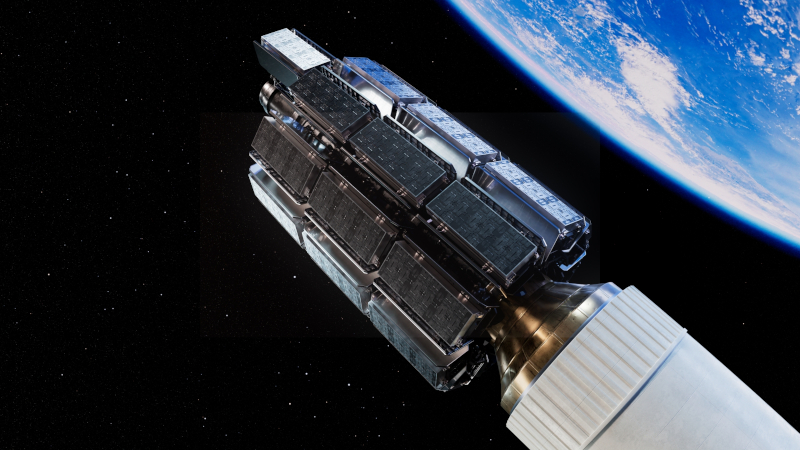
Amazon announced on March 23, 2026, that it plans to double the annual launch rate for its Project Kuiper low Earth orbit broadband constellation to more than 20 missions, with the acceleration driven by pressure from a key Federal Communications Commission milestone requiring deployment of half its planned 3,232 first-generation satellites by July 30, 2026.

The company stated it is on pace to complete 11 launches in the first year of deployment since kicking off the campaign in April 2025, with three more missions slated in the coming weeks. As of mid-March, Amazon reported six fully stacked payloads at its satellite processing facility in Florida, representing more than 200 satellites in total, with another payload being prepared in French Guiana.

While 212 Amazon Leo satellites have been deployed so far, hundreds more await launch as the company seeks relief from the FCC deadline. Amazon is asking the regulatory body to extend the deadline by two years or waive it entirely, arguing that launch vehicle availability and other constraints have prevented the originally contemplated deployment pace.

Amazon has booked more than 100 launches for the constellation, including missions with United Launch Alliance, Arianespace, Blue Origin, and SpaceX. The company noted that Ariane 64, New Glenn, and Vulcan are expected to carry increasing numbers of Amazon Leo satellites as vehicle performance improves.

The next major milestone is a ULA Atlas 5 mission on March 29, set to carry 29 Amazon Leo satellites, up from the usual 27, following an engine upgrade enabling its heaviest payload to date. Another Atlas 5 is due in April, along with a second Ariane 64 launch for the constellation. The first Ariane 64 mission last month was Arianespace’s first using the rocket’s more powerful four-booster variant and carried 32 satellites.

According to Amazon, future upgrades will enable Ariane 64 to support even larger payloads. Most launches for the constellation this year are scheduled to use heavy-lift rockets, including Blue Origin’s New Glenn, expected to carry about 48 satellites initially, and ULA’s Vulcan Centaur, with capacity for around 40 from the start.

The company has invested more than $200 million in upgrading ULA facilities at Cape Canaveral to help increase launch cadence and improve turnaround times. These upgrades support the accelerated deployment that Amazon says is necessary to meet its contractual obligations and service commitments.

Amazon can build as many as 30 satellites per week from its facility in Kirkland, Washington, though this rate has slowed to reflect launch vehicle readiness and availability. The manufacturing capacity exists; the challenge lies in getting satellites to orbit on the planned schedule.

The FCC milestone requiring deployment of 1,616 satellites by July 30 reflects the commission’s interest in ensuring that spectrum allocated for broadband constellations is actually used. Waiving or extending the deadline would require Amazon to demonstrate that circumstances beyond its control have prevented compliance, and that the public interest would be served by granting relief.

Building and deploying a constellation of thousands of satellites requires fundamentally different economics than traditional satellite programs. The per-satellite cost must be low enough that total constellation expense remains manageable, while launch costs must be sufficiently controlled to avoid having transportation dominate the budget.

Amazon has pursued vertical integration as a primary strategy, manufacturing satellites in-house at its Kirkland facility rather than purchasing from traditional satellite builders. This approach provides greater control over costs and schedule but requires substantial capital investment in manufacturing infrastructure and expertise.

The launch procurement strategy spreads risk across multiple providers, ensuring that delays from any single vehicle do not halt the entire constellation deployment. However, this also means that Amazon must coordinate across different launch systems, each with its own interfaces, procedures, and performance characteristics.

The FCC deadline applies to the first-generation constellation of 3,232 satellites, but Amazon has indicated plans for additional satellites beyond that initial deployment. The regulatory framework requires operators to demonstrate meaningful deployment within specific timeframes to maintain spectrum rights, creating incentives to launch satellites even before they can be fully utilized in the network.

Satellite life expectancy in LEO typically ranges from three to seven years, depending on orbital altitude and design. This limited operational lifetime means that constellation operators must continuously launch replacement satellites to maintain service levels, adding ongoing launch costs to the initial deployment expense.


  • Facebook
  • Google
  • Slashdot
  • Reddit
  • Live
  • TwitThis