


ESA Ramses Mission Clears Final Design Review as Apophis Flyby Prepares to Reshape Planetary Science
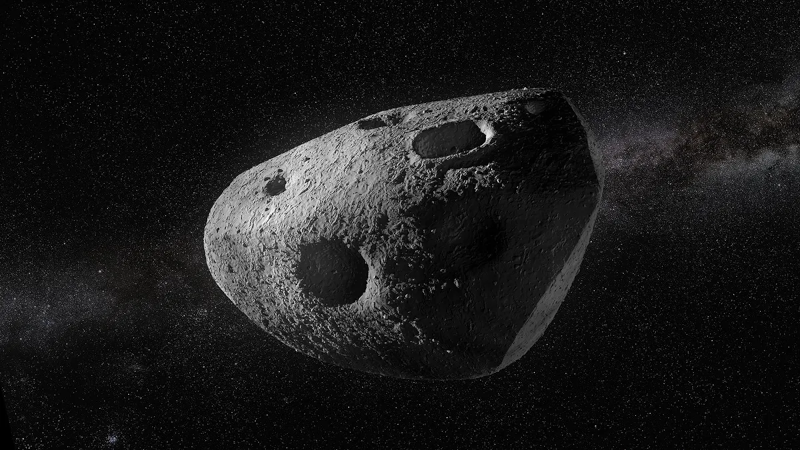
The European Space Agency announced in February 2026 that contracts for the Ramses spacecraft had been awarded following a successful final design review, clearing the path for a launch window opening in mid-April 2028. The mission targets asteroid 99942 Apophis, a 375-meter near-Earth object that will pass within approximately 32,000 kilometers of Earth on April 13, 2029. The encounter will bring Apophis closer than some Earth-orbiting satellites, creating conditions for scientific observation and planetary defense data collection that no spacecraft has previously had the opportunity to gather at such a precisely predicted event.
Apophis has occupied a unique place in planetary defense calculations since its discovery in 2004, when initial observations suggested a meaningful probability of impact with Earth in 2029. Subsequent radar observations refined the orbital calculation, eliminating the impact risk for 2029 and for every subsequent orbit for at least the next century. The 2029 flyby nonetheless represents a rare opportunity because Apophis will be large enough and close enough to observe with ground-based radar, space telescopes, and a rendezvous spacecraft simultaneously, producing a comprehensive dataset on an asteroid’s response to gravitational forces from a major planet.
The Ramses mission profile calls for launch in the April-to-May 2028 window aboard an Ariane 6 rocket from French Guiana, with direct trajectory to Apophis. The spacecraft will arrive in February 2029, approximately two months before the Earth flyby, allowing it to establish orbit around or near the asteroid and begin scientific observations before planetary proximity changes the environment. The tight timeline means Ramses must leverage existing technology and mission-proven systems, a constraint that shaped the spacecraft’s design and instrument payload. The mission builds directly on the Hera spacecraft currently approaching Didymos, using the same spacecraft bus architecture and many of the same instrument designs to reduce development time and risk.
Upon arrival at Apophis, Ramses will characterize the asteroid’s size, shape, mass, spin state, and surface composition through a combination of imaging, spectroscopy, and radar measurements. The spacecraft’s primary scientific objective during the approach and early encounter phase is to document how Earth’s gravitational field alters the asteroid’s physical state. The tidal forces from a close planetary passage can stretch and compress an asteroid, potentially triggering seismic activity, landslides, or the ejection of surface material. Apophis is large enough and passing close enough to Earth that these effects should be measurable, providing a direct test of models that predict asteroid physical evolution during planetary encounters.
The instruments aboard Ramses include a wide-angle camera for surface mapping, a thermal infrared spectrometer for mineralogical analysis, and a radar instrument capable of probing subsurface structure to depths of several meters. These tools will build a comprehensive picture of Apophis that will remain scientifically valuable long after the 2029 flyby. The radar data in particular will illuminate the internal structure of an asteroid that has been shaped by millions of years of collisions and thermal cycling, offering insights into how rubble pile objects like Apophis assembled and evolved.
Ramses will accompany Apophis through the April 2029 Earth encounter, maintaining proximity as the asteroid’s trajectory bends by approximately 1.7 degrees due to Earth’s gravity. The change in Apophis’s trajectory, while small in angular terms, represents a significant perturbation for an object in solar orbit, and measuring it precisely will improve the accuracy of future orbital predictions for Apophis and other near-Earth objects. The spacecraft will also observe Apophis’s rotation state during the encounter, as tidal torques from Earth can alter the rotation period and axis orientation of an asteroid passing at close range. This effect has been documented for other asteroids during planetary flybys but has never been directly measured by a spacecraft at the time of closest approach.
The decision to commit to the Ramses mission reflects a broader shift in European planetary defense strategy toward active characterization of known threats rather than purely detection-focused approaches. ESA’s Space Safety Programme, which funds Ramses, also encompasses the Hera mission at Didymos and the development of impact monitoring systems that track near-Earth objects for potential threat assessment. The cumulative program represents Europe’s contribution to an international network that includes NASA’s Planetary Defense Coordination Office, JAXA’s contributions to radar observation campaigns, and ongoing coordination through the United Nations Committee on the Peaceful Uses of Outer Space.
The timeline for Ramses is aggressive by planetary science standards. From contract award in early 2026 to launch in mid-2028 is approximately 26 months, compressing a development process that typically spans four to five years for a interplanetary spacecraft. The approach works because Ramses inherits much of its design from Hera, which itself benefits from heritage systems developed for ESA’s earlier planetary missions. The spacecraft bus uses the same carbon fiber composite structure, the same propulsion system architecture, and the same power distribution and thermal control designs. What changes is the scientific payload, which Ramses adapts for the specific observation requirements of the Apophis encounter.
When an asteroid passes near a planet, the planet’s gravitational field exerts slightly different forces on the near and far sides of the asteroid. The difference between these forces, called the tidal force, scales with the inverse cube of the distance between the two bodies. At 32,000 kilometers, the tidal acceleration at Apophis’s surface from Earth reaches approximately 0.003 meters per second squared, a small but sustained perturbation that acts continuously as the asteroid passes.
The resulting stress distribution within the asteroid depends on its internal structure. A solid monolithic object responds to tidal loading by deforming slightly and building internal stress that is relieved after the planetary encounter ends. A rubble pile object, where individual fragments are held together by gravity and interlocking rather than cohesive forces, may behave differently. The tidal forces can cause individual blocks to shift, potentially generating seismic disturbances that cause surface material to move or eject. The distinction matters for planetary defense because it affects whether an asteroid is more likely to fragment during an Earth encounter, which would change the risk calculation for future close approaches.
Apophis’s size class, around 375 meters, sits near the boundary where asteroid internal structure transitions from predominantly monolithic to predominantly rubble pile. Objects below approximately 300 meters tend to be solid, while larger objects are more likely to have fragmented and reassembled over cosmic timescales. Radar observations from the 2021 Apophis flyby suggested the asteroid has a smooth region on one side and rougher terrain elsewhere, consistent with a surface that has been reworked by impact events but may retain some internal coherence.
The rotation state of Apophis will be carefully monitored as the encounter approaches. Tidal torque from Earth can transfer angular momentum to the asteroid, speeding up or slowing down its rotation depending on its initial spin axis orientation relative to the approach trajectory. The effect is typically small for single-pass encounters but can accumulate over multiple close approaches. Apophis will not make another comparably close Earth approach for at least several centuries, limiting the cumulative effect, but the 2029 encounter provides a valuable data point for validating tidal torque models used in asteroid evolution studies.


 Subscribe to our RSS feed













There are no comments.
Add A Comment