OrbitalHub

The place where space exploration, science, and engineering meet

Domain is for sale. $50,000,000.00 USD. Direct any inquiries to contact@orbitalhub.com.

09-19-17

Marvelous Mini-Jet

Posted by


NASA dixit:

“June 20, 2013. A beautiful ‘mini-jet’ appears in the dynamic F ring of Saturn. Saturn’s A ring (including the Keeler gap and just a hint of the Encke gap at the upper-right) also appears. The mini-jets are thought by imaging scientists to be caused by low-speed collisions in the F ring ejecting dusty material from the ring’s core.

This view looks toward the unilluminated side of the rings from about 48 degrees below the ringplane. The image was taken in visible light with the Cassini spacecraft narrow-angle camera. The view was obtained at a distance of approximately 841,000 miles (1.4 million kilometers) from Saturn and at a Sun-Saturn-spacecraft, or phase, angle of 82 degrees. Image scale is 5 miles (8 kilometers) per pixel.”

Image credit: NASA


  • Facebook
  • Google
  • Slashdot
  • Reddit
  • Live
  • TwitThis
09-15-17

Cassini: The Wonder of Saturn

Posted by


NASA dixit:

“NASA’s Cassini spacecraft has explored the Saturn system since 2004, re-writing our understanding of the giant planet, its rings, moons and magnetosphere. For 13 years the spacecraft’s incredible, truly otherworldly images have revealed the wonder of Saturn in surprising, often awe-inspiring ways. Cassini is planetary exploration at its finest, proving that to truly reveal the grandeur of a world, there is no substitute for actually going there.”

Video credit: NASA Jet Propulsion Laboratory


  • Facebook
  • Google
  • Slashdot
  • Reddit
  • Live
  • TwitThis
09-15-17

Tethys in Sunlight

Posted by


NASA dixit:

“June 15, 2013. Tethys, like many moons in the solar system, keeps one face pointed towards the planet around which it orbits. Tethys’ anti-Saturn face is seen here, fully illuminated, basking in sunlight. On the right side of the moon in this image is the huge crater Odysseus. The Odysseus crater is 280 miles (450 kilometers) across while Tethys is 660 miles (1,062 kilometers) across.

This view looks toward the anti-Saturn side of Tethys. North on Tethys is up and rotated 33 degrees to the right. The image was taken in visible light with the Cassini spacecraft narrow-angle camera. The view was acquired at a distance of approximately 503,000 miles (809,000 kilometers) from Tethys. Image scale is 3 miles (5 kilometers) per pixel.”

“After almost 20 years in space, NASA’s Cassini spacecraft begins the final chapter of its remarkable story of exploration: its Grand Finale. Between April and September 2017, Cassini will undertake a daring set of orbits that is, in many ways, like a whole new mission. Following a final close flyby of Saturn’s moon Titan, Cassini will leap over the planet’s icy rings and begin a series of 22 weekly dives between the planet and the rings.

No other mission has ever explored this unique region. What we learn from these final orbits will help to improve our understanding of how giant planets – and planetary systems everywhere – form and evolve.

On the final orbit, Cassini will plunge into Saturn’s atmosphere, sending back new and unique science to the very end. After losing contact with Earth, the spacecraft will burn up like a meteor, becoming part of the planet itself.

Cassini’s Grand Finale is about so much more than the spacecraft’s final dive into Saturn. That dramatic event is the capstone of six months of daring exploration and scientific discovery. And those six months are the thrilling final chapter in a historic 20-year journey.”

Image credit: NASA

 

  • Facebook
  • Google
  • Slashdot
  • Reddit
  • Live
  • TwitThis
09-15-17

Cassini’s Grand Finale

Posted by


NASA dixit:

“The final chapter in a remarkable mission of exploration and discovery, Cassini’s Grand Finale is in many ways like a brand new mission. Twenty-two times, NASA’s Cassini spacecraft will dive through the unexplored space between Saturn and its rings. What we learn from these ultra-close passes over the planet could be some of the most exciting revelations ever returned by the long-lived spacecraft. This animated video tells the story of Cassini’s final, daring assignment and looks back at what the mission has accomplished.”

Video credit: NASA Jet Propulsion Laboratory


  • Facebook
  • Google
  • Slashdot
  • Reddit
  • Live
  • TwitThis
09-14-17

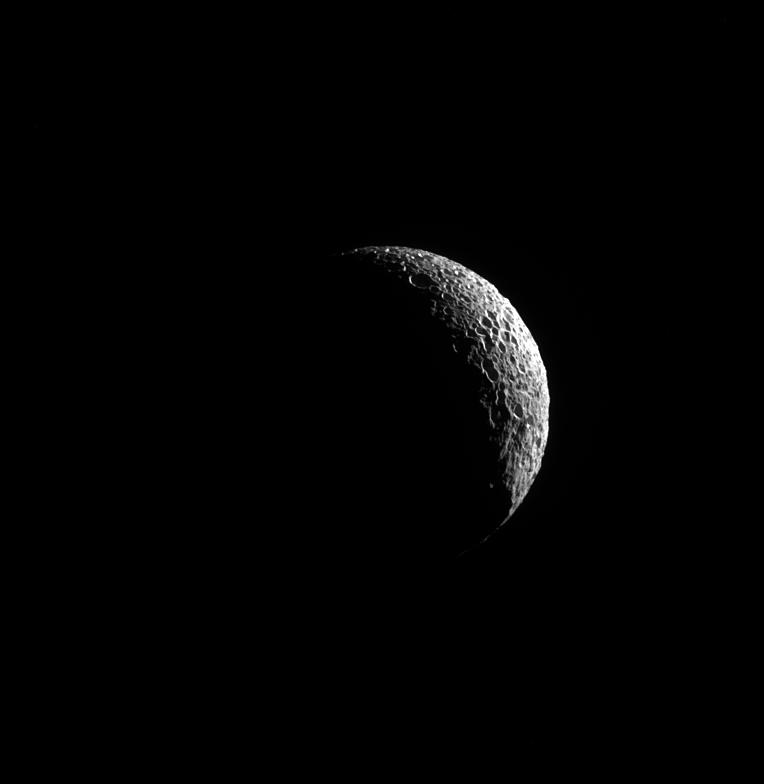
Crescent Mimas

Posted by


NASA dixit:

“May 20, 2013. A thin sliver of Mimas is illuminated, the long shadows showing off its many craters, indicators of the moon’s violent history. The most famous evidence of a collision on Mimas (246 miles, or 396 kilometers across) is the crater Herschel that gives Mimas its Death Star-like appearance. This view looks toward the anti-Saturn hemisphere of Mimas. North on Mimas is up and rotated 40 degrees to the right. The image was taken in visible light with the Cassini spacecraft narrow-angle camera.

The view was acquired at a distance of approximately 100,000 miles (200,000 kilometers) from Mimas and at a Sun-Mimas-spacecraft, or phase, angle of 130 degrees. Image scale is 4,000 feet (1 kilometer) per pixel.”

“After almost 20 years in space, NASA’s Cassini spacecraft begins the final chapter of its remarkable story of exploration: its Grand Finale. Between April and September 2017, Cassini will undertake a daring set of orbits that is, in many ways, like a whole new mission. Following a final close flyby of Saturn’s moon Titan, Cassini will leap over the planet’s icy rings and begin a series of 22 weekly dives between the planet and the rings.

No other mission has ever explored this unique region. What we learn from these final orbits will help to improve our understanding of how giant planets – and planetary systems everywhere – form and evolve.

On the final orbit, Cassini will plunge into Saturn’s atmosphere, sending back new and unique science to the very end. After losing contact with Earth, the spacecraft will burn up like a meteor, becoming part of the planet itself.

Cassini’s Grand Finale is about so much more than the spacecraft’s final dive into Saturn. That dramatic event is the capstone of six months of daring exploration and scientific discovery. And those six months are the thrilling final chapter in a historic 20-year journey.”

Image credit: NASA


  • Facebook
  • Google
  • Slashdot
  • Reddit
  • Live
  • TwitThis
09-13-17

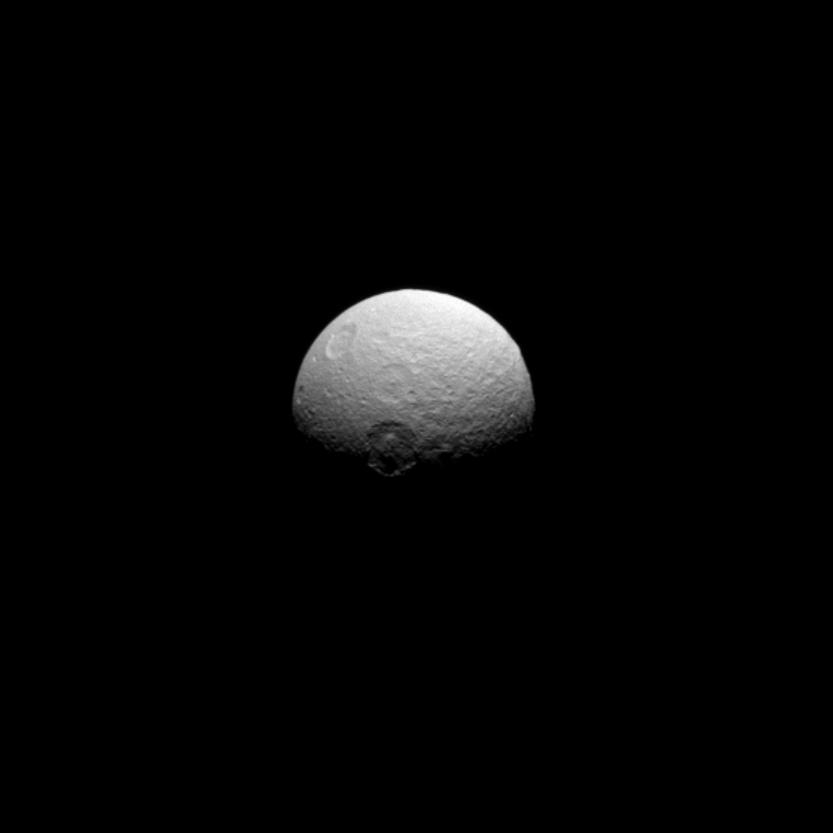
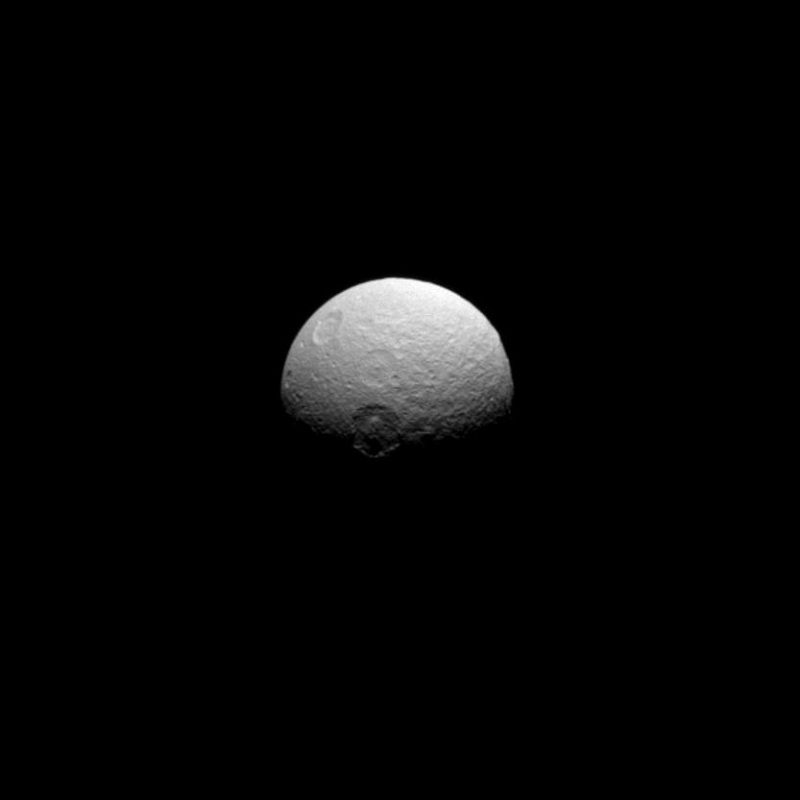
Melanthius at Dusk

Posted by


NASA dixit:

“May 16, 2013. The craters of Tethys tell the story of a violent history marked by impacts. The names of the craters also tell oft-violent stories: in this case, the Iliad and the Odyssey. Here, we see the craters Melanthius (near the center, at the day/night terminator), Dolius (above Melanthius), and Penelope (upper left almost over the limb). Penelope was the faithful and wise wife of the Greek hero Odysseus, Dolius was their loyal gardener, and Melanthius was Dolius’ son.

This view looks toward the leading side of Tethys. North on Tethys is up and rotated 32 degrees to the right. The image was taken in visible light with the Cassini spacecraft narrow-angle camera. The view was obtained at a distance of approximately 684,000 miles (1.1 million kilometers) from Tethys and at a Sun-Tethys-spacecraft, or phase, angle of 63 degrees. Image scale is 4 miles (7 kilometers) per pixel. The image has been zoomed in by a factor of 1.5.”

“After almost 20 years in space, NASA’s Cassini spacecraft begins the final chapter of its remarkable story of exploration: its Grand Finale. Between April and September 2017, Cassini will undertake a daring set of orbits that is, in many ways, like a whole new mission. Following a final close flyby of Saturn’s moon Titan, Cassini will leap over the planet’s icy rings and begin a series of 22 weekly dives between the planet and the rings.

No other mission has ever explored this unique region. What we learn from these final orbits will help to improve our understanding of how giant planets – and planetary systems everywhere – form and evolve.

On the final orbit, Cassini will plunge into Saturn’s atmosphere, sending back new and unique science to the very end. After losing contact with Earth, the spacecraft will burn up like a meteor, becoming part of the planet itself.

Cassini’s Grand Finale is about so much more than the spacecraft’s final dive into Saturn. That dramatic event is the capstone of six months of daring exploration and scientific discovery. And those six months are the thrilling final chapter in a historic 20-year journey.”

Image credit: NASA


  • Facebook
  • Google
  • Slashdot
  • Reddit
  • Live
  • TwitThis