OrbitalHub

The place where space exploration, science, and engineering meet

Domain is for sale. $50,000,000.00 USD. Direct any inquiries to contact@orbitalhub.com.

07-2-10

OCO 2.0

Posted by


Credits: NASA


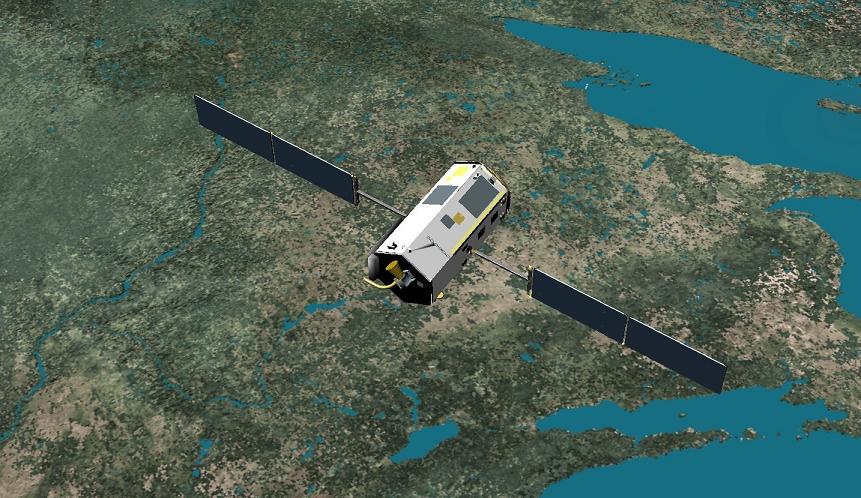
The Orbiting Carbon Observatory 2 mission is scheduled to launch in February 2013.


The previous spacecraft failed to reach orbit on February 24, 2009, after being launched on top of a Taurus XL launch vehicle from Vandenberg Air Force Base in California.


The OCO spacecraft will make global CO2 measurements from space, quite useful as scientists are trying to understand the global carbon cycle in order to be able to make predictions of future atmospheric CO2 increases.


NASA awarded the launch services contract to Orbital Sciences Corp. of Dulles, Virginia. OCO-2 will be launched by a Taurus XL 3110 launch vehicle from Vandenberg Air Force Base.


We quote from the NASA press release:

“OCO-2 is a NASA’s first mission dedicated to studying atmospheric carbon dioxide. Carbon dioxide is the leading human-produced greenhouse gas driving changes in the Earth’s climate. OCO-2 will provide the first complete picture of human and natural carbon dioxide sources and sinks, the places where the gas is pulled out of the atmosphere and stored.”


You can find more information about the Orbiting Carbon Observatory on NASA’s website.


  • Facebook
  • Google
  • Slashdot
  • Reddit
  • Live
  • TwitThis
04-11-10

Apollo 13 and UTIAS

Posted by


Credits: NASA


During the Apollo 13 mission, after the explosion of an oxygen tank crippled the Service Module, the astronauts had to abandon the third Moon landing. The Apollo 13 crew used the Lunar Module as a lifeboat. The Lunar Module was jettisoned by the Command Module just prior to re-entry.


A team of engineers from the University of Toronto Institute for Aerospace Studies (UTIAS) played a key role in the separation of the Lunar Module and the Command Module. As the tunnel connecting the two modules was pressurized, the UTIAS team had to determine how much pressure was necessary to safely separate the modules. Not an easy task considering the fact that if there was too much air in the tunnel, the explosion that triggered the separation would have damaged the hatch of the Command Module, and the astronauts would not have survived the re-entry.


The Apollo 13 astronauts, Commander James A. Lovell, Command Module Pilot John L. Swigert, and Lunar Module Pilot Fred W. Haise, were recovered by the U.S.S. Iwo Jima in the South Pacific after splashing down on April 17, 1970.


If you are in Toronto next Tuesday, on April 13, 2010, you can meet some of the members of the UTIAS team at the Canadian Air and Space Museum. They will receive the Pioneer Award for their role in the Apollo 13 rescue.


  • Facebook
  • Google
  • Slashdot
  • Reddit
  • Live
  • TwitThis
03-8-10

Kepler Anniversary

Posted by


Credits: NASA/Kim Shiflett


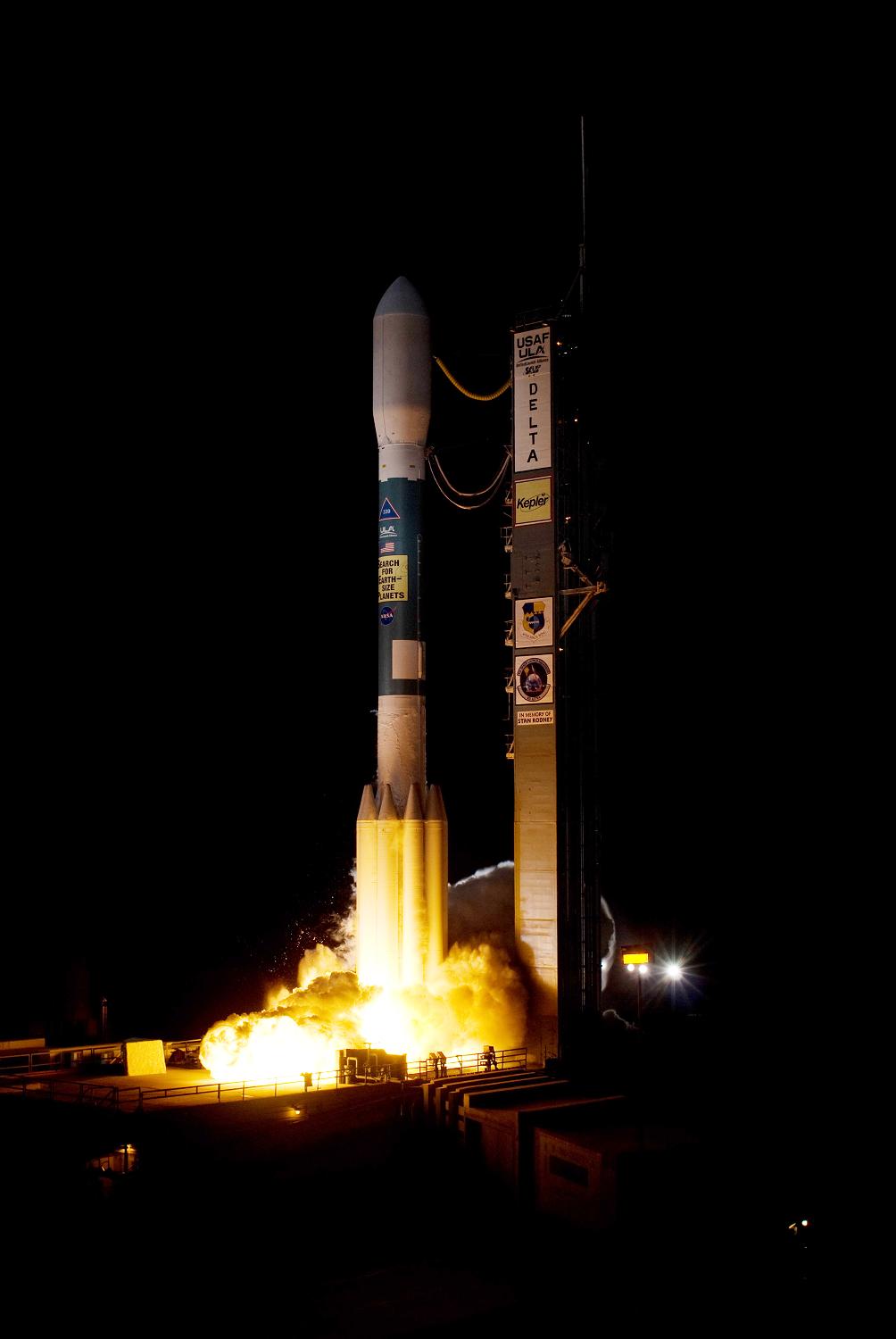
On March 6, 2009, the Delta II launch vehicle carrying the Kepler spacecraft lifted off from Launch Complex 17-B at Cape Canaveral Air Force Station in Florida.


In May 2009, Kepler started to hunt for other Earth-like planets in our galaxy. The technique used by Kepler to discover exo-planets is called transits. The large field of view of the Kepler telescope simultaneously captures the light of a very large number of stars in the Cygnus and Lyra constellations.


Kepler scientists already announced the discovery of five exoplanets named Kepler 4b, 5b, 6b, 7b, and 8b. The data collected by Kepler was also used to detect the atmosphere of the HAT-P-7b giant gas planet.


Kepler is expected to be operational until at least November 2012. Scientists hope to discover exo-planets in the habitable zone of other stars. The habitable zone is a region around a star where water can exist in liquid form on the surface of a planet. You can find more information about Kepler on NASA’s Kepler Mission website.


  • Facebook
  • Google
  • Slashdot
  • Reddit
  • Live
  • TwitThis
02-7-10

Solar Dynamics Observatory

Posted by


Credits: NASA/Goddard Space Flight Center Scientific Visualization Studio


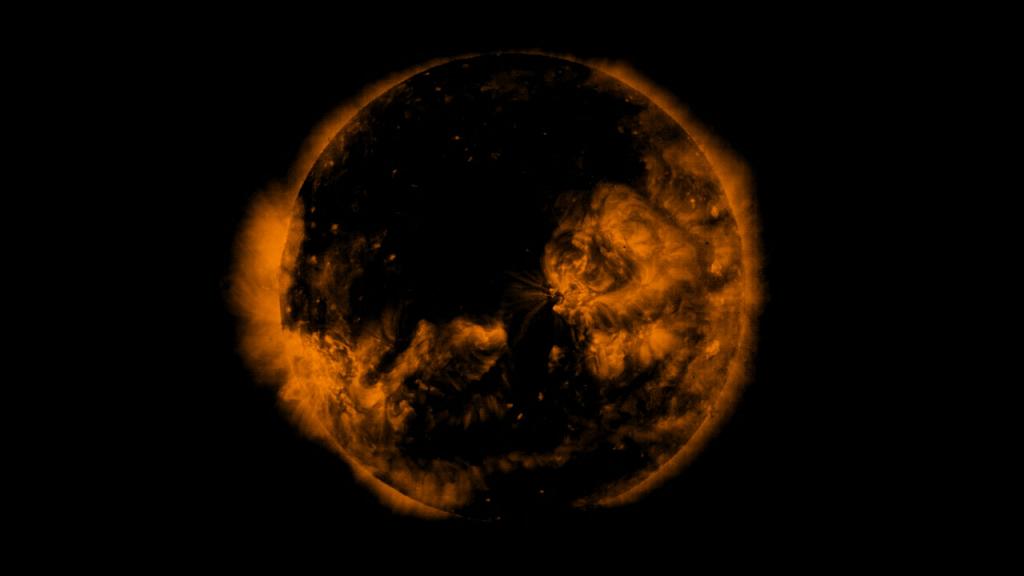
Predictions of space weather are important as the effects of magnetic storms can be very significant: disruptions in radio communications, radiation hazards to astronauts in LEO, and power lines surges, just to name a few. The goal of NASA’s Living With a Star (LWS) Program is to understand the changing Sun and its effects on the Solar System. The Solar Dynamics Observatory (SDO) is one of NASA’s LWS missions.


SDO will take measurements of the solar activity. There are seven science questions SDO will try to answer. Among them, what is the mechanism that drives the cycles of solar activity? How do the EUV variations relate to the magnetic activity of the Sun? Is it possible to make predictions regarding the space weather and climate? The last question, if answered, will make choosing the launch windows for future interplanetary manned missions an easier task.


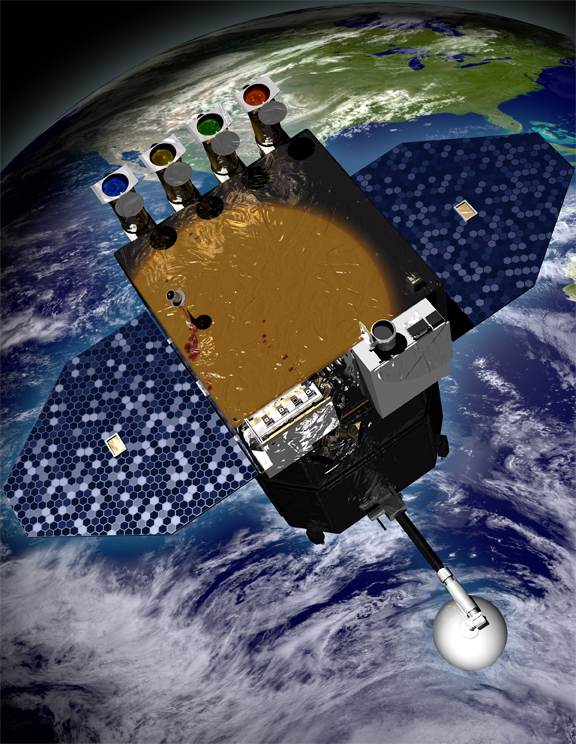
The spacecraft is 2.2 x 2.2 x 4.5 m and 3-axis stabilized. At launch, it has a mass of 3200 kg (270 kg the payload and 1400 kg the fuel). The solar panels are 6.5 m across, cover 6.6 m2, and produce up to 1540 W of power.


Credits: NASA


SDO carries three instruments: the Atmospheric Imaging Assembly (AIA), EUV Variability Experiment (EVE), and the Helioseismic and Magnetic Imager (HMI). The instruments will take measurements that will reveal at a very high rate the variations of the Sun.


The HMI was developed at Stanford University and it will extend the SOHO/MDI instrument. The HMI will help to study the origin of variability and the various components of the magnetic activity of the Sun. The measurements aim at understanding the origin and evolution of sunspots, sources and drivers of solar activity and disturbances, connections between the internal processes and the dynamics of the corona and the heliosphere.


You can find more information about the instrument on the HMI page on Stanford University’s web site.


The AIA will capture images of the solar atmosphere in ten wavelengths every ten seconds. The data collected by the instrument will improve the understanding of the activity in the solar atmosphere. The instrument was developed by Lockheed Martin.


EVE was developed at University of Colorado at Boulder. EVE will measure the solar extreme ultraviolet irradiance.


The SDO will launch aboard an Atlas V launch vehicle from SLC 41 at Cape Canaveral. SDO will operate on a geosynchronous orbit, which will allow continuous observations of the Sun. The orbit will also allow a continuous contact with a single dedicated ground station. The high data acquisition rate required such a mission profile, as a large on-board storage system would add to the overall complexity of the system.


You can find more information about SDO on NASA’s website.


  • Facebook
  • Google
  • Slashdot
  • Reddit
  • Live
  • TwitThis
09-28-09

Fly Me to the Moon

Posted by


In Fly Me to the Moon : An insider’s guide to the new science of space travel, Ed Belbruno explains in simple terms advanced mathematical techniques using a general subject called dynamical systems theory. He describes how we can use chaos to change the way we maneuver in space.


Ed Belbruno makes the important point that chaos can be used as a way to get a handle on the unpredictability in sensitive motions of a spacecraft.


The unpredictability results from the subtle combination of gravitational pulls and tugs on a spacecraft moving in space. An immediate application is low-energy transfer trajectories to lunar orbits.


Belbruno tells the stories of Hiten, the Japanese lunar mission rescued in 1991; HGS-1, a commercial Earth orbiting satellite that had strayed into an undesired orbit; LGAS, a low-budget NASA mission; and SMART-1, the ESA mission that tested low-energy lunar transfers in 2003.


The low-energy trajectories can be used for purposes other than sending automated cargo spacecrafts to permanent settlements on the Moon. Ballistic captures, as they are also called, could be used for a robotic mission in the Jovian system, to shed light on the apparently unpredictable trajectories of comets and other Kuiper Belt objects, and to explain the origin of our Moon or the Panspermia hypothesis.


While it is written for a non-technical audience, the book is grounded in solid theoretical research, and would be of interest to engineers and space enthusiasts alike.


  • Facebook
  • Google
  • Slashdot
  • Reddit
  • Live
  • TwitThis


Credits: ISRO


After nine months of operation, Chandrayaan-1 failed to communicate with the base. The Indian Space Research Organization (ISRO) abruptly lost contact with the spacecraft on Saturday, September 29, 2009.


If this is the end of Chandrayaan-1, the mission covered only nine months of its scheduled two-year operational life. I really hope that this is a minor obstacle that the ISRO will be able to overcome. ISRO stated that the Chandrayaan-1 mission was able to meet most of its scientific objectives.


The Chandrayaan-1 scientific payload contains a diverse collection of instruments. The instruments were designed and developed by ISRO, ESA, NASA, and the Bulgarian Space Agency.


There are two instruments that are used to map the surface of the Moon: the Terrain Mapping Camera (TMC) and the Lunar Laser Ranging Instrument (LLRI). The X-ray spectrometer onboard the spacecraft measures the concentration of certain elements on the lunar surface and monitors the solar flux in order to normalize the results of the measurements taken. The mineralogical configuration of the surface is mapped by four instruments: the Hyper Spectral Imager (HySI), the Sub-keV Atom Reflecting Analyzer (SARA), the Moon Mineralogy Mapper (M3), and the Near-Infrared Spectrometer (SIR-2). The Radiation Dose Monitor (RADOM-7) records the radiation levels in the lunar orbit.


You can find out more about Chandrayaan-1 on the ISRO’s dedicated web page.


  • Facebook
  • Google
  • Slashdot
  • Reddit
  • Live
  • TwitThis