OrbitalHub

The place where space exploration, science, and engineering meet

Domain is for sale. $50,000,000.00 USD. Direct any inquiries to contact@orbitalhub.com.

04-30-16

4K View of April 17 Solar Flare

Posted by


NASA dixit:

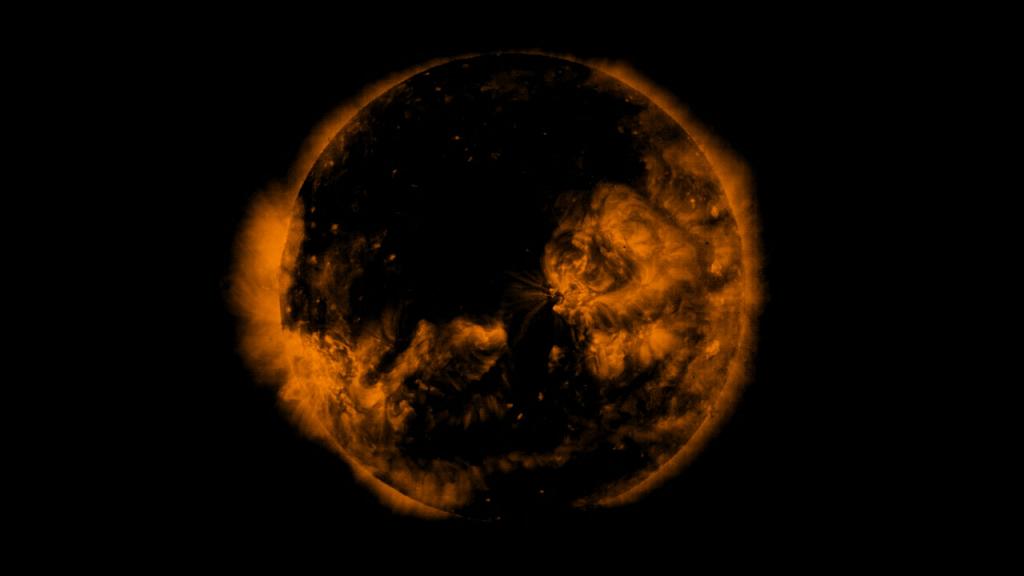
“On April 17, 2016, an active region on the sun’s right side released a mid-level solar flare, captured here by NASA’s Solar Dynamics Observatory. This solar flare caused moderate radio blackouts, according to NOAA’s Space Weather Prediction Center. Scientists study active regions – which are areas of intense magnetism – to better understand why they sometimes erupt with such flares. This video was captured in several wavelengths of extreme ultraviolet light, a type of light that is typically invisible to our eyes, but is color-coded in SDO images for easy viewing.”

Video credit: NASA’s Goddard Space Flight Center/SDO/Genna Duberstein


  • Facebook
  • Google
  • Slashdot
  • Reddit
  • Live
  • TwitThis
01-4-16

The Sun In Ultra-HD

Posted by


NASA dixit:

“It’s always shining, always ablaze with light and energy that drive weather, biology and more. In addition to keeping life alive on Earth, the sun also sends out a constant flow of particles called the solar wind, and it occasionally erupts with giant clouds of solar material, called coronal mass ejections, or explosions of X-rays called solar flares. These events can rattle our space environment out to the very edges of our solar system. In space, NASA’s Solar Dynamics Observatory, or SDO, keeps an eye on our nearest star 24/7. SDO captures images of the sun in 10 different wavelengths, each of which helps highlight a different temperature of solar material. In this video, we experience SDO images of the sun in unprecedented detail. Presented in ultra-high definition, the video presents the dance of the ultra-hot material on our life-giving star in extraordinary detail, offering an intimate view of the grand forces of the solar system.”

Video credit: NASA Goddard


  • Facebook
  • Google
  • Slashdot
  • Reddit
  • Live
  • TwitThis
07-9-15

CME in 304 Angstrom

Posted by


NASA dixit:

“NASA’s Solar Dynamics Observatory caught this image of an eruption on the side of the sun on June 18, 2015. The eruption ultimately escaped the sun, growing into a substantial coronal mass ejection, or CME — a giant cloud of solar material traveling through space. This imagery is shown in the 304 Angstrom wavelength of extreme ultraviolet light, a wavelength that highlights material in the low parts of the sun’s atmosphere and that is typically colorized in red. The video clip covers about four hours of the event.”

Credit: NASA


  • Facebook
  • Google
  • Slashdot
  • Reddit
  • Live
  • TwitThis


NASA dixit:

“The sun emitted a mid-level solar flare, peaking at 3:01 p.m. EDT on Oct. 2, 2014. NASA’s Solar Dynamics Observatory, which watches the sun 24-hours a day, captured images of the flare. Solar flares are powerful bursts of radiation. Harmful radiation from a flare cannot pass through Earth’s atmosphere to physically affect humans on the ground, however — when intense enough — they can disturb the atmosphere in the layer where GPS and communications signals travel.

This flare is classified as an M7.3 flare. M-class flares are one-tenth as powerful as the most powerful flares, which are designated X-class flares”.

Music: “No Comment Before Sunset” by Lars Leonhard, courtesy of the artist and BineMusic.

Credit: NASA


  • Facebook
  • Google
  • Slashdot
  • Reddit
  • Live
  • TwitThis
05-16-14

Graceful Eruption

Posted by


NASA dixit:

“A mid-level flare, an M6.5, erupted from the sun on April 2, 2014, peaking at 10:05 a.m. EDT. This video from NASA’s Solar Dynamics Observatory shows the flare in a blend of two wavelengths of extreme ultraviolet light: 171 Angstroms and 304 Angstroms, colorized in yellow and red, respectively.”

Credit: NASA Goddard Space Flight Center


  • Facebook
  • Google
  • Slashdot
  • Reddit
  • Live
  • TwitThis
02-7-10

Solar Dynamics Observatory

Posted by


Credits: NASA/Goddard Space Flight Center Scientific Visualization Studio


Predictions of space weather are important as the effects of magnetic storms can be very significant: disruptions in radio communications, radiation hazards to astronauts in LEO, and power lines surges, just to name a few. The goal of NASA’s Living With a Star (LWS) Program is to understand the changing Sun and its effects on the Solar System. The Solar Dynamics Observatory (SDO) is one of NASA’s LWS missions.


SDO will take measurements of the solar activity. There are seven science questions SDO will try to answer. Among them, what is the mechanism that drives the cycles of solar activity? How do the EUV variations relate to the magnetic activity of the Sun? Is it possible to make predictions regarding the space weather and climate? The last question, if answered, will make choosing the launch windows for future interplanetary manned missions an easier task.


The spacecraft is 2.2 x 2.2 x 4.5 m and 3-axis stabilized. At launch, it has a mass of 3200 kg (270 kg the payload and 1400 kg the fuel). The solar panels are 6.5 m across, cover 6.6 m2, and produce up to 1540 W of power.
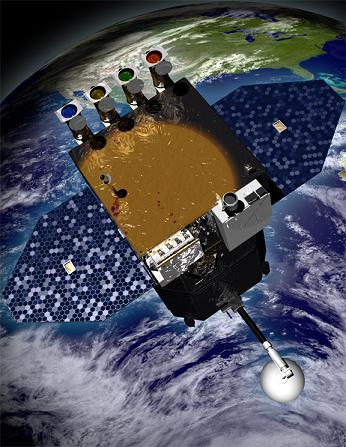
 

Credits: NASA


SDO carries three instruments: the Atmospheric Imaging Assembly (AIA), EUV Variability Experiment (EVE), and the Helioseismic and Magnetic Imager (HMI). The instruments will take measurements that will reveal at a very high rate the variations of the Sun.


The HMI was developed at Stanford University and it will extend the SOHO/MDI instrument. The HMI will help to study the origin of variability and the various components of the magnetic activity of the Sun. The measurements aim at understanding the origin and evolution of sunspots, sources and drivers of solar activity and disturbances, connections between the internal processes and the dynamics of the corona and the heliosphere.



You can find more information about the instrument on the HMI page on Stanford University’s web site.


The AIA will capture images of the solar atmosphere in ten wavelengths every ten seconds. The data collected by the instrument will improve the understanding of the activity in the solar atmosphere. The instrument was developed by Lockheed Martin.


EVE was developed at University of Colorado at Boulder. EVE will measure the solar extreme ultraviolet irradiance.


The SDO will launch aboard an Atlas V launch vehicle from SLC 41 at Cape Canaveral. SDO will operate on a geosynchronous orbit, which will allow continuous observations of the Sun. The orbit will also allow a continuous contact with a single dedicated ground station. The high data acquisition rate required such a mission profile, as a large on-board storage system would add to the overall complexity of the system.


You can find more information about SDO on NASA’s website.


  • Facebook
  • Google
  • Slashdot
  • Reddit
  • Live
  • TwitThis