OrbitalHub

The place where space exploration, science, and engineering meet

Domain is for sale. $50,000,000.00 USD. Direct any inquiries to contact@orbitalhub.com.


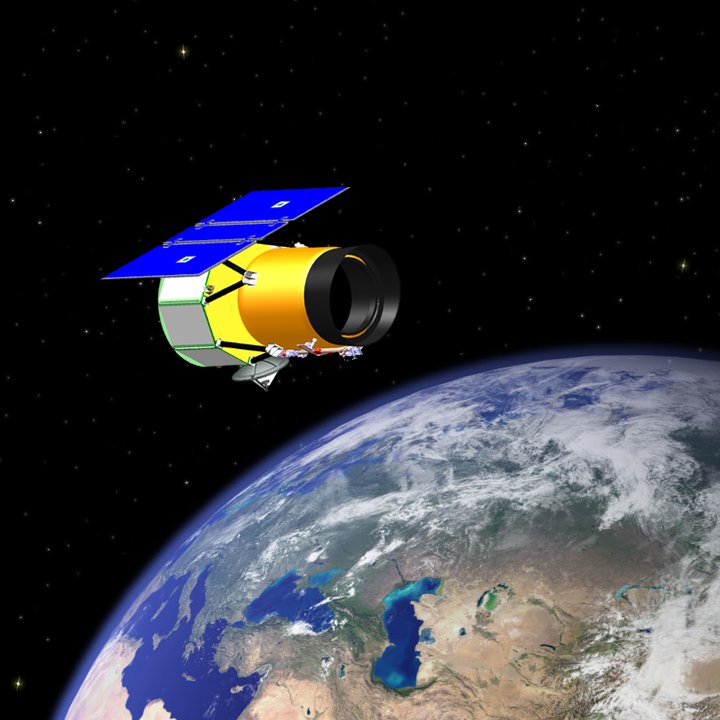
Credits: NASA/JPL


Wide-field Infrared Survey Explorer or WISE is a NASA-funded scientific research project that will provide an all-sky survey in the mid-infrared wavelength range.


WISE will collect data that will allow scientists to compile an all-sky infrared image atlas and catalogue of over 300 million infrared sources. WISE will be able to measure the diameters of more than 100,000 asteroids that glow in the mid-infrared, and make observations of the coldest and nearest stars, regions of new star and planet formation, and the structure of our own galaxy.


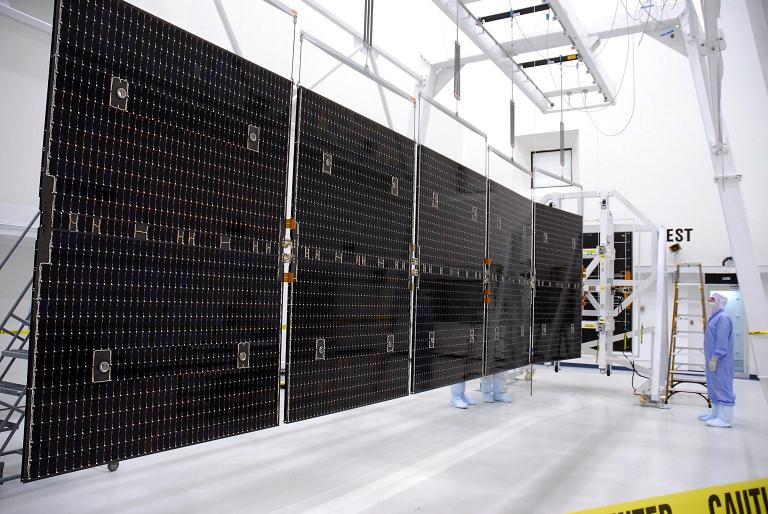
WISE will only operate for seven to thirteen months. WISE will explore the entire Universe from a 523×523 km, 97.4-inclined orbit above the ground. The spacecraft will orbit in a Sun-synchronous orbit, so the solar panel will always be pointed at the Sun.


The cryostat will run for thirteen months. After a one-month in-orbit checkout period, the telescope will operate for six months. An additional pass of the sky (that would take another six months) is possible, if funded to do so by NASA.


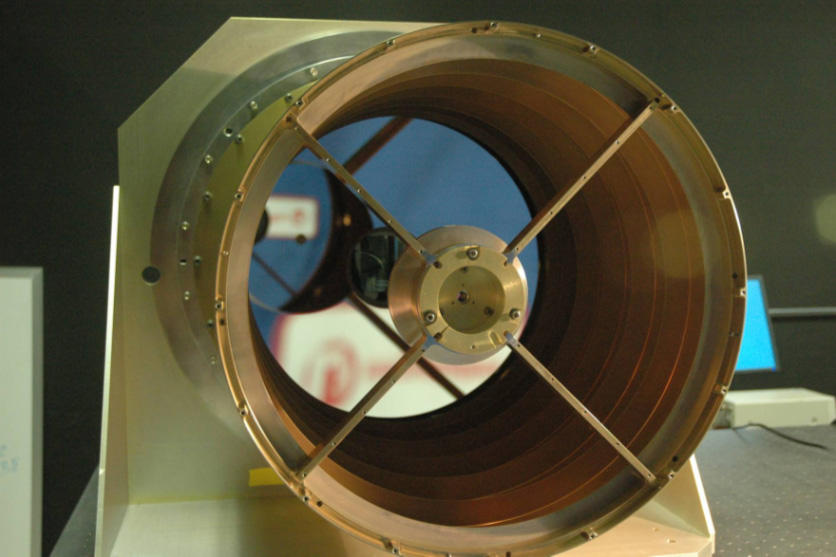
Credits: UCLA/JPL


The spacecraft is 2.85 m long, 2.0 m wide, and 1.73 m deep. The spacecraft does not carry propellant. The telescope will make all pointing adjustments using reaction wheels and torque rods. Star trackers, sun sensors, a magnetometer, and gyroscopes will be the sensors used by the attitude control subsystem. The TDRSS (Tracking and Data Relay Satellite System) satellites will relay commands and data with ground stations.


The field of view is 47 arc minutes and it comes from a small telescope diameter (only 40 cm) and large detector arrays. The telescope has four infrared sensitive detector arrays, 1024×1024 pixels each. For the near-infrared bands, there are Mercury-Cadmium-Telluride (MCT) detectors, while for the mid-infrared bands, Arsenic-doped Silicon (Si:As) detectors are used.


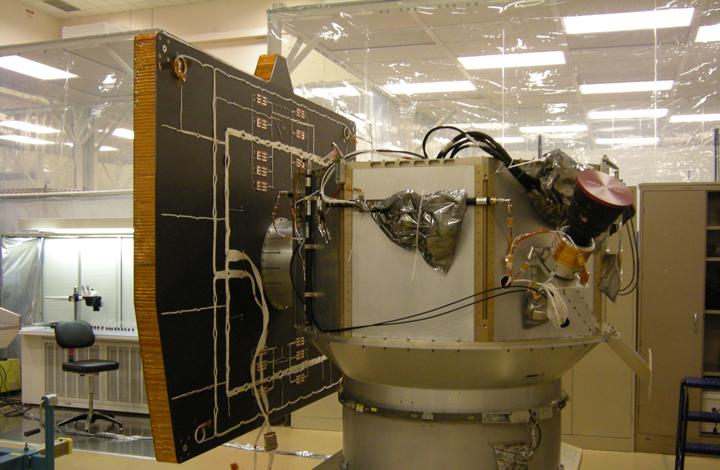
Credits: UCLA/JPL


The optics instruments have to be cooled to very low temperatures in order to lower noise detection. The MCT detectors operate at 32 K, while the Si:As detectors will be cooled to less than 8 K.


The WISE launch is scheduled for November 2009. WISE will launch aboard a Delta II launch vehicle from Vandenberg Air Force Base, in California.


The WISE team consists of UCLA (University of California at Los Angeles), JPL (Jet Propulsion Laboratory), SDL (Space Dynamics Labs in Utah), BATC (Ball Aerospace & Technology Corporation), IPAC (Infrared Processing and Analysis Center), and UCB (University of California at Berkeley).


For more information about the WISE mission, you can visit the WISE mission homepage at the Space Science Laboratory, University of California, Berkeley, website.


  • Facebook
  • Google
  • Slashdot
  • Reddit
  • Live
  • TwitThis
07-16-09

Q&A With Ed Belbruno

Posted by


Credits: NASA


NASA’s GRAIL mission will be one of the few missions to utilize the chaos associated with the subtle gravitational forces between planets in order to reach lunar orbit. The mission is scheduled to launch in 2011 and will use a low-fuel trajectory to the Moon.


Ed Belbruno, the first to use weak stability boundary theory to design trajectories for space missions, has agreed to answer some questions for OrbitalHub readers.


DJ: You graduated in mathematics from New York University, and received your PhD in mathematics from New York University’s Courant Institute. As a mathematician, how did you develop an interest in celestial mechanics?
Ed Belbruno: I was always interested in space since I was very young, going back to 4 years old. When I went to undergraduate school, also at NYU, I was a joint chemistry and mathematics major. At that time I was also interested in astrochemistry. When I got my BS, I went on to the Courant Institute and immediately wanted to get involved in an area of mathematics involved with space. I asked around, and found that there was a very famous mathematician there who was considered to be one of the leaders in the world in the subject, Juergen Moser. I learned that he was also a leader in a field called theoretical celestial mechanics. So, I asked to work with him and he agreed. For me it was great because I loved mathematics and I loved space. I am also an artist, and my early paintings involved a lot of space scenes. My being drawn to celestial mechanics was a natural thing.


DJ: I think of celestial mechanics as a precise discipline… the word CHAOS from the titles of the presentations you are giving would make any aerospace engineer nervous. Is this a misnomer or it is really the foundation for the new class of trajectories you designed?
E.B.: When I arrived at JPL in 1986, I was previously an assistant professor of mathematics at Boston University. I arrived at JPL and found myself at a leading space center – to work on the following missions: Galileo, Cassini, Magellan, Ulysses. My job was to do trajectory design. I noticed that all these missions and all the others I saw in the past, relied mainly on Hohmann transfers which are straightforward trajectories found using algebra. They are very well behaved and linear in nature. There was nothing chaotic about them. I noticed that in the field of astrodynamics, which designs trajectories for spacecraft, that advanced mathematical techniques using a general subject called dynamical systems theory, which includes chaos theory, was never used. I figured if you could incorporate that into astrodynamics, new exciting low fuel trajectories could be found. No one at JPL really believed me, but in 1986 I started investigating whether or not one could use the subtle gravitational interactions between the Earth and Moon to get a spacecraft into orbit about the Moon without the use of rocket engines – that is, automatically. This had never been done before. I also found that chaos methods had to be employed to do this since the gravitational interactions between the Earth and Moon give rise to chaotic motions for a spacecraft. I succeeded in 1986 and found a way to do this for a mission study at JPL called LGAS – Lunar Get Away Special, where I found a 2-year route to the Moon with automatic capture at the Moon that was chaotic. This was the first time chaos was used for a lunar capture for a spacecraft – or capture at any planet. It was the first systematic use of chaos in astrodynamics as far as I know. The LGAS design was eventually used by the European Space Agency for their SMART-1 lunar mission in 2004. In 1991 I found a 3-4 month route to the Moon using automatic chaotic capture for Japan’s Hiten mission. This transfer first moves out to 1.5 million kilometers from the Earth, then falls back to the Earth-Moon system and into automatic ballistic capture about the Moon. This same transfer type is going to be used for NASA’s GRAIL mission in 2011. All these trajectories that go to automatic capture at the Moon are chaotic since they are very sensitive to small changes.


DJ: Was there any resistance from the scientific community when you first published the results of your research?
E.B.: Yes. When I first started designing routes to the Moon that employed automatic capture (or ‘ballistic capture”) back in 1986-1990 at JPL, that employed chaos as described above there was a good deal resistance, in spite of publishing papers and demonstrating actual trajectories via computer simulations. This is because no one had ever heard of this before, and also, chaos was a not a term that was desired to be associated with space travel. In 1990 I had a disagreement at JPL over this and found myself looking for another job. Luckily, soon, a couple of months after that while still at JPL, ready to leave for another job, I was able to take part in the rescue of a Japanese lunar mission, and get its spacecraft, Hiten, successfully to the Moon on one of these new transfers employing ballistic capture, that vindicated my work – and saved my career.


DJ: Are there any computational challenges that make the class of trajectories you designed difficult to compute? Is the lack of computational power the reason they are a recent development in celestial mechanics?
E.B.: Yes, they require more accuracy than is typically used since the motions involved are very sensitive in nature. So, different methods, other than classical optimization methods, have to be employed. These methods involve using ideas from chaos theory and dynamical systems and making use of regions that support chaotic motions called weak stability boundaries. Once the motions in these regions were better understood, then the methods have been refined and the trajectories can be more easily generated. More powerful computers were/are not necessary. What was necessary were new numerical methods.


DJ: I believe solar sails would match the profile of low-energy space missions. Have you ever considered applying the weak stability boundary theory in order to design trajectories for spacecraft propelled by solar sails?
E.B.: I agree that solar sails would be a great thing to use with these low energy trajectories. I have considered them and made some designs actually, but never designed any missions using them.


DJ: Considering your experience in designing low-cost trajectories for lunar missions, have you been contacted by any Google X-Prize team for assistance? How feasible would it be for a Google X-Prize team to use such a trajectory (costs aside, they would have to launch at least three months before any other team in order to make an attempt to win the prize)?
E.B.: Yes, I was on the so-called ‘Mystery team’ for the Google X-prize from latter 2007 to latter 08. The base design was to use one of these low energy transfers to the Moon of the type that Hiten used, described earlier, and that GRAIL is planning to use. I don’t know how feasible it would be to use this trajectory – certainly no more or less feasible than using a direct Hohmann transfer. It ultimately depends on the launch vehicle, which are very expensive. I don’t think the three months flight time is a factor since it is very unlikely that there will be that kind of time pressure considering how difficult it is to send something to the Moon for a private company.


DJ: What other space missions are you currently involved in? Can you provide a brief description?
E.B.: I am involved, indirectly, with NASA’s STEREO solar science mission in the sense that they have recently redirected that mission to do an excursion to L4, L5 of the Earth-Sun to try and verify a theory of Richard Gott and myself on the origin of the Moon. This theory was published by Gott and myself in 2005 (see http://www.edbelbruno.com) in the Astronomical Journal entitled, Where Did the Moon Come From? In that paper we hypothesized that the giant Mars-sized impactor that is thought to have hit the Earth to form the Moon, billions of years ago (that Hayden has a fabulous show on), actually originated at special locations in space. These locations are called Earth-Sun equilateral L4, L5 points, 93 million miles from the Earth in either direction, on the Earth’s orbit. The impactor is called Theia. It is felt that if our theory is correct that residual material and perhaps asteroids exist near L4, L5. To verify this, the STEREO mission, consisting of two spacecraft, are being redirected to go to these points to investigate the possible remains of the mysterious planet called Theia that may have been there long ago. The NASA press release explains this in detail. The spacecraft are due to arrive at L4, L5 in September, October this year and are currently approaching these locations.


DJ: It is not often you meet someone who is both an artist and a mathematician. How do these roles complement each other?
E.B.: When I do paintings, I find that I have to completely turn off any logical mathematical way of thinking and work on a subconscious level. This is exactly the opposite of working mathematically where you have to be very logical and work mostly with the conscious part of your mind. These two processes are totally different. There is a little subconscious thought when doing mathematical/scientific work, of course, but you have to pay close attention to deductive reasoning. In doing a painting, especially abstract expressionist painting, you have to avoid as much as possible deductive reasoning and be very spontaneous without thinking, which would ruin the painting. I have found it challenging to work in these two different ways – but now I can do it fairly easily.

 

Credits: Linda Gambone


If you happen to be in New York on July 20, 2009, you can attend the presentation A New Path To The Moon and Beyond Using Gravitational Chaos, at the Hayden Planetarium Space Theater, American Museum of Natural History.


Ed Belbruno will present the weak stability boundary theory and the alternative approach to space travel he developed in the 1980s.


  • Facebook
  • Google
  • Slashdot
  • Reddit
  • Live
  • TwitThis
02-17-09

Dawn and the Flyby of Mars

Posted by


Credits: NASA/JPL


The Dawn spacecraft is currently performing the Mars flyby phase of its mission. The purpose of the Mars flyby is to alter the trajectory of the spacecraft in order to rendezvous with its first scientific target in the main asteroid belt.


The spacecraft will come within 549 km of the surface of Mars on February 17, 2009, at 4:28 PST.


The flyby is a gravity assist maneuver used in orbital mechanics to alter the trajectory of a spacecraft. The gravity assist is also known as a gravitational slingshot. The first ever gravity assist maneuver was performed by Mariner 10 in February 1974, and most of the interplanetary missions have made use of it since then.


The scientific objective of the Dawn mission is to answer important questions about the origin and the evolution of our solar system. The currently accepted theory about the formation of our solar system states that Jupiter’s gravity interfered with the accretion process, thereby preventing a planet from forming in the region between Jupiter and Mars. This led to the formation of the asteroid belt.


The asteroids chosen as scientific targets for the Dawn mission are Vesta and Ceres. Due to their size, they have survived the collisional phase, and it is believed that they have preserved the physical and chemical conditions of the early solar system. The asteroids have followed different evolutionary paths and have dissimilar characteristics, which makes them perfect research subjects.


Credits: NASA/JPL


The design of the Dawn spacecraft is based on Orbital’s STAR-2 series, and uses flight-proven components from other Orbital and JPL spacecraft: the propulsion system is based on the design used on Deep Space 1, the attitude control system used on Orbview, a hydrazine-based reaction control system used on the Indostar spacecraft, and command and data handling, as well as flight software, from the Orbview program.


The core structure of the spacecraft is a graphite composite cylinder, while the panels are aluminum core with aluminum/composite face sheets.


The central cylinder hosts the hydrazine and xenon tanks. The hydrazine tank can store 45 kg of fuel, while the xenon tank has a capacity of 450 kg.


The attitude control system (ACS) uses star trackers to estimate attitudes in cruise mode. A coarse Sun sensor (CSS) allows ACS to keep the solar panels normal to the Sun-spacecraft line. ACS also uses the hydrazine-based reaction control system for the control of attitude and for desaturation of the reaction wheels.


Credits: NASA/George Shelton


The solar panels are capable of producing more than 10 kW at 1 AU and 1 kW at 3 AU (on Ceres’ orbit).


The command and data handling system (CDHS) is based on a RAD6000 board running VxWorks. The software is written in C. There are 8GB available on the board as storage for engineering and scientific data.


The scientific payload consists of the Framing Camera (FC), the Gamma Ray and Neutron Detector (GRaND), and the visible and infrared (VIR) mapping spectrometer.


The FC will be used for determining the bulk density, the gravity field, for obtaining images of the surface, and for compiling topographic maps of Vesta and Ceres. In addition, the FC will capture images for optical navigation in the proximity of the asteroids. For reliability purposes, the payload includes two identical cameras that can run independently.


GRaND will serve for the determination of the elemental composition of the asteroids. GRaND is the result of the expertise accumulated during the Lunar Prospector and Mars Odyssey programs.


Credits: NASA/Jack Pfaller


VIR will help map the surface mineralogy of the asteroids. The instrument is a modified version of the visible and infrared spectrometer flying on the Rosetta mission.


The Dawn spacecraft uses ion propulsion to make its journey to Vesta and Ceres. Ion propulsion will also be used by Dawn during the low altitude flights over the asteroids.


While the fact that Dawn’s engines have a thrust of only 90 mN can hardly impress a reader, the important detail to mention when discussing propulsion systems is the specific impulse. Dawn’s engines have a specific impulse of 3100 s. For a chemical rocket, the specific impulse ranges from 250 s for solid rockets to 450 s for bipropellant liquid rockets. The only drawback (if this can be regarded as a drawback) is that the ion engines must be fired for much longer in order to achieve an equivalent trajectory.


With such high specific impulse engines, Dawn makes use of the fuel onboard in a very efficient way. The fuel used is xenon, a heavy noble gas placed in group 8A of the periodic table. The power produced by the large solar panels is used to ionize the fuel and then accelerate it with an electric field between two grids. In order to maintain a neutral plasma, electrons are injected into the beam after acceleration.


Credits: NASA/Amanda Diller


Dawn was launched from Cape Canaveral Air Force Station and injected on an interplanetary trajectory by a Delta II launch vehicle.


The main contributors to the Dawn mission are the University of California in Los Angeles (science lead, science operations, data products, archiving, and analysis), the Jet Propulsion Laboratory (project management, systems engineering, mission assurance, payload, navigation, mission operations, level zero data), and the Orbital Sciences Corporation (spacecraft design and fabrication, quality assurance, and payload integration).


The scientific payload was provided by the Los Alamos National Laboratory, the German Aerospace Center, the Max Planck Institute, and the Italian Aerospace Center. The Deep Space Network is responsible for data return from the spacecraft.


For more information about Dawn, you can visit the Dawn Mission Home Page on the JPL web site.


  • Facebook
  • Google
  • Slashdot
  • Reddit
  • Live
  • TwitThis


Credits: NASA


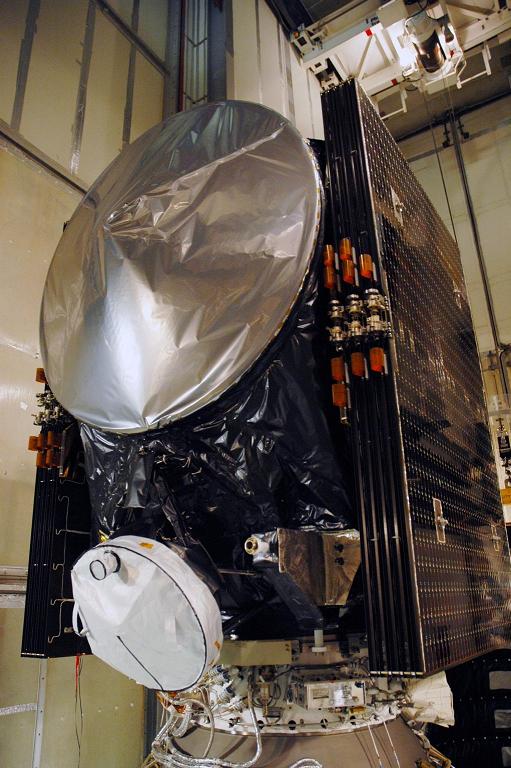
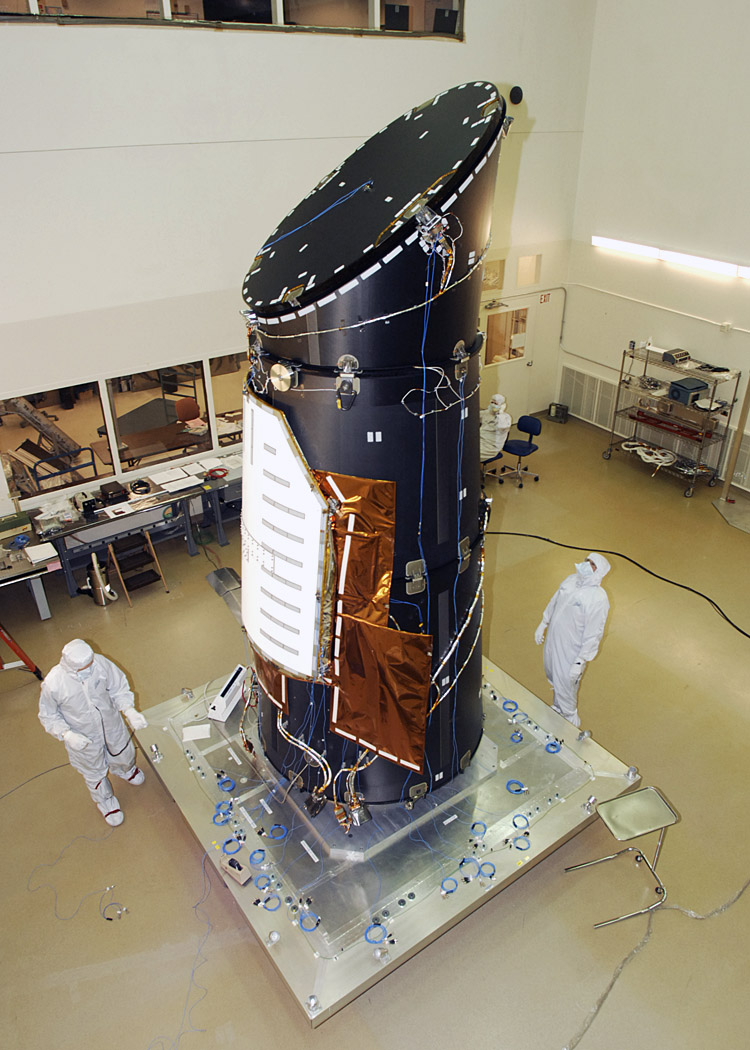
Kepler is the first NASA mission capable of finding terrestrial exo-planets. Of particular interest are the planets orbiting in the so-called habitable zone, where conditions are met so that liquid water can exist on the surface of the planet.


The observations made so far have brought clear evidence that planets orbiting around other stars are a common thing, rather than the exception to the rule. Due to the limitations of present technology, only gas giants, hot-super Earths in short period orbits, and ice giants have been discovered.


The Kepler mission, part of NASA’s Discovery Program, is designed to survey a portion of our region of the Milky Way. Kepler will survey a large number of stars, and explore the structure and diversity of many planetary systems.


The scientific objectives of the mission are very ambitious: determine the fraction of terrestrial planets in or near the habitable zone, determine the distribution of sizes and the orbits of exo-planets in the surveyed planetary systems, determine reflectivity, size, and density of short-period giant planets, estimate how many planets are in multiple-star systems, and determine the characteristics of the stars that have planets orbiting around them. Scientists hope to discover additional members of the planetary systems surveyed using other indirect techniques.


Credits: NASA/Ball Aerospace


The duration of the mission must be selected to allow the detection and confirm the periodic nature of the planet transits in or near the habitable zone. Due to the characteristics of orbits of such planets, a lifetime of three and a half years (as currently envisioned) would allow a four-transit detection of most orbits up to one year in length and a three-transit detection of orbits of length up to 1.75 years.


The mission lifetime will be extendible to at least six years. The extension will permit the detection of planets smaller than Earth with two-year orbits.


Kepler will be inserted in an Earth-trailing heliocentric orbit, then the spacecraft will slowly drift away from Earth. The selected orbit offers a very stable pointing attitude, and it avoids the high radiation dosage associated with an Earth orbit. However, Kepler will be exposed occasionally to solar flares.


The communication protocol with the spacecraft includes establishing contact twice a week for commanding, health, and status, and science data downlink contact once a month.


Credits: Jon Lomberg


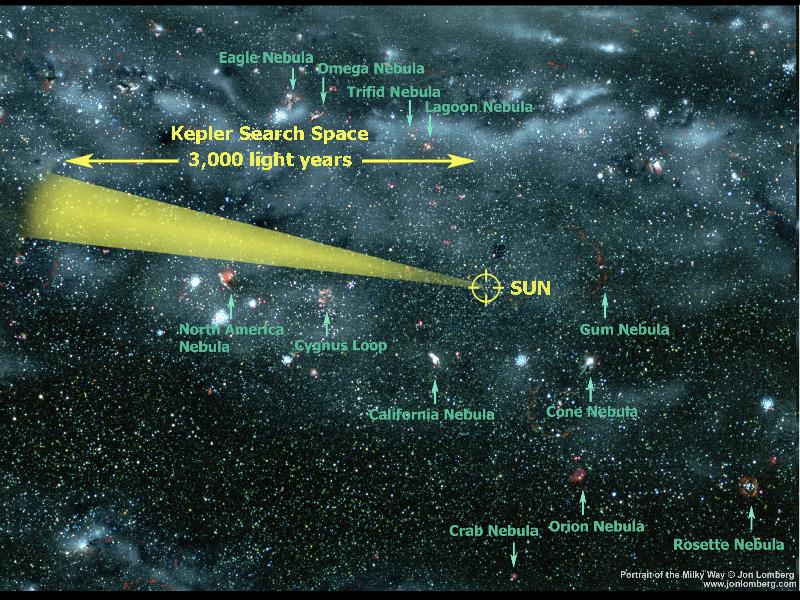
There are two requirements that dictated the selection of the target field. The first requirement is the ability to monitor continuously the stars surveyed because transits last only a fraction of a day. This can be achieved by having the field of view out of the ecliptic plane, so the Sun will not interfere with the observations at any time during the year. The second requirement is to have the largest possible number of stars in the field of view.


To meet both requirements, a region in the Cygnus and Lyra constellations of our galaxy has been selected as the field of view.


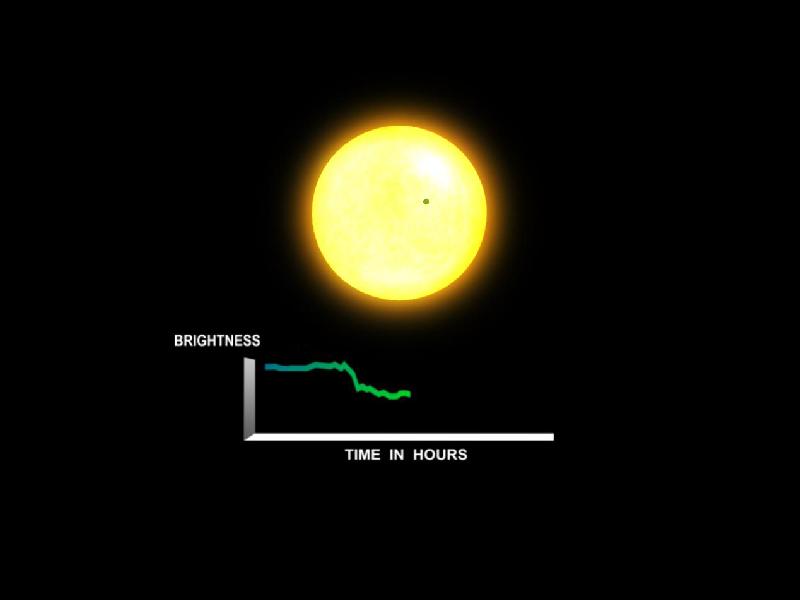
Kepler will use the transit method for detecting exo-planets. The sensitivity of the photometer will allow the discovery of terrestrial exo-planets (planets comparable in size and composition to Earth that are orbiting other stars).


The transit occurs when a planet passes in front of its star as viewed by an observer. Depending on the size of the planet, the change in the brightness of the star has different amplitudes. Transits of terrestrial planets cause a change in the star’s brightness of about 1/10,000, and they last from two to sixteen hours.


Credits: NASA


Changes in star brightness that are produced by a planet transit must be periodic, and all transits produced by the same planet must cause the same variation of brightness and last the same amount of time.


Of course, the case when two or more planets are in transit at the same time must be considered, and this can make the detection method a little bit more complicated.


The method allows for the calculation of the orbit, the mass, and the characteristic temperature of the exo-planet. Once we know the characteristic temperature of an exo-planet, the question of whether or not the planet is habitable (by our standards) can be answered.


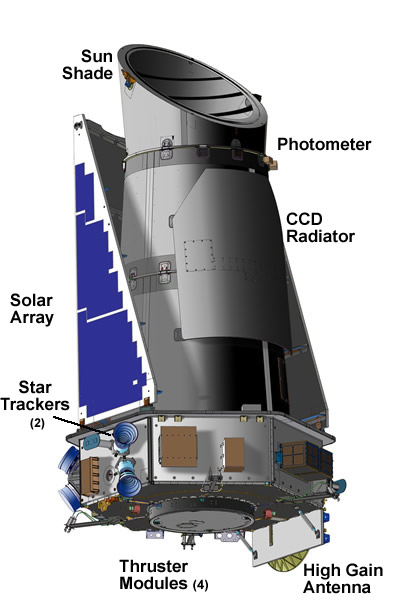
The Kepler instrument is a special telescope called photometer or light meter. The telescope has a very large field of view for an astronomical telescope, 105 square degrees. The primary mirror of the telescope is 0.95 m in diameter. The telescope needs a large field of view because it has to continuously monitor the brightness of more than 100,000 stars for the duration of the mission.


Credits: Ball Aerospace


The photometer is composed of one instrument, which is an array of charge-coupled devices (CCD), 42 in total. Each CCD is 50mm x 25mm and has 2200 x 1024 pixels. Data from the individual pixels that make up each star are recorded continuously and simultaneously.


The primary mirror of the photometer was coated with enhanced silver, which allows more light to reach the telescope’s detectors.


The spacecraft provides power, attitude control, and telemetry for the photometer. The mission requirements contributed to the simple design of the spacecraft. The only moving parts are the reaction wheels used to control the attitude of the spacecraft.


The launcher selected for the mission is Delta II. Delta II is a versatile launcher, and can be configured in two or three-stage vehicles in order to accommodate a variety of requirements.


Ball Aerospace is the prime contractor for the Kepler mission, building the photometer and the spacecraft, as well as managing the system integration and testing of the spacecraft. The Jet Propulsion Laboratory is managing mission development, while NASA Ames Research Center is responsible for ground system development, mission operations, and science data analysis.


Once the first observation results are downloaded from Kepler and made available to scientists, we will be able to place our solar system within the context of planetary systems in our galaxy.


The launch of Kepler is planned for March 5, 2009. For more information about the Kepler mission, you can visit the Kepler mission web page.


  • Facebook
  • Google
  • Slashdot
  • Reddit
  • Live
  • TwitThis


Credits: CNES


In 2005, ESA’s Advanced Concepts Team held its first Global Trajectory Optimization Competition (GTOC). The purpose of the competition is to stimulate research of techniques for finding the optimal trajectory for different space missions.


What is interesting about this competition is how it has been taken up by the community after its first edition. The winners of the competition become the hosts for the next edition.


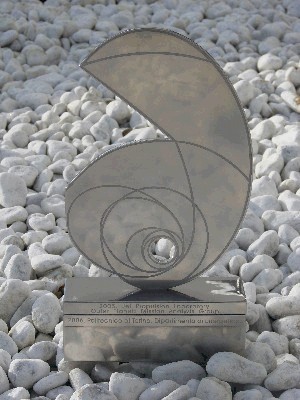
The first edition of the competition was won by the Outer Planets Mission Analysis Group of JPL. The second edition was won by the Department of Energetic in the Polytechnic of Turin, and the third edition was won by CNES (Centre National d’Etudes Spatiales).


CNES has announced the 4th Edition of the GTOC. We quote this year’s announcers of the competition, Regis Bertrand, Richard Epenoy, and Benoit Meyssignac:


“Mission designers generally solve trajectory optimisation problems by means of local optimisation methods together with their own experience of the problem. Even if this way is known to provide good results, it never guarantees to yield the global optimum. On the other hand, global optimisation techniques can offer significant assistance in finding an acceptable solution to a given problem, even though convergence to the global optimum is still not guaranteed. By focusing on a problem with a very large number of locally optimal solutions, the Global Trajectory Optimisation Competition promotes the development of methods that most thoroughly and most quickly search through a large and unconventional design space for optima.”


The deadline for registration is February 27, 2009. On March 2, 2009, the competition problem will be disclosed, and March 30, 2009, is the deadline for return of solutions. In September 2009, during a one-day workshop held in Toulouse, France, the teams selected will present their methods and solutions.


  • Facebook
  • Google
  • Slashdot
  • Reddit
  • Live
  • TwitThis


Credits: NASA


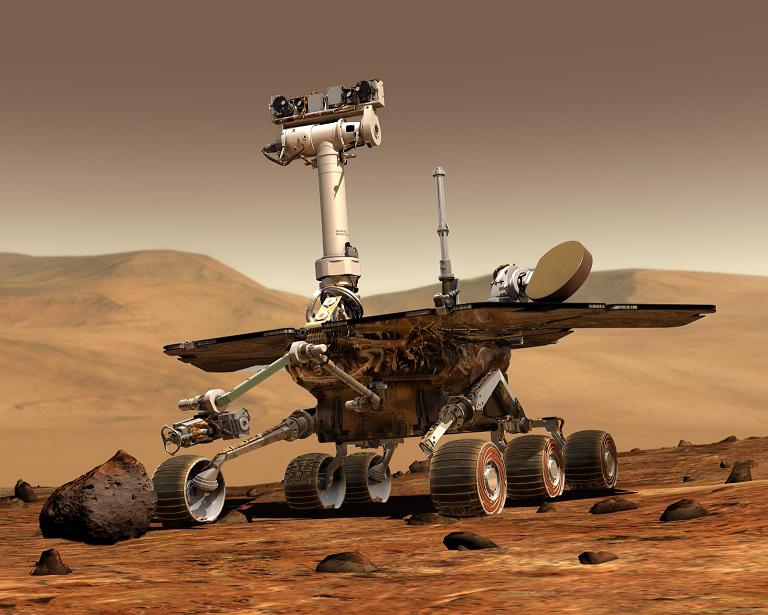
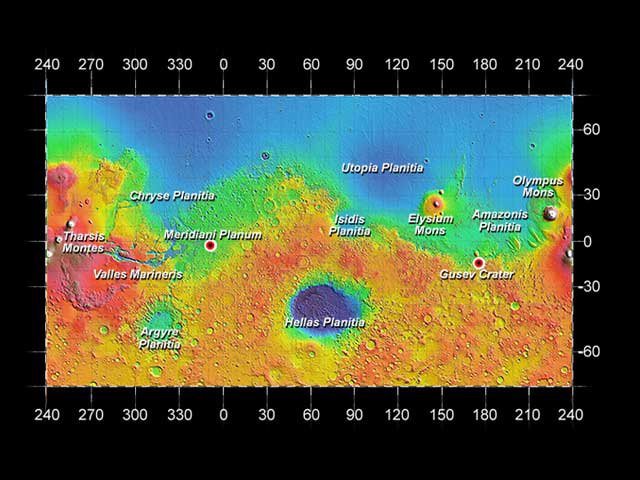
On January 3, 2004, the MER-A rover a.k.a. Spirit landed on Mars at the Gusev Crater. The second rover, MER-B a.k.a. Opportunity, followed twenty-one days later and landed at the Meridiani Planum.


They were both designed to operate for three months on the surface of Mars. Five years later, they are still operational and NASA has planned new missions for them.


Considering the harsh conditions on Mars, NASA’s twin rovers have accomplished remarkable things: they have returned a quarter-million images, driven more than thirteen miles, climbed a mountain, descended into impact craters, and survived dust storms. Using the Mars Odyssey orbiter as a communication relay, the rovers have sent more than 36 GB of scientific data back to Earth.


“These rovers are incredibly resilient considering the extreme environment the hardware experiences every day,” said John Callas, JPL project manager for Spirit and Opportunity. “We realize that a major rover component on either vehicle could fail at any time and end a mission with no advance notice, but on the other hand, we could accomplish the equivalent duration of four more prime missions on each rover in the year ahead.”


Credits: NASA


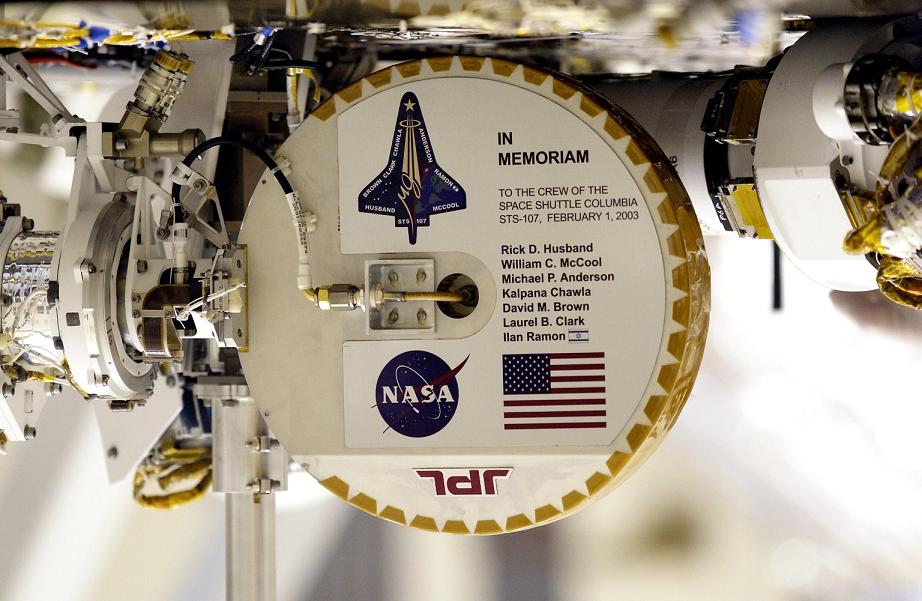
Digging into the MER mission archive, one detail caught my eye. The rovers carry plaques commemorating the crews of Columbia and Challenger, and some of the landmarks surrounding the landing sites of the rovers are dedicated to the astronauts of Apollo 1, Columbia, and Challenger.


Spirit is carrying a plaque commemorating the STS-107 Space Shuttle Columbia crew, which has been mounted on the high-gain antenna of the rover.


The names of the STS-107 crew are inscribed on the plaque: Rick D. Husband, William C. McCool, Michael P. Anderson, Kalpana Chawla, David M. Brown, Laurel B. Clark, and Ilan Ramon. Their names are now looking over the Martian landscapes.


To further honor their memory, the landing site of the MER Spirit is called the Columbia Memorial Station.


Credits: NASA


Three of the hills surrounding the Columbia Memorial Station are dedicated to the Apollo 1 crew: Gus Grissom, Ed White, and Roger Chafee. Grissom Hill is located 7.5 km to the southwest of Columbia Memorial Station, White Hill is 11.2 km northwest of the landing site, and Chafee Hill is located 14.3 km south-southwest of the landing site.


The area where Opportunity landed in the Meridiani Planum is called Challenger Memorial Station, in memory of the last crew of the Space Shuttle Challenger: Francis R. Scobee, Michael J. Smith, Judith A. Resnik, Ellison S. Onizuka, Ronald E. McNair, Gregory B. Jarvis, and Sharon Christa McAuliffe. I remember that Sharon Christa McAuliffe was NASA’s first teacher in space.


“The journeys have been motivated by science, but have led to something else important,” said Steve Squyres of Cornell University, in Ithaca, N.Y. Squyres is principal investigator for the rover science instruments. “This has turned into humanity’s first overland expedition on another planet. When people look back on this period of Mars exploration decades from now, Spirit and Opportunity may be considered most significant not for the science they accomplished, but for the first time we truly went exploring across the surface of Mars.”


  • Facebook
  • Google
  • Slashdot
  • Reddit
  • Live
  • TwitThis