OrbitalHub

The place where space exploration, science, and engineering meet

Domain is for sale. $50,000,000.00 USD. Direct any inquiries to contact@orbitalhub.com.


NASA dixit:

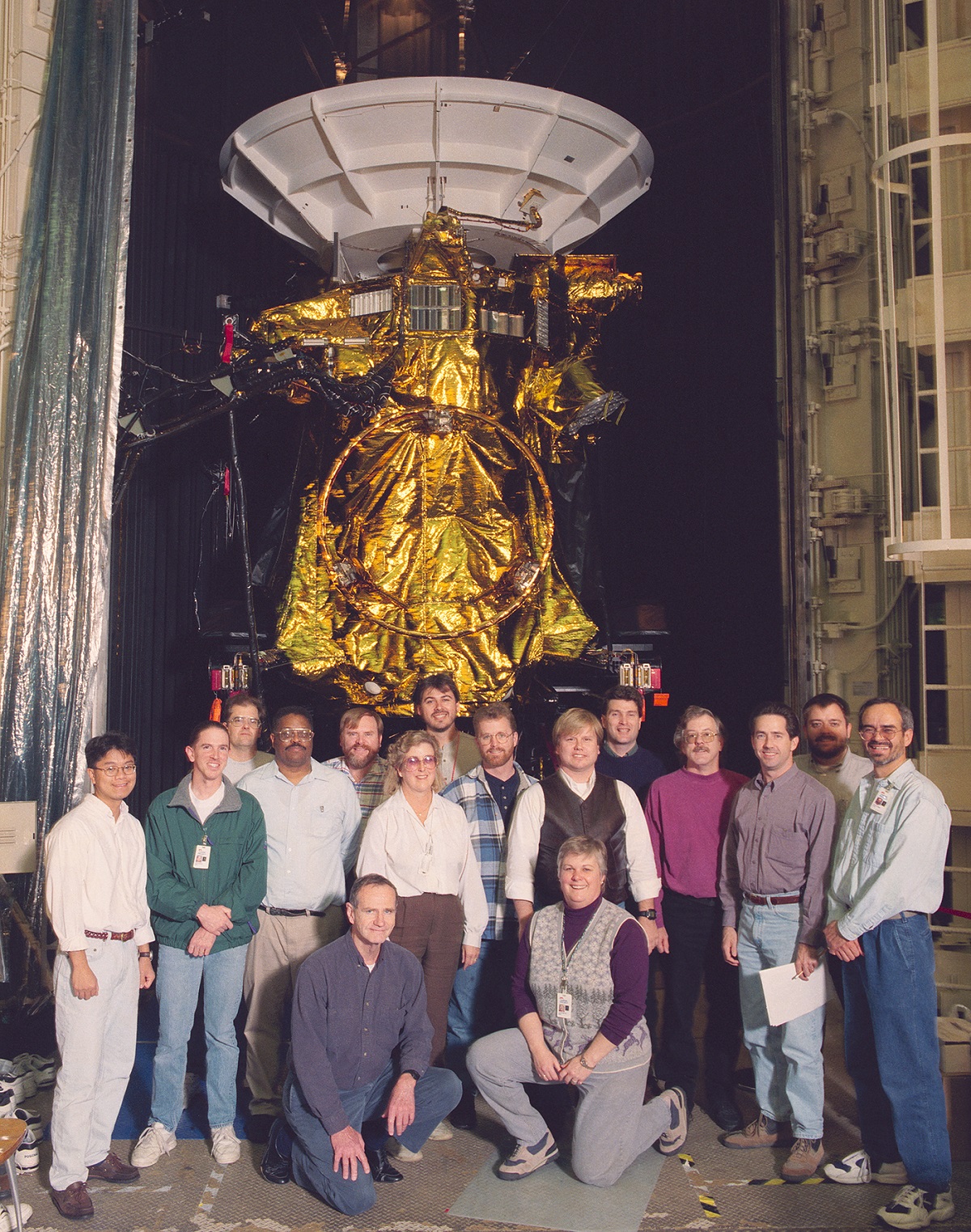
“February 21, 1997. Julie Webster, Cassini’s manager of spacecraft operations (kneeling, right), and the rest of the mission’s assembly, test and launch operations (ATLO) team pose with the spacecraft outside the Jet Propulsion Laboratory’s Space Simulator.”

“After almost 20 years in space, NASA’s Cassini spacecraft begins the final chapter of its remarkable story of exploration: its Grand Finale. Between April and September 2017, Cassini will undertake a daring set of orbits that is, in many ways, like a whole new mission. Following a final close flyby of Saturn’s moon Titan, Cassini will leap over the planet’s icy rings and begin a series of 22 weekly dives between the planet and the rings.

No other mission has ever explored this unique region. What we learn from these final orbits will help to improve our understanding of how giant planets – and planetary systems everywhere – form and evolve.

On the final orbit, Cassini will plunge into Saturn’s atmosphere, sending back new and unique science to the very end. After losing contact with Earth, the spacecraft will burn up like a meteor, becoming part of the planet itself.

Cassini’s Grand Finale is about so much more than the spacecraft’s final dive into Saturn. That dramatic event is the capstone of six months of daring exploration and scientific discovery. (And those six months are the thrilling final chapter in a historic 20-year journey.)”

Image credit: NASA / Jet Propulsion Laboratory – Caltech / Bob Brown


  • Facebook
  • Google
  • Slashdot
  • Reddit
  • Live
  • TwitThis
04-4-17

Cassini’s Grand Finale

Posted by


NASA dixit:

“After almost 20 years in space, NASA’s Cassini spacecraft begins the final chapter of its remarkable story of exploration: its Grand Finale. Between April and September 2017, Cassini will undertake a daring set of orbits that is, in many ways, like a whole new mission. Following a final close flyby of Saturn’s moon Titan, Cassini will leap over the planet’s icy rings and begin a series of 22 weekly dives between the planet and the rings.

No other mission has ever explored this unique region. What we learn from these final orbits will help to improve our understanding of how giant planets – and planetary systems everywhere – form and evolve.

On the final orbit, Cassini will plunge into Saturn’s atmosphere, sending back new and unique science to the very end. After losing contact with Earth, the spacecraft will burn up like a meteor, becoming part of the planet itself.

Cassini’s Grand Finale is about so much more than the spacecraft’s final dive into Saturn. That dramatic event is the capstone of six months of daring exploration and scientific discovery. (And those six months are the thrilling final chapter in a historic 20-year journey.)

At times, the spacecraft will skirt the very inner edge of the rings; at other times, it will skim the outer edges of the atmosphere. While the mission team is confident the risks are well understood, there could still be surprises. It’s the kind of bold adventure that could only be undertaken at the end of the mission.

Cassini’s final images will have been sent to Earth several hours before its final plunge, but even as the spacecraft makes its fateful dive into the planet’s atmosphere, it will be sending home new data in real time. Key measurements will come from its mass spectrometer, which will sample Saturn’s atmosphere, telling us about its composition until contact is lost.

While it’s always sad when a mission comes to an end, Cassini’s finale plunge is a truly spectacular end for one of the most scientifically rich voyages yet undertaken in our solar system. From its launch in 1997 to the unique Grand Finale science of 2017, the Cassini-Huygens mission has racked up a remarkable list of achievements. “

Video credit: NASA Jet Propulsion Laboratory


  • Facebook
  • Google
  • Slashdot
  • Reddit
  • Live
  • TwitThis


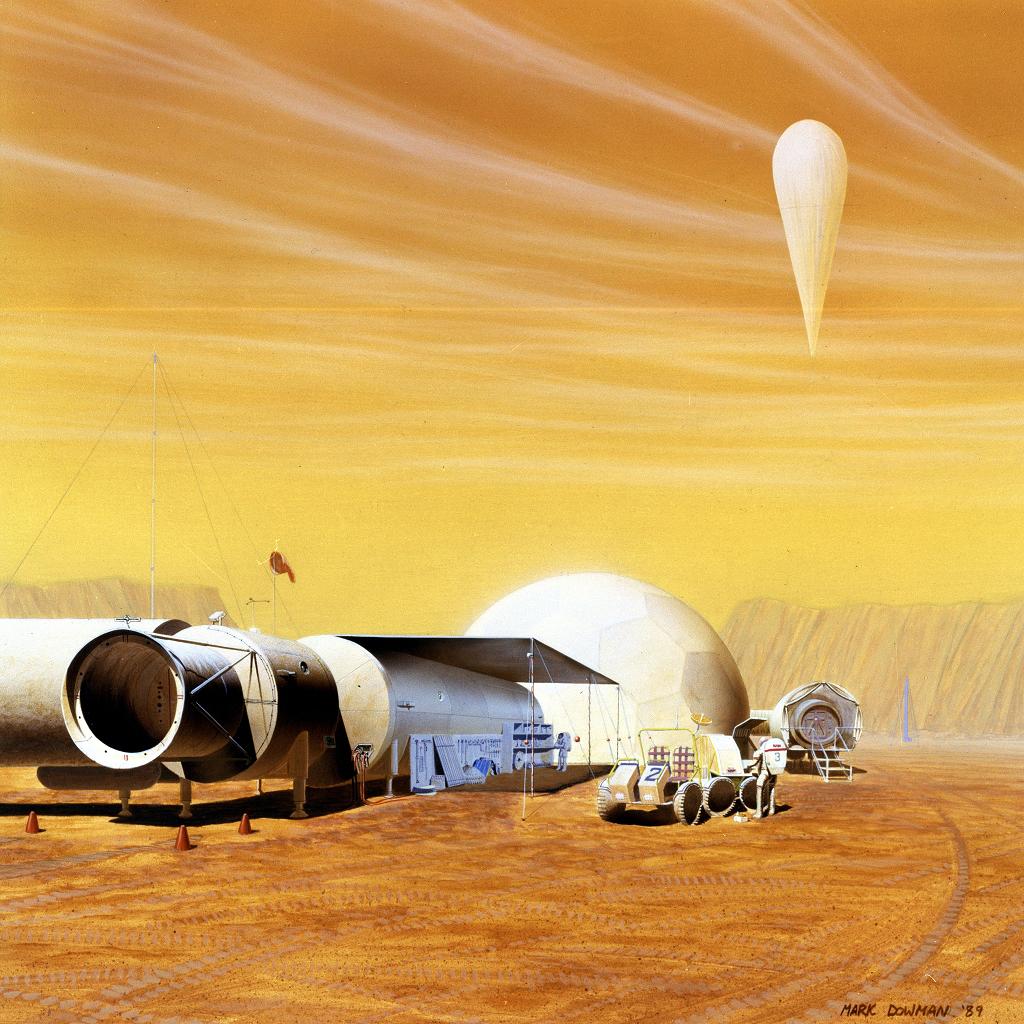
Credits: Mark Dowman


Airships are making a big comeback now as the energy consumption for all modes of transportation is being re-analyzed. Missions with special requirements like surveillance and reconnaissance missions and transportation of heavy payloads to remote outposts are the main driver for the reinvention of the airship.


But Earth is not the only place where airships can be deployed. There are a number of destinations in the solar system that would make a perfect environment for deployment and operation of airships, like Mars, Venus, and Titan – Saturn’s largest moon.


The presence of an atmosphere makes possible the use of vehicles that can fly within atmosphere for planetary exploration. Also, planetary exploration with low-powered vehicles like airships really makes sense considering the fact that energy is always at a premium.


So far, the only extraterrestrial deployment of an airship was performed during the Vega mission to Venus, in 1984. Two balloons were released and they floated 54 km above the planet’s surface for nearly two days.


Lighter-Than-Air (LTA) AERial ROBOTS (AEROBOTS) would present some advantages over their Heavier-Than-Air (HTA) siblings and the traditional planetary scouts, the exploration rovers: they would have long-duration mission and long-distance capabilities, they would not have to deal with obstacle avoidance problems, and they have low-power consumption. However, the environment in which the airship will operate will impose some restrictions on the capabilities of the airship (consider things like atmospheric composition and density, temperature, and the amount of solar radiation available). More on the planetary environments in the solar system and airship evaluations for each one of them can be found here.


NASA has funded a number of projects for solar system exploration that make use of aerobots. The Jet Propulsion Laboratory’s Planetary Aerobot Program is developing balloons to support scientific payloads in the atmosphere of other planets in our solar system. You can find more details about JPL’s Planetary Aerobot Program here.


  • Facebook
  • Google
  • Slashdot
  • Reddit
  • Live
  • TwitThis