OrbitalHub

The place where space exploration, science, and engineering meet

Domain is for sale. $50,000,000.00 USD. Direct any inquiries to contact@orbitalhub.com.


Venus is a world wrapped in thick clouds of sulfuric acid, its surface crushed under pressures more than ninety times that of Earth and heated to temperatures hot enough to melt lead. Despite its resemblance to Earth in size and mass, Venus evolved into something profoundly different. Understanding how and why this happened is one of the most intriguing puzzles in planetary science. NASA’s DAVINCI mission—short for Deep Atmosphere Venus Investigation of Noble gases, Chemistry, and Imaging—was designed to confront that mystery directly.

DAVINCI represents the first dedicated mission in decades to explore Venus’s atmosphere with modern scientific instruments. Scheduled for launch later in the decade, the spacecraft will travel across interplanetary space to the second planet from the Sun, carrying with it a powerful orbital platform and a descent probe built specifically to plunge into Venus’s dense atmosphere. The mission is not simply about gathering data; it is about reconstructing the story of a planet that may once have resembled Earth but ultimately followed a dramatically different path.

At the heart of DAVINCI’s mission is a simple question with profound implications: did Venus ever possess conditions that might have supported oceans and a temperate climate? Planetary scientists have long suspected that Venus, early in its history, may have had liquid water and a more Earth-like environment. If that was the case, understanding why Venus transformed into a furnace could help us better understand planetary evolution, climate stability, and even the long-term future of Earth itself.

The engineering behind DAVINCI reflects the immense challenges posed by Venus. The spacecraft must survive a journey to a planet where atmospheric pressure and heat would destroy most conventional spacecraft components within minutes. To overcome these conditions, DAVINCI is built around two primary elements: an orbiter designed to study the planet from above and a robust descent probe engineered to withstand the extreme environment during its plunge through the atmosphere.

The descent probe is the mission’s most daring feature. Encased within a protective heat shield, the probe will separate from the main spacecraft and enter Venus’s atmosphere at tremendous speed. As it descends, parachutes will deploy to slow its fall, allowing it to sample the atmosphere layer by layer. Instruments aboard the probe will measure temperature, pressure, and chemical composition while also analyzing the abundance of noble gases and isotopes—tiny chemical fingerprints that preserve clues about the planet’s formation and atmospheric history.

This descent will last roughly an hour, but during that short time the probe will perform measurements that have not been made since the Soviet Venera missions of the 1970s and 1980s. As the probe drops deeper into the thick atmosphere, it will encounter increasingly intense pressure and heat. Yet the engineering of the probe allows it to survive long enough to transmit a continuous stream of data back to the orbiter. One of its most exciting instruments is a high-resolution imaging system that will capture detailed photographs of the surface as the probe approaches the ground. These images could reveal geological structures that have never been seen clearly before.

Meanwhile, the main DAVINCI spacecraft will continue to orbit Venus, conducting remote sensing observations of the planet’s cloud layers and surface features. From its vantage point above the clouds, the spacecraft will study atmospheric dynamics, investigate the mysterious ultraviolet patterns in the Venusian cloud tops, and map regions of the surface that may provide evidence of past tectonic or volcanic activity.

The science objectives of DAVINCI are closely tied to some of the most fundamental questions about planetary environments. By measuring noble gases such as argon, krypton, and xenon, the mission can reveal information about the processes that shaped Venus’s atmosphere billions of years ago. Noble gases are chemically inert, meaning they preserve ancient records of planetary formation and atmospheric escape. Their relative abundance can help scientists determine whether Venus once had large amounts of water and how much atmosphere the planet may have lost over time.

Another crucial aspect of the mission is the study of Venus’s atmospheric chemistry. The planet’s clouds are composed primarily of sulfuric acid droplets, and the processes that maintain this thick cloud deck remain only partially understood. By analyzing the vertical structure of the atmosphere during its descent, DAVINCI will help scientists unravel the complex chemical reactions occurring within the clouds and the deeper atmosphere.

The descent images taken near the planet’s surface could also provide important geological insights. Scientists are particularly interested in a region known as Alpha Regio, one of the oldest and most complex terrains on Venus. The structures there may resemble ancient continental features, and high-resolution images could help determine whether Venus once experienced geological processes similar to those that shape Earth’s continents.

What makes DAVINCI especially compelling is that it bridges atmospheric science and planetary geology. Most spacecraft studying Venus in recent decades have remained in orbit, mapping the surface with radar or observing the atmosphere remotely. DAVINCI instead dives into the atmosphere itself, collecting measurements directly within the environment that defines the planet.

Beyond Venus itself, the mission has implications for the study of exoplanets. Many of the rocky worlds discovered around other stars appear to resemble Venus more than Earth. Understanding why Venus became so inhospitable could help astronomers interpret the climates of distant planets and identify which ones might be capable of supporting life.

In the broader story of planetary exploration, DAVINCI marks a renewed commitment to understanding our neighboring worlds. For many years Venus was overshadowed by the exploration of Mars, yet scientists increasingly recognize that Venus may hold equally important clues about planetary evolution. The planet stands as both a warning and a laboratory, demonstrating how dramatically a world can change under the influence of atmospheric chemistry, solar radiation, and geological activity.

When DAVINCI finally begins its descent through Venus’s thick clouds, it will be retracing a path last taken by probes nearly half a century ago—but with instruments far more capable and sensitive than anything flown before. In that brief hour-long fall toward the surface, the spacecraft will gather data that could transform our understanding of Venus and help answer one of the most enduring questions in planetary science: how two planets so similar in size could become so radically different in destiny.

The mission is, in essence, a journey not just to Venus, but into the deep history of our Solar System. By peeling back the layers of Venus’s atmosphere, DAVINCI may reveal whether the planet was once a world that could have resembled our own—and what forces turned it into the blazing landscape we see today.

Video credit: NASA Goddard


  • Facebook
  • Google
  • Slashdot
  • Reddit
  • Live
  • TwitThis


The James Webb Space Telescope continues to transform our understanding of galactic structure and evolution, with researchers announcing multiple significant discoveries in early 2026. New observations have revealed both stunning visual details of nearby spiral galaxies and unexpected findings about galactic architecture in the early universe.

A team of researchers using Webb data announced the discovery of a barred spiral galaxy existing a remarkably short time after the Big Bang, challenging existing models of galactic formation and evolution. The galaxy, informally designated Alaknanda, shows structural maturity typically associated with galaxies billions of years older. The discovery suggests that physical processes driving galaxy formation, including gas accretion, disk settling, and spiral density wave development, may operate more efficiently than current theoretical models predict.

Dr. Amanda Garfield, an astrophysicist at the University of Pittsburgh and lead author of the study, noted that finding such a well-organized spiral disk at this epoch was unexpected. The bar structure, a linear feature extending from galactic centers that helps funnel material inward, was thought to require substantial time to develop through gravitational interactions and dynamical evolution.

The observations indicate that the universe was capable of producing structurally mature galaxies much earlier than previously believed. This finding has prompted astrophysicists to reconsider the initial conditions and feedback mechanisms involved in galaxy formation, potentially requiring revisions to cosmological simulations that model the evolution of cosmic structure.

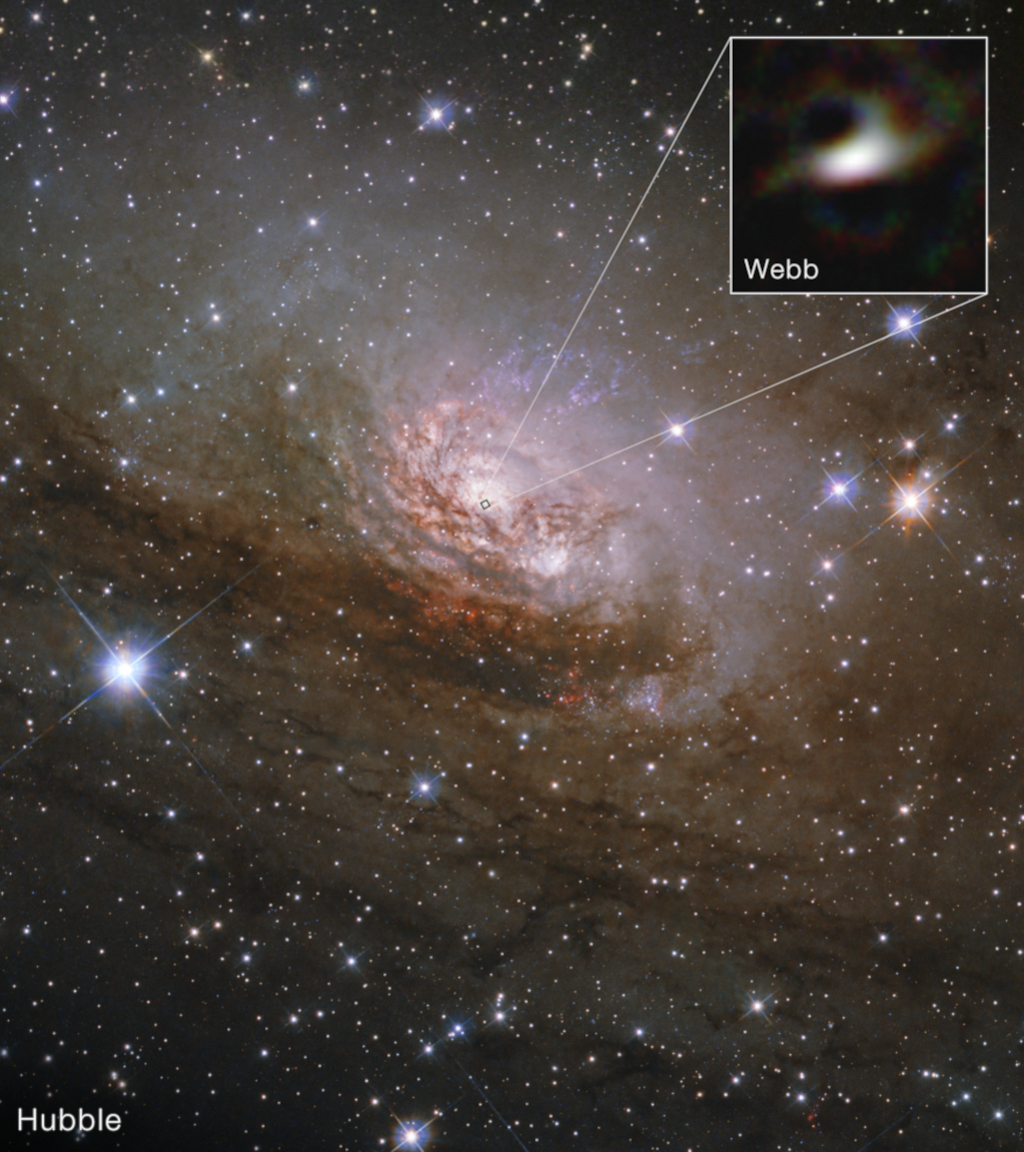
In separate observations, Webb captured a spectacular new image of the Circinus Galaxy, located approximately 14 million light-years from Earth in the constellation Circinus. The composite visualization combines data from both the Hubble Space Telescope and the James Webb Space Telescope, revealing details invisible to previous observatories. Webb’s infrared capabilities penetrate the thick dust clouds that obscure the galactic center in optical images, exposing the glowing inner regions of the active galactic nucleus.

The Circinus Galaxy represents a Seyfert galaxy, a class of active galaxies characterized by extremely luminous cores powered by accretion onto a supermassive black hole. Webb’s mid-infrared observations reveal the structure of the torus-shaped dust cloud surrounding the central engine, providing new data about the physical conditions in these energetic galactic regions.

The telescope’s high-resolution imaging also continues to yield detailed views of stellar nurseries within spiral arms. The intricate networks of dusty filaments and hot young star clusters, previously obscured by interstellar dust, are now visible in unprecedented detail. These observations help astronomers understand the cycle of star formation and the ways that massive stars influence their galactic environments through radiation pressure, stellar winds, and supernova explosions.

The 19 nearby spiral galaxies observed as part of Webb’s PHANGS (Physics at High Angular Resolution in Nearby Galaxies) program have provided a statistical sample for studying the relationship between galactic structure and star formation. The combination of near-infrared and mid-infrared imaging allows researchers to simultaneously observe both the older stellar populations in galactic cores and the youngest stellar objects embedded in dust clouds along spiral arms.

Webb’s capabilities have fundamentally changed the field of extragalactic astronomy in the years since its launch. The observatory’s large mirror and sensitive infrared instruments enable observations that were previously impossible, opening new windows into galactic dynamics, black hole physics, and the early universe. Researchers around the world continue to analyze the torrent of data flowing from the telescope, with each discovery raising new questions about the nature of cosmic structure and evolution.


  • Facebook
  • Google
  • Slashdot
  • Reddit
  • Live
  • TwitThis


The European Space Agency’s Jupiter Icy Moons Explorer, known as JUICE, has achieved an unexpected milestone in its journey toward the Jovian system by capturing the first detailed images of interstellar comet 3I/ATLAS. The spacecraft, currently en route to study Jupiter and its ocean-bearing moons, turned its instruments toward the visitor from beyond our solar system in late February 2026, producing remarkable imagery that reveals the comet’s structure in unprecedented detail.

Comet 3I/ATLAS represents only the third confirmed interstellar object ever detected in our solar system, following the discoveries of 1I/’Oumuamua in 2017 and 2I/Borisov in 2019. While those objects provided valuable glimpses into planetary formation processes elsewhere in the galaxy, 3I/ATLAS offered something unique: an approach to the inner solar system that allowed multiple spacecraft and ground-based observatories to observe it simultaneously. JUICE’s position and instrumentation made it particularly well-suited for this unexpected observation opportunity.

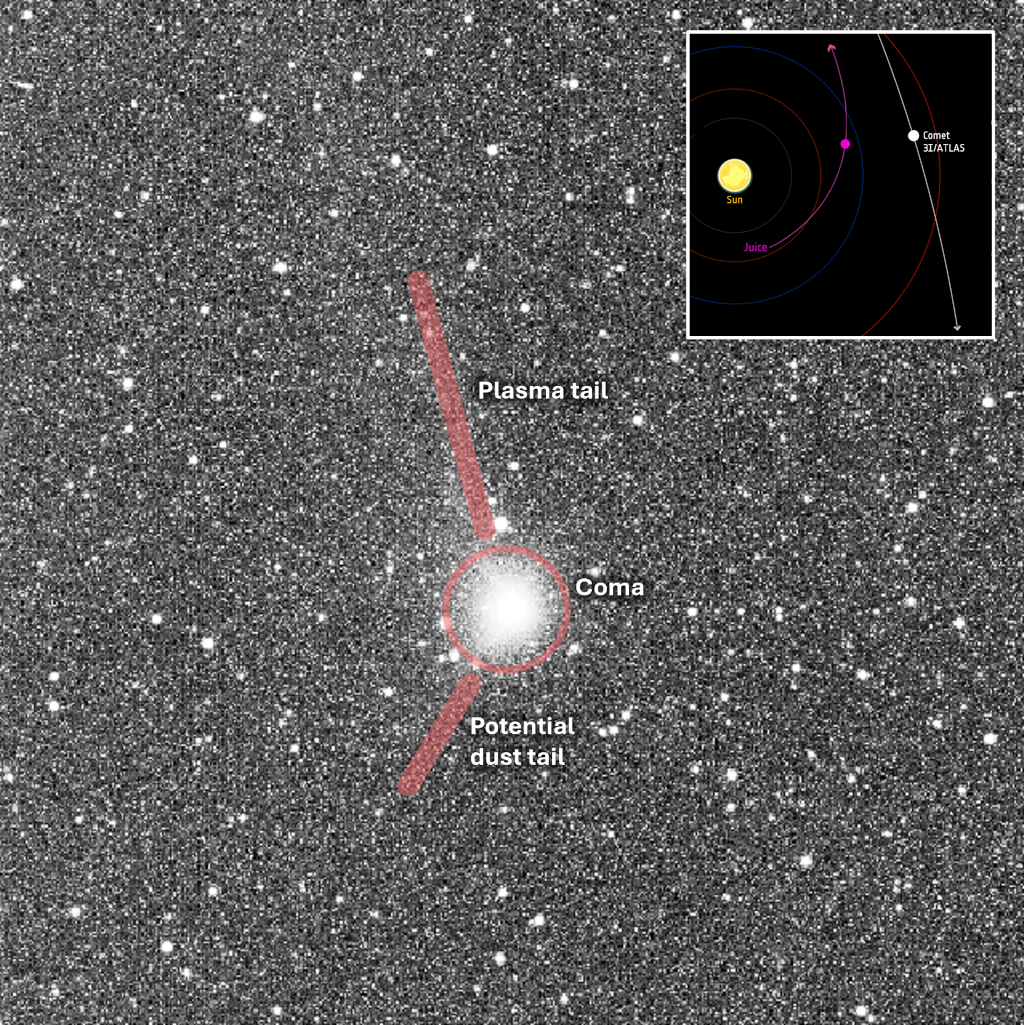
The images captured by JUICE’s science camera show the comet’s nucleus surrounded by a luminous coma, the glowing envelope of gas and dust that forms when solar radiation heats the icy body. A distinct tail extends away from the Sun, consisting of particles pushed outward by solar radiation pressure. The spacecraft observed the comet at a distance of approximately 50 million kilometers, close enough to resolve features that ground-based telescopes could only glimpse indirectly.

The JUICE mission was designed primarily for planetary science, with its ten scientific instruments optimized for studying Jupiter’s atmosphere, magnetosphere, and the subsurface oceans suspected to exist beneath the icy crusts of Ganymede, Callisto, and Europa. The spacecraft launched from French Guiana in April 2023 and has been performing a complex trajectory that includes multiple gravity assists, including an unprecedented double Earth-Moon flyby in August 2024. The encounter with 3I/ATLAS represents a bonus observation that demonstrates the versatility of the spacecraft’s instrumentation.

Interstellar comets provide scientists with a rare opportunity to study material from other planetary systems without the need for interstellar travel. The composition of such objects, preserved since their formation around another star, carries chemical fingerprints that may inform our understanding of how planets form and evolve throughout the galaxy. 3I/ATLAS exhibited characteristics consistent with comets originating from distant, cool stellar environments, with activity levels suggesting the release of water vapor, carbon dioxide, and other volatiles as it approached the Sun.

The JUICE observations were not without technical challenges. The spacecraft’s medium-gain antenna had to be used for data transmission rather than the high-gain antenna, reducing the data rate due to the spacecraft’s orientation relative to the Sun and Earth. Despite these constraints, the mission team successfully retrieved images that have already contributed to scientists’ understanding of cometary activity mechanisms.

Beyond the immediate scientific value, the JUICE observations highlight the importance of spacecraft flexibility and the potential for serendipitous discoveries in space exploration. Planetary missions often encounter unexpected targets or phenomena that fall outside their primary objectives but represent valuable science opportunities. TheJUICE team’s ability to reorient the spacecraft and repurpose its instruments on short notice reflects both the spacecraft’s robust design and the team’s scientific adaptability.

As 3I/ATLAS continues its journey back toward interstellar space, observations from JUICE will be supplemented by other missions and facilities. The Juno spacecraft orbiting Jupiter may observe the comet during its close approach to the giant planet in March 2026, though fuel constraints and operational priorities complicate any potential redirection. Each new observation adds to our growing picture of these interstellar travelers and what they can teach us about the cosmos beyond our own solar system.


  • Facebook
  • Google
  • Slashdot
  • Reddit
  • Live
  • TwitThis


In the history of astronomy, certain instruments do more than gather light — they reshape perspective. The Hubble Space Telescope revealed a universe of breathtaking clarity and depth. The James Webb Space Telescope opened a new infrared frontier, peering into the earliest epochs of galaxy formation. And now, standing on the shoulders of those giants, NASA’s Nancy Grace Roman Space Telescope prepares to widen our cosmic view in a way no space observatory has done before.

Named after Nancy Grace Roman, NASA’s first Chief of Astronomy and one of the architects of the Hubble program, the Roman Space Telescope is built on a bold premise: if we want to understand the structure and fate of the universe, we must not only see deeply — we must see broadly. Roman is not designed to zoom in on a single galaxy with exquisite detail. Instead, it is built to survey immense swaths of the sky with Hubble-level sharpness, combining resolution and scale in a way that has never before been achieved.

At the heart of Roman is a 2.4-meter primary mirror — the same diameter as Hubble’s — but paired with a field of view nearly one hundred times larger. That combination defines the mission. Where Hubble sees a small patch of sky in exquisite detail, Roman will see vast cosmic landscapes with comparable clarity. It is as though we have replaced a telescope’s keyhole view with a panoramic window.

The mission has two central scientific pillars. The first is to investigate the nature of dark energy, the mysterious force driving the accelerated expansion of the universe. The second is to conduct a census of exoplanets through gravitational microlensing, extending our knowledge of planetary systems far beyond what current techniques allow. Together, these goals address some of the most profound questions in modern astrophysics: What is the universe made of? How did it evolve? And how common are worlds like our own?

The engineering behind Roman reflects the demands of those ambitions. The telescope’s Wide Field Instrument is its primary scientific eye, operating in near-infrared wavelengths. This wavelength range is critical because it allows astronomers to observe distant galaxies whose light has been stretched, or redshifted, by cosmic expansion. The instrument consists of eighteen state-of-the-art infrared detectors arranged in a mosaic, creating a detector array of enormous scale and sensitivity. Each exposure captures a sky area equivalent to dozens of Hubble images stitched together — except it happens all at once.

The spacecraft itself is designed for precision and stability. Roman will operate in a Sun-Earth L2 orbit, approximately 1.5 million kilometers from Earth. This location provides a thermally stable environment, continuous sunlight for solar power, and a steady observational platform free from Earth’s shadow. Maintaining exquisite pointing accuracy is essential; even slight jitter would compromise measurements of subtle cosmic distortions. Advanced reaction wheels, gyroscopes, and fine guidance sensors work together to ensure the telescope holds its gaze with extraordinary steadiness.

One of Roman’s most important capabilities is its ability to measure weak gravitational lensing. According to Einstein’s general theory of relativity, mass bends spacetime, and light traveling through that curved spacetime follows the distortion. When light from distant galaxies passes near massive structures such as galaxy clusters or dark matter halos, its path is subtly altered. By statistically analyzing the shapes of millions of galaxies across vast areas of sky, Roman will map the invisible distribution of dark matter and trace how cosmic structures have grown over billions of years.

This mapping is essential for understanding dark energy. The rate at which cosmic structures form and evolve is influenced by the balance between gravity, which pulls matter together, and dark energy, which pushes space apart. Roman will measure this balance with unprecedented statistical power, surveying thousands of square degrees of sky and collecting data from billions of galaxies. The resulting dataset will refine our understanding of cosmic expansion and test whether dark energy behaves like Einstein’s cosmological constant or something more exotic.

At the same time, Roman will search for planets in a way unlike any previous mission. Most exoplanet discoveries have relied on transit photometry, observing the dimming of a star as a planet crosses its face, or radial velocity measurements that detect the gravitational tug of an orbiting planet. Roman’s microlensing survey will instead exploit a phenomenon predicted by general relativity: when a foreground star passes in front of a more distant background star, its gravity magnifies the background star’s light. If the foreground star hosts a planet, that planet can create a distinctive, temporary signature in the magnified light curve.

This technique is uniquely sensitive to planets at greater distances from their stars, including cold, Earth-mass planets and even free-floating planets that drift through space unbound to any star. Roman is expected to discover thousands of new worlds, filling in a region of planetary parameter space that remains largely unexplored. In doing so, it will help astronomers build a more complete picture of planetary system formation and diversity.

Roman will also carry a coronagraph instrument, a technology demonstration designed to block out the light of a star and directly image faint nearby exoplanets. While primarily experimental, the coronagraph will test technologies essential for future missions aimed at imaging Earth-like planets and analyzing their atmospheres for signs of habitability or life.

Perhaps what makes Roman most exciting is the scale of its data. It is not simply another observatory; it is a survey engine. The volume of information it will collect will fuel research for decades, enabling discoveries not yet imagined. Just as the Hubble Deep Field revealed galaxies that challenged cosmological models, Roman’s wide-field surveys are likely to uncover unexpected structures, rare objects, and statistical anomalies that reshape theoretical frameworks.

In many ways, the Roman Space Telescope represents the maturation of space astronomy. It is not designed solely for spectacle, though it will undoubtedly produce stunning images. It is built for measurement — precise, repeatable, statistically robust measurement. It embodies a shift from isolated observations to cosmic cartography.

When Roman opens its wide eye to the sky, it will not simply extend our reach deeper into space. It will expand our view sideways, revealing the structure of the universe at scales we have only begun to comprehend. In doing so, it will continue a legacy that Nancy Grace Roman herself helped establish: that by investing in bold, carefully engineered observatories, we do more than observe the cosmos — we learn to understand our place within it.

Video credit: NASA Goddard


  • Facebook
  • Google
  • Slashdot
  • Reddit
  • Live
  • TwitThis


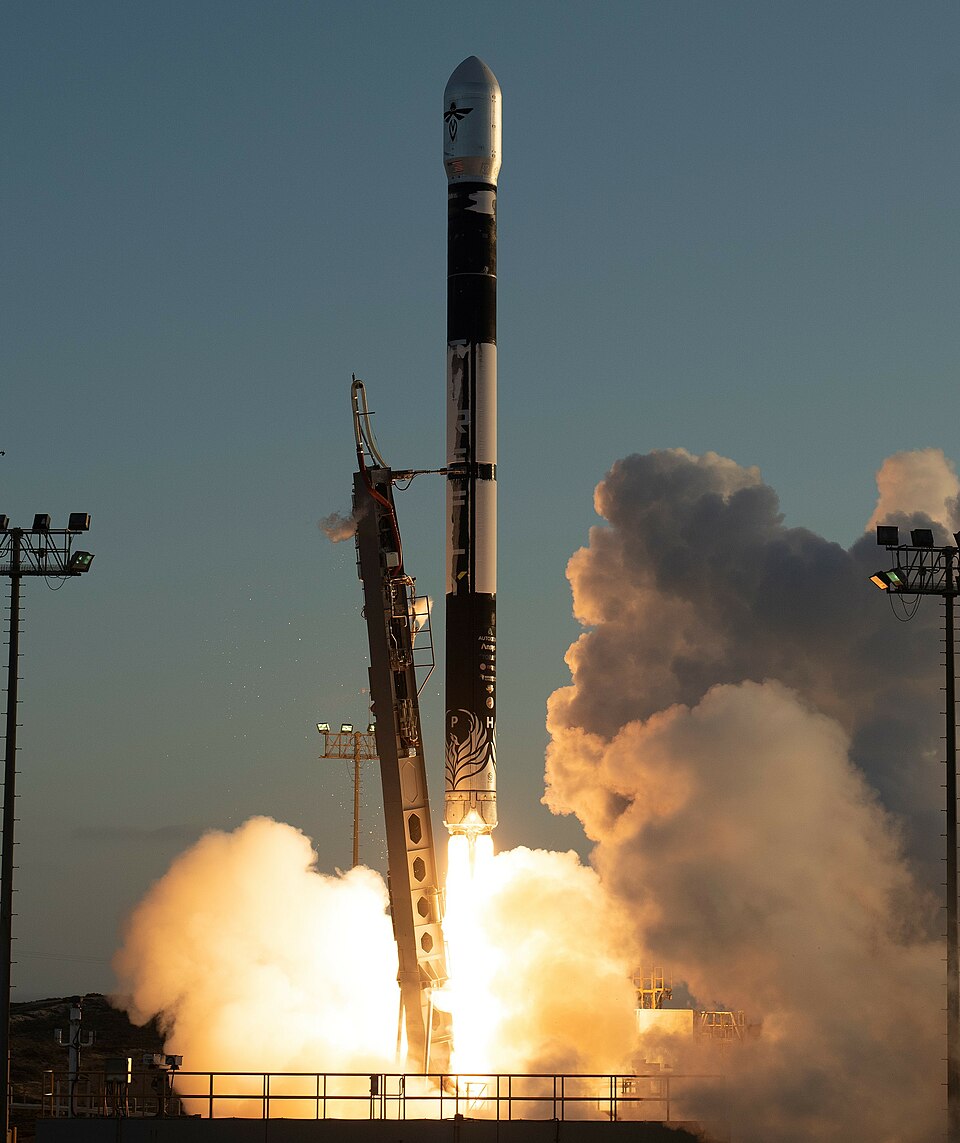
Firefly Aerospace is preparing to return to flight with its Alpha rocket, marking the company’s first launch attempt since experiencing explosive mishaps last year. The upcoming mission represents a critical test of both the rocket’s technical capabilities and the company’s resilience in the face of adversity. For the small but growing team at Firefly, this launch represents an opportunity to demonstrate that lessons learned from failure can lead to future success, and that the commercial space industry can mature through overcoming technical challenges. The aerospace industry is no stranger to setbacks, and Firefly’s story is emblematic of the persistence required to succeed in this challenging field.

The Alpha rocket, designed specifically for small satellite launches, experienced two high-profile failures in previous flight attempts. These incidents, while disappointing, provided valuable data that Firefly’s engineering team has used to identify and address the root causes of the failures. The company has implemented significant design improvements and rigorous testing protocols to ensure the next launch succeeds. This methodical approach to problem-solving reflects the maturity of the team’s engineering practices and their commitment to technical excellence. The failures, while painful, have made the company stronger and more knowledgeable.

Firefly Aerospace has been remarkably transparent about the challenges faced during development, sharing lessons learned with the broader aerospace community. This approach has earned the company credibility within the industry, where failure is often seen as an inevitable part of the development process rather than a permanent setback. The company’s willingness to discuss its difficulties openly stands in contrast to the secrecy that sometimes characterizes aerospace development programs. This transparency has helped build trust with customers and the broader space community, demonstrating a mature approach to doing business.

The small satellite launch market has become increasingly competitive, with numerous companies vying to provide cost-effective access to orbit. Firefly’s return to flight will demonstrate whether the company can compete with established players like SpaceX and Rocket Lab, as well as emerging competitors in the United States and internationally. The market opportunity remains substantial, as demand for small satellite launches continues to grow with the proliferation of constellation networks and dedicated missions. The challenge for Firefly will be differentiating itself in a crowded market and establishing a reliable track record.

The upcoming launch will carry a variety of payloads, demonstrating the rocket’s versatility for different mission requirements. Firefly has positioned Alpha as an ideal platform for dedicated small satellite missions, offering rideshare opportunities and flexible deployment options that larger rockets cannot match. This flexibility could prove attractive to customers who need precise orbit delivery or who want to avoid the wait times associated with larger rideshare programs. The ability to customize missions for specific customer needs is a key competitive advantage in this market segment.

Beyond the immediate launch, Firefly is developing Firefly ML, a medium-lift rocket that will expand the company’s capabilities into larger payloads. This progression follows a common pattern in the aerospace industry, where companies build experience and credibility with smaller systems before moving to larger platforms. The development of Firefly ML will require additional capital and technical investment, making the success of the Alpha return-to-flight mission even more critical for the company’s long-term viability and growth strategy. The roadmap is clear, but execution will be everything.

The return to flight represents more than just a technical milestone for Firefly Aerospace. It is a test of the company’s culture and determination in the face of adversity. The aerospace industry has seen numerous companies rise from failure to success, including SpaceX itself, which experienced multiple early failures before achieving reliability. Firefly is positioning itself to join that tradition, demonstrating that persistence and engineering rigor can overcome initial setbacks. The story of Firefly is ultimately about the resilience of the entrepreneurial spirit in the face of technical challenges.

As the launch approaches, the aerospace community will be watching closely. A successful flight would validate the company’s technical improvements and open new opportunities for growth. A failure, while disappointing, would provide additional data for further improvements. Either way, Firefly Aerospace’s return to flight demonstrates the resilience and determination that characterizes the commercial space industry. The company’s journey reflects the broader narrative of commercial space: bold attempts, hard lessons, and persistent pursuit of ambitious goals that push humanity further into the final frontier.

The significance of Firefly’s return extends beyond the company itself. It represents a test of the commercial space model’s ability to learn from failure and improve. The small launch vehicle market is crucial for the growth of the space economy, providing access for smaller payloads that cannot justify the cost of larger rideshare missions. Firefly’s success or failure will have implications for the entire ecosystem of small launch providers and the customers who depend on them.


  • Facebook
  • Google
  • Slashdot
  • Reddit
  • Live
  • TwitThis


There are satellites that flash briefly across the sky and then fade into history, and there are satellites that quietly build a legacy measured not in months, but in generations. The Landsat program belongs firmly to the latter. Since 1972, when the first Landsat spacecraft began circling Earth, the mission has carried forward a simple but transformative idea: that if we observe our planet consistently, patiently, and scientifically, we can understand how it changes—and why.

Landsat was born during a time when space exploration was dominated by lunar ambitions and planetary probes. Yet a handful of scientists and engineers recognized that one of the most important frontiers lay much closer to home. The Earth itself was changing under the pressure of agriculture, urban expansion, deforestation, water use, and climate variability. The Landsat program was designed to provide something unprecedented: a continuous, calibrated, and publicly available record of the planet’s land surface.

From the beginning, the mission’s goals were ambitious. Landsat satellites were built to measure reflected sunlight and emitted thermal radiation from Earth’s surface across multiple wavelengths. This spectral approach allowed scientists to distinguish forests from croplands, healthy vegetation from drought-stressed fields, snow from clouds, and sediment-rich rivers from clear lakes. By observing the same locations again and again over decades, Landsat turned snapshots into time series, revealing patterns that would otherwise remain invisible.

The engineering behind Landsat is a study in precision. Each spacecraft travels in a near-polar, sun-synchronous orbit at an altitude of roughly 700 kilometers. This orbit ensures that the satellite passes over any given location at approximately the same local solar time, maintaining consistent lighting conditions for imaging. Stability and repeatability are paramount. The sensors must be radiometrically calibrated to detect subtle changes in surface reflectance over time. A difference of just a few percent in measured brightness can signal shifts in vegetation health or soil moisture.

Over successive missions, Landsat’s instruments evolved. Early satellites relied on the Multispectral Scanner (MSS), which offered groundbreaking though relatively coarse imagery. Later generations introduced the Thematic Mapper (TM) and Enhanced Thematic Mapper Plus (ETM+), expanding spectral coverage and spatial resolution. With Landsat 8, launched in 2013, the program entered a new era of digital precision with two primary instruments: the Operational Land Imager (OLI) and the Thermal Infrared Sensor (TIRS). Together, they extended the spectral range, improved signal-to-noise performance, and ensured compatibility with the historical data record.

The continuity of the Landsat archive is not an accident—it is a design philosophy. Every new satellite must be cross-calibrated against its predecessor so that the global dataset remains scientifically consistent. This continuity has allowed researchers to track deforestation in the Amazon, glacier retreat in Greenland, urban expansion in Asia, and agricultural water use in the American West. Landsat’s data policy, which made imagery freely available starting in 2008, transformed global access to Earth observation, catalyzing research, commercial innovation, and environmental monitoring on a planetary scale.

It is within this lineage that Landsat 9 emerged.

Launched on September 27, 2021, from Vandenberg Space Force Base aboard an Atlas V rocket, Landsat 9 was not conceived as a revolution, but as a promise kept. Its mission was to ensure that the Landsat record—now spanning more than half a century—would continue without interruption. Developed by NASA and operated jointly by NASA and the U.S. Geological Survey (USGS), Landsat 9 carries forward the twin-instrument architecture pioneered by Landsat 8, with refined performance and improved reliability.

At the heart of Landsat 9 is the Operational Land Imager 2 (OLI-2), an advanced multispectral sensor that captures reflected sunlight across visible, near-infrared, and shortwave infrared wavelengths. These spectral bands are carefully chosen to reveal the chemical and structural properties of land surfaces. Vegetation reflects strongly in the near-infrared; water absorbs much of it. Soils, minerals, and built environments each leave distinct spectral signatures. By measuring these patterns, OLI-2 allows scientists to compute vegetation indices, monitor crop productivity, detect wildfire scars, and assess coastal health.

Complementing OLI-2 is the Thermal Infrared Sensor 2 (TIRS-2), which measures land surface temperature. Thermal data are essential for understanding evapotranspiration, drought conditions, urban heat islands, and volcanic activity. Land surface temperature is not merely a climate statistic; it is a dynamic variable that shapes ecosystems, agriculture, and human comfort. TIRS-2 improves upon earlier thermal sensors with better stray-light control and enhanced calibration, strengthening confidence in long-term temperature records.

Together, OLI-2 and TIRS-2 produce imagery with a spatial resolution of 30 meters for most bands and 100 meters for thermal measurements, revisiting the same location every 16 days. When combined with Landsat 8, the effective revisit time drops to eight days, increasing temporal coverage and reducing data gaps caused by cloud cover.

The engineering sophistication of Landsat 9 extends beyond its instruments. The spacecraft platform was built by Northrop Grumman and designed for durability and efficiency, with redundant systems and precise attitude control to maintain stable pointing. The satellite continuously transmits data to ground stations, where it is processed, calibrated, and archived by the USGS. Each image enters a public repository that now contains millions of scenes—a living chronicle of Earth’s surface.

Perhaps the most remarkable aspect of Landsat 9 is how unremarkable it strives to be. Its purpose is not spectacle, but continuity. It does not chase novelty; it protects consistency. In an era of rapid technological turnover, Landsat 9 embodies a different ethos: that sustained observation is as important as innovation.

As climate change accelerates, water resources tighten, and urban populations grow, the need for objective, long-term data becomes ever more urgent. Landsat 9 contributes to this global awareness by quietly collecting photons reflected and emitted from Earth’s surface, converting them into calibrated digital records. These records feed into agricultural planning, disaster response, forest management, and climate science.

The Landsat program began as an experiment in seeing our planet from above. Over five decades, it has become a foundational instrument for understanding it. Landsat 9 stands as the latest steward of that legacy—a spacecraft designed not just to observe the Earth, but to ensure that future generations can compare their world to the one we see today.

In that sense, Landsat 9 is more than a satellite. It is a continuation of a conversation between humanity and its home, a steady voice reminding us that change is measurable, and therefore knowable.

Video credit: NASA Goddard


  • Facebook
  • Google
  • Slashdot
  • Reddit
  • Live
  • TwitThis