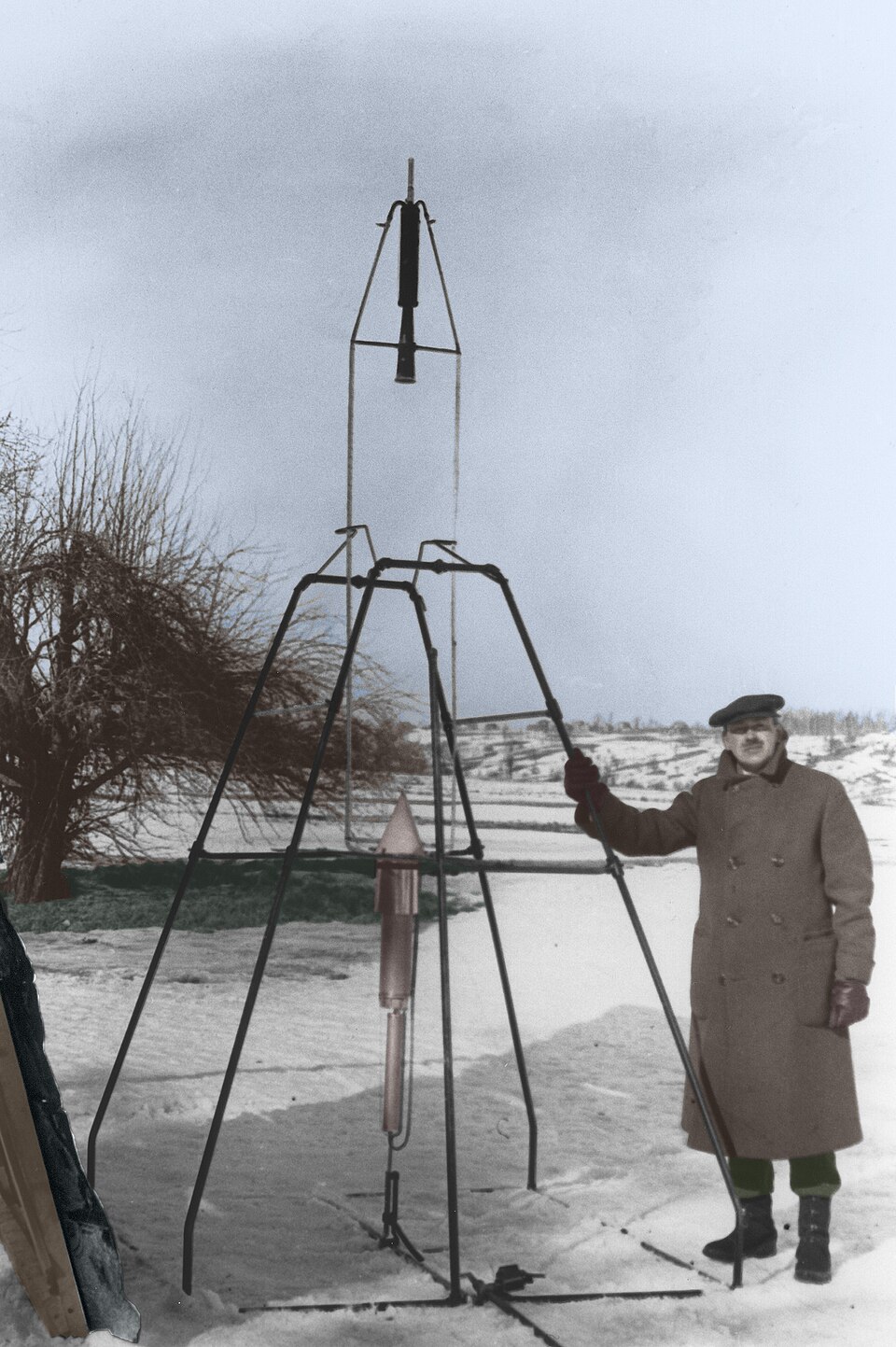
On March 16, 2026, the space community marks the 100th anniversary of Dr. Robert H. Goddard’s historic first flight of a liquid propulsion rocket. This milestone represents one of the most significant moments in the history of rocketry, comparable to the Wright Brothers’ first powered airplane flight at Kitty Hawk in 1903. The anniversary provides an opportunity to reflect on Goddard’s pioneering contributions and their lasting impact on modern space exploration.
Goddard launched the world’s first liquid-fueled rocket in Auburn, Massachusetts, on that March morning in 1926. The rocket climbed 41 feet and traveled 184 feet in just 2.5 seconds before landing. While modest by today’s standards, this flight demonstrated the fundamental principle that would enable humanity to reach space. From 1930 to 1941, Goddard continued developing increasingly sophisticated rockets, eventually achieving altitudes of 2,400 meters, approximately 1.5 miles, while refining guidance systems, welding techniques, insulation, and propulsion components.
The advances in rocket propulsion, guidance, and control that Goddard pioneered throughout the 1920s and 1940s formed the foundation for virtually every modern launch vehicle and in-space propulsion system. Communications satellites, human spaceflight, the Apollo Moon landings, robotic exploration of the solar system, space astronomy, the Space Shuttle, Earth observation satellites, space stations, GPS navigation, and orbital space tourism all trace their technological lineage to Goddard’s early work in liquid propulsion.
Alan Stern, planetary scientist and leader of NASA’s New Horizons mission to the Kuiper Belt, wrote about the significance of Goddard’s contributions in Aerospace America. Stern noted that it is profoundly regrettable that Goddard’s pioneering work was largely unappreciated during his lifetime. Goddard passed away in 1945, before witnessing the rapid advancement of rocketry in the 1950s and 1960s that led to satellites, human space travel, and eventually Moon landings.
Today, with a century of progress and perspective since that first flight, the space community can more clearly appreciate the profound and pivotal nature of Goddard’s contributions. The Goddard Centennial offers an occasion for celebration across the global space community, including space companies, government agencies, professional societies, and educational institutions.
Throughout March 2026, rocket clubs across the United States, including the National Association of Rocketry, the Tripoli Rocketry Association, and the American Rocketry Challenge, will launch rockets to honor Goddard’s achievements. Events are planned at the original launch site in Auburn, Massachusetts, and at the Hanover Theatre and Conservatory in Worcester. These celebrations provide opportunities to share the significance of Goddard’s contributions with the public, students, and future generations of engineers and scientists.
Goddard’s legacy extends beyond his technical achievements. His perseverance against doubters and critics, his inventive approach to engineering challenges, and his dedication to advancing the field of rocketry continue to inspire those working in space exploration today. As the industry looks toward the next century of spaceflight, Goddard’s example reminds practitioners of the importance of persistence, innovation, and technical rigor.
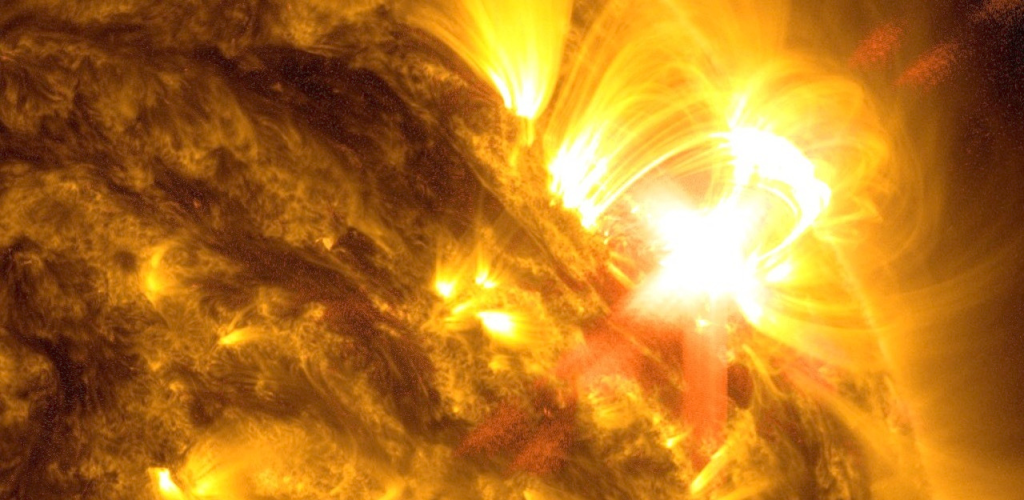
New scientific analysis suggests NASA’s Artemis 2 mission should not launch until the second half of 2026 due to elevated solar superflare activity. Dr. Ignacio Jose Velasco Herrera published findings indicating the Sun is experiencing a period of increased superflare risk that could pose radiation hazards to astronauts aboard the Orion spacecraft.
The research identifies mid-2025 through mid-2026 as a period of elevated superflare probability. The Sun’s current activity cycle has produced several powerful solar eruptions, and the analysis suggests the peak danger period coincides with Artemis 2’s planned launch window. Superflares represent extreme versions of normal solar eruptions, capable of releasing enormous amounts of radiation into space.
While Earth’s atmosphere protects terrestrial life from solar radiation, astronauts in deep space face potentially dangerous exposure levels. The Orion spacecraft provides substantial radiation shielding, including a storm shelter design for solar particle events. However, mission planners must balance the benefits of the lunar flyby mission against the risks of heightened radiation exposure.
The four Artemis 2 astronauts continue training regardless of the launch schedule. Commander Reid Wiseman, Pilot Victor Glover, and Mission Specialists Christina Koch and Jeremy Hansen have progressed through extensive preparation for the first crewed lunar flyby since Apollo 8. NASA will review the superflare analysis in coming months before finalizing the launch timeline.
Artemis 2 represents the first crewed flight of NASA’s post-Apollo lunar program. The mission will send the Space Launch System rocket and Orion spacecraft on a trajectory that loops around the Moon before returning to Earth. Success would pave the way for Artemis 3, which aims to land astronauts on the lunar surface, the first human Moon landing since 1972.
The solar activity concern adds to existing schedule pressures for the Artemis program. The SLS rocket and Orion spacecraft have experienced development delays, and the ground systems at Kennedy Space Center require extensive preparation for crewed launches. The mission originally targeted 2024 but has slipped multiple times.
Solar activity forecasting has improved considerably in recent decades, but predicting specific superflare events remains challenging. Scientists can identify periods of elevated risk based on solar cycle patterns and sunspot activity, but the exact timing and magnitude of individual events cannot be predicted precisely. This uncertainty informs the recommendation to avoid the entire elevated-risk period rather than attempting to time a specific launch window.
The Sun’s current activity cycle is among the most vigorous in recorded history. Space weather events have already affected satellite operations and ground-based infrastructure, highlighting the practical importance of understanding solar behavior. For human spaceflight, the stakes are even higher, as astronauts cannot shelter from cosmic radiation as easily as electronic systems can be hardened.
NASA’s approach to space weather has evolved following lessons from earlier programs. The agency maintains space weather forecasting capabilities and has developed procedures for protecting crew during solar events. For Artemis 2, the decision whether to delay involves weighing these protective measures against the risks of operating during a known period of elevated activity.
The Artemis program represents humanity’s most ambitious lunar exploration effort in decades. The success of Artemis 2 as a crewed shakedown flight is critical to subsequent missions, including lunar surface operations and eventually Mars missions. Ensuring crew safety during this foundational flight takes precedence over maintaining an aggressive schedule.
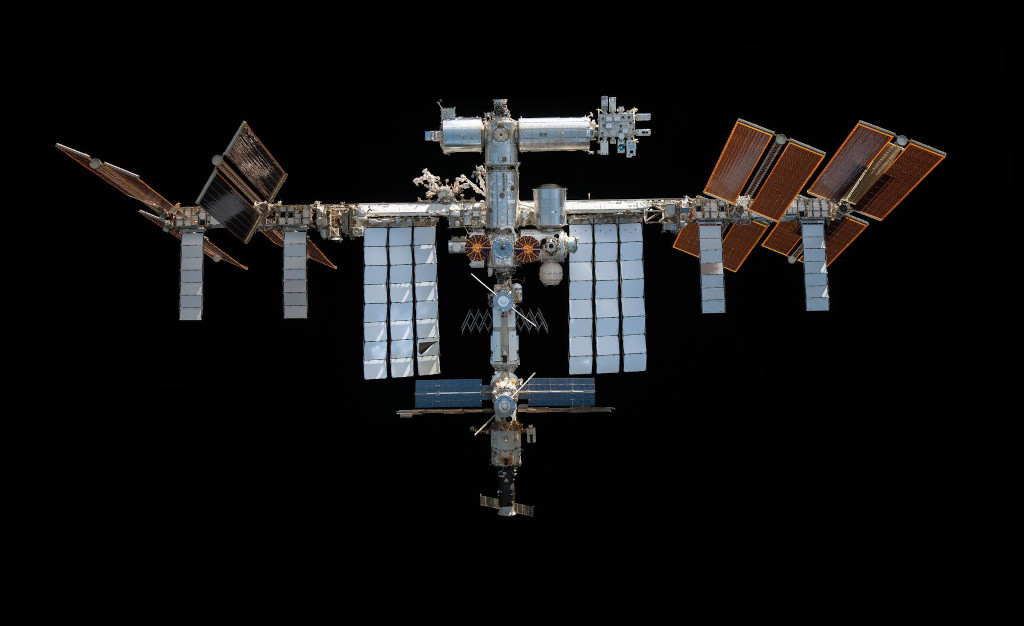
The United States Congress has directed NASA to extend International Space Station operations through 2032, marking a significant shift from the previous retirement target of 2030. The directive appears in the NASA Authorization Act of 2026, which also includes provisions for establishing a permanent lunar base and developing commercial space station capabilities.
The extension addresses concerns about continuity of human spaceflight capability between the ISS era and the emergence of commercial space stations. NASA had planned to deorbit the station in 2030, allowing it to burn up over a remote ocean area. However, the commercial alternatives expected to replace ISS capabilities have not yet reached operational status.
The legislation reflects congressional skepticism about NASA’s timeline for transitioning to commercial stations. Companies including Axiom Space, Voyager Space, and Blue Origin are developing privately-owned orbital platforms, but each faces significant development challenges. The extended ISS lifetime provides a buffer in case commercial stations encounter delays.
International partnerships add complexity to the extension. The ISS involves NASA, Roscosmos, JAXA, ESA, and CSA, with Russia notably announcing plans to withdraw from the project. Any extension requires coordination with international partners, and political tensions may complicate negotiations. The station’s Russian segment has experienced reliability issues, and continued Russian participation remains uncertain.
The station itself has operated continuously since 1998, making it one of the longest-running human spaceflight platforms in history. Its modular design has allowed continuous upgrades and additions over more than two decades of continuous human occupation. However, aging systems require increasing maintenance, and the station’s solar arrays have degraded over time.
Commercial station developers view the extension as both an opportunity and a challenge. The longer ISS lifetime provides additional market opportunity for cargo and crew services, but delays the potential revenue from commercial station operations. Companies had structured their business plans around the 2030 retirement timeline, and the extension may require reassessment of development schedules.
NASA has advocated for the extension, arguing that maintaining human spaceflight capability in low Earth orbit serves both scientific and strategic interests. The station supports research in biology, physics, and materials science, and provides a platform for understanding long-duration spaceflight effects critical to future deep space missions.
The authorization act also addresses spacesuit development, directing NASA to obtain the capability to develop spacesuits independently. Currently, NASA relies on Axiom Space for the suits planned for lunar missions, following Collins Aerospace’s withdrawal from the program in 2024. This directive aims to ensure multiple sources for critical spaceflight hardware.
Looking beyond 2032, the transition to commercial stations will require careful coordination. NASA plans to be one customer among several for commercial platforms, avoiding the single-vendor dependency that characterized the commercial crew competition.
The Roman Space Telescope was conceived with an ambitious goal: to observe vast regions of the sky with the clarity of a space telescope while capturing an enormous field of view. Previous missions such as Hubble and the James Webb Space Telescope excel at examining small patches of sky with extraordinary detail. Roman, by contrast, is designed to combine high resolution with panoramic scale. Its observations will reveal patterns in the structure of the universe that cannot be seen when focusing on individual objects alone.
The mission itself is built around the idea that the universe contains more than meets the eye. For nearly a century, astronomers have known that the visible matter—stars, planets, gas, and dust—accounts for only a small fraction of the cosmos. Most of the universe appears to be made of mysterious components known as dark matter and dark energy. Dark matter exerts gravitational influence but emits no detectable light. Dark energy, even more mysterious, seems to drive the accelerated expansion of the universe itself. Roman’s mission is to help uncover the nature of these invisible forces.
The engineering behind Roman reflects the scale of its ambitions. At the heart of the telescope sits a 2.4-meter primary mirror, similar in size to the one used on Hubble. However, Roman pairs that mirror with an instrument designed to capture images across an enormous portion of the sky. Its Wide Field Instrument is the largest camera ever sent into space for astronomical observation, composed of an array of advanced infrared detectors that together create a massive imaging mosaic. Each image Roman captures will cover an area of sky about one hundred times larger than a typical Hubble image, while still maintaining comparable resolution.
The spacecraft will operate from a stable orbit around the Sun–Earth L2 Lagrange point, roughly 1.5 million kilometers from Earth. This location provides a thermally stable environment, minimal interference from Earth’s atmosphere, and a continuous view of deep space. It is the same region where the James Webb Space Telescope operates, and it offers an ideal vantage point for long-term astronomical surveys. From this distant perch, Roman will quietly collect vast amounts of data, building a map of the universe that extends across billions of light-years.
Roman’s ability to survey the sky on such a grand scale is essential for studying dark matter. Although dark matter cannot be observed directly, its presence reveals itself through gravity. One of the most powerful tools for detecting it is gravitational lensing, a phenomenon predicted by Einstein’s theory of general relativity. When light from distant galaxies passes near massive structures such as galaxy clusters, the curvature of spacetime bends the light’s path. This bending subtly distorts the shapes of background galaxies. By measuring these distortions across millions or even billions of galaxies, astronomers can reconstruct the distribution of dark matter that caused the lensing effect.
This technique requires enormous statistical power. A single galaxy’s distortion is tiny and easily masked by noise or natural variation. But when measurements are repeated across vast areas of sky, patterns begin to emerge. Roman’s wide field of view allows it to collect the massive datasets required to trace the cosmic web—the vast network of dark matter filaments that connect galaxies and clusters throughout the universe. With Roman’s observations, scientists will be able to map the invisible scaffolding upon which galaxies form and evolve.
Dark energy presents an even deeper challenge. Observations over the past few decades have revealed that the expansion of the universe is accelerating. Instead of slowing down under the influence of gravity, cosmic expansion is speeding up. This discovery led scientists to propose the existence of dark energy, a mysterious form of energy permeating space itself. Yet its nature remains unknown.
Roman will investigate dark energy through several complementary methods. One approach involves measuring the large-scale distribution of galaxies across cosmic time. By mapping how galaxies cluster together, astronomers can track how structures grow as the universe evolves. If dark energy influences the expansion of space, it will also influence how quickly galaxies gather into clusters and filaments.
Another method involves observing distant supernovae, particularly Type Ia supernovae, which serve as cosmic distance markers. Because these stellar explosions have nearly uniform brightness, they allow astronomers to measure how far away their host galaxies are. By comparing distance measurements with the galaxies’ redshifts—the stretching of light caused by cosmic expansion—scientists can determine how the expansion rate of the universe has changed over billions of years.
Roman’s wide surveys will detect thousands of such supernovae, dramatically improving the statistical precision of these measurements. Combined with gravitational lensing studies and galaxy mapping, the telescope will provide multiple independent ways of probing dark energy’s influence.
The telescope will also contribute to the search for exoplanets through gravitational microlensing, an observational technique that detects planets when their gravity briefly magnifies the light of distant stars. While this aspect of the mission is not directly related to dark matter or dark energy, it demonstrates Roman’s versatility as a survey instrument capable of exploring multiple frontiers of astrophysics.
Perhaps the most exciting aspect of Roman’s mission is its potential for discovery. When astronomers open a new window on the universe, unexpected phenomena often follow. Hubble revealed distant galaxies that challenged existing theories of cosmic evolution. Webb has already begun uncovering surprising details about the earliest galaxies. Roman’s surveys, covering enormous areas of sky with unprecedented precision, may reveal entirely new cosmic structures or patterns that reshape our understanding of the universe.
The telescope stands as a tribute to Nancy Grace Roman’s vision. During the early years of NASA, she advocated for space-based astronomy at a time when many believed ground telescopes were sufficient. Her efforts helped pave the way for Hubble and for the entire field of modern space astronomy. The telescope that now bears her name continues that legacy by pushing the boundaries of what we can measure and understand.
When Roman begins its mission, it will not simply observe the universe—it will chart it. The telescope will map the invisible architecture of dark matter, measure the subtle fingerprints of dark energy, and provide astronomers with an unprecedented dataset describing the large-scale structure of the cosmos.
In doing so, Roman will help humanity confront one of the greatest mysteries in science: that most of the universe is made of something we cannot see. Yet by carefully measuring the light from distant galaxies, by tracing the curvature of spacetime itself, and by building a detailed map of cosmic structure, the telescope may bring us closer than ever to understanding the hidden forces shaping the universe.
Sierra Space has closed a $550 million Series C funding round, pushing the company’s valuation to $8 billion post-money. The investment, announced on March 5, 2026, reflects growing investor appetite for companies that bridge commercial space technology with national security applications. The round included participation from existing investors and new strategic partners interested in defense-related space infrastructure.
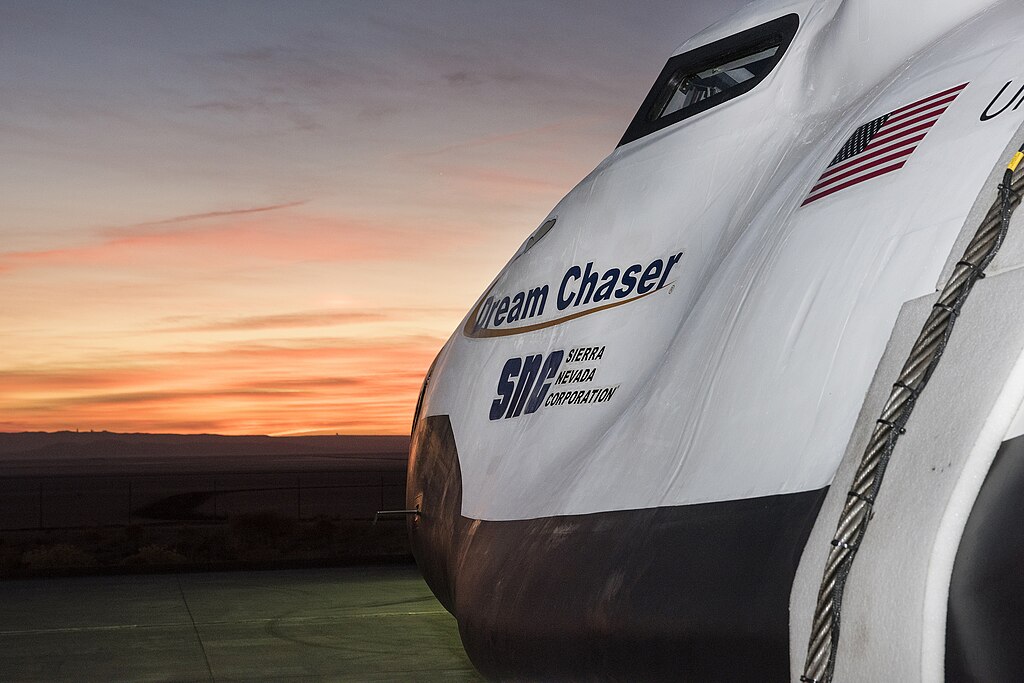
The Louisville, Colorado-based company has positioned itself at the intersection of civilian space operations and military applications. Its flagship product, the Dream Chaser cargo spaceplane, is designed to deliver payloads to the International Space Station and return them to Earth with a runway landing. Unlike most cargo vehicles that burn up on reentry, Dream Chaser’s lifting-body design allows it to glide back and land on conventional runways, preserving sensitive experiments for analysis.
Dream Chaser represents years of development dating back to NASA’s HL-20 Personnel Launch System concept from the 1990s. The design lineage traces through numerous experimental lifting-body vehicles including the X-20 Dyna-Soar, Northrop M2-F2, and Martin X-24. This heritage informs the current spacecraft’s reusability characteristics, which align with NASA’s commercial resupply goals.
The funding arrives amid a broader surge in space-related defense spending. Geopolitical tensions have intensified interest in space-based assets for communications, reconnaissance, and navigation. Companies developing spaceplane technology, satellite servicing capabilities, and orbital logistics have attracted significant capital in recent quarters.
Sierra Space plans to use the new capital to expand production facilities and accelerate development of advanced solutions for defense and intelligence customers. The company has already demonstrated its Dream Chaser cargo system’s capabilities through ground tests and drop flights, with the first orbital demonstration mission, known as Dream Chaser Demo-1, scheduled for late 2026.
The commercial crew and cargo market has matured considerably since NASA’s Commercial Crew Program initiated partnerships with multiple providers. Sierra Space’s Dream Chaser will compete with SpaceX’s Dragon capsule and Northrop Grumman’s Cygnus for NASA cargo resupply contracts. The reusable nature of Dream Chaser offers potential cost advantages over expendable alternatives.
Beyond cargo, Sierra Space has explored crewed versions of its spaceplane. The company’s vision includes point-to-point suborbital passenger transport, though that capability remains years away from reality. The current focus remains on achieving operational cargo flights to the ISS and expanding defense-related contracts.
The $8 billion valuation places Sierra Space among the most valuable private space companies globally, alongside SpaceX and Blue Origin. However, the path to profitability in the commercial space sector remains challenging, with significant capital requirements for development, manufacturing, and operations. The company’s ability to convert defense interest into sustained revenue will determine whether the valuation translates into long-term commercial success.
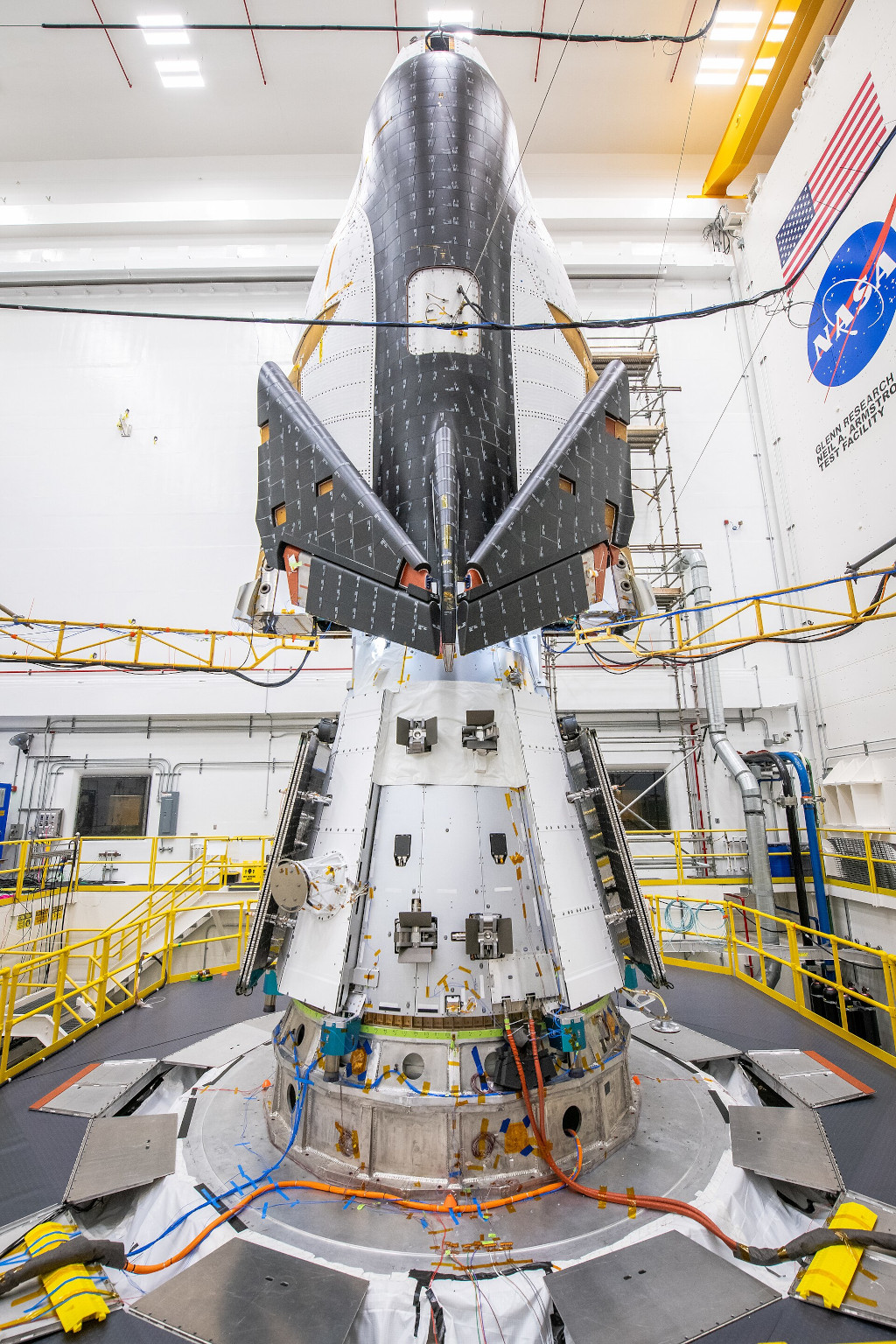
Sierra Space’s Dream Chaser cargo spaceplane continues its path toward first flight, with the demonstration mission currently targeted for late 2026. The spacecraft recently completed important pre-flight milestones at NASA’s Neil Armstrong Test Facility in Ohio, where it underwent vibration testing to simulate launch and re-entry conditions.
The Dream Chaser system consists of two main components: the reusable lifting-body spacecraft and the disposable Shooting Star cargo module. Together, the stack stands approximately 55 feet tall. Testing confirmed the vehicle’s structural integrity under the dynamic conditions experienced during launch and atmospheric re-entry.
Recent updates to the mission profile have changed the original plan. The demonstration flight will no longer dock with the International Space Station as originally planned. Instead, the mission will launch to low Earth orbit and return to Earth with a runway landing at Vandenberg Space Force Base in California. The change allows the mission to proceed without some of the complex docking systems that required additional development time.
NASA announced the modification in September 2025, noting that propulsion system and software certification remained in progress. The revised plan demonstrates the flexibility required in developing new spacecraft systems. The demonstration mission will still validate the vehicle’s core capabilities including launch, orbital flight, re-entry, and landing.
The CRS-2 contract with NASA tasks Dream Chaser with resupplying the International Space Station. Once operational, the spacecraft will be able to return sensitive cargo to Earth rather than disposing of it in the atmosphere as other cargo vehicles do. This capability addresses a longstanding gap in commercial resupply services.
The lifting-body design provides significant advantages during re-entry. Unlike capsule vehicles that splash down in the ocean, Dream Chaser can land on conventional runways. This approach enables faster payload recovery and eliminates the complexity of ocean recovery operations. The design also allows the vehicle to perform a controlled approach with greater maneuverability than capsule-shaped vehicles.
Testing at NASA’s facilities has included comprehensive evaluations of the integrated system. The vibration testing simulated the mechanical stresses of launch, orbital flight, and re-entry. Additional tests will evaluate thermal protection performance and systems integration before the vehicle is cleared for flight.
Sierra Space has invested heavily in developing manufacturing capabilities for the spacecraft. Production facilities in Colorado and Wisconsin support the build process for the reusable vehicle structure and the disposable cargo module. The company has established supplier relationships for specialized components including the heat shield tiles and propulsion systems.
If the demonstration mission succeeds, operational cargo flights could begin in 2027. The Dream Chaser will join SpaceX’s Dragon capsule and Northrop Grumman’s Cygnus vehicle in NASA’s commercial resupply portfolio. The addition of a runway-landable vehicle provides redundancy and expanded capabilities for station resupply operations.
The late 2026 launch window provides adequate time to complete remaining certification activities. Mission planners will select a specific date based on orbital mechanics and station logistics. The demonstration flight will carry a combination of NASA cargo and partner payloads to validate the vehicle’s performance in representative mission scenarios.





 Subscribe to blog posts using RSS












