OrbitalHub

The place where space exploration, science, and engineering meet

Domain is for sale. $50,000,000.00 USD. Direct any inquiries to contact@orbitalhub.com.

Archive for January, 2009

January 9, 2009

IBUKI Closer To Launch

Posted by


Credits: JAXA


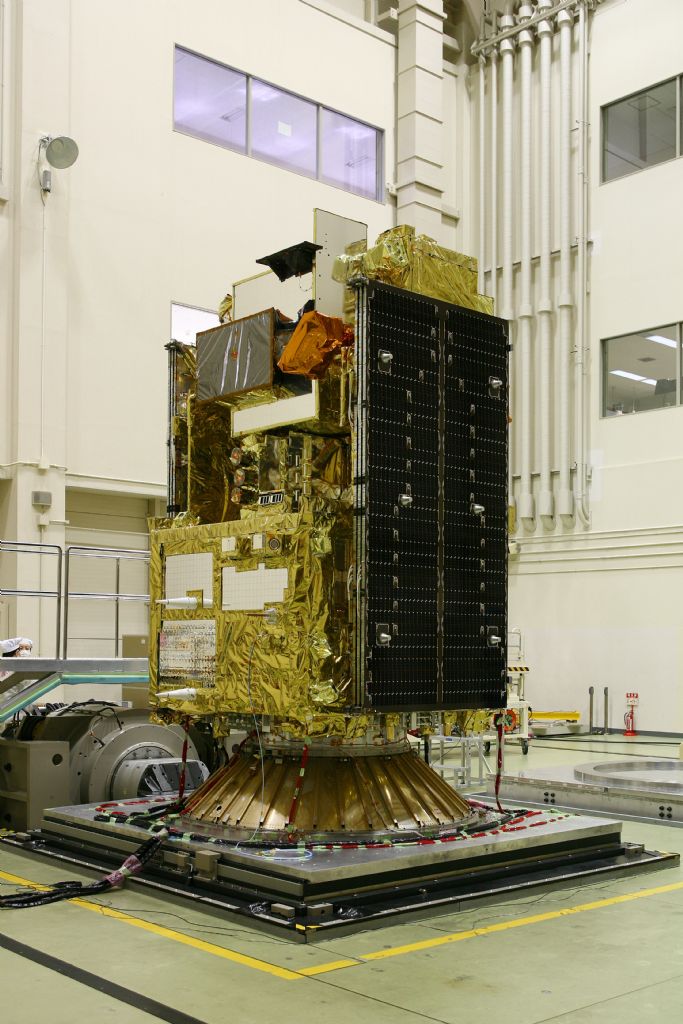
The Greenhouse Gases Observing Satellite or GOSAT for short, is getting closer to the launch scheduled for late January 2009. The chosen nickname for GOSAT is IBUKI, which means breath or puff.


IBUKI was encapsulated in the payload fairing after being mounted on the Payload Attach Fitting (PAF). The PAF is the base that connects the satellite and the launch vehicle. All of the integration operations are performed at the Spacecraft and Fairing Assembly building (SFA) at the Tanegashima Space Center (TNSC).


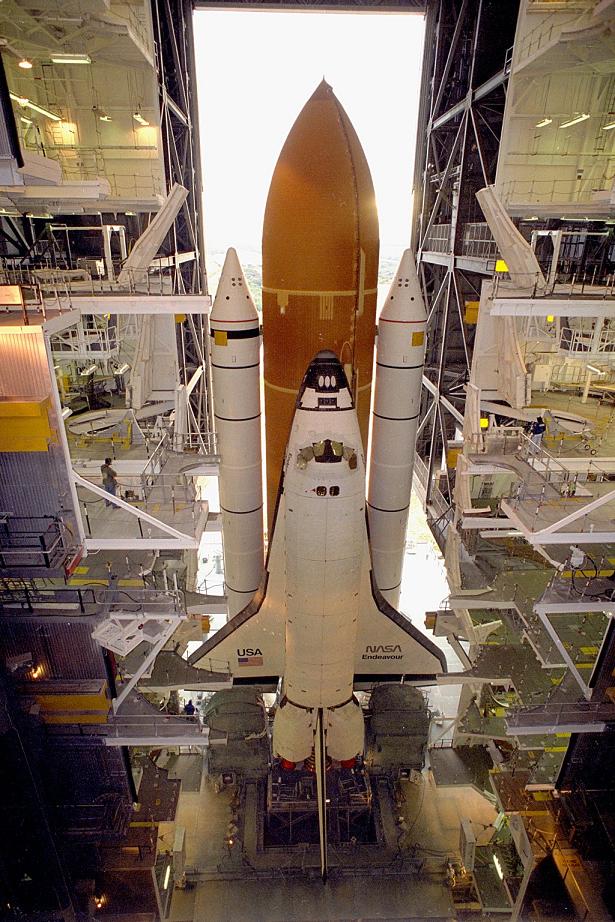
The final integration with the launch vehicle will be carried out at the Vehicle Assembly Building (VAB).


GOSAT is the first satellite to observe greenhouse gases from space. The main contributors behind GOSAT are the Japan Aerospace Exploration Agency (JAXA), the National Institute for Environmental Studies (NIES), and the Ministry of Environment (MOE).


The data collected by the GOSAT satellite will help us make better estimates as to how different areas on Earth contribute to global warming through the emission of greenhouse gases. The data will also help us understand the behavior of the greenhouse gases by combining global observation data collected on orbit with data collected on the ground, and it will also help us improve simulation models.


  • Facebook
  • Google
  • Slashdot
  • Reddit
  • Live
  • TwitThis
January 8, 2009

Taurus II and Cygnus

Posted by


Credits: NASA


Orbital will employ its Taurus II medium-lift launch vehicle and the Cygnus spacecraft in order to service the International Space Station (ISS) under the Commercial Resupply Services (CRS) contract.


Orbital is one of the two companies awarded CRS contracts under the Commercial Orbital Transportation Services Project (COTS).


NASA announced the COTS project on January 18, 2006. The purpose of the program is to stimulate the development of access to low Earth orbit (LEO) in the private sector. At the time, with the imminent retirement of the Space Shuttle fleet, NASA was faced with the option of buying orbital transportation services on foreign launch systems: the Russian Soyuz / Progress, the European Ariane 5 / ATV, or the Japanese H-II / HTV.


Another factor taken into consideration by NASA was that competition in the free market could lead to the development of more efficient and affordable launch systems compared to launch systems that a government agency could build and operate.
 

Credits: Orbital


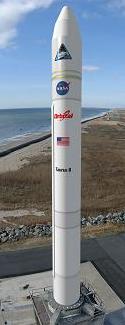
Orbital relies on proven experience in launch vehicle technology. Taurus II is designed to provide low-cost and reliable access to space, and it uses systems from other members of Orbital’s family of successful launchers: Pegasus, Taurus, and Minotaur.


Taurus II is a two-stage launch vehicle that can use an additional third stage for achieving higher orbits. The payloads handled by Taurus II can have a mass of up to 5,400 kg.


Orbital is responsible for overall development and integration of the first stage. The two AJ26-62, designed and produced by Aerojet and Orbital, are powered by liquid oxygen and kerosene. The core design is driven by NPO Yuzhnoye, the designer of the Zenit launchers.


The AJ26-62 engines are basically the NK-33 engines designed by the Kuznetsov Design Bureau for the Russian N-1 launch vehicle, and remarketed by Aerojet under a new designation.


The second stage uses an ATK Castor-30 solid motor with thrust vectoring. This stage evolved from the Castor-120 solid stage.


The optional third stage is developed by Orbital. The stage was dubbed the Orbit Raising Kit (ORK) and it uses a helium pressure regulated bi-propellant propulsion system powered by nitrogen tetroxide and hydrazine. ORK evolved from the Orbital STAR Bus. Because it is a hypergolic stage, it allows several burns to be performed in orbit, and can be used for high-precision injections using various orbital profiles.
 

Credits: Orbital


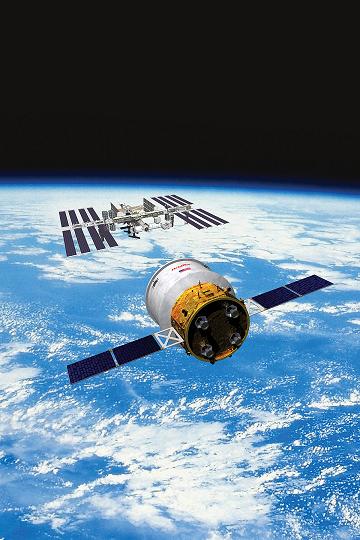
Cygnus will only have cargo capability and will be able to deliver up to 2,300 kg of pressurized or un-pressurized cargo to the ISS. The spacecraft will also be able to return up to 1,200 kg of cargo from ISS to Earth.


The two components of the Cygnus spacecraft will be the service module and the cargo module.


The service module is based on the Orbital STAR bus (like the ORK stage), and will use two solar arrays for producing electrical power for the navigation systems onboard.


The pressurized cargo module is based on the Italian-built Multi-Purpose Logistics Module (MPLM). The un-pressurized cargo module is based on NASA’s ExPRESS Logistics Carrier.


Cygnus will not dock to the ISS in the same manner as the European ATV, but it will be able to maneuver close to the ISS where the Canadarm 2 robotic arm will be used to capture it and berth it to the Node 2 module, similar to the Japanese HTV or SpaceX’s Dragon spacecraft.


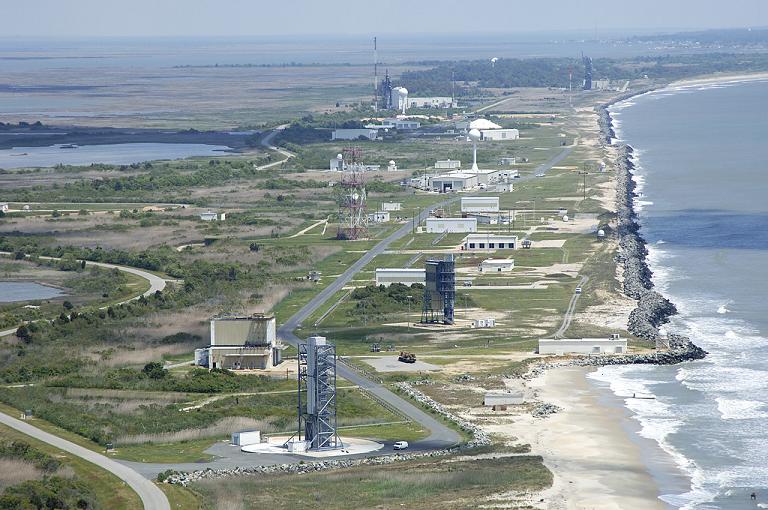
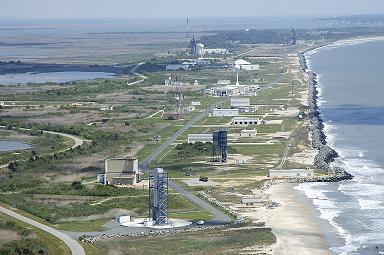
The Mid-Atlantic Regional Spaceport (MARS), located at NASA’s Wallops Island Flight Facility on Virginia’s Eastern shore, was chosen by Orbital to serve as the base of operations for the Taurus II launch vehicle.


MARS has two FAA licensed launch pads for LEO access. MARS also offers access to suborbital launchers, vehicle and payload storage, and processing and launch facilities.
 

Credits: NASA


Due to the location of the spaceport, latitude 37.8 degrees N, longitude 75.5 degrees W, optimal orbital inclinations for the launches performed at MARS are between 38 and 60 degrees. Polar and retrograde orbits can also be serviced with additional in-flight maneuvering.


The first flight of Orbital’s new Taurus II / Cygnus launch system under COTS is scheduled for late 2010.

 

  • Facebook
  • Google
  • Slashdot
  • Reddit
  • Live
  • TwitThis
January 4, 2009

Carnival of Space #85

Posted by


Credits: NASA


Carnival of Space #85 is hosted by CHEAP ASTRONOMY.


The first Carnival of Space for 2009 presents interesting stories. You can read about the future of human space flight, the Small Pressurized Rover (SPR), an interview with Elon Musk, 2,000 year-long space missions, the space elevator, the 40th anniversary of Apollo 8, and many more.


OrbitalHub presents an MIT Systems Engineering Course that focuses on the Space Shuttle. The course is part of the MIT OpenCourseware program.


  • Facebook
  • Google
  • Slashdot
  • Reddit
  • Live
  • TwitThis
January 4, 2009

The JPL Twins Are Five Years Old

Posted by


Credits: NASA


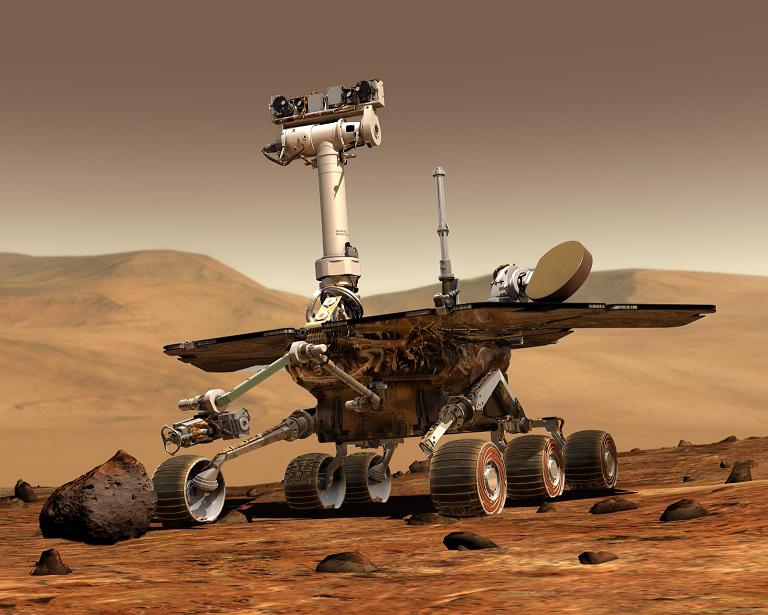
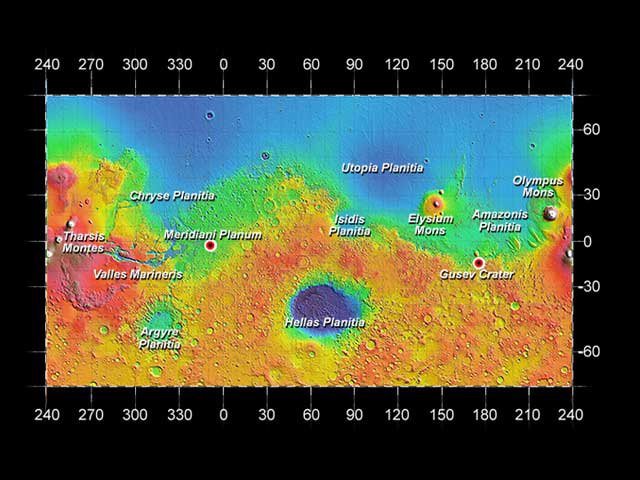
On January 3, 2004, the MER-A rover a.k.a. Spirit landed on Mars at the Gusev Crater. The second rover, MER-B a.k.a. Opportunity, followed twenty-one days later and landed at the Meridiani Planum.


They were both designed to operate for three months on the surface of Mars. Five years later, they are still operational and NASA has planned new missions for them.


Considering the harsh conditions on Mars, NASA’s twin rovers have accomplished remarkable things: they have returned a quarter-million images, driven more than thirteen miles, climbed a mountain, descended into impact craters, and survived dust storms. Using the Mars Odyssey orbiter as a communication relay, the rovers have sent more than 36 GB of scientific data back to Earth.


“These rovers are incredibly resilient considering the extreme environment the hardware experiences every day,” said John Callas, JPL project manager for Spirit and Opportunity. “We realize that a major rover component on either vehicle could fail at any time and end a mission with no advance notice, but on the other hand, we could accomplish the equivalent duration of four more prime missions on each rover in the year ahead.”


Credits: NASA


Digging into the MER mission archive, one detail caught my eye. The rovers carry plaques commemorating the crews of Columbia and Challenger, and some of the landmarks surrounding the landing sites of the rovers are dedicated to the astronauts of Apollo 1, Columbia, and Challenger.


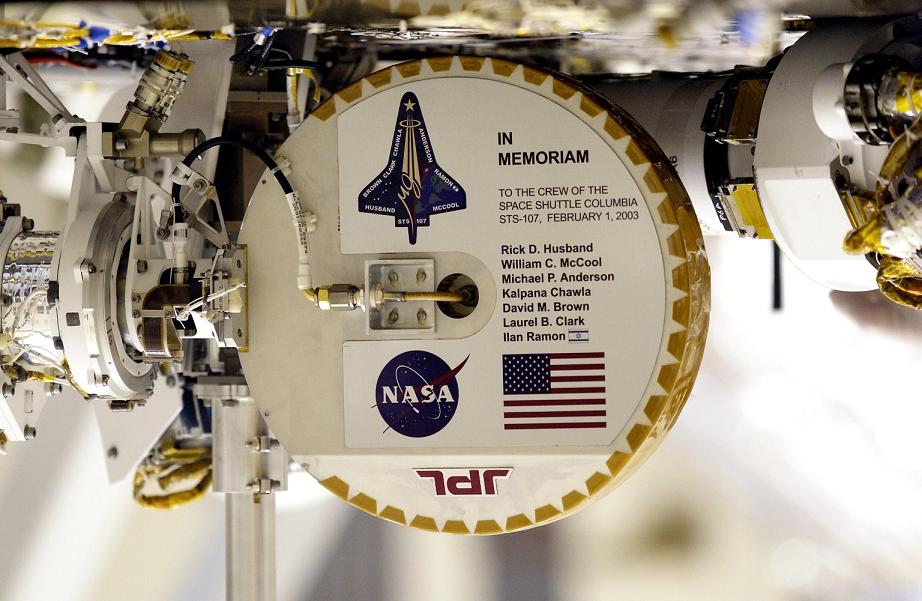
Spirit is carrying a plaque commemorating the STS-107 Space Shuttle Columbia crew, which has been mounted on the high-gain antenna of the rover.


The names of the STS-107 crew are inscribed on the plaque: Rick D. Husband, William C. McCool, Michael P. Anderson, Kalpana Chawla, David M. Brown, Laurel B. Clark, and Ilan Ramon. Their names are now looking over the Martian landscapes.


To further honor their memory, the landing site of the MER Spirit is called the Columbia Memorial Station.


Credits: NASA


Three of the hills surrounding the Columbia Memorial Station are dedicated to the Apollo 1 crew: Gus Grissom, Ed White, and Roger Chafee. Grissom Hill is located 7.5 km to the southwest of Columbia Memorial Station, White Hill is 11.2 km northwest of the landing site, and Chafee Hill is located 14.3 km south-southwest of the landing site.


The area where Opportunity landed in the Meridiani Planum is called Challenger Memorial Station, in memory of the last crew of the Space Shuttle Challenger: Francis R. Scobee, Michael J. Smith, Judith A. Resnik, Ellison S. Onizuka, Ronald E. McNair, Gregory B. Jarvis, and Sharon Christa McAuliffe. I remember that Sharon Christa McAuliffe was NASA’s first teacher in space.


“The journeys have been motivated by science, but have led to something else important,” said Steve Squyres of Cornell University, in Ithaca, N.Y. Squyres is principal investigator for the rover science instruments. “This has turned into humanity’s first overland expedition on another planet. When people look back on this period of Mars exploration decades from now, Spirit and Opportunity may be considered most significant not for the science they accomplished, but for the first time we truly went exploring across the surface of Mars.”


  • Facebook
  • Google
  • Slashdot
  • Reddit
  • Live
  • TwitThis