OrbitalHub

The place where space exploration, science, and engineering meet

Domain is for sale. $50,000,000.00 USD. Direct any inquiries to contact@orbitalhub.com.

07-2-10

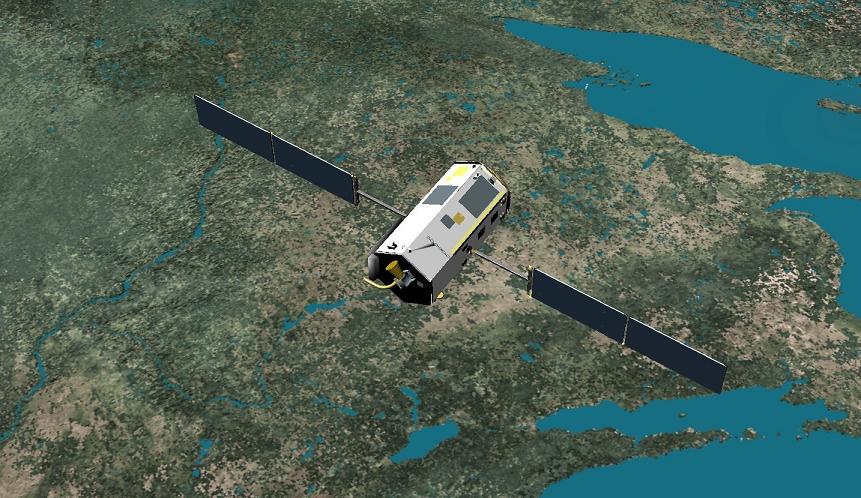
OCO 2.0

Posted by


Credits: NASA


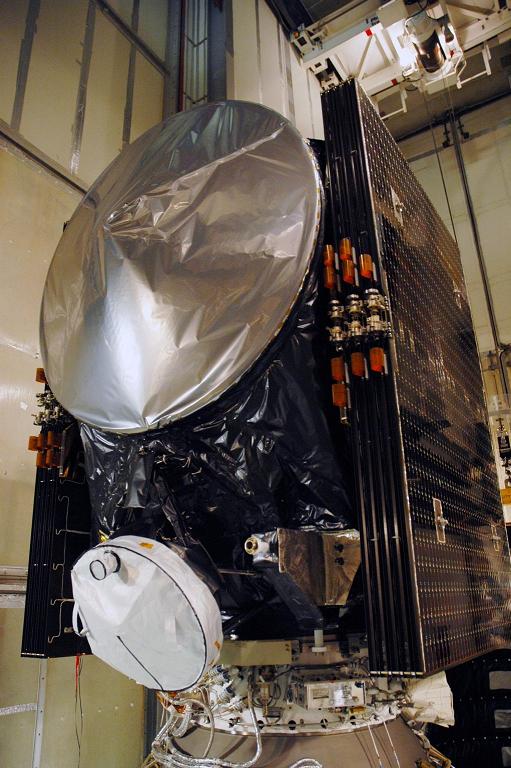
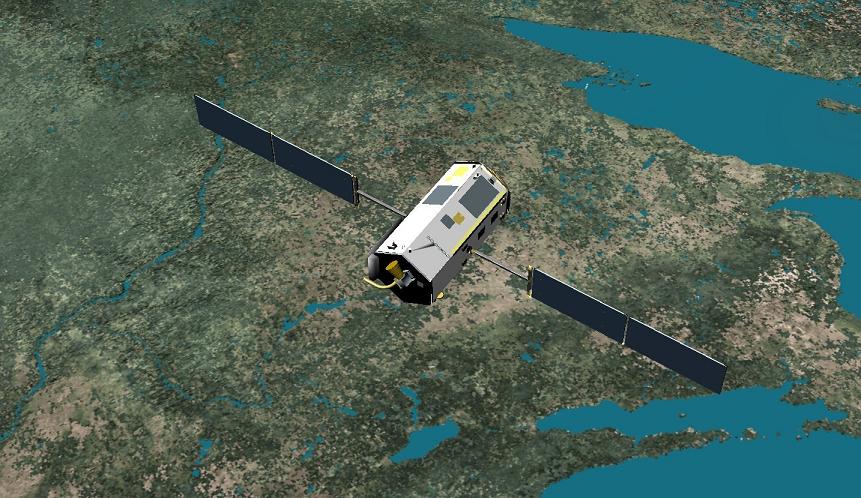
The Orbiting Carbon Observatory 2 mission is scheduled to launch in February 2013.


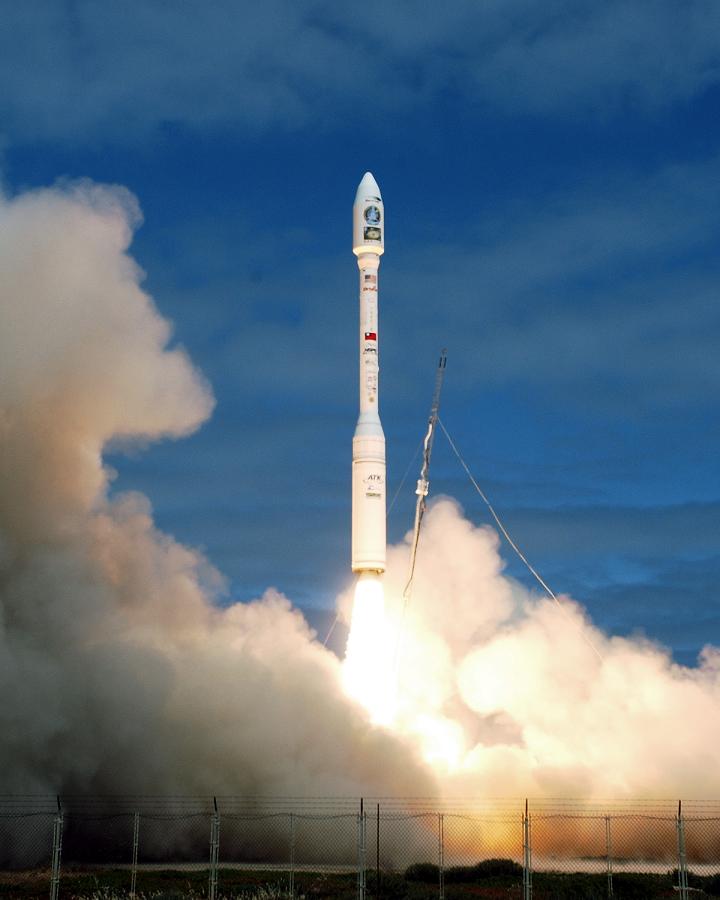
The previous spacecraft failed to reach orbit on February 24, 2009, after being launched on top of a Taurus XL launch vehicle from Vandenberg Air Force Base in California.


The OCO spacecraft will make global CO2 measurements from space, quite useful as scientists are trying to understand the global carbon cycle in order to be able to make predictions of future atmospheric CO2 increases.


NASA awarded the launch services contract to Orbital Sciences Corp. of Dulles, Virginia. OCO-2 will be launched by a Taurus XL 3110 launch vehicle from Vandenberg Air Force Base.


We quote from the NASA press release:

“OCO-2 is a NASA’s first mission dedicated to studying atmospheric carbon dioxide. Carbon dioxide is the leading human-produced greenhouse gas driving changes in the Earth’s climate. OCO-2 will provide the first complete picture of human and natural carbon dioxide sources and sinks, the places where the gas is pulled out of the atmosphere and stored.”


You can find more information about the Orbiting Carbon Observatory on NASA’s website.


  • Facebook
  • Google
  • Slashdot
  • Reddit
  • Live
  • TwitThis


Credits: NASA/JPL


The Nuclear Spectroscopic Telescope Array (NuSTAR) is a high-energy X-ray space telescope that will expand our understanding of the origins and the development of stars and galaxies.


NuSTAR was proposed to NASA in May 2003. In 2006, while NuSTAR was undergoing an extended feasibility study, NASA cancelled the program due to budgetary constraints. However, in September 2007, the program was restarted.


In 2007, Orbital Sciences Corporation was selected by NASA to design, manufacture, and test the NuSTAR telescope.


The spacecraft is based on a proven design, used by Orbital for other NASA Small Explorer missions: SORGE, GALEX, AIM, and OCO. NuSTAR will have a launch mass of 360 kg, and will be powered by articulated solar arrays providing 600 W.


The spacecraft incorporates a ten-meter long extendable mast. The mast allows the telescope to fit into a small launch vehicle.


The technology used to build the telescope is not new. A team of researchers, led by Dr. Fiona Harrison, professor of physics and astronomy at Caltech, has been improving the NuSTAR technology for the last ten years. A previous high energy X-ray telescope (High Energy Focusing Telescope or HEFT) was developed as part of a high altitude balloon payload.


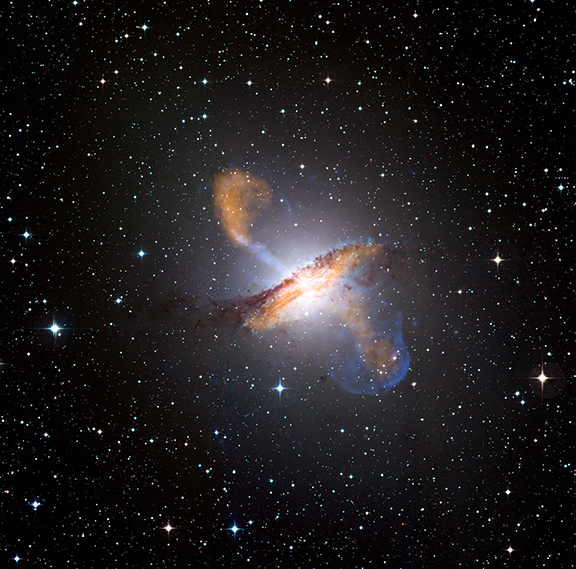
The currently operational X-ray telescopes, Chandra and XMM-Newton, observe the sky in the low energy X-ray spectrum (X-ray energies less than 10 keV). NuSTAR will make observations in a higher range, up to 79 keV. As much of the energy emitted by a black hole is absorbed by the surrounding gas and dust, observations in the high-energy X-ray spectrum can reveal in greater detail what is happening closer to the event horizon.


Credit: NASA/CXC/CfA/R.Kraft et al./MPIfR/ESO/APEX/A.Weiss et al./ESO/WFI


The NuSTAR telescope will have a sensitivity two orders of magnitude greater than any other instrument used to detect black holes. NuSTAR will help scientists understand how black holes are distributed throughout the universe, and what powers the most active galaxies.


The NuSTAR instrument consists of two co-aligned hard X-ray telescopes. The ten-meter mast mentioned above separates the mirrors and the imaging detectors. The detectors are Cadmium Zinc Telluride (CdZnTe) detectors and do not require cryogenic operation.


On February 9, 2009, NASA awarded Orbital the launch services contract for the NuSTAR mission. The telescope will be launched in 2011 aboard a Pegasus XL launch vehicle. Pegasus XL will be carried beneath a L-1011 aircraft and released over the Pacific Ocean. The air-launch system is very cost-effective, providing flexibility during operation and requiring minimal ground support.


NuSTAR will be deployed into a 525×525 km low Earth orbit (LEO) with a twenty-seven degree inclination.


For more details about the science of NuSTAR, you can visit the mission’s home page at Caltech. Orbital has also posted a NuSTAR fact sheet on their web site.


  • Facebook
  • Google
  • Slashdot
  • Reddit
  • Live
  • TwitThis
03-21-09

Taurus

Posted by


Credits: Orbital


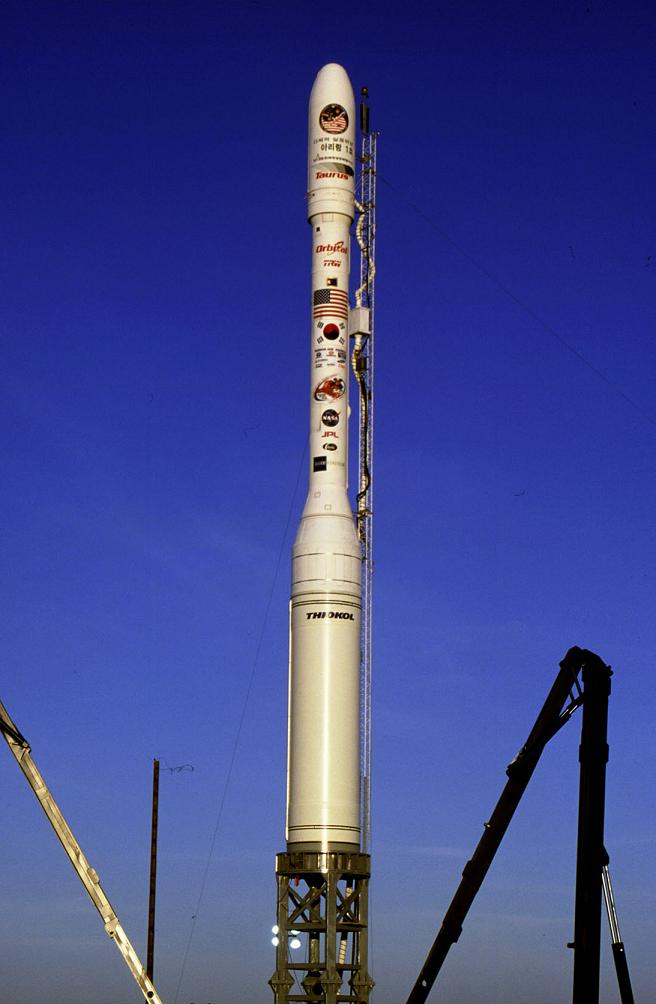
Taurus is a four-stage, inertially guided, all solid fuel, ground launched vehicle, designed and built by Orbital Sciences Corporation. In a typical mission, Taurus can inject a 1,350 kg payload in low Earth orbit (LEO).


Taurus lifted off for the first time on March 13, 1994. Since then, Taurus has conducted six of eight successful missions.


Taurus is well suited for LEO missions to a wide range of altitudes. Different orbital profiles can be attained through launches from more than one launch site. An additional fifth stage can boost the performance of the launch vehicle, making possible high energy and geosynchronous transfer orbit (GTO) missions.


Depending on configuration, Taurus can have up to 5 stages.


Stage 0 is an ATK Thiokol Castor 120 Solid Rocket Motor (SRM). Castor 120 is a commercial version of the Peacekeeper first stage. The stage is 9.06 m long and 2.38 m in diameter, with a mass of approximately 49 tons. The first Taurus used the Peacekeeper first stage as Stage 0.


Peacekeeper was an Inter-Continental Ballistic Missile (ICMB) deployed by the United States beginning in 1986. The Peacekeeper ICMB could carry up to ten re-entry vehicles, each armed with a 300-kiloton warhead (just to have an idea about the order of magnitude, that is twenty times the power of the bomb dropped on Hiroshima). The last Peacekeeper was decommissioned in 2005.


Stage 1 is an ATK Orion 50S SRM, 7.53 m long and 1.28 m in diameter, with a mass of approximately 12 tons. In the XL configuration, the stage is 8.94 m long and has a mass of approximately 15 tons. Stage 2 is an ATK Orion 50 SRM, 2.64 m long and 1.28 m in diameter, with a mass around 3 tons. In the XL configuration, the stage is 3.11 m long and almost 4 tons. Stage 3 is an ATK Orion 38 SRM. Stage 3 has a mass of around 800 kg, a length of 1.34 m, and a diameter of 97 cm.


The payload fairing comes in two versions: the 63” diameter fairing, manufactured by Vermont Composites, and the 92” diameter fairing, manufactured by Texas Composites. The fairing encapsulates and protects the payload during ground handling, integration operations, and flight. The payload mating is done late in the launch operations flow, so the designs of both fairings provide for off-line encapsulation of the payload and transportation to the launch site.


Taurus can be assembled in different configurations, depending on the specific requirements of the mission. The configurations are designated using a four-digit code. The first digit indicates the vehicle configuration (1 – SSLV Taurus with Peacekeeper first stage used as Stage 0; 2 – Commercial Taurus Standard with Castor 120 Stage 0 and standard-length Stage 1 and Stage 2; 3 – Commercial Taurus XL with Castor 120 Stage 0 and XL-length Stage 1 and Stage 2), the second digit designates the fairing size (1 for 63” fairing and 2 for 92” fairing), and the third and fourth indicate the Stage 3 motor (0 if there is no Stage 3 in configuration, 1 for Orion 38, and 3 for STAR 37), and the Stage 4 motor (0 if there is no Stage 4 in configuration, and 3 for STAR 37) respectively.


Credits: Orbital


The primary launch site used for Taurus is Site 576E on North Vandenberg Air Force Base (VAFB). Launches from North VAFB provide flight azimuths from 158 to 235 degrees, allowing payload injection on high inclination orbits (60 to 140 degrees).


For other mission profiles, there are a number of alternate sites that Taurus can launch from: South Vandenberg Air Force Base (VAFB), Cape Canaveral Air Force Station (CCAFS) Launch Complex 46, Wallops Flight Facility (WFF), and Reagan Test Site on the Kwajalein atoll in the western Pacific.


Taurus was designed to be launched from minimalist launch sites. The main requirement for the launch site is a 40×40 inch concrete pad that is able to support the weight of the launch vehicle.


For more information about the Taurus launch vehicle, you can visit the dedicated web page on Orbital’s website. There is also a Taurus User Guide available from Orbital. The guide is an exhaustive document, presenting the vehicle performance, the payload interfaces, an overview of the payload integration, among other things.


  • Facebook
  • Google
  • Slashdot
  • Reddit
  • Live
  • TwitThis
02-17-09

Dawn and the Flyby of Mars

Posted by


Credits: NASA/JPL


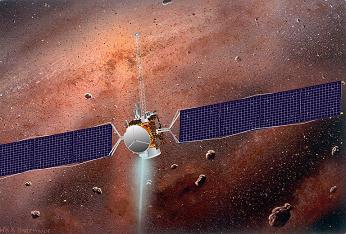
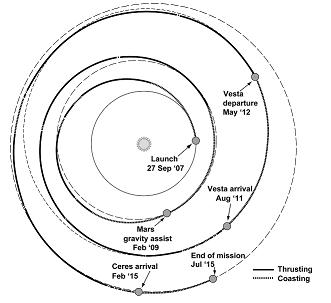
The Dawn spacecraft is currently performing the Mars flyby phase of its mission. The purpose of the Mars flyby is to alter the trajectory of the spacecraft in order to rendezvous with its first scientific target in the main asteroid belt.


The spacecraft will come within 549 km of the surface of Mars on February 17, 2009, at 4:28 PST.


The flyby is a gravity assist maneuver used in orbital mechanics to alter the trajectory of a spacecraft. The gravity assist is also known as a gravitational slingshot. The first ever gravity assist maneuver was performed by Mariner 10 in February 1974, and most of the interplanetary missions have made use of it since then.


The scientific objective of the Dawn mission is to answer important questions about the origin and the evolution of our solar system. The currently accepted theory about the formation of our solar system states that Jupiter’s gravity interfered with the accretion process, thereby preventing a planet from forming in the region between Jupiter and Mars. This led to the formation of the asteroid belt.


The asteroids chosen as scientific targets for the Dawn mission are Vesta and Ceres. Due to their size, they have survived the collisional phase, and it is believed that they have preserved the physical and chemical conditions of the early solar system. The asteroids have followed different evolutionary paths and have dissimilar characteristics, which makes them perfect research subjects.
 

Credits: NASA/JPL


The design of the Dawn spacecraft is based on Orbital’s STAR-2 series, and uses flight-proven components from other Orbital and JPL spacecraft: the propulsion system is based on the design used on Deep Space 1, the attitude control system used on Orbview, a hydrazine-based reaction control system used on the Indostar spacecraft, and command and data handling, as well as flight software, from the Orbview program.


The core structure of the spacecraft is a graphite composite cylinder, while the panels are aluminum core with aluminum/composite face sheets.


The central cylinder hosts the hydrazine and xenon tanks. The hydrazine tank can store 45 kg of fuel, while the xenon tank has a capacity of 450 kg.


The attitude control system (ACS) uses star trackers to estimate attitudes in cruise mode. A coarse Sun sensor (CSS) allows ACS to keep the solar panels normal to the Sun-spacecraft line. ACS also uses the hydrazine-based reaction control system for the control of attitude and for desaturation of the reaction wheels.
 

Credits: NASA/George Shelton


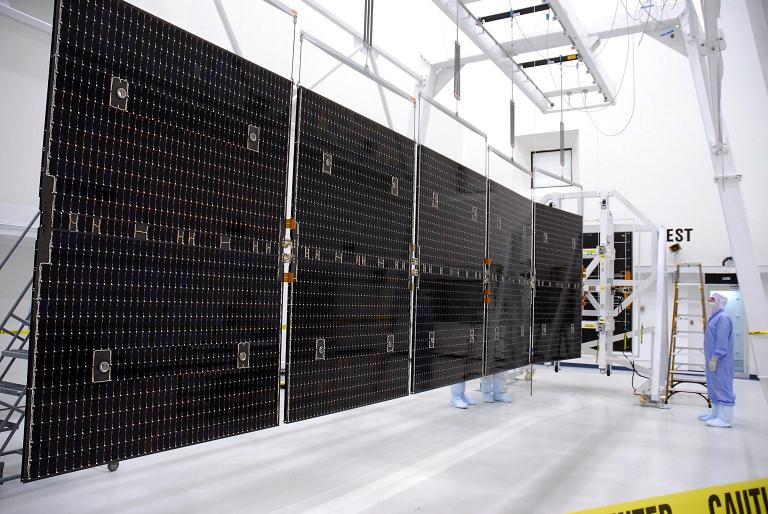
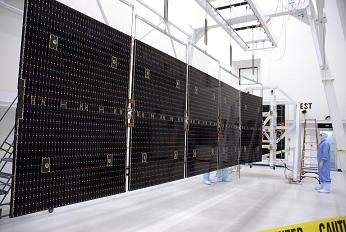
The solar panels are capable of producing more than 10 kW at 1 AU and 1 kW at 3 AU (on Ceres’ orbit).


The command and data handling system (CDHS) is based on a RAD6000 board running VxWorks. The software is written in C. There are 8GB available on the board as storage for engineering and scientific data.


The scientific payload consists of the Framing Camera (FC), the Gamma Ray and Neutron Detector (GRaND), and the visible and infrared (VIR) mapping spectrometer.


The FC will be used for determining the bulk density, the gravity field, for obtaining images of the surface, and for compiling topographic maps of Vesta and Ceres. In addition, the FC will capture images for optical navigation in the proximity of the asteroids. For reliability purposes, the payload includes two identical cameras that can run independently.


GRaND will serve for the determination of the elemental composition of the asteroids. GRaND is the result of the expertise accumulated during the Lunar Prospector and Mars Odyssey programs.


Credits: NASA/Jack Pfaller


VIR will help map the surface mineralogy of the asteroids. The instrument is a modified version of the visible and infrared spectrometer flying on the Rosetta mission.


The Dawn spacecraft uses ion propulsion to make its journey to Vesta and Ceres. Ion propulsion will also be used by Dawn during the low altitude flights over the asteroids.


While the fact that Dawn’s engines have a thrust of only 90 mN can hardly impress a reader, the important detail to mention when discussing propulsion systems is the specific impulse. Dawn’s engines have a specific impulse of 3100 s. For a chemical rocket, the specific impulse ranges from 250 s for solid rockets to 450 s for bipropellant liquid rockets. The only drawback (if this can be regarded as a drawback) is that the ion engines must be fired for much longer in order to achieve an equivalent trajectory.


With such high specific impulse engines, Dawn makes use of the fuel onboard in a very efficient way. The fuel used is xenon, a heavy noble gas placed in group 8A of the periodic table. The power produced by the large solar panels is used to ionize the fuel and then accelerate it with an electric field between two grids. In order to maintain a neutral plasma, electrons are injected into the beam after acceleration.


Credits: NASA/Amanda Diller


Dawn was launched from Cape Canaveral Air Force Station and injected on an interplanetary trajectory by a Delta II launch vehicle.


The main contributors to the Dawn mission are the University of California in Los Angeles (science lead, science operations, data products, archiving, and analysis), the Jet Propulsion Laboratory (project management, systems engineering, mission assurance, payload, navigation, mission operations, level zero data), and the Orbital Sciences Corporation (spacecraft design and fabrication, quality assurance, and payload integration).


The scientific payload was provided by the Los Alamos National Laboratory, the German Aerospace Center, the Max Planck Institute, and the Italian Aerospace Center. The Deep Space Network is responsible for data return from the spacecraft.



For more information about Dawn, you can visit the Dawn Mission Home Page on the JPL web site.


  • Facebook
  • Google
  • Slashdot
  • Reddit
  • Live
  • TwitThis


Credits: SpaceX


NASA has awarded two International Space Station (ISS) Commercial Resupply Services (CRS) contracts to Space Exploration Technologies (SpaceX) and Orbital Sciences Corporation (Orbital).


NASA has ordered eight flights valued at about $1.9 billion from Orbital and twelve flights valued at about $1.6 billion from SpaceX.


The maximum potential value of each contract is roughly $3.1 billion. Based on known requirements, the value of both contracts combined is projected at $3.5 billion.


Credits: Orbital


The awarded contracts are fixed-price indefinite delivery, indefinite quantity contracts. They will begin January 1, 2009, and are effective through December 31, 2016. SpaceX and Orbital each will have to deliver a minimum of twenty metric tons of cargo to the space station, and they will also have to deliver non-standard services in support of the cargo resupply, including analysis and special tasks as the government deems necessary.


SpaceX will service the ISS with its Falcon9/Dragon system.


“The SpaceX team is honored to have been selected by NASA as the winner of the Cargo Resupply Services contract,” said Elon Musk, CEO and CTO, SpaceX. “This is a tremendous responsibility, given the swiftly approaching retirement of the Space Shuttle and the significant future needs of the Space Station. This also demonstrates the success of the NASA COTS program, which has opened a new era for NASA in US Commercial spaceflight.”


Orbital will employ the Taurus IITM medium-lift launch vehicle and the CygnusTM maneuvering space vehicle.


“We are very appreciative of the trust NASA has placed with us to provide commercial cargo transportation services to and from the International Space Station, beginning with our demonstration flight scheduled in late 2010,” said Mr. David W. Thompson, Orbital’s Chairman and Chief Executive Officer. “The CRS program will serve as a showcase for the types of commercial services U.S. space companies can offer NASA, allowing the space agency to devote a greater proportion of its resources for the challenges of human spaceflight, deep space exploration and scientific investigations of our planet and the universe in which we live.”


Both Orbital and SpaceX have issued press releases with more details about the CRS contracts.


  • Facebook
  • Google
  • Slashdot
  • Reddit
  • Live
  • TwitThis


Credits: NASA


Last week we presented GOSAT a.k.a. Ibuki, a mission that has as its objective the mapping of carbon dioxide and methane in the Earth’s atmosphere. A similar mission is getting ready to launch on the other side of the Pacific: the Orbiting Carbon Observatory (OCO). OCO is a NASA Earth System Science Pathfinder (ESSP) Program mission.


The mission team includes the Orbital Sciences Corporation, the Jet Propulsion Laboratory, and Hamilton Sundstrand Sensor Systems.


The atmospheric carbon dioxide (CO2) is an important greenhouse gas. CO2 absorbs and traps infrared radiation emitted by the Earth’s surface, preventing it from escaping to space. OCO will provide global CO2 measurements from space. The data collected during the mission will help scientists understand the global carbon cycle. This understanding is essential to improve the predictions of future atmospheric CO2 increases and its impact on the climate.


The OCO has a mass of 407 kg. The two GaAs solar arrays will provide 324 W orbit average for the scientific payload onboard. The satellite will use hydrazine thrusters for stabilization while on orbit. The estimated life span for the mission is 24 months.


The scientific payload includes three spectrometers. The spectrometers can detect what gases are in the Earth’s atmosphere and determine their amounts. The measurements will translate into monthly estimates of atmospheric CO2 over 621-square-mile regions of the Earth’s surface. From its sun-synchronous orbit, OCO will map the globe once every sixteen days. These maps will help locate CO2 sources and sinks.


Credits: NASA / Orbital


OCO will be placed on orbit by a Taurus XL launch vehicle. Taurus XL is a solid fuel launch vehicle built by the Orbital Sciences Corporation. According to the Taurus fact sheet, it provides launch capability for satellites weighing up to 1,590 kg. The range of launch missions supported by Taurus include low inclination low Earth orbit (LEO), polar LEO, sun-synchronous LEO, geo-transfer orbit, and interplanetary trajectory.


Depending on the configuration, Taurus can have a mass from 69,000 to 77,000 kg and can have a length from 27 to 32 m.


The mission launch is scheduled for early 2009. The Taurus XL launch vehicle will lift off from Vandenberg Air Force Base, California.


  • Facebook
  • Google
  • Slashdot
  • Reddit
  • Live
  • TwitThis