OrbitalHub

The place where space exploration, science, and engineering meet

Domain is for sale. $50,000,000.00 USD. Direct any inquiries to contact@orbitalhub.com.

Archive for May, 2026


For decades, the assumption among planetary scientists was straightforward: small bodies in the outer solar system are too cold, too low in gravity, and too distant from the Sun to hold onto any significant atmosphere. Pluto had been known to have one since the 1980s, but Pluto is large — roughly 2,400 kilometers in diameter, large enough to retain a thin nitrogen atmosphere through a combination of low temperature and sufficient surface gravity. The same was assumed to be true for Eris and Makemake, the other dwarf planets in the Kuiper Belt. But small trans-Neptunian objects, the hundreds of thousands of bodies that orbit beyond Neptune, were expected to lack atmospheres entirely.

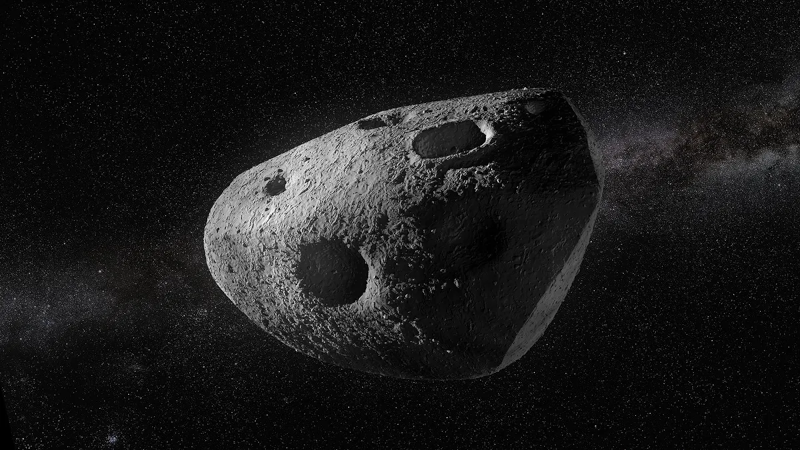
On May 4, 2026, a team led by Ko Arimatsu at the National Astronomical Observatory of Japan published a paper in Nature Astronomy reporting the detection of an atmosphere on the trans-Neptunian object (612533) 2002 XV93. The discovery changes that assumption.

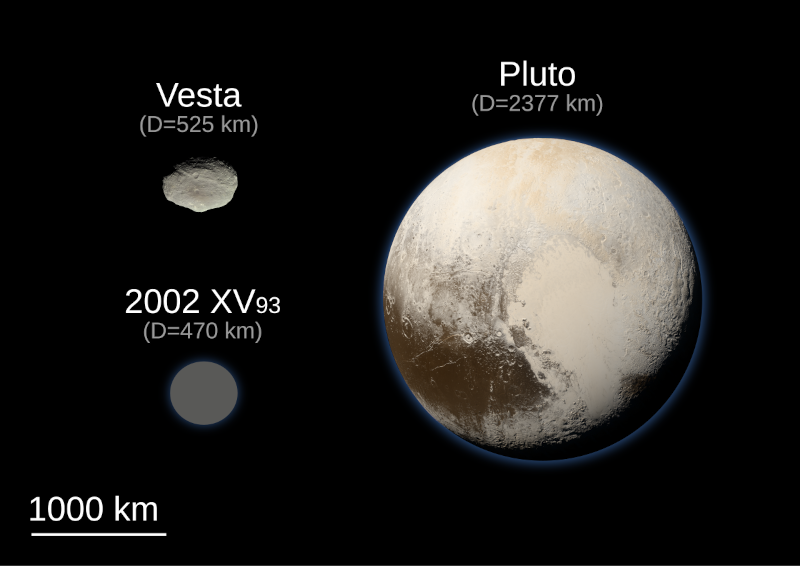
2002 XV93 is a plutino — a class of trans-Neptunian objects that orbit in a 3:2 resonance with Neptune, completing two orbits for every three that Neptune makes. It is roughly 500 kilometers in diameter, about one-fifth the size of Pluto, and at the time of the observation it was approximately 5.5 billion kilometers from Earth. The detection method was a stellar occultation: the team observed the asteroid passing in front of a distant star, measuring how the starlight dimmed as 2002 XV93 moved across the line of sight. In an ordinary occultation by an airless body, the starlight drops abruptly and recovers in the same way. In this case, the dimming was gradual, stretching over roughly 1.5 seconds as the star passed through the atmosphere, its light refracted by gas surrounding the small body.

The surface pressure was estimated at 100 to 200 nanobars — roughly 100 times less than Pluto’s atmosphere, and 50 to 100 million times less than Earth’s sea-level pressure. At temperatures of 40 to 50 kelvin, nitrogen and methane ices on the surface could be in a state of slow sublimation, releasing gas into a thin envelope around the body. But the pressure measurement raises an immediate question: at 500 kilometers across, 2002 XV93 should not be able to hold onto an atmosphere for long. Its surface gravity is too weak to retain gas against the thermal escape processes that drain atmospheres into space. An atmosphere at this pressure should dissipate within roughly a thousand years.

Two possible explanations have been proposed. The first is cryovolcanism — ice eruptions on the surface that continuously replenish gas lost to space, maintaining a steady-state atmosphere through ongoing geological activity. The second is a recent impact event that cracked the interior and released volatiles that are currently slowly escaping. JWST observations have found no detectable surface gases, adding a layer of mystery to the finding. The team acknowledges that the atmosphere may be transient, a short-lived phenomenon that will not persist on astronomical timescales.

The scientific significance is not limited to 2002 XV93 itself. The detection demonstrates that small TNOs can retain atmospheres under conditions that models had suggested were prohibitive. If cryovolcanism is the mechanism, it implies that these distant worlds are more geologically active than previously believed. Other dwarf planets and large TNOs may harbor similar transient atmospheres that have simply not been observed yet. The finding redefines the boundary between airless and atmosphere-bearing bodies in the outer solar system.

The discovery also showcases the power of stellar occultation surveys, which can detect atmospheric signatures that would be invisible to direct telescopic observation. Arimatsu’s team used observations from multiple Japanese sites, including telescopes operated by amateur astronomers, to triangulate the geometry and measure the pressure gradient. The approach demonstrates that targeted occultation surveys can characterize the atmospheres of small bodies at distances where direct sensing is impractical.

The condition for a body to retain an atmosphere against thermal escape is determined by the ratio of gravitational binding energy to the thermal energy of gas molecules. For Earth-temperature conditions, hydrogen and helium escape readily because their molecules move at velocities that approach or exceed the body’s escape velocity. At 40 to 50 kelvin, however, the average molecular velocity is much lower, and only light gases like hydrogen and helium are prone to rapid escape. Nitrogen and methane, being heavier molecules, have lower average velocities at the same temperature, making them more readily retained.

The escape velocity from 2002 XV93 is roughly 0.2 kilometers per second — tiny compared to Earth’s 11.2 kilometers per second. At 50 kelvin, the mean thermal velocity of nitrogen molecules is about 0.14 kilometers per second, which is a substantial fraction of the escape velocity. This means that nitrogen molecules at the top of the atmosphere are not strongly bound, and a continuous supply mechanism is required to maintain the observed pressure. The Jean’s escape parameter, which quantifies the fraction of molecules with velocities exceeding escape velocity, is close to unity for this body — a marginal condition that explains why the atmosphere is so thin.

The discovery of an atmosphere on 2002 XV93 adds a new dimension to the taxonomy of trans-Neptunian objects. Where they were once categorized by size, orbital class, and surface color, the possibility of atmospheric activity introduces a geologically active category that was previously unknown beyond the realm of the gas and ice giants. The outer solar system is more complicated, and more interesting, than the textbooks suggested.


  • Facebook
  • Google
  • Slashdot
  • Reddit
  • Live
  • TwitThis


In the early hours of March 17, 2026, engineers at the European Space Agency watched as a spacecraft roughly 1.6 billion kilometers away executed the largest trajectory correction of its mission. Hera’s three main engines fired in sequence over several hours, consuming 123 kilograms of hydrazine propellant and delivering a velocity change of 367 meters per second. The maneuver aligned the spacecraft’s solar orbit inclination with that of the Didymos binary asteroid system, confirming that the probe remains precisely on course for its rendezvous in November. Hera will spend the coming months quietly cruising toward a planetary science milestone that researchers have been anticipating since September 2022, when NASA deliberately collided a spacecraft with a small moonlet called Dimorphos.

The DART mission, Double Asteroid Redirection Test, impacted Dimorphos on September 26, 2022, at approximately 6.1 kilometers per second. The collision was not designed to destroy the asteroid but to test whether kinetic energy transferred from a spacecraft could measurably alter the orbit of a body around its parent asteroid. Scientists estimated the impact would shorten Dimorphos’s orbital period around Didymos by roughly 10 percent, a change that ground-based telescopes began measuring within days. The initial finding of approximately 32 minutes shortening was striking enough to declare the test a success, but the full picture required more time and more data to emerge.

In March 2026, NASA announced the conclusion of a multi-year analysis combining radar observations, ground-based telescope measurements, and 22 stellar occultations recorded by volunteer astronomers worldwide. The results confirmed not only that Dimorphos’s orbital period around Didymos shortened by approximately 33 minutes but also that the entire binary system’s orbit around the Sun changed in a measurable way. The Didymos-Dimorphos system’s 770-day solar orbit shortened by approximately 0.15 seconds per revolution, and its orbital speed increased by roughly 11.7 microns per second. The mechanism behind the solar orbit change differs from the immediate transfer of momentum during the impact. Instead, the effect arises from the substantial ejection of rocky debris from Dimorphos following the collision. When the DART spacecraft struck Dimorphos, it displaced millions of kilograms of material that accelerated away from the asteroid in various directions. The conservation of momentum in the system meant that the ejected debris carried away additional orbital energy, effectively acting as a secondary propulsion event. The phenomenon is called momentum enhancement, and the DART results indicate it approximately doubled the net impulse delivered to the asteroid compared to the spacecraft’s own momentum alone.

The 22 stellar occultations that contributed to the measurement illustrate an elegant form of interplanetary science that requires no spacecraft at all. When an asteroid passes in front of a distant star as seen from Earth, the star’s light dims in a characteristic pattern that encodes information about the asteroid’s size, shape, and orbital position. Volunteer astronomers using commercially available equipment recorded these events across multiple continents between October 2022 and March 2025, building a dataset precise enough to detect changes in Dimorphos’s trajectory measured in meters per second. The coordination required to time these observations across dozens of sites reflects the kind of international scientific collaboration that planetary defense has increasingly attracted.

The binary nature of the Didymos-Dimorphos system added complexity to the analysis because the two bodies orbit each other while together orbiting the Sun. Changes in the internal orbital period affect the center of mass of the system, which in turn affects how the system responds to external gravitational influences. Researchers found that the momentum enhancement from debris ejection altered the binary orbit in ways that rippled outward to change the system’s solar orbit. This had never been directly measured before and provides a data point that asteroid deflection models had predicted but never confirmed.

Hera’s mission now is to examine the aftermath of this event at close range. The spacecraft carries two CubeSats named Juventus and Milani that will deploy upon arrival to conduct complementary measurements. Juventus will use a tri-axial magnetometer and a susceptibility probe to characterize Dimorphos’s internal composition and magnetic properties, while Milani will conduct spectroscopic analysis of the asteroid’s surface to map mineralogy and search for organic compounds. The primary spacecraft will map the DART impact crater in high resolution, measure the mass of Dimorphos through subtle gravitational effects on Hera’s trajectory, and characterize the surface morphology that resulted from the collision and subsequent debris cascade.

The approach phase beginning in October 2026 represents the highest-risk period of the mission aside from arrival itself. Hera’s onboard software will use its asteroid framing cameras to autonomously detect and track Didymos and Dimorphos during the three-week approach, a capability that has been tested in simulations but never validated in the actual environment. The navigation challenge is compounded by the binary system’s mutual orbit, which means both bodies are moving relative to each other at velocities that require the spacecraft’s guidance system to track two objects simultaneously. Engineers have uploaded software updates during the cruise phase to prepare for these operations, and mission controllers will monitor the process from ESA’s European Space Operations Centre in Darmstadt.

Understanding why DART produced effects extending to the solar orbit requires examining the three-body dynamics that govern binary asteroid systems. When two objects orbit each other, their motions are governed by their mutual gravitational attraction, which depends on their masses and the distance between them. The impact by DART altered the orbital velocity of Dimorphos, which changed the balance of forces in the binary system. This in turn changed the rate at which the two bodies orbit each other, and the resulting shift in the location of the center of mass altered the system’s overall momentum.

The momentum enhancement factor of approximately 2 observed in the DART results has significant implications for the design of future deflection missions. If a spacecraft impact can deliver twice the expected momentum transfer through debris ejection, then smaller missions could achieve the same deflection effect, reducing launch mass requirements and mission costs. However, the magnitude of the enhancement depends on the surface properties of the target asteroid, which vary considerably. Loose rubble pile asteroids like Dimorphos produce more debris than solid rock bodies, making the enhancement factor difficult to predict for new targets.

The crater formed by DART on Dimorphos will provide direct evidence of the surface response to hypervelocity impact. The crater size and shape encode information about the target’s material properties, including its tensile strength, porosity, and layering. Hera’s high-resolution camera will resolve features down to a few meters, allowing scientists to compare the observed crater with pre-impact predictions and refine impact models for future use.


  • Facebook
  • Google
  • Slashdot
  • Reddit
  • Live
  • TwitThis


Roughly 1,000 light-years from Earth, astronomers have identified an enormous protoplanetary disk surrounding a young star system, a structure so large that it extends nearly 400 billion miles across. Nicknamed “Dracula’s Chivito,” the disk is now recognized as the largest protoplanetary disk ever imaged in visible light, offering astronomers a rare opportunity to study the early stages of planetary system formation on an unusually large scale.

The name itself reflects the backgrounds of the researchers involved in the discovery. One astronomer came from Transylvania, historically associated with Dracula, while another came from Uruguay, where the chivito sandwich is considered a national dish. Despite the playful nickname, the scientific significance of the object is substantial. The disk provides a direct observational window into the processes that shape young planetary systems and may help researchers better understand how systems like our own Solar System formed billions of years ago.

The observations were made using the Hubble Space Telescope, whose optical resolution and long operational history continue to make it one of the most important instruments for studying circumstellar environments. Protoplanetary disks are difficult observational targets because they are composed largely of diffuse gas and dust surrounding extremely bright young stars. Imaging them requires both high spatial resolution and careful control of scattered light.

A protoplanetary disk forms during the early stages of star formation. As a molecular cloud collapses under gravity, conservation of angular momentum causes the infalling material to flatten into a rotating disk around the newly forming star. Over time, dust grains within the disk collide and aggregate into progressively larger bodies, eventually forming planetesimals and planets. Gas dynamics, turbulence, magnetic fields, and gravitational interactions all influence this evolution.

Dracula’s Chivito stands out primarily because of its scale. The disk extends approximately 40 times farther than the diameter of our Solar System measured out to the Kuiper Belt. At these distances, the physical conditions differ substantially from those in the inner regions of more typical protoplanetary disks. Material density decreases, orbital periods become extremely long, and interactions with the surrounding interstellar environment may become increasingly important.

The disk was observed nearly edge-on from Earth’s perspective, a geometry that is scientifically useful because it enhances visibility of the dust structure. In edge-on systems, the dense central plane of dust blocks direct starlight, allowing the surrounding scattered light to reveal the disk’s shape and vertical structure. Hubble’s imaging shows a dark central lane surrounded by extended illuminated material, tracing the distribution of dust particles suspended above and below the disk midplane.

The science behind these observations involves the interaction between starlight and microscopic dust grains. Dust particles scatter and absorb light depending on their size, composition, and spatial distribution. By analyzing the brightness and structure of the scattered light, astronomers can estimate properties such as particle size distribution, disk thickness, and density gradients.

One important question concerns the stability of such a large disk. At extreme distances from the central star, the gravitational influence of the star weakens, making the outer regions more susceptible to disruption from nearby stars, interstellar gas clouds, or internal instabilities. Studying these outer regions helps researchers test models of disk evolution and understand the limits of planet formation processes.

The observations may also provide insight into how giant planets form at large orbital distances. Traditional models of core accretion become less efficient farther from the star because material densities are lower and orbital timescales are longer. Alternative formation mechanisms, such as gravitational instability within the disk itself, may play a larger role in these environments. Detailed imaging of large disks like Dracula’s Chivito helps constrain these theoretical models.

From an engineering perspective, capturing this image required both the optical stability of Hubble and advanced image-processing techniques. The telescope operates above Earth’s atmosphere, avoiding atmospheric turbulence that would otherwise blur fine structures. Hubble’s pointing system maintains extremely stable alignment during long exposures, allowing faint scattered light from the disk to be resolved against the much brighter central star.

Image processing is equally important. Observations of circumstellar disks often require subtraction of residual starlight and instrumental artifacts to reveal faint surrounding structures. Calibration procedures remove detector noise, cosmic ray events, and optical distortions. Multiple exposures may be combined to improve signal-to-noise ratio and recover subtle features in the disk.

The scale of the disk also emphasizes the diversity of planetary systems in the galaxy. Early models of planetary formation were strongly influenced by the architecture of the Solar System because it was the only known example. Modern observations have shown that planetary systems exhibit enormous variation in size, orbital structure, and composition. Some contain tightly packed planets orbiting close to their stars, while others possess extended debris structures spanning hundreds of billions of miles.

Dracula’s Chivito contributes to this broader picture by demonstrating that protoplanetary disks themselves can exist at scales much larger than previously observed. Understanding how such systems evolve may help explain the origin of wide-orbit planets and extended debris populations detected around other stars.

The observations also highlight the continued scientific relevance of Hubble more than three decades after launch. Although newer observatories such as the James Webb Space Telescope provide expanded infrared capabilities, Hubble remains highly effective for visible-light imaging of circumstellar structures. The combination of optical and infrared observations allows astronomers to study both scattered starlight and thermal emission from dust, providing complementary information about disk composition and structure.

Future observations may further refine understanding of the system. Spectroscopic analysis could help determine the chemical composition of the disk material, while higher-resolution infrared observations may reveal substructures such as gaps, rings, or asymmetries associated with forming planets. Long-term monitoring could also detect dynamical evolution within the disk over time.

In practical terms, Dracula’s Chivito is a large-scale example of processes believed to have shaped the early Solar System. The disk represents a phase in stellar evolution where gas and dust are actively organizing into more complex structures that may eventually produce planetary systems. By observing such systems directly, astronomers can compare theoretical models with real physical environments.

The discovery provides a detailed observational dataset for studying how stars and planets form together, how disks evolve over time, and how diverse planetary systems can become under different initial conditions.

Video credit: NASA Goddard


  • Facebook
  • Google
  • Slashdot
  • Reddit
  • Live
  • TwitThis


SpaceX has set no earlier than May 19, 2026, for the first flight of Starship in its Version 3 configuration, a significant step in the development of the vehicle that NASA has contracted to land astronauts on the Moon and that SpaceX intends to use for missions to Mars. The upcoming flight, designated Flight 12, will lift off from Starbase in South Texas with a window opening around 5:30 to 6:30 p.m. ET, with a backup opportunity on May 20 if weather or technical issues require it.

The Version 3 configuration represents the most capable iteration of the Starship and Super Heavy system yet built. The vehicle stands approximately 150 meters tall with the upper stage stacked on the booster, making it the largest flying object ever constructed. The Super Heavy booster carries 33 Raptor engines — the full complement — compared to the 33-engine configuration that flew in earlier tests, but V3 introduces upgraded engines with higher thrust output and improved longevity. The upper stage, Ship 39, carries the same engine count as its predecessors but benefits from the thermal protection and reusability improvements that the SpaceX team has refined through the program’s rapid iteration cycle.

On May 11 and 12, SpaceX completed a full launch rehearsal that included propellant loading and a 33-engine static fire of Booster 19 with Ship 39 stacked on top. The test was the first time V3 hardware had been subjected to a full-duration static fire with all engines firing simultaneously, and it verified the vehicle’s readiness for flight conditions. The rehearsal included loading cryogenic propellants — liquid oxygen and liquid methane — into both stages, a process that takes hours and involves managing thermal gradients and boil-off rates that are significantly more complex for a vehicle of Starship’s scale than for any prior rocket.

The May 19 target has been in development for several weeks. SpaceX had originally planned an earlier V3 debut but chose to extend the testing and validation phase after discovering a hardware issue during pre-flight inspections. The conservative approach reflects a pattern the company has followed throughout the Starship program: when something does not look right, the team stops, diagnoses, and fixes rather than proceeding and hoping for the best. The strategy has produced a flight rate that is slower than early projections suggested, but it has also produced a vehicle that, by the time it flies, has been tested against the conditions it will actually face.

Flight 12 will be the first Starship flight of 2026 and the twelfth overall test flight in the program’s history. SpaceX has been flying approximately one Starship mission every few months as the vehicle matures, with each flight serving as both a test of new hardware and a demonstration of capabilities that have been validated in previous flights. The Version 3 hardware will attempt to complete the full mission profile: a full-duration burn of both stages, a controlled descent of the booster back toward the launch site where it will be caught by the mechanical arm system, and an upper stage that will perform a controlled splashdown in the Indian Ocean after completing one or more orbits of Earth.

The vehicle’s role in NASA’s Artemis program gives the program a significance that extends beyond SpaceX’s own ambitions. The Human Landing System contract that NASA awarded to Starship requires the vehicle to demonstrate crewed lunar landing capability before astronauts from the Artemis III mission descend to the lunar surface. That demonstration is years away, but the hardware being tested in the V3 flights is the same hardware that will eventually attempt the lunar descent. Each test flight, even if it ends in a loss of vehicle, produces data that refines the engineering and reduces the risk of the crewed mission later.

The May 19 window is specific enough that it suggests the team has high confidence in the timeline, but not so specific that it implies a guarantee. SpaceX has shown, repeatedly, that it will delay a launch rather than fly a vehicle it has reason to doubt. For a rocket program that has redefined what rapid iteration means in aerospace, the patience to wait for the right conditions is not a contradiction — it is the discipline that makes the iteration sustainable.

Super Heavy’s 33-engine first stage is a study in the engineering trade-offs that define modern launch vehicle design. Each Raptor engine produces a specific thrust at sea level, and the total thrust at liftoff is the sum of all 33 engines burning simultaneously. The challenge is not generating that thrust but managing the physical interactions between engines, the structure, and the propellant flow at the scale Super Heavy requires.

The Raptor engine uses a full-flow staged combustion cycle, which means that all of the fuel and oxidizer are gasified before they enter the combustion chamber. This approach produces very high efficiency — specific impulse in the range of 380 seconds at sea level — but it requires turbomachinery that can handle extreme temperatures and pressures without failing. The engineering challenge is not just the performance but the durability: an engine that will be fired multiple times must maintain its tolerances across many cycles of heating and cooling, which is why the V3 engines include upgrades to materials and cooling passages that extend engine life.

At liftoff, the structural loads on Super Heavy are enormous. The vehicle weighs approximately 4,000 metric tons at full propellant, and the acceleration from zero to thousands of meters per second in a few minutes requires structural integrity in the airframe that can withstand both the axial loads along the body and the bending moments produced by the aerodynamic forces acting along the vehicle’s length. The stainless steel construction that SpaceX chose for Starship is not a cost-cutting measure but an engineering decision that trades away the weight efficiency of carbon composites for the fracture toughness and reusability of a material that can survive the thermal and structural extremes of repeated flights without developing the microcracks that compromise composite structures over time.

The catch mechanism — the mechanical arms at the launch tower that are designed to catch the returning booster rather than landing it on legs — remains one of the more ambitious elements of the Starship reusability architecture. The system requires precise trajectory control during descent, a structure on the booster that can interface with the catcher arms, and software that can execute the maneuver reliably at the end of a ballistic arc. The May 19 flight will be the first V3 attempt at this catch, and whether the system works on the first try or requires iteration will define the timeline for the operational reusability that SpaceX has designed the vehicle around.


  • Facebook
  • Google
  • Slashdot
  • Reddit
  • Live
  • TwitThis


The European Space Agency announced in February 2026 that contracts for the Ramses spacecraft had been awarded following a successful final design review, clearing the path for a launch window opening in mid-April 2028. The mission targets asteroid 99942 Apophis, a 375-meter near-Earth object that will pass within approximately 32,000 kilometers of Earth on April 13, 2029. The encounter will bring Apophis closer than some Earth-orbiting satellites, creating conditions for scientific observation and planetary defense data collection that no spacecraft has previously had the opportunity to gather at such a precisely predicted event.

Apophis has occupied a unique place in planetary defense calculations since its discovery in 2004, when initial observations suggested a meaningful probability of impact with Earth in 2029. Subsequent radar observations refined the orbital calculation, eliminating the impact risk for 2029 and for every subsequent orbit for at least the next century. The 2029 flyby nonetheless represents a rare opportunity because Apophis will be large enough and close enough to observe with ground-based radar, space telescopes, and a rendezvous spacecraft simultaneously, producing a comprehensive dataset on an asteroid’s response to gravitational forces from a major planet.

The Ramses mission profile calls for launch in the April-to-May 2028 window aboard an Ariane 6 rocket from French Guiana, with direct trajectory to Apophis. The spacecraft will arrive in February 2029, approximately two months before the Earth flyby, allowing it to establish orbit around or near the asteroid and begin scientific observations before planetary proximity changes the environment. The tight timeline means Ramses must leverage existing technology and mission-proven systems, a constraint that shaped the spacecraft’s design and instrument payload. The mission builds directly on the Hera spacecraft currently approaching Didymos, using the same spacecraft bus architecture and many of the same instrument designs to reduce development time and risk.

Upon arrival at Apophis, Ramses will characterize the asteroid’s size, shape, mass, spin state, and surface composition through a combination of imaging, spectroscopy, and radar measurements. The spacecraft’s primary scientific objective during the approach and early encounter phase is to document how Earth’s gravitational field alters the asteroid’s physical state. The tidal forces from a close planetary passage can stretch and compress an asteroid, potentially triggering seismic activity, landslides, or the ejection of surface material. Apophis is large enough and passing close enough to Earth that these effects should be measurable, providing a direct test of models that predict asteroid physical evolution during planetary encounters.

The instruments aboard Ramses include a wide-angle camera for surface mapping, a thermal infrared spectrometer for mineralogical analysis, and a radar instrument capable of probing subsurface structure to depths of several meters. These tools will build a comprehensive picture of Apophis that will remain scientifically valuable long after the 2029 flyby. The radar data in particular will illuminate the internal structure of an asteroid that has been shaped by millions of years of collisions and thermal cycling, offering insights into how rubble pile objects like Apophis assembled and evolved.

Ramses will accompany Apophis through the April 2029 Earth encounter, maintaining proximity as the asteroid’s trajectory bends by approximately 1.7 degrees due to Earth’s gravity. The change in Apophis’s trajectory, while small in angular terms, represents a significant perturbation for an object in solar orbit, and measuring it precisely will improve the accuracy of future orbital predictions for Apophis and other near-Earth objects. The spacecraft will also observe Apophis’s rotation state during the encounter, as tidal torques from Earth can alter the rotation period and axis orientation of an asteroid passing at close range. This effect has been documented for other asteroids during planetary flybys but has never been directly measured by a spacecraft at the time of closest approach.

The decision to commit to the Ramses mission reflects a broader shift in European planetary defense strategy toward active characterization of known threats rather than purely detection-focused approaches. ESA’s Space Safety Programme, which funds Ramses, also encompasses the Hera mission at Didymos and the development of impact monitoring systems that track near-Earth objects for potential threat assessment. The cumulative program represents Europe’s contribution to an international network that includes NASA’s Planetary Defense Coordination Office, JAXA’s contributions to radar observation campaigns, and ongoing coordination through the United Nations Committee on the Peaceful Uses of Outer Space.

The timeline for Ramses is aggressive by planetary science standards. From contract award in early 2026 to launch in mid-2028 is approximately 26 months, compressing a development process that typically spans four to five years for a interplanetary spacecraft. The approach works because Ramses inherits much of its design from Hera, which itself benefits from heritage systems developed for ESA’s earlier planetary missions. The spacecraft bus uses the same carbon fiber composite structure, the same propulsion system architecture, and the same power distribution and thermal control designs. What changes is the scientific payload, which Ramses adapts for the specific observation requirements of the Apophis encounter.

When an asteroid passes near a planet, the planet’s gravitational field exerts slightly different forces on the near and far sides of the asteroid. The difference between these forces, called the tidal force, scales with the inverse cube of the distance between the two bodies. At 32,000 kilometers, the tidal acceleration at Apophis’s surface from Earth reaches approximately 0.003 meters per second squared, a small but sustained perturbation that acts continuously as the asteroid passes.

The resulting stress distribution within the asteroid depends on its internal structure. A solid monolithic object responds to tidal loading by deforming slightly and building internal stress that is relieved after the planetary encounter ends. A rubble pile object, where individual fragments are held together by gravity and interlocking rather than cohesive forces, may behave differently. The tidal forces can cause individual blocks to shift, potentially generating seismic disturbances that cause surface material to move or eject. The distinction matters for planetary defense because it affects whether an asteroid is more likely to fragment during an Earth encounter, which would change the risk calculation for future close approaches.

Apophis’s size class, around 375 meters, sits near the boundary where asteroid internal structure transitions from predominantly monolithic to predominantly rubble pile. Objects below approximately 300 meters tend to be solid, while larger objects are more likely to have fragmented and reassembled over cosmic timescales. Radar observations from the 2021 Apophis flyby suggested the asteroid has a smooth region on one side and rougher terrain elsewhere, consistent with a surface that has been reworked by impact events but may retain some internal coherence.

The rotation state of Apophis will be carefully monitored as the encounter approaches. Tidal torque from Earth can transfer angular momentum to the asteroid, speeding up or slowing down its rotation depending on its initial spin axis orientation relative to the approach trajectory. The effect is typically small for single-pass encounters but can accumulate over multiple close approaches. Apophis will not make another comparably close Earth approach for at least several centuries, limiting the cumulative effect, but the 2029 encounter provides a valuable data point for validating tidal torque models used in asteroid evolution studies.


  • Facebook
  • Google
  • Slashdot
  • Reddit
  • Live
  • TwitThis


In the coming days, a spacecraft launched from Cape Canaveral in October 2023 will pass close enough to Mars to feel the planet’s gravity bend its trajectory. NASA’s Psyche spacecraft is executing a gravity assist maneuver, using Mars as a gravitational redirector to adjust its speed and direction toward a distant asteroid in the outer main belt. The flyby is scheduled for approximately May 15, 2026, when the spacecraft will pass within 1,500 kilometers of the Martian surface, close enough for ground-based telescopes to detect it and for the spacecraft’s instruments to record data about the planet’s environment.

The gravity assist is not an accident or an afterthought. It is an intentional engine of the mission design, reducing the propellant the spacecraft must carry for its journey to 16 Psyche, a metal-rich asteroid that orbits the Sun at approximately 2.9 times the Earth-Sun distance. Without the Mars flyby, reaching 16 Psyche would require more acceleration from the spacecraft’s solar-electric propulsion system and a longer travel time. The maneuver leverages orbital mechanics to do in minutes what would otherwise require months of thrusting.

16 Psyche is one of the most massive objects in the asteroid belt, with a diameter of approximately 280 kilometers. What distinguishes it from most asteroids is its composition. Spectroscopic observations from Earth suggest that the asteroid may be composed primarily of iron and nickel, similar to the metallic cores of rocky planets like Earth. The leading hypothesis is that 16 Psyche is the exposed core of a protoplanet that was disrupted by collisions early in the solar system’s history, stripping away its rocky mantle and leaving the metallic interior as a separate body. If this interpretation is correct, 16 Psyche offers a direct view of planetary core material without the need to drill through hundreds of kilometers of overlying rock.

The Psyche mission will test this hypothesis through a year-long scientific investigation beginning in August 2029. The spacecraft carries a magnetometer to search for evidence of a remnant magnetic field, which would support the core remnant hypothesis. A gamma ray and neutron spectrometer will characterize the elemental composition of the surface, distinguishing iron-rich regions from silicates. A multispectral imager will map the surface geology and topography. A technology demonstration called the Deep Space Optical Communication system will test high-bandwidth laser communication at interplanetary distances.

The solar-electric propulsion system aboard Psyche uses xenon as its propellant. The xenon atoms are ionized by electrons emitted from hollow cathodes, accelerated through a series of electrostatic grids, and expelled at velocities exceeding 19 kilometers per second. The resulting thrust is modest, on the order of a few pounds, but it operates continuously over months, producing a cumulative velocity change that equals or exceeds what a chemical rocket could achieve with far more propellant mass. The system is the highest-power electric propulsion ever flown on a planetary mission, drawing up to 45 kilowatts from the spacecraft’s large solar arrays.

The Mars flyby serves multiple engineering purposes simultaneously. The primary objective is trajectory modification, changing the spacecraft’s heliocentric orbit to align with 16 Psyche’s orbital plane and reduce the arrival velocity. The secondary objective is calibration of the science instruments, which will observe Mars during the approach and departure phases, providing an opportunity to compare the spacecraft’s measurements against known values for a well-characterized planetary body. The magnetometer will pass through Mars’s bow shock and magnetotail, providing data on the planet’s interaction with the solar wind.

Lindy Elkins-Tanton, the mission’s principal investigator, noted on April 29 that NASA’s Eyes on the Solar System simulation tool had been updated to show the upcoming flyby, allowing the public to visualize the encounter in real time. Raw images from the spacecraft are available through NASA’s public image archive, and the team is expected to release imagery from the Mars approach beginning in early May. The spacecraft is operating nominally, according to periodic updates from the Jet Propulsion Laboratory, with no reported anomalies in the weeks leading up to the encounter.

The timing of the flyby reflects the orbital geometry of the mission. Psyche launched in October 2023, placing it in a trajectory that intersects Mars’s orbit at the appropriate point in May 2026. The 2029 arrival date is fixed by the orbital mechanics of the transfer trajectory from Earth to the asteroid belt. The launch window for 16 Psyche occurs only once every 4.7 years, when the relative positions of Earth, Mars, and the asteroid align. If Psyche had missed the 2026 Mars flyby opportunity, reaching 16 Psyche would have required waiting for the next window in 2031, at which point the mission would arrive in 2036.

A gravity assist works by exploiting the orbital motion of a planet. When a spacecraft approaches a moving planet, the planet’s gravitational field redirects the spacecraft’s path. More precisely, the spacecraft is falling toward the planet, but because the planet itself is moving, the spacecraft’s velocity relative to the Sun changes as it swings around the planet’s trailing side. In the planet’s reference frame, the spacecraft approaches and departs at the same speed but in different directions. In the Sun’s reference frame, the spacecraft has gained or lost velocity depending on whether it passed behind or ahead of the planet’s motion.

The Psyche spacecraft is passing behind Mars as seen from the Sun, which means it will gain velocity relative to the Sun, raising its orbital energy and moving it outward toward the asteroid belt. The magnitude of the velocity change, approximately 2.5 kilometers per second, is modest compared to the total velocity budget of the mission but occurs at precisely the right location and direction to maximize its effect on the trajectory.

Navigation of the flyby requires precise knowledge of the spacecraft’s position and velocity relative to Mars at the time of closest approach. The navigation team at JPL uses ground-based tracking data, including measurements from the Deep Space Network, to estimate the trajectory and command correction maneuvers when necessary. The margin for error is small: arriving at Mars with a velocity error of even a few meters per second would change the trajectory after the flyby by enough to require additional correction burns that consume propellant and alter the arrival time at 16 Psyche.

The instruments aboard Psyche that will observe Mars during the flyby include the magnetometer and the multispectral imager. The magnetometer will detect perturbations in the interplanetary magnetic field caused by Mars’s bow shock, the boundary where the solar wind encounters the planet’s magnetic environment. The imager will acquire context images of the Martian surface from a distance, providing an opportunity to test the camera’s performance on a real planetary target before the encounter with 16 Psyche.

The Deep Space Optical Communication technology demonstration, which uses a laser transmitter to send data at rates far exceeding what conventional radio systems can achieve, will be tested during the flyby. The Mars proximity provides a useful target for the optical communications link, with ground stations on Earth pointing toward the spacecraft as it passes near the planet. The test will demonstrate whether optical communication can be used for high-bandwidth science data transmission during future deep space missions, potentially revolutionizing the data return capabilities of interplanetary spacecraft.

Video credit: NASA Jet Propulsion Laboratory


  • Facebook
  • Google
  • Slashdot
  • Reddit
  • Live
  • TwitThis