OrbitalHub

The place where space exploration, science, and engineering meet

Domain is for sale. $50,000,000.00 USD. Direct any inquiries to contact@orbitalhub.com.

Archive for 2026


The American Institute of Aeronautics and Astronautics has released a groundbreaking report identifying ten technologies that will fundamentally reshape aerospace operations, manufacturing, and services over the next two decades. The comprehensive study, titled “Technologies Transforming Aerospace,” draws on insights from over 700 aerospace professionals and nearly two dozen senior technology leaders across industry, academia, and government. This represents the most extensive survey of its kind, capturing the collective wisdom of the aerospace community on the technologies that will define the future of flight and opening new frontiers in how we think about aviation and space exploration. The findings represent a consensus view of where the industry is heading.

Leading the list is AI-Aided Advanced Design and Engineering, which promises to revolutionize how aircraft and spacecraft are conceived and optimized. Machine learning algorithms can now explore design spaces that would take human engineers centuries to examine, leading to more efficient structures, improved aerodynamics, and innovative configurations that were previously unimaginable. This technology is already accelerating development cycles and reducing the cost of bringing new aerospace vehicles from concept to certification. The implications for the industry are profound, potentially democratizing aerospace design by making advanced tools accessible to smaller organizations that previously lacked the resources for extensive simulation and testing.

Alternative Aviation Fuels and Electric Aircraft represent the industry’s response to the imperative of decarbonization. As climate concerns intensify and regulatory pressure increases, aerospace engineers are developing propulsion systems that dramatically reduce carbon emissions. Electric aircraft, once considered science fiction, are now transitioning from experimental prototypes to viable commercial platforms for short-haul routes. The technology is maturing rapidly, with several manufacturers announcing plans for regional electric aircraft within the decade. This represents a fundamental shift in how we think about aircraft propulsion and could eventually transform the entire aviation industry.

Fully Reusable Launch Systems continue to transform the economics of space access. The success of SpaceX’s Falcon 9 has proven the concept, and numerous companies worldwide are developing their own reusable rockets. This technology is democratizing space, making it accessible to smaller nations and private companies that previously could not afford launch services. The economic implications are profound, potentially reducing launch costs by an order of magnitude and enabling entirely new categories of space-based applications that were previously economically unfeasible. The space economy is expanding rapidly as a result.

High-Temperature Materials and Hypersonic Propulsion are enabling the next generation of military and civilian aircraft capable of traveling at incredible speeds. Hypersonic vehicles that can traverse the globe in hours are moving from laboratory concepts to operational systems, potentially revolutionizing air travel and strategic capabilities. The materials required to survive the extreme temperatures generated by hypersonic flight represent a significant engineering challenge that is now being overcome through advances in ceramics, composites, and thermal management systems. This technology could compress international travel times dramatically and reshape global connectivity.

In-Space Manufacturing and Space Nuclear Power and Propulsion represent the frontier technologies that will enable permanent human presence beyond Earth. Manufacturing products in the microgravity environment of orbit opens possibilities impossible on our planet, from advanced materials to pharmaceuticals that cannot be produced in terrestrial environments. Nuclear propulsion could reduce travel times to Mars from months to weeks, making deep space exploration more practical and safe. These technologies remain in earlier stages of development but hold tremendous promise for the future of space exploration and could fundamentally change humanity’s relationship with the solar system.

The remaining technologies on the list Quantum Computing and Sensing, and Pilotless Aircraft round out a picture of an industry undergoing rapid transformation. Quantum computing will accelerate the development of all other technologies by enabling calculations currently impossible with classical computers, potentially revolutionizing everything from materials science to mission planning. Pilotless aircraft will transform both military and civilian aviation, potentially making air travel safer and more efficient while raising important questions about the role of human operators in aviation. The social and regulatory implications of this technology will be as significant as the technical ones.

The report emphasizes that these technologies are not developing in isolation but are converging to create unprecedented capabilities. The synergies between artificial intelligence, advanced materials, and new propulsion systems are creating opportunities that none of these technologies could achieve alone. For aerospace professionals and enthusiasts alike, this report provides a roadmap for understanding the technological landscape that will shape the next twenty years of aviation and space exploration. The future of aerospace is being written today, and these technologies will be the chapters that define it.

The convergence of these technologies also raises important questions about workforce development and education. As the aerospace industry transforms, the skills required for success are evolving rapidly. Engineers and technicians will need to become proficient in artificial intelligence, advanced materials science, and new propulsion technologies. Universities and training programs are already adapting their curricula to prepare the next generation of aerospace professionals for this transformed industry. The workforce implications are as significant as the technological ones.


  • Facebook
  • Google
  • Slashdot
  • Reddit
  • Live
  • TwitThis


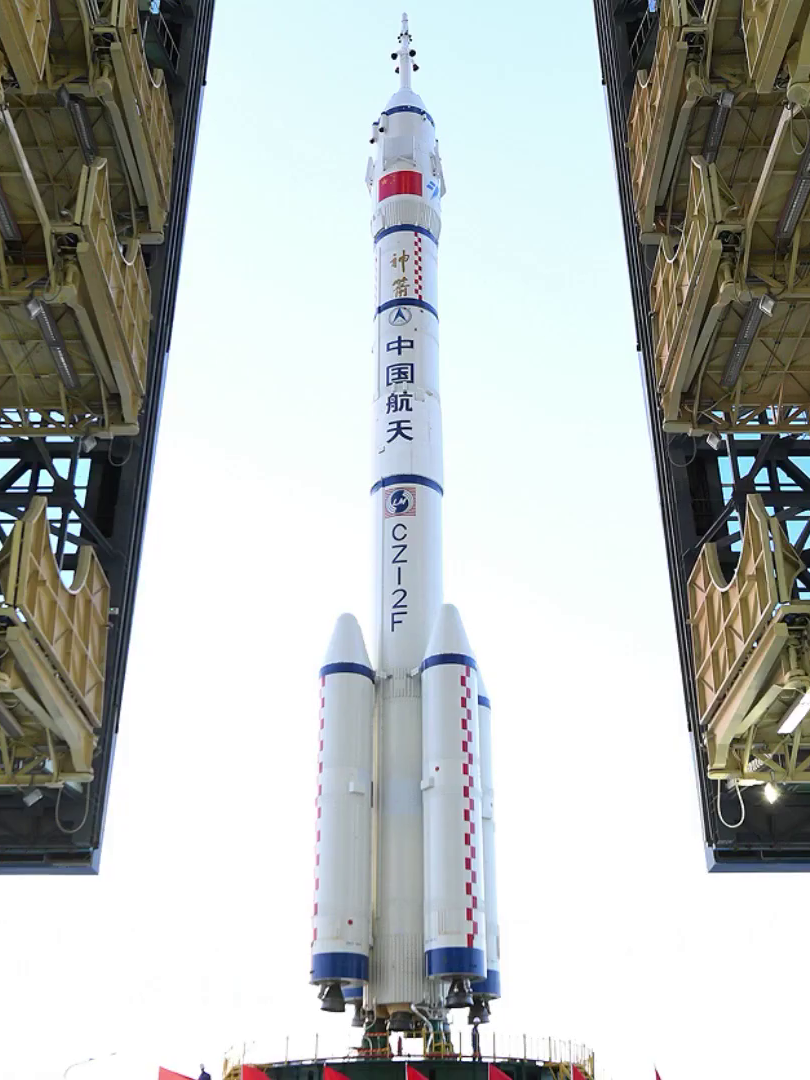
China has achieved a significant milestone in its human spaceflight program with the successful in-flight abort test of the new Mengzhou spacecraft. On February 11, 2026, China conducted a critical test that verified the spacecraft’s launch escape system performance, marking a crucial step toward the nation’s ambitious goal of sending astronauts to the Moon. This test represents one of the most important technical demonstrations in China’s quest to establish itself as a major power in lunar exploration, and it sends a clear message to the international community that China is serious about its long-term space ambitions. The successful completion of this test removes one of the final technical hurdles before China can begin operational crewed lunar missions.

The test involved the Mengzhou spacecraft riding atop a Long March 10A rocket, where the launch escape system was activated mid-flight to demonstrate its ability to pull the crew capsule to safety in the event of an emergency during ascent. What made this test particularly remarkable was the additional verification of the first stage’s ability to perform a soft landing on water, showcasing China’s commitment to rocket recoverability and reusable launch technology. The dual objectives of the mission demonstrated the sophistication of China’s aerospace engineering capabilities and represented a significant technical achievement that few nations have accomplished. This dual capability testing reflects a methodical approach to risk management.

This achievement places China among an elite group of nations capable of human spaceflight with robust safety systems. Only the United States and Russia have previously demonstrated such crew escape capabilities, with NASA’s Orion spacecraft and Russia’s Soyuz system representing the gold standard in crew safety. China’s entry into this exclusive club marks a significant shift in the global balance of human spaceflight capabilities and sets the stage for increased international competition in lunar exploration. The geopolitical implications of this development are substantial, as nations increasingly view space capability as a marker of national prestige and technological prowess.

The Mengzhou spacecraft represents China’s next-generation crew vehicle designed specifically for lunar missions. Unlike the Shenzhou spacecraft currently used for missions to the Tiangong space station, Mengzhou is being developed with the extreme conditions of deep space travel in mind. The spacecraft features advanced life support systems capable of sustaining astronauts for extended periods, improved heat shielding designed to withstand the higher velocities associated with lunar return, and a modular design that can accommodate various mission profiles from lunar orbit operations to potential Mars missions in the future. These capabilities represent a substantial upgrade from previous Chinese spacecraft.

Looking ahead, China plans to launch Mengzhou 1, the first operational mission of this new spacecraft, later in 2026. This will be followed by increasingly complex missions as the nation works toward its stated goal of landing astronauts on the Moon by the 2030s. The successful abort test removes one of the major technical uncertainties remaining in the program and demonstrates that Chinese engineers have mastered the critical safety systems required for human spaceflight beyond low-Earth orbit. Each subsequent mission will build upon this foundation, gradually expanding the operational capabilities of the Mengzhou system and moving China closer to its lunar goals.


  • Facebook
  • Google
  • Slashdot
  • Reddit
  • Live
  • TwitThis
January 27, 2026

Remember Fallen Heroes

Posted by


They will always be remembered…

Apollo 1 (January 27, 1967)

Virgil “Gus” Grissom – Commander, Edward White – Command Pilot, Roger Chaffee – Pilot

STS-51 L (January 28, 1986)

Francis R. Scobee – Commander, Michael J. Smith – Pilot, Judith A. Resnik – Mission Specialist 1, Ellison Onizuka – Mission Specialist 2, Ronald E. McNair – Mission Specialist 3, Gregory B. Jarvis – Payload Specialist 1, Sharon Christa McAuliffe – Payload Specialist 2

STS-107 (February 1, 2003)

Rick D. Husband – Commander, William C. McCool – Pilot, Michael P. Anderson – Payload Commander, David M. Brown – Mission Specialist 1, Kalpana Chawla – Mission Specialist 2, Laurel Clark – Mission Specialist 3, Ilan Ramon – Payload Specialist 1

Video credit: NASA


  • Facebook
  • Google
  • Slashdot
  • Reddit
  • Live
  • TwitThis


Every propulsion revolution has been delayed not by imagination, but by power. The impulse engine, as envisioned in the previous chapter, does not fail because it lacks elegance or theoretical structure. It fails because the universe is expensive. Momentum, when accumulated coherently and continuously, demands energy on a scale that chemical bonds cannot provide. Even fission, with all its density, struggles to sustain the electrical output required for persistent non-Newtonian thrust architectures.

Yet history shows a recurring pattern: once a conversion mechanism is understood, power generation eventually catches up. Steam engines awaited coal refinement. Electric motors waited for grids. The impulse engine has been waiting for fusion.

Fusion is not simply a larger power source—it is a fundamentally different one. It converts mass directly into energy through nuclear binding forces, releasing orders of magnitude more energy per unit mass than any chemical process. For decades, fusion was framed as a terrestrial dream: massive tokamaks, national laboratories, multi-decade timelines. That framing is now obsolete.

Compact Fusion: From Monumental to Modular

A quiet transformation has occurred in fusion research over the past two decades. Advances in superconducting magnets, plasma modeling, materials science, and power electronics have collapsed the scale of viable fusion systems. What once required buildings may soon fit inside a shipping container—and eventually, a spacecraft hull.

Several companies are actively pursuing compact fusion-based electrical generation. Commonwealth Fusion Systems is leveraging high-temperature superconductors to dramatically shrink tokamak designs. Helion Energy is developing pulsed fusion systems that directly convert fusion energy into electricity without steam cycles. TAE Technologies is exploring field-reversed configurations optimized for steady-state operation and minimal neutron output. General Fusion is pursuing magnetized target fusion using mechanical compression. First Light Fusion focuses on inertial confinement using projectile-driven implosions.

While none of these systems are yet flight-ready, the trajectory is clear. Fusion is transitioning from centralized infrastructure to modular energy generation. The key metric is not net grid gain, but power density per unit volume—exactly the parameter spacecraft engineers care about.

Fusion as an Electrical Engine, Not a Reactor

For propulsion purposes, fusion’s greatest advantage is not thermal output, but electrical availability. The impulse engine does not need heat; it needs controlled electrical power to pump quantized momentum states, maintain magnetic cavities, and synchronize stimulated impulse emission.

Future fusion generators designed for spacecraft would bypass traditional heat engines entirely. Direct energy conversion—via inductive coupling, charged particle capture, or magnetohydrodynamic extraction—would feed high-voltage, high-current power buses. These buses would supply the impulse nacelles continuously, without combustion cycles, exhaust plumes, or fuel depletion curves.

In this architecture, fusion is not the engine. It is the heart.

Integrating Fusion and Impulse Propulsion

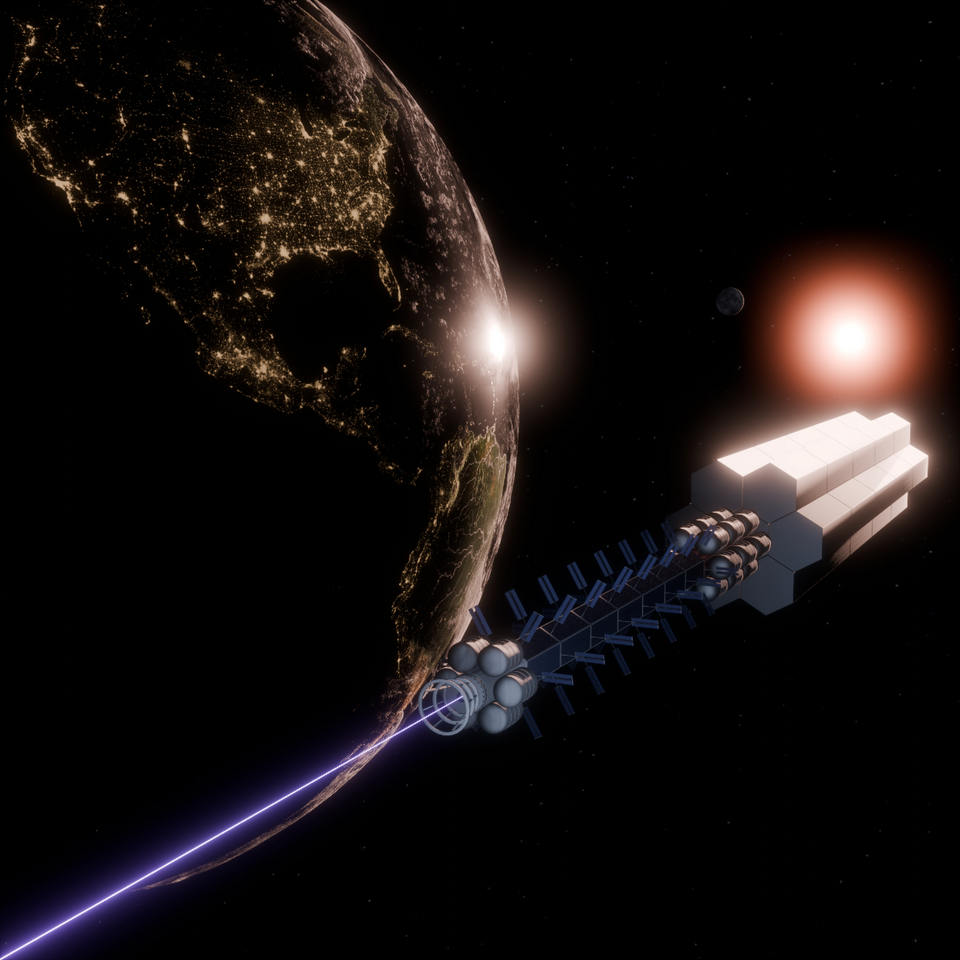
The spacecraft that emerges from this synthesis is unlike any vehicle humanity has built. At its core sits a compact fusion generator, magnetically isolated and structurally decoupled from the hull. Surrounding it are power conditioning systems: superconducting loops, pulse modulators, and energy buffers that smooth the inherently dynamic nature of fusion output.

Mounted along the spacecraft’s longitudinal axis are impulse nacelles—self-contained impulse cavities where impulson transitions occur. These nacelles do not emit exhaust. There is no plume, no reaction mass, no erosion. The thrust vector is defined entirely by internal field geometry and phase synchronization across the nacelle array.

Because thrust is not tied to propellant flow, acceleration becomes a function of power availability rather than fuel mass. Low but continuous acceleration—millimeters per second squared sustained for weeks—produces velocities unattainable by chemical means. Interplanetary travel times collapse from months to weeks. Orbital mechanics shifts from ballistic arcs to controlled trajectories.

Thermal Management and Structural Considerations

No system is without losses. Fusion generators produce waste heat. Impulse cavities dissipate energy through imperfect coherence. The spacecraft must radiate heat efficiently, relying on large-area radiators integrated into the hull or deployable structures. Unlike chemical engines, heat is the primary limiting factor—not thrust.

Structurally, the absence of exhaust simplifies design while introducing new constraints. The spacecraft experiences uniform internal stresses rather than localized thrust loads. Vibration is minimal. Mechanical fatigue is reduced. Long-duration missions become not just possible, but routine.

Radiation shielding remains critical, particularly for neutron-producing fusion reactions. Advanced materials, layered magnetic shielding, and active field shaping mitigate exposure to both crew and electronics. Over time, aneutronic fusion pathways may reduce this burden further.

The Implications for Solar System Expansion

The true significance of fusion-powered impulse propulsion is not speed—it is accessibility. When spacecraft are no longer limited by propellant mass, mission design changes fundamentally. Cargo vessels can spiral gently between worlds, carrying infrastructure rather than fuel. Habitats can be assembled in situ. Asteroid resources become reachable without launch windows dictating feasibility.

Mars ceases to be a one-way commitment. The outer planets stop being distant outposts. The Kuiper Belt becomes a frontier rather than a boundary.

Colonization, in this context, is not a rush—it is a gradient. Continuous propulsion enables continuous presence.

A New Philosophy of Motion

What binds this trilogy together is a philosophical shift. The LASER showed that energy could be disciplined into coherence. The impulse engine extends that discipline to momentum itself. Fusion provides the endurance required to sustain it.

This is not science fiction propulsion in the sense of hand-waving miracles. It is speculative, yes—but structured. It extrapolates from known physics, respects conservation laws, and builds incrementally from proven principles. It does not eliminate difficulty; it relocates it—from brute force to precision engineering.

If such a spacecraft ever leaves the shipyard, it will not announce itself with flame. It will depart silently, accelerating so gently that its crew will feel nothing at all. And yet, over time, it will outrun every rocket humanity has ever built.

The age of throwing mass away will end not with an explosion, but with a realization: energy, when properly ordered, is enough.


  • Facebook
  • Google
  • Slashdot
  • Reddit
  • Live
  • TwitThis